



Why Your Lawn Needs a Spring Sprinkler Tune-Up
When spring arrives, it’s like a jangling alarm clock for your yard. Time to wake things up! A proper sprinkler system spring startup is key to a healthy, vibrant lawn all season long.
What does sprinkler system spring startup involve?
- Slowly introducing water to prevent damage.
- Inspecting your backflow preventer.
- Checking all sprinkler heads and lines for issues.
- Testing each watering zone.
- Reprogramming your controller for the new season.
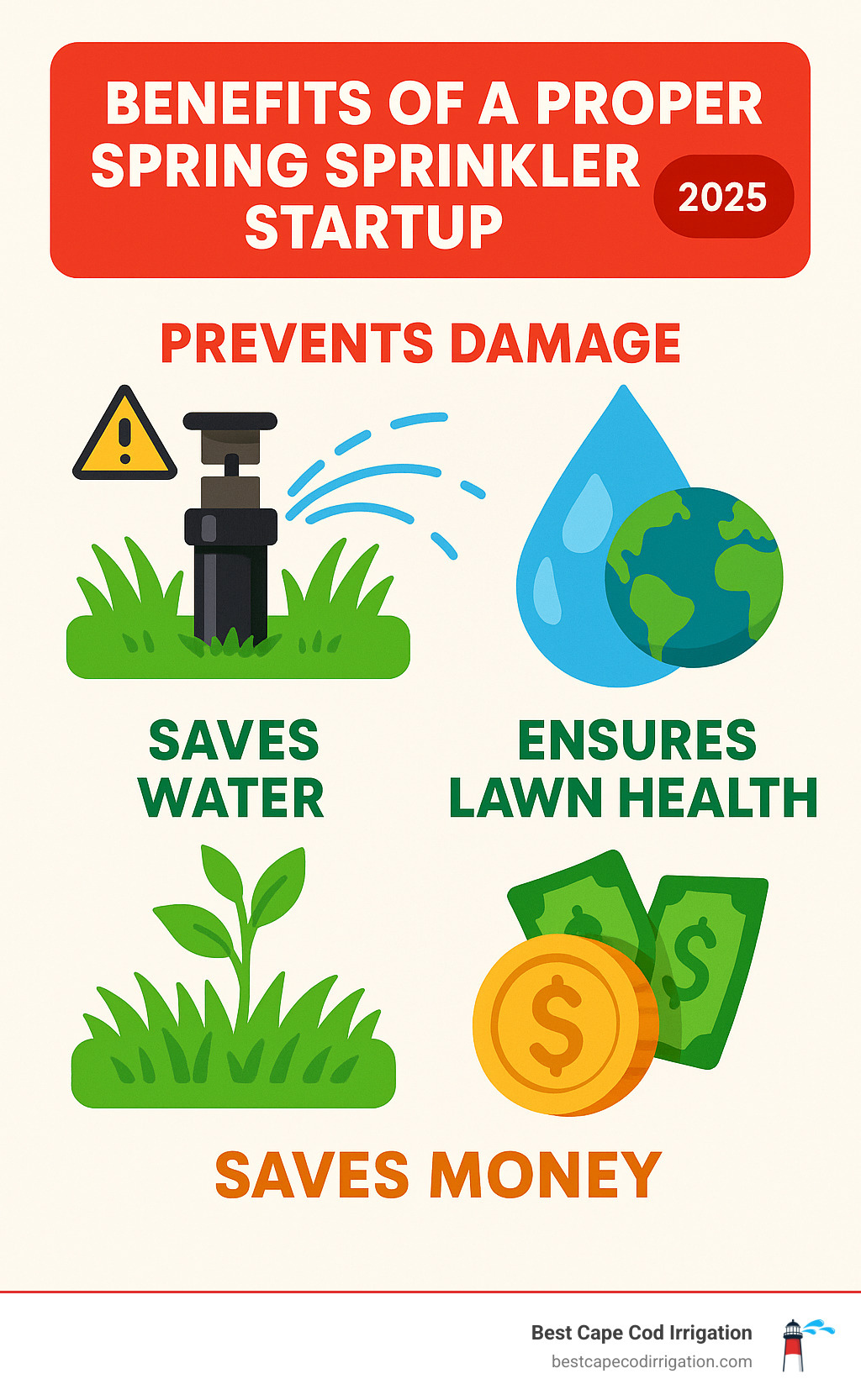
This careful process ensures your irrigation system is ready to deliver water efficiently. It helps protect your system from costly damage. It also makes sure your lawn gets exactly what it needs, saving you money and water.
A well-maintained system means a lush, green lawn without the hassle. It prevents those unexpected mid-season problems that can turn your yard into a headache.
Key terms for sprinkler system spring:
When to Start Your Sprinkler System in Spring
Ah, spring on Cape Cod! It’s that wonderful time of year when our thoughts turn to green lawns and the gentle hum of an irrigation system. One of the questions we hear most often is, “When exactly is the right time to get my sprinkler system spring startup going?” It’s a fantastic question, and the answer isn’t just about picking a date on the calendar. It’s more about understanding a few key factors specific to our beautiful region.
The absolute most important thing to remember is the last frost date. Think of it as nature’s green light. Why is this so crucial? Because any water left in your system’s pipes or sprinkler heads, no matter how little, can freeze if temperatures drop below zero. When water freezes, it expands, and that expansion can wreak havoc, leading to expensive cracked pipes, broken sprinkler heads, or damaged backflow preventers. For us here on Cape Cod, this usually means waiting until at least a few weeks after our typical last frost date has safely passed.
But it’s not just about the air temperature. The ground temperature plays an equally big role. Your irrigation lines are typically buried about 8-12 inches deep. So, even if the air feels warm, the ground below might still be holding onto winter’s chill. To be sure, we recommend a simple “dig test.” Grab a shovel and dig down about 10-12 inches into your soil. You want to make absolutely certain the ground at that depth is completely frost-free. If the soil is still frozen where your pipes lay, turning on your system could cause immediate pipe bursts. Some folks even wait until the soil has warmed to a consistent 55°F for at least a week, or until they see the vibrant forsythia blooms — a lovely natural sign that spring has truly arrived!
Patience really is a virtue when it comes to your sprinkler system spring startup. While a single warm, sunny day might tempt you, multiple consecutive nights below freezing can still cause major problems. Even if your buried lines have some protection, components like your backflow preventer are often exposed and highly vulnerable to cold wind and freezing temperatures. Rushing the process can lead to unnecessary repairs and wasted water, which is something none of us want!
To help you plan, you can easily check your local frost date online. Knowing this little piece of information can save you a lot of headache (and money!) down the road.
Gearing Up: Tools and Pre-Startup Inspection
Before you even think about turning on the water, gathering your tools and performing a thorough pre-startup inspection is essential. Think of it as preparing for battle against any winter-induced wear and tear.
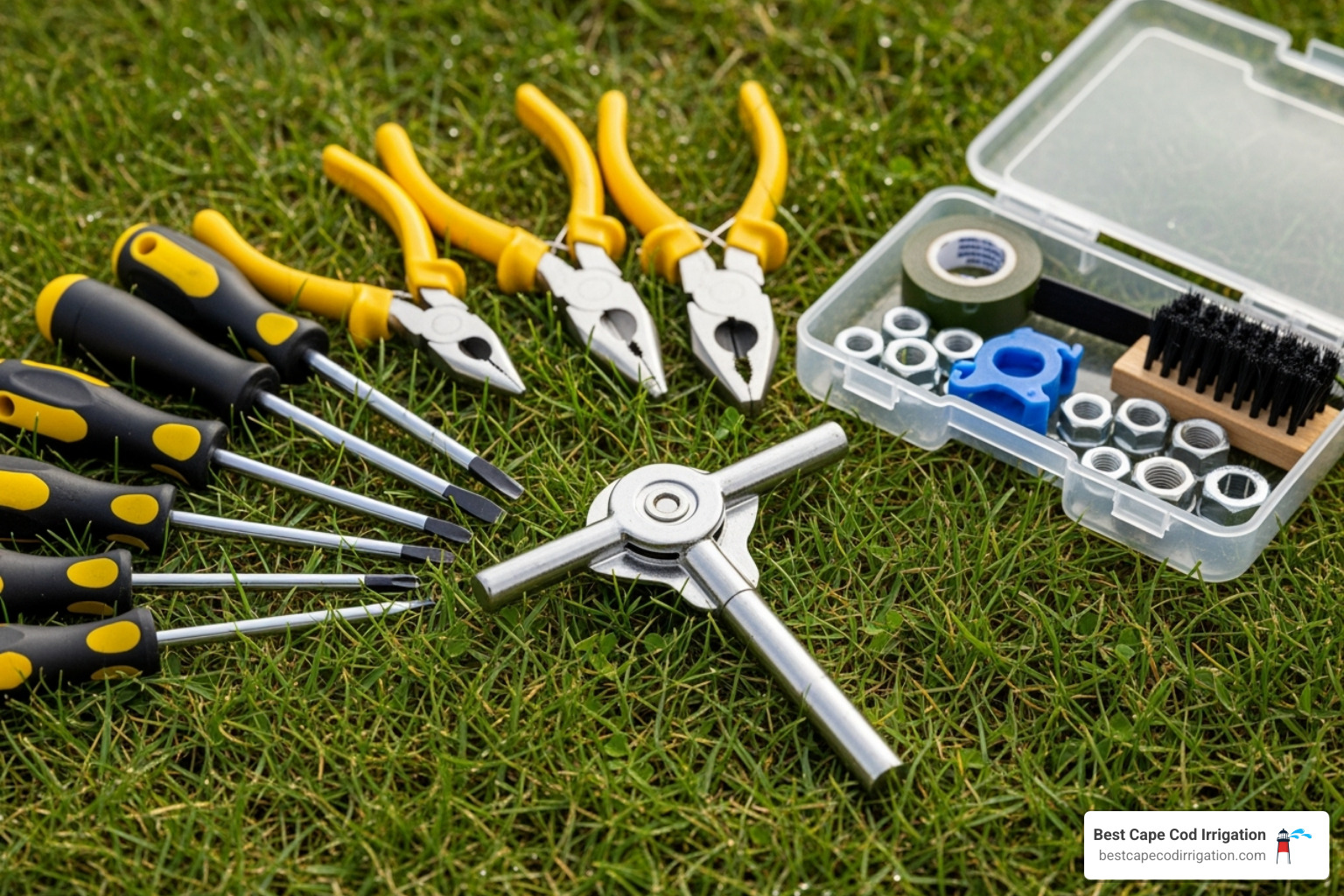
First things first, let’s talk tools! You’ll want to gather a few essentials to make your sprinkler system spring startup smooth. Grab your trusty screwdriver (both flathead and Phillips will come in handy for various adjustments), a pair of pliers (or channel-locks) for any stubborn connections, and a specific sprinkler valve key or adjustment tool for fine-tuning those sprinkler heads. Don’t forget a pen and pad – you’ll want to jot down notes about any quirks you find in each zone. And a little pro tip? Having some spare parts like extra nozzles or fittings on hand can be a real lifesaver if you spot minor damage.
With your toolkit ready, it’s time for some detective work: the visual inspection! Take a stroll around your entire property, giving your sprinkler system spring setup a good once-over. You’re looking for any tell-tale signs of trouble that winter might have left behind.
First, cast an eagle eye over all your sprinkler heads. Did winter’s icy grip or perhaps a rogue snowplow leave any of them cracked, broken, or knocked out of alignment? Are any missing or pointing towards your neighbor’s house instead of your lawn? Next, inspect any visible pipes or valves, especially around your backflow preventer or valve boxes. Even though most of your system is buried safely, exposed components can be vulnerable to cracks, leaks, or impact damage from the cold or accidental bumps.
Don’t forget to check for debris! Leaves, dirt, or other garden clutter can easily accumulate around sprinkler heads and inside valve boxes, ready to clog things up. Clear it all away now. Finally, keep an eye out for any mysterious soggy spots on your lawn, even before you turn on the water. A persistently wet patch could be a sneaky hint of a leak that happened over the winter.
Addressing any visible issues before you introduce water can save you a lot of headaches (and potential geysers!) later on.
The Ultimate Guide to Sprinkler System Spring Startup
Alright, you’ve done your homework! You’ve waited for the right time, gathered your tools, and given your system a good visual once-over. Now, it’s time for the main event: getting your sprinkler system spring startup underway. This DIY process typically takes about 30 to 45 minutes, depending on how complex your system is. We’re going to walk you through each vital step to make sure your system wakes up smoothly, safely, and ready to water your beautiful lawn.
Turning On Sprinkler System in Spring
Step 1: Prepare the Backflow Preventer for the Sprinkler System in Spring
Think of your backflow preventer as your home’s unsung hero. It’s a super important device that stops any water from your irrigation system (which might have fertilizers or other things in it) from flowing backward and mixing with your clean drinking water. Getting it ready is a key first step.
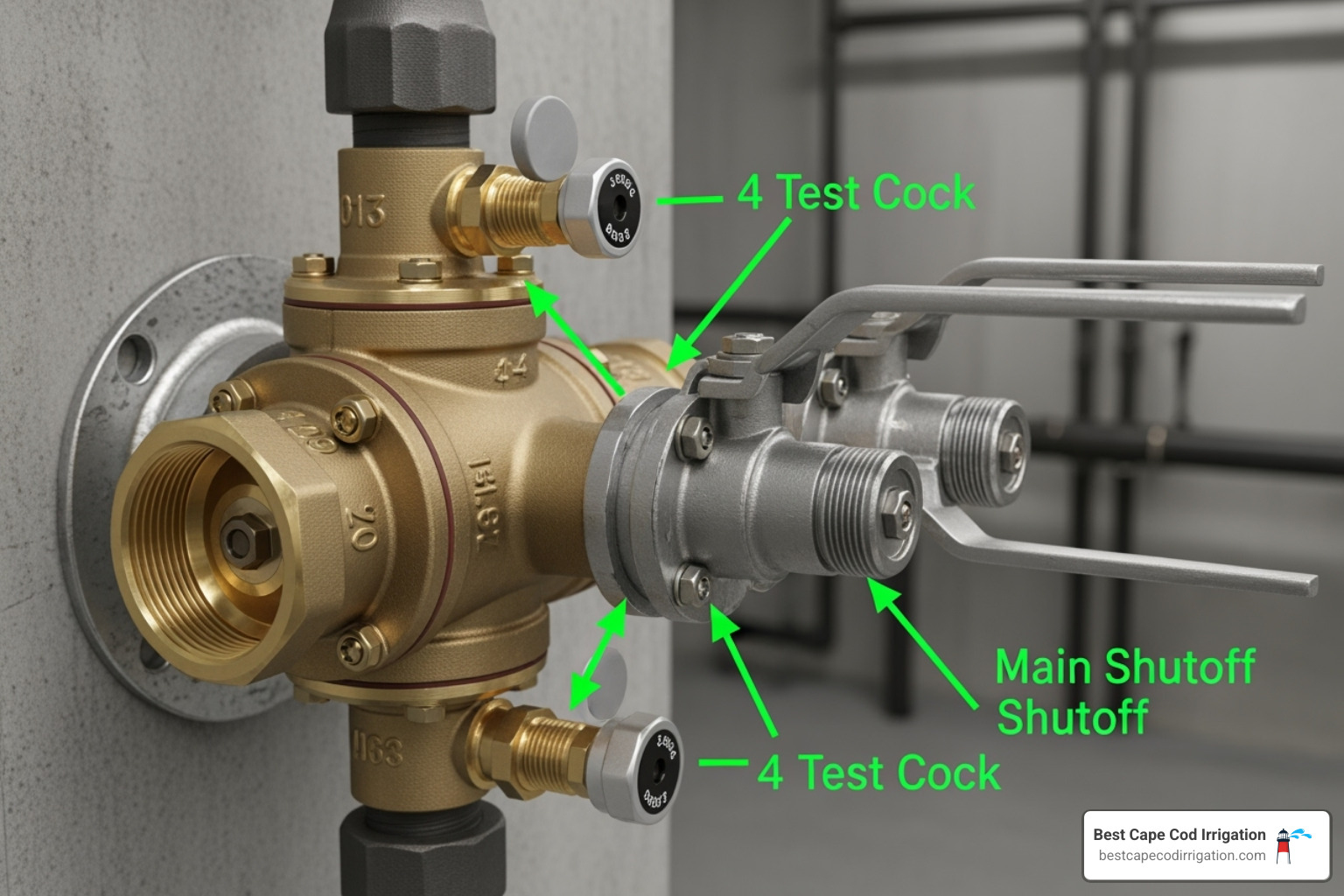
If your system was professionally winterized, the small test cocks (they look like little screws) on your backflow preventer were probably left partly open. Also, the main shutoff valves (often ball valves) would have been closed.
Here’s how to get it ready:
First, grab your flathead screwdriver and close the test cocks. Turn them so they are pointing straight across the pipe, not in line with it. This seals them off. Next, locate the two main shutoff valves. These are usually open when their handles are parallel with the pipe and closed when they’re perpendicular. Slowly turn these handles until they are parallel to the pipes. Finally, if any bleeder caps were taken off for winter, make sure they are put back on securely.
A properly working backflow preventer isn’t just about good lawn care; it’s about keeping your family’s water safe. If you spot any cracks, drips, or a lot of rust, it might mean there’s winter damage that needs a pro’s touch.
Irrigation Repairs Maintenance
Step 2: Slowly Open the Main Water Valve to Prevent Water Hammer
This step is probably the most important one to take your time with. Rushing it can cause something called “water hammer.” Imagine a sudden, powerful bang inside your pipes! That’s water hammer, and it happens when water rushes into empty pipes too quickly. This sudden force can cause big problems like burst pipes, cracked fittings, or even sprinkler heads popping off. It creates a surge of pressure that’s many times higher than what your system can handle.
To avoid this costly headache:
First, find your main water valve. This might be inside your home (like in the basement) or outside near your water meter. Once you find it, open it just a quarter of the way. You should start to hear water slowly filling the pipes and air escaping. Let the system slowly pressurize for several minutes. This gentle fill lets any trapped air escape and keeps that damaging surge pressure from building up. Sometimes, filling just one zone can take as long as 30 minutes to really minimize surge pressure.
After a few minutes, slowly open the valve another quarter turn. Keep doing this until the main valve is fully open. This gentle method ensures your pipes fill up gradually, stopping any sudden shocks. Most sprinkler systems work best with pressure between 40-65 PSI. If you have a pressure gauge, you can check it to make sure everything’s in the safe zone.
Taking your time here truly protects your system from damage and ensures a smooth start to your watering season.
Opening Sprinkler System in Spring
Step 3: Test Each Zone and Inspect Sprinkler Heads
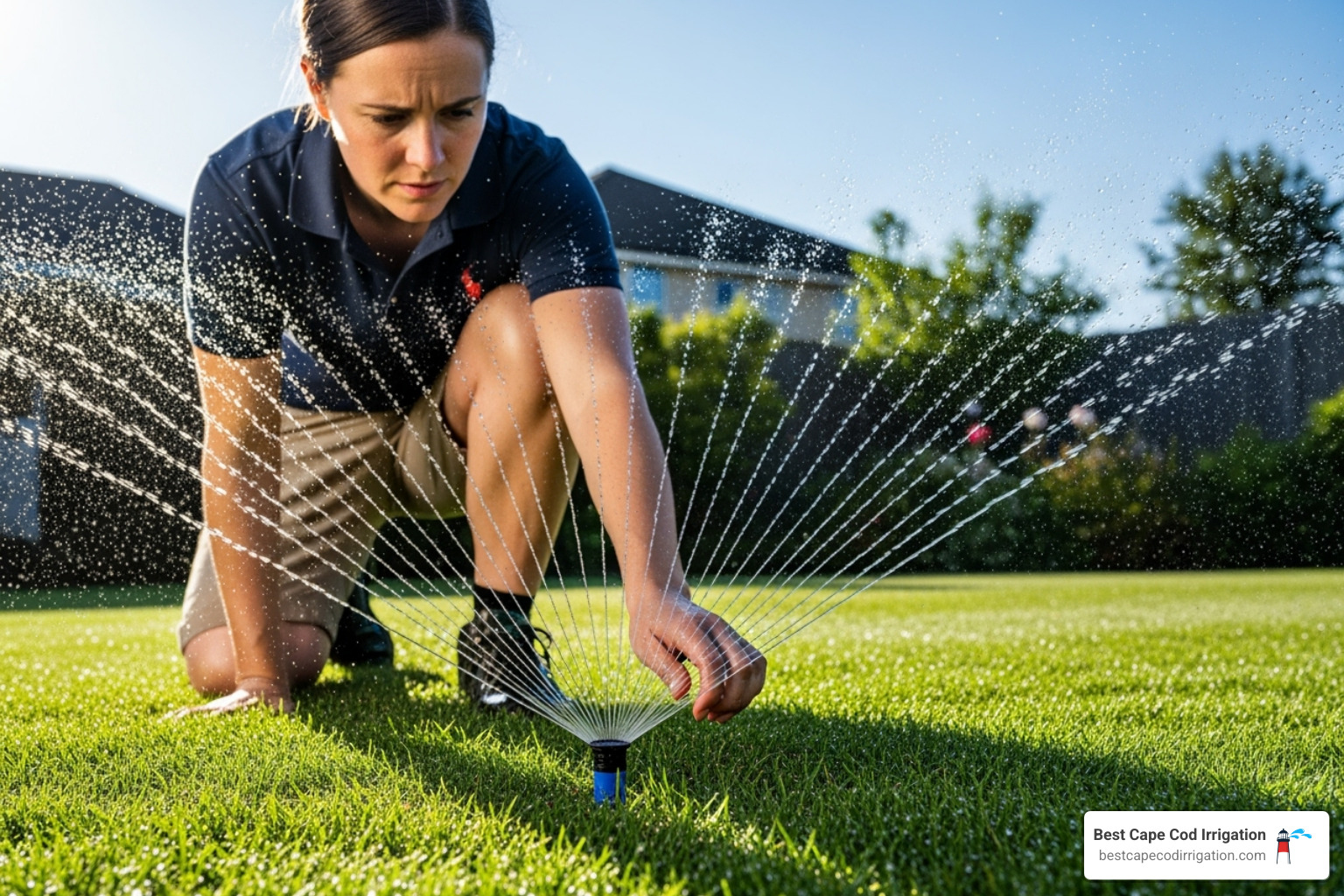
Now that water is flowing, it’s time to check each part of your system. This means going through every watering zone one by one. This step lets you see how each sprinkler head is working and spot any problems that might have popped up over winter. Plan to spend about 3 to 5 minutes on each zone during this manual test.
Here’s how to do it:
Go to your irrigation controller and switch it to manual mode. Then, turn on the first zone. As it runs, walk around and carefully look at every sprinkler head in that zone. Is it rotating properly if it’s a rotary head? Is the water spraying where it should be, or is it watering your driveway instead of your lawn? You can adjust the spray patterns with your sprinkler key or a screwdriver.
Look for any clogged nozzles – you’ll see a weak or uneven spray. Clear out any dirt or debris. Also, check for leaks; look for puddles around the base of the heads or water bubbling up from the ground. If the water looks more like a mist or barely reaches its target, you might have low pressure. This could mean a leak further down the line or a broken head.
Once you’ve checked the first zone thoroughly, turn it off and move to the next. Repeat this careful inspection for every zone in your system. Don’t forget your pen and pad! Jot down any issues you find, like “Zone 3: Head near the big oak tree is broken,” or “Zone 1: Low pressure by the fence.”
This detailed, zone-by-zone check is super important to make sure your system is working well and watering your lawn effectively.
Residential Sprinkler System Maintenance
Step 4: Programming Your Controller for the Sprinkler System in Spring
After you’ve tested all your zones and fixed any issues, the last step is to program your irrigation controller for the new season. Many people unplug their controllers for winter, which means all your old settings might be gone. So, this is a crucial step for a fresh start!
First, make sure the controller’s internal clock shows the correct date and time. Then, it’s time to adjust your watering schedule. Your lawn’s watering needs change a lot from spring to summer. Set your start times, how long each zone runs, and which days it waters based on the current weather, what your plants need, and any local watering rules. You’ll likely need less water in spring compared to the hot summer months.
If your controller has a backup battery, it’s a good idea to replace it if it’s old (say, six months or more). This helps save your settings during power outages. If you have a rain sensor, check that it’s clean and nothing is blocking it. A working rain sensor is great because it stops your system from watering when it’s raining, saving both water and preventing soggy spots.
Finally, if you have a smart irrigation controller, now’s the time to reconnect it to your Wi-Fi. Make sure its weather-sensing features are active. Smart controllers are fantastic because they can automatically change watering times based on local weather forecasts, how moist your soil is, and even the types of plants you have. This really helps optimize water use. At Best Cape Cod Irrigation, we love smart technology because it provides efficient, worry-free watering, custom-custom for Cape Cod’s unique conditions.
Proper programming ensures your lawn gets just the right amount of water at just the right time, leading to a healthier lawn and saving precious resources.
Start-Up Sprinkler System in Spring
Troubleshooting Common Startup Problems
Even if you’ve followed every step for your sprinkler system spring startup with care, sometimes your system might throw you a curveball. Don’t fret! Many common issues are fairly straightforward to spot and often have simple solutions. Think of it as your irrigation system just needing a little extra TLC after its long winter nap.
One of the most frequent sights after winter is leaks. Keep an eye out for any perpetually soggy spots in your lawn that weren’t there before, bubbling water, or puddles forming around your sprinkler heads or valve boxes. These can be tell-tale signs of a leak, ranging from a simple loose connection to a cracked pipe that might need a bit more attention.
If your sprinkler heads are sputtering out water like a weak cough, or the spray isn’t reaching where it should, you might be dealing with low pressure. This could stem from a variety of culprits, such as a leak somewhere along the main line, a broken sprinkler head, or even a valve that didn’t fully open.
Ever seen a sudden, dramatic spout of water shooting up from your lawn? That’s what we affectionately call a geyser. This usually screams “pipe burst!” It often happens if winterization wasn’t quite perfect, or if there was a major “water hammer” when you turned the system on too quickly. If you see one, act fast: immediately shut off the main water valve to prevent further flooding and damage.
Then there are clogged heads or nozzles. If you notice an uneven spray pattern, or a head that’s just dribbling instead of spraying, chances are it’s blocked. Dirt, sand, or mineral buildup can easily clog these tiny openings. Often, a quick clean with a small brush or even a straightened paperclip can get them spraying beautifully again.
What about a zone not working at all? If one entire section of your yard isn’t getting water, the first place to check is the wiring to the solenoid valve in that zone’s valve box. Sometimes the solenoid itself might be faulty, or there could be an electrical hiccup with your controller.
Speaking of controllers, sometimes they can act up too, leading to controller faults. If your control panel isn’t responding, showing strange error messages, or just seems “dead,” check its power source, any backup battery it might have, and make sure it hasn’t been damaged by a power surge.
Beyond obvious leaks, persistent soggy spots in your yard could also indicate a valve that isn’t fully closing. It’s letting a little water seep through even when the zone is supposed to be off. And finally, if your sprinkler heads are constantly misting rather than spraying distinct droplets, it might be a sign of excessively high water pressure, not just low pressure. In such cases, a pressure regulator might be a smart addition to protect your system and save water.
For those trickier issues, or if you’re just not sure what you’re looking at, don’t hesitate to reach out to a professional.
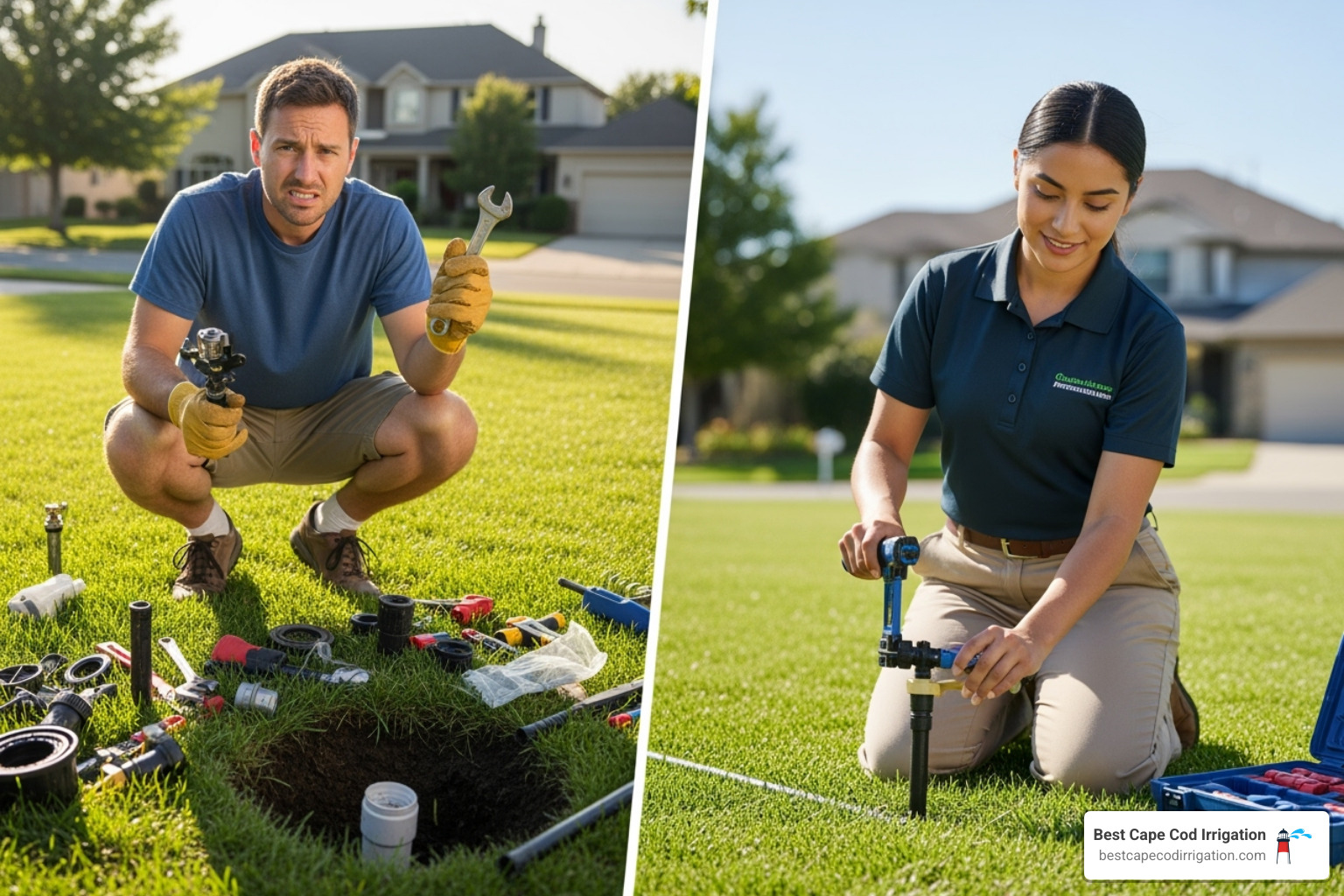
DIY vs. Hiring a Professional: Making the Right Call
Alright, let’s get to the big question on many homeowners’ minds: when it comes to your sprinkler system spring startup, should you roll up your sleeves and do it yourself, or is it better to call in the pros?
We’ve just walked through the DIY steps, and yes, tackling it yourself is absolutely achievable! A do-it-yourself sprinkler system spring startup usually takes about 30 to 45 minutes of your time. It’s a great way to learn more about your system and save a few bucks.
However, there’s also a world of ease and expertise that comes with bringing in the experts, especially if you’re new to this, short on time, or if your system seems to be putting up a fight.
Here’s a quick peek at how the two options stack up:
| Feature | DIY Startup | Professional Startup |
|---|---|---|
| Cost | $0 (unless parts are needed) | Average $125 (range $75 – $1,000 or more) |
| Time | 30-45 minutes | 30-60 minutes |
| Expertise | Basic knowledge, learning curve | In-depth system knowledge, diagnostics |
| Tools | Basic hand tools | Specialized equipment, diagnostic tools |
| Issue Resolution | May require research, trial-and-error | Quick diagnosis, on-the-spot repairs |
| Damage Risk | Higher if inexperienced (e.g., water hammer) | Minimal, trained to prevent issues |
| Peace of Mind | Depends on comfort level | High, system checked thoroughly |
| Warranty | None | Often includes warranty on parts/labor |
When you choose the DIY route, you benefit from cost savings upfront and the genuine sense of accomplishment that comes with a job well done. Plus, you get to learn all about your system. The flip side is the risk of damage if something goes wrong (like that tricky water hammer!), it can become quite time-consuming if problems pop up, and you might simply lack the specialized tools or knowledge for bigger issues.
Now, let’s talk about the perks of calling in a pro. First off, there’s a huge time savings. A professional can get your system up and running smoothly, usually within 30 to 60 minutes, freeing you up to enjoy your spring. Then there’s the expertise. With over 25 years of regional experience, our team at Best Cape Cod Irrigation truly understands the unique challenges of our Cape Cod climate and soil. We can spot hidden issues, fine-tune your system for maximum efficiency, and often prevent those costly future repairs before they even start.
Professionals also come armed with specialized tools for accurate diagnostics, and they can handle important tasks like backflow testing (which, by the way, is often a local regulation requiring annual certification!). This leads to better system efficiency, ensuring your lawn gets exactly what it needs without wasting water. If you have any smart irrigation technology, a pro can make sure it’s perfectly calibrated and integrated, making your watering truly worry-free.
So, when is it really time to call in the cavalry? If you’re seeing persistent leaks, low pressure across multiple zones, strange electrical issues, or if you suspect major component damage, don’t hesitate. That’s when it’s definitely time to give us a call. We can quickly diagnose the problem and offer reliable, affordable solutions to get your green back.
You might be wondering about the cost. A professional spring irrigation system startup service typically takes between 30 to 60 minutes. While internet data suggests the average professional service call to turn on a sprinkler system is around $125, please keep in mind that prices can vary quite a bit, ranging from $75 to $1,000 or more. This wide range depends on things like your system’s size, how complex it is, and any unexpected repairs that might be needed. At Best Cape Cod Irrigation, we believe in transparent pricing and efficient service, ensuring your system is perfectly ready for the season.
Conclusion
Phew! We’ve covered a lot of ground, haven’t we? Getting your sprinkler system spring ready might seem like a chore, but trust us, it’s one of the best investments you can make for your lawn’s health and your own peace of mind. A proper spring startup is so much more than just turning on the water; it’s a vital step in ensuring your lawn looks its absolute best all season long.
Remember those key steps we talked about? Patience is your best friend when slowly introducing water, preventing those terrifying “water hammer” surprises that can wreak havoc on your pipes. A thorough inspection is like a health check-up for your system, catching little problems before they become big, expensive headaches. And careful pressurization? That’s your secret weapon against burst pipes and unexpected geysers! By nailing these steps, you prevent costly damage, ensure your system uses water efficiently, and set the stage for a truly vibrant landscape.
Here on Cape Cod, our unique blend of sandy soils and coastal weather means your irrigation system has a job unique to our beautiful region. That’s where local expertise truly shines. Understanding these specific conditions can make a significant difference in optimizing your system for both efficiency and long-term health.
That’s why Best Cape Cod Irrigation isn’t just a name; it’s a promise. With over 25 years of hands-on experience right here on the Cape, we’ve seen it all and know exactly how to make your system sing. We blend that deep regional knowledge with smart technology to create an efficient, worry-free watering plan that’s custom-built for your property and our local conditions. We’re dedicated to providing the highest quality lawn irrigation installation, repair, and maintenance services, offering you true peace of mind.
So, don’t let your lawn hit the snooze button this spring. Give it the proper kickstart it deserves. Whether you’re a DIY enthusiast or prefer to let the pros handle it, getting your sprinkler system spring ready ensures a lush, vibrant landscape that’ll be the envy of the neighborhood. Ready to watch your landscape flourish?
