


Why Cape Cod Homeowners Need Regular Sprinkler Care
Residential sprinkler system maintenance is essential for keeping your Cape Cod lawn healthy while protecting your investment from costly repairs. A well-maintained system can reduce water waste by up to 30% and prevent expensive emergency fixes that often cost 3-5 times more than routine care.
Quick maintenance checklist for busy homeowners:
- Monthly: Visual inspection of heads and controllers
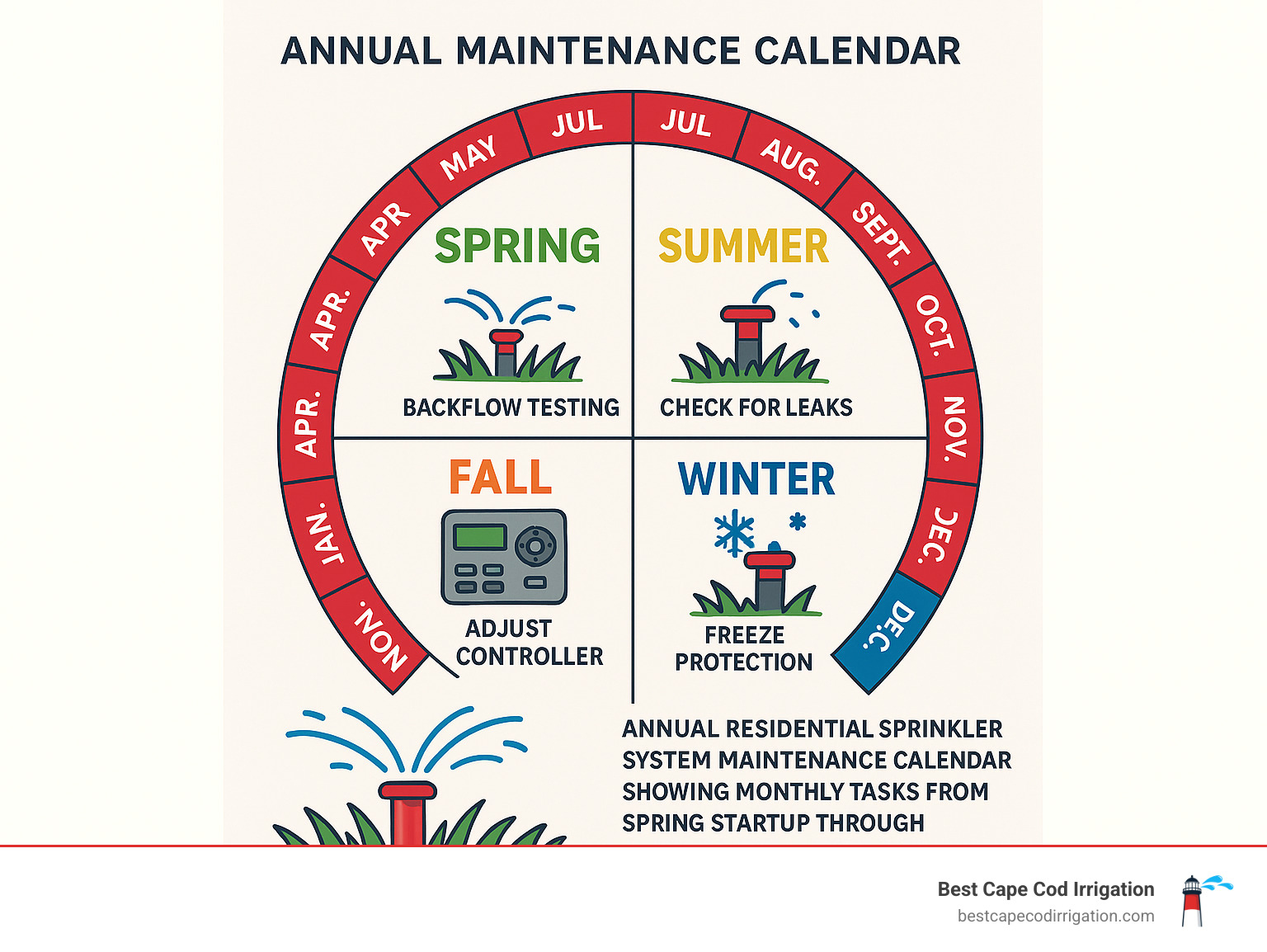
- Spring: Professional startup and backflow testing
- Summer: Adjust watering schedules and check for leaks
- Fall: Winterization with compressed air blow-out
- Bi-annual: Professional system audit ($75-$450 average cost range)
Cape Cod’s sandy soil and unpredictable weather make proper sprinkler maintenance even more critical. Without regular care, systems often develop issues like clogged nozzles, broken pipes, or controller malfunctions that waste water and damage your landscape.
Research shows that 79% of sprinkler system failures result from lack of maintenance, accidental shut-offs, or damaged components – all preventable problems. Most maintenance tasks are simple and take just minutes to complete.
Whether you have a basic timer system or smart Wi-Fi controllers, consistent care keeps your irrigation running efficiently through Cape Cod’s challenging growing conditions.
Basic Residential sprinkler system maintenance glossary:
How a Home Sprinkler System Works
Think of your sprinkler system like your home’s circulatory system – water flows through a network of pipes and valves to deliver the right amount of moisture exactly where your lawn needs it. Understanding these basic components makes residential sprinkler system maintenance much simpler and helps you spot problems before they become expensive headaches.
Your system starts with water from either your municipal supply or a private well, flowing through a backflow preventer that protects your drinking water from contamination. From there, water travels to control valves that direct flow to different zones around your property.
Zones are the heart of efficient irrigation. Each zone typically covers 500-1,500 square feet and operates independently based on your landscape’s unique needs. Your sunny front yard might need different watering than the shaded area under your oak trees.
The controller serves as your system’s brain, telling each zone when to start watering. Modern controllers range from basic timers to sophisticated Wi-Fi units that check weather forecasts and adjust watering schedules automatically.
Sprinkler heads are where the magic happens. Spray heads cover smaller areas up to 15 feet with a fan-like pattern, perfect for flower beds. Rotors handle larger zones up to 50 feet, slowly rotating to distribute water evenly. Most heads are pop-up variety that retract when not in use.
| System Type | Piping | Best For | Maintenance Level |
|---|---|---|---|
| Stand-Alone | Dedicated irrigation lines | New construction, large properties | Moderate – seasonal startup/shutdown |
| Multipurpose | Shared with home plumbing | Existing homes, budget-conscious | Lower – fewer components |
Water Flow & Pressure Basics
Water pressure is like the engine that powers your entire system. Most residential sprinklers need 20-50 PSI to work their best. When pressure drops too low, you’ll notice weak spray patterns. Too much pressure creates fine mist that evaporates before hitting the ground.
Municipal supply usually provides adequate pressure for most Cape Cod homes, but geography matters. If you live on a hill or at the end of a water line, you might need a booster pump to maintain consistent pressure.
Check valves prevent water from flowing backward through your system when zones shut off. Without these, you’ll notice heads continuing to drip long after watering cycles end.
Pump systems come into play when municipal pressure isn’t enough. These require monthly testing to ensure reliable operation, since unused pumps often seize up from mineral deposits.
Sensors & Smart Add-Ons
Modern irrigation technology takes the guesswork out of watering while helping you become a better environmental steward. These smart devices integrate seamlessly with most existing controllers.
Rain sensors automatically shut off your irrigation when Mother Nature provides her own watering service. Set to trigger at about 1/4 inch of rainfall, these devices can reduce water usage by 15-20% during Cape Cod’s unpredictable weather patterns.
Soil moisture probes take efficiency to the next level by measuring actual ground moisture before allowing irrigation cycles to start. Think of them as your lawn’s personal water meter.
Wi-Fi controllers represent the cutting edge of irrigation technology. These smart systems connect to weather services and adjust watering schedules automatically based on temperature, humidity, and rainfall forecasts.
Residential Sprinkler System Maintenance Essentials
Taking care of your sprinkler system doesn’t require a degree in engineering or a toolbox full of fancy equipment. Residential sprinkler system maintenance is really about staying consistent with simple tasks that prevent small problems from becoming wallet-draining disasters.
Think of it like brushing your teeth – a few minutes of regular attention beats hours in the dentist’s chair later. The same principle applies to your irrigation system, where a monthly walk-around can save you from emergency service calls during peak summer.
Controller checks should happen monthly to ensure your system runs on schedule. Head cleaning becomes second nature once you realize how often Cape Cod’s sandy soil clogs those tiny nozzles. Leak scanning during your regular yard time catches problems while they’re still small drips rather than geyser-sized emergencies.
Professional tune-ups bring an experienced eye to your system twice a year. Research shows that properly maintained sprinkler systems achieve 95% effectiveness, but this drops significantly when basic care gets skipped.
For situations that go beyond basic maintenance, More info about irrigation repairs can help you understand when it’s time to call in the professionals.
Monthly DIY Residential Sprinkler System Maintenance
Your monthly maintenance routine should feel like a pleasant walk around your property rather than a chore. Plan to spend about 30 minutes observing your system during an actual watering cycle.
During your visual sweep, you’re looking for obvious issues that jump out at you. Sprinkler heads that don’t pop up properly, spray patterns that look more like gentle mist than purposeful watering, or heads that have gotten tilted or buried since last month. Brown spots in your lawn often tell the story of heads that aren’t reaching their intended areas, while soggy patches usually mean a head is stuck open.
Valve box checks involve removing any debris that’s accumulated – leaves, dirt, and the occasional curious insect find their way in there regularly. If you find water standing in a valve box, that’s your clue that a valve is leaking and needs attention.
The tuna can test sounds quirky, but it’s actually the most reliable way to measure whether your system delivers water efficiently. Place empty tuna cans around each zone, run the system for 15 minutes, then measure the water depth. If you find half an inch of water, you’ll need 30 minutes of runtime to deliver the recommended inch of weekly watering.
Sprinkler head alignment prevents the common problem of watering your driveway instead of your lawn. Adjust spray heads so they’re hitting grass rather than pavement, and make sure rotor heads complete their full rotation without getting stuck.
Bi-Annual Pro Service & Average Costs
Professional service twice a year – typically during spring startup and fall winterization – catches the problems that even diligent homeowners miss.
A professional audit goes well beyond what most homeowners can accomplish on their own. Backflow preventer testing is required by most municipalities and involves specialized equipment. Water pressure measurement at multiple points reveals problems that aren’t obvious during casual observation.
Average costs for professional service vary widely based on system complexity and regional pricing (these are internet averages, not specific to any particular company). Basic system inspections typically run $75-$225, while backflow testing adds another $50-$150 to your annual costs. Complete tune-ups with adjustments generally fall in the $150-$450 range, though high-end pricing can reach three times these amounts for complex systems.
The investment in professional service typically pays for itself by preventing major failures. A $200 annual inspection often prevents those $600-$2,000 emergency repairs that always seem to happen during the hottest week of summer.
Documentation & Record-Keeping
Good record-keeping makes troubleshooting infinitely easier and helps service technicians work more efficiently. Keep your documentation in a waterproof container or scan everything into digital files.
Essential documentation includes your original installation plans showing pipe locations, which becomes invaluable when you need to dig anywhere on your property. A zone map with head types and coverage areas helps you communicate problems clearly when calling for service.
Don’t forget your controller manual and programming instructions – these seem obvious until you need to reprogram after a power outage. Service history with dates, problems, and solutions helps identify recurring issues, while warranty information for major components can save significant money on repairs.
Seasonal Care: Startup, Mid-Season Adjustments & Winterization
Cape Cod’s coastal climate keeps irrigation professionals busy year-round. Our spring recharge typically starts in late April when those sneaky overnight frosts finally stop threatening. Summer optimization becomes crucial as beach traffic increases and water restrictions kick in. Then there’s fall preparation – the make-or-break season that determines whether you’ll face expensive spring repairs.
The beauty of Cape Cod’s distinct seasons is also the challenge. We get late spring freezes that can crack pipes just when you think it’s safe to turn everything back on. Summer brings gorgeous beach days that also mean your lawn is baking in sandy soil. Fall arrives early here, and that first hard freeze always seems to catch someone off guard.
Professional seasonal service takes the guesswork out of timing. More info about sprinkler system startup covers comprehensive spring preparation. For fall protection, More info about opening & winterization explains how we protect your investment through harsh Cape Cod winters.
Spring Startup Checklist
Spring startup timing on Cape Cod requires patience. That beautiful 70-degree day in March means nothing if temperatures drop to 28 degrees that night. Wait until nighttime temperatures consistently stay above 32°F – typically mid-to-late April around here.
Slow pressurization prevents the most common spring disaster: burst pipes from rapid pressure changes. Open your main valve gradually over 5-10 minutes, not all at once. Think of it like stretching before exercise – your pipes need time to adjust after months of being empty.
Controller battery checks often reveal winter’s hidden damage. Power outages from nor’easters frequently wipe out programming. Replace backup batteries annually and reprogram zones based on any landscape changes from winter.
Head flushing clears debris that accumulates during shutdown. Remove nozzles and run water briefly through each zone. You’ll be amazed what comes out – sand, small stones, and occasionally something that makes you wonder how it got there.
Winter damage inspection reveals problems early when parts are available and contractors aren’t swamped. Look for cracked pipes from freeze/thaw cycles, heads that shifted from frost heaving, and valve boxes that collected water from spring runoff.
Summer Water-Saving Tweaks
Summer maintenance on Cape Cod means working with sandy soil that drains like a sieve and weather that changes faster than beach parking rates. Evapotranspiration – how much water your lawn actually needs – varies dramatically with our coastal conditions.
Cycle times need constant adjustment as temperatures climb and those famous Cape Cod winds pick up. Hot, windy days suck moisture from lawns faster than you’d think. Cool, foggy mornings mean you can often skip watering entirely.
Drought mode programming becomes essential when water restrictions hit. Prioritize established lawn areas over newer plantings, reduce runtime by 20-30%, and focus on deep, infrequent watering that encourages roots to grow down rather than spread shallow.
Early morning watering between 4-6 AM minimizes evaporation and gives grass time to dry before evening.
Winterization Steps
Proper winterization separates the pros from the homeowners who end up with expensive spring surprises. Cape Cod’s freeze-thaw cycles are particularly brutal on irrigation systems.
Professional winterization involves systematically draining all water from pipes, valves, and heads using high-pressure compressed air. We blow out each zone starting with the highest elevation, ensuring complete water removal from every pipe and fitting.
Insulation protects above-ground components like backflow preventers that can’t be completely drained. Shutting off the water supply and draining supply lines prevents water from migrating back into the system during winter thaws.
Controller programming gets set to “off” or “rain” mode to prevent accidental activation. Nothing’s worse than having your system try to run during a January warm spell, only to freeze solid when temperatures drop that night.
Most homeowners lack the specialized air compressor equipment needed for complete water removal. Garden-variety shop compressors don’t generate enough volume to clear water from low spots where it can freeze and crack pipes.
Timing winterization requires watching weather forecasts carefully. Schedule service when nighttime temperatures approach 25°F, but don’t wait for the first hard freeze.
Residential sprinkler system maintenance continues through winter with periodic controller checks and ensuring valve boxes stay clear of snow and ice buildup.
Troubleshooting, Costs & When to Call a Pro
When your sprinkler system starts acting up, the symptoms usually tell the story pretty clearly. Most homeowners can spot these problems during their regular walks around the property – and the sooner you catch them, the less they’ll cost to fix.
Brown spots in regularly watered areas often mean clogged or broken heads aren’t delivering water where it’s needed. Soggy areas or standing water typically point to valve leaks or broken pipes underground. Uneven spray patterns usually indicate damaged nozzles or pressure problems, while controller display errors suggest electrical issues.
Don’t ignore unusually high water bills – they’re often the first sign of hidden leaks that can waste thousands of gallons before you notice wet spots on the surface. Heads that don’t pop up or retract properly might seem minor, but they create mowing hazards and uneven watering.
Many common problems have simple solutions. Cleaning clogged nozzles with a thin wire takes just minutes. Adjusting spray patterns on rotatable heads requires no tools. Replacing obviously broken spray heads is usually straightforward, and resetting tripped controller programs often solves mysterious watering issues.
However, some repairs require professional expertise. Electrical problems with controllers can damage expensive components if handled incorrectly. Pipe leaks requiring excavation need proper tools and knowledge of underground utilities. Backflow preventer issues legally require certified testing.
For expert help with complex issues, Find Local Pros for expert help connects you with qualified irrigation specialists who understand Cape Cod’s unique conditions.
Common Failures & Quick Fixes
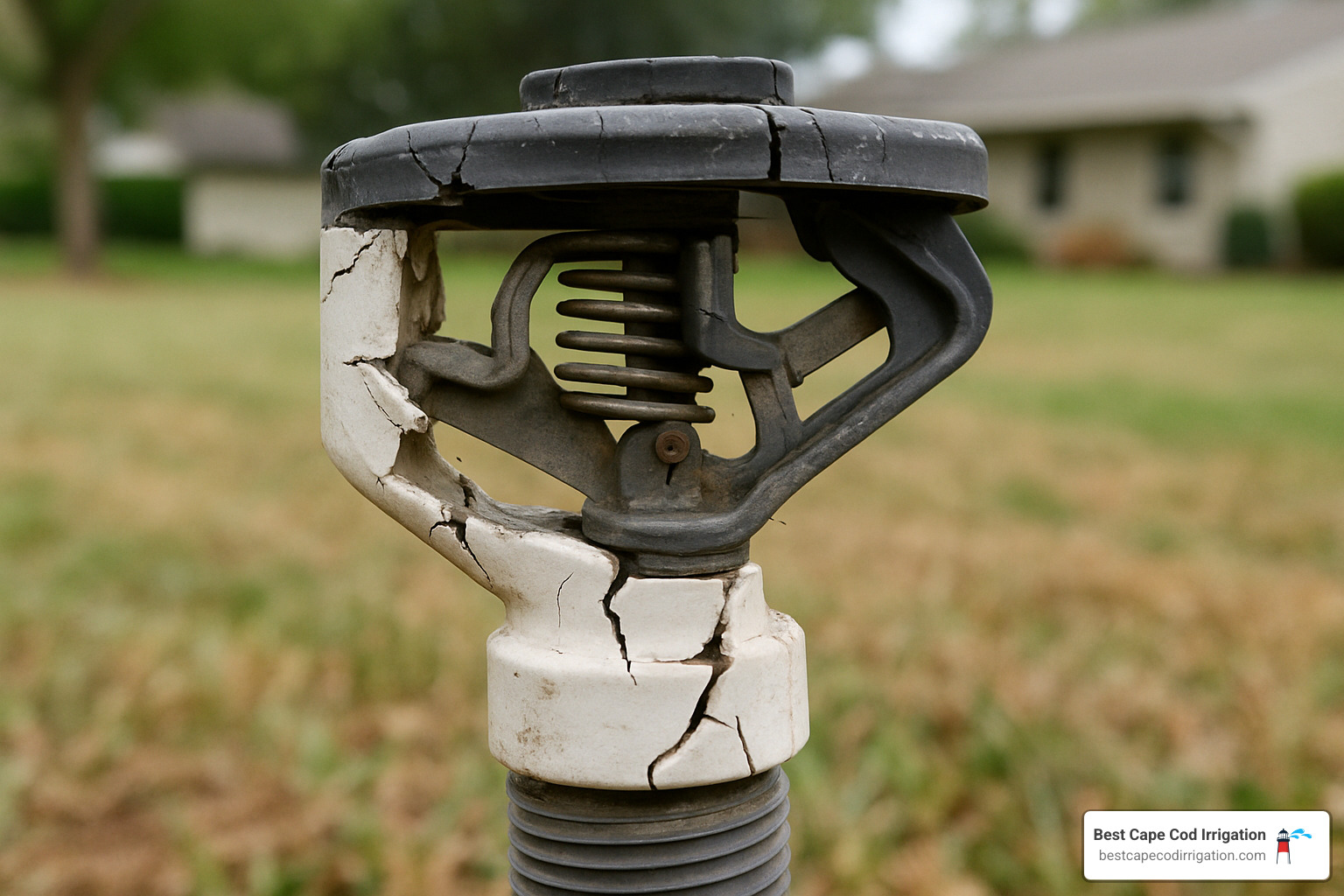
Clogged nozzles top the list of sprinkler complaints, especially in areas with hard water or lots of debris. The fix is usually simple – remove the nozzle, rinse it with clean water, and use a thin wire to clear the tiny holes. If the nozzle is cracked or permanently clogged, replacement nozzles cost just a few dollars.
Misaligned rotors waste water on sidewalks and driveways while leaving dry spots in your lawn. Most rotors have small adjustment screws that control how far they rotate. Turn clockwise to reduce the coverage area, counterclockwise to increase it.
Pop-up seal problems cause heads to stick up permanently or refuse to retract after watering. Usually debris has collected around the riser, or the internal seals have worn out. Clean around the head thoroughly and try lubricating with silicone spray.
Valve leaks show up as constantly soggy valve boxes or zones that won’t shut off completely. These problems often stem from debris caught in valve seats or worn diaphragms. Professional repair is usually your best bet since valve work requires specialized tools.
Controller faults range from simple programming glitches to complete electrical failure. Before calling for help, check that power connections are tight, replace any dead batteries, and verify that your programming settings are correct.
Average Repair Pricing (Internet Data)
Understanding typical repair costs helps you budget for maintenance and decide when to tackle repairs yourself versus calling professionals. These prices represent internet averages and are not our actual service costs.
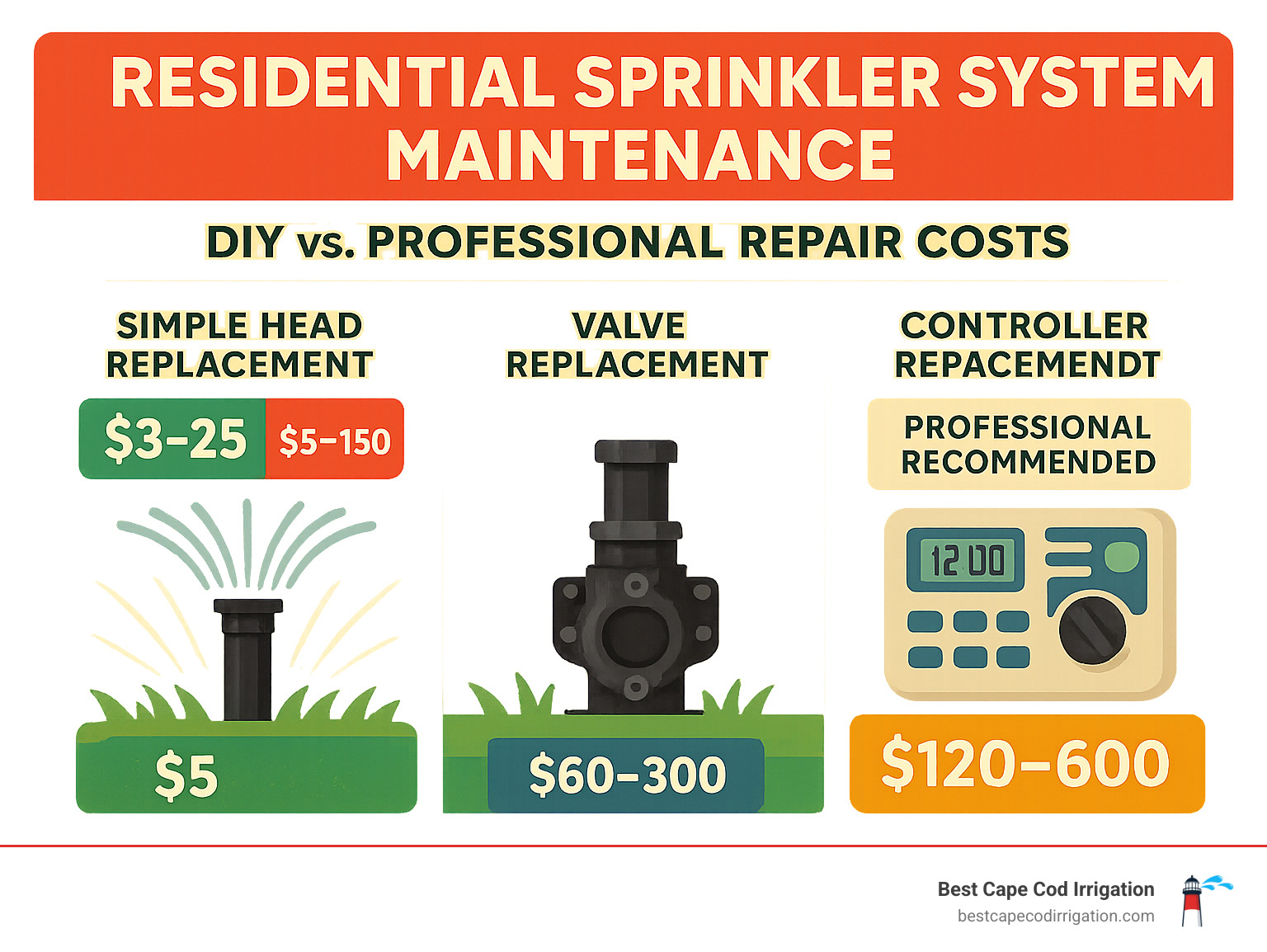
Sprinkler head replacement typically runs $3-$25 for DIY repairs, or $25-$75 when handled professionally. The price difference reflects the convenience of having someone else diagnose the problem and ensure proper installation.
Valve replacement generally costs $60-$300 and usually requires professional service. The wide price range depends on valve type, accessibility, and whether electrical connections need updating.
Controller replacement varies dramatically from $120-$600, depending on features and complexity. Basic timers cost much less than smart Wi-Fi controllers with weather integration.
Pipe repairs typically range from $150-$500, depending on how deep the pipes are buried and how accessible the damage is. Repairs under driveways or established landscaping cost more than those in open lawn areas.
Backflow preventer service runs $50-$200 annually and is required by law in most areas. This protects the public water supply from contamination.
High-end pricing can reach 3x these averages for emergency service calls during peak season, complex installations requiring extensive excavation, or repairs in difficult-access areas.
When DIY Stops & Safety Starts
While many maintenance tasks are perfect for motivated homeowners, certain repairs require professional expertise for safety and legal reasons.
Electrical work on controllers and valve wiring should always be handled by qualified technicians. Improper electrical connections can damage expensive components, create fire hazards, or even pose electrocution risks around water systems.
Deep excavation for pipe repairs risks serious damage to utility lines, foundations, or other underground infrastructure. Always call Dig Safe (811) before any digging project – it’s free and required by law.
Backflow preventer service is legally regulated in most areas and must be performed by certified testers. This protects public water supplies and maintains your homeowner’s insurance coverage.
Main water line connections require plumbing expertise and often municipal permits. Mistakes here can affect your home’s entire water supply or create expensive damage that insurance won’t cover.
Frequently Asked Questions about Residential Sprinkler System Maintenance
How often should I schedule professional service?
The sweet spot for professional residential sprinkler system maintenance is twice yearly – once for spring startup and again for fall winterization. This timing catches seasonal issues before they become expensive problems and keeps your system running efficiently when you need it most.
Spring service should happen when Cape Cod’s unpredictable weather finally settles into consistent warmth, typically late April or early May. This visit includes backflow testing (required by most municipalities), pressure checks, and programming updates for the new growing season.
Fall service focuses on protecting your investment from winter’s harsh reality. Proper winterization prevents the heartbreak of finding burst pipes and damaged components when spring arrives.
Between professional visits, monthly DIY inspections help you catch problems quickly. Think of it as a partnership – you handle the routine checks, while professionals tackle the technical stuff that requires specialized equipment.
What is the tuna-can test and why use it?
The tuna-can test sounds quirky, but it’s actually a brilliant way to measure how much water your sprinkler heads actually deliver. Here’s the simple process: place empty tuna cans around a zone, run your system for exactly 15 minutes, then measure the water depth in each can.
This humble test reveals a surprising amount about your system’s health. Ideally, all cans should contain similar amounts of water – significant differences indicate clogged heads, low pressure, or misaligned sprinklers that need attention.
The real magic happens when you use these measurements to calculate proper watering times. Most Cape Cod lawns need about 1 inch of water per week. If your cans collected 1/4 inch in 15 minutes, you know that zone needs to run for one hour weekly to deliver the right amount.
Why tuna cans specifically? Their low, wide shape gives accurate measurements, and most people have them lying around. Plus, they’re the perfect depth for this test – deep enough to catch water without overflow, shallow enough for easy measurement.
How do I prevent accidental lawn flooding?
Nobody wants to find their yard has turned into a swamp overnight. Lawn flooding usually results from stuck valves, broken pipes, or controller malfunctions – all preventable with the right precautions.
The best protection is installing a master valve that automatically shuts off water flow when your controller turns off. This simple device prevents most flooding scenarios by acting as a fail-safe when individual zone valves malfunction.
Learn your main water shut-off location and practice operating it quickly. During an emergency, fumbling around looking for the shut-off valve while water gushes everywhere is nobody’s idea of fun.
Many newer controllers include rain sensors that prevent operation during storms – because watering during a downpour is both wasteful and potentially flooding-prone. These sensors typically cost under $50 and can save hundreds in water bills.
Smart controllers with flow monitoring represent the cutting edge of flood prevention. These systems detect unusual water usage patterns and shut down automatically when something seems wrong. While more expensive initially, they can prevent thousands of dollars in water damage.
Regular maintenance catches valve problems before they cause flooding. During your monthly inspections, look for valve boxes that stay wet between watering cycles – this often indicates a valve that’s not sealing properly.
Conclusion
Taking care of your residential sprinkler system maintenance isn’t just about keeping your lawn green – it’s about protecting your investment and being a good steward of Cape Cod’s water resources. Our unique coastal environment, with its sandy soils and ever-changing weather patterns, makes consistent maintenance absolutely essential for long-term system success.
The numbers speak for themselves: proper maintenance can slash your water usage by 30% and prevent 79% of common system failures. Even better, those small monthly tasks and seasonal check-ups prevent emergency repairs that often cost three to five times more than routine care. Your wallet will thank you, and so will your landscape.
Cape Cod’s climate demands a thoughtful approach to irrigation care. Spring startup gets your system ready for the growing season, summer adjustments keep everything running efficiently during peak demand, and fall winterization protects your investment from our sometimes harsh winters. Add in those quick monthly walk-throughs, and you’ve got a recipe for irrigation success.
There’s a time for DIY and a time to call in the pros. While cleaning nozzles and adjusting spray patterns are perfect weekend projects, electrical work and backflow testing require professional expertise. When safety or local codes are involved, it’s always better to err on the side of caution.
Here at Best Cape Cod Irrigation, we’ve been helping homeowners steer these challenges for over 25 years. We understand how Cape Cod’s sandy soil drains, how our coastal weather affects watering schedules, and what it takes to keep systems running smoothly through every season. That local knowledge makes all the difference.
Ready to give your irrigation system the care it deserves? Schedule Maintenance with our team to learn about our comprehensive seasonal service programs. We’ll work with you to create a maintenance plan that fits your schedule and keeps your system performing at its best.
Your landscape is an investment worth protecting. Start with those simple monthly checks, stay on top of seasonal needs, and enjoy the peace of mind that comes from knowing your irrigation system is in good hands. After all, a well-maintained system is a reliable system – and reliability is what every Cape Cod homeowner deserves.