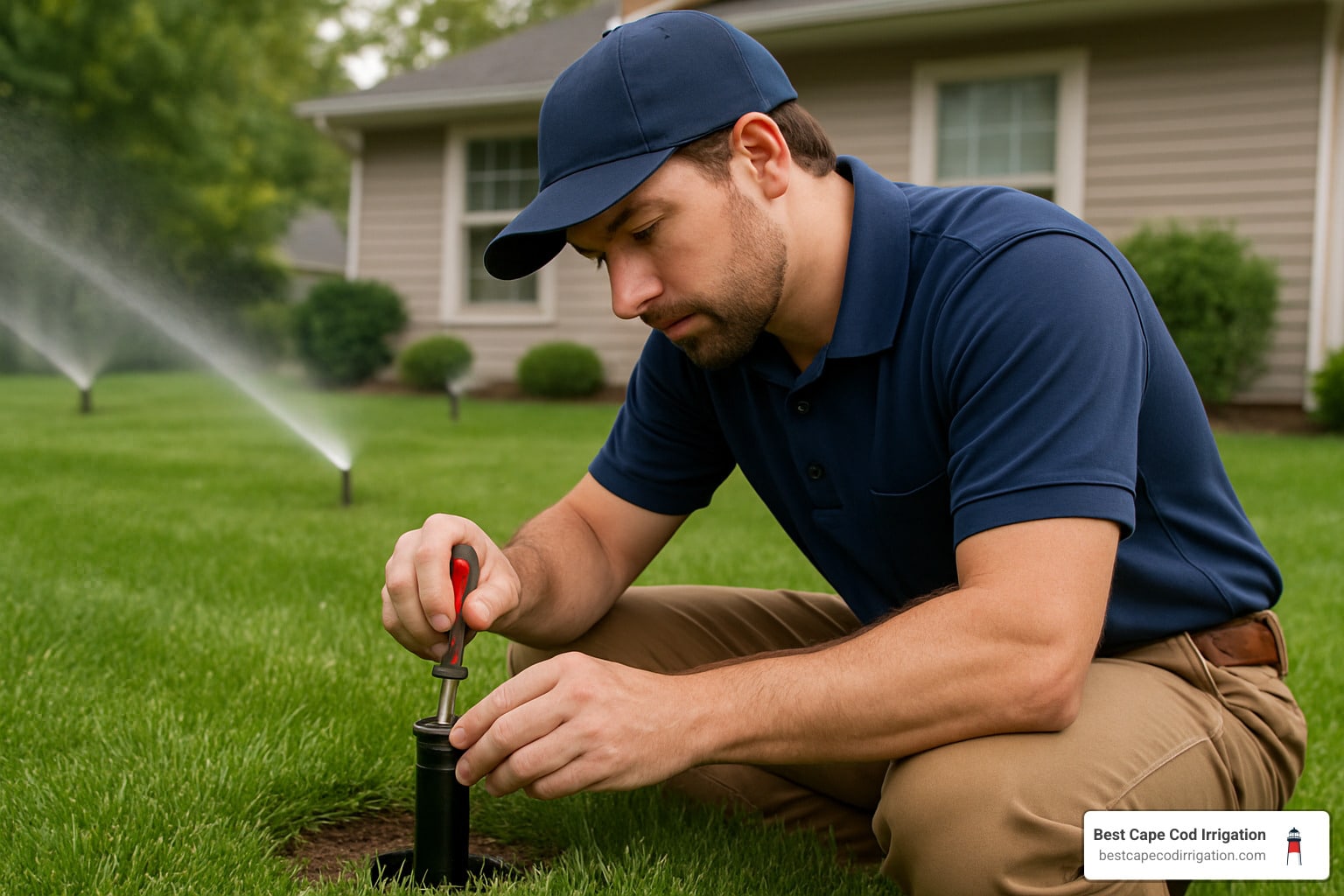



Why Your Lawn Needs Professional Sprinkler Repair
If you need automatic sprinkler system repair services on Cape Cod, here’s what you should know:
- Common signs of problems: Brown patches, leaking heads, low pressure, or high water bills
- Average repair costs: $10-$150 for simple DIY fixes, $75-$400 for professional repairs
- When to call a pro: Complex electrical issues, main line breaks, or when you lack time/tools
- Best time for repairs: Early spring before system activation or fall after shutdown
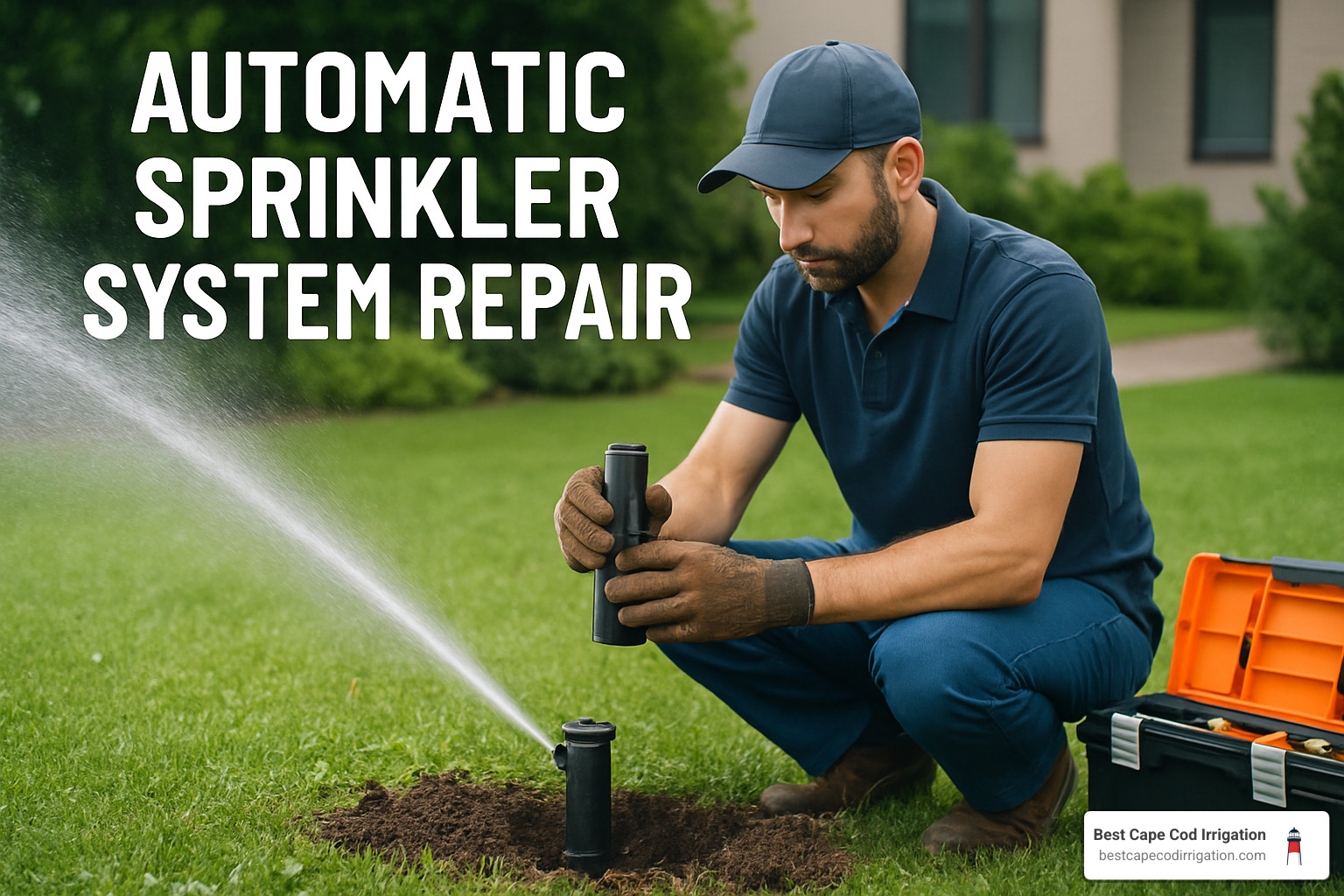
An automatic sprinkler system is essential for maintaining a lush, healthy lawn on Cape Cod, where sandy soil and unpredictable weather create unique challenges. When your irrigation system fails, it can quickly lead to stressed plants, wasted water, and unexpectedly high utility bills.
A broken sprinkler head can waste up to 4,200 gallons of water per month, while a small hole in a sprinkler line can waste a staggering 6,300 gallons. That’s not just bad for the environment—it’s terrible for your wallet too.
Most sprinkler systems have a lifespan of 10-15 years, though individual components like sprinkler heads and risers may need replacement every 1-2 years. Regular maintenance and timely repairs are crucial to keeping your system running efficiently.
The most common sprinkler system problems include:
– Broken or clogged sprinkler heads
– Leaking valves or pipes
– Electrical or controller malfunctions
– Low water pressure
– Solenoid failures
Whether you’re a DIY enthusiast or prefer to call in the experts, understanding the basics of sprinkler system repair can help you make informed decisions about maintaining your lawn’s irrigation system.
Signs You Need Automatic Sprinkler System Repair
Identifying problems early can save you thousands of gallons of wasted water and prevent costly landscape damage. Here are the telltale signs that your automatic sprinkler system repair needs might be urgent:
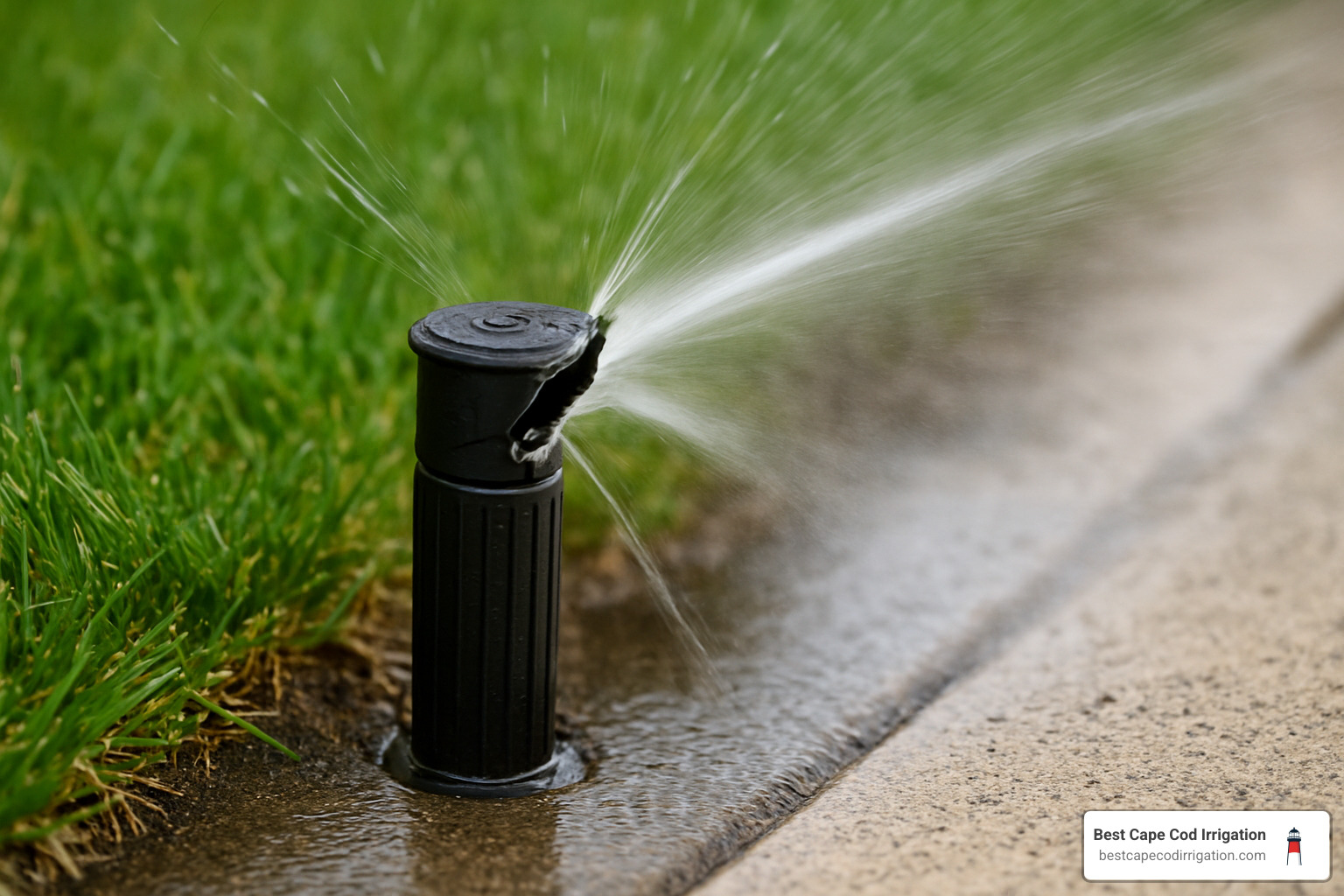
Common physical symptoms of automatic sprinkler system repair
That sprinkler head that refuses to pop up properly? It’s not just being stubborn. Pop-up failure often results from damage caused by lawn mowers, foot traffic, or debris buildup. You might notice heads that stay partially lifted after watering, refuse to rise at all, or create frustrating dry spots across your otherwise lovely Cape Cod lawn.
Nothing says “repair me now” quite like water geysers shooting dramatically into the air. These mini-fountains aren’t just putting on a show—they’re signaling a broken sprinkler head or riser and wasting gallons of precious water in the process.
Over time, your sprinkler nozzles can develop their own version of a stuffy nose. Clogged nozzles filled with dirt, grass clippings, and mineral deposits lead to irregular spray patterns, reduced coverage, and ineffective misting instead of proper water droplets. Your plants won’t thank you for this misty shower that barely reaches their roots.
Walking across your lawn shouldn’t feel like crossing a marsh. Those soggy patches that never seem to dry out are likely hiding underground leaks in your irrigation pipes. Beyond wasting water, these leaks can damage your landscape and potentially compromise your home’s foundation if ignored.
When your sprinklers produce weak, disappointing streams that barely reach their targets, you’re experiencing low pressure issues. This could stem from partially closed valves, system leaks, municipal water pressure changes, or clogged filters. Either way, your thirsty lawn isn’t getting the drink it deserves.
Electrical & controller red flags for automatic sprinkler system repair
Noticed entire sections of your yard staying bone dry while others get watered? These dead zones typically point to electrical issues with your controller, solenoid valves, wiring connections, or zone valve operation.
Modern sprinkler controllers communicate through their displays. Those flashing displays and error codes aren’t just for show—they’re your system’s way of asking for help. Keep your manual handy to decode these digital distress signals.
If you’re hearing a persistent solenoid buzz or clicking from your valve box, your system is literally crying out for attention. These electromagnetic components should work quietly; unusual sounds suggest they’re struggling to function properly.
For the technically inclined, testing electrical components with a multimeter can pinpoint issues. A healthy solenoid should measure between 20-60 ohms of resistance. Readings outside this range indicate a faulty solenoid that needs replacement.
When tackling electrical repairs, Cape Cod’s moist climate demands proper protection. Always make the connections waterproof using silicone-filled connectors designed specifically for irrigation systems. Standard electrical tape simply won’t stand up to the moisture in valve boxes and will lead to corrosion and system failure down the road.
At Best Cape Cod Irrigation, we’ve seen these warning signs countless times across our 25+ years serving local properties. Catching these problems early not only saves water but prevents the frustration of watching your carefully tended landscape suffer unnecessarily.
Common Repair Services & Average Costs
When it comes to automatic sprinkler system repair, costs can vary widely depending on the specific issue and whether you choose DIY or professional service. Here’s a breakdown of common repairs and what you can expect to pay:
| Repair Type | DIY Cost | Professional Cost | Time Required |
|---|---|---|---|
| Sprinkler Head Replacement | $5-$35 | $75-$150 | 30-60 minutes |
| Valve Rebuild/Replacement | $12.50-$150 | $125-$250 | 1-2 hours |
| Pipe Leak Repair | $10-$50 | $150-$900 | 1-3 hours |
| Controller Replacement | $100-$300 | $200-$600 | 1-2 hours |
| Rain Sensor Installation | $25-$80 | $100-$200 | 1 hour |
| Solenoid Replacement | $15-$35 | $75-$150 | 30-60 minutes |
These are average costs based on internet data and not actual costs for Best Cape Cod Irrigation services. Professional costs typically include labor, expertise, and sometimes a service call fee.
Sprinkler head or nozzle replacement
Replacing a sprinkler head is one of the most common repairs and often the most accessible for DIY enthusiasts. Sprinkler heads cost between $5 and $35 each, depending on the type and quality.
A broken sprinkler head can waste up to 4,200 gallons of water per month, making prompt replacement essential for both conservation and cost savings.
There are two main types of sprinkler heads you might need to replace:
Pop-up spray heads: These rise from the ground when the system activates and spray in fixed patterns. They’re typically used for smaller areas and cost $5-$15 each.
Rotor heads: These rotate to distribute water over larger areas and come in impact or gear-driven varieties. Gear-driven rotors are more reliable in debris-prone environments like Cape Cod, where pine needles and sand can interfere with moving parts. These typically cost $10-$35 each.
The replacement process involves:
1. Digging around the head (about 5-6 inches down)
2. Unscrewing the old head from the riser
3. Installing the new head with the same inlet size (typically 1/2″ or 3/4″)
4. Testing to ensure proper operation and coverage
Valve and solenoid repair
Valves control the flow of water to different zones in your irrigation system. Rebuilding a sprinkler valve typically costs between $12.50 and $150 per valve, with an average cost of about $81.
Valve problems often manifest as:
– Zones that won’t turn on or off
– Constant leaking or “weeping”
– Areas of your lawn that stay wet when the system is off
Solenoids are the electrical components that open and close the valves. A faulty solenoid can be diagnosed using a multimeter—proper resistance should be between 20-60 ohms. Replacement solenoids cost $15-$35.
When repairing valves, you’ll often need to:
1. Locate the valve box
2. Turn off the water supply
3. Disassemble the valve carefully
4. Replace the diaphragm, solenoid, or entire valve as needed
5. Reassemble and test the system
At Best Cape Cod Irrigation, our Irrigation Repairs & Maintenance services include comprehensive valve diagnostics and repair to ensure your system operates efficiently.
Pipe and fitting leak repair
Underground pipe leaks can be more challenging to locate and repair. A small hole in a sprinkler line can waste approximately 6,300 gallons of water per month, significantly impacting your water bill.
Pipe repairs typically involve:
1. Locating the leak (often identified by soggy areas or unusually lush grass)
2. Excavating around the damaged area
3. Cutting out the damaged section
4. Installing a PVC slip coupling or repair sleeve
5. Backfilling and testing the system
Tree roots are a common cause of pipe damage, especially in established landscapes. Pipes damaged by tree roots may require rerouting to prevent recurring issues.
Professional pipe repair services typically cost between $150 and $900, depending on the location, accessibility, and extent of the damage. DIY repairs can be done for $10-$50 in materials if you have the necessary tools and skills.
DIY Troubleshooting vs Calling a Pro – Which Path Fits You?
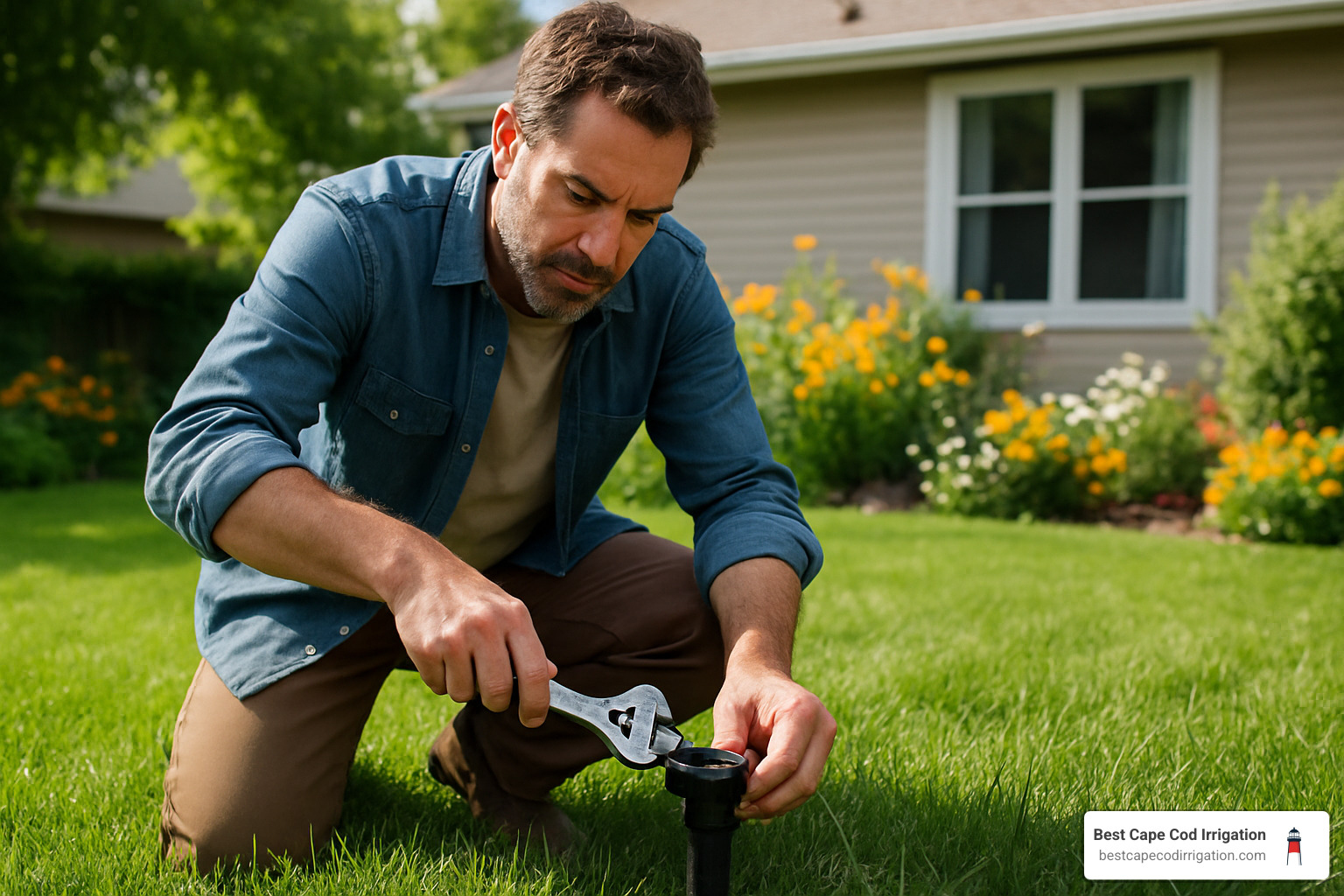
Let’s face it—when water starts shooting in the wrong direction or your controller starts flashing mysterious codes, you have a choice to make. Should you roll up your sleeves and tackle that automatic sprinkler system repair yourself, or is it time to call in the cavalry? The answer depends on your skills, tools, and comfort level.
Essential tools for quick fixes
If you’re the handy type who enjoys weekend projects, many sprinkler repairs are surprisingly accessible. With just a few basic tools, you can handle common issues without breaking the bank.
A small shovel or trowel is your first essential—perfect for carefully excavating around sprinkler heads without damaging the surrounding components. Pair this with a hacksaw for those moments when you need to cut and replace a section of damaged PVC pipe.
For diagnosing issues, a pressure gauge helps identify whether your system is operating within the optimal range. Low pressure might indicate leaks, while high pressure can damage components over time. Similarly, a multimeter becomes your best friend when electrical gremlins strike, helping you test solenoids and wiring connections.
Safety first is more than just a catchy phrase when working with irrigation systems. Always shut off both the water supply and electrical power before diving in. And remember that quick call to 811 before digging—it’s free, required by law, and could save you from a very bad day hitting underground utilities.
One of my favorite DIY tricks? Keep a pack of those $1 replacement filters on hand. They’re often the culprit behind clogged heads, and swapping them out takes just minutes. For electrical repairs, invest in proper silicone waterproof connectors—they’ll prevent corrosion in our damp Cape Cod environment where standard electrical tape just won’t cut it.
Most DIY sprinkler repairs clock in under an hour and cost between $10-$50, making them accessible weekend projects for anyone with basic mechanical skills and a bit of patience.
When to stop and dial an expert
While there’s satisfaction in fixing things yourself, some situations call for professional expertise. Knowing when to put down the tools and pick up the phone can save you time, money, and frustration.
Complex wiring issues are where many DIYers meet their match. If your multimeter readings don’t make sense or you’re facing a rat’s nest of corroded wiring, a professional brings specialized diagnostic equipment and the experience to trace electrical problems efficiently. What might take you a frustrating weekend might take a pro just an hour.
Mainline breaks represent another level of complexity, especially when they’re deep underground or near your home’s foundation. These repairs often require specialized equipment and expertise to avoid causing further damage. The pros know exactly how to locate, access, and repair these critical lines with minimal disruption to your landscape.
Backflow testing and repair isn’t just challenging—it’s regulated. These devices prevent irrigation water from contaminating your drinking water, and many Cape Cod municipalities require annual testing by certified professionals. This isn’t an area where DIY approaches make sense.
Understanding local code compliance becomes increasingly important in our water-conscious region. Professional irrigation contractors stay current with Cape Cod’s water restrictions and conservation requirements, helping you avoid potential violations and fines.
Perhaps the most honest assessment comes down to your time constraints. Even “simple” repairs have a way of revealing unexpected complications. If your weekends are precious or your patience runs thin, the investment in professional service often proves worthwhile.
At Best Cape Cod Irrigation, our Opening & Winterization services include thorough inspections that catch small issues before they become expensive emergencies. Sometimes, the smartest DIY decision is knowing when to call in the experts who’ve been solving Cape Cod’s unique irrigation challenges for over 25 years.
Preventative Maintenance & Smart Upgrades
The best way to avoid costly automatic sprinkler system repairs is through regular maintenance and strategic upgrades. Preventative care not only extends the life of your system but also improves its efficiency and performance.
Rain sensors: small device, big savings
Rain sensors might be small, but they pack a mighty punch when it comes to water conservation. These clever devices use moisture-absorbing discs that expand when wet, triggering a switch that tells your sprinklers, “Hey, it’s raining! Take a break!”
Did you know that Massachusetts actually requires rain sensors on all automatic irrigation systems? It’s not just a good idea—it’s the law! And for good reason. These little workhorses prevent your sprinklers from running during a downpour (which, let’s face it, looks pretty silly to the neighbors).
The benefits go beyond avoiding embarrassment, though. A properly installed rain sensor connects directly to your system controller and can significantly reduce your water bill while promoting healthier plant growth. Plants, like people, don’t appreciate being drenched when they’re already wet!
Over time, the cork wafers inside rain sensors can deteriorate from exposure to Cape Cod’s unique blend of pollen, salt air, and environmental conditions. That’s why we recommend checking them annually—think of it as a quick health check for your water-saving buddy.
Seasonal service checklist
Your sprinkler system, much like your car, needs different kinds of attention as the seasons change on Cape Cod. Our sandy soil and variable climate create unique challenges that require a custom approach.
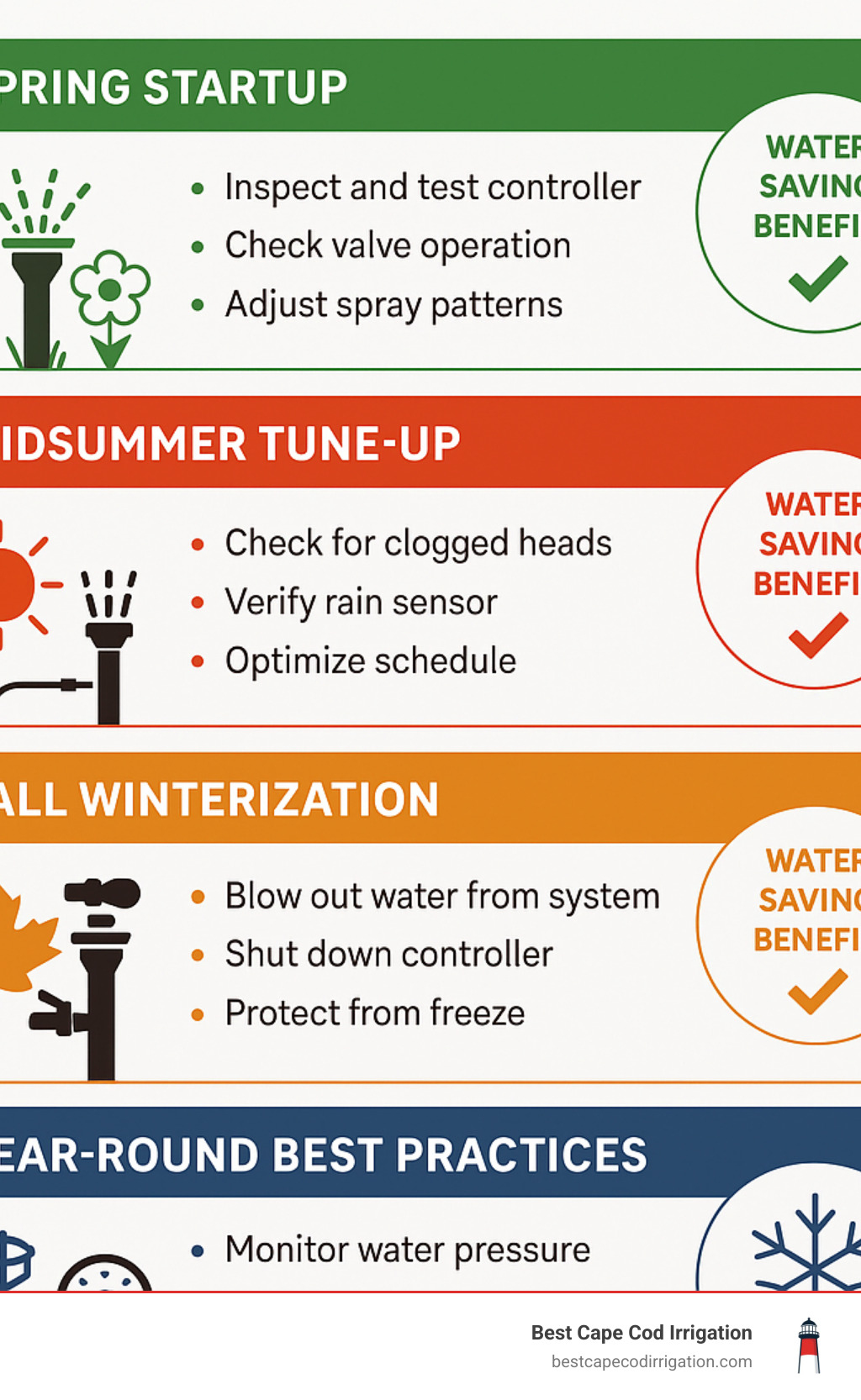
When spring arrives (typically March-April), it’s time for the annual “wake-up call.” This includes inspecting your controller, testing valves, checking for winter damage, and adjusting head alignment. Those heads can shift during freeze-thaw cycles, and nothing’s more frustrating than watering your driveway instead of your daylilies!
By midsummer (July), your system needs a quick tune-up. The summer growth spurt means your spray patterns might need adjusting, and lawn clippings can clog heads during peak mowing season. This is also the perfect time to verify your rain sensor is working correctly—especially important during Cape Cod’s occasional summer thunderstorms.
Fall winterization (October-November) is perhaps the most critical service of all. Our team uses commercial-grade air compressors to blow all water from your system, protecting it from freeze damage. Skipping this step is like leaving your pipes filled with tiny ice bombs waiting to explode!
Year-round, we recommend monitoring water pressure, cleaning filters, and adjusting your controller as seasonal needs change. A properly maintained system uses up to 30% less water while keeping your landscape lush and healthy.
At Best Cape Cod Irrigation, our Smart Irrigation Solutions can transform your existing system into a water-conserving powerhouse. Imagine controllers that adjust watering based on yesterday’s rainfall and tomorrow’s forecast, or soil moisture sensors that tell your system when your plants are actually thirsty—not just when it’s Tuesday. These aren’t futuristic fantasies; they’re practical technologies we install every day.
Frequently Asked Questions about Automatic Sprinkler System Repair
Homeowners often have questions about maintaining their irrigation systems. Here are answers to the most common queries we receive about automatic sprinkler system repair.
How much water can a broken head or leak waste?
You might be shocked to learn that a single broken sprinkler head can waste approximately 4,200 gallons of water per month—enough to fill a small backyard swimming pool! Even more concerning, a small leak in an irrigation line can silently drain about 6,300 gallons monthly.
This isn’t just an environmental concern; it’s a direct hit to your wallet. Many Cape Cod homeowners first notice something’s wrong with their sprinkler system when they receive a water bill that’s suddenly double or triple the normal amount. By fixing these issues promptly, you’re not only being a good steward of our precious water resources but also protecting yourself from those heart-stopping utility bills that seem to arrive at the worst possible time.
What safety steps before digging for repairs?
Before you grab that shovel to fix your automatic sprinkler system repair issue, take a moment for safety:
First, shut off the water supply to your irrigation system. There’s nothing worse than creating an impromptu backyard fountain when you accidentally slice through a pressurized pipe!
Next, turn off electrical power to the controller and pump (if you have one). Water and electricity make dangerous partners, so don’t take chances.
Protect yourself with appropriate gear—gloves to prevent blisters and eye protection to guard against soil and debris.
Perhaps most importantly, call 811 at least 72 hours before digging. This free service marks underground utilities like gas, electric, and communication lines. Trust me, accidentally cutting your neighbor’s internet cable won’t make you popular on the block, and hitting a gas line could have far more serious consequences.
When you do start digging, work carefully with hand tools rather than power equipment, especially near marked utilities or existing irrigation components. Even shallow digging can cause expensive and potentially dangerous damage.
How long does a typical sprinkler system last?
A well-installed irrigation system typically serves your lawn faithfully for 10 to 15 years, though some carefully maintained systems can function effectively for up to 20 years. However, individual components have their own timelines:
Sprinkler heads and risers are the workhorses of your system and typically need replacement every 1-2 years, especially those in high-traffic areas or those constantly battling with your lawnmower.
Valves generally provide 5-10 years of service before they need rebuilding or replacement. When they start to leak or stick, it’s usually time for attention.
Controllers last about 7-10 years, though many homeowners upgrade sooner to take advantage of water-saving smart technology advancements.
PVC pipes are the marathon runners of your system, often lasting 20-40 years when properly installed and protected from freezing.
Polyethylene pipes, more common in some installations, typically provide 10-15 years of service, especially in areas with Cape Cod’s freeze-thaw cycles.
Several factors affect how long your system will last, including your water quality (Cape Cod’s varying mineral content can be tough on components), exposure to lawn equipment, proper winterization, regular maintenance, and the quality of the initial installation.
At Best Cape Cod Irrigation, we recommend considering system upgrades when you find yourself calling for repairs frequently, or when new water-efficient technologies emerge that could significantly reduce your water consumption. Our 25+ years of experience with Cape Cod’s unique sandy soil and coastal climate conditions helps us design systems that maximize longevity while minimizing water usage and maintenance headaches.
Conclusion
Taking care of your automatic sprinkler system repair needs doesn’t have to be overwhelming or break the bank when you understand what to look for. Whether you’re comfortable with DIY fixes like swapping out sprinkler heads or you need professional help for complex issues, addressing irrigation problems promptly saves water, money, and your precious landscape.
Best Cape Cod Irrigation brings over 25 years of specialized knowledge to communities across the Cape, from Sandwich to Chatham and all points between. We truly understand the unique challenges of our local environment – the sandy soils that drain quickly, unpredictable coastal weather patterns, and the growing importance of water conservation in our region.
Our expertise lies in creating irrigation solutions specifically custom to Cape Cod’s distinctive conditions. When you work with us, you’re getting technicians trained to diagnose and repair all types of sprinkler issues efficiently. We use only high-quality parts and waterproof connections that stand up to our sometimes harsh coastal environment.
Maybe you need a simple sprinkler head replacement, or perhaps it’s time for a complete valve rebuild. You might even be considering an upgrade to a smart controller system that adjusts to weather conditions automatically. Whatever your irrigation needs, we’ve got you covered. Our preventative maintenance programs catch small issues before they develop into expensive repairs, while our seasonal opening and winterization services ensure your system runs efficiently during growing season and remains protected when inactive.
For more information about our comprehensive repair services, or to schedule a consultation, reach out to us today. We’re committed to keeping your landscape beautiful while conserving water through thoughtful irrigation system design, regular maintenance, and expert repairs.
Remember – a well-maintained sprinkler system does more than just save water. It creates healthier plants with stronger root systems, reduces weed growth by targeting water where it’s needed, and gives you back precious time to actually enjoy your outdoor space rather than worrying about watering schedules. Let us help you achieve that lush, vibrant landscape you’ve been dreaming of – with less water, less effort, and fewer headaches from unexpected repairs.