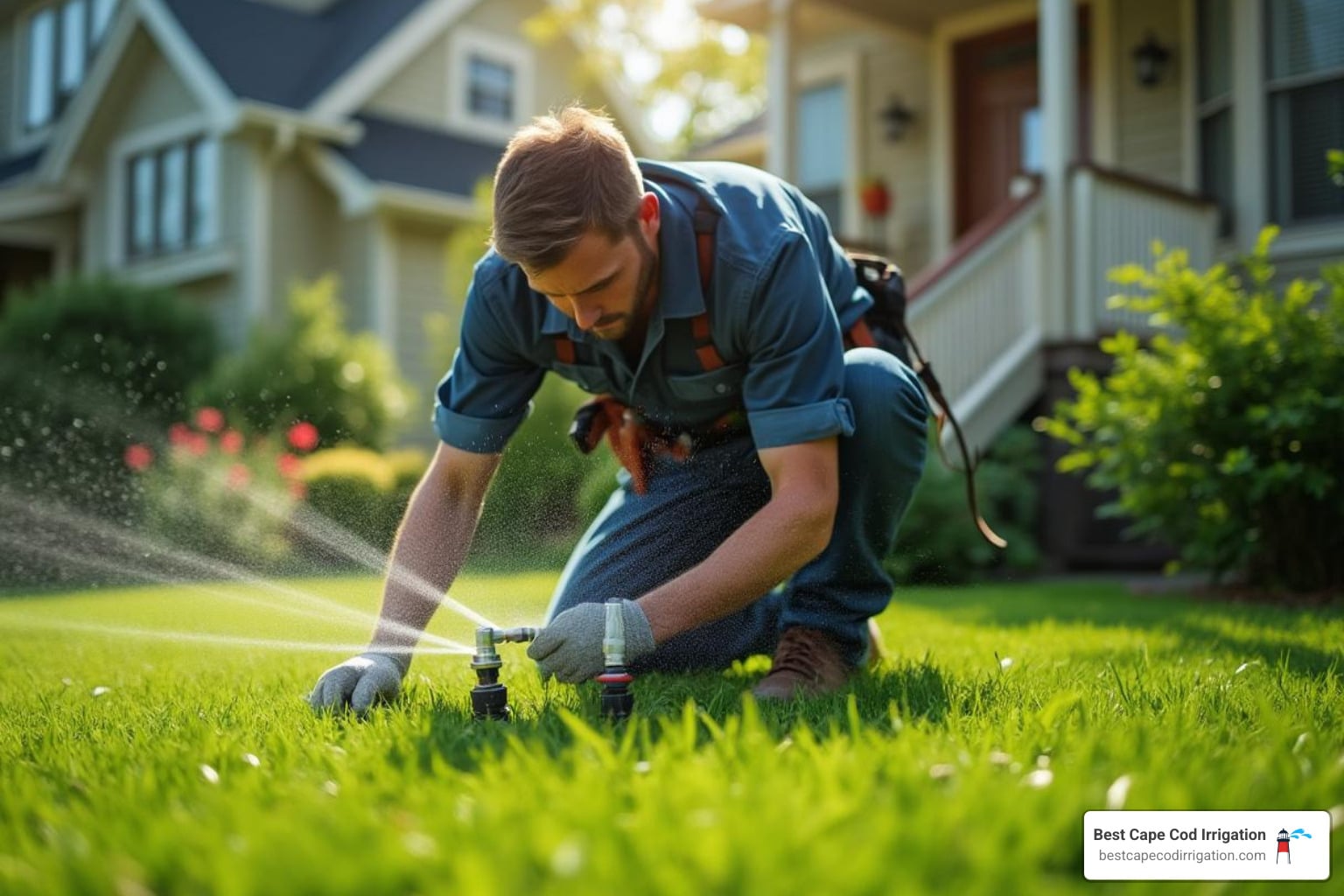



Why Seasonal Maintenance is Your Lawn’s Best Friend
Seasonal irrigation maintenance is the key to keeping your Cape Cod lawn lush and healthy while avoiding costly repairs and water waste. Your sprinkler system needs regular care to perform at its best.
Essential seasonal irrigation maintenance tasks include:
- Spring: System startup, leak detection, and controller adjustments
- Summer: Monthly inspections, pressure checks, and spray pattern adjustments
- Fall: Winterization and professional blowout service
- Winter: System protection and component storage
Well-maintained irrigation systems use up to 15% less water than neglected ones. Since outdoor water use accounts for about 30% of household consumption, proper maintenance directly impacts your water bill.
Regular care prevents small issues from becoming expensive problems. A simple clogged nozzle or misaligned sprinkler head can waste hundreds of gallons, creating dry spots and promoting lawn disease. For Cape Cod homeowners dealing with sandy soil and unpredictable weather, consistent maintenance ensures your system adapts to changing conditions, preventing costly repairs and keeping your landscape looking its best.
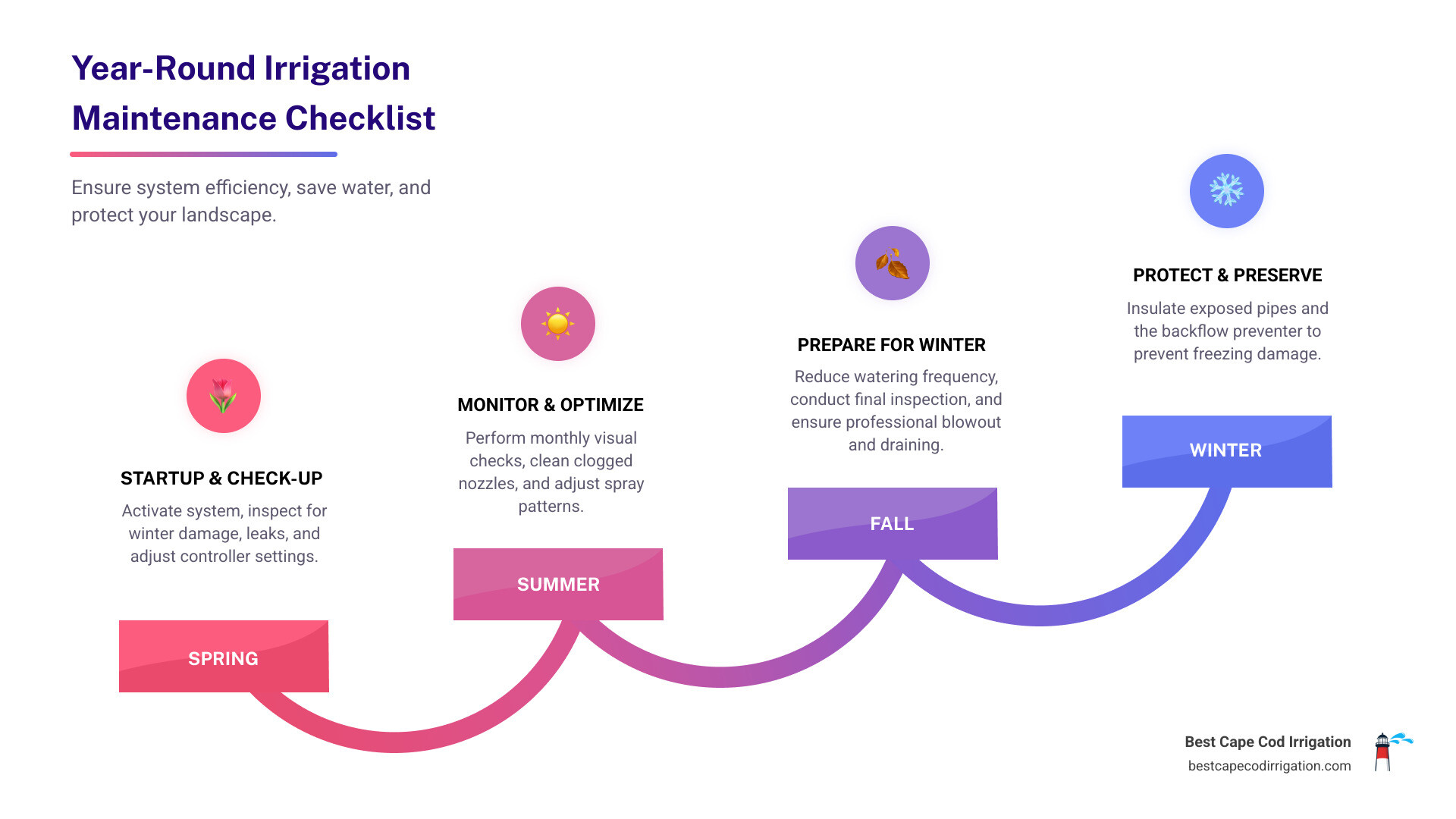
Seasonal irrigation maintenance terms explained:
Your Year-Round Seasonal Irrigation Maintenance Checklist
Your irrigation system is a complex network of pipes, valves, and controllers. To keep it running efficiently and protect your investment, consistent seasonal irrigation maintenance is crucial for Cape Cod’s unique coastal climate. This checklist breaks down essential tasks by season, ensuring your system runs efficiently all year long.
Spring Startup: Waking Up Your System for a New Season
Spring startup, or de-winterization, awakens your system for a new season of growth. This is a critical phase of seasonal irrigation maintenance that prepares your landscape to thrive.
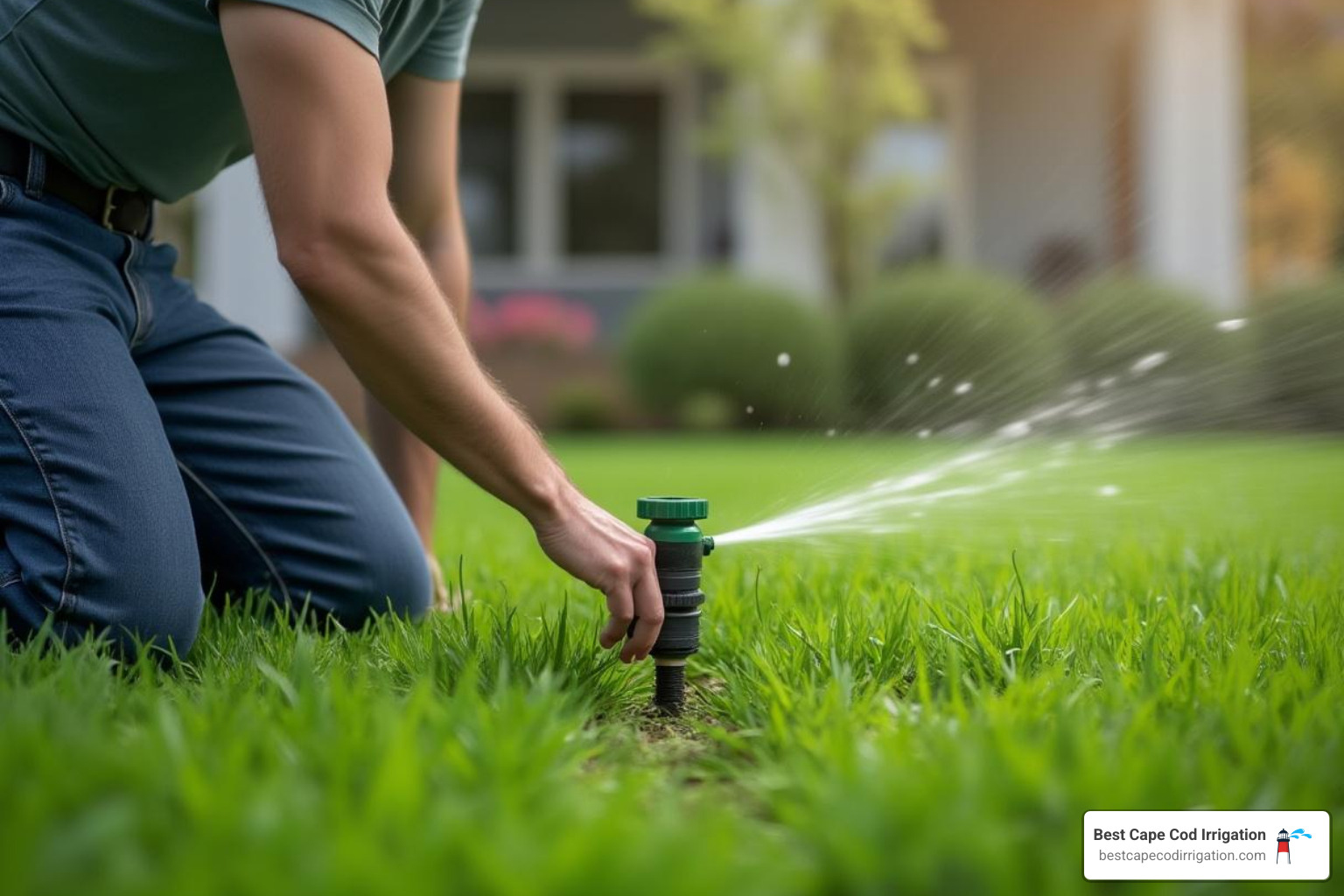
Key spring tasks include:
- Slowly Opening the Main Valve: This prevents a sudden pressure surge called “water hammer” that can damage pipes and fittings.
- Checking for Winter Damage: Carefully inspect all visible pipes, valves, and sprinkler heads for cracks or breaks caused by harsh freeze-thaw cycles.
- Cleaning Sprinkler Heads and Nozzles: Remove accumulated dirt and debris to ensure clean, even spray patterns.
- Testing Each Zone Individually: Run each zone separately to spot hidden leaks, low pressure, or other operational issues.
- Adjusting Spray Patterns: Make sure water is directed onto your lawn and garden beds, not your driveway or sidewalk, to prevent waste.
- Reprogramming the Controller: Adjust your watering schedule for cooler spring temperatures and increased rainfall to encourage deep root growth.
For professional help, explore our Turning On Sprinkler System in Spring and Lawn Sprinkler System Startup services.
Summer Watch: Keeping Your System Efficient During Peak Use
During summer, seasonal irrigation maintenance shifts to vigilant monitoring and fine-tuning to ensure efficiency during peak water demand.
- Perform Monthly Visual Inspections: Walk your property while each zone runs to quickly spot unusual noises, geysers, or pooling water.
- Adjust Watering Times to Early Morning: Water between 4 AM and 8 AM when temperatures are cool and winds are calm to minimize evaporation and reduce the risk of fungal disease.
- Monitor for Dry or Over-Saturated Spots: These are tell-tale signs of uneven coverage, clogged nozzles, or potential leaks.
- Clean Clogged Nozzles: Regularly clear grass clippings, dirt, and mineral deposits that can block spray patterns and cause uneven watering.
- Adjust Sprinkler Heads: Check and realign any heads that have been knocked out of position by mowers or foot traffic.
For more guidance, you can find more info on adjusting your controller for different seasons.
Fall Shutdown & Winterization: The Most Critical Step
Fall shutdown and winterization is the most essential step in seasonal irrigation maintenance. It protects your investment from Cape Cod’s harsh winters, where freezing water can expand and burst pipes, valves, and sprinkler heads.
Key winterization steps:
- Reduce Watering Frequency: As temperatures drop, your lawn needs less water. Tapering off helps it prepare for dormancy.
- Shut Off the Main Water Supply: This is the first step to ensure no new water enters the system.
- Professional Blowout Service: This is not a DIY job. A professional uses a high-volume air compressor to force every drop of water out of the entire system. This prevents freeze damage that can lead to thousands of dollars in repairs. Learn more about our Sprinkler System Blowout Service.
- Insulate Vulnerable Components: The backflow preventer and any exposed pipes should be insulated for an extra layer of protection.
For detailed guidance, visit our page on Turning Off Irrigation System Winter or watch a guide on how to winterize your automatic sprinkler system.
Common Irrigation Problems and How to Spot Them
Even with diligent seasonal irrigation maintenance, problems can arise. Knowing these common signs helps you catch issues early, preventing water waste and costly repairs.
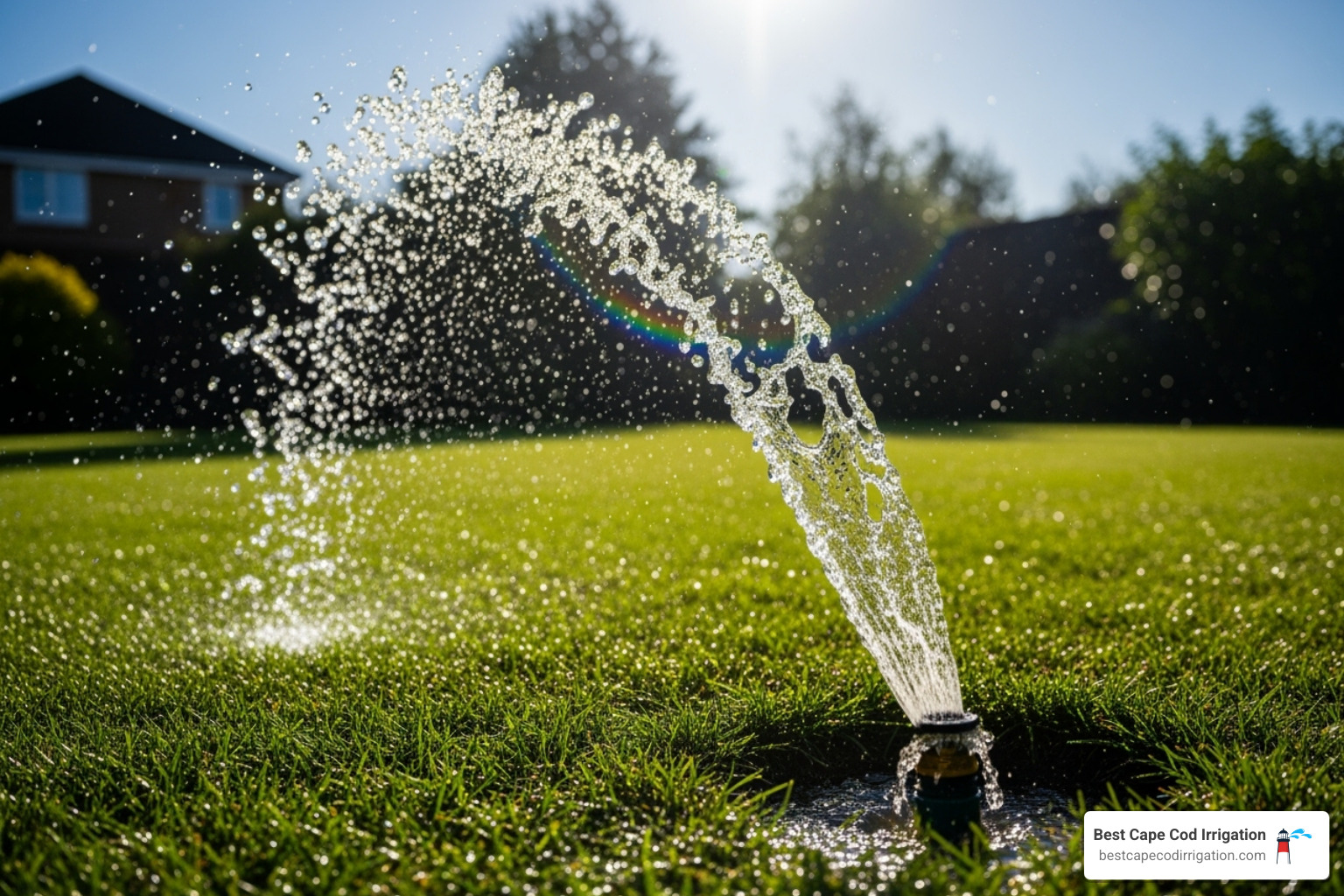
Here are the most frequent issues and how to spot them:
- Leaks: Look for pooling water, soggy spots in the lawn, or a sudden spike in your water bill. Leaks can also cause reduced water pressure in certain zones.
- Clogged Heads: These result in uneven or weak spray patterns, often creating frustrating dry spots in your lawn while over-watering other areas.
- Dry Spots: Brown, crispy patches in the lawn signal poor coverage. This can be caused by misaligned heads, low pressure, or the wrong nozzle type for the area.
- Pressure Issues: Low pressure causes weak spray and heads that don’t pop up properly. High pressure creates a fine mist or fog that wastes water through evaporation before it reaches the soil.
- Broken Heads: Obvious signs include geysers of water, heads that won’t pop up or retract, or spray aimed at your house or sidewalk instead of the lawn.
- Controller Malfunctions: If your system waters at odd times, skips cycles, or a zone won’t turn on or off, the controller or its wiring may be faulty. You may also notice drainage from the lowest head after a cycle, indicating a lack of check valves.
If you’re unsure how to fix these issues, it’s best to call for professional Irrigation Repairs & Maintenance.
DIY vs. Professional Seasonal Irrigation Maintenance
When it comes to seasonal irrigation maintenance, it’s important to know which tasks you can handle and when to call an expert. This balance saves money and prevents costly mistakes.
DIY-Friendly Seasonal Irrigation Maintenance Tasks
Many routine tasks are simple and can greatly improve your system’s efficiency:
- Visual Inspections: Regularly walk your property while the system runs to spot obvious issues like puddles or misdirected spray.
- Cleaning Sprinkler Heads: Unscrew nozzles to clean out dirt, grass clippings, or mineral buildup. You can learn how you can soak sprinkler heads to remove mineral buildup for tougher jobs.
- Adjusting Spray Patterns: Use the adjustment screw or ring on heads to keep water off sidewalks and driveways.
- Simple Controller Adjustments: Change watering days and run times to match the current weather conditions.
- Checking for Obvious Leaks: Look for puddles or drips around sprinkler heads and visible pipes.
When to Call a Professional for Seasonal Irrigation Maintenance
While DIY care is beneficial, some tasks require specialized tools and expertise to avoid damaging your system. This table outlines when to call Best Cape Cod Irrigation:
| Task Category | DIY-Friendly | Professional Recommended |
|---|---|---|
| Spring Startup | Visual inspection, cleaning heads, controller adj. | Full system pressurization, backflow testing, leak detection |
| Summer Monitoring | Visual checks, adjusting spray, cleaning nozzles | Diagnosing pressure issues, complex repairs, valve issues |
| Fall Winterization | Reducing watering, insulating exposed pipes | Full system blowout with air compressor, backflow drainage |
| Repairs | Tightening visible connections, simple head replacement | Mainline breaks, valve replacement, electrical diagnostics |
| System Adjustments | Basic controller programming, head aim adjustment | Advanced controller programming, system calibration |
| Safety/Compliance | None | Backflow preventer testing & certification (often required) |
| Upgrades | None | Smart controller installation, system redesign |
Always call a professional for:
- Spring Startup and Winterization Blowout: These are the most critical services. A pro safely pressurizes the system in spring and uses a high-volume air compressor for a fall blowout to prevent freeze damage—a task standard home compressors cannot handle.
- Backflow Preventer Testing: This is often required by law and must be done by a certified technician to protect your drinking water.
- Major Repairs: This includes underground pipe breaks, valve replacement, and troubleshooting persistent low pressure.
- Electrical Issues: A technician can safely diagnose and repair faulty controllers, wiring, or solenoids.
- System Upgrades: Professionals can properly design and install smart controllers or system expansions.
When you need expert help, Schedule Maintenance with us.
Frequently Asked Questions about Irrigation Maintenance
Here are answers to some of the most common questions we hear from homeowners about seasonal irrigation maintenance.
How often should an irrigation system be serviced?
For optimal performance, your system should be professionally serviced at least twice a year: once for spring startup and once for fall winterization. These two visits are the cornerstones of proactive care. Beyond that, we recommend homeowners perform a quick visual inspection once a month during the growing season to catch small issues like clogged heads or misaligned spray before they become bigger problems.
How does regular maintenance save water and money?
Regular seasonal irrigation maintenance is a smart investment. It saves money by catching leaks early, preventing a high water bill. It ensures efficiency, so every drop of water nourishes your landscape instead of your driveway; a well-maintained system can use up to 15% less water. Proactive care also helps you avoid expensive emergency repairs and extends the overall lifespan of your system, protecting your investment for years to come.
What are the signs my system needs professional attention?
While you can handle minor adjustments, certain red flags mean it’s time to call an expert. Contact a professional if you notice any of the following:
- A sudden, unexplained spike in your water bill.
- Persistent wet spots or stubbornly dry patches in the lawn.
- System-wide low pressure (weak spray) or high pressure (misting).
- Sprinkler heads that won’t pop up, retract, or are visibly broken.
- A non-responsive controller, electrical errors, or zones that won’t turn on or off.
- Any leaks or visible damage to the backflow preventer.
If you’re ever unsure or uncomfortable with a repair, calling a professional is the safest and most cost-effective choice. Our team at Best Cape Cod Irrigation has the expertise to diagnose and resolve these issues efficiently.
Protect Your Investment with Expert Care
Your irrigation system is a vital part of your home’s value and your landscape’s health. Consistent seasonal irrigation maintenance is the secret to keeping it running efficiently for years, saving you from water waste and costly surprise repairs. By following this guide, you can confidently care for your system and know when to call for expert help.
When you need a professional, the team at Best Cape Cod Irrigation is here for you. With over 25 years of regional expertise, we understand Cape Cod’s unique challenges. We specialize in custom, eco-friendly systems and use smart technology for efficient watering. Whether you need a precise spring startup, a critical fall winterization blowout, or help with a tricky repair, we provide honest and reliable service.
Don’t wait for a small issue to become a big headache. Schedule your Irrigation Repairs & Maintenance with us today to protect your investment and keep your Cape Cod landscape thriving.