



Why a Proper Spring Sprinkler Startup Matters
Are you ready to get your lawn looking its best this spring? Lawn Sprinkler System Startup is an essential step to ensure your Cape Cod lawn stays lush and healthy all season long.
Here’s a quick overview of how to do it right:
- Check for frost-free ground: Dig 12 inches deep to confirm no frozen soil.
- Inspect your backflow preventer: Look for any cracks or leaks from winter.
- Slowly open the main water valve: This prevents damage from “water hammer.”
- Inspect heads and lines: Check for broken parts or debris.
- Test each zone: Run each section to check for proper spray and pressure.
- Program your controller: Set watering schedules for spring conditions.
Winter on Cape Cod can be tough on everything, including your underground sprinkler system. When spring arrives and the ground thaws, it’s tempting to just flip a switch and get the water flowing. But taking a few key steps during Lawn Sprinkler System Startup is vital.
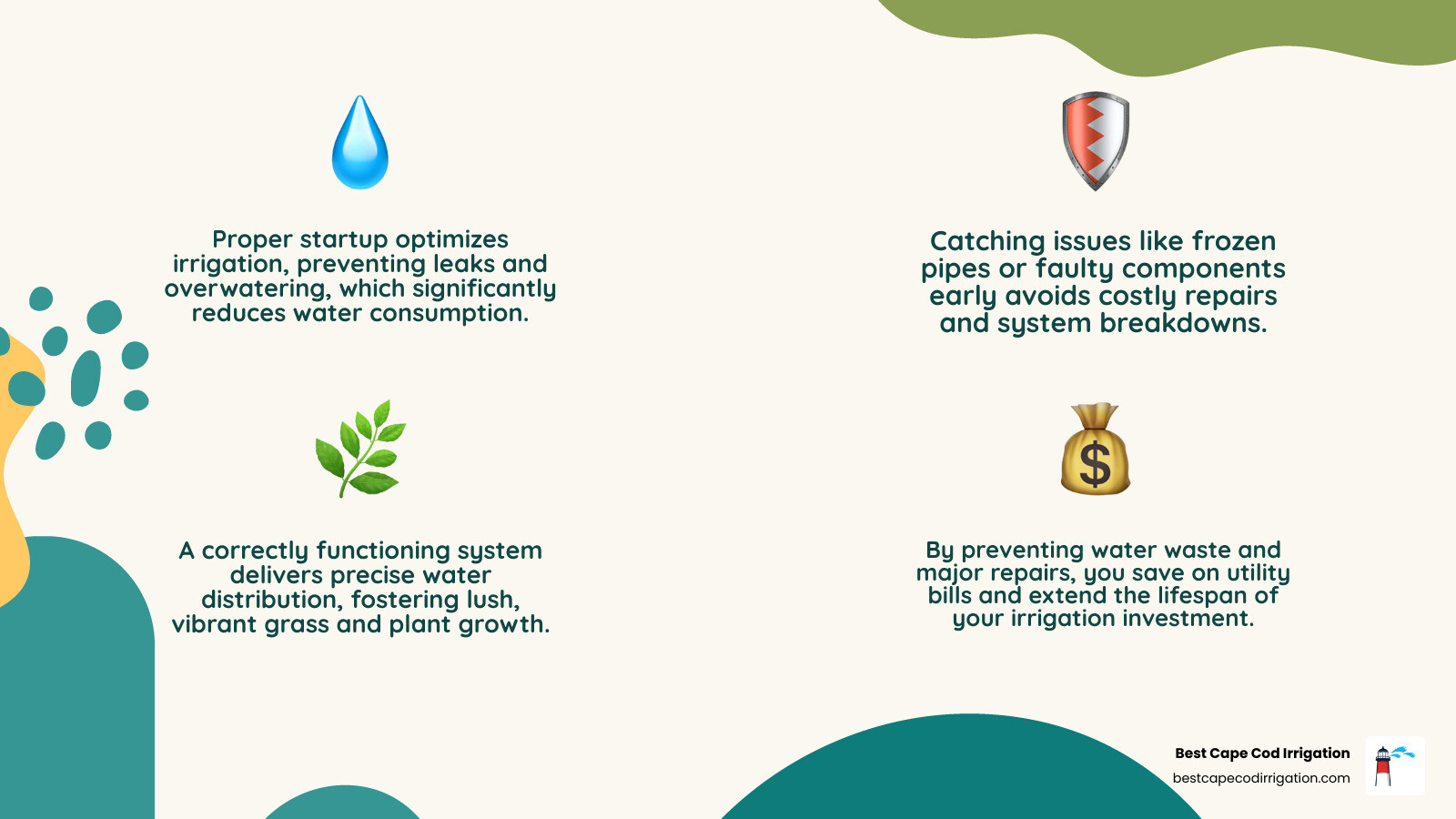
A proper startup helps us in many ways:
- Saves water: An efficient system avoids waste.
- Prevents costly damage: Catch small issues before they become big problems.
- Ensures a healthy lawn: Your grass gets just the right amount of water.
- Extends system life: Regular care keeps your irrigation running smoothly for years.
Neglecting these steps can lead to busted pipes, wasted water, and a patchy lawn.
Preparing for Your Sprinkler System Startup
Getting your yard ready for spring on Cape Cod is exciting! And when it comes to your sprinkler system, a little preparation goes a long way. Think of your Lawn Sprinkler System Startup as getting your garden ready for its very own “spring awakening.” We’ll walk you through the best time to begin and what simple tools you’ll want to have on hand.
When is the Best Time to Start?
Timing is truly everything when it comes to your spring Lawn Sprinkler System Startup, especially here on Cape Cod. Why? Because water expands when it freezes! If you turn your system on too early, while there’s still a risk of a late-season frost, any water left in the pipes can freeze. This can lead to costly and frustrating damage like cracked pipes, broken sprinkler heads, or even a damaged backflow preventer.
For our beautiful Cape Cod region, we generally recommend waiting until late April or early May. This usually gives us enough time for the ground to properly thaw and for the danger of hard freezes to pass. Always keep an eye on your local weather forecast for any unexpected cold snaps.
A simple “dig test” can also help you know if the ground is truly ready. Grab a small shovel or trowel and dig down about 12 inches in an out-of-the-way spot in your yard. If the soil is completely frost-free at that depth, you’re likely in the clear! Some folks even look for natural signs, like when the vibrant forsythia bushes burst into bloom. This often means the soil has warmed up consistently. A little patience now can save you a lot of headaches (and money!) later.
What Tools Will You Need?
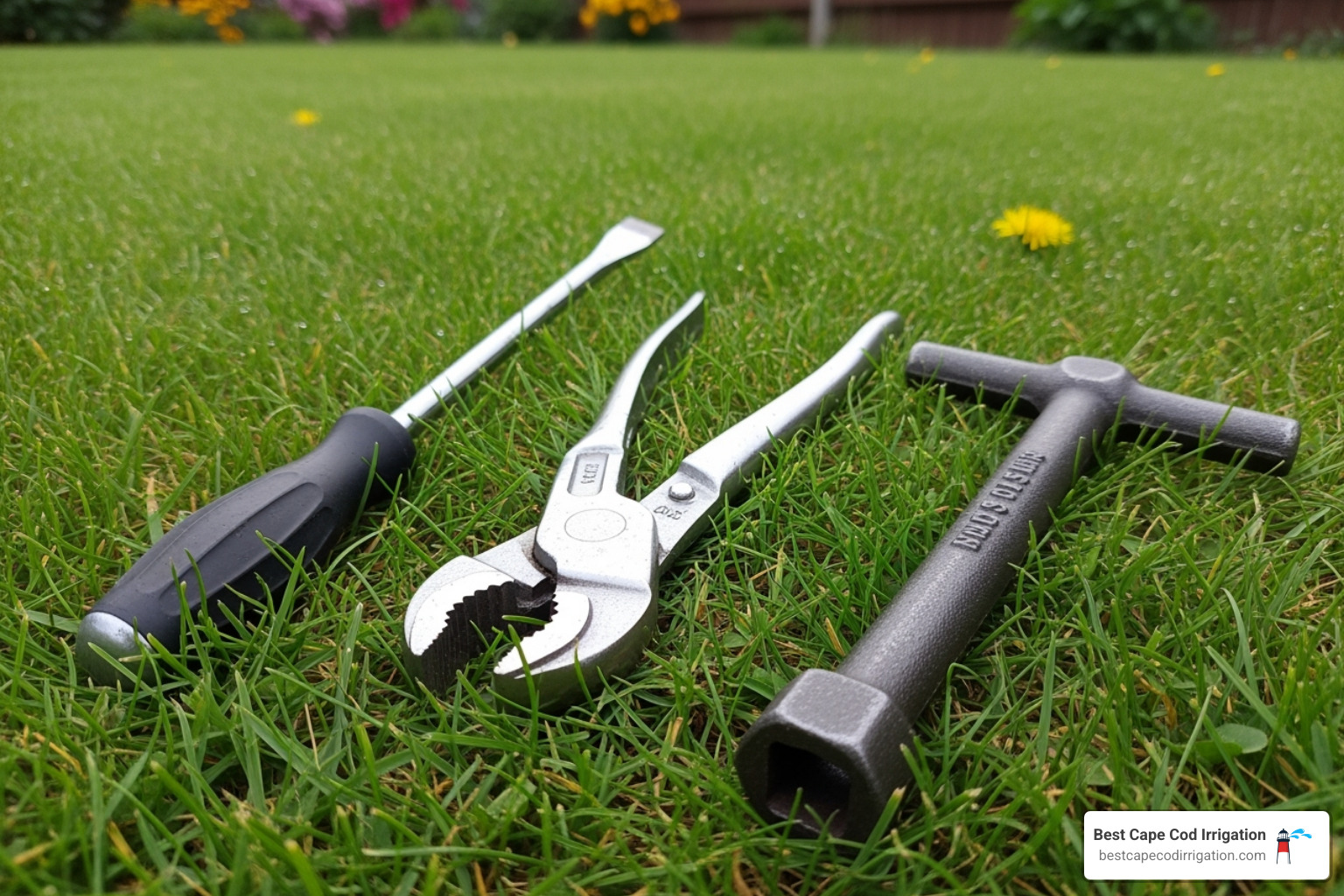
Before you dive into the startup process, it’s a good idea to gather a few basic tools. You don’t need a huge collection of specialized gear, just these everyday items will make your Lawn Sprinkler System Startup much smoother:
- A screwdriver: A trusty flathead screwdriver is often needed for various adjustments, especially on backflow preventers or some sprinkler heads.
- A pair of pliers: Channel-lock pliers can be handy for tightening or loosening connections on your system.
- A sprinkler valve key (if needed): Some irrigation systems use a special key to turn on certain valves. Check your system to see if you have one.
- A pad and pen: Keep these nearby to jot down notes about any issues you might spot in different zones. It helps to remember what needs fixing!
- A small shovel or trowel: Perfect for that “dig test” we talked about, and also for clearing away any soil or debris around buried sprinkler heads.
- Replacement sprinkler heads or nozzles: If you know you had some broken or damaged heads from last season, having replacements on hand can save you a trip to the store mid-process.
The 7-Step Guide to a Safe Lawn Sprinkler System Startup
Ready to give your Cape Cod lawn the perfect start this spring? A safe and thorough Lawn Sprinkler System Startup is absolutely key! It’s not just about getting water flowing; it’s about protecting your system, saving water, and ensuring your lawn stays vibrant and healthy all season long. Following a clear, step-by-step process helps us avoid common headaches, like the dreaded “water hammer,” and gets your irrigation working beautifully from day one.
Think of it as setting the stage for a great growing season. For a complete overview of the process, you can always refer to our main guide on Sprinkler System Startup.
Let’s walk through these essential steps together to get your system up and running the right way.
Step 1: Inspect the Backflow Preventer and Valves
Your backflow preventer is a real hero in your irrigation system! It’s the device that tirelessly protects your home’s fresh water supply from any potential contamination from your sprinkler lines. Since winter on Cape Cod can be quite harsh, this device is especially vulnerable to freezing damage.
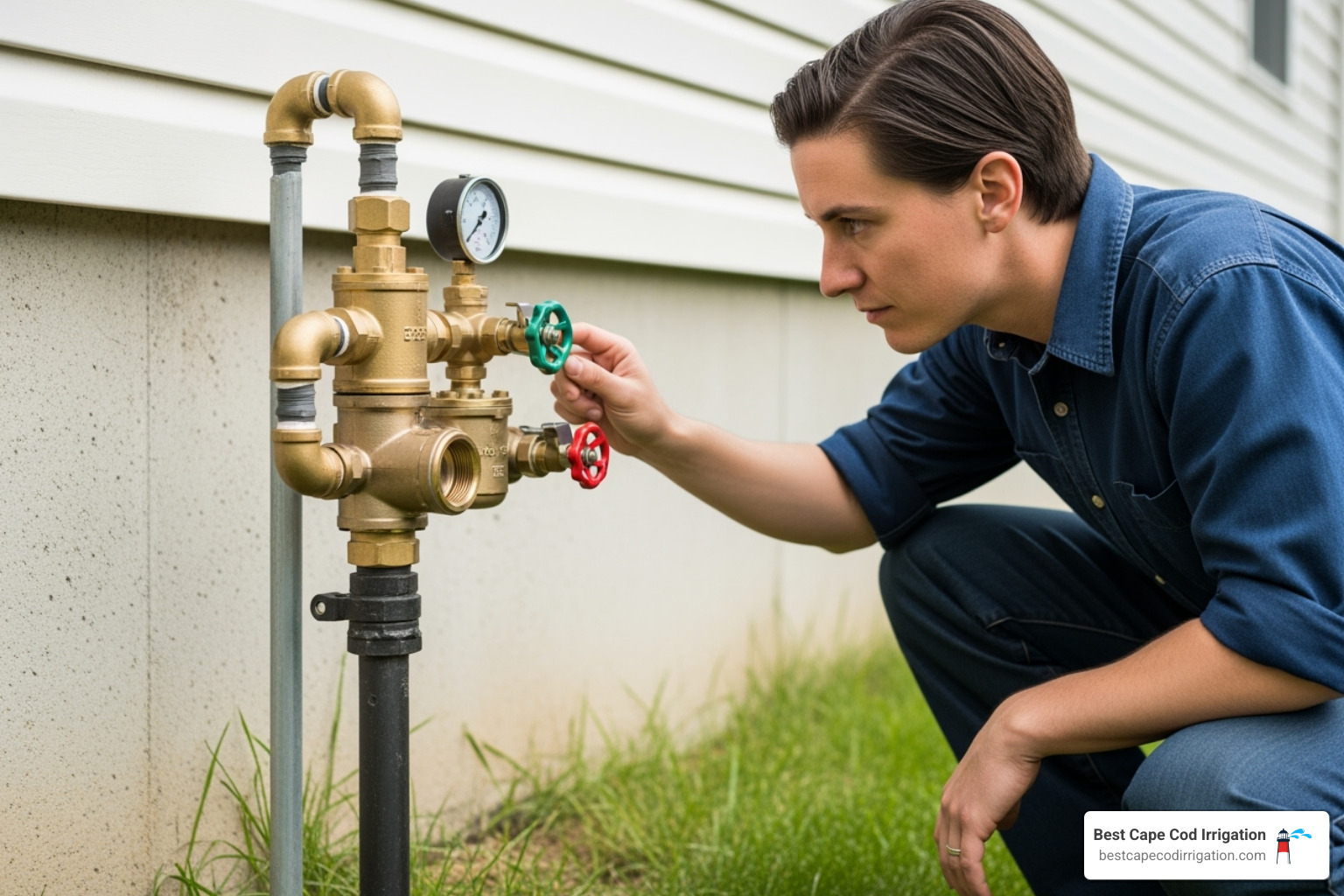
First things first, find your backflow preventer. It’s usually located above ground, often near your house. Give it a good, close look. Are there any cracks, splits, or obvious leaks? These are tell-tale signs of winter damage. If you spot any damage here, stop! It’s crucial not to proceed with turning on the water until this is repaired or replaced.
Next, if your system has one, make sure the drain plug on the backflow preventer is tightly closed. During winterization, those small test cocks (tiny valves) on the backflow preventer are often left at a 45-degree angle to help drain water. For spring, you’ll need to turn them so they are perpendicular to the pipe – this closes them off. If your system uses ball valves on the backflow preventer, confirm they are in the closed position (handle perpendicular to the pipe) before you introduce any water.
Lastly, take a peek inside your valve boxes in the yard. Just lift their lids and visually check the zone valves inside. Make sure they all look okay and aren’t showing any signs of damage or leaks. Also, ensure all these valves are in the closed position.
Step 2: Slowly Open the Main Water Valve
This step is super important, perhaps the most critical one, for preventing damage to your entire system. Opening the main water valve too quickly can cause something called “water hammer.”
What’s water hammer? Imagine water rushing into empty pipes with incredible force. If it happens too fast, it creates a powerful pressure surge or shockwave. This sudden jolt can lead to cracked pipes, burst fittings, and even damaged sprinkler heads. It can cause quite a mess and cost a lot to fix!
To completely avoid this, you need to locate your main shutoff valve for your irrigation system. This might be inside your home (often in a basement or utility room) or in an underground valve box outside. With all your other components checked and closed, slowly, slowly begin to open this main water valve. We really mean slowly! Take at least 30 to 60 seconds to move the handle from fully closed to fully open. You should hear the water gradually filling the pipes. This gentle, gradual pressurization allows any trapped air to escape and prevents those dangerous high-pressure surges.
For more detailed tips on how to prevent water hammer and other spring startup advice, be sure to check out our guide on Turning On Sprinkler System in Spring.
Step 3: Check Sprinkler Heads and Lines for Damage
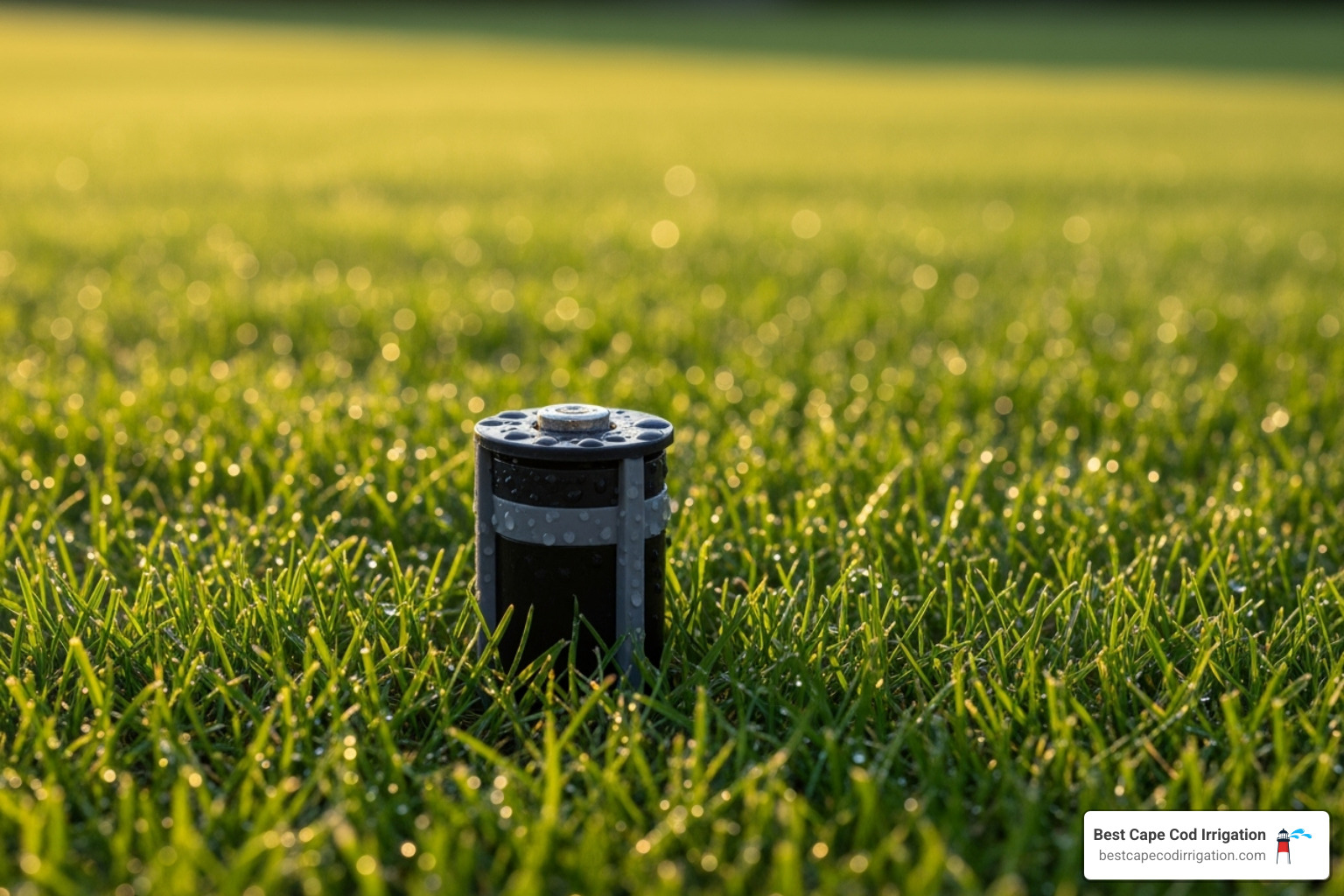
Once your main water line is slowly and safely pressurized, it’s time for a walk-through! Take a leisurely stroll around your property and give every single sprinkler head and any visible lines a good, thorough inspection. Winter weather, playful pets, lawnmowers, or even shifting soil can sometimes cause unexpected damage.
Here’s what to look for:
- Cracked or broken heads: These will usually either spray water wildly in the wrong direction or not spray at all.
- Debris in nozzles: Little bits of grass, dirt, or other debris can easily clog those tiny nozzles, messing up the spray pattern. A small brush or even an old toothbrush works wonders for cleaning them out.
- Misaligned or sunken heads: Sprinkler heads should ideally be flush with the ground. If they’re too low, they can get buried by growing turf; if they’re crooked, they won’t water evenly. Adjust them so they’re at the right height and straight.
- Signs of leaks: Even when your system isn’t running, keep an eye out for soggy spots, patches of grass that look unusually green, or tiny areas of erosion along your sprinkler lines. These can be sneaky signs of an underground leak.
Step 4: Test and Adjust Each Irrigation Zone
Now for the exciting part – seeing your system spring to life! We’ll test each irrigation zone one by one.
Head over to your sprinkler controller and switch it to manual watering mode. Then, activate the first zone. As the water starts to flow, watch carefully:
- Proper pop-up: Do all the sprinkler heads in that particular zone fully extend and then retract smoothly?
- Spray patterns: Are the heads spraying exactly where they should be? Are they covering the intended area, ideally from “head-to-head” (meaning one head sprays far enough to reach the next head in line)?
- Nozzles and rotors: If you see a nozzle spraying in the wrong direction or with an incorrect arc, now’s the time to adjust it. For rotor heads, check their rotation and make any necessary tweaks. Often, all you need is a flathead screwdriver for these adjustments.
- Clogged filters: If a sprinkler head isn’t performing well (maybe low pressure, misting, or poor coverage), it could have a clogged filter. You can usually unscrew the top of the head, carefully pull out the filter basket, clean it thoroughly, and then pop it back in.
As you go, make sure to jot down notes about any issues you find in each zone. This will help you keep track of what needs attention!
Step 5: Troubleshoot Common Issues During Your Lawn Sprinkler System Startup
It’s totally normal to run into a few little hiccups during your Lawn Sprinkler System Startup. Don’t worry, here are some common issues and what they might be telling you:
- Low water pressure: If the overall pressure just feels weak, it could be something simple like a main valve that’s not fully open, a major leak somewhere in your main line, or even an issue with your home’s water supply. If it’s only one zone, it might be a broken head or a leak in that specific zone’s line.
- Misting heads (high pressure): While low pressure is more common, sometimes you’ll see misting from your heads. This usually means your water pressure is actually too high. Most sprinkler systems work best between 45-75 PSI (pounds per square inch). If your pressure is consistently outside this range, you might need a pressure regulator or a professional adjustment.
- Leaks (geysers or pooling): An obvious “geyser” of water means you likely have a broken pipe or head. If you see water pooling in one spot, it often points to a smaller leak or a broken fitting. If you suspect a major leak, turn off the system immediately to prevent wasting water and causing more damage.
- Zone not turning on: This can be a bit tricky. It might be a wiring problem, a faulty solenoid (the electrical part) on the valve itself, or an issue with your controller. Try manually activating the valve right at the valve box to see if it’s a controller or wiring problem.
- Sprinkler heads not rotating: For those rotor heads that are supposed to spin, if they’re not rotating, it usually means an internal part is stuck or broken, or there’s just not enough water pressure getting to them.
It’s always better to take care of these minor fixes now rather than facing a bigger, more costly breakdown later. For comprehensive troubleshooting tips and detailed guidance on getting your system running perfectly, be sure to refer to our in-depth guide on how to Start-Up Sprinkler System in Spring.
Step 6: Program Your Sprinkler Controller
Once all your zones are happily running and you’ve made any necessary repairs or adjustments, it’s time to program your sprinkler controller for the season! This is where you tell your system when and how much to water.
- Replace backup battery: If your controller uses a backup battery, pop in a fresh one, especially if it’s six months old or older. This little step ensures your precious watering settings are saved during any power outages.
- Set current date and time: Double-check that your controller has the correct date and time. It’s a simple step that ensures your watering schedule stays accurate.
- Program watering days and start times: For spring here on Cape Cod, we often have cooler temperatures and more natural rainfall than in the summer. Adjust your run times and watering days to reflect this. You might start with shorter watering durations and fewer days per week compared to what you’d use in the warmer months.
- Smart controllers and Wi-Fi features: If you’re lucky enough to have a smart controller, now’s the time to explore its amazing features! These can often automatically adjust watering based on local weather forecasts, which is a fantastic way to save water and money.
- Rain sensor check: If your system has a rain sensor, make sure it’s uncovered, clean, and working properly. This clever device prevents your system from watering when it’s raining or right after rainfall, which is a truly wonderful water-saving feature!
DIY Startup vs. Hiring a Professional
Many homeowners on Cape Cod find themselves asking the same question each spring: can I handle my Lawn Sprinkler System Startup myself, or is it better to call in the pros? Both paths have their own set of advantages, and what’s right for you often depends on your comfort level, how much time you have, and your budget.
If you’re a hands-on type, a DIY sprinkler startup can be quite rewarding! The biggest perk, of course, is the cost savings. You won’t pay for labor, which means your startup cost is essentially $0 (aside from any replacement parts you might need). Plus, getting familiar with your system can be a great way to understand how it works and potentially troubleshoot minor issues down the line. It’s like learning the quirks of your own car – you get to know it intimately.
However, a DIY approach does come with its own set of challenges. It can be quite time-consuming, especially if you’re new to it or your system is large. There’s also a real risk of damage if you miss a crucial step (like opening that main valve too fast!). This can lead to costly repairs for burst pipes or a damaged backflow preventer. And sometimes, you might miss subtle issues that an experienced professional would spot, which could turn into bigger problems later in the season.
On the flip side, hiring a professional for your Lawn Sprinkler System Startup offers significant peace of mind. They bring years of expertise to the table, knowing exactly what to look for and how to handle any surprises. They’re incredibly efficient, getting your system up and running quickly and correctly. Best of all, they help with damage prevention, often catching small, hidden issues before they turn into expensive headaches. Think of it as having a seasoned detective inspect your system – they know all the hiding spots for trouble!
Understanding the Costs
When it comes to the cost, the DIY route means you’re investing your own time rather than money for labor.
For professional services, the price can vary. Please remember, these are average costs based on internet data, not actual quotes for Best Cape Cod Irrigation services. Generally, you can expect the cost for a professional Lawn Sprinkler System Startup to range anywhere from $75 to $1,000 or more.
What makes the price swing so much? A few things can impact the final bill:
- System size: Larger, more complex systems with many zones naturally take more time and effort to inspect and activate.
- Complexity: If your system has special features like smart controllers, drip lines, or multiple backflow preventers, the startup might be more involved.
- Repairs needed: The biggest variable is often any repairs or adjustments that are found during the startup process. A cracked head, a leaky valve, or a broken pipe will add to the overall cost.
For a deeper dive into what influences these prices, check out our guide on Irrigation Start-Up Cost.
