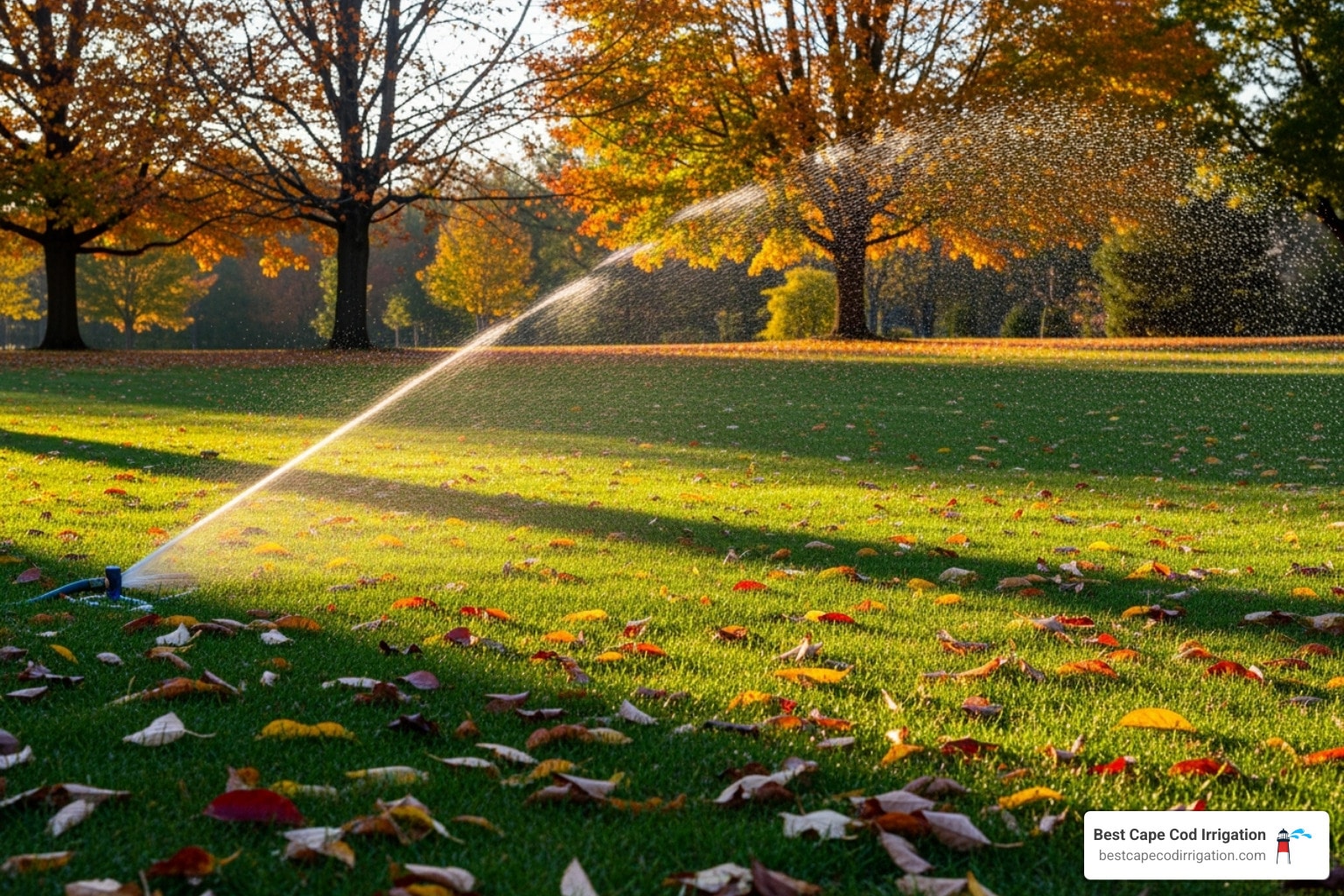



Why Fall Lawn Watering Matters
For busy Cape Cod homeowners, fall lawn watering might seem counter-intuitive as temperatures drop and leaves begin to fall. You’ve worked hard all summer to keep your lawn looking great, and you might think it’s time for a break.
But here’s the quick answer:
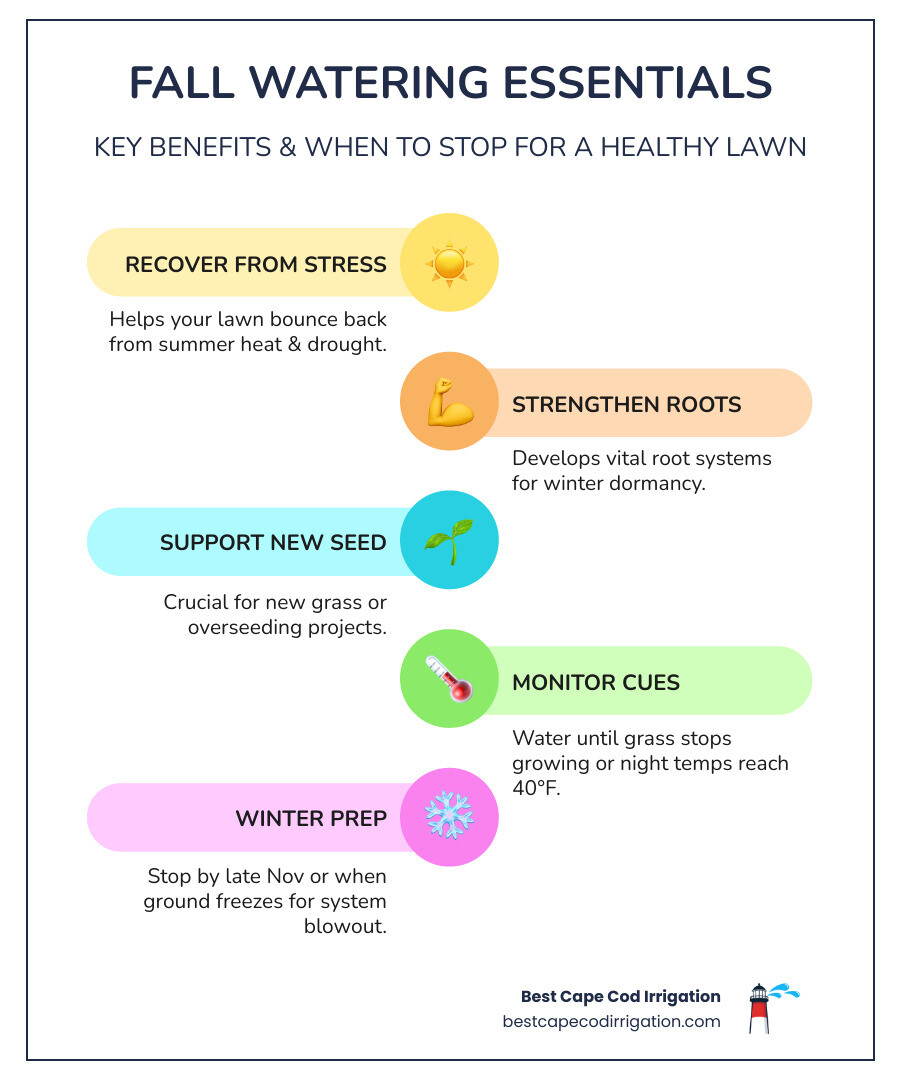
Why fall lawn watering is important:
- It helps your lawn recover from summer heat and stress.
- It builds strength and vital root systems before winter dormancy.
- It’s crucial for new grass or overseeding planted in autumn.
When to stop watering:
- Continue watering at its regular rate (1-1.5 inches per week) until the grass stops growing.
- Aim to stop by the third week of November.
- Cease watering when night temperatures consistently reach 40 degrees Fahrenheit.
- Stop once the ground freezes, as water won’t penetrate.
Basic fall lawn watering vocab:
- Residential sprinkler system maintenance
- Sprinkler system blowout service
- Irrigation pipe leak repair
The fall is one of the most critical times for your lawn. It’s not just about keeping things green now. It’s about setting your lawn up for success next spring. Your lawn needs proper hydration to recover from summer stress and build strong roots before winter.
This guide will walk you through everything you need to know about fall lawn watering, helping you achieve a healthy, resilient lawn without wasting water or time.
Why Bother Watering in the Fall? The Surprising Benefits
When autumn arrives on Cape Cod, lawn care might be the last thing on our minds. But fall lawn watering isn’t just a chore; it’s a smart strategy for a healthier lawn next spring.
While the green growth above ground slows, important work is happening beneath the surface. Fall is the perfect time for cool-season grasses on Cape Cod—like Kentucky bluegrass, fescues, and perennial ryegrass—to focus on their roots. They’re busy soaking up nutrients and recovering from summer heat and dry spells.
As Lotte Berendsen, a certified botanist and plant expert at Plantin, puts it beautifully: “It reduces any stress and drought caused by the prior summer heat,” she explains. “With temperatures dropping, your lawn has a chance to recover and regain its strength before winter arrives.” Meet the Expert Lotte Berendsen is a certified botanist and plant expert at Plantin.
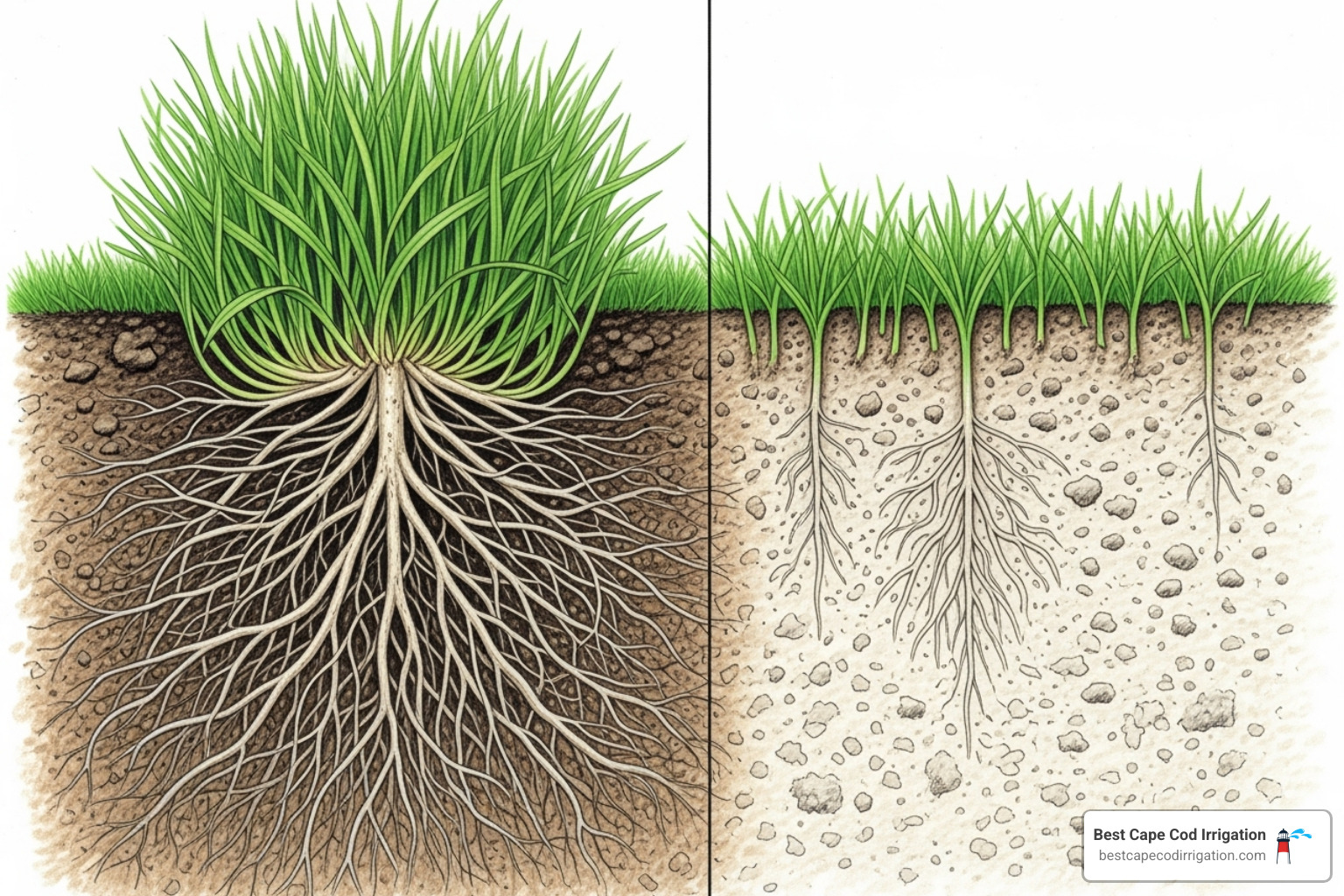
Think of proper fall lawn watering like giving your lawn a big, nourishing drink after a tough summer marathon. This deep drink isn’t just about quenching thirst. It helps your grass build deep, strong roots that can store energy for the long winter ahead. These deeper roots mean your lawn becomes much more resilient against future droughts, absorbs nutrients way better, and gets a fantastic head start for a vibrant green-up in the spring. It’s all about preparing your lawn for its best comeback!
What happens if you skip this crucial step? Your lawn might limp into winter feeling weak and vulnerable. It could be more prone to diseases, winter damage, and a very slow, less impressive green-up come spring. While dormancy is a natural resting period for your lawn, inconsistent watering can actually confuse it, pulling it in and out of this rest. This drains its energy reserves, leaving it open to problems. We’ve seen how a well-watered lawn in the fall bounces back with incredible vigor, looking far better than one left to fend for itself.
Your Complete Guide to Fall Lawn Watering
On Cape Cod, our sandy soils mean water drains quickly, making strategic fall lawn watering crucial for cool-season grasses. Smart water conservation is key—making every drop count without waste. This is where advanced options like Smart Irrigation Solutions shine, helping you water efficiently. Another bonus of autumn is that evaporation rates naturally drop, as cooler air means less water disappears before it can soak into your lawn’s roots. This is great news for efficiency, but it doesn’t mean your lawn doesn’t need your attention!
How Much & How Often: Finding the Sweet Spot
When it comes to fall lawn watering, consistency and precision are your best friends. Your lawn still needs a steady drink, just perhaps not as often as during the peak heat of summer.
The golden rule is that your lawn aims for about 1 to 1.5 inches of water per week. You can deliver this in one or two deep watering sessions. For example, two 30-minute watering sessions each week are often enough to reach this goal. The real secret? Get that water to penetrate at least 6-8 inches deep into the soil. This encourages those deep, strong roots we talked about earlier, setting your lawn up for winter success.
As the temperatures really start to dip, especially heading into late October and November, you can begin to taper off the frequency. In September and early October, watering once a week is often ideal. As the weather gets colder, you might shift to every other week, adapting to what your lawn needs.
Wondering how to measure 1 to 1.5 inches? The “tuna can test” is a classic for a reason! Just place a few empty, flat-bottomed cans (like tuna or cat food cans) around your lawn in the path of your sprinklers. Run your system for a set amount of time, then measure the water collected in the cans. This simple trick tells you exactly how long it takes your system to deliver the perfect amount. For more detailed guidance, check out our comprehensive Lawn Watering Guide.
If Mother Nature delivers a good soaking rain, skip a manual watering session. The total weekly water count is what matters. Always check the weather forecast and adjust your schedule accordingly. For ultimate efficiency, consider upgrading to Water-Efficient Sprinklers. These smart systems are designed to put water exactly where it’s needed, minimizing waste and runoff, which is extra important with our sandy Cape Cod soils.
The Best Time of Day to Water for a Healthy Lawn
Just like in summer, the best time for fall lawn watering is in the early morning. We highly recommend setting your sprinklers to run between 6 AM and 10 AM. Why this window?
- Minimizing Evaporation: The air is cooler and calmer in the early morning. This means less of your precious water is lost to evaporation before it can even reach your lawn’s roots. Watering later in the day, especially if there’s a surprise warm fall afternoon, can mean a lot of water simply vanishes into thin air.
- Preventing Fungal Disease: Watering in the morning allows your lawn plenty of time to dry out before nightfall. If you water in the evening, those grass blades can stay wet for 12 to 15 hours. This creates a cozy, damp environment that’s perfect for fungal diseases like snow mold to take hold, potentially causing significant damage over the winter months.
- Wind Considerations: While fall winds might not be as fierce as summer gusts, they can still push water off course. Watering during the calm morning hours helps ensure that the water lands precisely where it’s intended – on your lawn, not your driveway or the neighbor’s fence!
Simple Tests to Check if Your Lawn is Thirsty
Even with a perfect schedule, your lawn is constantly chatting with you, telling you what it needs. Learning to read these simple signs can save you water and ensure your lawn gets just the right amount of hydration.
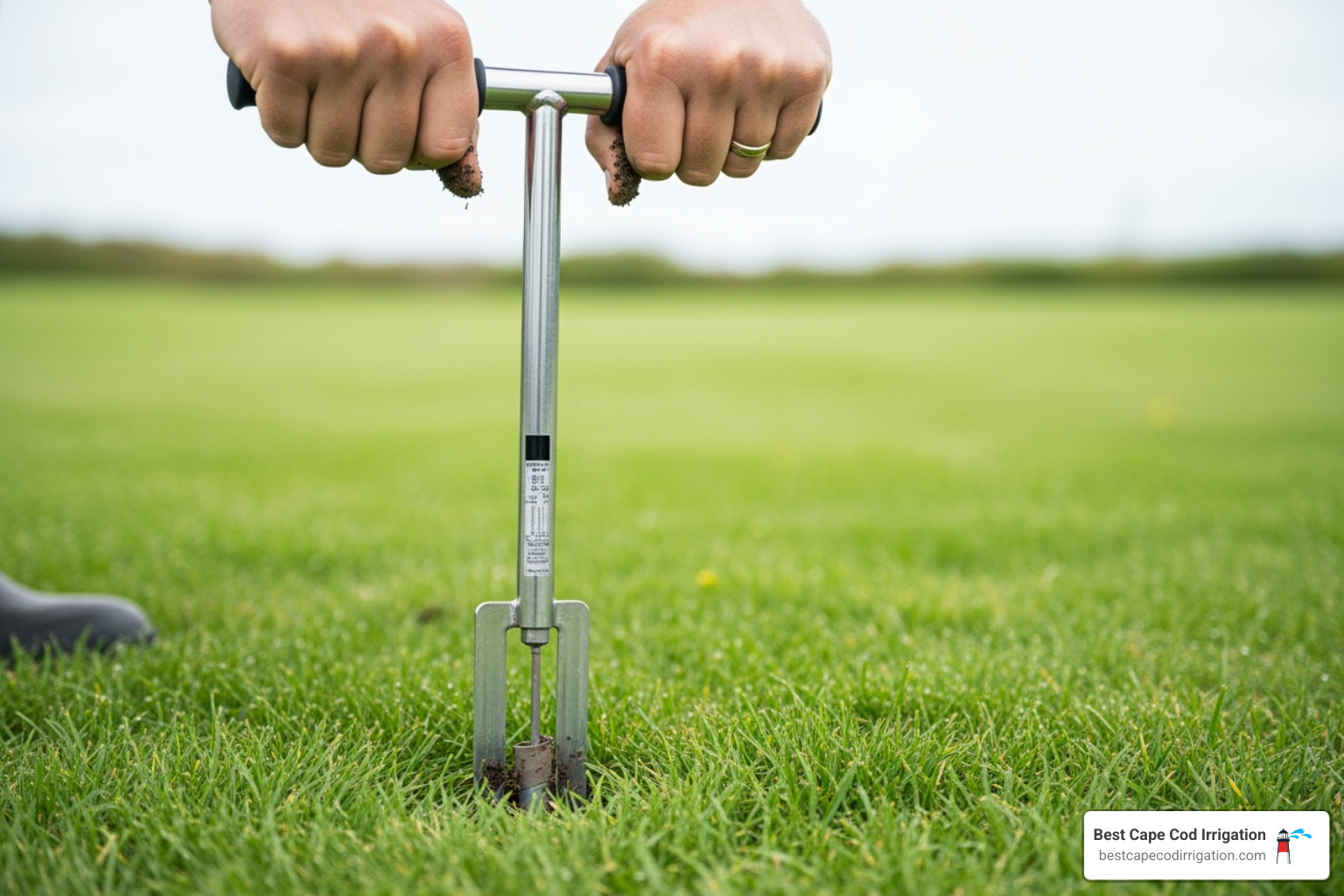
- The Screwdriver Test: This is our absolute favorite method. Grab a long screwdriver (or a garden trowel if you have one). Try pushing it into your lawn. If it slides in easily to a depth of 6-8 inches, your soil has plenty of moisture. If it’s tough to push in, your lawn is probably quite thirsty and needs a good drink. This test is also great for confirming that your deep watering is actually reaching those crucial roots.
- The Footprint Test: This one’s super simple and visual! Walk across your lawn. If your footprints stay visible for a while, or if the grass blades lie flat and don’t spring back up quickly, your lawn is showing signs of being dehydrated. A well-hydrated lawn is bouncy and resilient!
- Grass Color Changes: A healthy, happy, well-watered lawn should be a vibrant green. If your lawn starts to look a bit dull, or takes on a grayish-blue, almost smoky hue, that’s a classic sign of drought stress. You might also notice individual blades starting to wilt or curl at the edges.
By regularly performing these quick and easy tests, you can truly know if your lawn needs water, rather than just watering on a fixed schedule. This approach leads to much more efficient water use and a happier, healthier lawn.
Advanced Fall Watering & Lawn Care Strategies
Effective fall lawn watering is part of an integrated lawn care approach that maximizes water effectiveness and prepares your lawn for the Cape Cod winter. With over 25 years of regional expertise right here on the Cape, we’ve learned a thing or two about what it takes to keep your lawn happy. That’s why we’ve explored extensively The Importance of Lawn Irrigation for Healthy Cape Cod Landscapes – because we genuinely know how vital it is for our unique environment.
As the smart folks at Iowa State University Extension put it, “mindful turfgrass management in the fall helps grass to recover from summer stresses and sets lawns up to thrive in the spring.” Fall Lawn Care Considerations to Recover from Summer Drought and Ensure Spring Green-up. This isn’t just about watering, either! It includes other helpful tasks like aerating your soil, giving your lawn the right nutrients with fertilizer, and keeping up with regular mowing. It’s all connected!
Special Considerations for fall lawn watering with New Seed
Autumn is a great time to overseed or patch bare spots. Cooler fall temperatures are ideal for cool-season grasses, leading to quick germination with less weed competition. However, new grass has different watering needs than an established lawn.
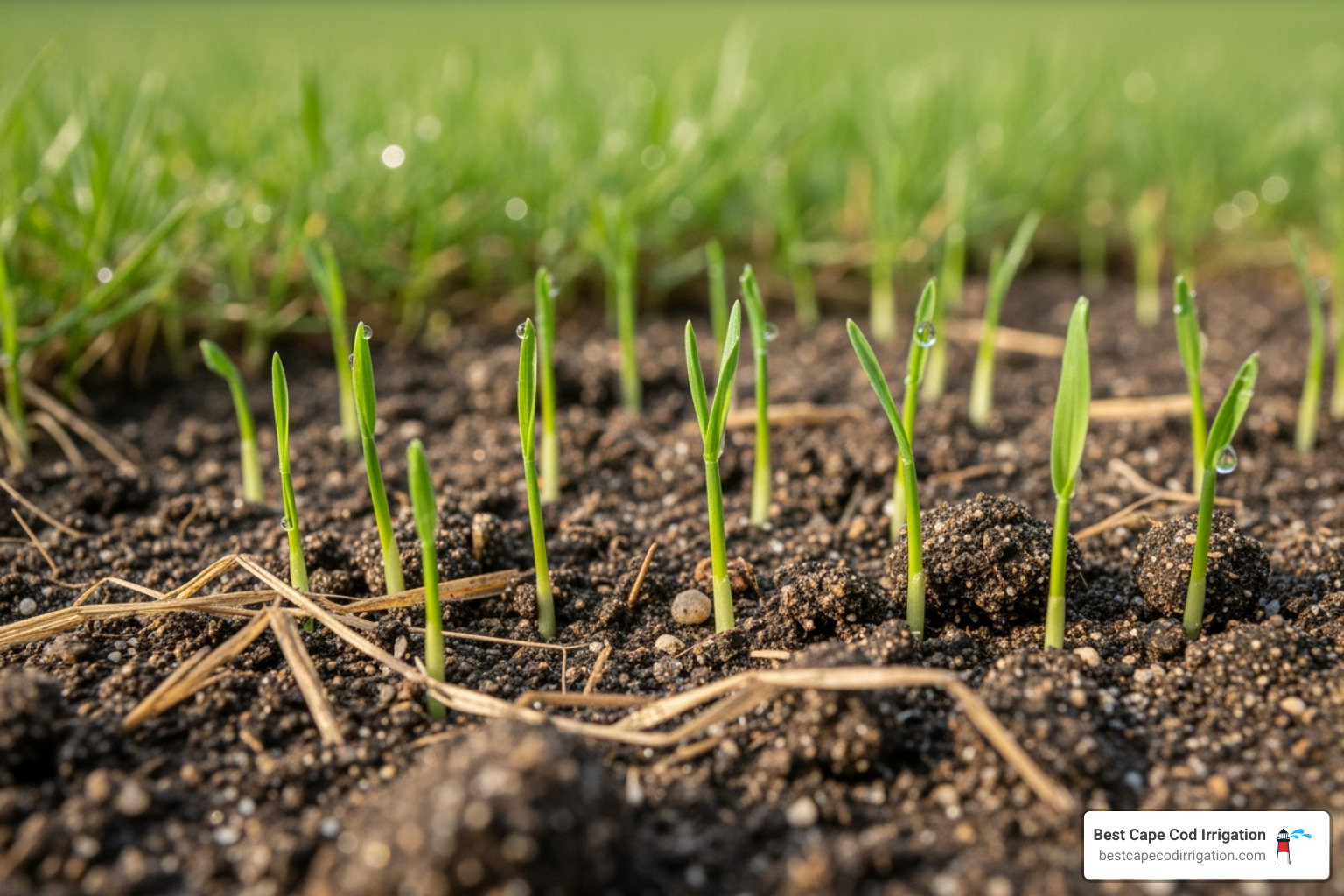
When you’re establishing new grass or overseeding, consistent moisture is absolutely key. Those tiny seeds need to stay moist to sprout. This usually means giving them very light watering sessions multiple times a day, often 2-4 times a day for just 5-10 minutes each. You’ll keep this up for the first 2-3 weeks, or until your new seedlings are a couple of inches tall and looking strong.
It’s also important to avoid washout. Use a gentle spray or a fine mist setting on your sprinkler so you don’t accidentally wash away those delicate seeds. Our modern Lawn Sprinkler Systems can be programmed for these precise, short bursts, making the job much easier! Once your new grass is established (usually after you’ve mowed it 2-3 times), you can then gradually transition to deeper, less frequent watering, just like you do for the rest of your lawn. The goal is still deep watering, about twice a week, making sure the moisture gets down at least 6 inches.
Properly watering new seed takes dedication, but the payoff is a thick, healthy lawn next spring.
Common Mistakes in fall lawn watering to Avoid
While giving your lawn a good drink in the fall is super beneficial, there are definitely a few common pitfalls to steer clear of. Making these mistakes can actually do more harm than good!
First, avoid overwatering. More water isn’t better, especially as weather cools. Excess water creates a breeding ground for nasty fungal diseases like snow mold, dollar spot, and brown patch. These can leave ugly patches and really weaken your grass.
Another issue with constantly saturated soil is root rot. Your grass roots need oxygen, and if they’re always sitting in water, they can’t breathe, leading to a weakened root system. You might also find thatch buildup becoming a problem, as excess moisture can contribute to a thick, spongy layer that stops water and nutrients from reaching the soil. Overwatered grass is weaker and more likely to suffer from pests and diseases, and it won’t be as resilient to the stresses of winter. Plus, it’s just plain wasted water, which isn’t great for your water bill or the environment!
Here are some signs your lawn might be getting too much to drink:
- You see runoff and puddling on the surface of your lawn.
- Your lawn feels squishy or spongy when you walk across it.
- The thatch layer is overly thick and wet.
- Grass blades start to yellow, which can be a sign of roots suffocating.
- You notice an increase in weeds that love wet conditions.
- Mushrooms or other fungi start popping up in the lawn.
- There’s an increase in insect activity that thrives in damp environments.
Another common slip-up is inconsistent watering. As we mentioned earlier, if you water sporadically, pulling your lawn in and out of dormancy, it can really zap its energy reserves. So, make a plan for your fall lawn watering, and then stick with a consistent schedule!
And don’t forget watering at the wrong time of day. Watering in the evening or too late in the afternoon means your grass blades stay wet all night, which is like an open invitation for those fungal diseases to move in.
Finally, always be smart about ignoring natural rainfall. Don’t just blindly stick to your watering schedule if Mother Nature has already provided a good soaking! If your lawn has received enough rain, skip your manual watering session. The goal is to meet that weekly water quota, not go overboard.
By simply being aware of these common missteps, you can make sure your fall lawn watering efforts truly give your lawn the boost it needs for a fantastic spring comeback.
Winter is Coming: Preparing Your Sprinkler System
As the Cape Cod autumn progresses and the chill sets in, your focus shifts from watering to protecting your irrigation system. Freezing temperatures are the enemy of sprinkler systems, and neglecting proper winterization can lead to costly repairs come spring.
When water freezes, it expands. If there’s water left in your pipes, valves, or sprinkler heads, this expansion can cause them to crack, burst, or become permanently damaged. A burst pipe is never a fun find in April!
Our Automatic Watering Systems are designed for efficiency, but even the smartest system needs proper care before winter. That’s why we offer comprehensive Openings and Winterization services.
When to Stop Watering and Shut Down Your System
Knowing precisely when to stop watering and winterize your system is crucial. On Cape Cod, this usually falls around mid-to-late November, but it’s best to pay attention to the weather, not just the calendar.
- Ground Temperature: Once the ground begins to freeze, watering becomes pretty much useless. The moisture won’t reach the grassroots through the frozen ground, and it can even contribute to ice buildup on the surface.
- Night Temperatures: A good indicator is when night temperatures consistently reach 40 degrees Fahrenheit or below. This signals that the ground is getting cold enough for freezing to become a real risk. Some sources suggest stopping when temperatures are consistently 30 degrees Fahrenheit or below, as water won’t penetrate frozen ground.
- First Hard Freeze: The absolute deadline is before the first hard freeze in your area. This is when temperatures drop significantly below freezing for an extended period. It’s time to stop using your irrigation system and winterize it before temperatures reach freezing in your area. This prevents damage to pipes and fittings from expanding water when it freezes.
Our team at Best Cape Cod Irrigation can help you determine the optimal time for your specific location on the Cape. We also have a guide on Turning Off Irrigation System for Winter for more details.
The Importance of a Professional Sprinkler Blowout
Once you’ve stopped watering, the next critical step is to remove all water from your irrigation system. This is where a professional sprinkler blowout comes in.
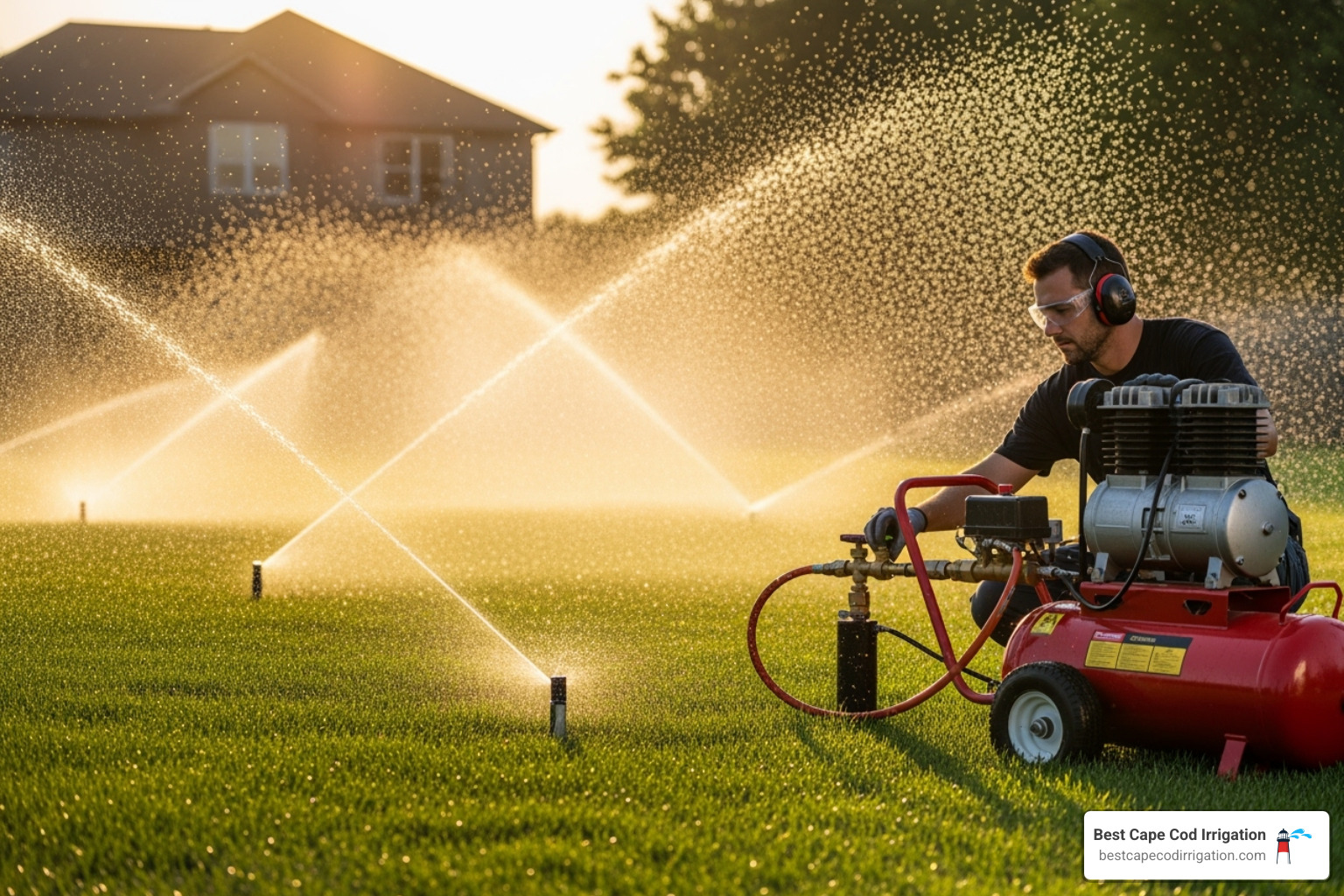
Using a large air compressor, a trained technician will systematically blow out all the water from your pipes, valves, and sprinkler heads. This isn’t something we recommend as a DIY project unless you have the right equipment and expertise. Using an improperly sized compressor or incorrect pressure can cause more damage than good, potentially blowing seals or breaking pipes.
A professional blowout ensures:
- Complete Water Removal: Every drop is cleared, leaving no room for ice to form and cause damage.
- Prevention of Cracks: Your pipes and components are protected from freezing and bursting, saving you the headache and expense of repairs in the spring.
- System Longevity: Proper winterization extends the lifespan of your entire irrigation system.
For peace of mind and to protect your investment, we highly recommend our Sprinkler System Blowout Service. It’s a small investment that can save you a significant amount of money and frustration down the line.
Frequently Asked Questions about Watering Lawns in the Fall
Here are answers to common questions we receive from Cape Cod homeowners about fall lawn watering.
Should I water my lawn if a frost is predicted?
Generally, you should avoid watering your lawn when temperatures are at or below freezing (30 degrees Fahrenheit or below).
If a light frost is predicted, but daytime temperatures are still going to be well above freezing, you can usually stick to your regular fall lawn watering schedule. The ground won’t freeze deep down, and the water will soak in before nightfall.
However, if a hard freeze is on its way – meaning temperatures will stay below freezing for a long time – it’s definitely best to stop watering. Why? Because water won’t be able to soak into frozen ground. Instead, it’ll just sit on the surface and turn into ice, which can potentially harm your grass blades or even make your pathways super slippery. A good rule of thumb to remember: once night temperatures consistently drop to 40 degrees Fahrenheit or below, it’s a clear signal that it’s time to start thinking about shutting down your irrigation system for the winter.
Does fall watering help with fall fertilizer applications?
Absolutely! Think of fall lawn watering and fall fertilization as best friends – they really go hand-in-hand. For your fertilizer to do its job properly, those vital nutrients need to get down into the soil where your lawn’s roots can actually absorb them.
If you spread fertilizer without consistent watering or enough natural rainfall, it’ll just sit on the surface. That means it could wash away with the next heavy rain, or simply lose its effectiveness before your grass can benefit. Watering right after you fertilize is like giving those nutrients a direct ride to the root zone. This helps promote stronger root growth, which is exactly what your lawn needs to prepare for winter, and it sets the stage for that gorgeous, vibrant spring green-up we all love. Many experts suggest applying a good balanced fertilizer (one with phosphorus and potassium) around October, and then making sure to water it in well.
Can I just rely on rain to water my lawn in the fall?
While natural rainfall should always be factored into your watering plans, relying solely on it might not be enough for your lawn, especially early in the fall.
The amount and consistency of rainfall on Cape Cod can really vary. If your lawn is getting an inch or more of rain per week, you might not need to supplement with your sprinklers. But if we hit a dry spell, your lawn will still need that consistent 1 to 1.5 inches of water per week to stay healthy and strengthen its roots before winter sets in.
Always keep an eye on the weather forecast! And remember those simple tests we talked about earlier – the screwdriver test, the footprint test, and checking your grass color – they’re your best friends for figuring out if your lawn is truly getting enough moisture from nature alone. If the rain gauge is looking a little empty, it’s definitely time to turn your sprinklers back on.
Conclusion
Fall lawn watering is a vital step for your lawn’s long-term health. It’s more than keeping things green now; it’s about helping your lawn recover from summer, build deep roots, and store up energy for winter.
By following our simple tips – knowing how much water your lawn truly needs, finding that sweet spot for when to water, and understanding the crucial timing for winterizing your sprinkler system – you’re not just maintaining your lawn for the moment. You’re making a smart investment that guarantees a vibrant, lush, and beautiful green return next spring.
At Best Cape Cod Irrigation, we help homeowners achieve their lawn goals. With over 25 years of experience on Cape Cod, we understand our local landscapes and how to optimize your irrigation system. Whether you need a new installation, a quick repair, or proper winterization, we’re here to help.
Don’t let your lawn miss out on this crucial fall care! Contact Us today with any questions, or to schedule a service that will set your lawn up for success. For professional help with all your seasonal irrigation needs, be sure to explore our comprehensive Irrigation Repairs & Maintenance services.