


Why Water Efficiency Matters for Your Lawn
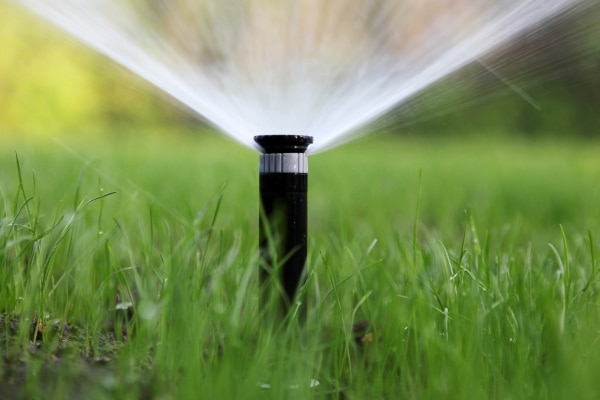
Water efficient sprinklers are specialized irrigation devices designed to minimize water waste while maintaining healthy turf. They work by regulating pressure, distributing water more evenly, and reducing runoff and evaporation.
Quick Answer: The best water efficient sprinklers for most homeowners
| Sprinkler Type | Water Savings | Best For | Price Range |
|---|---|---|---|
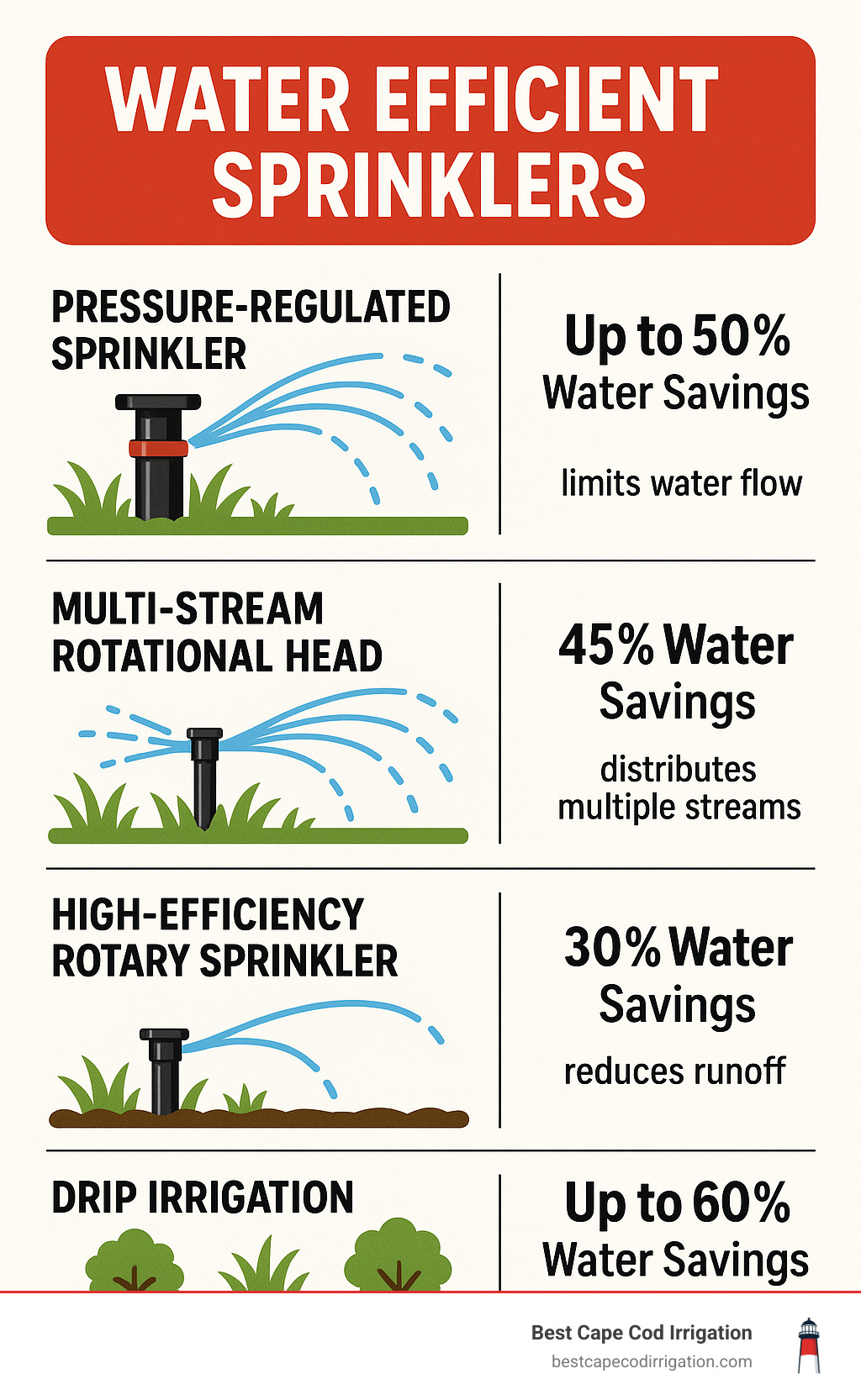
| Pressure-regulated sprays | Up to 50% | Small areas, precise coverage | $5-15 per head |
| Multi-stream rotational | ~45% better uniformity | Medium lawns, slopes | $5-7 per head |
| High-efficiency rotary | ~30% over traditional | Large lawns | $10-25 per head |
| Drip irrigation | Up to 60% | Flower beds, shrubs | $0.15-0.50 per foot |
In Cape Cod, where sandy soils quickly drain water and seasonal weather fluctuates dramatically, choosing the right irrigation solution isn’t just about convenience—it’s essential for maintaining a healthy lawn while being environmentally responsible.
“Spring is here, the time when homeowners fire up their sprinkler systems after the dormant winter months, providing a prime opportunity to evaluate sprinkler systems and landscape designs,” notes a water efficiency manager from Denver Water, where half of all water consumption goes to outdoor irrigation.
The stakes are significant. A standard sprinkler system can waste thousands of gallons annually through inefficient design, improper pressure, and poor distribution. Modern water-efficient sprinkler heads address these issues through innovative technologies:
- Pressure regulation that maintains consistent water flow regardless of municipal pressure fluctuations
- Larger water droplets that resist wind drift and evaporation
- Slower application rates that match soil absorption capabilities
- Even distribution patterns that eliminate dry or over-saturated spots
For Cape Cod homeowners dealing with sandy soil that drains quickly, water-efficient sprinklers aren’t just an environmental choice—they’re a practical solution that can save up to 106,000 gallons of water per year while delivering healthier, more uniform lawn coverage.
Why This Guide Matters
Did you know that outdoor water use accounts for nearly 30% of household water consumption in the United States? In many regions, especially during summer months, that figure jumps to 50-70%. Here in Cape Cod, with our unique climate and soil conditions, efficient irrigation isn’t just environmentally responsible—it’s economically sensible.
Water restrictions are becoming increasingly common across Massachusetts communities. By implementing water efficient sprinklers, you’re not only preparing for potential restrictions but also contributing to community water conservation efforts while maintaining a beautiful landscape.
Water Efficient Sprinklers 101: How They Save Water & Money
Ever wondered how water efficient sprinklers can transform your lawn care routine? These innovative systems don’t just spray water—they deliver precise hydration exactly where and when your lawn needs it most.
Think of it this way: traditional sprinklers often act like a shower with inconsistent pressure, sometimes misting, sometimes flooding. Water efficient sprinklers, on the other hand, function more like a carefully calibrated drip system, ensuring every drop counts.
The results speak for themselves. A California field study found that irrigation systems with automatic shut-off devices reduced water consumption by an impressive 39% over a year, with savings climbing to 51% during peak summer months. That’s not just good for the environment—it translates directly to lower water bills while maintaining (or even improving) your lawn’s health.
According to the Federal Energy Management Program (FEMP), today’s water-saving technologies deliver remarkable results:
- Pressure-regulated sprinklers cut water use by up to 50% compared to standard models
- Multi-stream rotational heads slow down precipitation rates from over 2 inches per hour to a soil-friendly 1 inch
- High-efficiency rotary heads use 30% less water than traditional pop-ups
These aren’t minor tweaks—they represent a complete rethinking of lawn irrigation technology.
Core Principles Behind Water Efficient Sprinklers
At their heart, water efficient sprinklers operate on four fundamental principles that work together to maximize every drop:
First, they maintain consistent pressure delivery regardless of municipal supply fluctuations. This eliminates wasteful misting and ensures even coverage across your entire lawn.
Second, they use matched precipitation rates so all sprinklers in a zone deliver water at the same pace. This prevents the common problem of some areas drowning while others stay parched.
Third, they respect soil infiltration rates by applying water at a pace that allows proper absorption. This prevents runoff and encourages deeper root growth—especially important for Cape Cod’s sandy soils.
Finally, they emphasize timing optimization by delivering water during early morning hours when evaporation is minimal, maximizing the benefit of every gallon used.
“A well-designed sprinkler system doesn’t just spray water—it strategically hydrates your landscape,” explains our irrigation team at Best Cape Cod Irrigation. “The right system can transform both your lawn’s health and your water bill.”
Key Advantages & a Few Trade-Offs
Upgrading to water efficient sprinklers offers substantial benefits that go beyond simple water conservation:
Your lawn receives more even distribution of water, promoting stronger root systems and fewer disease problems. The reduced runoff from slower application rates keeps water on your lawn instead of flowing onto driveways and sidewalks. And of course, there’s the satisfaction of environmental stewardship—knowing you’re conserving a precious resource while reducing energy used for water pumping.
Perhaps most tangibly, you’ll see lower utility bills—up to 50% reduction in water use translates directly to monthly savings that add up quickly over time.
However, it’s worth considering a few trade-offs:
The initial investment for efficient heads typically runs $5-15 per head compared to $1.50-3 for basic models (based on internet data, not actual costs from Best Cape Cod Irrigation). There’s also some installation time required when retrofitting an existing system. And some high-efficiency nozzles may need slightly more frequent cleaning due to their smaller water pathways.
| Feature | Traditional Sprinklers | Water Efficient Sprinklers |
|---|---|---|
| Water usage | Base comparison | 30-50% less |
| Coverage uniformity | Often uneven | Highly uniform |
| Wind resistance | Poor (fine mist) | Excellent (heavy droplets) |
| Runoff potential | High | Low |
| Initial cost | Lower | Higher |
| Long-term savings | None | Substantial |
| Maintenance frequency | Less frequent | Slightly more frequent |
For Cape Cod homeowners, the choice becomes particularly clear. Our unique sandy soils and seasonal weather patterns make efficient irrigation not just environmentally responsible, but practically essential for maintaining a healthy landscape without wasting water.
Technology Deep Dive: The Main Types of Water Efficient Sprinkler Heads
Let’s explore the primary technologies that make modern water efficient sprinklers so effective at conserving water while maintaining beautiful lawns.

Pressure-Regulated Spray Bodies (PRS)
Imagine your sprinklers maintaining perfect pressure no matter what’s happening with your municipal water supply. That’s exactly what pressure-regulated sprinkler heads do – they’re the reliable workhorses of water efficiency, keeping a steady 30-40 PSI regardless of fluctuations in your incoming water pressure.
In real-world tests, when municipal pressure dropped from 100 PSI to 50 PSI, standard heads lost 3 feet of coverage while PRS heads kept spraying consistently. This steady performance doesn’t just look good – it saves up to 50% of water compared to non-regulated systems.
These reliable performers eliminate that wasteful misting and fogging you see with high-pressure systems, while also reducing wear on your entire irrigation system. They’ve proven so effective that several states including California, Massachusetts, and New Jersey now require them for new installations. Here on Cape Cod, we often recommend PRS heads because our coastal communities frequently experience pressure fluctuations.
Multi-Stream Rotational Nozzles
Instead of spraying a fine mist that quickly evaporates or blows away, multi-stream rotational nozzles deliver water through multiple rotating streams that fall as larger, heavier droplets. This simple but brilliant design change makes a huge difference.
According to the Federal Energy Management Program, these innovative heads reduce precipitation rates from over 2 inches per hour down to just 1 inch per hour – matching how quickly your soil can actually absorb water. The result is 45% better distribution uniformity compared to traditional nozzles.
“These innovative nozzles apply water in rotating arcs to reduce misting and runoff,” explains a water conservation specialist. “They lower precipitation rates, allowing soil to absorb more water and reduce evaporation losses.”
Cape Cod’s sandy soils particularly benefit from this technology. Rather than water running off the surface, these nozzles help water penetrate deeply to reach root systems where it’s needed most.
High-Efficiency Rotary & Gear Rotors
For larger lawn areas, high-efficiency rotary sprinklers deliver exceptional coverage with remarkable water savings. These sprinklers distribute water in a single stream or multiple streams that rotate slowly across your yard, ensuring every inch gets just the right amount of moisture.
Modern high-efficiency models like the MP Rotator offer matched precipitation rates that stay consistent even when you adjust the arc or radius. With coverage ranging from 6 to 35 feet depending on the model, they’re perfect for medium to large lawns. Their software-controlled precipitation rates and operating pressure range of 25-55 PSI ensure consistent performance in various conditions.
The slower rotation and larger water droplets mean less evaporation and better soil penetration – particularly important for our Cape Cod sandy soil that tends to drain quickly. As one irrigation expert puts it, “Gear-driven rotary heads distribute water evenly over large areas at uniform speed,” making them ideal for expansive lawns.
Drip & Micro-Irrigation Lines
When it comes to flower beds, shrubs, and vegetable gardens, nothing beats the efficiency of drip irrigation. These systems deliver water directly to the root zone through small tubes with emitters or porous soaker hoses.
Drip systems can slash water use by up to 60% compared to traditional sprays by eliminating overspray and evaporation. By delivering water precisely where plants need it, they also help prevent weed growth in non-irrigated areas while reducing soil erosion and compaction.
At Best Cape Cod Irrigation, we often recommend Rain Bird drip irrigation systems for perennial beds, foundation plantings, and vegetable gardens. The slow, precise delivery is perfect for establishing new plantings and maintaining mature landscapes with minimal waste.
Automatic Shut-Off Devices
We’ve all seen it – a broken sprinkler head creating a geyser that wastes gallons of water per minute. Automatic shut-off devices solve this common problem by closing at the riser when a sprinkler head breaks.
This simple technology delivers impressive results. A California study found irrigation systems with automatic shut-off devices reduced water use by 39% over 12 months, with peak reductions of 51% during high-demand periods. Beyond water savings, these devices prevent erosion and landscape damage while maintaining system pressure for other zones.
“A drop in water pressure from a broken head triggers the valve to close, stopping water loss while maintaining system pressure,” explains a federal water efficiency report. This straightforward technology can save thousands of gallons per year while also reducing liability from slippery walkways and property damage.
For Cape Cod homeowners concerned about conservation and efficiency, these innovative technologies align perfectly with the EPA WaterSense label and ASABE 802-2014 standard that define truly efficient irrigation. The latest research on multi-stream heads continues to show promising improvements in water conservation technology.
Selection, Installation & Maintenance Best Practices
Choosing the right water efficient sprinklers for your Cape Cod property requires consideration of several factors unique to our region. Our sandy soils, coastal weather patterns, and seasonal fluctuations all impact irrigation system performance.
Matching Sprinkler Type to Soil & Landscape
Different landscape features require different sprinkler solutions:
For Sandy Soils (Common in Cape Cod):
– Multi-stream rotational nozzles that deliver water at a slower rate
– Drip irrigation for beds and gardens to prevent rapid drainage
– More frequent but shorter watering cycles to prevent water from draining beyond root zones
For Sloped Areas:
– Low-precipitation rate nozzles (0.6-0.8 inches/hour) to prevent runoff
– Multi-stream rotational heads that allow better absorption
– Staggered run times to allow water to soak in between cycles
For Planting Beds vs. Turf:
– Drip irrigation or micro-sprays for planting beds
– Pressure-regulated spray heads for small turf areas
– Rotary nozzles for medium-sized lawns
– Gear-driven rotors for large open spaces
For Oddly Shaped Areas:
– Adjustable arc nozzles (can be set from 0-360 degrees)
– Fixed pattern nozzles for consistent shapes (quarter-circle, half-circle, etc.)
– Strip nozzles for narrow areas between walkways and driveways
“Arrange heads in a triangular or square pattern to ensure head-to-head overlap,” advises an irrigation specialist. This ensures uniform coverage without dry spots or oversaturated areas.
DIY vs. Pro Installation Steps
While professional installation ensures optimal performance, many homeowners successfully retrofit existing systems with more efficient heads. Here’s a simplified process:
- Turn off water to the irrigation system at the main valve
- Excavate around the sprinkler head you’re replacing (about 6 inches diameter)
- Unscrew the old head from the riser or body
- Clean the threads and apply plumber’s tape if needed
- Install the new efficient head, ensuring it’s level with the ground
- Flush the system before installing the nozzle to remove debris
- Set the arc and radius according to the area’s needs
- Test the system to verify coverage and adjust as needed
For a complete system overhaul or new installation, professional expertise ensures proper design, pressure calculations, and zone planning. At Best Cape Cod Irrigation, we minimize disruption by using specialized equipment that requires minimal digging for new installations.
“It’s easier to adjust spray distance than to reinstall a head, so install heads closer together initially,” recommends an industry expert. This provides flexibility for future adjustments.
Ongoing Maintenance & Common Mistakes to Avoid
Even the most efficient sprinkler system requires regular maintenance to perform optimally:
Seasonal Inspections (3-4 times yearly):
– Check for clogged nozzles and clean as needed
– Look for broken or damaged heads
– Verify proper rotation and coverage patterns
– Adjust heads that may have shifted or sunk
Common Mistakes to Avoid:
– Mixing head types in one zone: Different precipitation rates lead to uneven watering
– Improper pressure: Too high causes misting, too low reduces coverage
– Incorrect scheduling: Watering during mid-day increases evaporation
– Failure to adjust seasonally: Spring needs differ dramatically from summer requirements
– Neglecting winterization: Cape Cod’s freezing temperatures can damage systems without proper blowouts
“Split watering into two half-cycles with a 20–30 minute pause to allow deeper soil penetration,” suggests a lawn care professional. This practice is particularly effective in Cape Cod’s sandy soils, which can benefit from this soak-and-cycle approach.
Maximizing Savings with Smart Tech, Incentives & FAQs
The true power of water efficient sprinklers really shines when they’re paired with smart irrigation controllers and sensors that fine-tune your watering schedule based on what’s actually happening in your yard.

Integrating Smart Controllers with Water Efficient Sprinklers
Remember the days of watching your sprinklers run during a rainstorm? Smart controllers have changed all that. These clever devices act like weather-savvy gardeners, automatically adjusting when and how much to water based on local conditions.
“I used to constantly fiddle with my irrigation timer,” says one Cape Cod homeowner. “Now my smart controller handles everything—it even skipped yesterday’s scheduled watering because it knew rain was coming.”
When smart controllers team up with water efficient sprinklers, they create a dynamic duo that delivers precisely the right amount of water exactly when your lawn needs it. The controller tracks factors like local weather patterns and soil conditions, while the efficient sprinkler heads ensure that water is distributed evenly without waste.
This smart pairing offers remarkable benefits for Cape Cod homeowners. Your system will automatically skip watering during rainy periods, apply more water during hot spells, and adjust seasonally without you lifting a finger. Many systems even allow you to monitor and control everything from your smartphone, giving you insights into exactly how much water you’re using and saving.
We’ve seen customers at Best Cape Cod Irrigation reduce their water consumption by 30-50% after upgrading to this combination of efficient heads and smart controllers. For a typical quarter-acre Cape Cod property, that can translate to savings of 20,000-40,000 gallons each growing season—water that stays in your wallet instead of soaking into your lawn.
Rebates, Mandates & True Cost Savings
“But what about the cost?” you might be wondering. The good news is that the initial investment in water efficient sprinklers often pays for itself faster than you might think.
Many water districts offer rebate programs that can significantly offset your upgrade costs. Denver Water, for example, provides a $3 rebate per efficient nozzle when you purchase between 10-100 heads. Similar programs exist in many regions, including parts of Massachusetts. It’s worth checking with your local water authority to see what incentives might be available to you.
The price range for water-efficient equipment varies widely based on internet data (not actual Best Cape Cod Irrigation pricing). Basic spray nozzles might cost anywhere from $1.50 to $9 each, while multi-stream rotational nozzles typically range from $5 to $21. Pressure-regulated spray bodies can run from $5 to $45 each, and high-efficiency rotors might cost between $10 and $75 each. Smart controllers generally start around $100 and can exceed $300 for advanced models.
The good news? “Prices for rotary nozzles have fallen to roughly $5–7 each in recent years,” according to industry reports, making these upgrades more accessible than ever. Most Cape Cod homeowners see a complete return on their investment within 1-3 years, depending on their water rates and lawn size.
When you factor in not just the water savings but also the improved lawn health and reduced maintenance needs, upgrading to water efficient sprinklers becomes an easy decision for most homeowners.
Frequently Asked Questions
How much water can I really save?
This is the question we hear most often at Best Cape Cod Irrigation, and the answer is impressive. Most homeowners see water reductions of 30-50%, with some saving even more.
To put this in perspective, a typical quarter-acre Cape Cod property with an inefficient irrigation system might use over 100,000 gallons per season just for lawn watering. Cutting that by 40% means saving 40,000 gallons—and seeing a proportional drop in your water bill.
Different technologies offer different levels of savings: pressure-regulated sprinklers can save up to half your water compared to standard heads, while multi-stream rotational nozzles improve water distribution by 45%. High-efficiency rotary heads typically use about 30% less water than traditional pop-ups, and systems with automatic shut-off devices have shown 39% reductions in real-world studies.
The sandy soil common throughout Cape Cod makes efficient irrigation particularly valuable here, as traditional systems often waste water through rapid drainage beyond the root zone.
Are efficient heads hard to retrofit?
Good news: retrofitting your existing system with water efficient sprinklers is one of the easiest and most cost-effective upgrades you can make.
In most cases, you won’t need to modify any underground pipes or make major system changes. Most efficient nozzles are designed to fit onto existing spray bodies, and installation typically takes just minutes per head. With basic DIY skills and a few simple tools, many homeowners successfully complete the retrofit themselves.
“I was surprised how simple it was,” one Barnstable homeowner told us. “I replaced all 12 heads in my front yard in less than an hour, and I’m not particularly handy.”
As a federal water efficiency report notes, “Multi-stream rotational sprinkler heads are easy to retrofit onto existing pop-up sprinkler systems without major redesigns.” If you’d prefer professional help, the installation is quick and affordable—we can often upgrade an entire system in just a few hours.
What certifications should I look for?
When shopping for water efficient sprinklers, a few key certifications can help ensure you’re getting genuinely effective products:
The EPA WaterSense Label is the gold standard, indicating products that use at least 20% less water while performing as well as or better than standard models. The ASABE/ICC 802-2014 Standard provides technical verification for landscape irrigation sprinklers, ensuring performance claims are legitimate. Products tested under the Smart Water Application Technology (SWAT) protocol have been independently validated for their water efficiency claims.
At Best Cape Cod Irrigation, we prioritize these certified products because they’ve been rigorously tested and proven to deliver real water savings without compromising performance. Our 25+ years of experience in Cape Cod’s unique conditions has taught us which products work best in our sandy soils and variable climate—knowledge we’re always happy to share with our customers.
Looking to make your irrigation system more efficient? Visit our Smart Irrigation Solutions page or browse the EPA’s WaterSense product search to learn more about certified options.
Conclusion
Imagine dramatically cutting your water bill while your lawn looks better than ever. That’s the promise of water efficient sprinklers – a true win-win that saves money, reduces environmental impact, and improves your landscape’s health.
Here on Cape Cod, our unique challenges – sandy soils that drain quickly, seasonal coastal weather patterns, and increasingly common water restrictions – make efficient irrigation not just a nice-to-have, but essential for responsible homeownership.
At Best Cape Cod Irrigation, we’ve spent over 25 years learning exactly what works in our local conditions. We’ve seen how the right combination of water efficient sprinklers and smart technology can transform a property – not just in appearance, but in sustainability and maintenance requirements.
Our approach is simple but effective: we match the perfect water-saving technology to your specific landscape needs. Whether that means pressure-regulated spray heads that eliminate misting, multi-stream rotational nozzles that prevent runoff, high-efficiency rotors for larger areas, or precise drip irrigation for your garden beds – we design systems that work with nature, not against it.
The impact extends far beyond your property line. Every gallon you save contributes to community conservation efforts and helps protect our fragile Cape Cod ecosystem. As water restrictions become increasingly common across Massachusetts, having an efficient system already in place provides both peace of mind and regulatory compliance.
Water efficient sprinklers aren’t just about conservation – they’re about smarter watering. Our customers consistently report healthier lawns with fewer disease problems, reduced maintenance needs, and of course, lower water bills. Many see their investment recouped within just 1-3 seasons through utility savings alone.
Ready to transform your irrigation approach? We’d love to help. Our team can evaluate your current system, recommend appropriate upgrades, and provide a clear roadmap to water savings and a healthier lawn. Contact us about Smart Irrigation Solutions to learn more about your options.
The most efficient irrigation system is one that’s expertly designed, properly installed, and regularly maintained. Let us help you achieve all three while protecting our most precious resource—water. Your lawn (and your wallet) will thank you.