



Why Drip System Repair Matters for Cape Cod Homeowners
When you need drip system repair near me, finding the right local service can mean the difference between a thriving landscape and costly water waste. Here’s what you need to know:
Quick Service Finder:
- Local irrigation contractors – Search online directories and check reviews
- Average repair costs – $75 to $225 for most common issues
- Emergency signs – Puddles, dry patches, or spiking water bills
- DIY vs. Pro – Simple clogs you can fix, valve issues need experts
Your drip irrigation system is the backbone of efficient watering on Cape Cod’s challenging sandy soil. When it’s working properly, it delivers water directly to plant roots, reducing waste by up to 50% compared to traditional sprinklers.
But like any mechanical system, drip irrigation needs regular maintenance and occasional repairs. Common problems include clogged emitters, leaking lines, and pressure issues – all of which can turn your water-saving system into a water-wasting headache.
The good news? Most drip system issues are fixable, and many repairs cost less than $100 according to industry data. Whether you tackle simple fixes yourself or call a professional, quick action prevents small problems from becoming expensive disasters.
For Cape Cod homeowners dealing with our unique climate challenges, a properly functioning drip system isn’t just convenient – it’s essential for maintaining healthy landscapes while conserving our precious water resources.
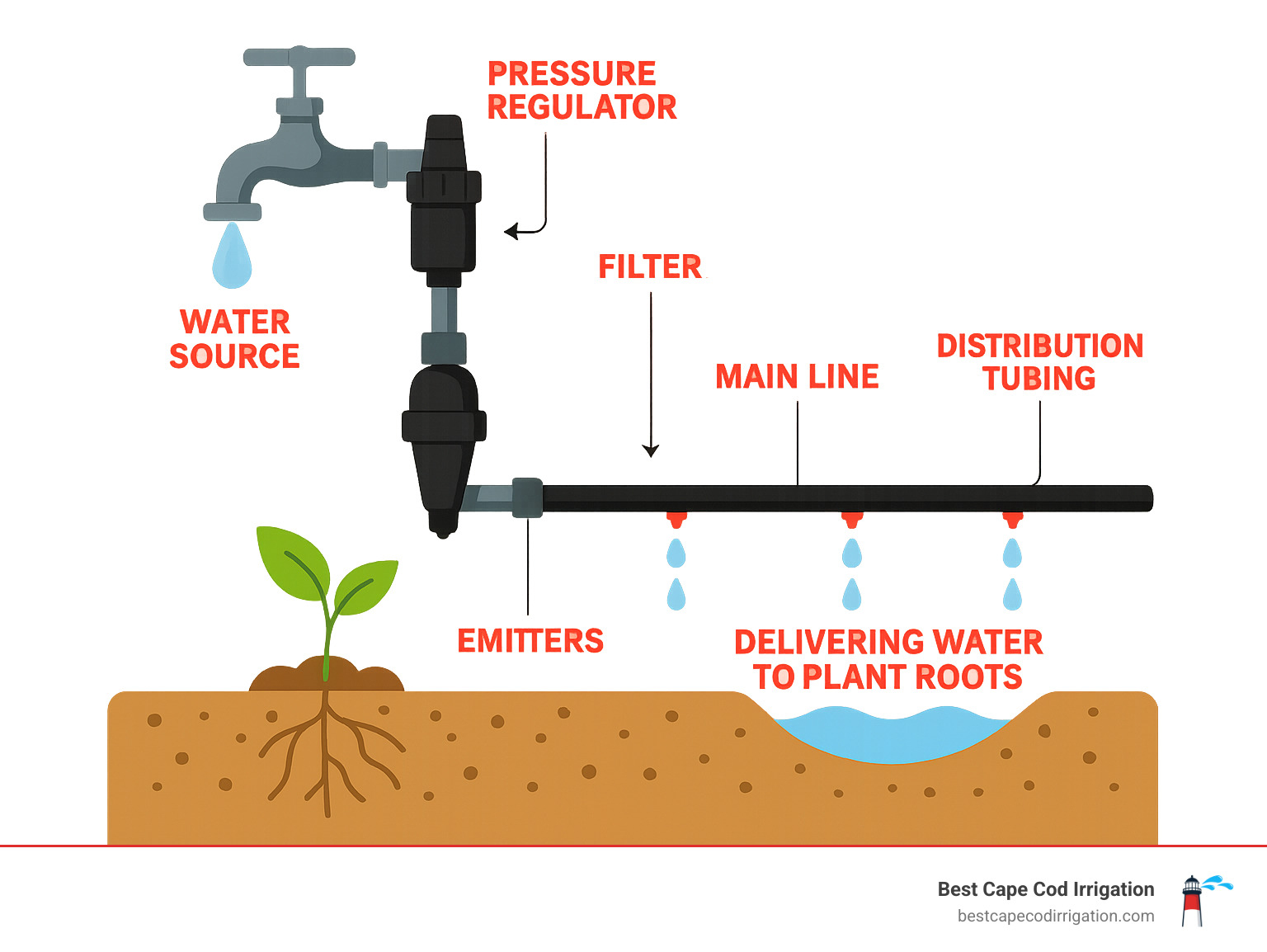
Drip system repair near me terminology:
Telltale Signs Your Drip System Needs Repair
Picture this: you step outside with your morning coffee, ready to admire your beautiful garden, only to find your prize petunias looking droopy while a small pond has mysteriously appeared around your hydrangeas. Sound familiar? These are classic signs that your drip irrigation system is crying out for some TLC.
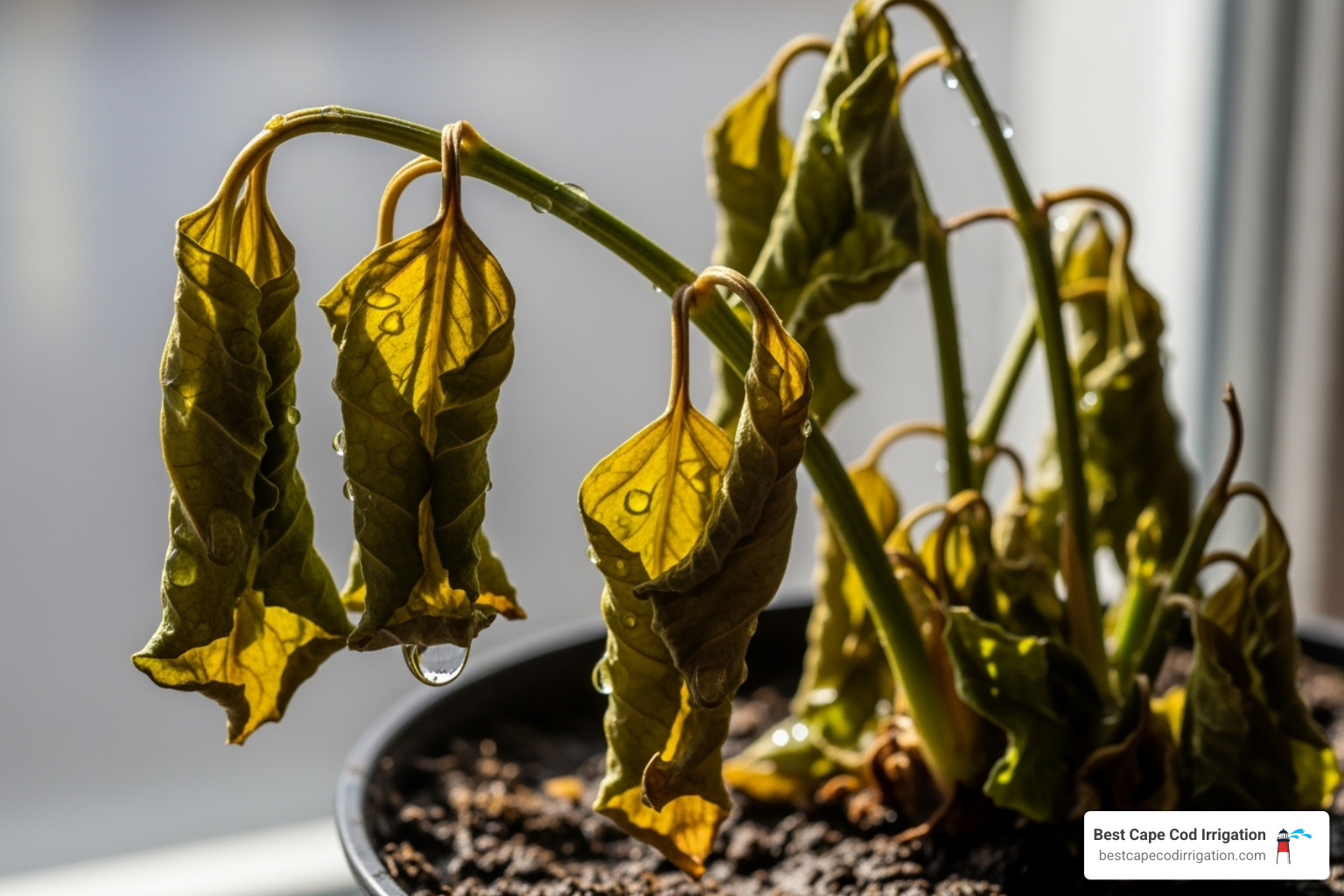
The most obvious red flag is uneven watering across your landscape. When some plants are thriving while their neighbors just feet away are wilting, your system is telling you something’s wrong. You might notice some emitters sputtering like an old car engine, while others have gone completely silent.
Puddles or soggy soil in areas that should only receive gentle, targeted watering usually point to leaks or broken components. On the flip side, dry patches in zones that should be well-watered often mean emitters are clogged or lines have disconnected entirely.
Here’s one that’ll get your attention fast: a spiking water bill. If your landscape looks normal but your water bill has you doing a double-take, you likely have a hidden leak somewhere in the system. These sneaky underground leaks can waste hundreds of gallons before you even notice.
Don’t forget to check for visible tube damage during your regular garden walks. Whether it’s curious squirrels treating your tubing like chew toys, UV rays cracking exposed lines, or that unfortunate encounter with your shovel last weekend, visible damage needs immediate attention.
For comprehensive care tips, check out our guide on Drip Irrigation Maintenance.
Common Drip System Problems
Understanding what typically goes wrong with drip systems helps you spot problems early. Clogged emitters top the list of common issues. These tiny openings can get blocked by sediment, mineral deposits from hard water, or even algae growth, creating those frustrating dry spots in your garden.
Leaks or line breaks happen more often than you’d think. Physical damage from garden tools, curious critters, or simple wear and tear can cause tubing to split or pop off fittings. Even a small leak can waste significant water and create soggy problem areas.
Water pressure issues can wreak havoc on your system. Drip irrigation works best at low pressure – typically between 10 and 30 PSI. Too much pressure can blow emitters right off the lines, while too little means water won’t reach plants at the far end of your zones.
Faulty valves control water flow to different areas of your system. When they stick open, you get constant watering and potential flooding. When they stick closed, entire zones go thirsty. Controller malfunctions can also disrupt your watering schedule, causing the system to run at odd times or not at all.
And let’s not forget about animal damage – those adorable but mischievous creatures that see your soft poly tubing as the perfect chew toy. We’ve seen everything from determined rodents to playful puppies leave their mark on irrigation systems.
Diagnosing the Issue Yourself
Before calling for drip system repair near me, a bit of detective work can help you identify the problem. Start with a systematic check by running your system and observing how it operates. Are all zones turning on? Is water flowing from the main line?
Start at the water source and work your way out. Check that your spigot is fully open, your backflow preventer is functioning, and your pressure regulator isn’t faulty. These components at the beginning of your system affect everything downstream.
Inspect filters next – they’re often the culprit behind mysterious pressure drops. Most drip systems have at least one filter to keep debris from reaching your emitters. A clogged filter screen can choke off water flow to your entire system, and you might be amazed at what collects in there.
Walk the lines methodically, looking for visible leaks, kinks, disconnected tubing, or damaged emitters. Pay special attention to areas where tubing crosses walkways or gets sun exposure, as these spots are prone to damage.
Finally, observe water flow at emitters in problem areas. If you find dry spots, check whether the emitters are clogged, damaged, or simply need a good cleaning. Sometimes gently removing and flushing an emitter is all it takes to restore proper flow.
This initial diagnosis often reveals simple fixes you can handle yourself, or at least gives you valuable information to share with a professional repair service.
DIY Fix or Call a Pro? A Homeowner’s Guide
When you find your drip system repair near me search has led you to a puddle in your garden bed, the big question hits: “Can I tackle this myself, or is it time to call in the pros?”
The honest answer? It depends on what’s broken and how comfortable you feel getting your hands dirty. Some fixes are surprisingly simple – like unclogging an emitter with a toothpick. Others, like electrical issues with your controller, are best left to folks who won’t accidentally fry the whole system.
| Task | DIY Feasibility | Professional Help Recommended For… |
|---|---|---|
| Cleaning clogged emitters | High | Persistent clogs, system-wide clogging |
| Patching small holes | Medium | Large leaks, mainline breaks |
| Replacing individual emitters | High | Extensive emitter replacement, system redesign |
| Flushing the system | High | Diagnostic issues after flushing |
| Adjusting pressure regulator | Medium (with gauge) | Regulator replacement, persistent pressure issues |
| Replacing tubing | Medium (small sections) | Long runs, buried lines, complex layouts |
| Repairing/replacing valves | Low | All valve repairs, electrical diagnostics |
| Controller malfunctions | Low (simple resets) | All electrical faults, programming issues |
For the DIY-friendly repairs, you’ll want to stock up on a few basic tools. A tubing cutter or sharp utility knife will be your best friend, along with replacement emitters and those handy little “goof plugs” (yes, that’s really what they’re called) for sealing up old holes. Grab some couplings and tees for patching, hose clamps for bigger connections, and a small pressure gauge to check if your water pressure is playing nice.
Professional repair brings serious advantages even for seemingly minor hiccups. We’ve got specialized tools – like wire locators that can find buried valves without turning your yard into a construction zone. Plus, there’s something to be said for warranties on the work and the peace of mind that comes with experience.
For comprehensive professional help, check out our Drip Sprinkler Repair services.
Simple DIY Drip System Repairs
The good news? Several common drip system problems are totally within your wheelhouse to fix.
Cleaning clogged emitters is often as simple as giving them a gentle twist to open them up for cleaning. If they’re being stubborn, try soaking them in a vinegar solution overnight – it works wonders on mineral buildup. For inline emitters, sometimes just flushing the whole system can dislodge whatever’s causing the blockage.
Flushing the system should be part of your regular routine anyway. Look for flush caps or valves at the end of each drip line, open them up, turn on your system, and let water run through for a few minutes. You’ll be amazed at the gunk that comes out – and your plants will thank you for it.
When an emitter is truly beyond saving, replacing individual emitters is refreshingly straightforward. Pull out the old troublemaker and push in a new one with the same flow rate. If the hole has stretched out too much, use a goof plug to seal it and punch a fresh hole nearby.
For patching small holes with couplings, think of it as giving your drip line a tiny, durable bandage. Cut out the damaged section and insert a barbed coupling to reconnect the ends. Simple, effective, and surprisingly satisfying.
When Professional Help is Essential
While we love a good DIY success story, some repairs really do need professional expertise.
Mainline leaks are often the sneaky culprits hiding underground. These require specialized detection equipment to locate without turning your landscape into an archaeological dig. Plus, working with the higher-pressure main supply lines needs experience to avoid creating bigger problems.
Valve replacement or repair gets tricky fast because these components blend mechanical and electrical elements. When a valve won’t open or close properly, diagnosing the issue requires specific knowledge about solenoids, water flow, and electrical systems. One wrong move can turn a simple repair into a costly replacement.
Electrical issues with the controller fall into the “definitely not a DIY project” category. If your controller isn’t communicating with your valves or having power problems, troubleshooting electrical faults requires expertise and safety knowledge. We’ve seen too many well-intentioned homeowners turn minor glitches into major headaches.
Persistent low or high-pressure problems that don’t resolve after cleaning filters and checking regulators usually point to deeper issues. Maybe there’s a hidden leak upstream, or the system design needs adjustment. Our diagnostic tools and 25+ years of Cape Cod experience help us pinpoint these elusive problems quickly.
For complex issues involving buried lines or electrical components, explore our Irrigation Pipe Leak Repair services.
How to Find a Reliable Drip System Repair Near Me
When your drip system starts acting up, finding the right drip system repair near me service can feel overwhelming. But here on Cape Cod, where our sandy soil and coastal conditions create unique challenges, choosing the right professional makes all the difference between a quick fix and a lasting solution.
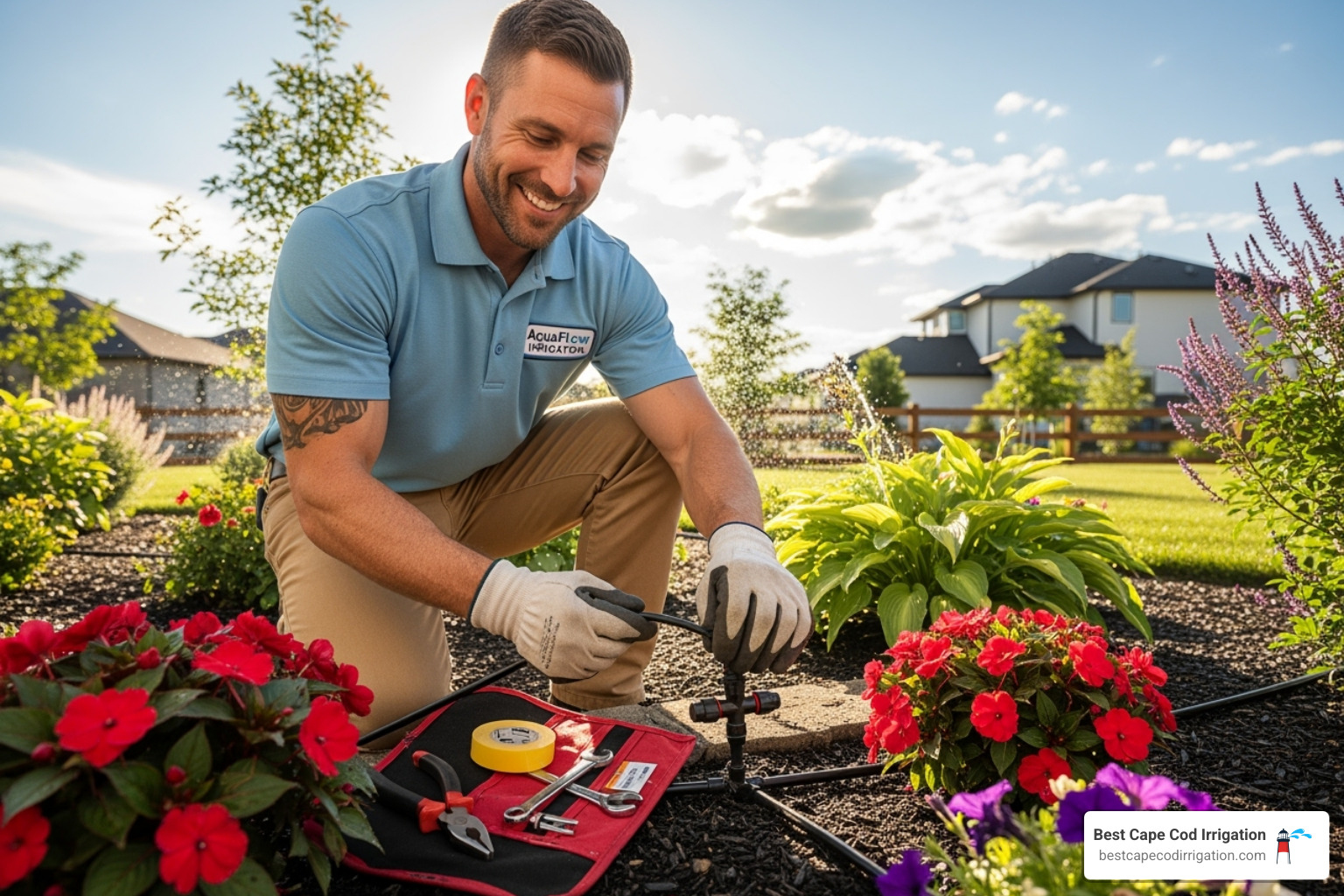
The good news? With a little know-how, you can quickly identify reliable irrigation specialists who understand our local conditions. Start with a targeted online search using terms like “drip system repair Cape Cod” or “irrigation repair near me.” You’ll want to look beyond general landscaping companies and focus on those who specialize specifically in irrigation systems.
Local directories are your friend – both online platforms and traditional Cape Cod business directories often list companies that serve your specific town, whether you’re in Mashpee, Falmouth, or Hyannis. These local listings usually indicate businesses that truly understand our regional needs.
But here’s where the real detective work begins: dive deep into reviews. Platforms like Google, Yelp, and Angie’s List reveal the true story behind each company. Look for patterns in the feedback – do customers consistently mention punctuality, fair pricing, and quality repairs? Pay special attention to comments about how well companies handle our Cape Cod-specific challenges, like salt air corrosion or sandy soil drainage issues.
Don’t underestimate the power of neighbor recommendations. Cape Cod’s tight-knit communities are goldmines for honest referrals. Chat with your neighbors, ask at your local garden center, or check community Facebook groups. When someone raves about their irrigation repair experience, that’s worth its weight in gold.
For additional resources on finding qualified professionals, check out More about professional landscape organizations.
Key Questions for Your “Drip System Repair Near Me” Search
Once you’ve narrowed down your list of potential companies, it’s time to ask the right questions. Think of this as your interview process – after all, you’re inviting these professionals into your landscape investment.
Local expertise should be your first inquiry. Ask directly: “How familiar are you with Cape Cod’s sandy soils and coastal conditions?” A company with genuine local experience will immediately understand why this matters. They’ll know how salt air affects metal components and why our soil requires specific emitter spacing and flow rates.
Licensing and insurance aren’t just nice-to-haves – they’re absolutely essential. Any reputable contractor should readily provide proof of licensing, bonding, and insurance coverage. This protects you if something goes wrong during the repair process.
Warranties tell you everything about a company’s confidence in their work. Ask about their guarantee policy on both parts and labor. Companies that stand behind their repairs typically offer at least a one-year warranty, showing they use quality components and skilled techniques.
Be upfront about pricing expectations. Ask about service call fees, whether estimates are free, and their typical repair cost ranges. Transparent companies will give you honest answers about their pricing structure without hemming and hawing.
Timeline matters, especially when your plants are suffering. Ask about their typical response time for non-emergency repairs and whether they offer same-day service for urgent issues. Companies that prioritize customer service often have impressive response statistics they’re happy to share.
What a Professional Repair Service Involves
When you finally call in the pros for drip system repair near me, you should expect a methodical, professional approach that goes far beyond just patching the obvious problem.
The process starts with a comprehensive system inspection. A skilled technician will run your entire system while carefully observing water flow patterns, pressure levels, and any obvious issues. They’ll walk every zone, checking each emitter and examining all visible tubing for wear, damage, or improper installation.
Next comes the detective work – component testing using specialized tools. They might use solenoid testers to check valve function, pressure gauges to verify system pressure, or even electronic locators to trace buried lines. This systematic approach ensures they find the root cause, not just the symptoms.
Communication is key during the diagnosis phase. Your technician should explain what they’ve found in plain English, avoiding technical jargon that leaves you confused. They should help you understand not just what’s broken, but why it happened and how to prevent similar issues.
Before any work begins, expect a detailed written estimate outlining necessary repairs, required parts, and total costs. No surprises, no hidden fees – just honest, upfront pricing that lets you make informed decisions about your irrigation investment.
Quality parts make all the difference in repair longevity. Professional services use durable, compatible components designed to withstand our Cape Cod conditions. They might even suggest upgrading older components to more robust materials if it makes economic sense for your system’s long-term health.
The job isn’t done until everything works perfectly. After completing repairs, your technician should run the entire system again, checking for proper operation, even water distribution, and optimal pressure throughout all zones. They’ll make final adjustments to ensure your system operates at peak efficiency, giving you that peace of mind that comes with professional-quality work.
Understanding Repair Costs and Maintenance Schedules
Understanding the costs involved in drip system repair near me and knowing how often your system needs attention can help you budget and prevent unexpected breakdowns.
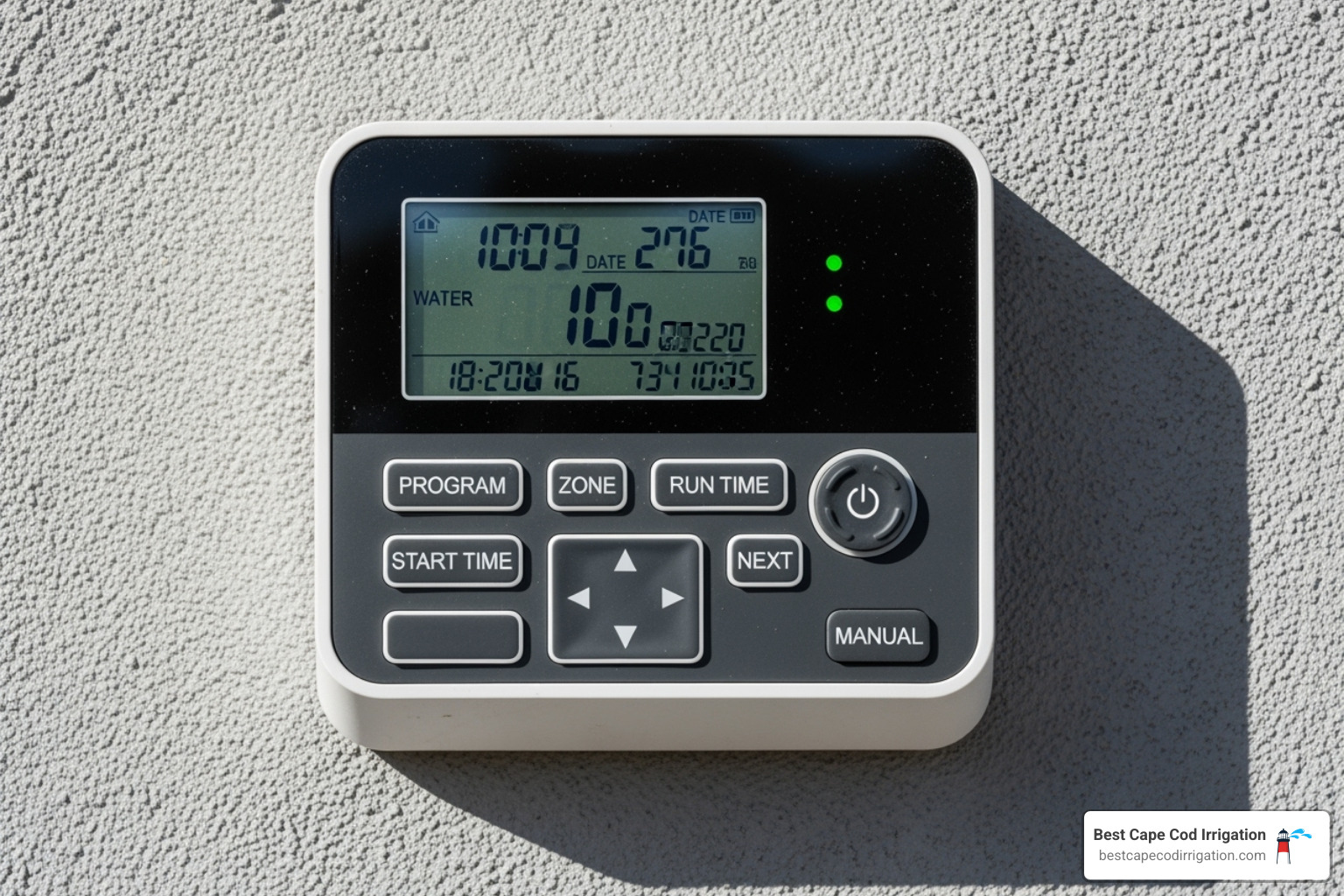
The reality is that drip system repairs can range from surprisingly affordable to “ouch, that stings” depending on what’s gone wrong. Like most things in life, the sooner you catch a problem, the less it’s likely to cost you.
Several factors influence repair costs, including the complexity of the problem, accessibility of damaged components, and whether it’s a simple part replacement or requires extensive diagnostics. A clogged emitter that you can fix in five minutes costs virtually nothing, while a buried mainline leak that requires excavation and detection equipment is a different story entirely.
The importance of preventative maintenance cannot be overstated. Think of it as buying insurance for your irrigation system. Regular check-ups catch small issues before they become wallet-draining disasters. A $20 filter replacement today can prevent hundreds of dollars in emitter replacements later.
Seasonal check-ups are your best friend when it comes to keeping costs manageable. Spring start-ups ensure your system awakens from winter in good shape, while fall winterization protects it from freeze damage that could cost thousands to repair.
How Much Does Drip System Repair Cost?
The cost of drip irrigation repair varies dramatically based on what’s actually broken. Minor repairs like cleaning filters, replacing a handful of emitters, or patching small sections of tubing are typically quick fixes that won’t break the bank. These straightforward problems usually involve inexpensive parts and minimal labor time.
Major repairs tell a different story entirely. When you’re dealing with mainline leaks, complete valve replacements, electrical controller issues, or extensive tubing damage from animal activity, both the parts and labor costs climb significantly. These repairs often require specialized diagnostic equipment and more experienced technicians.
The breakdown between part costs versus labor is important to understand. Simple components like individual emitters or small sections of tubing cost just a few dollars each. However, specialized parts like pressure regulators, control valves, or electronic controllers can represent a significant portion of your repair bill. Labor rates reflect the technician’s expertise, especially for complex diagnostics or repairs requiring excavation.
Please note: The costs mentioned are national averages based on online data, with typical repairs ranging from $75 to over $225. Minor repairs often fall under $100, while complex issues involving extensive diagnostics, excavation, or multiple component replacements can push costs higher, sometimes exceeding $400. These figures are for informational purposes only and do not reflect actual service pricing. For an accurate quote custom to your specific situation, please contact a local professional.
The smartest approach to managing repair costs is investing in regular maintenance. For comprehensive information on keeping your system in top shape, visit our Irrigation Repairs Maintenance page.
How Often Should a Drip System Be Inspected?
Your drip irrigation system needs attention at different times throughout the year, much like your garden itself. The key is knowing when to look and what to look for.
Annual professional inspection should be the cornerstone of your maintenance strategy. This comprehensive check-up, typically performed during spring start-up, ensures your system is ready for another season of reliable service. A trained technician will methodically examine every component, test water pressure, flush accumulated debris from lines, and fine-tune your controller settings.
Spring start-up is when your system comes back to life after Cape Cod’s winter hibernation. This critical service involves slowly bringing the system back to full pressure, checking for any freeze damage or component failures that occurred during the off-season, and ensuring all zones are functioning properly. It’s like giving your irrigation system a complete physical before the busy growing season begins.
Mid-season checks don’t require professional service, but they’re invaluable for catching problems early. A monthly walk-through during peak watering season helps you spot issues like new dry patches, soggy areas, or visible damage before they become serious problems.
Fall winterization is absolutely essential for Cape Cod homeowners. Our freezing temperatures can destroy an improperly winterized system in a single night. This process involves shutting off water supplies, draining all lines, and using compressed air to remove every drop of water that could freeze and crack your investment.
If you’re considering upgrading to a new system entirely, explore our Drip Irrigation System Installation services to see how modern technology can make maintenance even easier.
Conclusion
A functioning drip irrigation system is more than just a convenience – it’s your secret weapon for creating a thriving Cape Cod landscape while being a responsible steward of our precious water resources. When your system is running smoothly, it delivers water with surgical precision, ensuring your prize-winning roses get just what they need while your water bill stays reasonable.
Prompt repairs prevent small issues from snowballing into expensive disasters. That slightly sputtering emitter you’ve been meaning to check? It could be the early warning sign of a clog that will eventually affect your entire zone. The small puddle near your vegetable garden might seem harmless now, but left unchecked, it could signal a leak that wastes hundreds of gallons over the season.
Here on Cape Cod, we face unique challenges that make a well-maintained drip system even more valuable. Our sandy soils drain quickly, our salt air can be tough on equipment, and our summer water restrictions mean every drop counts. Whether you’re tending to a cottage garden in Chatham or maintaining extensive landscaping in Barnstable, your drip system works overtime to keep everything green and gorgeous.
For homeowners across our beautiful peninsula – from Bourne and Sandwich in the west to Provincetown at the tip, and everywhere in between including Falmouth, Mashpee, Yarmouth, Brewster, and all our cherished communities – Best Cape Cod Irrigation understands these local challenges intimately. With over 25 years of regional expertise, we’ve seen it all: systems battered by nor’easters, emitters clogged with our infamous Cape sand, and controllers that need a little coaxing after a power outage.
Ready to get your system back in top shape and ensure your landscape remains the envy of the neighborhood? Don’t let another day go by with inefficient watering or sky-high water bills. Explore our professional irrigation repair and maintenance services today, and let us help you maintain the beauty and efficiency that makes your outdoor space truly special.
