



Why Build a DIY Watering System for Your EarthBox?
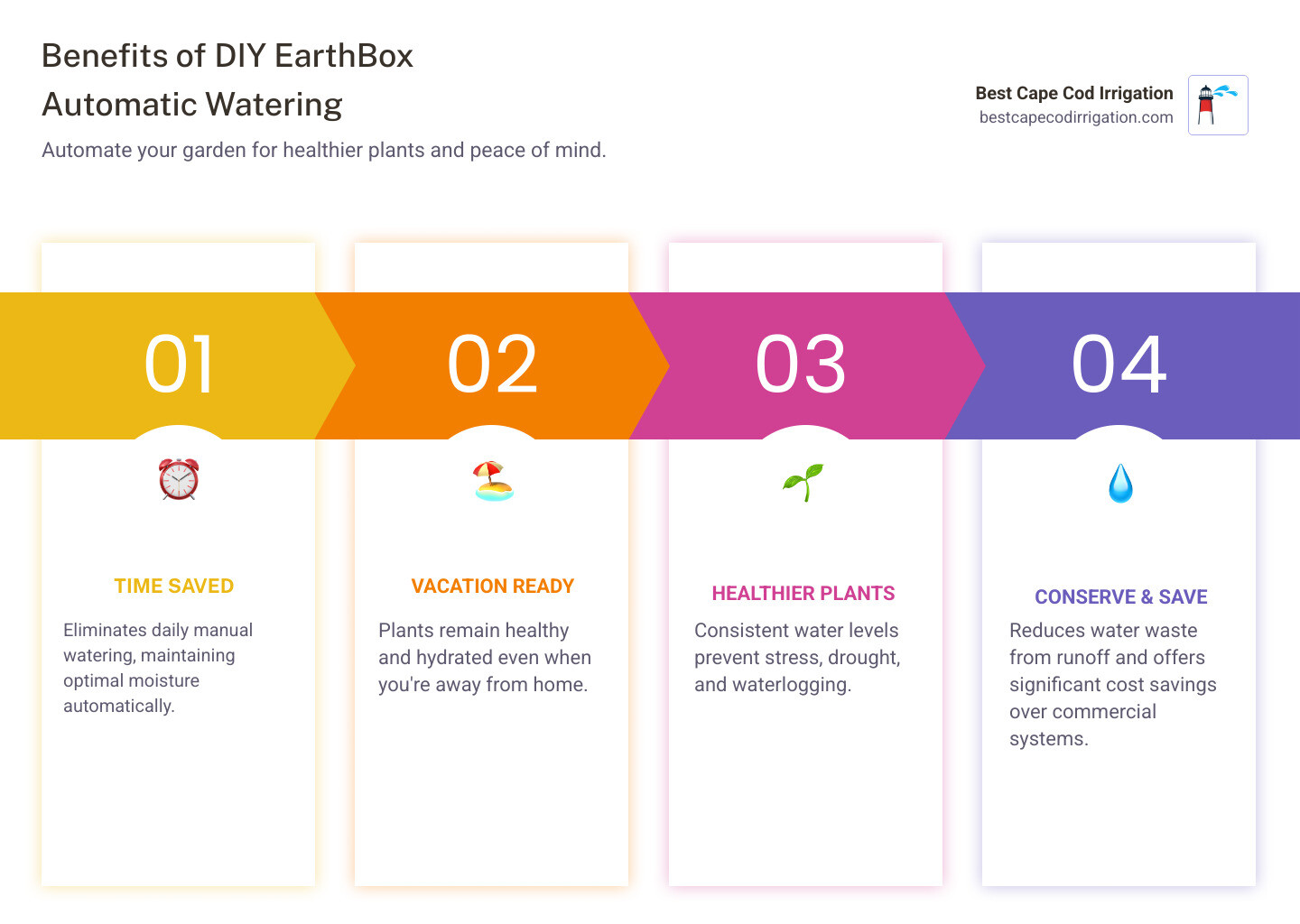
A diy earthbox automatic watering system transforms your container garden from a daily chore into a self-sustaining oasis. Here’s why it matters and what you can build:
Quick DIY Options:
- Gravity-fed float valve system – Uses a 5-gallon bucket and mini float valve ($10-$45 total cost)
- Autopot Easy2Go integration – Commercial valve system adapted for EarthBoxes (~$39)
- Rain barrel connection – Connects existing rain collection to your containers
Key Benefits:
- No more daily watering – System maintains optimal moisture automatically
- Vacation-proof garden – Plants stay healthy even when you’re away
- Better plant health – Consistent water levels prevent stress and disease
- Water conservation – No overwatering or runoff waste
On Cape Cod, sandy soil and unpredictable weather make container gardening challenging. Manual watering often leads to drought stress or waterlogged roots, both of which an automated system solves.
One gardener shared, “I was able to go on vacation without worrying about my EarthBoxes” after installing a simple float valve system. DIY systems can cost as little as $10-$15 for basic setups, much less than commercial versions ranging from $19.50 to over $50.
Please note that costs mentioned are estimates based on online research and can range from $10 to over $45 depending on materials and complexity.
The beauty of DIY systems is their simplicity. They work like a toilet tank: when the water level drops, a float valve opens and refills the reservoir automatically. No electricity, timers, or programming needed.
Basic diy earthbox automatic watering system vocab:
Planning Your DIY EarthBox Automatic Watering System
Proper planning is key to a successful diy earthbox automatic watering system. A little preparation now saves frustrating trips to the hardware store later.
Choosing Your Method: Gravity-Fed vs. Float Valve Systems
When automating your EarthBox watering, you have two main options that serve different styles and budgets.
Gravity-fed systems use a large reservoir (like a rain barrel or 5-gallon bucket) placed above your EarthBoxes. Water flows downhill through tubing, controlled by a spigot. This method is reliable and ideal if you collect rainwater or can refill the reservoir weekly. These systems are simple, with no moving parts to break or clog. However, you must monitor and refill the main reservoir.
Float valve systems offer more automation. A mini float valve is installed in the EarthBox’s water reservoir. As the water level drops, the float opens the valve, letting more water in—just like a toilet tank. This method connects to a larger water source, like a raised reservoir or a garden hose (with proper pressure regulation), for truly hands-free watering.
For larger gardens, you might explore professional drip irrigation systems that can handle multiple zones and varying plant requirements.
Essential Materials and Tools You’ll Need
Building your diy earthbox automatic watering system doesn’t require a specialty store; most materials are available at local hardware stores.
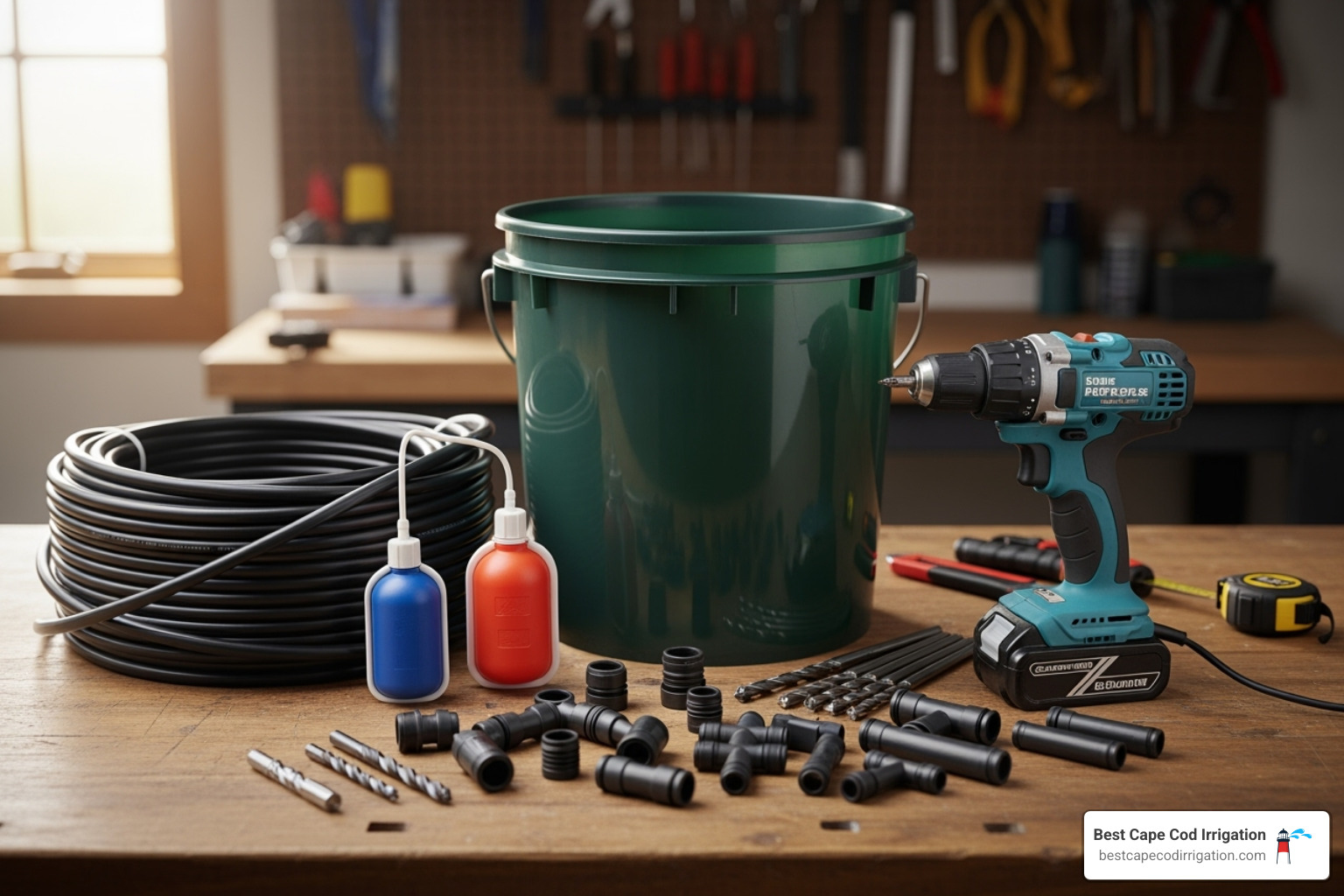
Your reservoir container is the system’s heart. A 5-gallon bucket works for one or two EarthBoxes, while an 18-gallon storage bin can handle more. For larger setups, use a rain barrel. Ensure any container is opaque to prevent algae.
The float valve is the system’s brain. Mini or evaporative cooler float valves are ideal as they are designed for low-pressure and are inexpensive. While toilet float valves can be adapted, mini versions are easier to use.
You’ll need irrigation tubing (1/4-inch or 3/8-inch), connectors like T-fittings and elbows, a bulkhead fitting or spigot for the reservoir’s outlet, and silicone sealant to keep it watertight.
Tool-wise, you’ll need a drill, utility knife, basic pliers and wrench, and zip ties for securing tubing.
The entire system can cost as little as $10-$15, though more complex setups might run $25-$45. That’s significantly less than commercial alternatives.
Water Source and Reservoir Considerations
Your water source strategy is critical for your diy earthbox automatic watering system.
Reservoir placement is simple: higher is better. The main reservoir must be liftd above the EarthBoxes for gravity to work. A few feet of elevation on a sturdy table, concrete blocks, or a platform is usually sufficient.
Water quality matters. Rainwater is often ideal. If using a garden hose, be mindful of the pressure. Municipal water (40-80 PSI) can overwhelm delicate float valves. A simple pressure regulator ($10-$15) can protect your system.
Reservoir size depends on your garden’s needs. A single EarthBox might use 5 gallons over several days, but multiple boxes in summer can drain reservoirs quickly. A 30-50 gallon rain barrel offers excellent capacity for larger setups.
Remember to choose opaque or dark containers for your reservoir to prevent algae growth, which can clog the system.
For complex gardens, professional garden watering solutions might be worth exploring alongside your DIY efforts.
Step-by-Step Guide: Building a Gravity-Fed Float Valve System
This guide will help you build a reliable diy earthbox automatic watering system to keep your plants perfectly watered. This gravity-fed float valve system works like a toilet tank—when water drops, the float opens a valve to let more water in. It’s simple, effective, and requires no electricity.
Step 1: Preparing the Water Reservoir
The main water reservoir is the command center of your system. First, find a stable spot for it. The container must sit higher than your EarthBoxes for gravity to work. A sturdy table, cinder blocks, or a plant stand are good options.
Next, drill a hole near the bottom of your reservoir, sized for your bulkhead fitting or spigot. A clean, correctly sized hole is crucial. Install the fitting, using plumber’s tape or silicone sealant around the washers to create a watertight seal. Tighten it snugly without overdoing it to avoid cracking the plastic.
Finally, perform a quick leak test. Fill the reservoir with a few inches of water and wait an hour. Fix any drips now.
Step 2: Installing the Float Valve in Your EarthBox
Next, install the float valve that automatically maintains the water level in your EarthBox.
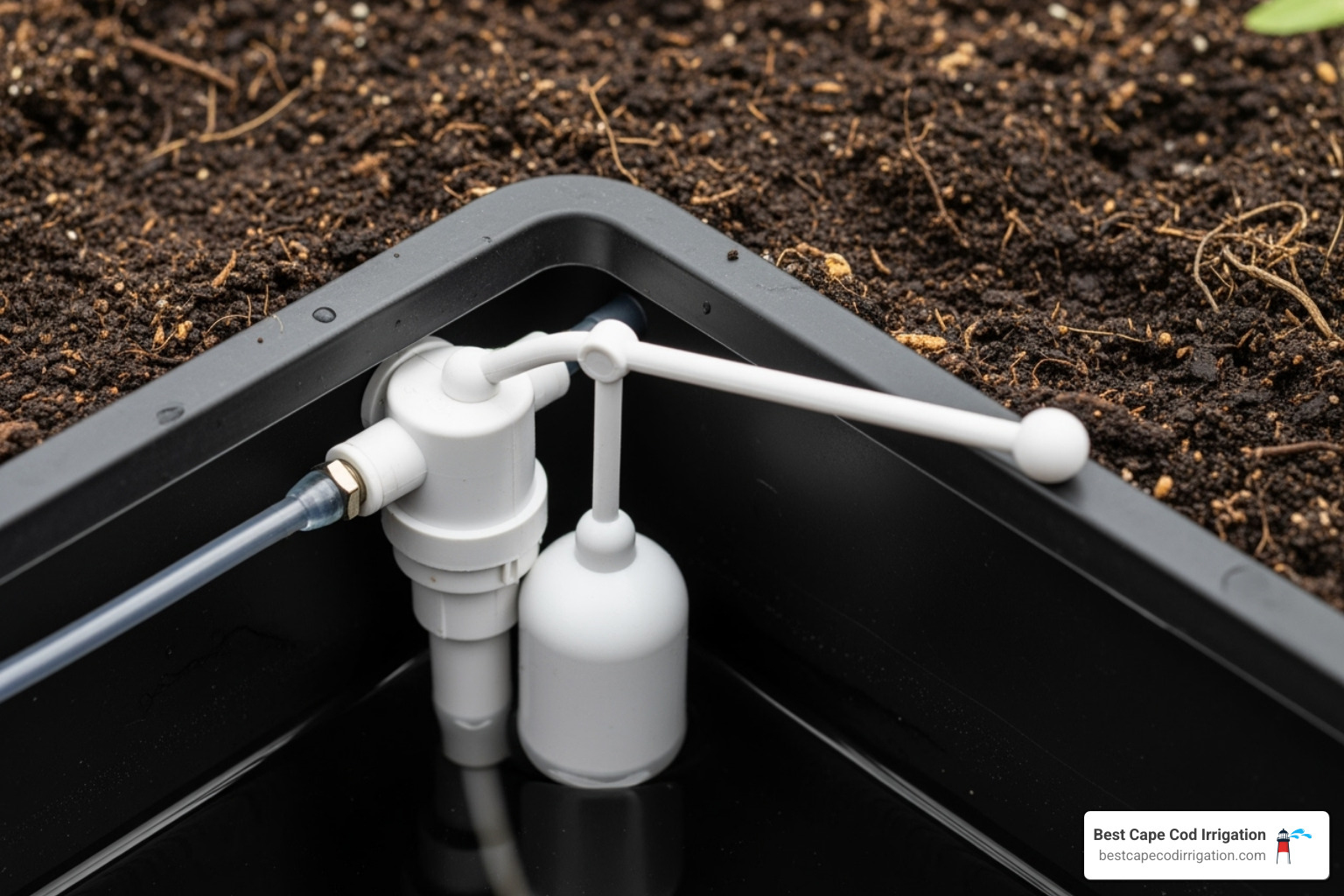
Create an entry point for the water line just above the EarthBox’s internal reservoir. You can use an existing drain slot or drill a small hole matching your tubing size. For DIY containers, drill into the side wall above the water reservoir.
Position the mini float valve inside the reservoir area, ensuring the float arm can move freely. Secure it with its mounting hardware or zip ties. The most important step is adjusting the float level. You want the valve to shut off when the internal reservoir is full but not overflowing. Bend the float arm slightly to fine-tune this setting. Your goal is to keep the wicking system submerged.
If you drilled a new hole, add a bead of silicone sealant where the tube enters to prevent leaks.
Step 3: Connecting the System and Testing for Leaks
Now, connect the components to bring your diy earthbox automatic watering system to life.
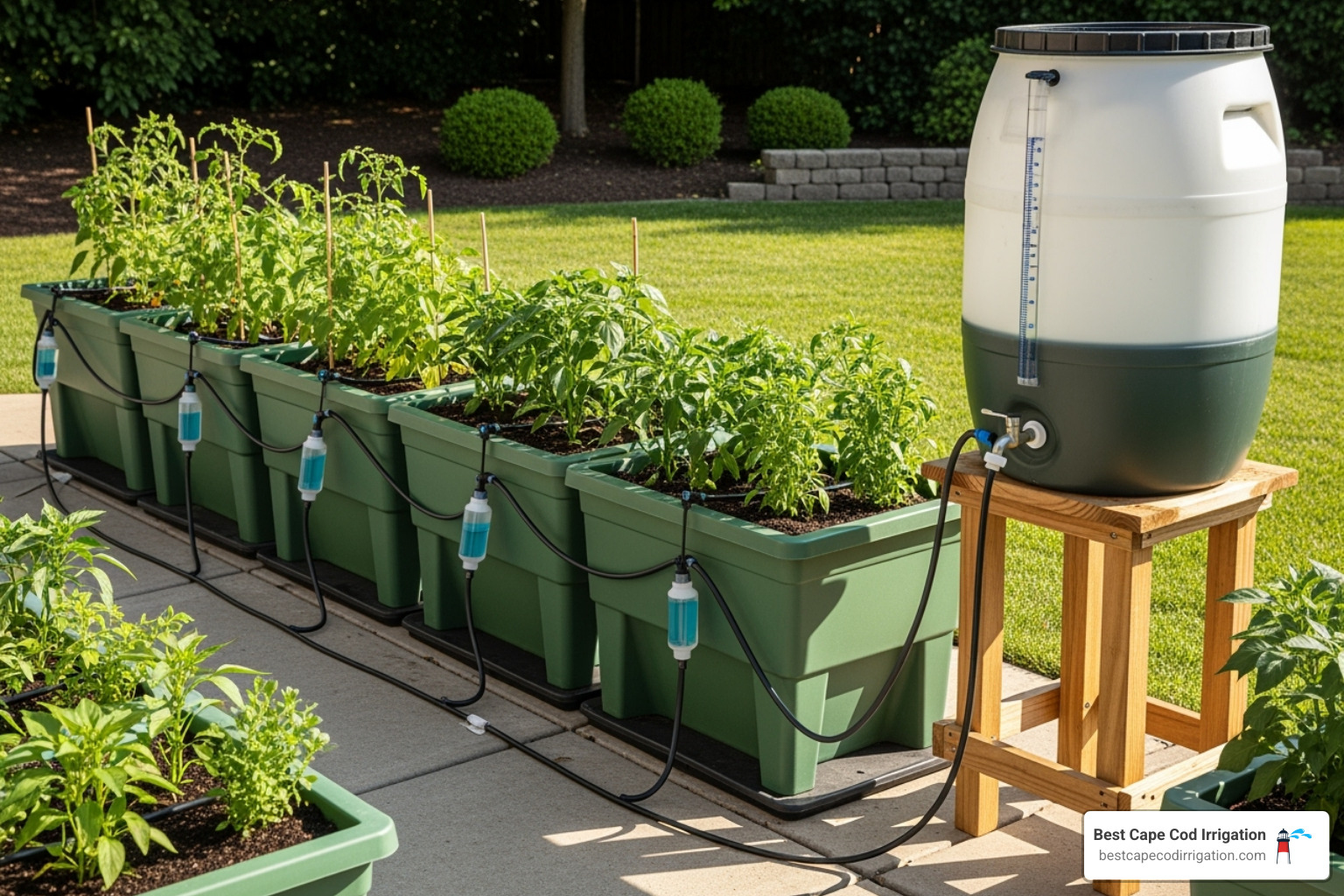
Measure and cut tubing to connect the reservoir to the float valve. For multiple boxes, use T-connectors to branch the main line. Keep tubing runs as straight as possible. To make connections easier, dip the tubing end in hot water to soften it before pushing it onto the fitting.
To test the system, open the reservoir spigot. Water should flow through the tubing, filling the EarthBoxes until the float valves rise and shut off the flow. Once filled, check every connection for drips or leaks, including the reservoir fitting, tubing joints, and float valve installations. Fix any leaks immediately.
Give the system a full day to prove itself, making small adjustments to the float arms as needed to ensure proper filling.
Congratulations! You’ve built a reliable watering system that will keep your plants happy and give you peace of mind.
Customization, Maintenance, and Troubleshooting
Once your diy earthbox automatic watering system is running, you can customize it for your garden and perform simple maintenance to keep it working for years. Most problems have easy fixes.
Adapting Your diy earthbox automatic watering system for Different Container Sizes
The beauty of a DIY system is its adaptability to your unique garden.
For larger containers, like a 31-gallon EarthTainer, you may need to mount the float valve higher or extend its arm to ensure proper water levels. The goal is to keep wicking components submerged without causing overflow.
Smaller containers require positioning the float valve low enough to maintain the correct water level without flooding the planter. This may mean adjusting the float valve height by bending the arm or finding a new mounting spot.
When watering multiple containers, consider a larger 1/2-inch main supply line feeding smaller 1/4-inch branches to maintain adequate pressure.
Modifying for DIY containers follows the same principles. The float valve just needs to maintain the water reservoir that feeds your wicking components.
For more ideas on tailoring your garden’s watering, explore our garden watering solutions.
Maintenance and Off-Season Storage
A well-maintained diy earthbox automatic watering system is low-maintenance and will last for many seasons.
During the growing season, check for clogs in tubing and float valves, especially if using rainwater. Clean float valves occasionally with a brush and water to remove dirt or mineral deposits that cause sticking. Clean the reservoir once a season to prevent algae buildup.
Winterization is critical in freezing climates like Cape Cod. Frozen water will expand and crack components. Before the first frost, shut off the water supply, drain the system completely, and remove the float valves from your EarthBoxes.
To prevent insect damage, clean all components thoroughly and store them indoors in a shed or garage. Keep tubing rolled carefully in a bag or bin for easy setup next season.
Common Troubleshooting Tips for your diy earthbox automatic watering system
Even well-built systems can have issues. Here’s how to handle common problems.
If the overflow drain leaks, first ensure the EarthBox is level. If that doesn’t help, the float valve may be set too high; gently bend the arm down. Sometimes plant roots can block the drain, causing a leak.
If the system stops filling, check that the reservoir spigot is open and has water. Look for kinked tubing or debris. A stuck float valve can often be freed with a gentle wiggle.
Clogs in tubing are usually from sediment or algae. Disconnect the tubing and flush the lines. An inline filter near the reservoir can prevent recurring clogs.
Uneven watering often means the boxes aren’t level. For many boxes on one line, those farthest from the reservoir may get less pressure. A larger main supply line can solve this.
For complex issues, our team has experience with drip sprinkler repair and can help.
Frequently Asked Questions about DIY EarthBox Watering
Building a diy earthbox automatic watering system raises some common questions. Here are the answers.
How does the float valve mechanism work?
The float valve mechanism is simple and mechanical, much like a toilet tank, requiring no electricity or sensors. Inside the EarthBox’s reservoir is a float valve with an attached, buoyant float. As plants use water, the level drops, and the float arm drops with it.
When the arm reaches a low point, it mechanically opens a small valve, allowing water from your main reservoir to flow in. As the water level rises, so does the float, pushing the valve closed and shutting off the flow. This cycle maintains consistent moisture without your intervention.
Can I add liquid fertilizer to the main water reservoir?
While it seems like a time-saver, avoid adding liquid fertilizer to the main reservoir. Here’s why.
Clogging is a major concern. Liquid fertilizers contain particles that can gum up tubing and float valves, causing system failure. Fertilizers also create an algae party in your reservoir, leading to more clogs.
The good news is that EarthBoxes are designed for solid fertilizer strips placed on the soil surface. As water wicks up, it dissolves nutrients and delivers them to the roots. This proven method avoids the problems associated with liquid fertilizers in the water system.
For those interested in the engineering, you can check out this detailed DIY system plan that focuses on water delivery.
How can I monitor the water level in my EarthBox?
Even with an automated system, it’s smart to monitor water levels, especially during heat waves. You can easily create a monitoring system for the fill tube using household items.
The wine cork and skewer method is a practical DIY indicator. Push a long bamboo skewer through a cork and drop it into the fill tube so it floats on the water. Use a marker to create “Full” and “Add Water” reference points on the skewer. It will rise and fall with the water level, giving you a visible gauge from a distance.
Another option is the plastic straw and styrofoam method. Connect straws, attach a small piece of styrofoam to one end, and insert it into the fill tube. Mark your levels with colored tape as the system fills. These simple indicators provide confidence that your diy earthbox automatic watering system is working correctly.
Conclusion: Enjoy Your Automated, Thriving Garden
Congratulations on exploring diy earthbox automatic watering system automation! You’ve seen how basic materials like a bucket, tubing, and a float valve can transform your gardening experience from a chore into a pleasure.
With this system, you’ll have no more daily watering schedules, forgotten plants, or wilted tomatoes after a weekend away. Your system maintains perfect moisture levels around the clock, letting you focus on the fun parts of gardening, like the harvest. Your plants will thank you with healthier growth, better yields, and fewer stress-related problems.
The peace of mind is invaluable. Whether you’re on vacation, busy with work, or just sleeping in, your garden thrives without constant attention. It’s like having a reliable garden assistant.
Beyond functionality, you’ve built something that will serve your garden for years. You can easily expand the system to more containers or experiment with other setups.
Ready to start your project? The basic gravity-fed float valve system works beautifully for most home gardens. Start simple and make adjustments as you go.
For those managing larger properties or interested in whole-yard automation, our professional smart irrigation solutions can integrate your container garden with comprehensive landscape irrigation. With over 25 years of Cape Cod experience, we understand local conditions and the unique challenges of coastal gardening.
If you prefer a hands-off approach, explore our expert irrigation installation services to ensure your entire property stays perfectly watered with minimal effort.
Now get out there and enjoy your automated garden – you’ve earned it!
