


Why Proper Garden Watering Solutions Matter for Your Success
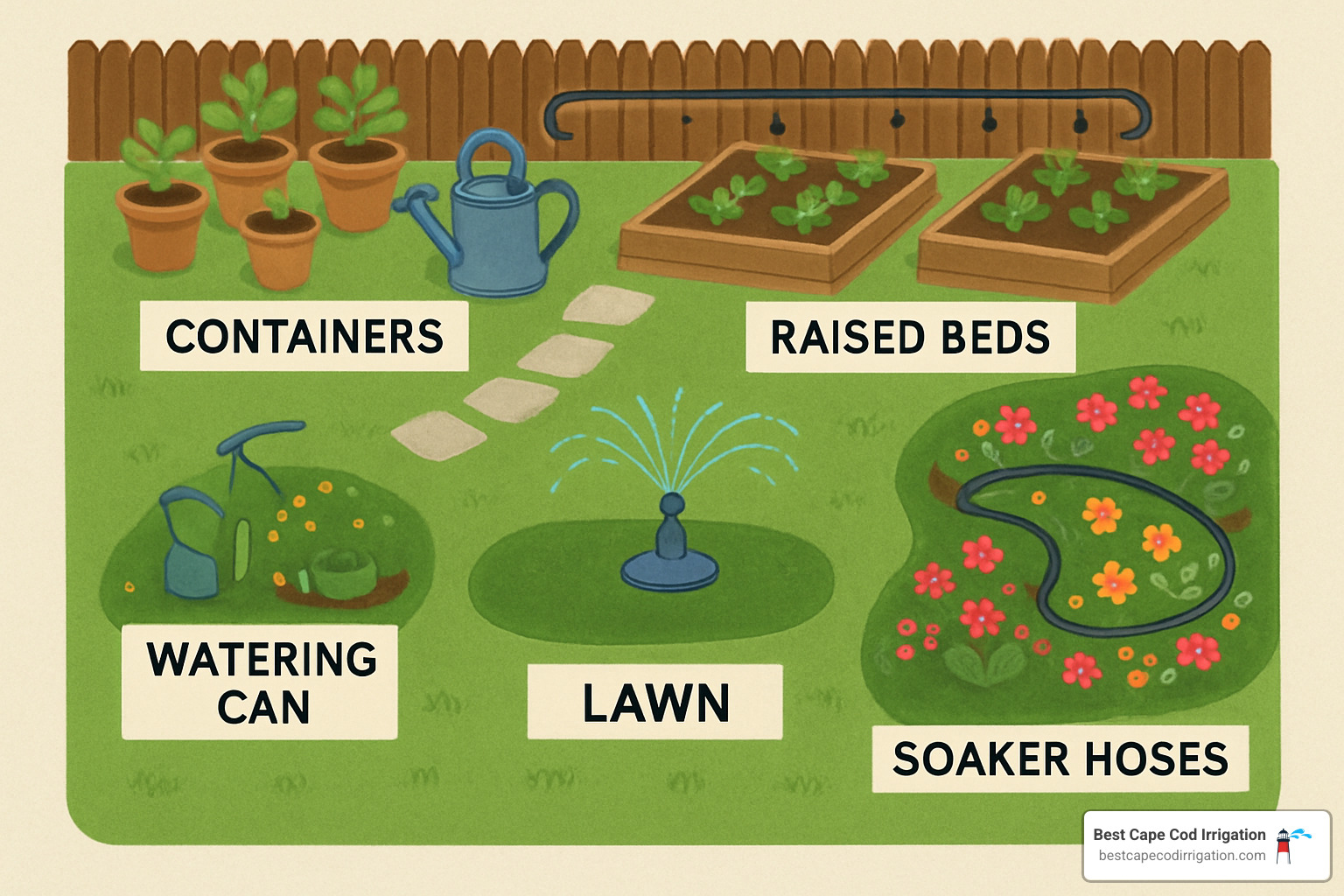
Garden watering solutions come in many forms, from simple hand watering to sophisticated drip irrigation systems. Here’s what you need to know:
Quick Answer – Best Garden Watering Solutions:
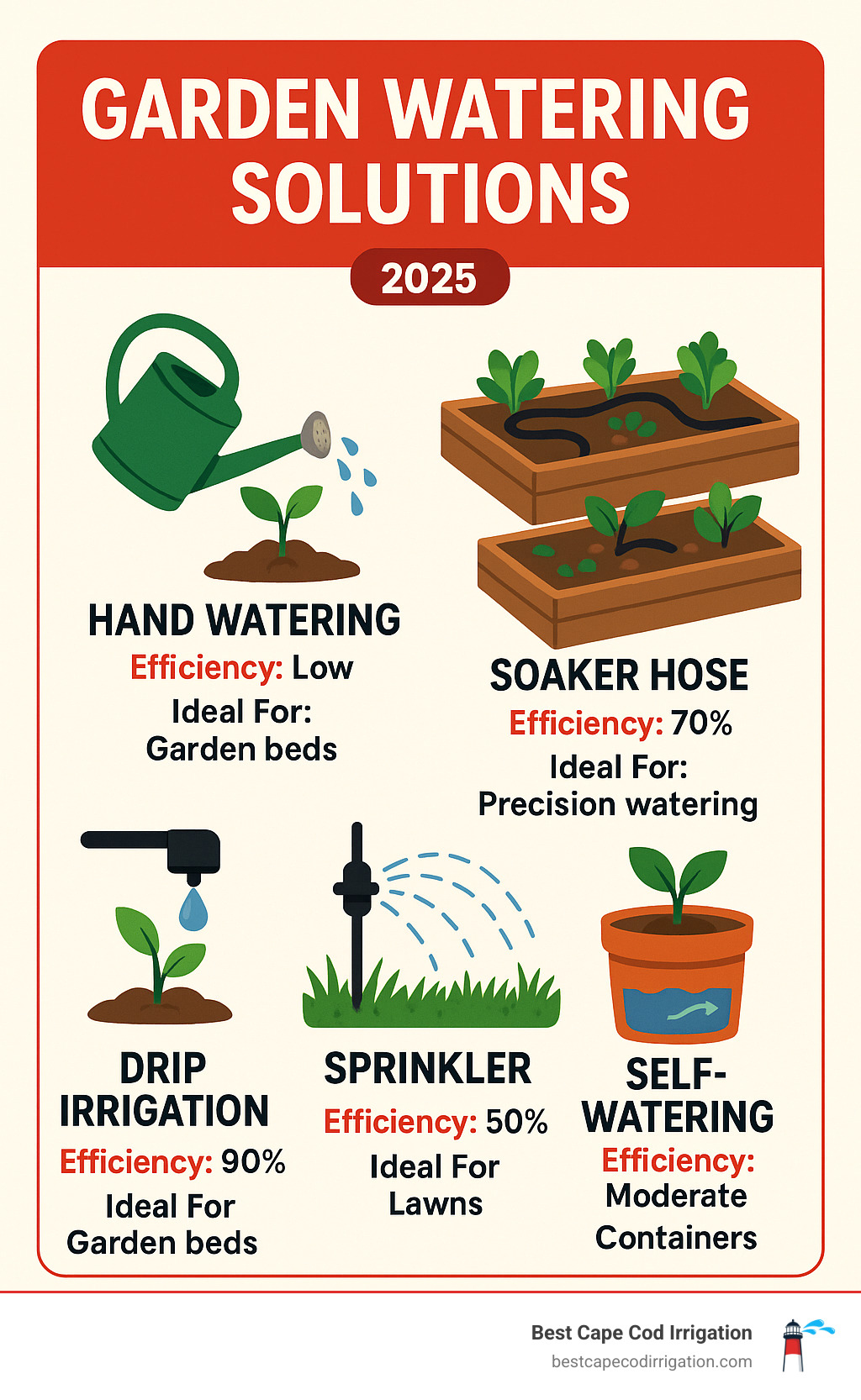
– Hand watering – Most flexible but time-consuming
– Soaker hoses – 70% more water-efficient than sprinklers
– Drip irrigation – Uses 30-50% less water, best for precision watering
– Sprinkler systems – Best for lawns and large areas
– Self-watering containers – Perfect for containers and vacation watering
– Smart timers – Automate any system for consistency
Your garden needs water to survive, but how you deliver that water makes all the difference. Cape Cod’s sandy soil drains fast, summer droughts hit hard, and manual watering takes forever. Modern irrigation technology makes it easier than ever to keep your garden thriving while saving time, water, and money.
Basic garden watering solutions vocab:
– allotment watering solutions
– flower bed watering solutions
Why Water Matters
Water isn’t just about keeping plants alive – it’s about keeping them thriving. When roots have consistent access to moisture, they can efficiently absorb nutrients from the soil. This leads to stronger stems, lusher foliage, better fruit production, and improved disease resistance.
Without proper hydration, plants enter survival mode. They close their stomata (leaf pores) to conserve water, which also stops photosynthesis. Root development slows, and the plant becomes vulnerable to pests and diseases.
Understanding Your Garden’s Water Needs
Every garden is unique. After helping Cape Cod gardeners for over 25 years, we’ve learned that understanding your specific conditions is the secret to choosing the right garden watering solutions.
Soil texture sets the stage. Cape Cod’s sandy soil drains faster than clay but is forgiving if you occasionally overdo it. Clay soils hold water like a sponge but can drown plants if you’re not careful. The sweet spot? Loamy soil enriched with compost.
Rainfall patterns across our region can be surprisingly different. Install a simple rain gauge – it takes the guesswork out of knowing what nature already provided.
Sun exposure dramatically affects how quickly your garden dries out. Full-sun gardens can lose moisture twice as fast as shaded spots.
Here’s the magic number: most gardens need 1-2 inches of water per week from rain and irrigation combined. But scientific research on drip efficiency shows how you deliver that water matters just as much as how much you provide.
Modern moisture probes take the mystery out of when to water. Adding compost and mulch to your beds works like magic for water retention.
Signs of Overwatering vs. Underwatering
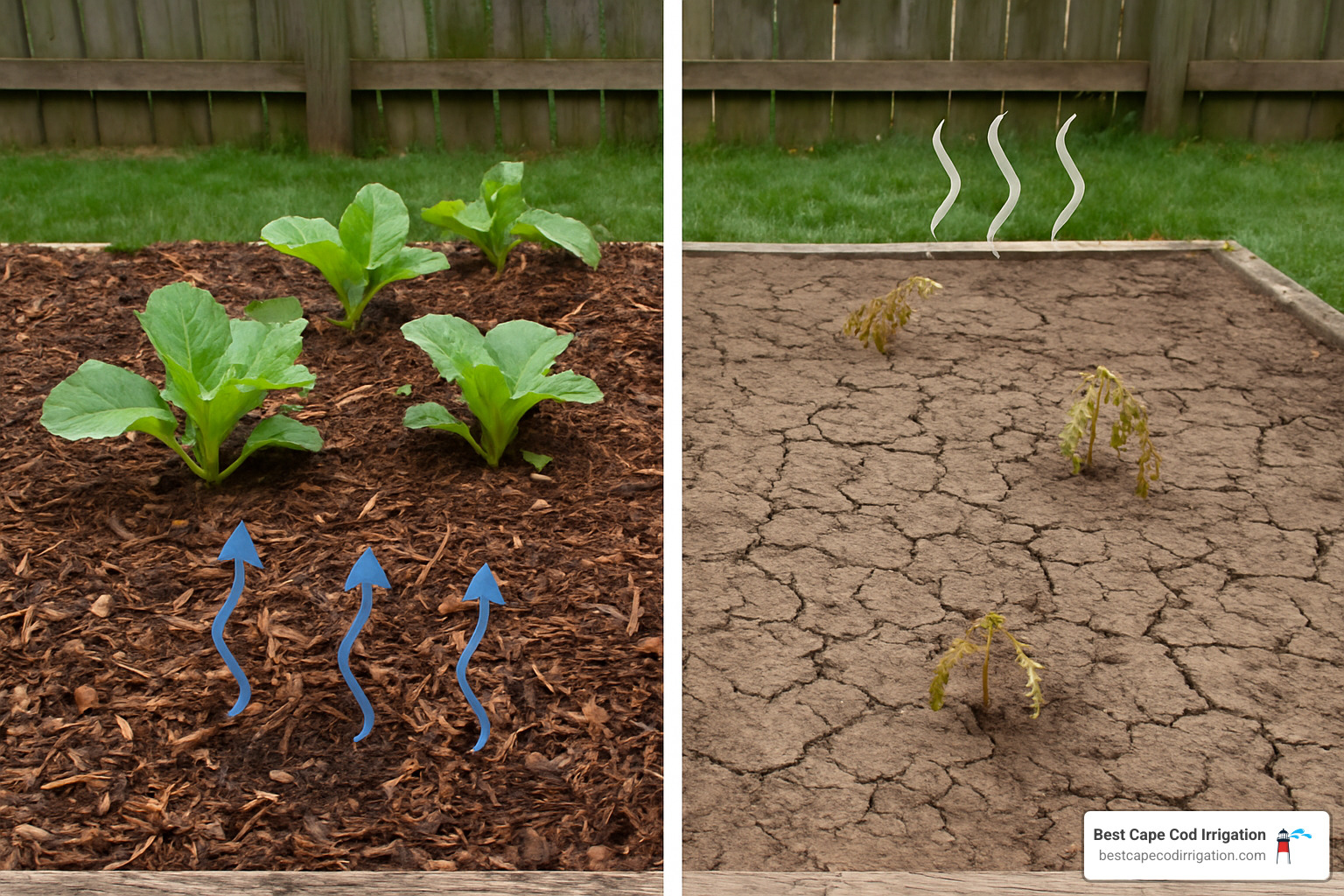
Yellow leaves are often the first cry for help, but they can mean opposite things. Overwatered plants develop soft, mushy yellow leaves. You might also notice root rot – those black, smelly roots.
Underwatering shows up differently. Plants develop dry, crusty soil and leaves feel crispy rather than soft.
The droop test is useful: if plants perk up within hours of watering, they were genuinely thirsty. If they stay droopy, you might be dealing with overwatering.
How Often Should You Water?
Forget daily sprinkling – it creates shallow root systems that can’t handle stress.
The finger test never lies: push your finger 2-3 inches deep into the soil. If it’s dry at that depth, it’s time to water deeply.
Use your rain gauge to track what Mother Nature provides, then supplement to reach that 1-2 inches per week target. The key is watering deeply but less frequently.
Garden Watering Solutions: Comparing Every System
Think of choosing a watering system like picking the right tool for a job. After 25 years of Cape Cod installations, we’ve seen what works. Each method has its sweet spot, and the best gardens often combine multiple approaches.
Hand & Hose Watering
Hand watering gives you ultimate flexibility for spot-treating stressed plants. It’s perfect when you’re learning what your plants need, with zero startup cost.
But hand watering gets old fast with large gardens. It’s time-intensive, easy to forget, and coverage tends to be inconsistent.
This method works best for small gardens, container plants, and supplemental watering.
Soaker Hoses & DIY Buckets
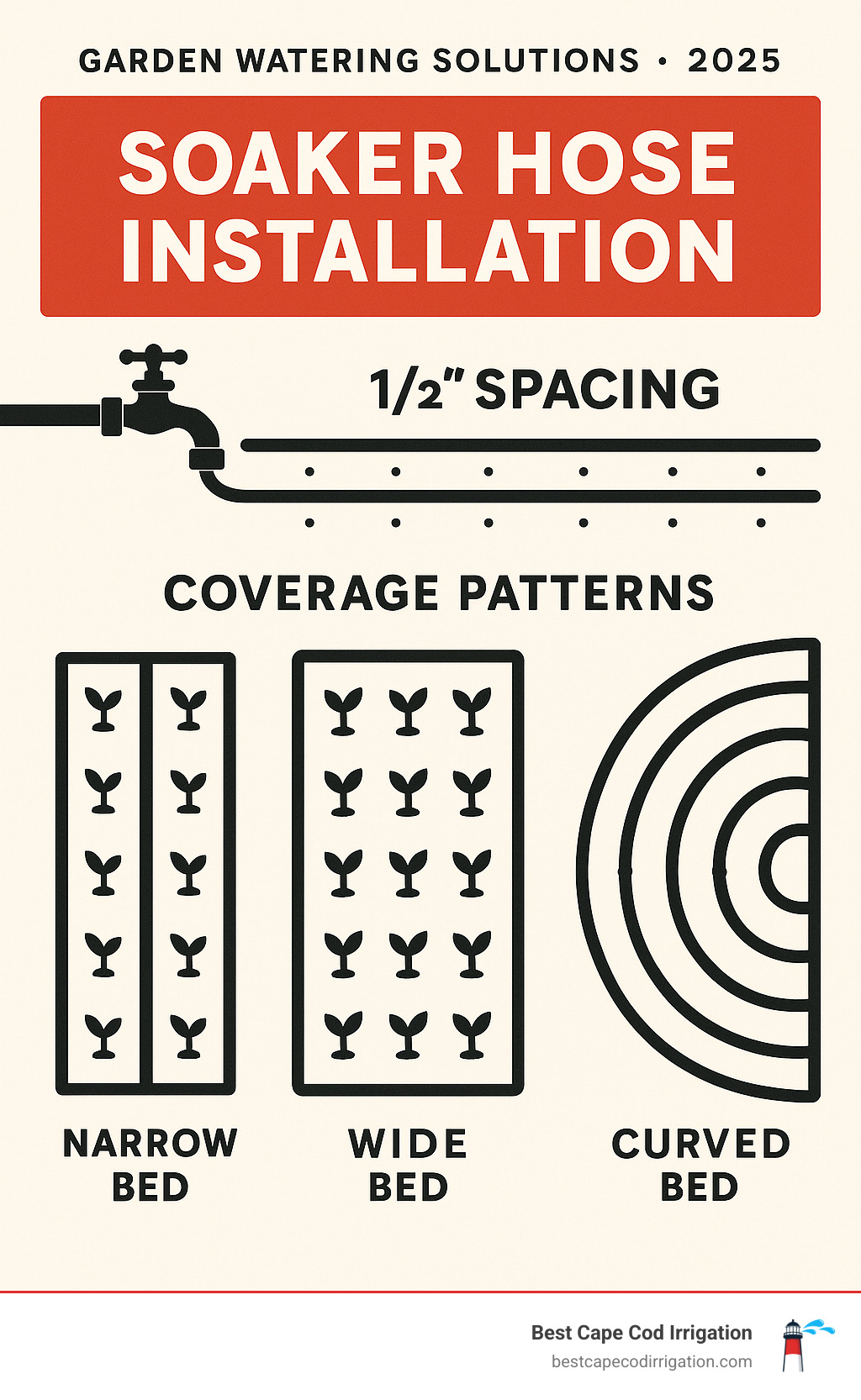
Soaker hoses are reliable, affordable, and surprisingly effective. These perforated tubes reduce water waste by up to 70% compared to traditional sprinklers.
Water seeps directly into the root zone, promoting deep root growth while keeping foliage dry. This reduces disease problems.
The downside? Soaker hoses can clog easily with hard water or debris, distribute unevenly on slopes, and need manual operation unless you add timers.
Soaker systems shine in vegetable rows, perennial borders, and around newly planted trees.
Drip Irrigation (Most Water-Efficient)
Drip irrigation is the precision engineer of garden watering solutions. This is the most water-efficient method available, using 30-50% less water than other systems.
Modern drip systems include pressure regulators, filters, and precise emitters spaced exactly where your plants need water. The magic happens at low pressure, minimizing evaporation and runoff.
Drip irrigation works beautifully on slopes where other systems struggle. You can customize water delivery for different plant needs.
The main drawbacks are higher upfront costs and careful planning requirements. Learn more about our professional Rain Bird system installations.
Choose drip irrigation for vegetable gardens, flower beds, and anywhere water conservation is a priority.
Sprinkler & Rotor Systems
For covering large areas efficiently, nothing beats a well-designed sprinkler system. Pop-up spray heads excel in smaller zones, while rotor heads throw water 20-40 feet, perfect for expansive lawns.
The real game-changer is smart technology integration. Modern systems include rain sensors and soil moisture sensors that adjust schedules based on actual conditions.
Proper zoning makes all the difference. Group plants with similar water needs together.
Sprinkler systems are unbeatable for lawns, large planted areas, and properties where comprehensive coverage matters. Explore our Smart Irrigation Solutions.
Self-Watering Containers & Ollas
Ollas are unglazed clay pots that ancient civilizations used for irrigation. Bury one in your garden bed, fill with water, and let physics do the work for 7-10 days.
Self-watering containers use a wick system that draws water from a reservoir as plants need it.
These systems are vacation heroes and prevent both overwatering and underwatering.
Self-watering works best for container gardens, small raised beds, and consistent moisture needs.
Off-Grid & Solar Watering Kits
Solar-powered irrigation brings automation where electrical lines aren’t practical. These systems typically cycle every 3 hours, with water volume adjusting based on sunlight exposure.
Solar systems excel in remote gardens, greenhouses, and off-grid applications.
| System | Water Efficiency | Upfront Cost | Best For | Automation Potential |
|---|---|---|---|---|
| Hand Watering | Low | Very Low | Small gardens | None |
| Soaker Hoses | High | Low | Vegetable rows | With timers |
| Drip Irrigation | Highest | Medium-High | All gardens | Excellent |
| Sprinklers | Medium | Medium-High | Lawns, large areas | Excellent |
| Self-Watering | High | Medium | Containers | Built-in |
| Solar Systems | High | High | Remote areas | Excellent |
Choosing the Right System for Your Space
The best garden watering solutions aren’t one-size-fits-all. After 25+ years of Cape Cod installations, the “perfect” system depends entirely on your unique situation.
Garden size drives everything else. Small herb collections work fine with hand watering, but once you hit 200 square feet or more, automation becomes essential.
Plant types tell us about water needs. Tomatoes want consistent moisture, while established beach roses handle Cape Cod’s dry spells fine. Mixing high-maintenance vegetables with drought-tolerant perennials? That’s where zoning becomes your best friend.
Water pressure often surprises homeowners. Low pressure actually works great for drip irrigation, while sprinkler systems need consistent pressure across multiple zones.
Budget considerations matter, but efficient systems pay for themselves through water savings and healthier plants.
The smart approach? Hybrid setups work beautifully – drip irrigation for vegetables, rotors for lawns, and self-watering containers for decks.
Garden Watering Solutions for Raised Beds
Raised beds are drip irrigation heaven. Start with a Y-connector at your spigot, add a battery-powered timer, then a pressure regulator.
The magic happens with the drip grid layout. Run tubing in neat loops, spacing emitters every 12 inches for consistent coverage.
Garden Watering Solutions for Lawns & Large Areas
Large areas need sprinkler system coverage. Rotor heads handle spaces over 30 feet, while pop-up spray heads manage smaller zones and corners.
The secret is proper zoning – group plants with similar water needs. Smart controllers adjust schedules based on weather forecasts and soil conditions.
Garden Watering Solutions for Containers & Balconies
Container gardens dry out faster and have limited root space. Self-watering containers with built-in reservoirs are game-changers. Micro-drip systems with individual stakes work beautifully for larger collections.
The key is matching the solution to your lifestyle.
Installation, Automation & Maintenance Tips
Getting your garden watering solutions installed correctly makes everything else work smoothly. After 25+ years of Cape Cod installations, we’ve seen what works.
Planning your layout is where success starts. Sketch your property, marking zones based on sun exposure and plant types. Your vegetable garden shouldn’t be on the same schedule as drought-tolerant perennials.
Backflow prevention devices prevent irrigation water from flowing back into your home’s water supply. Most areas require them by code.
Seasonal scheduling separates pros from amateurs. Your August routine will drown plants in October. Smart controllers handle adjustments automatically.
Don’t forget Openings and Winterization – Cape Cod winters can destroy improperly prepared systems.
Automate Like a Pro
Modern irrigation controllers are computers that water your garden. Wi-Fi enabled models adjust schedules based on weather forecasts and send alerts if something goes wrong.
Voice control integration means you can tell your garden to water itself. Even basic programmable timers eliminate forgotten watering sessions.
Weather sync capabilities automatically adjust or skip watering based on rainfall, temperature, and humidity.
Maintaining a Drip System
Drip irrigation is reliable but needs some TLC. Monthly line flushing during growing season keeps emitters flowing freely. Clogged emitters are the most common issue – they’re cheap and easy to replace.
Filter cleaning takes five minutes but saves hours of frustration. Leak detection becomes second nature once you know what to look for.
Our Irrigation Repairs & Maintenance team handles all this for homeowners who’d rather enjoy their gardens.
Keeping Plants Alive While on Vacation
Timer installation before departure is non-negotiable. Test everything at least a week before leaving.
Reservoir filling applies to ollas, self-watering containers, or rain barrels. Thick mulch application dramatically reduces evaporation – 3-4 inches around plants.
Neighbor briefings work best when kept simple. Show them the main shutoff, timer controls, and your contact information.
Costs, Water Conservation & Common Mistakes
DIY setups typically run $50-$200 for soaker hoses, timers, and simple drip kits. Professional installations – average costs based on internet data range from $800-$2,500 for comprehensive systems, though high-end installations can reach $7,500 or more (these are industry averages and not actual costs for Best Cape Cod Irrigation services).
Efficient systems pay for themselves. A properly designed drip system can slash water bills by 30-50%. We’ve had clients tell us their summer water bills dropped by $200+ per month after upgrading to smart drip irrigation.
Check for rebates – many Cape Cod municipalities offer cash back for water-efficient irrigation systems.
The best time to water? Dawn is your golden hour – specifically between 4-6 AM. This timing can save 30-50% on water costs compared to midday watering.
Common Watering Mistakes to Avoid
The daily sprinkle trap is the worst offender. Light, frequent watering creates shallow roots that can’t handle stress. Instead, water deeply but less often.
Midday watering wastes water to evaporation. Evening leaf spray invites fungal diseases. Always water at soil level when possible, and run sprinklers early morning so plants dry quickly.
The “set it and forget it” mistake ignores rain. Rain sensors cost $30 and save hundreds on water bills.
Conservation Hacks That Pay Off
Mulch is your secret weapon for cutting water bills in half. A thick 3-inch layer prevents evaporation and suppresses weeds.
Compost transforms Cape Cod’s sandy soil into a water-holding sponge. Work 2-3 inches into beds each year.
Smart sensors prevent overwatering. Soil moisture sensors costing $50-100 can reduce water usage by 20-30%.
Rain barrels capture free water. One inch of rain on a 1,000 square foot roof fills over 600 gallons.
Drought-resistant plants are the ultimate water-saving hack. Native Cape Cod plants thrive with minimal irrigation once established.
Frequently Asked Questions About Garden Watering Solutions
After 25+ years of helping Cape Cod gardeners, we get asked the same questions over and over. Here are the answers that matter most for your garden watering solutions success.
How do I tell if my plants need more or less water?
The best way to check is with the soil probe method – stick your finger or a screwdriver 3-4 inches deep into the soil near your plants. If it feels dry at that depth, it’s watering time. If it’s still moist, hold off for another day or two.
Leaf posture tells you a lot too. Plants that droop during the hottest part of the day but perk up by evening are usually just conserving water – that’s normal and healthy. But plants that stay wilted even in the cool morning or evening? They need water right away.
Watch for the subtle signs too. Slightly grayish-green leaves often mean thirst, while overly dark green leaves that feel soft might signal overwatering. Your plants are constantly communicating – you just need to learn their language.
What’s the most water-efficient system I can install?
Drip irrigation wins every time. A properly designed drip system uses 30-50% less water than traditional sprinklers because it delivers water directly to root zones with almost zero evaporation loss.
The magic happens at low pressure through precise emitters spaced exactly where your plants need water. No waste on pathways, no water blowing away in the wind, and no wet foliage that invites disease problems.
But here’s the catch – the system has to be designed and installed correctly to get those savings. Cheap DIY setups often perform poorly, while professional installations with pressure regulators, filters, and quality emitters deliver the promised efficiency year after year.
How can I winterize my watering system for Cape Cod winters?
Cape Cod’s brutal freeze-thaw cycles can turn your irrigation investment into expensive yard art if you don’t winterize properly. Water expands when it freezes, and that expansion will crack pipes, split valves, and destroy sprinkler heads.
Professional winterization includes blowing out all water lines with compressed air, draining low-point valves, and shutting off main water supplies to prevent any residual water from causing damage. We also insulate above-ground components and remove any electronics that might be damaged by moisture.
Simple soaker hose systems can often be winterized by disconnecting and draining them yourself. But anything with buried pipes, valves, or sprinkler heads really needs professional attention. The cost of proper winterization is always less than replacing a damaged system come spring.
Our Openings and Winterization service takes the worry out of protecting your investment through our unpredictable Cape Cod winters.
Conclusion
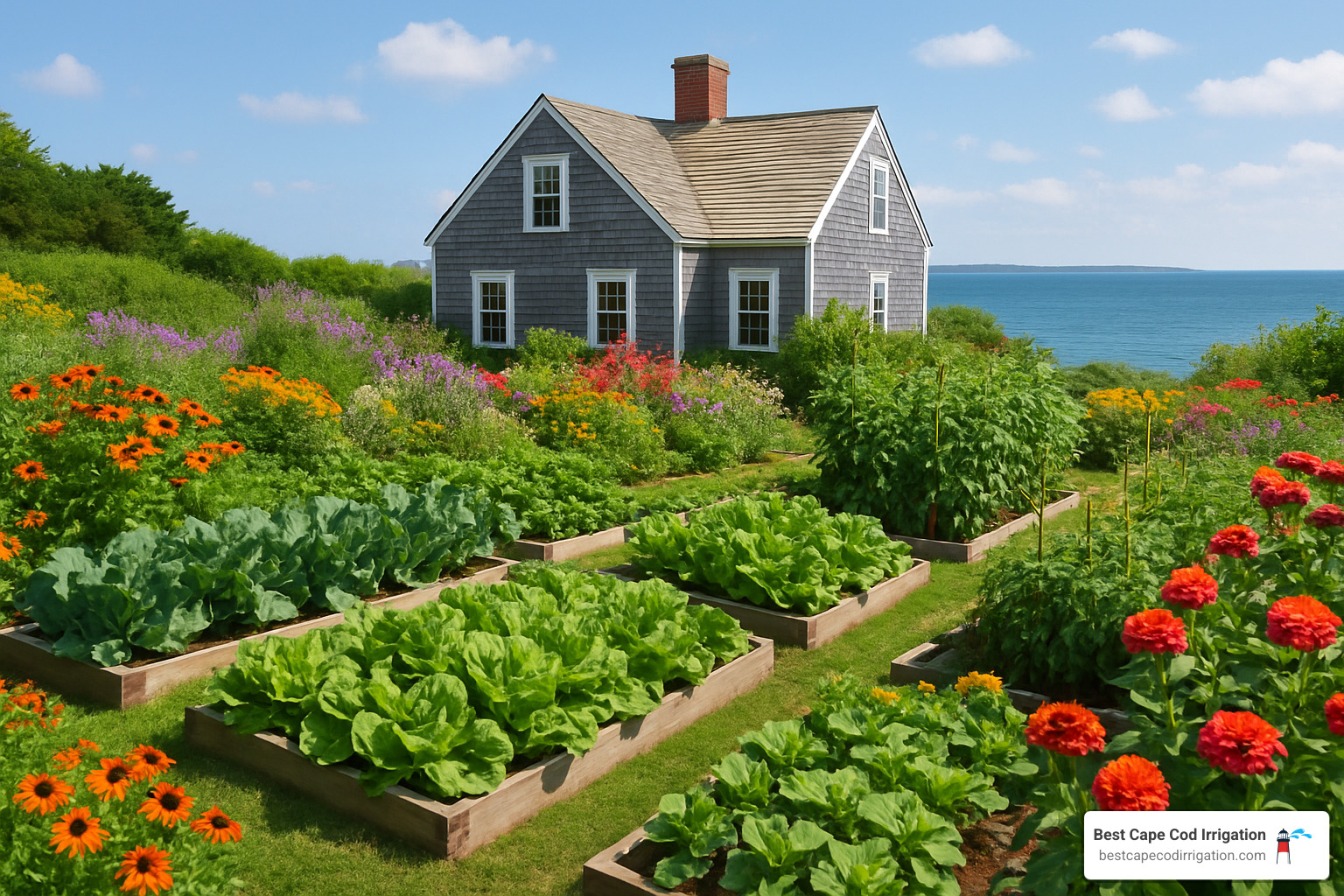
Your journey to perfect garden watering solutions doesn’t have to be overwhelming. Whether you’re starting with a basic soaker hose or ready for smart irrigation technology, find what works for your situation and use it consistently.
We’ve seen countless Cape Cod gardens transform from struggling to thriving simply by switching to well-designed automated systems. The results: healthier plants, lower water bills, and more time to enjoy your garden.
The most efficient system is drip irrigation. But the best system is the one you’ll maintain and use properly. Hybrid systems work beautifully too – combining drip irrigation for vegetables with smart sprinklers for lawns and self-watering containers for decks.
After 25+ years of helping Cape Cod gardeners, we’ve learned every property tells a different story. Provincetown’s sandy soil behaves differently than Mashpee’s clay. A windy Chatham hillside has different challenges than a sheltered Barnstable valley garden.
Smart technology has revolutionized garden watering with systems that adjust based on weather forecasts, send phone alerts, and learn your garden’s needs over time.
The investment pays off quickly. Between water savings, healthier plants, and time saved, most systems cover costs within two growing seasons.
Ready to stop worrying about plant watering? Schedule an installation consultation with our team. We’ll design a system that works perfectly for your garden, budget, and lifestyle.
At Best Cape Cod Irrigation, we combine decades of local expertise with cutting-edge technology to create systems that just work, year after year.