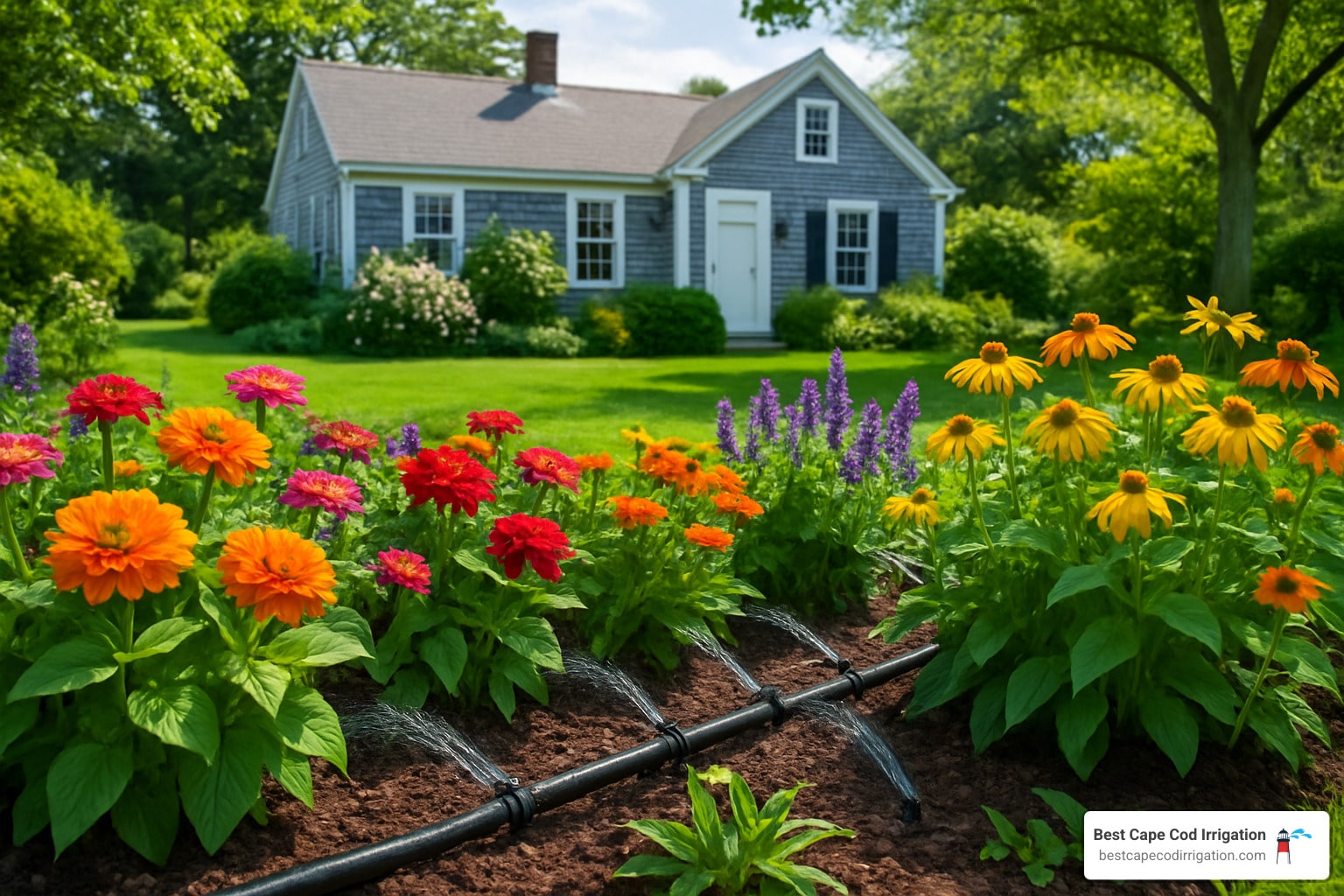



The Smart Gardener’s Guide to Flower Bed Hydration
Looking for the best flower bed watering solutions? Here’s a quick overview of your options:
| Solution Type | Best For | Water Savings | Cost Range | Ease of Install |
|---|---|---|---|---|
| Drip Irrigation | Precise watering, water conservation | Up to 80% | $25-$150 | Moderate |
| Soaker Hoses | Row plantings, borders | 30-50% | $15-$50 | Easy |
| Micro-Sprayers | Mixed beds, ground cover | 20-40% | $20-$100 | Moderate |
| Smart Timers | Automation, convenience | 15-50% | $30-$150 | Easy |
| DIY Bucket Systems | Budget solutions, small beds | Variable | $5-$20 | Very Easy |
Finding the right flower bed watering solutions can transform your garden from a daily chore into a self-sustaining oasis. If you’re tired of dragging hoses across your Cape Cod property or watching your precious blooms wilt during summer dry spells, you’re not alone. With our region’s sandy soil and unpredictable weather patterns, keeping flower beds properly hydrated can feel like a full-time job.
The good news? Modern irrigation technology has made it easier than ever to maintain gorgeous flower beds while conserving water and saving time.
Whether you’re dealing with sprawling perennial borders, compact raised beds, or container gardens, there’s a watering solution perfectly matched to your needs. From simple soaker hoses to sophisticated drip systems with smart controllers, today’s options deliver water exactly where plants need it—at the roots, not on the leaves where it can promote disease.
A properly designed irrigation system for your flower beds can reduce your water usage by up to 80% compared to traditional sprinklers or hand watering. That’s not just good for your wallet—it’s essential for Cape Cod’s fragile ecosystem.
Flower Bed Watering Solutions 101: How to Pick the Perfect System
Choosing the right watering system for your flower beds isn’t just about buying the first kit you see at the garden center. After helping Cape Cod gardeners for over 25 years, we’ve learned that the perfect system feels almost custom-made for your unique garden conditions.
Before you invest in any flower bed watering solutions, consider what makes your garden special:
Your plant layout matters tremendously. Are your flowers lined up or clustered in natural-looking groups? Dense cottage-garden style plantings need different watering approaches than formal arrangements.
Then there’s our famous Cape Cod sandy soil. Unlike clay-heavy gardens elsewhere, our quick-draining soil means more frequent watering but less risk of root rot.
Sun exposure plays a huge role too. That south-facing bed that gets baked all day will need significantly more water than the one tucked along your north-facing fence line.
Your home’s water pressure is something many gardeners overlook until they install a system that dribbles rather than waters. A quick pressure test can save you frustration later.
Native plant lovers rejoice! Those beautiful Cape Cod natives typically need far less supplemental water once established than exotic varieties.
Drip vs Soaker Hose – Root-Level Rivals
Both deliver water directly to roots, but they work quite differently.
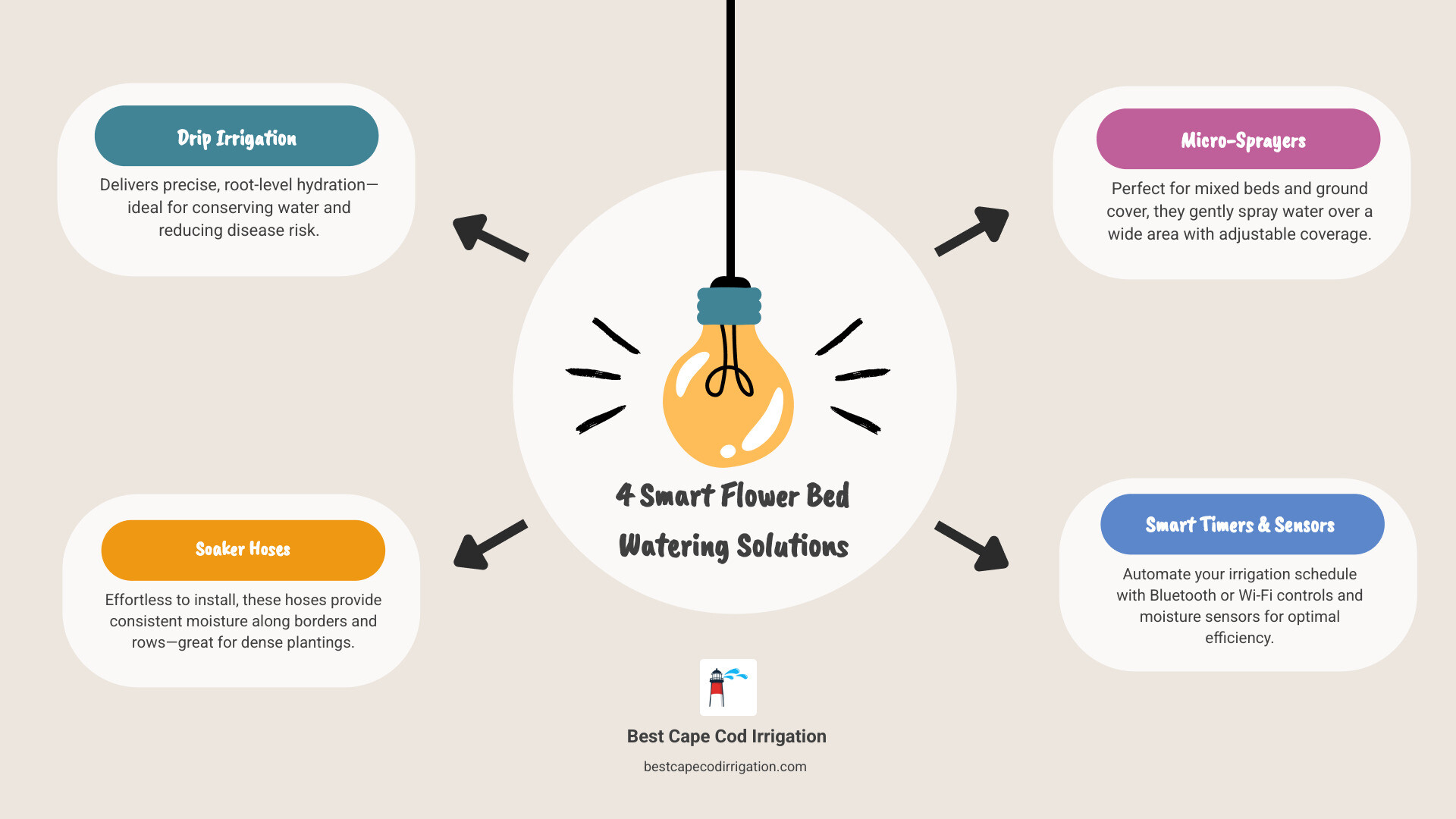
Drip irrigation systems feel almost magical once installed. Those tiny emitters deliver precise water amounts exactly where needed, with different flow rates available for thirsty plants versus drought-tolerant ones. They’re incredibly efficient, saving up to 80% of water compared to sprinklers.
Soaker hoses take a simpler approach. These porous hoses “sweat” water along their entire length, creating a strip of moisture perfect for row plantings. They’re straightforward to install—just lay them out and connect to your spigot. While less customizable than drip systems, they’re generally more budget-friendly and less intimidating for beginners.
Sprinklers & Hand Watering – When Overhead Makes Sense
While root-level watering generally wins the efficiency contest, sometimes overhead watering makes more sense.
Sprinkler systems shine in specific situations. They’re perfect for newly seeded areas where gentle, even moisture helps delicate seedlings establish. They’re also ideal for ground covers and low-growing plants that form a continuous carpet.
The downside? They’re less water-efficient, using 50-70% more water than drip systems. Plus, wet foliage can invite fungal problems.
Hand watering will always have its place in the garden. There’s something deeply satisfying about personally delivering water to your plants. It’s perfect for spot-treating struggling plants or giving special attention to newly transplanted specimens.
Matching System to Bed Shape & Plant Needs
Different garden configurations call for custom flower bed watering solutions:
For raised beds, drip irrigation with 1/4″ micro-tubing works beautifully. The defined edges make securing tubing simple, and the lifted position can help with water pressure.
Border plantings that stretch along property lines or walkways benefit from soaker hoses or drip lines with inline emitters. These can gracefully follow your landscape’s curves while delivering consistent moisture.
Container clusters on patios and decks need special consideration. Specialized container watering kits can connect multiple pots to a single water source.
Average Costs & ROI
Investing in flower bed watering solutions varies widely in cost, but even modest systems quickly pay for themselves.
DIY kits range from simple to sophisticated. A basic soaker hose setup might cost just $15-$50, while a small drip irrigation kit typically runs $25-$150. Medium garden systems generally fall in the $150-$400 range, with comprehensive landscape kits ranging from $400-$1,200 based on internet averages (not our specific pricing).
The return on investment goes beyond money. Beyond the water bill savings, you’ll enjoy more consistent growth, fewer plant losses, and the freedom to actually enjoy your garden rather than constantly maintaining it.
Installation & Troubleshooting Guide
Rolling up your sleeves to install your own flower bed watering solution can be a rewarding weekend project that pays dividends all season long. With a bit of planning and the right supplies, you’ll be well on your way to a garden that practically waters itself.
Before you dig in, take some time to properly plan your system. Sketch out your flower beds, marking water sources, plant groupings, and any obstacles. This blueprint will save you headaches later.
Every good flower bed watering solution needs a few essential components:
A pressure regulator prevents damage to your system from variable water pressure. A backflow preventer is non-negotiable—it protects your home’s drinking water from potential contamination. Add a filter to capture sediment that could clog your emitters, and a timer to automate your watering schedule.
Step-by-Step: Installing a Drip Network
Drip irrigation has become the gold standard for flower beds, and for good reason. It delivers water directly to plant roots, reducing evaporation and weed growth. Here’s how to get your system up and running:
Start by connecting your backflow preventer, filter, and pressure regulator to your outdoor faucet—in that specific order. Next, run your 1/2″ or 5/8″ mainline tubing around the perimeter of your flower bed. Secure it with stakes every few feet.
Using a hole punch tool, make openings in the mainline wherever you want to place emitters or run smaller 1/4″ micro-tubing. For plants close to the mainline, you can insert drip emitters directly. For those further away, connect micro-tubing to reach them.
Before finalizing everything, flush the system by running water through it for a few minutes. This clears out any debris. Then install end caps to close off the mainlines.
Scientific research from the University of California’s Division of Agriculture and Natural Resources confirms what Cape Cod gardeners have experienced firsthand—drip irrigation can achieve up to 80% water savings compared to traditional methods.
Step-by-Step: Laying a Soaker Hose Grid
If you’re new to irrigation, soaker hoses offer a simpler installation process that’s perfect for beginners:
Start by attaching a pressure regulator directly to your soaker hose—these systems work best at lower pressures (around 10 PSI). Then weave the hose in a serpentine pattern through your flower bed, keeping it 2-3 inches away from plant stems.
Secure your hose in place using landscape pins or stakes, especially at curves where the hose might want to straighten itself out. For best results, cover your soaker hoses with 2-3 inches of mulch.
Connect a simple hose timer at the faucet to automate watering, and establish a monthly maintenance routine to flush the system.
Automate the Flow with Timers & Smart Controllers
The real magic of modern flower bed watering solutions happens when you add automation. A good timer or controller turns your system from convenient to truly effortless.
Basic timers range from simple mechanical models to digital versions with multiple programs. If you’re looking for something more advanced, Bluetooth timers let you program watering schedules from your smartphone when you’re nearby.
For the tech-savvy gardener, smart controllers offer impressive capabilities. Wi-Fi enabled models let you control your system from anywhere via a smartphone app. Weather-responsive controllers can automatically adjust watering based on local forecasts.
Quick Fixes for Leaks, Clogs & Uneven Zones
Even the best flower bed watering solutions need occasional troubleshooting. Here’s how to handle common issues:
When you spot leaking connections, first check that fittings are properly seated and hand-tightened. For threaded connections, a wrap of Teflon tape often works wonders.
Clogged emitters are a common frustration, especially with mineral-rich well water. Remove and clean individual emitters, or flush the entire system by removing end caps and running water at full pressure.
If you notice uneven watering, with some plants getting soaked while others stay dry, you might have pressure issues. Test emitters at different distances from the water source to identify problems.
Smart Watering & Conservation Habits
Watering your garden isn’t just about turning on a hose and hoping for the best. Creating truly effective flower bed watering solutions means developing thoughtful habits that respond to what your plants actually need—not what the calendar says.
Think of yourself as a “watering detective” rather than following a rigid schedule. The best approach considers several factors that change throughout the season:
First, pay attention to seasonal shifts. Your garden naturally needs less water in spring and fall than during hot July afternoons. Second, newly planted flowers need more frequent attention than established plants with deeper roots. Third, work with Mother Nature—Cape Cod typically receives 4-5 inches of rain monthly, though it’s rarely evenly distributed.
How Often & How Much to Water
The golden rule of smart irrigation is surprisingly simple: water deeply but infrequently. This approach encourages plants to develop deep, drought-resistant root systems instead of shallow, dependent ones.
Different plants have different watering depths. For annuals and shallow-rooted perennials, aim to moisten the soil about 6-8 inches deep. Established perennials benefit from water reaching 8-12 inches down, while shrubs need moisture to penetrate 18-24 inches.
In Cape Cod’s predominantly sandy soil, most flower beds need watering every 2-3 days during the growing season. If you’re lucky enough to have loamier soil, you might stretch to every 3-5 days.
Most garden experts recommend the “inch-per-week” guideline—your flower beds generally need about an inch of water weekly from either rainfall or irrigation. For perspective, that’s roughly 0.5 gallons per square foot.
Mulch: The Moisture Multiplier
If watering systems are the technology of garden hydration, mulch is the magic. A proper 2-3 inch blanket of organic mulch might be the most underrated component of effective flower bed watering solutions.
This simple layer can reduce evaporation by up to 70%, moderate soil temperature swings, suppress thirsty weeds, prevent soil compaction from heavy rain, and gradually add organic matter as it breaks down.
For Cape Cod flower beds, we particularly recommend shredded bark or wood chips for their longevity and attractive appearance. Pine straw works beautifully for acid-loving plants, while compost pulls double-duty by adding nutrients as it conserves moisture.
Always keep mulch 1-2 inches away from plant stems to prevent rot, and plan to replenish annually as it decomposes. If you’re using drip irrigation or soaker hoses, install them before adding mulch, then cover with your mulch layer for maximum efficiency.
Using Rainwater & Greywater Safely
Why pay for water when it falls from the sky for free? Supplementing your flower bed watering solutions with collected rainwater or repurposed greywater reduces both your environmental footprint and your water bills.
The math on rainwater collection is impressive: a single 1-inch rainfall on a 1,000 square foot roof can yield over 600 gallons of water. Simple rain barrels (50-100 gallons) easily connect to downspouts, while larger cisterns can store hundreds or thousands of gallons for extended dry periods.
Plants actually prefer rainwater to tap water because it’s naturally soft, free of chlorine, and slightly acidic. Most collection systems can connect directly to drip irrigation with a small pump to provide adequate pressure.
Signs of Over- & Under-Watering
Even with the best flower bed watering solutions, it’s important to monitor your plants for signs of water stress.
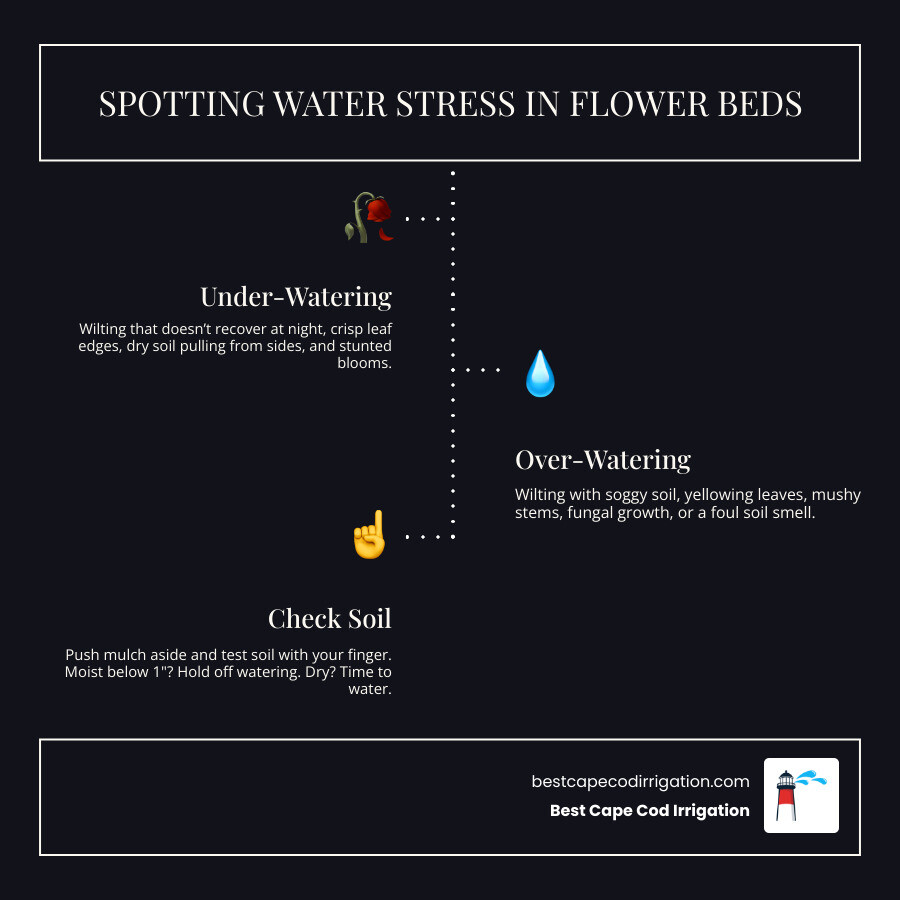
When plants don’t get enough water, they show their distress through wilting that doesn’t recover in the evening, curling or yellowing leaves (often with brown edges), stunted growth, or lack of flowering.
Overwatering can be just as harmful, with symptoms including wilting despite moist soil, yellowing leaves (particularly lower ones), soft stems near soil level, or fungal growth on the soil surface.
Frequently Asked Questions about Flower Bed Watering Solutions
Are drip kits hard to install for beginners?
Not at all! Modern flower bed watering solutions like drip irrigation kits are designed with DIY gardeners in mind. Most kits come with clear instructions and only require basic tools you probably already have—typically just scissors or pruning shears to cut the tubing.
Many of our first-time customers are surprised by how straightforward the process is. The planning stage is actually where most people need to focus their attention. We recommend grabbing a piece of paper and sketching your garden layout first, marking where each plant is located.
Take your time and test everything at low pressure before finalizing the installation. If you hit a snag, there are plenty of resources available—from YouTube tutorials to our team who are always happy to provide guidance.
Can I run a soaker hose off a rain barrel?
Yes, you absolutely can use rain barrels to power soaker hoses for your flower bed watering solutions! There are just a few practical considerations to keep in mind:
First, soaker hoses work best with low pressure (around 10 PSI), which makes them perfect partners for gravity-fed systems. For adequate pressure, position your rain barrel on a stand at least 3-4 feet above your flower bed.
Don’t forget to install a simple filter between the barrel and hose. Rain water collects roof debris that can quickly clog the tiny pores in your soaker hose.
Keep your soaker hose runs under 50 feet when using gravity pressure. For longer beds, consider dividing the system into multiple zones or adding a small solar-powered pump to boost pressure.
What’s the best way to winterize my flower-bed irrigation?
Here on Cape Cod, proper winterization isn’t just recommended for your flower bed watering solutions—it’s essential! Our freeze-thaw cycles can wreak havoc on irrigation components left full of water.
Start by shutting off the water supply at the source and disconnecting from outdoor faucets before the first hard freeze (typically mid-November on the Cape). Next, thoroughly drain your system by removing all end caps and letting gravity do its work.
Don’t forget about your electronic components! Remove timers and controllers and bring them indoors for the winter.
Backflow preventers are particularly vulnerable to freezing damage. Either remove them entirely or insulate thoroughly if they must remain outdoors.
For soaker hoses, once drained, coil them loosely (tight coils can create kinks) and store in a shed or garage away from direct sunlight. Most drip emitters can stay in place, but supply lines should be completely drained.
Conclusion
Finding the perfect flower bed watering solutions is truly a game-changer for your Cape Cod garden. Beyond just keeping plants alive, the right system creates a thriving landscape that practically takes care of itself while respecting our region’s precious water resources.
After exploring all your options, remember these key takeaways:
First, matching your watering system to your specific garden is crucial. Drip irrigation gives you pinpoint control for mixed plantings, while soaker hoses offer simplicity for beginners or uniform borders. Either choice delivers water directly to roots—exactly where plants need it most.
Installation might seem daunting at first, but today’s systems are remarkably DIY-friendly. Taking time to plan your layout and include essential components like pressure regulators and filters prevents headaches down the road.
The magic really happens when you add automation. A simple timer transforms your watering from a daily chore into something that happens quietly in the background. Smart controllers take this even further, adjusting to weather patterns automatically.
Conservation isn’t just good for the environment—it’s good for your wallet too. Adding a layer of mulch can cut your water needs dramatically, while collecting rainwater gives you a free resource that plants actually prefer to treated tap water.
At Best Cape Cod Irrigation, we’ve spent over 25 years helping gardeners throughout the region create beautiful, sustainable landscapes. Our team understands the unique challenges of our sandy soils, coastal conditions, and seasonal patterns. We’ve seen how the right flower bed watering solutions transform gardens from high-maintenance headaches into relaxing retreats.
Whether you’re ready for a professional installation or looking for guidance on a DIY project, we’re here to help. Our expertise ensures your system will be perfectly custom to your garden’s specific needs.
Ready to make watering worries a thing of the past? Contact us today for a consultation custom to your garden’s unique needs.