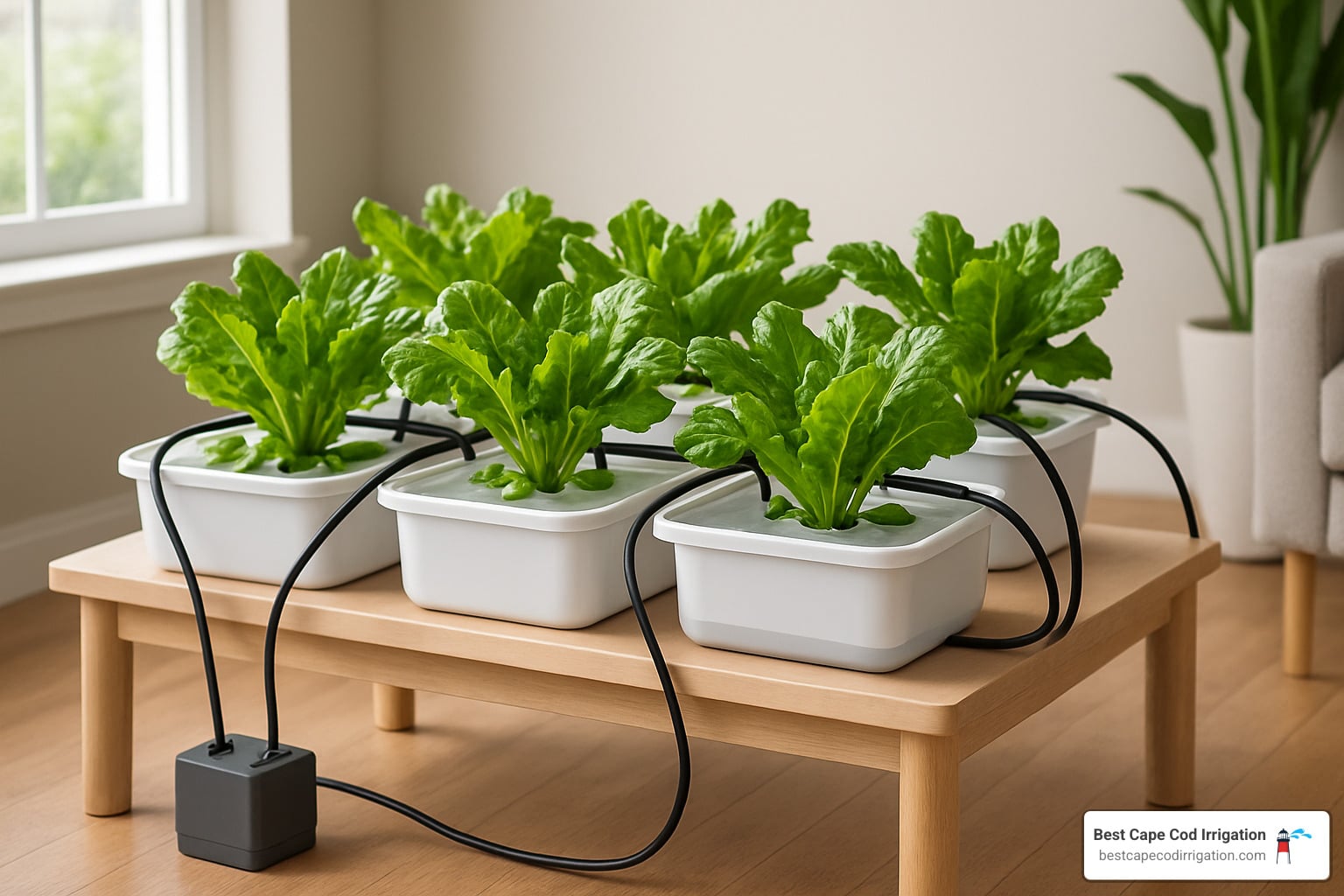



Why Self Watering Hydroponic Systems Are Perfect for Busy Cape Cod Homeowners
A self watering hydroponic system eliminates the daily watering struggle that comes with Cape Cod’s sandy soil and unpredictable weather. These automated systems deliver water and nutrients directly to plant roots without soil, using gravity, pumps, or wicking action to maintain perfect moisture levels 24/7.
Quick Answer – Best Self Watering Hydroponic Systems:
– Starter Systems: $80-$300 for 6-15 plants (countertop herb gardens)
– Mid-Range Systems: $300-$600 for deep water culture with pumps and timers
– Advanced Systems: $600+ for app-controlled drip irrigation with sensors
– Key Benefits: 30-50% faster growth, no weeding, year-round harvests
– Best For: Busy homeowners wanting fresh produce without daily maintenance
Have you ever driven by a house and saw the sprinkler system watering the lawn while it was raining? That’s exactly the kind of waste self watering hydroponic systems prevent.
These smart systems use sensors and timers to deliver exactly what your plants need, when they need it. No more dead tomatoes from forgotten watering or soggy herbs from Cape Cod’s surprise downpours.
The technology isn’t new – commercial growers have used automated hydroponics for decades to produce those perfect grocery store vegetables. Now compact, affordable versions bring the same reliability to your kitchen counter or backyard.
Whether you’re growing fresh herbs for your Wellfleet clam chowder or want cherry tomatoes that actually taste like summer, these systems work around your schedule instead of demanding daily attention.
What Is a Self Watering Hydroponic System?
Think of a self watering hydroponic system as the ultimate lazy gardener’s dream – it’s like having a personal plant assistant that never takes a day off. These clever systems grow plants without any soil, delivering water and nutrients directly to roots while you’re busy enjoying life on the Cape.
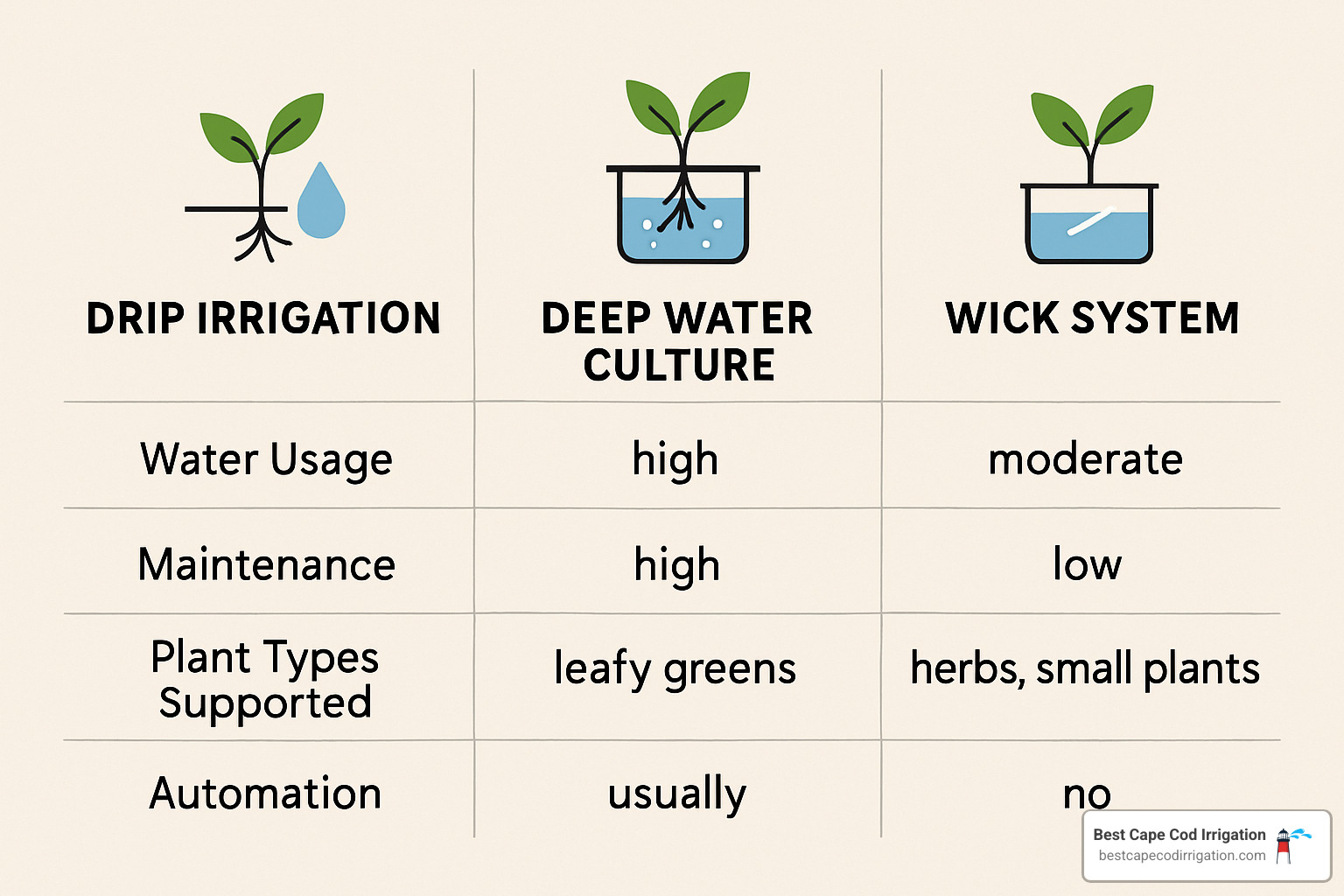
The beauty lies in the automation. While your neighbors are dragging hoses around their yards every morning, your plants are getting perfectly measured drinks through passive wicking systems (imagine a cotton string slowly drawing water upward), active pump systems (scheduled deliveries like clockwork), or smart sensors that actually “know” when plants are thirsty.
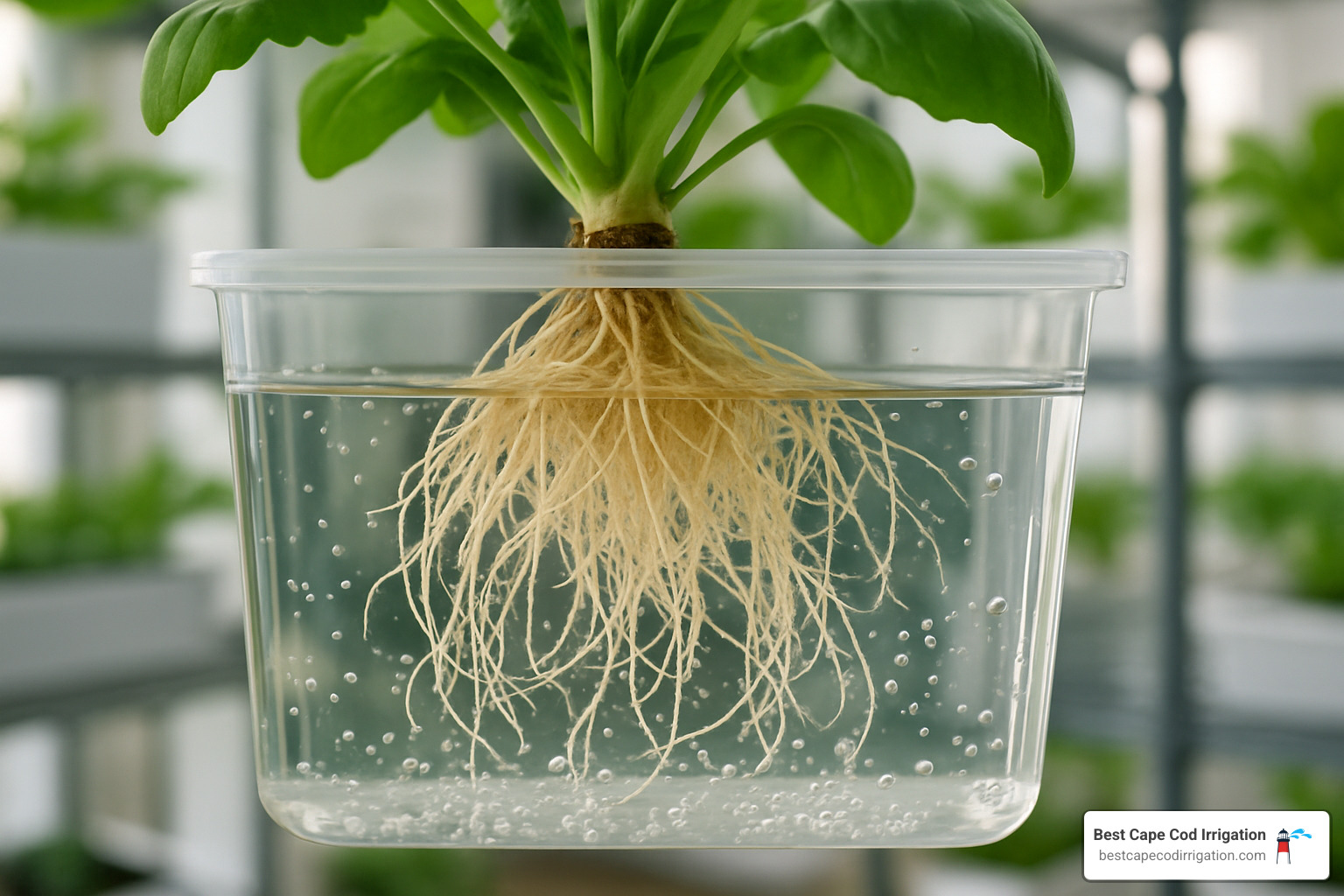
Instead of roots searching through Cape Cod’s sandy soil for nutrients, everything flows directly to where it’s needed most. Your plants sit comfortably with their roots either dangling in nutrient-rich water or positioned just above it, getting fed like VIPs at a five-star restaurant.
Core Principles Behind a Self Watering Hydroponic System
The science behind these systems is refreshingly simple – no PhD in botany required! Capillary action does most of the heavy lifting, using the same natural force that draws water up a paper towel or makes your morning coffee percolate. Cotton strings, specialized growing media, or even simple fabric wicks pull nutrient solution from reservoirs directly to thirsty roots.
Float valves work exactly like the mechanism in your toilet tank – when water levels drop, they automatically trigger refills. It’s brilliant in its simplicity and means you’re not constantly checking water levels like you’re monitoring a patient in the ICU.
Here’s the part that makes plant nerds excited: oxygenation stones bubble air through the water, giving roots the oxygen they desperately need. This creates the perfect wet-dry cycle that keeps roots healthy and prevents the dreaded root rot that kills so many houseplants.
Key Components You’ll Meet
Every self watering hydroponic system starts with a reservoir – your water headquarters. These range from cute 1-gallon countertop containers perfect for herbs to serious 25-gallon outdoor setups that could keep a small restaurant in fresh produce.
Net pots replace traditional planters, holding your plants securely while letting roots grow wild and free into the nutrient solution below. Think of them as plant hammocks – supportive but not restrictive.
Timers are the brains of the operation, controlling when pumps kick in and how long they run. No more setting phone alarms to remember watering time! Many systems also include grow lights for indoor setups, which is perfect for Cape Cod’s shorter winter days when even our sun seems to take a vacation.
The magic happens when all these components work together – while you’re out enjoying Nauset Beach or grabbing dinner in Provincetown, your plants are getting precisely what they need, when they need it.
How It Works & Why It Beats Traditional Soil
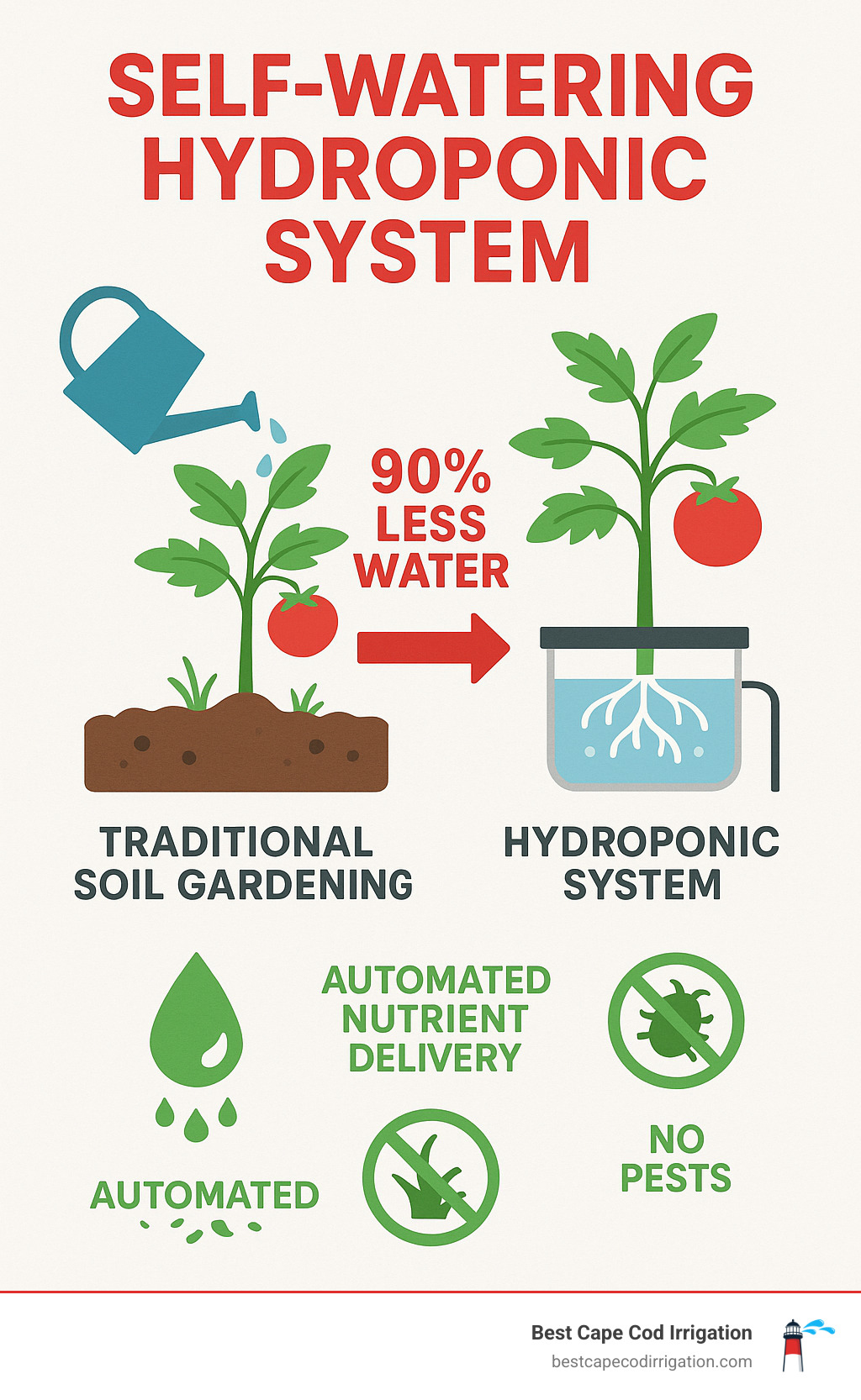
Here’s where things get exciting – self watering hydroponic systems don’t just match traditional gardening, they blow it out of the water (pun intended). Scientific research on hydroponic yield shows these systems use 90% less water than traditional gardening while producing 30-50% faster growth rates.
Think about that for a second. Your basil plant that normally takes two months to get bushy? It’ll be ready for your caprese salad in just over a month with hydroponics.
This efficiency comes from delivering nutrients directly to roots instead of broadcasting fertilizer across soil where much gets washed away. This is especially relevant here on Cape Cod, where our sandy soil lets nutrients drain away faster than a tourist’s vacation budget in Chatham.
The automated aspect eliminates human error completely. No more “did I water yesterday?” or returning from a long weekend in Provincetown to find your tomato plants looking like they’ve been through a nor’easter. Systems can run unattended for weeks with sufficient reservoir capacity, making them perfect for busy homeowners or vacation properties.
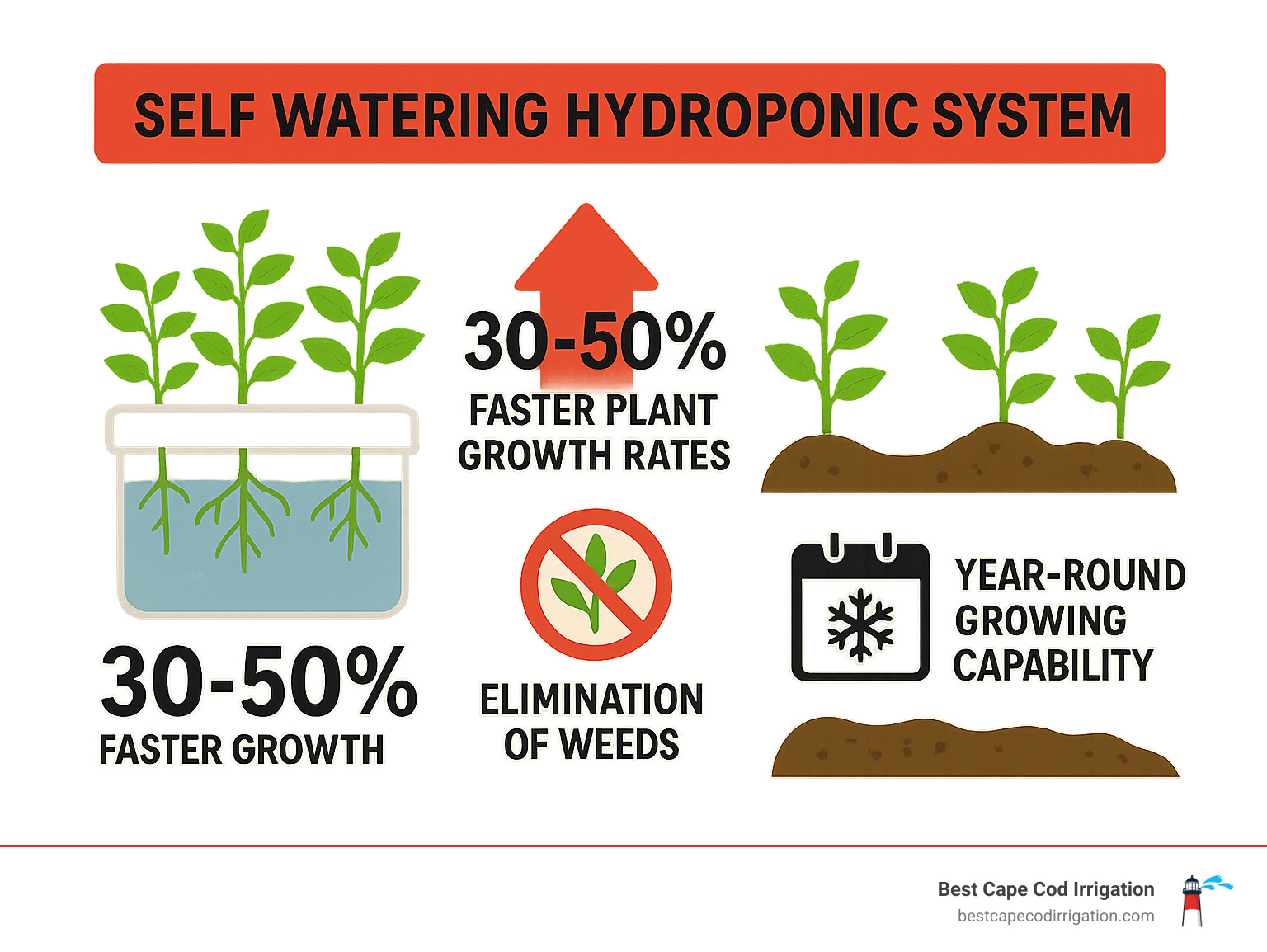
Indoor and outdoor flexibility means you’re not at the mercy of Cape Cod’s weather. Want fresh lettuce in January? No problem. Summer tomatoes when it’s snowing? Your hydroponic system doesn’t care what’s happening outside.
Benefits at a Glance
Zero weeds – since there’s no soil, there’s nowhere for weed seeds to sprout. This alone saves hours of maintenance time that you can spend enjoying the beach instead of pulling crabgrass.
Minimal pesticides needed because many soil-borne pests and diseases simply can’t survive in hydroponic environments. Your plants stay healthier naturally, without constant chemical treatments.
Year-round harvests become possible with indoor systems, extending your growing season well beyond Cape Cod’s frost dates. We’ve seen customers harvesting fresh herbs in December while their neighbors are ordering dried seasonings online.
Plants grow faster because they don’t waste energy developing massive root systems to search for nutrients. Everything they need is immediately available, so energy goes straight into leaf and fruit production. It’s like having a personal chef for your plants – no hunting around for food, just constant, perfect nutrition.
Environmental & Sustainability Perks
Lower nutrient runoff means fewer chemicals entering Cape Cod’s sensitive groundwater and coastal areas. Traditional fertilizers often wash straight through our sandy soil into ponds and bays, but hydroponic systems keep nutrients exactly where plants can use them.
Recyclable growing media like expanded clay pebbles and rockwool can be cleaned and reused for multiple growing cycles, reducing waste compared to constantly buying new potting soil that gets thrown away each season.
Urban food security improves when people can grow fresh produce in apartments, condos, and small spaces. A single countertop system can provide fresh herbs year-round, reducing grocery trips and eliminating those plastic containers of wilted herbs that seem to spoil the day after you buy them.
Choosing the Best Self Watering Hydroponic System for Your Space
Picture this: you’re standing in your kitchen, looking at that sunny windowsill, wondering if you can finally grow something that won’t end up as expensive compost. Or maybe you’re eyeing that empty corner of your deck, dreaming of fresh tomatoes that actually taste like summer. The good news? There’s a self watering hydroponic system that fits your exact situation.
The secret is starting with three simple questions: How much space do you actually have? What’s your realistic budget? And honestly, how much do you want to tinker versus set-and-forget?
Your space determines everything else. A cramped Provincetown condo calls for a completely different approach than a spacious Barnstable home with a sunny deck. Count your available square feet, check for nearby electrical outlets, and think about whether you want something tucked away or proudly displayed as a conversation starter.
Budget-wise, the math is refreshingly straightforward. Under $200 gets you into the game with basic wick systems or small pump setups – perfect for keeping fresh basil and cilantro on hand without breaking the bank. $200-$600 opens up deeper reservoirs, reliable pumps, and enough capacity to grow actual meals, not just garnishes. Above $600 brings the fancy stuff: app controls, sensors that text you updates, and commercial-grade components for serious food production.
The scalability question matters more than most people realize. That cute 6-pod herb garden might seem limiting now, but if it keeps you in fresh pesto all summer, it’s doing its job. On the flip side, going too big too fast often leads to overwhelmed plants and frustrated gardeners.
Self Watering Hydroponic System for Apartments
Apartment living on Cape Cod doesn’t mean giving up on fresh food dreams. Compact tower systems work like vertical magic, turning a corner of your Hyannis condo into a productive mini-farm. These systems stack plants upward instead of sprawling outward, perfect when every square foot counts.
Countertop kits slide right under kitchen cabinets while keeping herbs within arm’s reach of your stove. No more buying $4 packages of basil that turn into green slime in your refrigerator crisper drawer. The key is finding systems with quiet pumps – anything under 40 decibels won’t compete with your morning coffee routine or evening Netflix binge.
Light spillage becomes important in small spaces. Look for systems with contained LED panels that won’t turn your living room into a grow house advertisement. Many newer units include timers that automatically dim lights during evening hours, keeping your space comfortable for actual living.
The sweet spot for most apartment dwellers? A 6-pod herb system provides plenty of basil, cilantro, parsley, and mint without overwhelming your refrigerator with excess produce. These compact systems prove more reliable than trying to keep potted herbs alive on windowsills, especially during Cape Cod’s unpredictable weather swings.
Self Watering Hydroponic System for Outdoor Gardeners
Outdoor systems open up possibilities that make indoor growing look like child’s play. Weather-proof totes and containers designed for outdoor use laugh at Cape Cod’s salt air and temperature swings. These systems handle everything from July heat waves to September nor’easters without missing a beat.
Solar-powered pumps eliminate the headache of running electrical lines to your deck or patio. Battery backup ensures operation during cloudy periods, which let’s face it, happen more often than we’d like on the Cape. These systems work especially well for heat-loving plants like tomatoes, peppers, and cucumbers that benefit from consistent watering throughout their long growing season.
Consider seasonal systems that you set up in spring and harvest through fall, then pack away components indoors during winter. This approach gives you the best of both worlds – serious food production during growing season without year-round maintenance or weathering concerns.
The outdoor advantage is space and scalability. That stackable channel system that would overwhelm your kitchen counter becomes perfectly reasonable on a sunny deck, producing enough salad greens and cherry tomatoes to actually impact your grocery budget.
2024 Product Round-Up: Automatic Systems Worth Your Money
Shopping for a self watering hydroponic system feels like browsing cars – you’ve got your reliable economy models, your feature-packed mid-range options, and your luxury systems with all the bells and whistles. Based on online marketplace data, expect to invest anywhere from $80 to $900+ for complete systems, though the sweet spot for most Cape Cod homeowners falls between $150-$400.
Note: These are average market prices based on internet research, not pricing for Best Cape Cod Irrigation services.
Here’s what we’ve learned from digging through thousands of customer reviews: people consistently rate reliability over flashy features. A simple system that runs for two years beats a high-tech one that breaks after six months. Look for customer ratings of 4.0+ stars with at least 100 recent purchases – that’s your reliability indicator.
The automation level drives most of the price difference. Basic timers might add $20-50 to your cost, while app connectivity and smart sensors can bump prices up by $100-200. Ask yourself honestly: will you actually check your tomatoes’ moisture levels from your phone, or do you just want them to grow without daily fussing?
“Plug-N-Play” Starter Kit (Good)
These entry-level systems support around 15 plants and represent the “Honda Civic” of hydroponics – reliable, affordable, and perfect for most people’s needs. They typically include pre-set timers and straightforward pump systems, with many offering phone alerts when water levels drop low.
Setup takes about 30 minutes, assuming you can follow IKEA-style instructions without throwing anything. Most components come pre-assembled, so you’re mainly connecting tubes and plugging things in. These systems excel at leafy greens, herbs, and smaller vegetables that don’t need massive root space.
The beauty of starter kits lies in their simplicity. No pH meters to calibrate, no apps to download, no complicated nutrient schedules. Fill the reservoir, add liquid nutrients according to the bottle instructions, and let the system do its thing. Perfect for testing whether hydroponic gardening fits your lifestyle before investing in larger systems.
“Smart Bucket” DWC Kit (Better)
Deep Water Culture systems with 5-13 gallon reservoirs are where things get serious. These setups include built-in air pumps that bubble oxygen through the water (roots need to breathe, just like us), and some models feature inline sensors that monitor nutrient levels automatically.
This category shines for fruiting plants like tomatoes, peppers, and cucumbers that demand consistent deep watering throughout their growing season. The larger reservoirs mean less frequent refilling – crucial during Cape Cod’s busy summer season when you’d rather be at the beach than babying your vegetables.
Many systems in this range earn 4.5+ star ratings and include top-drip components for extra versatility. You can typically connect multiple buckets together, creating a small-scale commercial operation in your basement or greenhouse. Expect restaurant-quality vegetables with minimal daily attention once everything’s dialed in properly.
“Scalable Drip Rail” System (Best)
Premium systems feature stackable growing channels, app-controlled pumps, and moisture probes that adjust watering based on what your plants actually need rather than arbitrary timer schedules. These represent the “luxury SUV” category – loaded with features and built for serious food production.
App connectivity lets you monitor and adjust settings from anywhere, perfect for vacation homes or when you’re traveling off-Cape. Some systems integrate with smart home platforms, allowing voice control or automated scheduling based on weather forecasts. Imagine telling Alexa to increase watering before a heat wave hits.
The scalability factor sets these systems apart. Start with one growing channel and add more as your confidence (and appetite for fresh vegetables) grows. Many customers begin with herbs and end up producing enough salad greens to supply their entire neighborhood’s summer potlucks.
These systems typically earn 4.7+ star ratings from customers who appreciate the engineering quality and long-term reliability. While the upfront investment is substantial, the per-plant cost often works out lower than simpler systems when you factor in their higher capacity and longer lifespan.
Setup, Maintenance & Cost Guide
Setting up your self watering hydroponic system feels a bit like assembling furniture – most pieces snap together without tools, though you might need a drill for larger outdoor systems. Plan on spending 1-3 hours for assembly, depending on whether you’re setting up a simple countertop herb garden or a multi-bucket deep water culture system.
Once your system is running, you’ll want to keep an eye on pH levels between 5.8-6.5 – most plants are picky about this range. An inexpensive pH meter becomes your best friend here. EC monitoring (electrical conductivity) tells you when nutrients are running low, though many beginners successfully grow without it by following feeding schedules.
Nutrient solutions need refreshing every 2-4 weeks, or sooner if plants start looking pale or growth slows. Think of it like changing your car’s oil – regular maintenance prevents bigger problems down the road.
Average setup costs vary dramatically based on your ambitions. These are internet-based estimates, not Best Cape Cod Irrigation pricing – basic wick systems start around $80, while mid-range pump systems run $200-400. Commercial-grade automated systems can reach $900 or more, especially if you want app connectivity and sensors that do the thinking for you.
The beauty of most self watering hydroponic systems lies in their simplicity. Regular maintenance means cleaning reservoirs monthly, checking that pumps still gurgle happily, and watching for early signs of plant stress. Most problems come from skipping these basics rather than equipment failures.
Automation Upgrades That Pay Off
WiFi-enabled timers ($30-80) transform your growing experience, especially if you have a vacation home or travel frequently. Imagine adjusting your watering schedule from a Boston office when Cape Cod gets an unexpected heat wave – that’s the kind of flexibility these upgrades provide.
Float-switch auto-refill systems ($40-100) work like magic, maintaining perfect water levels without your attention. Instead of checking reservoirs every few days, these systems can run unattended for weeks. For busy homeowners, this upgrade often pays for itself in convenience alone.
Leak alarms ($20-50) provide serious peace of mind for indoor systems. These small sensors send phone alerts if water escapes your system, potentially saving you from costly floor damage. After seeing what a small leak can do to hardwood floors, most people consider this essential insurance.
Create a drip irrigation system for your garden for more traditional watering solutions.
Common Issues & Quick Fixes
Root rot shows up as brown, mushy roots that smell like a low-tide beach on a hot day. This usually means roots aren’t getting enough oxygen between waterings. Increase your air pump capacity or reduce watering frequency to restore the wet-dry cycle plants crave. Clean affected components with diluted hydrogen peroxide – it works like antiseptic for your system.
Algae blooms turn your pristine nutrient solution into green soup, competing with your plants for food. The fix is simple: block light from reaching your water reservoir with opaque covers or even aluminum foil. Reduce nutrient concentration slightly and ensure good water circulation. Algae loves still, bright water – eliminate those conditions and it disappears.
Clogged emitters in drip systems create the hydroponic equivalent of a clogged showerhead – some plants get flooded while others go thirsty. Remove and soak drip nozzles in white vinegar overnight, then rinse thoroughly. Installing inline filters prevents future clogs from nutrient buildup, much like how water filters protect your home’s plumbing.
Frequently Asked Questions about Automatic Hydroponics
How often do I change nutrient solution?
Your self watering hydroponic system needs fresh nutrient solution every 2-3 weeks for optimal plant health, though this timing depends on your system size and what you’re growing. Think of it like changing the water in a fish tank – over time, the balance shifts as plants drink more water than they consume nutrients.
Here’s the simple test: when your water level drops to about 25% of capacity, it’s time for a complete change. Don’t just top off with more water – that actually makes the problem worse by diluting the remaining nutrients even further.
Watch your plants for clues too. Yellowing leaves usually mean the nutrients are running low, while burnt or crispy leaf edges suggest the solution has become too concentrated. Keep a simple calendar note of when you change solutions – most Cape Cod growers find their rhythm after a month or two.
Can I grow fruiting plants like tomatoes?
You absolutely can grow tomatoes, peppers, cucumbers, and strawberries in a self watering hydroponic system! The key is choosing the right system size – fruiting plants need bigger reservoirs (at least 5+ gallons) and stronger support structures since a single tomato plant can produce 5+ pounds of fruit.
Deep Water Culture and drip systems work best for these hungry plants. The consistent water and nutrient supply actually eliminates the stress that reduces fruit production in traditional Cape Cod gardens, where sandy soil and inconsistent watering often leave tomatoes struggling.
Many of our customers report better yields than they ever got from soil growing. There’s something satisfying about harvesting perfect tomatoes in October while your neighbor’s soil-grown plants gave up after the first September cold snap. The controlled environment lets you extend the season well beyond what’s possible outdoors on the Cape.
What happens during a power outage?
Don’t panic if the power goes out – most self watering hydroponic systems can coast through 12-24 hour outages without any plant damage, especially if your reservoir was full when the lights went out. The roots remain in contact with water and nutrients, so plants won’t immediately stress like they might if you forgot to water soil plants for a day.
Wick systems keep working completely normally since they don’t need electricity at all. Pump-based systems simply pause until power returns, then resume their normal schedule. It’s like hitting the pause button on a movie – everything picks up where it left off.
For longer outages or if you want complete peace of mind, battery backup systems ($50-150) can keep pumps running for several days. Some Cape Cod growers invest in solar-powered systems with battery storage, which provides complete independence from grid power – especially useful for those off-grid spots or if you’re thinking about emergency preparedness.
Conclusion
Self watering hydroponic systems bring the satisfaction of fresh, homegrown produce without the daily stress of traditional gardening. Whether you’re managing a busy Chatham summer home or trying to grow herbs in a compact Hyannis apartment, these eco-friendly systems work around your schedule instead of demanding constant attention.
The change is remarkable – what used to require daily watering, weeding, and worrying now becomes a simple weekly check-in. Your self watering hydroponic system quietly delivers perfect nutrition and hydration while you’re at work, traveling, or simply enjoying Cape Cod’s beautiful beaches.
With systems starting around $80 and proven technology that uses 90% less water than traditional gardening, hydroponics offers one-touch gardening that actually works. No more dead plants from forgotten watering or nutrient-starved vegetables struggling in Cape Cod’s sandy soil.
The environmental benefits make these systems even more appealing. Lower water usage, zero pesticide runoff, and year-round growing capability mean you’re not just growing better food – you’re growing it more responsibly.
At Best Cape Cod Irrigation, we’ve dedicated 25+ years to making watering worry-free across the Cape. While our expertise focuses on professional outdoor irrigation systems, we appreciate how hydroponic growing complements smart water management. The same attention to automation, reliability, and local conditions that drives our irrigation work applies whether you’re watering your lawn or your lettuce.
Ready to explore how smart irrigation can transform your outdoor spaces too? More info about smart irrigation installation shows how we bring the same worry-free automation to your entire landscape.
From Bourne to Provincetown, Best Cape Cod Irrigation continues making watering effortless for Cape Cod homeowners. Whether through our professionally installed smart irrigation systems or simply sharing knowledge about better growing methods, we’re here to help you succeed with less effort and better results.
After all, the best gardening system is the one that actually gets used – and self watering hydroponic systems make growing your own food as simple as checking your phone.