



Why Cape Cod Homeowners Are Switching to Drip Irrigation
Drip irrigation Cape Cod systems deliver water directly to plant roots, using up to 50% less water than traditional sprinklers while creating healthier landscapes that thrive in sandy coastal soils.
Quick Answer for Cape Cod Property Owners:
• Water Savings: 40-50% reduction in usage compared to overhead sprinklers
• Sandy Soil Solution: Prevents water from draining away before plants absorb it
• Cost Range: $1,000-$6,000+ for residential installations (internet averages)
• Best Applications: Vegetable gardens, flower beds, foundation plantings, planters
• Maintenance: Spring startup, mid-season checks, fall winterization required
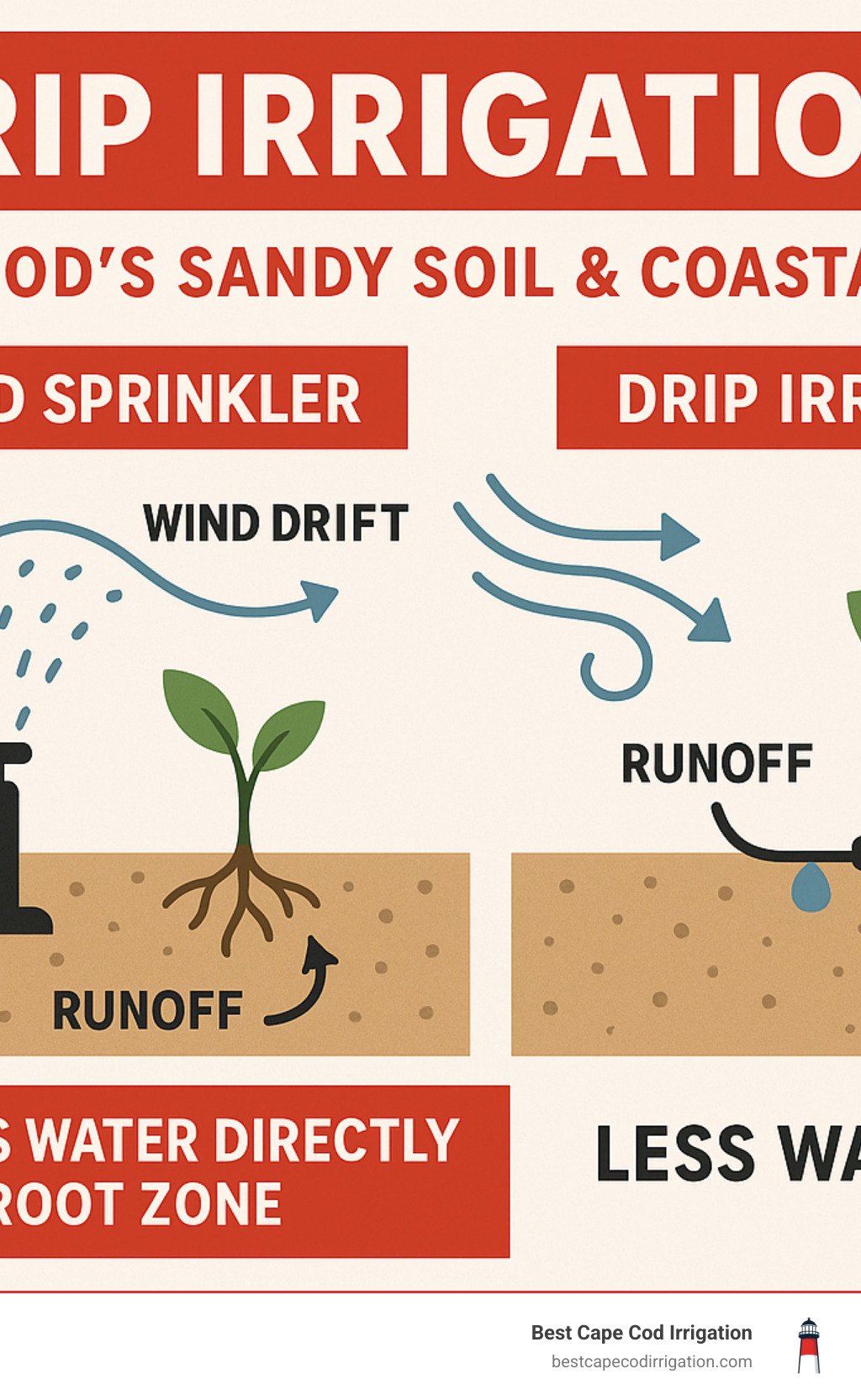
Cape Cod’s unique challenges make drip irrigation especially valuable here. As one local irrigation expert notes: “High winds and warm temperatures on Cape Cod dry out soil before water has a chance to enter the root zone of your turf.”
The region’s sandy soils drain quickly, often wasting water from traditional sprinklers before plants can use it. Drip systems solve this by delivering water slowly and precisely where plants need it most.
More than 1.5 billion gallons of water are wasted daily by runoff from conventional irrigation. Drip irrigation eliminates most of this waste while reducing plant diseases caused by wet foliage and suppressing weed growth.
Whether you’re struggling with manual hose watering in the summer heat or watching your water bills climb, drip irrigation offers a smarter solution that works with Cape Cod’s coastal climate instead of fighting against it.
How Does Drip Irrigation Work?
Think of drip irrigation Cape Cod systems as nature’s own gentle rain, but smarter. Instead of spraying water everywhere and hoping for the best, these systems deliver water drop by precious drop exactly where your plants need it most – right at their roots.
The magic starts with pressure-regulated tubing that takes your home’s forceful 40-60 PSI water pressure and calms it down to a gentle 15-25 PSI. This isn’t just being polite to your plants – it’s essential for the system to work properly.
Emitters are the real stars of the show. These small but mighty devices control how fast water flows out, typically releasing between 0.5 to 4 gallons per hour. That might sound slow, but it’s perfect for Cape Cod’s sandy soils that tend to let water slip away faster than a tourist’s vacation time.
Here’s where it gets really clever: water moves through your soil using capillary action, spreading outward and downward in a bulb-shaped pattern around each emitter. This creates a consistently moist root zone without turning your garden into a swamp or creating wasteful runoff.
The slow release rate gives even our famously fast-draining Cape Cod soils time to actually absorb the water. Scientific research on water-efficient irrigation shows this method can be up to 40% more efficient than overhead irrigation systems – a big deal when you’re paying summer water bills.
This approach is especially important here on the Cape, where high winds and warm temperatures can dry out soil before water from traditional sprinklers ever reaches plant roots.
Key Components of a “Drip Irrigation Cape Cod” System
Every effective drip irrigation Cape Cod system relies on several key players working together like a well-orchestrated beach cleanup crew.
Filters might seem boring, but they’re your system’s best friend. Cape Cod’s water often carries minerals from our coastal aquifers, and these particles love to clog up emitters. A good filter prevents expensive headaches down the road.
Pressure reducers do the heavy lifting of stepping down your household water pressure to levels that won’t blow out your emitters or create uneven watering. Think of them as the calm, steady friend who keeps everyone else from getting too excited.
The mainline tubing (usually ½” or ¾” diameter) acts like the main highway, carrying water from your source to different areas of your landscape. Lateral lines (typically ¼” tubing) are the side streets that branch off to reach individual plants or specific planting areas.
Stakes and fittings keep everything secure and connected. Quality fittings prevent those annoying leaks that waste water and make your system less efficient. Nobody wants to find mysterious wet spots in their yard.
Emitters come in different styles for different jobs – drippers for individual plants, micro-sprays for covering small areas, and soaker lines for continuous coverage along plant rows.
Don’t forget the backflow preventer – it’s required by law and protects your home’s drinking water supply from contamination. Safety first, even in irrigation.
“Drip Irrigation Cape Cod” vs. Traditional Sprinklers
| Feature | Drip Irrigation | Traditional Sprinklers |
|---|---|---|
| Water Efficiency | 85-95% | 65-75% |
| Evaporation Loss | Minimal | 20-30% |
| Wind Impact | None | Significant |
| Disease Risk | Low (dry foliage) | Higher (wet foliage) |
| Weed Growth | Reduced | Increased |
| Installation Cost | $1,000-$6,000+ | $2,000-$8,000+ |
| Operating Costs | Lower | Higher |
| Maintenance | Moderate | Moderate |
The difference becomes obvious when you consider Cape Cod’s notorious winds. While sprinklers send water flying in directions you never intended, drip systems keep every drop focused on your plants. Your water bill – and your plants – will thank you.
Why Drip Irrigation Cape Cod Homeowners & Businesses Love It
When Cape Cod property owners find drip irrigation, they quickly understand why it’s becoming the go-to choice for smart landscaping. The numbers alone tell a compelling story – up to 50% water savings compared to traditional sprinklers means real money back in your pocket every month.
But the benefits go far beyond lower water bills. Cape Cod’s unique coastal environment creates challenges that drip irrigation Cape Cod systems handle beautifully. Take runoff, for example. Traditional sprinklers often create puddles and waste on our sandy soils, but drip systems deliver water so slowly and precisely that minimal runoff occurs. Every drop goes where it’s supposed to – into your plants’ root zones.
Disease suppression becomes automatic with drip irrigation. Anyone who’s dealt with fungal problems on their hydrangeas or roses knows how Cape Cod’s humid coastal air can spell trouble for wet foliage. Drip systems keep leaves dry while maintaining perfect soil moisture, creating naturally healthier plants that resist disease.
Here’s a bonus many homeowners don’t expect: weed control happens naturally. Since water only goes where you place emitters, the spaces between plants stay drier. Weeds struggle to germinate and establish in these conditions, which means less time pulling weeds and less need for herbicides.
Many Cape Cod towns recognize the conservation value of efficient irrigation and offer utility rebates for water-saving installations. These rebates help offset initial costs while supporting our region’s commitment to eco-friendly landscaping practices.
Perfect Match for Sandy Soils & Coastal Climate
Cape Cod’s sandy soils can frustrate even experienced gardeners. Water seems to disappear almost instantly with traditional sprinklers, often draining away before plants can use it. But this challenge becomes an advantage with drip irrigation Cape Cod systems.
The fast drainage that makes overhead watering so inefficient actually works perfectly with drip irrigation’s slow, steady delivery. Water has time to spread laterally through the soil, creating the ideal moisture zone around plant roots instead of rushing straight down to the water table.
Living near the coast brings the constant challenge of salt spray tolerance. Drip systems excel here by keeping salt-sensitive foliage completely dry while delivering fresh water directly to roots. Your plants get the moisture they need without the stress of salt exposure on their leaves.
Windy conditions that blow sprinkler water off course become irrelevant with drip irrigation. Whether you’re dealing with steady offshore breezes or those sudden gusts that seem to come from nowhere, your plants receive consistent watering exactly where they need it.
Cape Cod’s fascinating micro-climate zones create different watering needs across even small properties. The exposed area near your driveway might need different irrigation than the sheltered spot behind your garage. Drip systems handle this beautifully with zone-specific programming that delivers precisely what each area requires.
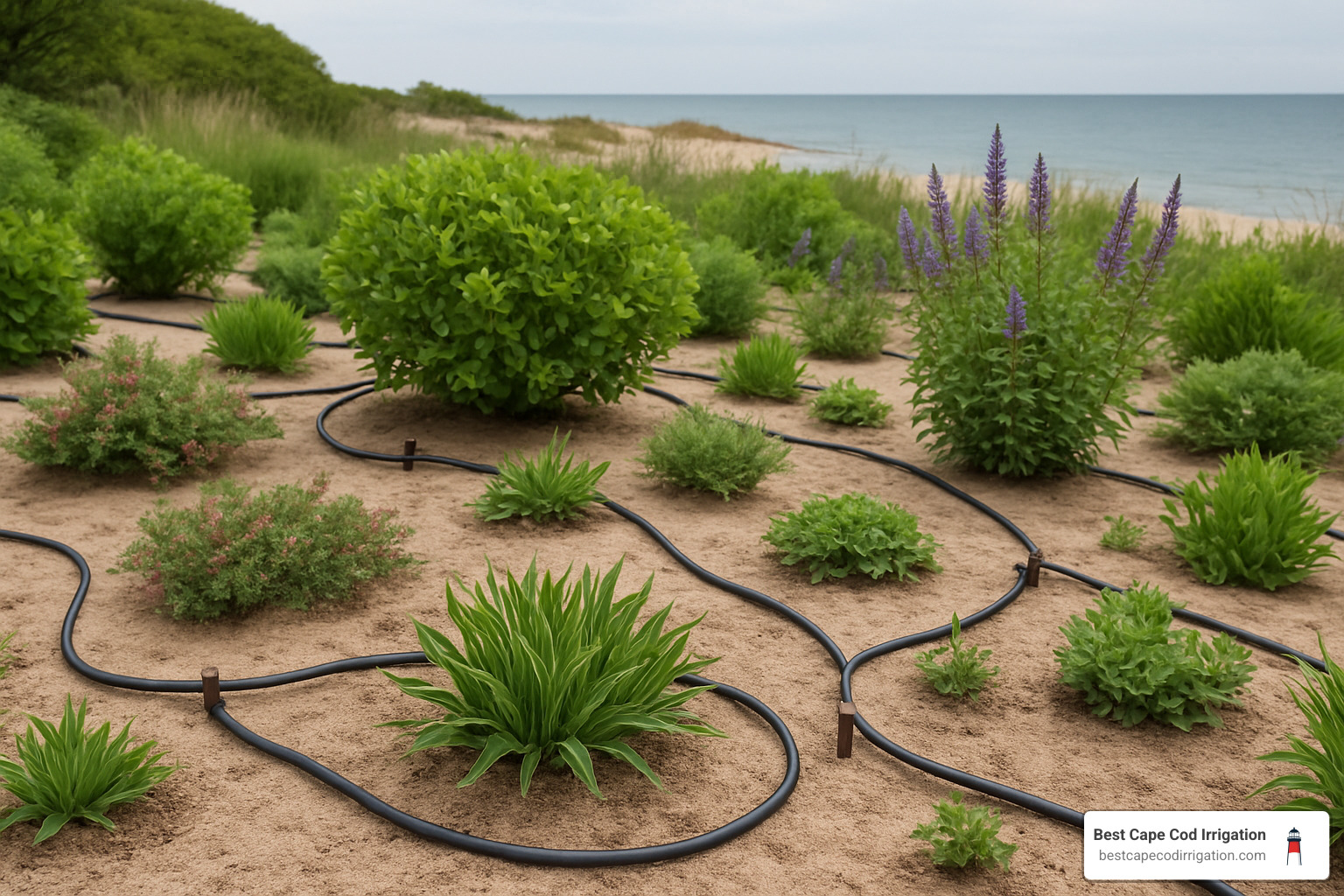
Dune plantings and native coastal plants especially thrive with drip irrigation’s precision. These tough plants often need careful water management during establishment – enough to help them settle in, but not so much that they become soft and vulnerable to coastal conditions.
Who Benefits Most? “Drip Irrigation Cape Cod” Applications
Vegetable gardens transform with drip irrigation. Cape Cod gardeners consistently report healthier tomatoes, peppers, and herbs with fewer disease problems. The consistent soil moisture and dry foliage create ideal growing conditions, often resulting in noticeably better yields.
Perennial borders become much easier to maintain with drip systems. Established perennials develop deep root systems that respond beautifully to slow, deep watering rather than frequent surface irrigation. Your daylilies, hostas, and ornamental grasses will show the difference.
Foundation plantings around your home get targeted watering without water splashing against siding or creating moisture issues near the house. This precision is especially valuable for Cape Cod’s many historic homes where protecting wood construction is crucial.
Planters and window boxes can easily connect to drip systems, eliminating the daily watering routine during hot summer months. This application is perfect for seasonal residents who want beautiful container displays without constant maintenance.
Sloped lawns and terraced areas that shed water with traditional sprinklers respond well to drip irrigation that prevents erosion while maintaining healthy turf. The slow water delivery gives even steep slopes time to absorb moisture effectively.
Installation, Costs & Local Regulations
Getting your drip irrigation Cape Cod system installed properly starts with understanding what’s involved – and honestly, it’s more straightforward than most homeowners expect. The journey begins with a design consultation where professionals take a close look at your property’s quirks, from those stubborn sandy spots to the areas that always seem too wet or too dry.
Zoning and permitting might sound intimidating, but here’s some good news: most residential drip installations on Cape Cod don’t require permits. That said, it’s always smart to give your local building department a quick call, especially if you’re planning something elaborate or connecting to municipal water. Better safe than sorry, right?
Let’s talk numbers. Average costs for residential systems typically range from $1,000 to $6,000+ based on internet data – these are general market averages you’ll find online, not specific to any particular company’s pricing. A simple setup for your vegetable garden might land on the lower end, while a comprehensive whole-property system with all the bells and whistles pushes toward that higher range. For extensive properties with premium components, costs can climb significantly higher, sometimes reaching $18,000 or more.
The trenching versus retrofit decision affects both your wallet and timeline. New installations often need trenching to get mainlines properly placed, while retrofit systems can sometimes piggyback on existing sprinkler infrastructure with some clever modifications.
Here’s one non-negotiable: every system needs a backflow preventer installed by a Massachusetts-certified plumber. This protects your home’s drinking water supply and typically adds $200-500 to your project cost. It’s required by state plumbing codes, so there’s no getting around it.
Cape Cod’s summer water restrictions are a reality many towns face, but here’s where drip irrigation shines. These systems often get more flexible watering windows because they’re so much more efficient and create virtually no runoff.
Professional-grade systems like Rain Bird Drip Irrigation System Installation are specifically designed to handle New England’s challenging climate conditions – from scorching summer days to those surprise late-season frosts.
Step-By-Step Cape Cod Installation Process
The magic starts with a thorough site assessment that goes way beyond just looking at your plants. Professionals evaluate how the sun moves across your property, where those persistent Cape Cod winds hit hardest, and how your existing landscape actually uses water throughout the day.
Soil testing might seem like overkill, but Cape Cod’s soils can surprise you. While most areas have that familiar sandy drainage, some spots hide clay lenses or other quirks that completely change how water moves underground. Getting this right from the start saves headaches later.
Layout and staking is where the plan becomes reality. This involves marking exactly where emitters will go and mapping tubing routes. Good installers think ahead – considering how your plants will grow, where you might add new landscaping, and how the system can adapt over time.
Tubing installation requires getting mainlines buried below frost depth (crucial for Cape Cod winters) while securing lateral lines so they won’t get damaged by foot traffic or your weekend gardening enthusiasm. Quality installation work shows in these details.
Emitter placement gets surprisingly technical. Different plants have completely different water needs, and selecting the right emitter type and flow rate for each area ensures everything gets exactly what it requires – no more, no less.
Controller programming brings everything together, setting up watering schedules that work with plant needs, soil conditions, and those local water restrictions. Modern controllers can even adjust automatically as conditions change throughout the season.
Smart & Automated Upgrades
Weather-based controllers represent the future of irrigation – and honestly, they’re pretty amazing. These systems tap into local weather data to adjust watering schedules automatically. Rainy week? They dial back the irrigation. Heat wave incoming? They ramp up coverage before your plants even know they’re stressed.
Soil moisture sensors take guesswork completely out of the equation. Instead of watering on some arbitrary schedule, these systems check actual soil conditions and irrigate only when plants genuinely need water. It’s like having a gardening expert monitoring your landscape 24/7.
Smart Irrigation Solutions integrate all these technologies into systems that truly run themselves, adapting to changing conditions without you having to constantly tinker with settings.
Remote monitoring capabilities let you check and adjust everything from your smartphone – perfect for Cape Cod’s many seasonal residents who want beautiful landscapes whether they’re home or not. No more worrying about your garden while you’re away for the week.
Keeping Your System Running: Maintenance & Seasonal Services
Proper maintenance keeps drip irrigation Cape Cod systems running efficiently year after year. Regular care prevents problems and ensures optimal performance through all seasons.
Filter flushing should be done monthly during the growing season. Cape Cod’s mineral-rich water can gradually clog filters, reducing system pressure and effectiveness. Clean filters ensure consistent water flow to all emitters.
Emitter checks involve inspecting each drip point for proper flow rates and clearing any clogs. Mineral deposits, algae, or small debris can block emitters, creating dry spots in your irrigation coverage.
Leak repair addresses problems quickly before they waste significant water or damage landscapes. Regular inspections help catch small issues before they become major problems.
Spring start-up services typically begin in March, weather depending. Professional technicians charge the system, test all zones, check rain sensors, replace controller batteries, and program schedules for the new growing season.
Mid-season audits during summer help optimize system performance when plants need irrigation most. Technicians adjust emitter flow rates, modify schedules based on plant growth, and address any issues that have developed.
Winterization blow-out removes water from all lines before freezing temperatures arrive. This critical service prevents expensive freeze damage to emitters, tubing, and valves.
Irrigation Repairs & Maintenance provides comprehensive seasonal care that keeps systems running efficiently through Cape Cod’s variable climate conditions.
DIY Troubleshooting for “Drip Irrigation Cape Cod” Owners
Clogged emitters are the most common problem homeowners encounter. Remove the emitter and soak it in a mild vinegar solution to dissolve mineral deposits. For stubborn clogs, use a small wire or toothpick to clear the opening, being careful not to damage the precision orifice.
Pressure issues often manifest as uneven watering or emitters that don’t function properly. Check that pressure reducers are working correctly and that mainline filters aren’t clogged. Low pressure might indicate leaks in the system that need professional attention.
Uneven flow between emitters in the same zone suggests partial blockages or pressure variations. Start by cleaning all emitters in the affected area, then check for kinked tubing or damaged fittings that might restrict flow.
If problems persist after basic troubleshooting, professional diagnosis can identify underlying issues and prevent more serious damage to your system.
Retrofitting Existing Sprinkler Zones to Drip
Many Cape Cod properties can convert existing sprinkler zones to drip irrigation without major infrastructure changes. Converter fittings allow drip tubing to connect to existing sprinkler heads or valve boxes.
Zone valve adjustment may be necessary to reduce pressure and flow rates appropriate for drip emitters. Professional technicians can modify existing valves or install pressure-reducing devices as needed.
Controller re-programming changes watering schedules from short, frequent sprinkler cycles to longer, less frequent drip irrigation sessions. This adjustment is crucial for system efficiency and plant health.
Irrigation Installation services include retrofit options that maximize existing infrastructure while upgrading to more efficient drip technology.
Frequently Asked Questions about Drip Irrigation on Cape Cod
How much water and money will I save?
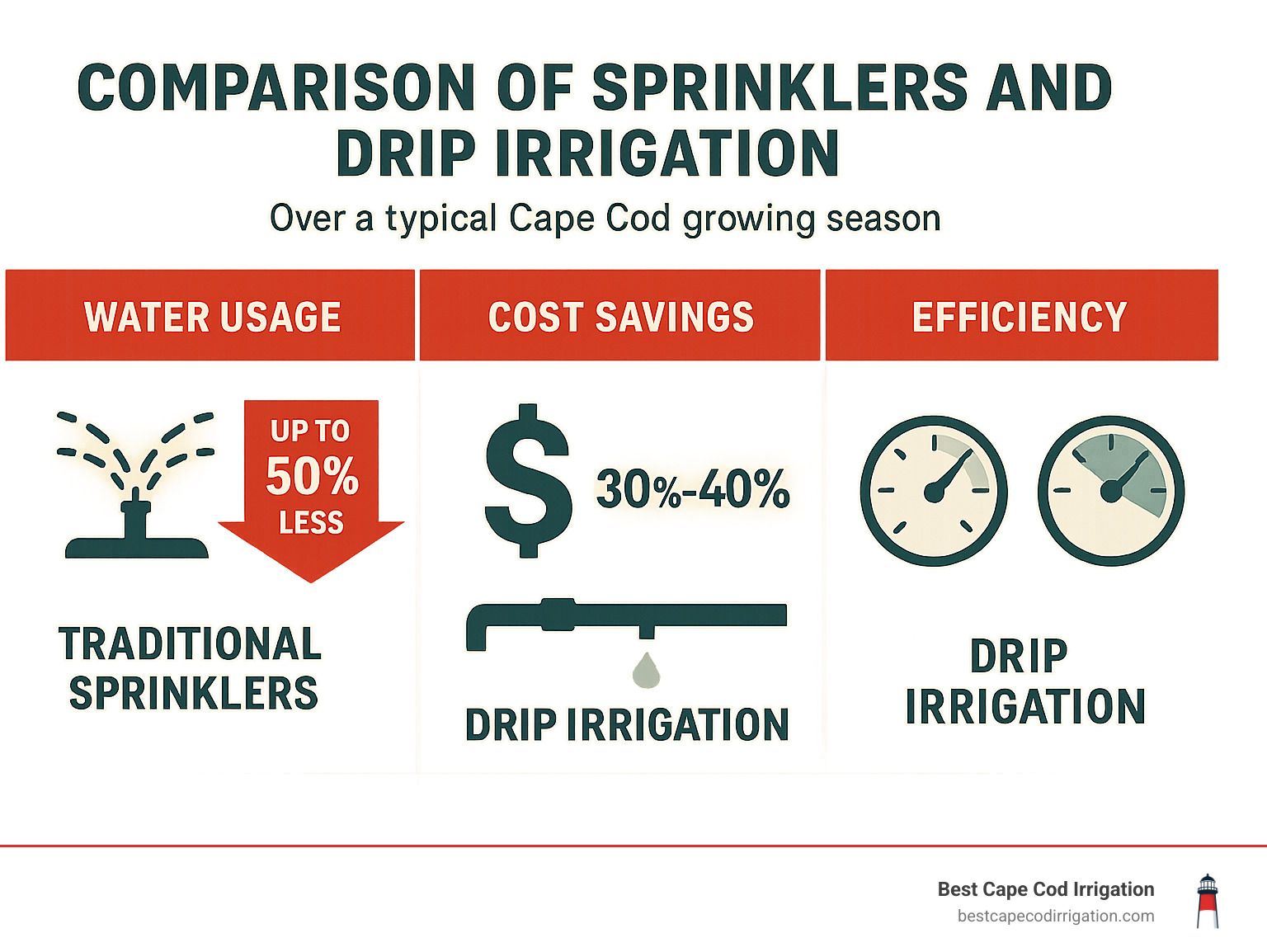
The water savings with drip irrigation Cape Cod systems are impressive – most homeowners see 30-50% reductions in their irrigation water use compared to traditional sprinklers. If your property currently uses 10,000 gallons monthly for watering, you could save 3,000-5,000 gallons each month during the growing season.
Those water savings translate directly into lower utility bills. But the financial benefits go beyond just the monthly water costs. Healthier landscapes mean fewer plant replacements, and the precision watering reduces maintenance needs too. Most Cape Cod homeowners find their drip systems pay for themselves within 3-5 years through these combined savings.
The 40% efficiency advantage over overhead irrigation comes from eliminating the water losses that plague traditional sprinklers – no more watching your water blow away in Cape Cod’s coastal winds or evaporate before it reaches plant roots. During summer water restrictions, this efficiency becomes especially valuable for maintaining beautiful landscapes while staying within conservation guidelines.
Are there Cape Cod bylaws I need to follow?
Cape Cod towns take water conservation seriously, especially during summer months when seasonal populations surge. Most communities have specific watering schedules that restrict irrigation to certain days and times – typically early morning or evening hours to reduce evaporation losses.
Here’s the good news: drip irrigation systems often get more flexibility under local water restrictions because they use water so efficiently and create zero runoff. Still, it’s smart to check with your town’s water department about specific requirements for your area, since regulations can vary between communities.
All irrigation systems must include backflow preventers to protect municipal water supplies. This isn’t optional – it’s required by state plumbing codes and enforced by local water departments. Professional installation ensures your system meets all relevant regulations from the start.
Many Cape Cod towns offer rebates or incentives for water-efficient irrigation installations. These programs help offset installation costs while supporting regional conservation goals. Contact your local water department to learn what’s available in your area.
What seasonal services are essential?
Spring startup gets your system ready for another growing season and typically begins in March when hard freezes are behind us. Professional technicians charge the system, test every zone, clean filters, inspect emitters, and program controllers for optimal performance. Skipping this service is like trying to start your car after winter storage without checking anything first.
Mid-season maintenance during the heat of summer keeps everything running smoothly when your plants need water most. This involves adjusting emitter flow rates as plants grow, modifying schedules based on weather patterns, and catching small problems before they become expensive repairs.
Fall winterization protects your investment by removing all water from the system before freezing temperatures arrive. This critical service prevents costly freeze damage to emitters, tubing, valves, and controllers. Most Cape Cod systems get winterized in October, and waiting too long can result in expensive spring repairs.
Between professional services, regular filter cleaning and emitter inspection throughout the growing season help maintain peak performance. Think of it as routine maintenance that prevents bigger headaches down the road.
Conclusion
Drip irrigation Cape Cod systems represent the smart choice for property owners who want beautiful landscapes without fighting against nature. The combination of 40-50% water savings, healthier plants, and lower maintenance costs makes this technology a wise investment that keeps paying back year after year.
Across the Cape – from the sandy shores of Sandwich to the windswept dunes of Provincetown – homeowners and businesses are finding that drip irrigation works with coastal conditions instead of against them. Your vegetable garden in Barnstable gets consistent moisture without disease-causing wet leaves. Your perennial borders in Dennis thrive with deep, steady watering that sandy soil can actually absorb. Even foundation plantings in Falmouth stay healthy without creating moisture problems near your home.
Modern drip systems have come a long way from simple soaker hoses. Today’s smart controllers monitor weather conditions automatically, adjusting watering schedules when it rains and increasing irrigation during heat waves. Weather monitoring and remote management capabilities mean your system takes care of itself, whether you’re home for the summer or checking in from miles away.
The key to success lies in proper installation and seasonal care. Professional design ensures your system works efficiently from day one, while regular spring startup, mid-season maintenance, and fall winterization keep everything running smoothly through Cape Cod’s variable climate.
Best Cape Cod Irrigation brings over 25 years of local expertise to every installation. We understand how coastal winds affect plant watering, why sandy soils need different approaches, and which smart technologies work best in our unique environment. Our experience with Cape Cod’s microclimates and challenging conditions means your drip irrigation system will be designed right the first time.
Ready to transform your Cape Cod property into a thriving, water-efficient landscape? Contact us for a custom drip consultation and find how the right drip irrigation system can give you the beautiful gardens you want with the water savings you need.
