


The Hidden Threat to Your Cape Cod Lawn
Sprinkler system leak detection is essential for protecting your lawn, wallet, and the environment from costly water waste. While seeing sprinklers on in the rain is an obvious sign of inefficiency, hidden leaks are far more damaging.
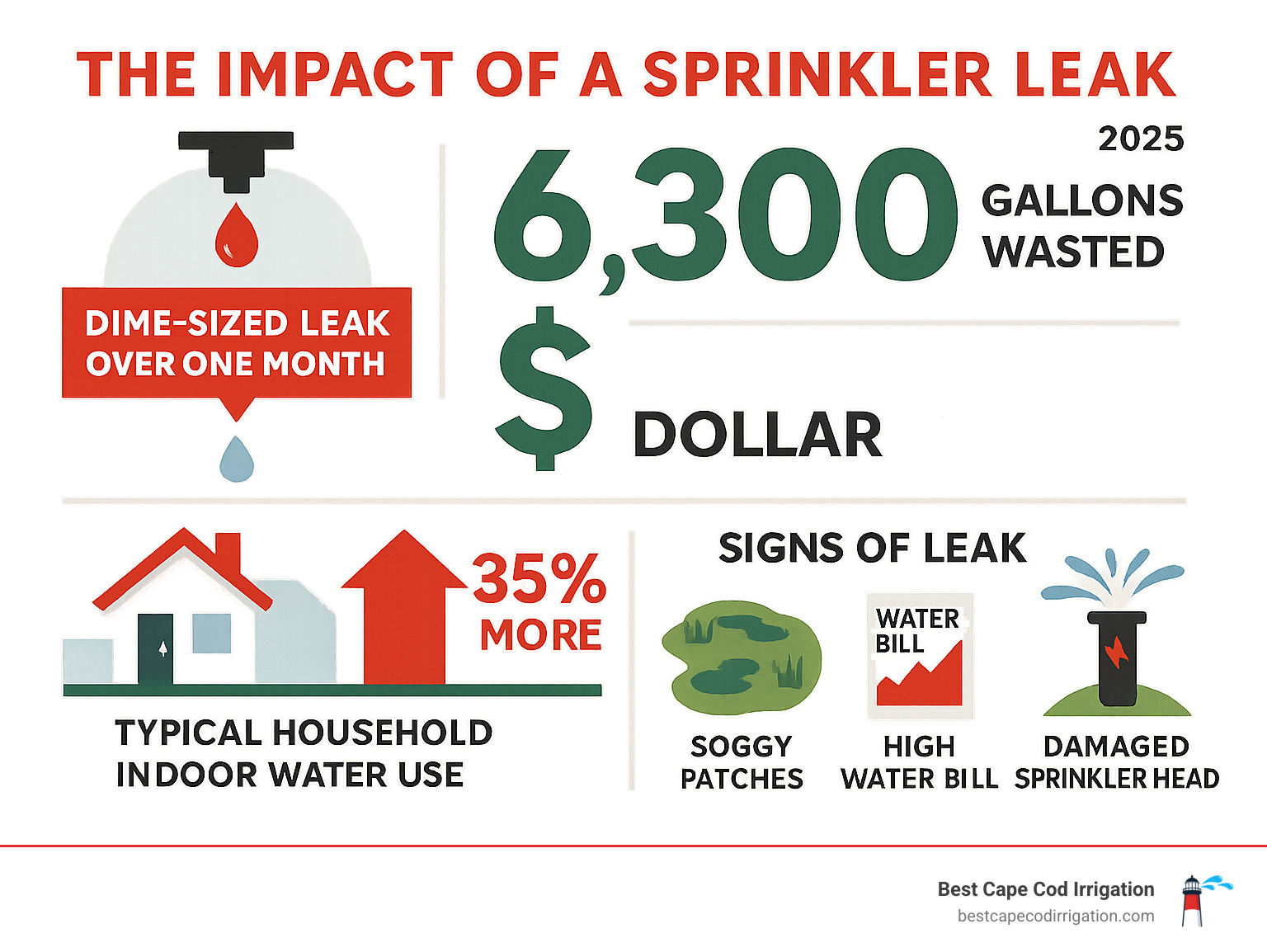
An irrigation leak the thickness of a dime can waste approximately 6,300 gallons of water per month. For Cape Cod homeowners, this can turn a dream lawn into a financial nightmare. The good news is that most leaks show clear warning signs.
From soggy patches and high water bills to broken sprinkler heads, your system often signals when something is wrong. Early detection can save you money and prevent serious property damage. Here are the key methods every homeowner should know:
- Visual inspection: Look for soggy patches, unusually green spots, or bubbling water.
- Water meter test: Check if your meter moves when all water is off.
- Zone-by-zone testing: Run each zone individually to isolate problem areas.
- Listen for sounds: Hissing or gurgling noises can indicate underground leaks.
Sprinkler system leak detection terms at a glance:
- Automatic sprinkler system repair
- Irrigation pipe leak repair
- Residential sprinkler system maintenance
Why Finding a Sprinkler Leak is Crucial for Your Lawn and Wallet
Ignoring a sprinkler system leak means watching your money and your lawn’s health seep into the ground. Prompt detection is essential for your wallet, property, and our Cape Cod environment.
A staggering up to 50% of outdoor water can be lost to inefficient irrigation, with a large portion due to hidden leaks. The EPA states that a leak the size of a dime can waste 6,300 gallons of water per month—more than many households use indoors. An irrigation leak about the thickness of a dime can waste about 6,300 gallons of water per month, according to the Environmental Protection Agency. This wasted water leads directly to higher bills.
Beyond the financial cost, water conservation is vital for our coastal community. Leaks also harm your lawn by creating overly saturated or parched areas, leading to root disease and brown patches. Most critically, undetected leaks near your home can damage the foundation, cause soil erosion, and even create dangerous sinkholes. Early detection prevents these small issues from becoming major, expensive problems.
Common Signs of an Irrigation System Leak
Your irrigation system will often show clear signs of a problem. Look for these indicators during regular lawn maintenance:
- Spongy or wet spots: Areas of your lawn that are consistently soggy or have standing water point to an underground leak.
- Unusually green patches: A spot that is greener or taller than the surrounding grass is likely getting overwatered by a hidden leak.
- Dry, brown patches: If an area looks parched despite watering, a nearby leak may be diverting water or lowering pressure.
- Low water pressure: If sprinkler heads aren’t spraying as far as they used to, a leak in the line could be the cause.
- Sputtering sprinkler heads: Heads that mist or don’t pop up fully often indicate a pressure issue from a leak.
- Water bubbling from the ground: A clear sign of a significant break in an underground pipe.
- Visible broken heads or pipes: Cracked, tilted, or broken components are obvious culprits.
- High water bill: A sudden spike in your bill without a change in indoor usage is a classic sign of an outdoor leak.
- Mold or eroded soil: Constant moisture can cause mold growth, while escaping water can wash away soil around sprinkler heads.
The Primary Causes of Sprinkler Leaks
Understanding why leaks happen can help with prevention and diagnosis. Common causes include:
- Wear and tear: Over time, seals dry out, plastic becomes brittle, and connections loosen.
- Freeze damage: Water left in pipes during a Cape Cod winter can freeze, expand, and crack pipes, valves, and heads. This is why improper winterization is a leading cause of leaks.
- Physical damage: Lawn mowers, vehicles, or shovels can easily crush or pierce sprinkler components. Always call 811 before you dig.
- Root intrusion: Tree roots seeking water can wrap around and crush underground pipes over time.
- Animal chewing: Rodents and other animals sometimes chew through exposed lines.
- Incorrect installation or faulty parts: Improperly glued joints, shallow pipes, or defective valves can lead to premature failure.
Understanding these causes helps with both detection and prevention. For more on repairs and maintenance, see our guide: More info about Irrigation Repairs Maintenance.
A Step-by-Step Guide to Sprinkler System Leak Detection
A methodical approach to sprinkler system leak detection can save you time and money. While some leaks require a professional, many can be diagnosed by homeowners. For safety, always call your local utility to mark underground lines before any significant digging, and use irrigation flags to mark problem spots.
Step 1: The Visual Walk-Through
Your first and most effective step is a thorough visual inspection. Make this a regular habit during the watering season.
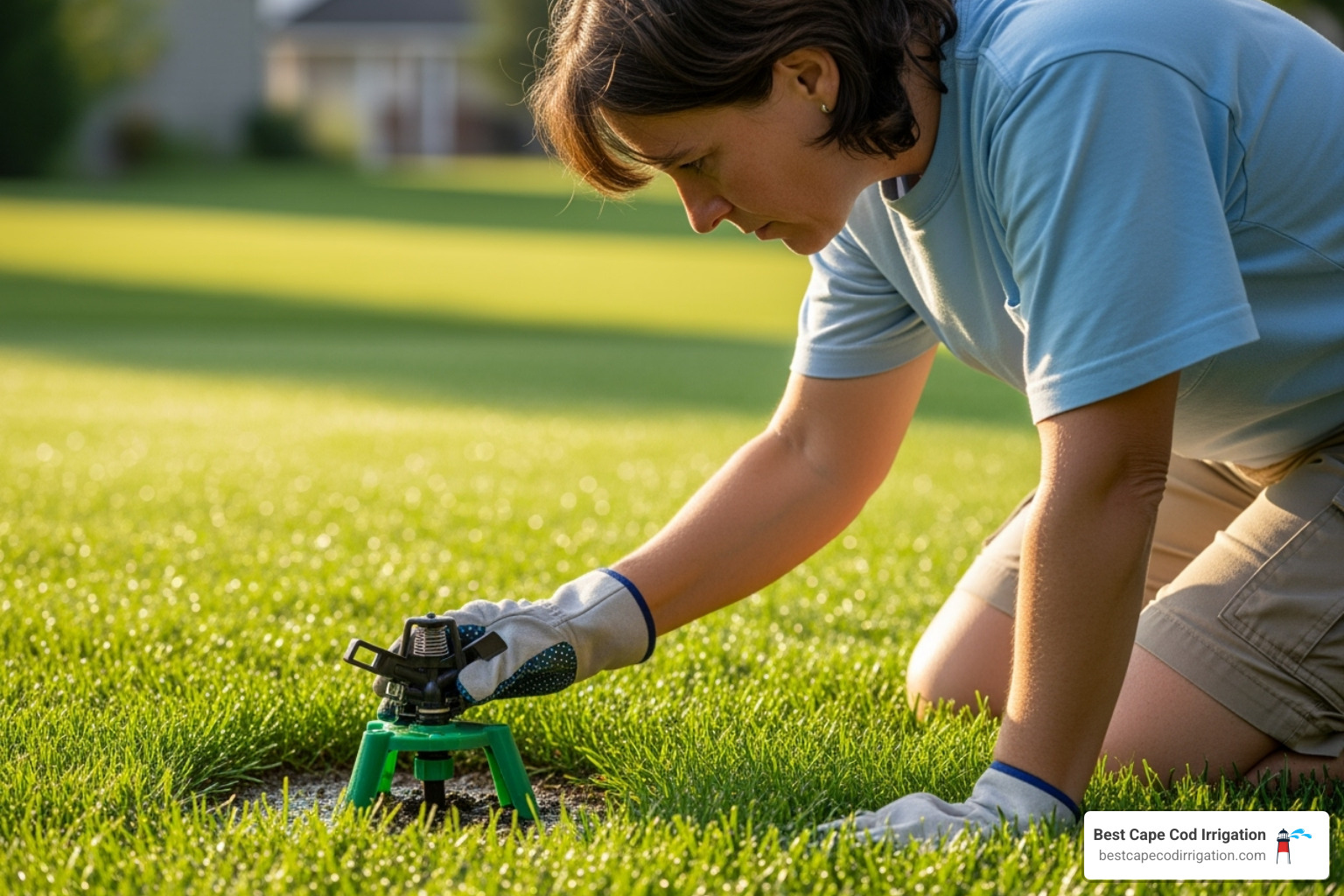
Turn on your system one zone at a time and walk through the area. Look for obvious signs like puddles, soggy ground, or geysers shooting from a broken pipe or head. Inspect each sprinkler head for cracks or damage, and check if water is leaking from its base. Note any uneven watering patterns or significant runoff onto sidewalks, which can indicate a leak or misaligned head. Finally, check inside your valve boxes; if they are wet or muddy, you likely have a leaky valve.
Step 2: The Water Meter Test for Hidden Leaks
For leaks that don’t show on the surface, your water meter is an invaluable tool. This test confirms if there is a leak anywhere in your system.
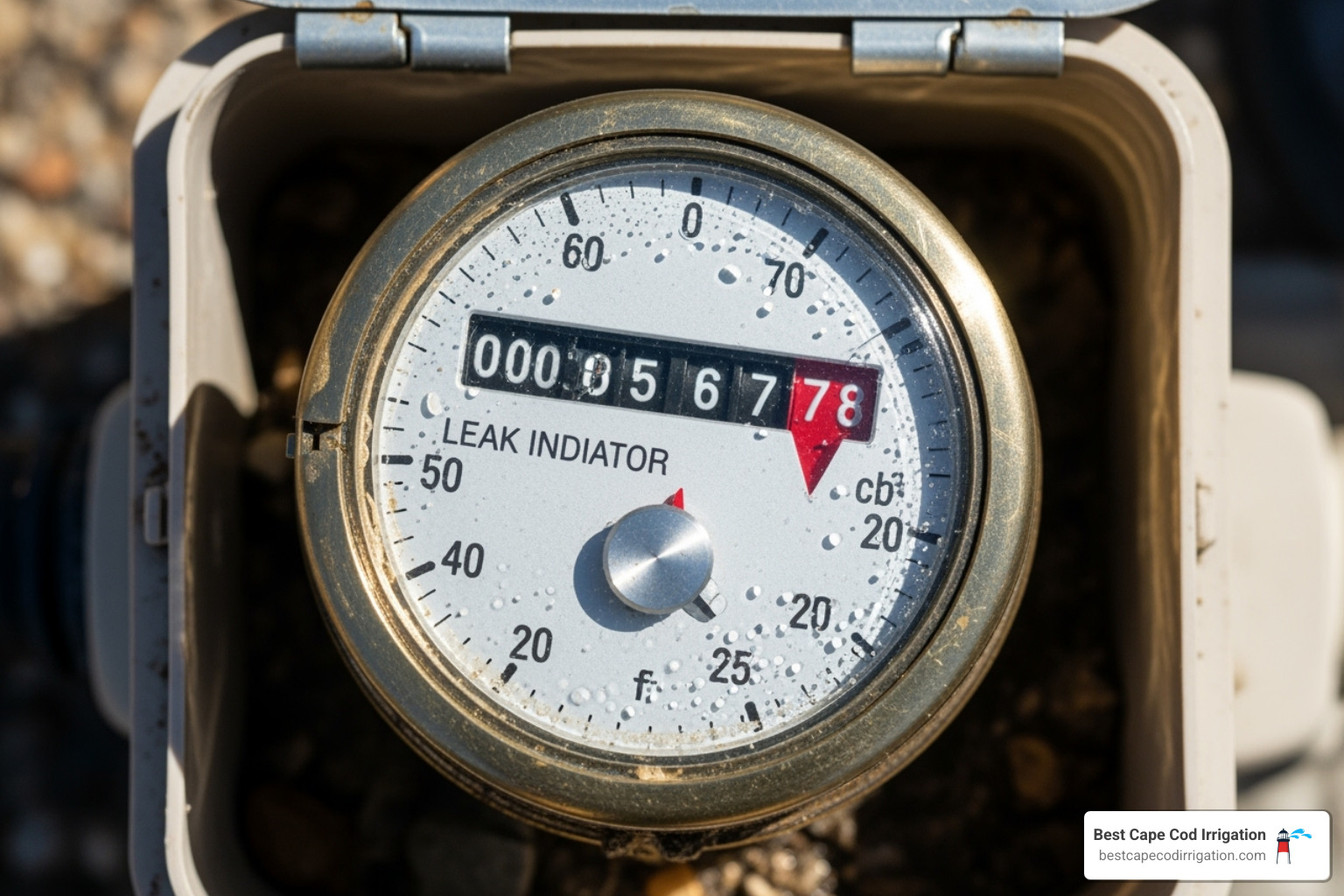
- Locate your water meter, usually in a box near the street.
- Turn off all water inside and outside your home. Ensure no faucets, toilets, or appliances are running.
- Check the leak indicator on the meter (a small triangle or wheel). If it’s moving, you have a leak.
- If there’s no indicator, write down the meter reading.
- Wait 4-8 hours without using any water.
- Re-check the meter. If the numbers have changed, you have a leak.
To determine if the leak is in your irrigation system, turn off the main sprinkler shut-off valve (often near the meter) and repeat the test. If the meter stops moving, the leak is in your sprinkler system.
Step 3: Zone-by-Zone Inspection
Once you’ve confirmed the leak is in the irrigation system, this step helps pinpoint its location.
- Go to your controller panel.
- Manually activate each zone individually for a few minutes.
- As each zone runs, observe every sprinkler head. Look for sputtering, misting, or heads that don’t pop up fully. Check for water bubbling from the base of a head or uneven spray patterns.
- Listen for unusual sounds like hissing or gurgling, which often indicate an underground pipe leak.
- Note if the water pressure seems significantly lower in a specific zone, as this points to a leak in that line.
If you find a problem with a specific head, it may just need cleaning or replacement. If you suspect a faulty valve, learn more here: Sprinkler System Valve Repair.
Tools and Technology for Finding Tough Leaks
Sometimes, visual inspections and meter tests aren’t enough to find sneaky underground leaks. When DIY methods fall short, it’s time to turn to more advanced tools and technology.
Manual Sprinkler System Leak Detection for Homeowners
Before calling a professional, a few simple tools can help. A screwdriver can act as a stethoscope; place the tip on the ground where you suspect a leak and listen through the handle for the sound of running water. A small shovel or trowel can be used to gently probe soggy areas, feeling for unusually soft soil that may indicate a buried leak. Listen carefully for gurgling sounds as you probe.
Advanced Tools for Professional Sprinkler System Leak Detection
When a leak is too deep or subtle to find manually, professionals use specialized equipment to locate it without extensive digging.
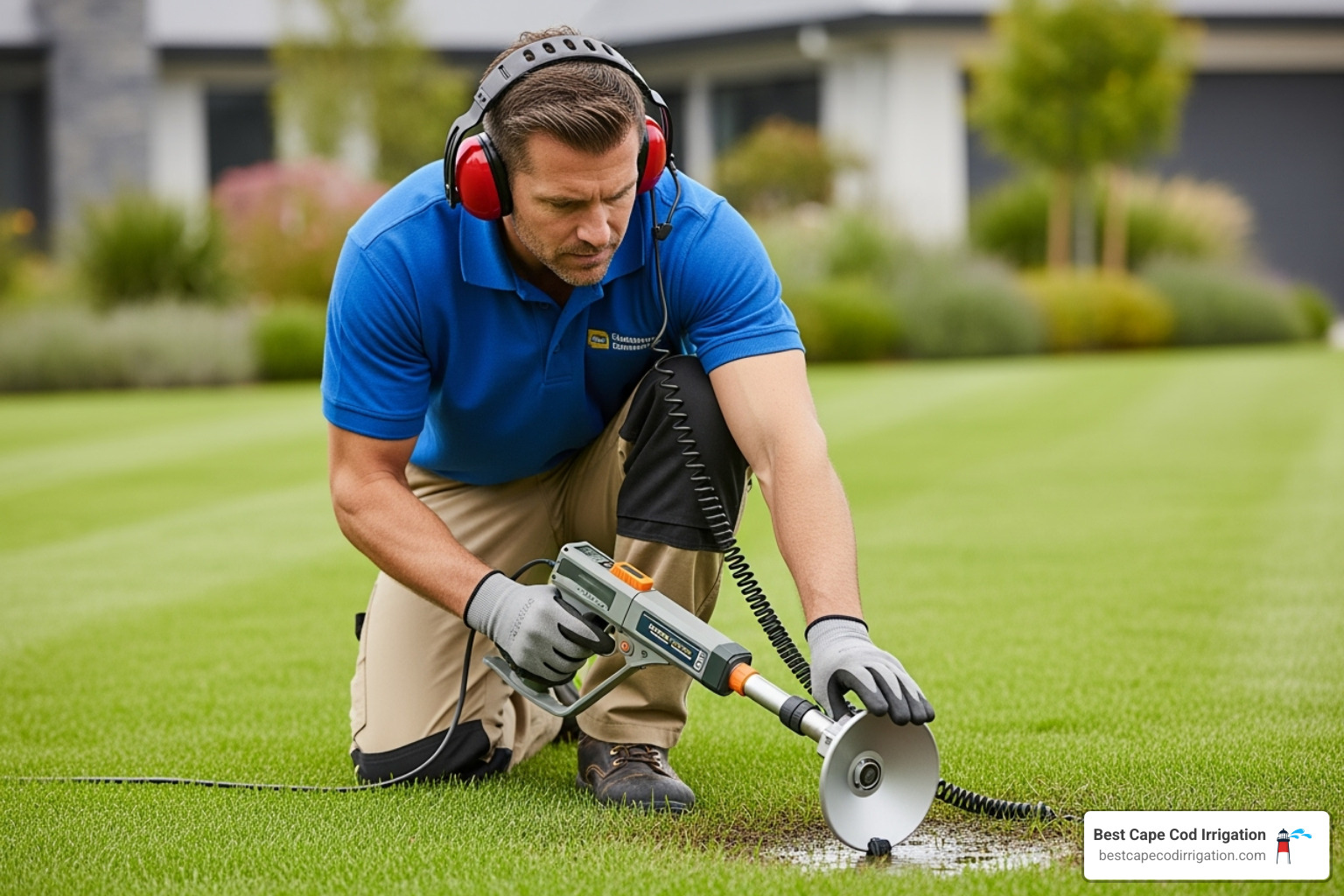
- Acoustic leak detectors are highly sensitive microphones that can hear the distinct sound of water escaping from a pipe buried deep underground. This technology turns guesswork into a precise science. Water leak microphones are a key tool for non-invasive detection.
- Thermal imaging cameras can sometimes detect the subtle temperature differences in soil caused by seeping water, making the wet, cooler area visible.
- Pressure testing equipment allows technicians to isolate sections of the irrigation system and pressurize them. A drop in pressure confirms a leak within that specific section, narrowing down the search significantly.
The Rise of Smart Leak Detection Devices
Modern technology is revolutionizing sprinkler system leak detection. Smart devices can monitor your system and alert you to problems instantly.
- Flow monitors and sensors are installed on your main irrigation line to learn your system’s normal water flow. When they detect an abnormality—like water running when it shouldn’t or an unusually high flow rate—they send an immediate alert to your phone.
- Real-time alerts are a game-changer, notifying you of a leak in minutes rather than weeks later on your water bill. This allows for immediate shutdown to prevent waste.
- Automatic shut-off capabilities are available in advanced systems, which can automatically stop water flow when a major leak is detected, preventing catastrophic water loss and property damage.
- Water usage tracking via smartphone apps provides detailed insights into your system’s performance, helping you spot trends that may indicate a developing leak.
For Cape Cod homeowners, these smart systems are invaluable for managing water use efficiently. Once an issue is detected, find repair info here: More info about Irrigation Pipe Leak Repair.
How to Prevent Future Sprinkler System Leaks
Proactive care and regular maintenance are the best ways to prevent sprinkler system leaks. These steps protect your investment, conserve water, and help you avoid costly, unexpected repairs. For Cape Cod’s climate, with its cold winters and sandy soil, consistent maintenance is especially vital.
Regular Maintenance is Key
Consistent attention to your system throughout the watering season can stop small issues from becoming major leaks.
- Spring Start-Up Inspection: When turning your system on for the season, carefully inspect for any damage that occurred over the winter, such as cracked pipes or broken heads.
- Mid-Season Check-Ups: A quick visual scan every few weeks can help you spot new soggy spots or damaged components before they cause significant problems.
- Adjust and Clean Heads: Ensure sprinkler heads are aimed correctly to water your lawn, not your driveway. Regularly clean nozzles and filters to prevent clogs, which can cause pressure issues and stress the system.
- Check Water Pressure: Pressure that is too high can strain pipes and fittings, while pressure that is too low may indicate an existing leak. A pressure regulator can help if your system’s pressure fluctuates.
Seasonal Best Practices
On Cape Cod, proper seasonal practices are necessary to prevent winter damage.
- Proper Winterization: This is the single most important preventative step. Before the first hard freeze, the system must be professionally “blown out” with an air compressor to remove all water. This prevents water from freezing, expanding, and bursting pipes and components.
- Protect Above-Ground Components: Insulate any exposed pipes, valves, and backflow preventers to shield them from freezing temperatures.
- Mindful Landscaping and Mowing: Know where your sprinkler lines and heads are located before digging. Avoid driving heavy equipment over irrigated areas, and be careful when mowing near sprinkler heads to prevent damage.
Following these tips will significantly reduce your risk of future leaks. For more on maintenance, visit our page: More info about Irrigation Repairs Maintenance.
When to Call a Professional for Leak Detection and Repair
While DIY sprinkler system leak detection is encouraged, some situations require a professional to ensure a proper, lasting fix and avoid further frustration or damage.
Signs You Need an Expert
It’s time to call a professional when you encounter these issues:
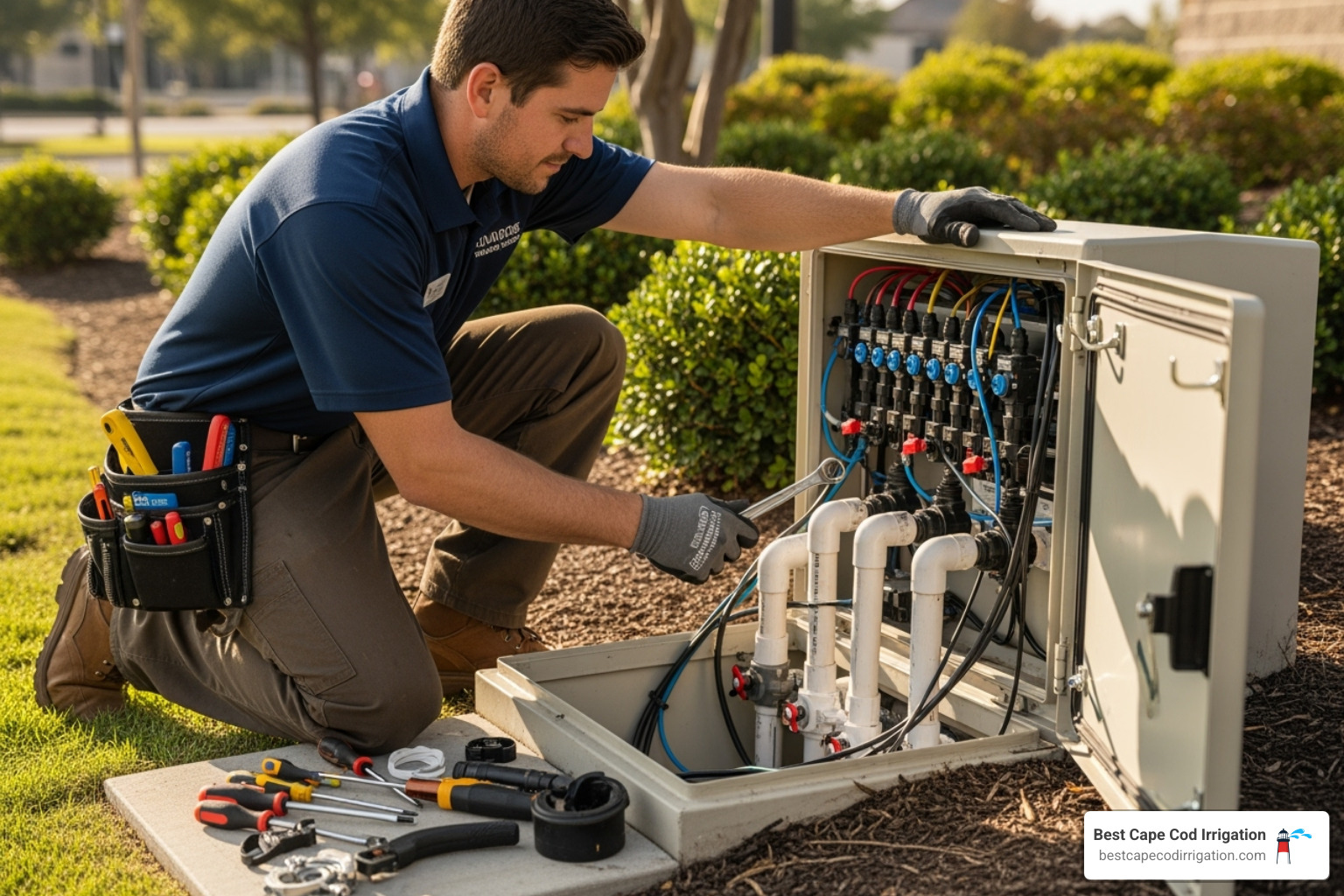
- The leak source is undetectable: After trying all the basic steps, you still can’t find the leak. It’s likely deep underground.
- A suspected main line break: You notice a constant water flow or a dramatic drop in overall pressure. This requires immediate, expert attention.
- Multiple zones are malfunctioning: If several zones have low pressure or won’t turn on, the problem is likely complex, involving valves or wiring.
- Electrical issues: Problems with the controller or valves are best left to experts to avoid safety risks and ensure correct repair.
- You lack the time or tools: A professional can complete the job quickly and correctly if you don’t have the time or necessary equipment.
- A significant drop in water pressure: A sudden, system-wide pressure drop often points to a major break.
When these signs appear, find expert help here: More info about Sprinkler Leak Repair Near Me.
Benefits of Hiring a Professional
Choosing a professional for sprinkler system leak detection and repair is a smart investment.
- Expertise and Experience: With over 25 years serving Cape Cod, we understand the unique challenges of our region’s soil and weather.
- Specialized Detection Equipment: We use advanced tools like acoustic detectors to find hidden leaks accurately with minimal disruption to your lawn.
- Correct Diagnosis and Quality Repairs: We identify the root cause of the leak and use high-quality materials to ensure a durable, long-lasting fix.
- Guarantee of Work: We stand behind our services, giving you peace of mind that the job is done right the first time.
- Preventing Further Damage: Our efficient service—with most calls handled within 24 hours—minimizes water waste and protects your property from further harm.
Hiring a professional saves time and money in the long run by ensuring the problem is solved correctly. To schedule service, contact us here: More info about Schedule Repairs.
Conclusion
We’ve covered the essentials of sprinkler system leak detection, from spotting soggy patches to using smart technology. A small, dime-sized leak can waste thousands of gallons, damage your lawn, and inflate your water bills. The key takeaway is to be proactive.
Simple steps like regular visual walk-throughs, water meter checks, and zone-by-zone inspections can save you significant money and trouble. Modern smart leak detection devices offer even greater peace of mind by providing instant alerts and protecting your home from water damage.
Consistent, proactive maintenance is your best defense against leaks, conserving water and keeping your system in top shape. However, some leaks are too complex for a DIY fix. If you have a stubborn leak, suspect a main line break, or simply prefer an expert touch, calling a professional is the wisest choice.
On Cape Cod, Best Cape Cod Irrigation offers over 25 years of regional expertise and the right equipment to handle any issue efficiently. A healthy, leak-free system means a lush lawn and a protected property. For all your irrigation needs, you know who to call: Empowerment to tackle simple checks and know when to call for help.