


Why Acting Fast on Pipe Leaks Saves Your Lawn and Wallet
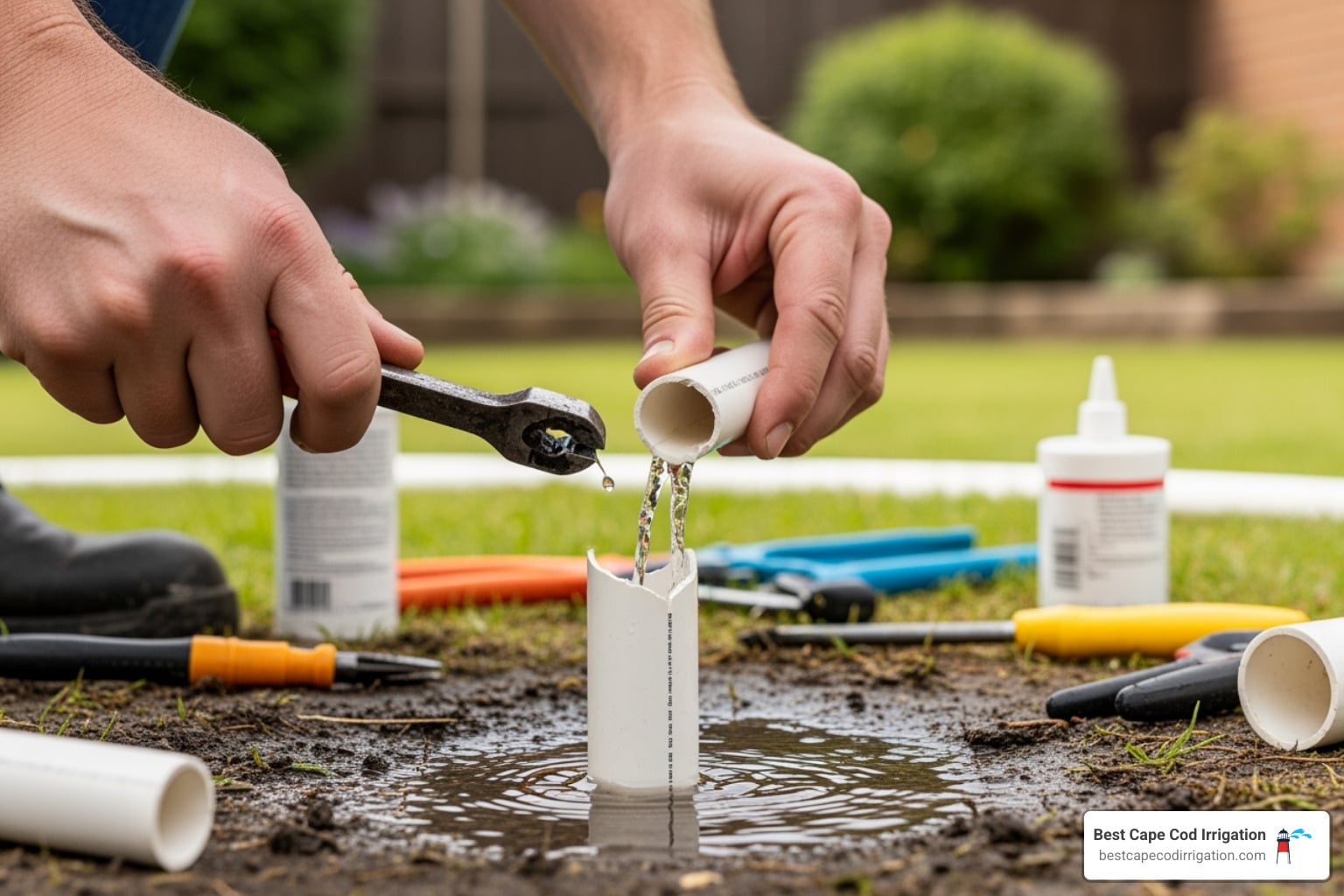
When you need to repair broken irrigation pipe, time is money – literally. A single cracked pipe can waste thousands of gallons per month and turn your water bill into a nightmare.
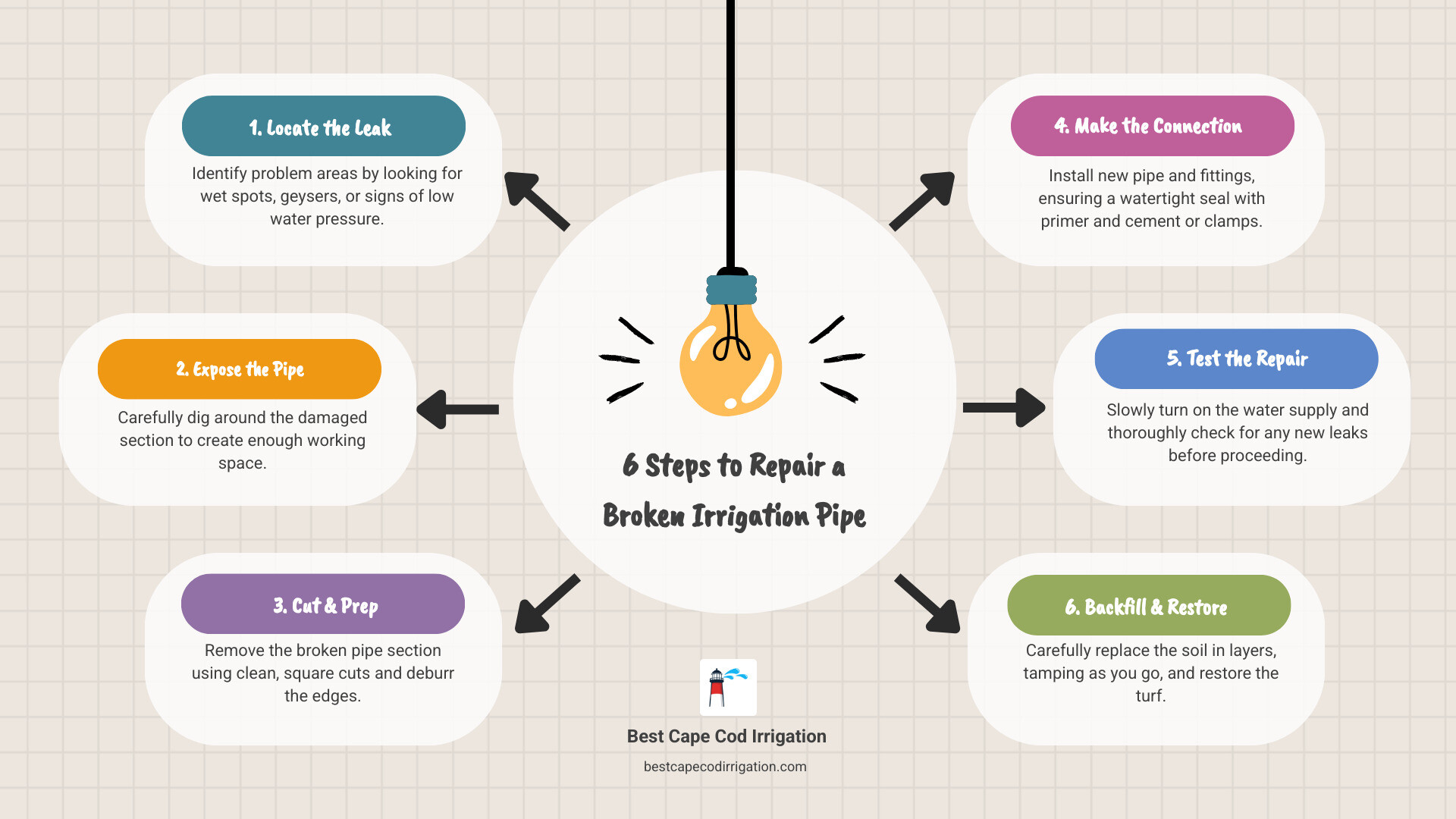
Quick repair steps:
- Locate the leak by looking for wet spots or geysers
- Dig carefully around the damaged pipe section
- Cut out the broken piece with clean, square cuts
- Replace using slip couplings or standard fittings
- Test thoroughly before backfilling the hole
Ever noticed a mysterious puddle in your yard when it hasn’t rained? That soggy patch could be costing you hundreds in wasted water while slowly damaging your landscape. The good news? Most pipe repairs are surprisingly simple DIY jobs that take just a few hours and cost under $50 in materials.
Common signs you need repairs:
- Unexplained wet spots in your lawn
- Water bills that suddenly spike
- Reduced pressure in sprinkler zones
- Geyser-like water shooting from the ground
Cape Cod’s sandy soil and freeze-thaw cycles make pipe breaks especially common here. But with the right approach, you can fix most leaks yourself and get back to enjoying that perfect green lawn you’ve worked so hard to maintain.
Repair broken irrigation pipe word guide:
Spotting the Problem: How to Find a Broken Irrigation Pipe
Picture this: you’re enjoying your morning coffee when you spot what looks like a mini Old Faithful erupting from your lawn. Sometimes finding where to repair broken irrigation pipe is that obvious! But more often, these sneaky leaks hide underground, silently wreaking havoc on your water bill and landscape.
The most obvious visual cues are your best friends when hunting down pipe breaks. Those wet spots or puddles that appear even when it hasn’t rained in days? That’s your irrigation system crying for help. Here’s the tricky part – water loves to travel along the pipe trench before popping up to the surface, so that soggy patch might not be sitting directly above the actual break.
Keep an eye out for soil erosion too. If you notice little depressions forming or soil mysteriously washing away, there’s likely water escaping from a broken pipe below. And here’s something that catches many homeowners off guard – sometimes a broken pipe creates dry grass patches instead of wet ones. When water diverts away from sprinkler heads through a crack, those areas start looking pretty thirsty.
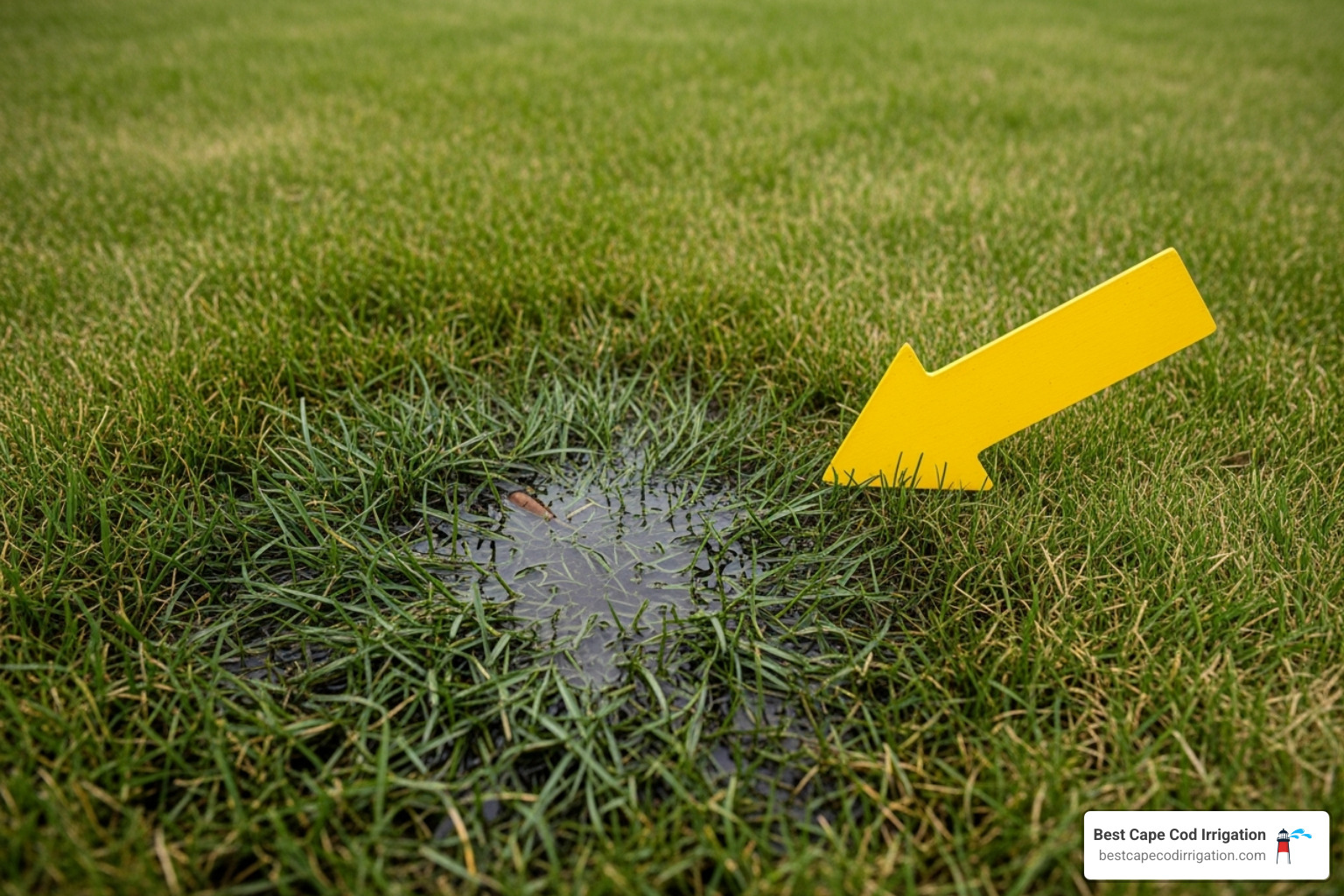
Low water pressure across your system or sprinkler head issues like heads that won’t pop up fully or spray weakly can signal trouble downstream. When an entire zone malfunctions – either getting no water or running constantly – you’re looking at a problem somewhere in that specific line.
Signs of a Hidden Leak
The sneakiest leaks don’t announce themselves with geysers. Instead, they whisper through your water bill spike. A single cracked pipe can waste thousands of gallons monthly, turning your utility bill into a real budget buster. If your water usage jumps without explanation, it’s detective time.
Listen carefully around your property. That faint sound of running water when your system should be off? That’s not your imagination – it’s often the first clue to a hidden leak. Some pros use special listening equipment, but your ears work pretty well too.
Foundation damage is where things get serious. Underground leaks don’t just waste water – they can undermine decks, patios, and even your home’s foundation if left unchecked. Wilting plants in some areas while others get too much water creates that telltale uneven watering pattern that screams “pipe problem!”
Once you suspect trouble, turn on your system during daylight hours and activate one zone at a time. Walk the lines like a detective, looking and listening for those telltale signs. Mark suspicious spots with spray paint or flags.
Here’s the most important step before you grab that shovel: Before you dig, call 811 or visit their website. This free service marks underground utility lines within 72 hours, preventing dangerous and expensive accidents with gas, electric, or communication lines. Trust us – a few days of patience beats a lifetime of regret!
For complex leak detection or peace of mind, consider professional Sprinkler System Leak Repair services that can pinpoint problems without the guesswork.
Gearing Up: Tools and Materials for the Job
Now that we’ve played detective and found our leak, it’s time to gather everything we need for the fix. Don’t worry – you won’t need a contractor’s truck full of equipment! Most repair broken irrigation pipe jobs require just a handful of basic tools that any homeowner can handle.
Think of this as assembling your repair toolkit. A good shovel and hand trowel will be your best friends for careful digging – the hand trowel especially shines when you need to work close to the pipe without causing more damage. You’ll also need a PVC pipe cutter or hacksaw for making those crucial clean cuts. Trust me, a proper PVC pipe cutter is worth the investment if you don’t have one – it creates much cleaner, burr-free cuts than wrestling with a hacksaw.
Don’t forget your tape measure for accurate measurements, some rags to clean everything up, and the star players: new PVC pipe (matching your existing diameter and type), PVC primer, PVC cement, and the right couplings to tie it all together.
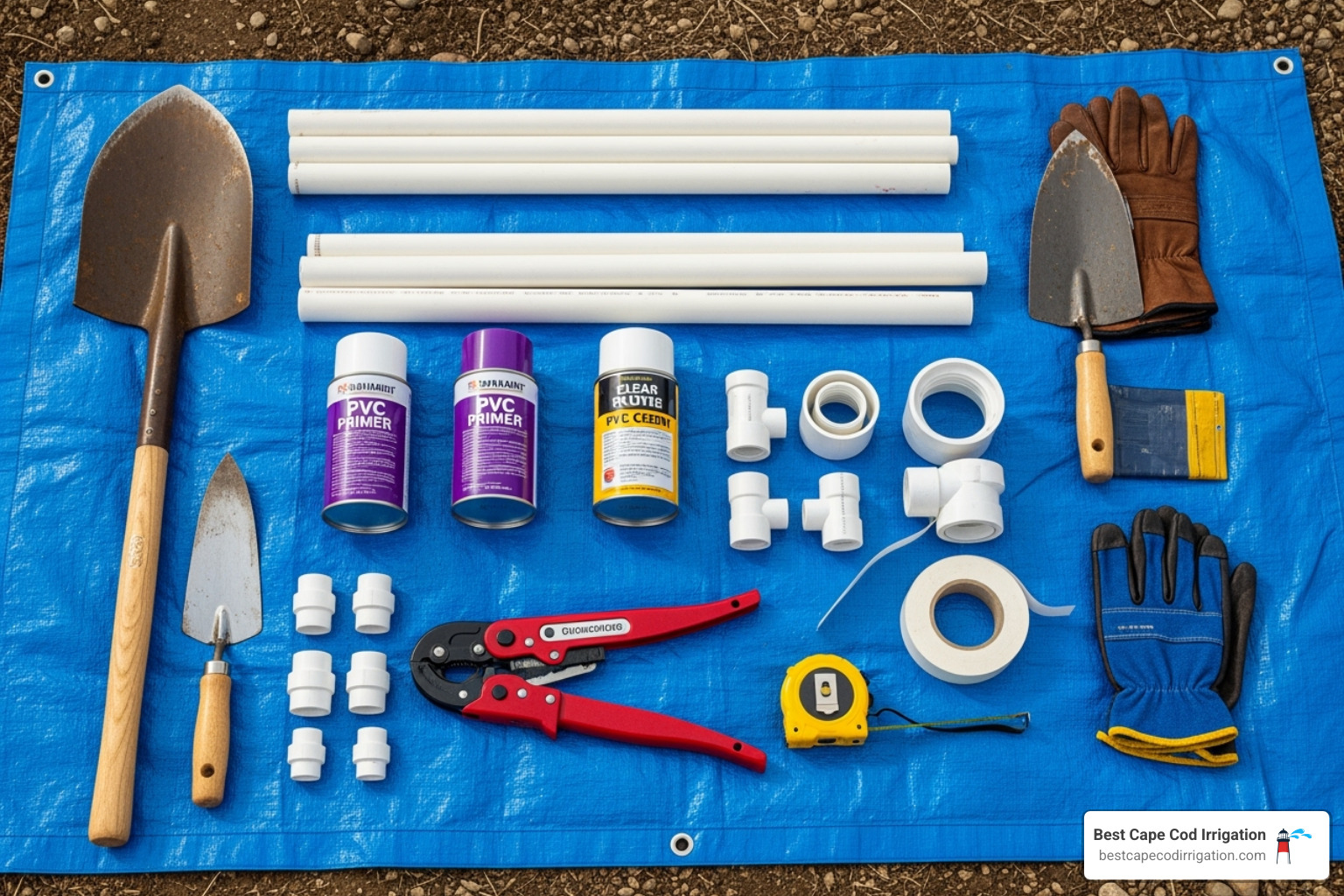
Here’s your complete shopping list: shovel, hand trowel, PVC pipe cutter, hacksaw, tape measure, rags, PVC pipe, PVC primer, PVC cement, and couplings. Most hardware stores will have everything in one trip, and you’ll likely spend less than $50 for the whole kit.
Choosing the Right Fitting
Here’s where things get interesting – picking the right coupling can make or break your repair (pun intended!). The choice between standard couplings and slip couplings often determines whether your repair goes smoothly or becomes a frustrating puzzle.
| Feature | Standard Coupling | Slip Coupling (aka Slip Fix) |
|---|---|---|
| Ease of Use | Requires precise measurement and pipe manipulation. | Easier to install in tight spaces as it slides over pipe. |
| Space Req. | Needs enough play in the pipe to fit new section. | Requires less room between existing pipe ends. |
| Best Use | Ideal for new installations or when ample space. | Perfect for repairs where pipe movement is limited, or for bridging a gap without cutting a large section. |
Standard couplings are the traditional choice – rigid fittings that connect two pipe pieces perfectly. They work great when you have room to maneuver, but they require cutting out the damaged section and having enough flexibility in your existing pipes to fit everything together.
Slip couplings are the repair hero you didn’t know you needed. These clever fittings have a wider end that slides over your existing pipe, then slides back to bridge the gap. They’re absolute lifesavers when you’re working in cramped quarters or when your existing pipes won’t budge much. Despite what some people worry about, properly installed slip couplings are completely reliable for buried lines and won’t affect your system’s performance.
If you’re dealing with polyethylene (poly) pipes – those flexible black or blue ones – you’ll need a different approach entirely. Compression couplings and barbed fittings are your go-to options here, secured with hose clamps since poly pipe can’t be glued like PVC.
Understanding these fitting options is key to successful Irrigation Pipe Installation and repair work.
The Step-by-Step Guide to Repair Broken Irrigation Pipe
Now that we have our tools and materials, let’s get our hands dirty and learn how to repair broken irrigation pipe. This process is straightforward, but attention to detail ensures a lasting fix that’ll keep your lawn happy for years to come.
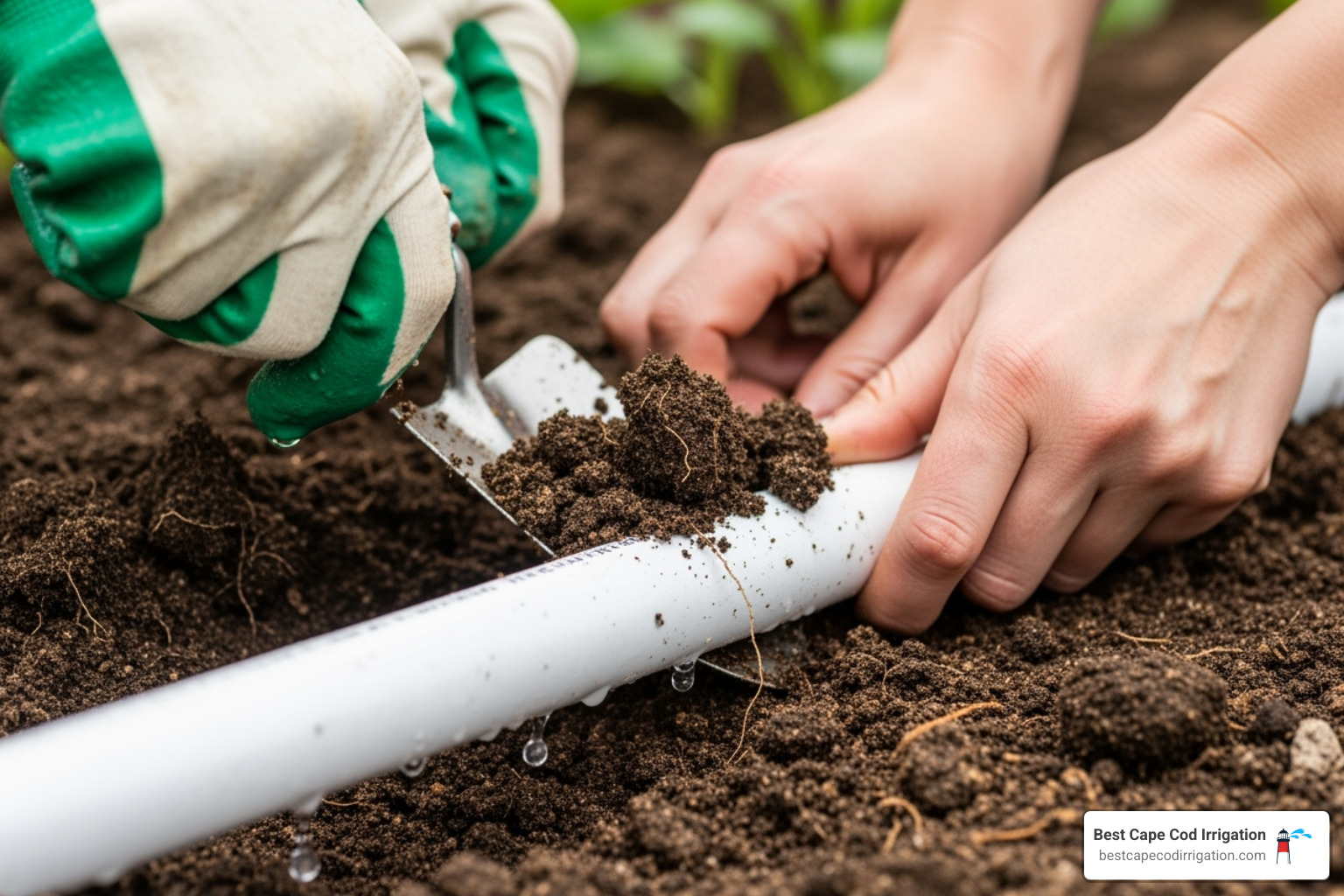
Think of this repair like performing minor surgery on your lawn – we need to be careful, precise, and patient. The good news? Most homeowners can tackle this project in an afternoon with basic DIY skills. If you’d rather watch someone demonstrate the process, check out this helpful video demonstration before starting.
Step 1: Digging and Exposing the Damage
Before we start digging like treasure hunters, safety comes first. Shut off your water supply at the main irrigation valve – usually found near your backflow preventer or main water line. Trust me, you don’t want a surprise geyser soaking you while you work!
If you’re dealing with a broken pipe in your beautiful lawn, take a moment to preserve that turf. Cut a neat square or rectangle around the problem area with your shovel, then carefully lift the grass patch like you’re removing a puzzle piece. Keep 2-3 inches of soil attached to the roots and set it aside on a tarp. Your future self will thank you when it’s time to put everything back together.
Now comes the careful digging. Start with your hand trowel near where you suspect the pipe runs – this prevents accidentally whacking the pipe again with your shovel. When you do use the shovel, angle it rather than driving straight down. We’re looking to expose 6-12 inches of pipe on both sides of the break, plus dig about 3 inches below the pipe to give yourself proper working room.
Once you’ve created your workspace, grab those rags and clean the pipe around the damaged area. A little elbow grease here makes the next steps much easier and ensures a better repair.
Step 2: How to repair broken irrigation pipe by Cutting and Prepping
With the damaged section exposed like a patient on the operating table, it’s time to remove the troublemaker. Using your PVC pipe cutter or hacksaw, make clean, square cuts on both sides of the damage. Cut at least 1-2 inches beyond any visible cracks – we want to work with healthy pipe, not something that might fail again next month.
Remove the damaged section completely. This piece might be anywhere from 4 to 10 inches long depending on how extensive the damage is. If you used a hacksaw, take a moment to deburr the edges with light sandpaper or a utility knife. Those rough edges can prevent a proper seal and create turbulence in your water flow.
Here’s a pro tip that’ll save you headaches later: dry-fit everything first. Before you touch any glue, test-fit your new pipe section and couplings to make sure everything lines up perfectly. This is especially crucial for PVC repairs where you only get one shot at the glued connection.
For specialized crack repairs that don’t require full pipe replacement, our guide on Irrigation Pipe Crack Repair offers additional techniques worth exploring.
Step 3: Making the Connection for a Watertight Seal
This is where the magic happens – creating a watertight seal that’ll last for years. The process differs depending on whether you’re working with PVC or poly pipe, so let’s break it down.
For PVC pipe repairs, start by applying PVC primer generously to the outside of your existing pipe ends and inside your coupling ends. This purple or clear liquid isn’t just for show – it cleans and softens the PVC surface for a proper chemical bond. Immediately follow with PVC cement application to the same primed areas. Work quickly here, as PVC cement sets fast!
Push your new pipe section and couplings together with a slight twisting motion to spread the cement evenly. Hold the joints firmly for 30 seconds – this prevents the pieces from pushing apart as the chemical weld begins. Here’s the hardest part for impatient DIYers: curing time. Even though the joint feels solid quickly, wait a full 24 hours before turning the water back on. Rushing this step is the most common cause of repair failures.
Poly pipe repairs use a different approach with barbed fittings. Slide hose clamps over your existing pipe ends first (easy to forget this step!), then push the barbed fittings firmly into the pipe ends. Warming the poly pipe in hot water or using a dab of dish soap makes this easier. Position your hose clamps over the barbed sections and tighten them securely. For high-pressure lines, consider double-clamping for extra security.
Step 4: Flushing, Testing, and Backfilling
We’re in the home stretch! These final steps ensure your system runs clean and leak-free for years to come.
Flushing dirt from the lines prevents clogged sprinkler heads down the road. After your joints have cured properly, temporarily remove sprinkler heads downstream from your repair. Turn on the water supply slowly and let it run until the water runs clear. It’s like giving your irrigation system a good rinse after its surgery.
Now for the moment of truth – testing the repair. Slowly turn your main water supply back on and watch the repaired area like a hawk for the first few minutes. Let the system run for at least 5 full minutes under pressure. A neat trick: place a piece of toilet paper under the connections to catch even tiny leaks that might be hard to see.
If you spot any leaks, don’t panic. Turn off the water, let everything dry, and reassess your connections. Sometimes a joint just needs to be redone – it happens to the best of us.
Once you’re confident everything’s watertight, it’s time for backfilling. Add soil back in thin layers (2-3 inches at a time) and tamp it gently. This layered approach prevents settling and properly supports your newly repaired pipe. Finally, replace that turf you carefully saved earlier, press it down firmly, and give it a good drink with your garden hose.
Congratulations! You’ve successfully completed a professional-quality pipe repair that should serve your lawn well for many seasons to come.
Prevention and Professional Help
While knowing how to repair broken irrigation pipe is a valuable skill, preventing breaks in the first place will save you time, money, and frustration. Think of it as insurance for your lawn – a little effort upfront can prevent major headaches later.
Preventing Future Pipe Breaks
Cape Cod’s unique climate presents specific challenges for irrigation systems, but with the right preventive measures, your pipes can last for decades.
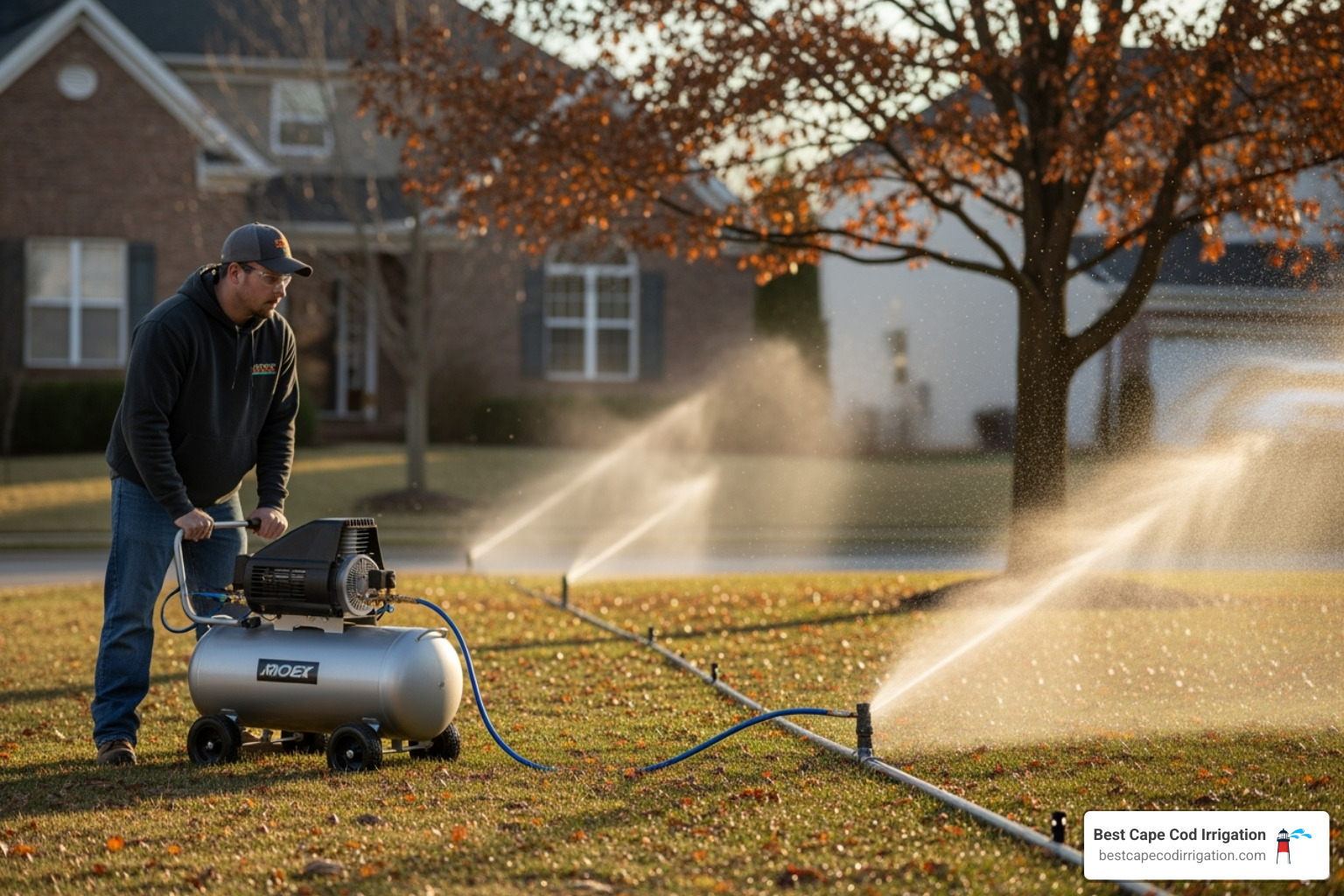
Proper winterization is absolutely critical here on the Cape. Our freeze-thaw cycles are brutal on irrigation pipes. Water left in the lines will freeze, expand, and crack your pipes like nature’s own pipe wrench. The solution? Blowing out your lines completely before winter arrives. This means using compressed air to push every drop of water from your system.
Burying pipes at the correct depth makes a huge difference in their longevity. Lateral lines should sit 8-12 inches deep, while main lines need to be 12-18 inches down. This protects them from frost damage, accidental shovel strikes, and UV degradation from sunlight.
Tree roots are sneaky troublemakers. They’re drawn to water like kids to ice cream, and they’ll wrap around your pipes until something gives. Root barriers installed near thirsty trees can redirect roots away from your irrigation lines, preventing costly damage years down the road.
Water pressure regulators might sound technical, but they’re your system’s best friend. Sudden pressure surges – what plumbers call “water hammer” – can stress pipes and fittings until they fail. A pressure regulator keeps everything running smoothly and costs only $40-$60. That’s a bargain compared to multiple pipe repairs.
Following proven Irrigation System Maintenance Tips will keep your system running smoothly year after year.
When to Call a Professional for Irrigation Pipe Repair
Sometimes, the smart move is knowing when you’re in over your head. DIY repairs are great for simple breaks, but certain situations call for professional expertise.
Major breaks or multiple leaks can quickly become overwhelming. If your yard looks like a water park or you’re playing whack-a-mole with leaks, it’s time to call in the pros. What seems like separate problems might actually be symptoms of a larger system issue.
Leaks near main lines or within complex multi-zone systems require specialized knowledge and tools. These aren’t the place to learn plumbing – a mistake here could affect your entire water supply or create expensive damage.
Lack of confidence is perfectly valid. If you’re staring at the broken pipe thinking “I have no idea what I’m doing,” trust that instinct. There’s no shame in calling a professional who can fix it right the first time.
The average cost to repair broken irrigation pipe professionally varies significantly based on complexity. Simple repairs might run $150 to $250, while complex jobs can range from $250 to over $450. Please note: these are average costs based on general online data and don’t reflect actual pricing for Best Cape Cod Irrigation services, which depends on your specific situation.
For reliable service and peace of mind, especially with complex issues, local expertise matters. We provide comprehensive Irrigation Repairs & Maintenance services backed by 25+ years of Cape Cod experience. When you’re searching for Sprinkler Pipe Repair Near Me, our team understands the unique challenges of our sandy soil, salt air, and harsh winters.
Frequently Asked Questions about Irrigation Pipe Repair
What are the most common causes of broken irrigation pipes?
If you’re wondering why your irrigation pipe decided to give up the ghost, you’re not alone! Broken irrigation pipes happen for several predictable reasons, and understanding these can help you prevent future headaches.
Freeze-thaw cycles are the number one culprit here on Cape Cod. When water gets trapped in your pipes during winter, it freezes and expands with incredible force – enough to crack even the sturdiest PVC. It’s like Mother Nature’s way of reminding us that proper winterization isn’t optional in New England!
Shovel damage comes in a close second. We’ve all been there – you’re enthusiastically digging a new flower bed when suddenly you hear that dreaded “thunk” and see water bubbling up. Always call 811 before digging to avoid this expensive surprise.
Tree root intrusion is sneakier but just as destructive. Those beautiful oak trees don’t just want sunlight – they’re actively hunting for water sources. Over time, roots can wrap around pipes like a slow-motion python, gradually crushing them until they crack.
Old age catches up with irrigation systems just like everything else. Most systems last 15-20 years before the plastic becomes brittle from sun exposure and soil chemicals. Improper installation can cut that lifespan short, especially pipes buried too shallow or connections that weren’t sealed properly from the start.
Finally, high water pressure can stress your entire system. Those sudden pressure surges (called “water hammer”) can make even new fittings fail unexpectedly.
Are slip couplings strong enough for buried lines?
Absolutely! This is one of those questions that keeps homeowners up at night, but you can rest easy. Slip couplings are completely reliable for buried irrigation lines when installed properly.
The beauty of slip couplings lies in their design – they’re specifically engineered to create strong, watertight seals while being much easier to install in tight spaces. You don’t need to be a contortionist to repair broken irrigation pipe when you can slide the coupling over existing pipe ends.
Some folks worry about flow restriction, but here’s the reality: the internal diameter difference between slip couplings and standard couplings is so minimal it won’t affect your system’s performance. Unless your irrigation system is already maxed out (which most residential systems aren’t), you’ll never notice the difference.
The key to long-lasting performance is using quality couplings designed specifically for irrigation and allowing proper curing time for the PVC cement. Rush the process, and you might be digging again next season. Take your time, and that repair will outlast your lawn mower.
Can I repair polyethylene (poly) and PVC pipes the same way?
Here’s where things get interesting – and the answer is a definitive no! PVC and poly pipes are like distant cousins – they’re both plastic, but they require completely different repair approaches.
PVC pipes are the rigid, typically white or gray pipes you see in most residential systems. These bad boys get repaired through chemistry – you literally melt them together using PVC primer and solvent cement. It’s like welding, but with chemicals instead of heat. The result is a permanent bond that’s often stronger than the original pipe.
Polyethylene (poly) pipes, on the other hand, are the flexible black or blue pipes that come in rolls. These can’t be glued – the chemistry just doesn’t work. Instead, you use mechanical connections with barbed fittings that push into the pipe ends, secured with hose clamps or compression fittings.
Think of it this way: PVC repairs are like performing surgery with permanent stitches, while poly repairs are more like using really good bandages. Both work perfectly when done right, but you absolutely cannot mix the methods. Using PVC cement on poly pipe is like trying to glue water – it simply won’t stick, and you’ll end up with a bigger mess than when you started.
The first step in any repair broken irrigation pipe project is identifying which type of pipe you’re dealing with. Get this wrong, and you’ll be making another trip to the hardware store!
Conclusion
There’s something deeply satisfying about fixing a problem with your own two hands, especially when it involves saving money and protecting your beautiful Cape Cod landscape. Successfully completing a repair broken irrigation pipe project gives you that exact feeling – plus the peace of mind knowing you’ve prevented water waste and potential damage to your property.
We’ve covered everything from spotting those telltale soggy patches and mysterious water bill spikes to getting your hands dirty with PVC primer and slip couplings. The process might seem intimidating at first, but as we’ve seen, most pipe repairs are straightforward weekend projects that cost under $50 in materials and can save you hundreds in professional service fees.
Prevention remains your best strategy. Regular maintenance, proper winterization (especially crucial here on Cape Cod), and simply being aware of where your irrigation lines run can save you from most emergency repairs. A little attention now prevents those unwelcome surprises later.
Of course, not every repair is a DIY job. When you’re dealing with major breaks near main lines, multiple leaks throughout your system, or you simply prefer the confidence that comes with professional expertise, that’s perfectly reasonable. Sometimes the smartest move is knowing when to call in the pros.
For complex issues or when you want that worry-free peace of mind on Cape Cod, trust the experts at Best Cape Cod Irrigation. Our 25+ years of regional expertise means we understand exactly what Cape Cod’s sandy soil, freeze-thaw cycles, and coastal conditions do to irrigation systems. We’re here to help whether you need emergency repairs or want to set up a maintenance schedule to prevent future problems.
Schedule your irrigation repairs and maintenance today and let us help you keep your lawn lush and your water bills reasonable. Your future self will thank you.