



Why Your Lawn Sprinkler System Needs a Proper Spring Awakening
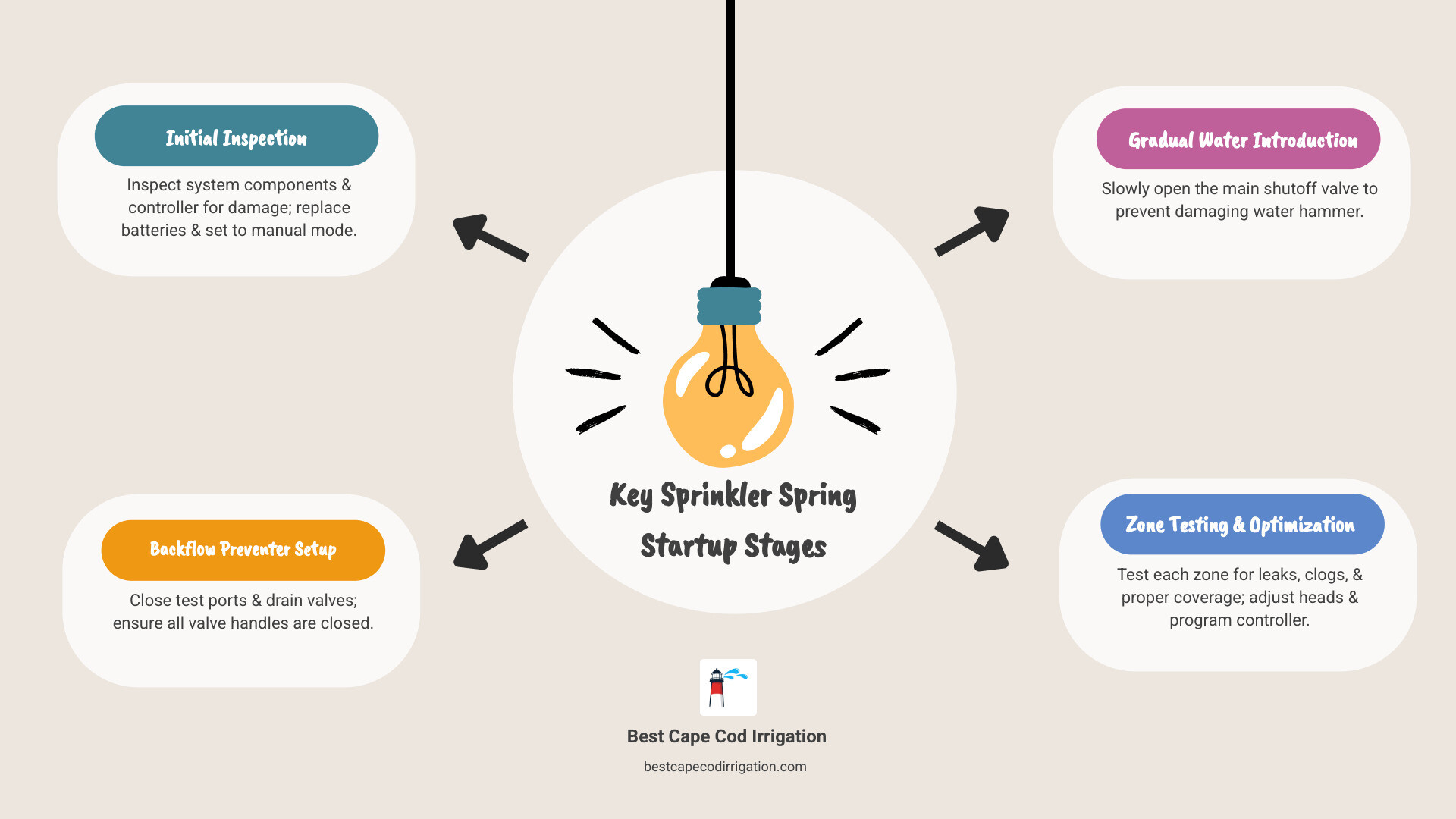
A lawn sprinkler system spring startup is the critical process of safely reactivating your irrigation system after winter shutdown. Here’s what you need to know:
Key Spring Startup Steps:
- Check for frozen ground – Dig 12 inches deep to ensure no frost remains
- Inspect system components – Look for winter damage to pipes, heads, and valves
- Prepare backflow preventer – Close test ports and drain valves
- Slowly open main water valve – Turn gradually to prevent water hammer damage
- Test each zone individually – Check for leaks, clogs, and proper coverage
- Program controller – Adjust settings for spring watering needs
After months of Cape Cod’s harsh winter conditions, your sprinkler system has been dormant under snow and freezing temperatures. But as spring arrives and your lawn starts showing signs of life, it’s time to bring your irrigation system back online.
The stakes are higher than you might think. Research shows that approximately 80% of irrigation systems need at least minor repairs after winter. Without proper startup procedures, you risk expensive damage from water hammer – a dangerous pressure surge that can crack pipes and burst fittings.
For busy Cape Cod homeowners dealing with sandy soil and unpredictable spring weather, a properly functioning sprinkler system isn’t just convenient – it’s essential for maintaining a healthy lawn while conserving water.
The good news? With the right approach, most homeowners can safely perform their own spring startup in 30 to 60 minutes.
Handy lawn sprinkler system spring startup terms:
Why a Proper Spring Startup is Crucial for Your Lawn and Wallet
Cape Cod winters are tough on irrigation systems. Even with proper winterization, freezing temperatures, ground shifts, and wildlife can damage pipes, valves, and sprinkler heads.
Simply cranking open the main water valve in spring is asking for trouble.
Winter damage is sneaky and expensive. Frozen pipes can develop tiny hairline cracks that only reveal themselves when the water is turned back on, leading to major leaks, soggy lawns, and high water bills.
We’ve seen homeowners find cracked seals and damaged valves that seemed fine during a visual inspection. The real test comes when water pressure hits the system.
Without a proper lawn sprinkler system spring startup, you risk creating uneven watering patterns that leave brown patches or flood flower beds, undoing your hard work and damaging your landscape investment.
The financial impact is significant. Minor issues caught early might cost $20-50 to fix, but ignored problems can lead to major repairs. Research shows that approximately 80% of irrigation systems need at least minor repairs after winter; catching them during startup prevents expensive emergencies.
When bigger problems do arise, our Sprinkler System Leak Repair services can help, but prevention is always your best bet.
When is the Right Time to Turn on Your Sprinkler System?
Timing your startup on Cape Cod is critical. Spring weather can bring surprise freezes that crack pipes, undoing months of winter protection.
Wait until at least two weeks after the average last frost date. A late cold snap can turn an eager startup into an expensive mistake.
Soil temperature tells the real story. Your pipes are buried, so surface air temperature doesn’t matter as much. Wait for consistent soil temperatures of 55°F or higher for at least a week.
Try the dig test method. Grab a small shovel and dig about 12 inches deep in an out-of-the-way spot. If the soil is still frozen, wait another week. Soft, workable soil means your pipes are likely safe.
Nature provides clues: when forsythia blooms are in full swing across Cape Cod, the ground has likely thawed enough for a safe startup.
For most Cape Cod areas—from Barnstable to Provincetown—this sweet spot typically falls between mid-April and late May.
Gathering Your Tools and Supplies
Being prepared makes the lawn sprinkler system spring startup process smooth and stress-free. Gather your tools beforehand to avoid a mid-project hardware store run.
Essential tools you’ll need: A flat-head screwdriver, a pair of pliers, and a sprinkler valve key if your system has manual zone valves.
Keep a pad and pen handy to note any issues you find while testing.
Stock up on common replacement parts like replacement sprinkler heads, nozzles, and fresh batteries for your controller. This allows you to fix problems immediately.
A small hand shovel is useful for the dig test and for clearing debris from around sprinkler heads. Also, grab some Teflon tape for sealing threaded connections on your backflow preventer.
Your Step-by-Step Guide to a Lawn Sprinkler System Spring Startup
Bringing your system back to life requires a careful sequence to protect your investment. A proper lawn sprinkler system spring startup should be done gently and methodically.
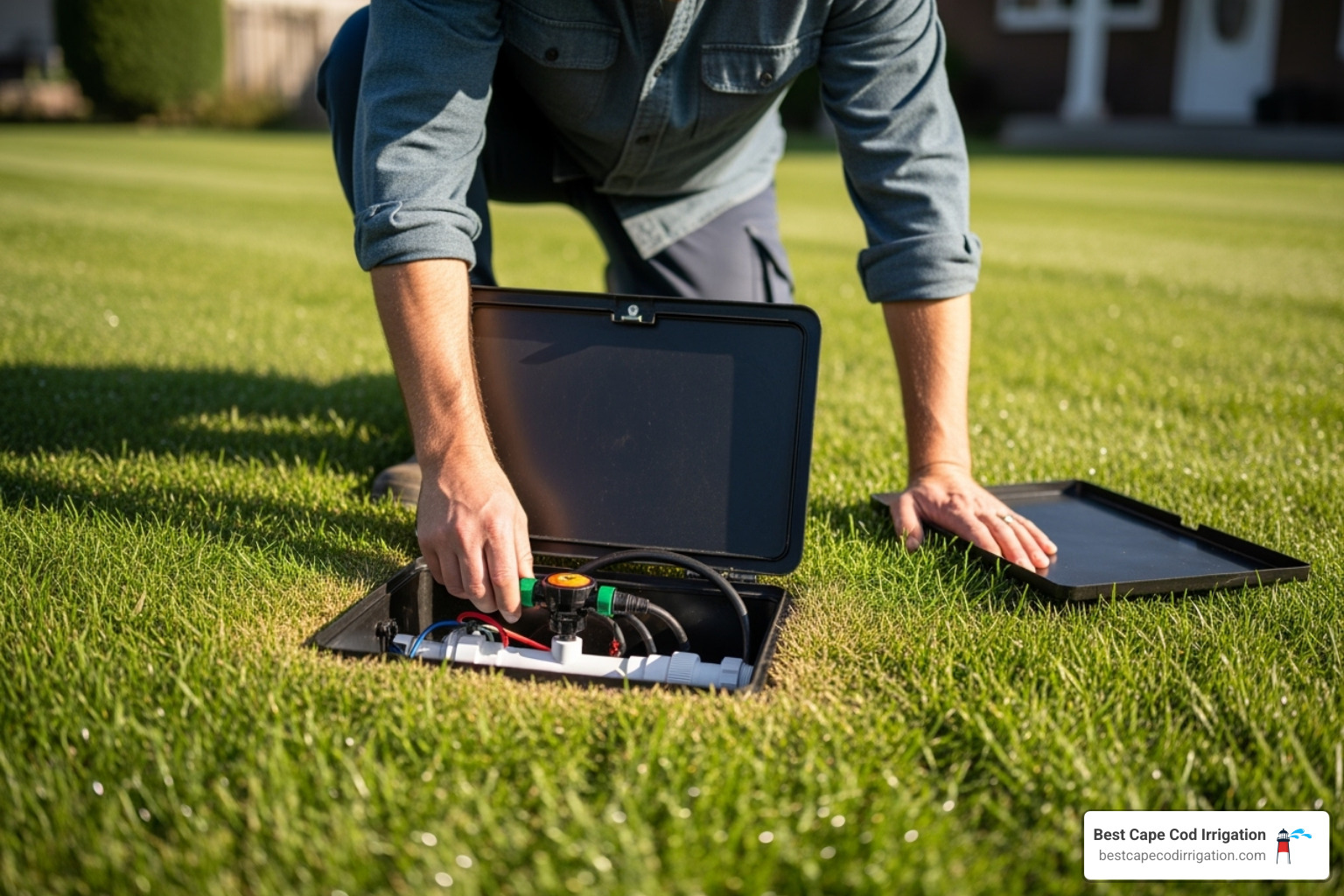
Safety should be your first priority. Rushing through a spring startup is the fastest way to turn a simple task into an expensive repair.
Step 1: Initial Inspection and Controller Prep
Before any water flows, perform a thorough inspection. Winter can be harsh on irrigation systems, even on Cape Cod.
Walk your property and look for visible winter damage: cracked pipes, damaged sprinkler heads (from frost heave or snowplows), and accumulated debris. Pay special attention to exposed piping and clear away leaves and dirt from around sprinkler heads and inside the valve box.
Next, head to your controller. Check the power and replace the backup batteries, especially if they’re over six months old. Winter power outages can drain them. Make sure the date and time are correct, then set your controller to manual mode. This gives you complete control for testing each zone individually.
For more detailed guidance specific to your controller model, the General – Spring Startup | Hunter Industries resource is incredibly helpful.
Step 2: Prepare the Backflow Preventer
Your backflow preventer is a critical safety device. It prevents contaminated water from your sprinkler lines from flowing back into your home’s drinking water.
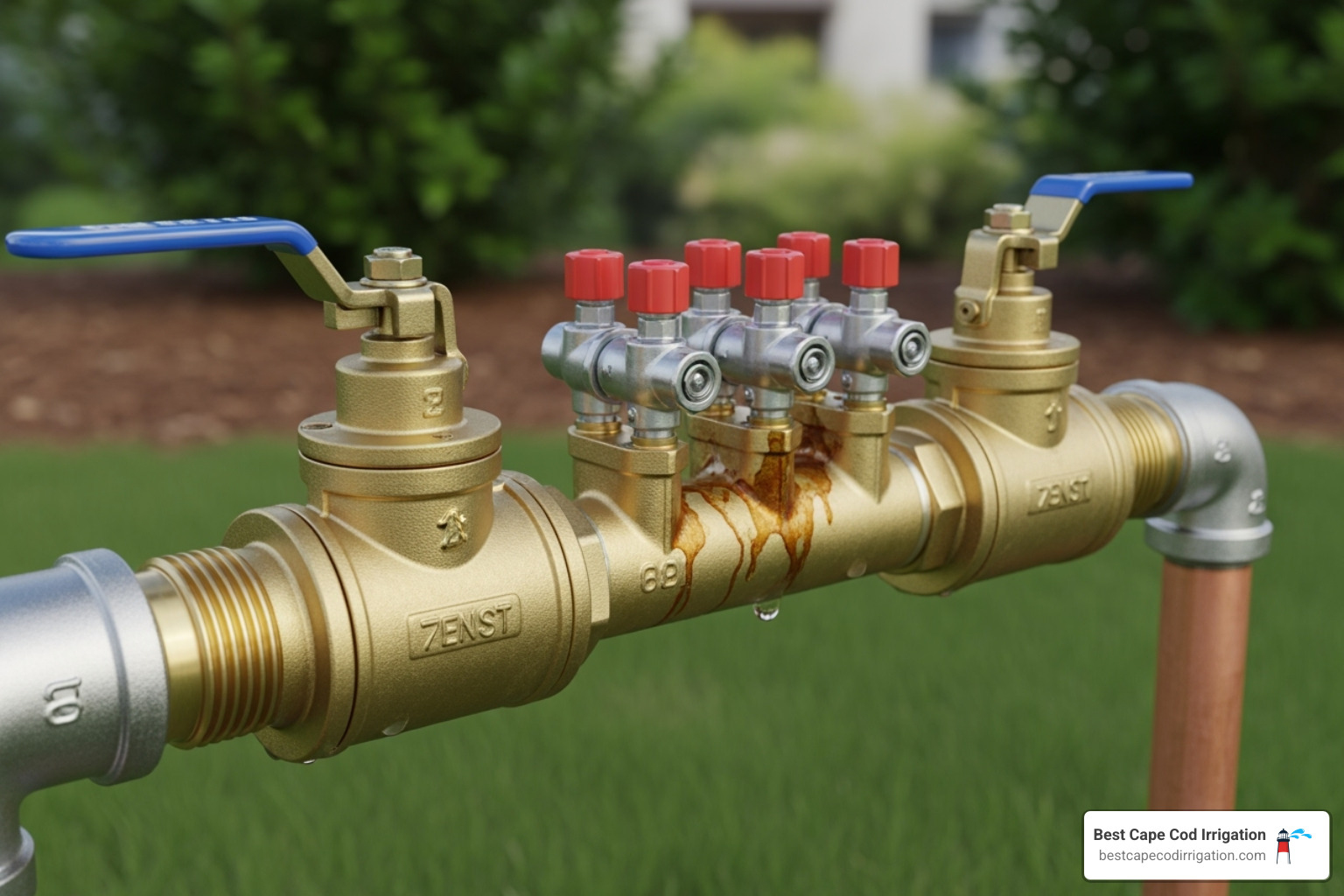
During winterization, these devices are left partially open to drain. Now it’s time to prepare them for active duty. You’ll usually find the backflow preventer above ground near your home’s foundation. Most have two main ball valves and two smaller test ports.
Using your flathead screwdriver, gently close the test cocks by turning them until they’re perpendicular to the valve. Ensure any drain plugs or caps are snug.
Ensure those main valve handles are in the closed position (perpendicular to the pipe) to prevent water from rushing through when you turn on the main supply.
Different backflow preventers have slightly different procedures. If you have a Reduced Pressure Zone (RPZ) device, it might require professional setup and testing. When in doubt, call an expert.
Step 3: The Most Important Step: Slowly Turning on the Water
This step requires patience and can be the difference between a successful startup and an expensive repair bill. Do not rush this part.
First, locate your main shutoff valve for the sprinkler system, which may be in your basement, crawlspace, or an underground box. Ensure it’s in the “off” position.
The goal is to avoid water hammer, a powerful pressure surge created when water rushes through empty pipes too quickly. This surge can crack pipes, break fittings, and damage valves and sprinkler heads.
The secret to preventing water hammer is patience. Start with just a quarter-turn of your main shutoff valve. You should hear water beginning to fill the pipes.
Listen carefully and wait. Let the system slowly pressurize as air escapes. This can take several minutes but is time well spent. Once the sound of filling water subsides, the pressure has equalized.
Only then should you slowly open the valve completely. If your backflow preventer has two main ball valves, open the lower valve first (slowly!), then the upper valve. Remembering to open the valve slowly can save you hundreds of dollars in repairs.
Testing and Optimizing Your System for Peak Performance
With water safely flowing, it’s time to test each zone to ensure your lawn sprinkler system spring startup is successful and your system is ready for the season.
Step 4: Test Each Zone and Look for Common Issues
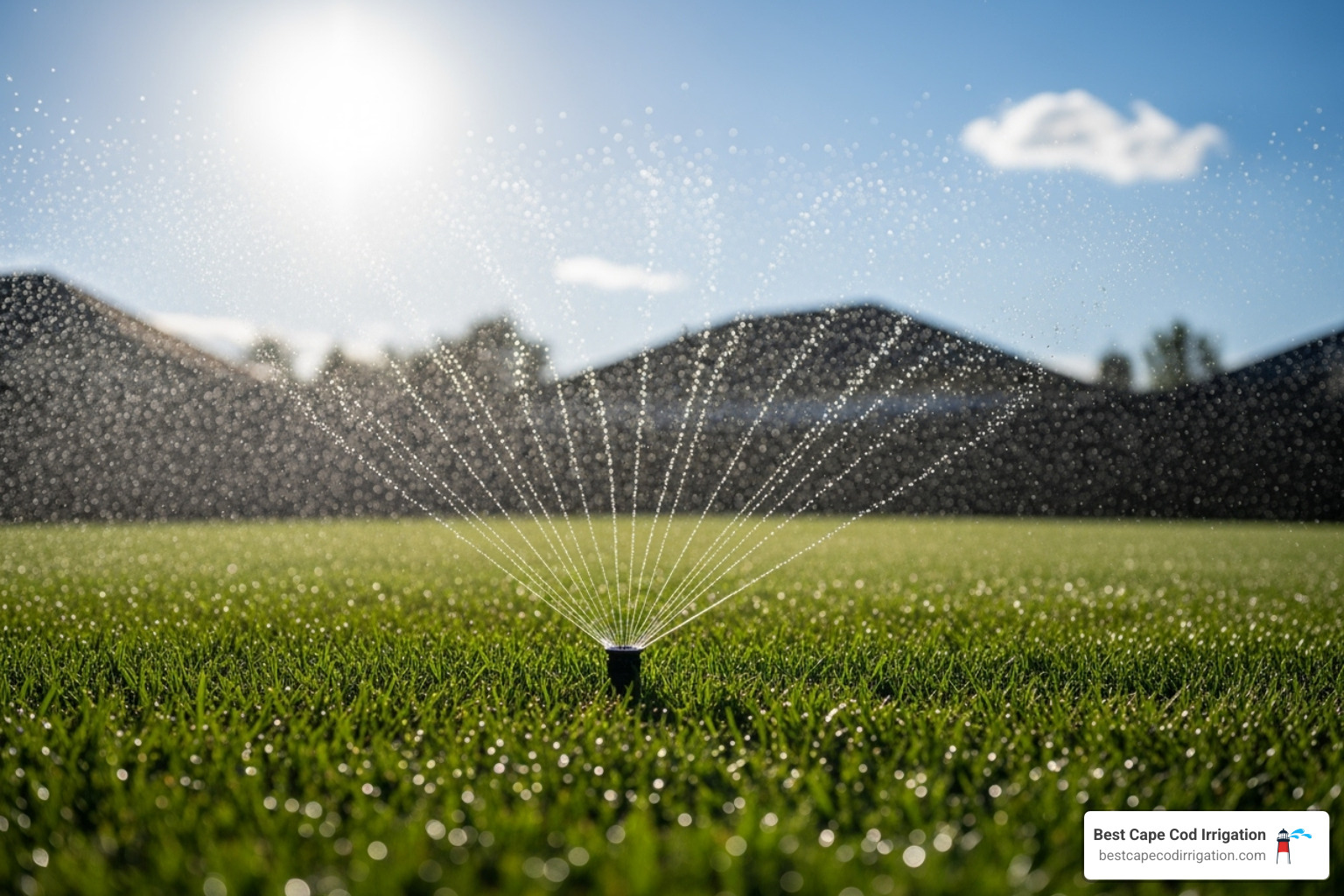
Using your controller’s manual mode, activate each zone one by one. As each zone runs, walk through your yard and observe its operation.
Watch for proper head operation. All sprinkler heads should fully pop up. If one doesn’t, it could be due to low pressure, a clog, or damage.
Low pressure is a common spring issue on Cape Cod, causing weak or misty sprays. This can signal line breaks (look for geysers or soggy spots), missing sprinkler heads, or clogged nozzles.
Listen for unusual sounds like hissing or gurgling, and watch for leaks at the base of sprinkler heads, which indicate a seal problem.
Check for misaligned spray patterns that may be watering your driveway instead of your lawn. Soggy spots in unexpected areas often point to underground leaks.
Use your pad and pen to create a repair checklist of any issues you find. For more information on proper system function, see our Lawn Sprinkler Systems page.
Step 5: Adjust Heads and Program Your Controller
Now, fine-tune your system for peak performance and water efficiency.
Start by adjusting spray patterns while each zone is running. Use your adjustment tool or a screwdriver to set each head’s arc and radius for “head-to-head” coverage, where spray from one sprinkler reaches the next. This ensures even watering.
Avoid watering hardscapes like your driveway, patio, or house. This wastes water and can create slippery, damaging conditions.
If you notice misting or uneven spray, clean the clogged nozzles. Gently remove the nozzle (check the manual) and clean it with a small brush or toothpick.
Reprogramming your controller is crucial. Your lawn’s watering needs in spring are different from summer. Set shorter run times initially, as cooler temperatures mean less evaporation.
Seasonal adjustments are key. As temperatures and rainfall change, you’ll need to tweak your settings.
Consider upgrading to smart controllers that automatically adjust to local weather. Our Smart Irrigation Solutions can save time and water, ensuring your lawn gets exactly what it needs. After 25+ years serving Cape Cod, we’ve seen the difference the right technology makes.
DIY vs. Hiring a Professional
After reviewing the steps for a lawn sprinkler system spring startup, you may wonder whether to do it yourself or hire a professional. Below is an updated, easy-to-read comparison to help you decide.
| Feature | DIY Startup | Professional Startup |
|---|---|---|
| Pros |
- No labor fee, so you keep more money in your pocket
- Great learning experienceyou become familiar with every pipe, head, and wire
- Immediate gratificationyou control the schedule and pace |
- 25+ years of Cape Codspecific expertise brought right to your door
- Comprehensive inspection with specialized diagnostic tools
- On-the-spot repairs and a workmanship warranty
- Saves you several hours of weekend “yard time”
- Reduces the risk of costly mistakes such as cracked pipes or damaged valves |
| Cons | - A single misstep while pressurizing can cause burst pipes that cost more than a service call
- Troubleshooting electrical or low-pressure issues can be frustrating
- You may overlook subtle leaks that drive up water bills |
- You pay a labor fee (average $80250 for a basic residential startup and up to $450+ for large or complex systems)
- You have to coordinate schedules |
The dollar figures above are industry averages gathered from publicly available internet sources. They are offered only as a general guide and are not quotes from Best Cape Cod Irrigation. Actual pricing depends on property size, system design, and the extent of any winter damage.
When Should You Call a Professional?
- Persistent low pressure in one or more zones after youve ruled out clogged nozzles.
- Electrical problems, such as zones that refuse to turn on even after you test the controller wiring.
- Mandatory backflow-preventer testing required by many Cape Cod municipalities.
- Time constraintssometimes your weekend is better spent enjoying the Cape than digging around valve boxes.
Our team at Best Cape Cod Irrigation is always happy to handle the technical work so you can stay worry-free and protect your landscape investment. If you find anything during your DIY attempt that feels out of your depth, schedule a visit and well take it from there.
Frequently Asked Questions about Sprinkler Startups
Below are answers to some of the most common questions we hear from Cape Cod homeowners. Weve added extra detail so you can feel confident tackling your own lawn sprinkler system spring startup.
What is a “water hammer” and why is it bad?
A water hammer is a high-pressure shockwave that travels through your pipes when water is introduced too quickly to an empty system. Think of it as a mini earthquake in your plumbingthe sudden force can crack PVC pipes, shatter fittings, and blow sprinkler heads right out of the ground. Prevent it by opening the main valve only a quarter-turn at first, pausing to let the system fill, and then finishing the turn slowly.
What if one of my sprinkler zones wont turn on?
Start with the basics:
- Verify the controller has power and the correct date/time.
- Check the wiring connections on the zone terminalloose wires are more common than youd think.
- Listen for a faint click in the valve box when the zone is activated; no click usually means a failed solenoid.
If youve walked through these steps and the zone is still silent, its best to bring in a pro. Electrical diagnostics often require a multimeter and familiarity with 24-volt irrigation circuits. Feel free to book a repair so we can pinpoint the issue quickly.
How often should I water my lawn in the spring on Cape Cod?
Most cool-season grasses thrive on about 1 inch of water per week in spring, supplied either by rainfall or irrigation. Because Cape weather changes quickly, aim for one or two deep waterings per week rather than daily sprinkles. Deep watering trains roots to grow downward, making your turf more drought-tolerant when summer heat arrives.
A smart controller paired with a rain sensor or weather feed will automatically skip cycles after a good shower, saving both water and money. Learn more about these upgrades on our Automated Sprinkler System page.
I found a small leak at a sprinkler head. Can I ignore it?
It might look harmless, but even a pinhole leak can waste hundreds of gallons over the course of a season. Leaks also lower the pressure in that zone, reducing coverage uniformity and inviting weeds into dry spots. Replacing a worn seal or cracked riser is usually a quick, inexpensive fix you can handle yourself. If the leak is underground or youre unsure of its source, let our leak-detection team help.
Do backflow preventers really need annual testing?
Yes. Local plumbing codes require certified testing because backflow devices protect the public water supply from contamination. Best Cape Cod Irrigation is licensed to perform these tests, file the paperwork with your municipality, and correct any issues we find.
Have a question we didnt cover? Send us a note or give us a callwere always happy to help our neighbors keep their lawns healthy while conserving Cape Cods precious water resources.
Get Your Sprinkler System Ready for the Season
Congratulations on completing your lawn sprinkler system spring startup! By following these steps, you’ve set your lawn up for a healthy season and protected your system from costly damage.
On Cape Cod, our sandy soil, shifting weather, and coastal conditions create unique challenges. Your system needs to be customized for our local environment to truly thrive.
Perhaps you found a stubborn zone or a mysterious leak during your startup. Or maybe you’re simply ready to upgrade to a smarter system that can handle our unpredictable weather.
That’s where our 25+ years of local expertise makes a difference. The team at Best Cape Cod Irrigation understands how our region’s unique conditions—from sandy soil to coastal winds—affect your system. We’ve solved irrigation puzzles on properties from Milford to Provincetown.
Whether you need help with a startup, want to upgrade to smart technology, or prefer the peace of mind of expert maintenance, we’re here to help. Our eco-friendly systems are designed for Cape Cod, keeping your lawn lush while conserving water.
Ready to take the worry out of your irrigation? Schedule your professional opening or winterization today! Your lawn will thank you, and you’ll have one less thing to worry about come spring.
