



The Smarter Way to Water: Automated Sprinkler Systems Explained
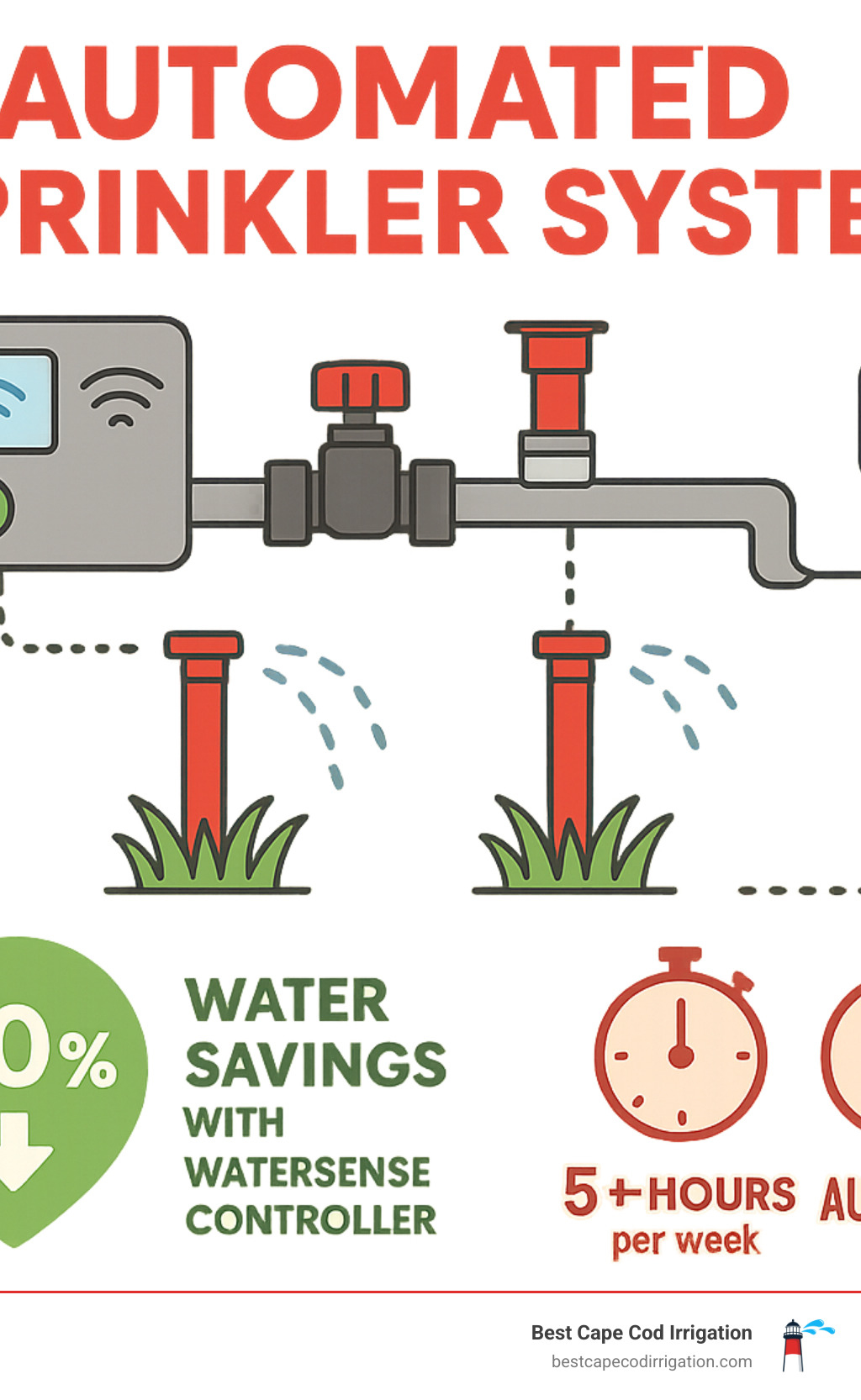
An automated sprinkler system is a water-efficient irrigation solution that automatically waters your lawn and garden on a programmed schedule without manual intervention. Here’s what you need to know:
| Key Feature | Benefit |
|---|---|
| Scheduled watering | Waters at optimal times (early morning/evening) without you being present |
| Zoned irrigation | Delivers different amounts of water to different areas based on needs |
| Smart controllers | Adjust to weather conditions, skipping watering when it rains |
| Water conservation | Saves up to 8,800 gallons annually with WaterSense certified controllers |
| Labor reduction | Eliminates manual watering, saving 5+ hours weekly |
A lawn is a significant investment, especially on Cape Cod where sandy soil and unpredictable weather patterns create unique challenges. If you’re tired of dragging hoses around, forgetting to water, or worse—accidentally leaving sprinklers running for hours, an automated irrigation system might be the solution you’ve been looking for.
“An automatic sprinkler system is by far the easiest and most effective way to water your lawn, providing precise, automated coverage without dragging hoses around,” according to irrigation experts. This convenience isn’t just about saving time—it’s about saving money and conserving water too.
Modern automated systems have evolved far beyond simple timers. Today’s smart controllers can integrate with weather forecasts, soil moisture sensors, and even your smartphone to ensure your lawn gets exactly what it needs, when it needs it—no more, no less.
For Cape Cod homeowners dealing with sandy soil that drains quickly, an automated system can be particularly valuable, delivering consistent, measured watering that prevents both drought stress and wasteful runoff.
Whether you’re considering a professional in-ground installation, a DIY above-ground setup, or a high-tech smart system, understanding the basics will help you make an informed decision that keeps your landscape lush while keeping your water bills in check.
Why Upgrade to an Automated Sprinkler System?
Thinking about making the switch to an automated sprinkler system? If you’re like many Cape Cod homeowners I’ve spoken with, you might be wondering if it’s really worth the investment. Let me walk you through the game-changing benefits that have my clients wondering how they ever managed without one.
Significant Water Savings
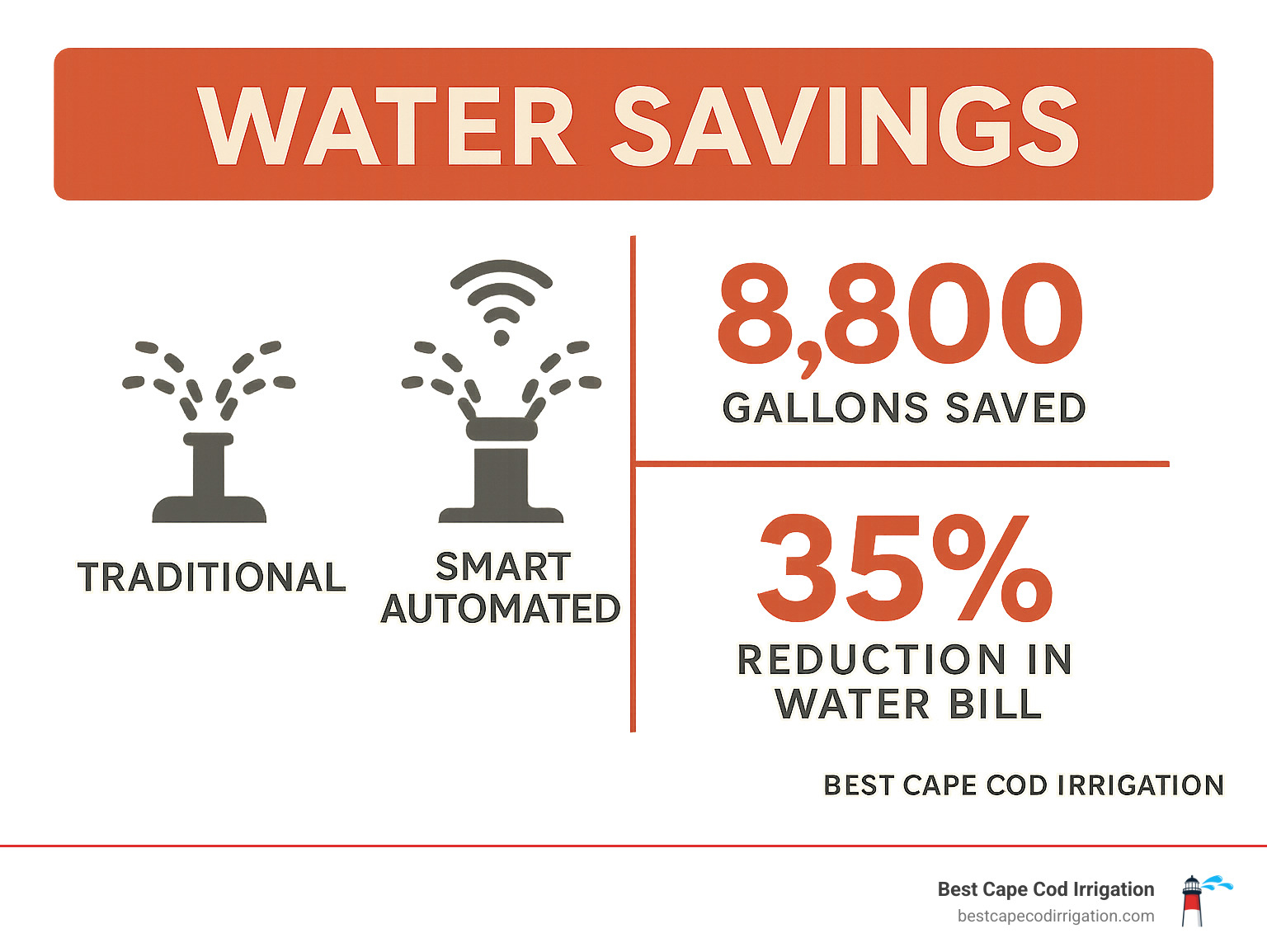
Remember those water bills that make you wince every summer? A properly configured irrigation system can help tame them. WaterSense-labeled controllers use at least 20% less water than conventional methods, saving the average home nearly 8,800 gallons annually. Here on Cape Cod, where our water resources are precious, those savings make a real difference—both for your wallet and our community.
Healthier, More Vibrant Landscaping
The secret to that enviably lush lawn your neighbor has? Consistent watering. An automated sprinkler system delivers precisely the right amount of water exactly when your landscape needs it. No more forgetting to water during busy weeks or accidentally drowning your plants when you leave the hose running too long.
“A properly installed and maintained automatic sprinkler system is the most convenient and efficient way to ensure your landscape gets the water it needs without over- or under-watering,” according to irrigation experts at the Automatic irrigation research center.
Dramatic Labor Reduction
Let’s be honest—dragging hoses around isn’t anyone’s idea of a perfect weekend. Many of our clients report saving 5+ hours weekly that would otherwise be spent on manual watering tasks. As one delighted Cape Cod homeowner told me, “My automated sprinkler system gives me back at least 5 hours weekly that I now spend actually enjoying my yard instead of watering it!”
Perfect Timing, Every Time
The optimal time to water your lawn is early morning when evaporation is minimal and absorption is maximized. But who wants to wake up at 5 AM to turn on sprinklers? Your automated system handles this perfectly, operating at ideal times while you’re still comfortably asleep or enjoying your morning coffee.
Reduced Runoff and Environmental Impact
Cape Cod’s delicate ecosystem deserves protection. By delivering water at rates your soil can actually absorb, automated sprinkler systems prevent fertilizers and soil amendments from washing away into our local watersheds. This controlled watering means nutrients stay where they belong—feeding your plants, not our waterways.
Improved Property Value
Looking ahead to eventually selling your home? A properly installed irrigation system often pays for itself. Real estate professionals consistently note that homes with established, efficient irrigation systems tend to command higher prices and sell faster than comparable properties without them—making it both a lifestyle and financial investment.
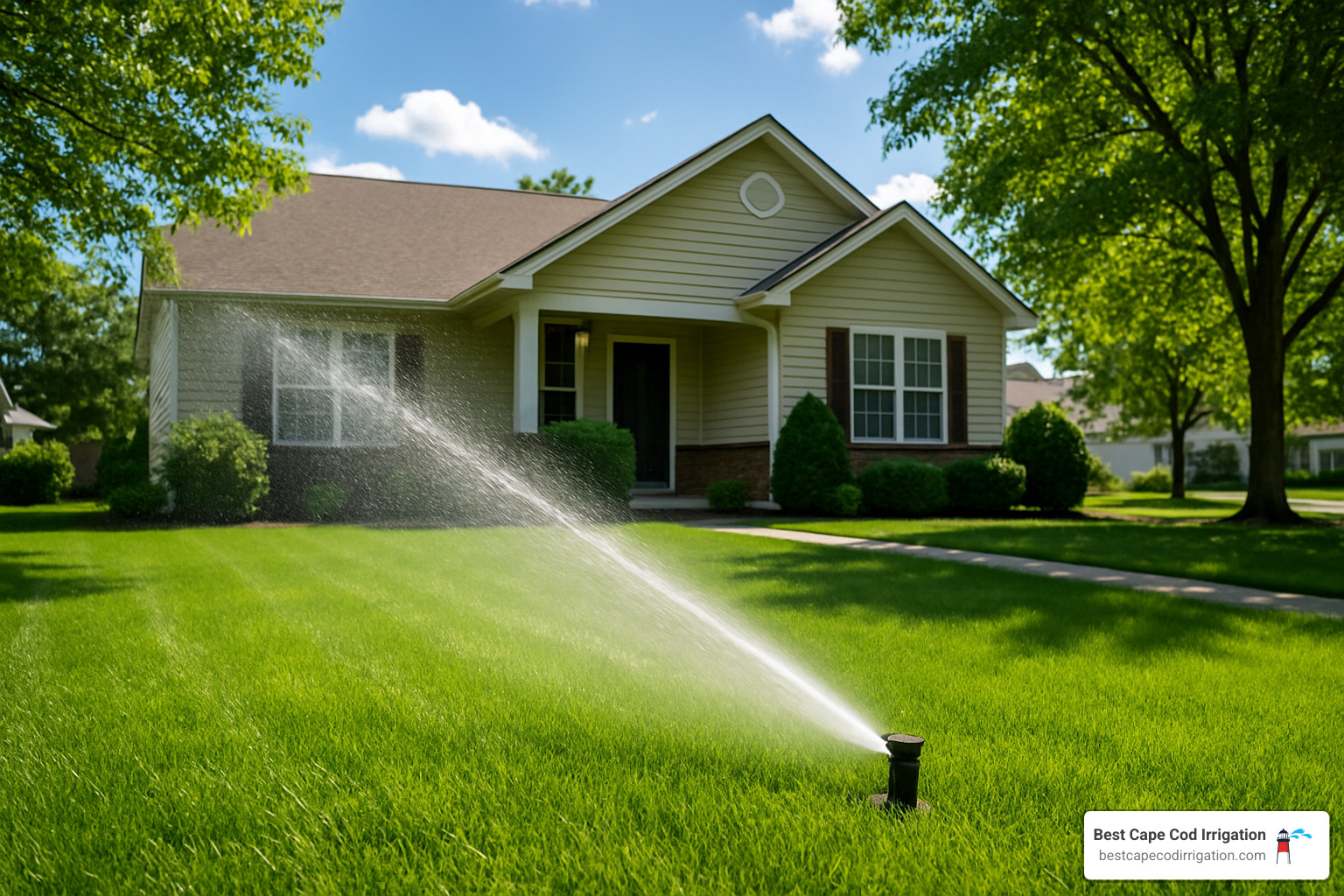
For Cape Cod homeowners dealing with our unique sandy soil conditions that drain quickly, an automated sprinkler system isn’t just a convenience—it’s practically essential for maintaining a healthy landscape without wasting water. The right system, properly zoned and programmed, works with our local conditions to keep your outdoor spaces thriving through our sometimes unpredictable New England weather patterns.
Popular Types of Automated Sprinkler Systems & Who They’re Best For
Finding the right automated sprinkler system for your Cape Cod property doesn’t have to be overwhelming. Let’s explore the main options available, each with their own set of advantages for different homeowners and situations.
In-Ground Automated Sprinkler System
When it comes to irrigation solutions that blend seamlessly with your landscape, in-ground systems are the gold standard. These systems feature pop-up sprinkler heads that remain hidden until it’s time to water, then discreetly retreat back into the ground when finished.
These systems represent the pinnacle of lawn irrigation technology, with buried PVC or polyethylene piping feeding strategically placed sprinkler heads throughout your property. The beauty of an in-ground system lies in its invisibility – your guests will notice your lush, green lawn without seeing how it stays that way.
In-ground systems are ideal for homeowners planning to stay put for years to come. If you’ve invested in beautiful landscaping and care deeply about curb appeal, this option preserves your property’s aesthetic while providing comprehensive coverage. With multiple programmable zones, you can ensure your flower beds receive different amounts of water than your lawn or vegetable garden.
While the initial investment ranges from $2,500-$7,500 for a quarter-acre lot (based on internet averages, not our pricing), the long-term value is undeniable. After 25+ years of installing these systems across Cape Cod’s unique terrain, we’ve found they offer exceptional durability and performance that above-ground alternatives simply can’t match.
Above-Ground Automated Sprinkler System
Not ready to commit to trenching your yard? Above-ground systems offer impressive automation capabilities without the permanence of an in-ground installation.
These systems typically connect to your existing outdoor spigots using hose-based configurations with timers that control when water flows. The sprinklers themselves remain visible, usually mounted on spikes or stands positioned throughout your yard.
Above-ground systems shine for renters who need portability or homeowners working with tighter budgets. They’re also perfect for “testing the waters” of automation before investing in a permanent solution. With typical costs ranging from $400-$1,200 for comparable coverage (based on internet data), they represent a significant savings over in-ground options.
One Cape Cod homeowner told us, “I dreaded dragging hoses around but wasn’t ready for a full in-ground system. My above-ground setup with automatic timers has been a game-changer – I get the convenience without the commitment.” The flexibility to reconfigure your system as your garden evolves is another significant advantage of this approach.
Smart DIY Automated Sprinkler System
The newest entrants to the irrigation world combine the accessibility of above-ground systems with cutting-edge smart technology that puts control literally at your fingertips.
These systems connect to your home’s WiFi network, allowing you to control every aspect of your watering schedule from a smartphone app – whether you’re in the living room or vacationing off-Cape. Most can integrate with weather forecasts to automatically skip watering when rain is predicted, and many work with voice assistants like Alexa or Google Home.
Smart systems are perfect for tech-savvy homeowners, frequent travelers, and those passionate about water conservation. The real-time monitoring and instant alerts about potential issues provide peace of mind that traditional systems can’t match.
With costs typically between $600-$1,800 depending on coverage and features (based on internet research), smart systems represent the middle ground in pricing while offering the most advanced feature set. The ability to fine-tune watering schedules based on seasonal changes or adjust on the fly when heat waves strike makes these systems particularly valuable for Cape Cod’s variable climate.
For properties with irregular shapes or complex landscaping, smart systems with precision nozzles create custom-shaped watering zones that ensure water lands exactly where you need it – not on your driveway or deck. This precision is especially valuable given Cape Cod’s water conservation concerns and sandy soil that benefits from targeted irrigation.
Key Components & Smart Features That Slash Water Bills
Understanding what makes an automated sprinkler system tick helps you make smarter choices when it’s time to install or upgrade. Let’s break down the key parts that work together to keep your lawn lush while keeping your water bills in check.
The Central Brain: Controllers
Think of the controller as the command center of your automated sprinkler system. It’s where all the magic happens! Basic models let you set simple schedules, but today’s smart controllers are something else entirely:
“My smart controller paid for itself in the first summer,” shares one Cape Cod homeowner. “It automatically skipped watering three times when it rained, something I would have forgotten to do manually.”
Smart controllers offer weather intelligence that adjusts based on forecasts (no more sprinklers running during rainstorms!), EPA WaterSense certification that guarantees at least 20% water savings, and mobile apps that let you tweak your watering schedule from the beach or your couch. Many also integrate with home automation systems, so you can ask Alexa or Google to give your flowers a drink.
The Workhorses: Valves and Pipes
Valves and pipes might not be the glamorous part of your system, but they’re essential to its success. Quality components here prevent headaches down the road.
For Cape Cod’s unique environment, we typically recommend polyethylene pipes rather than PVC. They handle our freeze-thaw cycles much better and have more flexibility in our sandy soil. Durable valves with manual override options give you control when you need it, while properly sized pipes ensure your system has the right water pressure throughout.
Don’t forget the backflow preventer – it’s not just a good idea, it’s required by most local codes to protect your drinking water from contamination. In our 25+ years of experience on Cape Cod, we’ve found that investing in quality components up front saves significant headaches (and money) down the road.
The Delivery System: Sprinkler Heads
Sprinkler heads are where the rubber meets the road – or rather, where the water meets your lawn. Different areas need different types of heads:
For larger lawn areas, pop-up rotors deliver water in a rotating pattern covering 15-35 feet. Medium-sized areas benefit from spray heads with a 5-15 foot radius. Flower beds and vegetable gardens thrive with drip emitters that deliver water right to the roots, while trees and shrubs love bubblers that provide deep watering.
On Cape Cod’s often windy days, quality matters. Premium heads with Rain Curtain nozzle technology create larger water droplets that resist wind drift and soak into our sandy soil more effectively rather than evaporating.
Anatomy of a Smart Controller
Modern smart controllers have revolutionized irrigation efficiency. They don’t just turn water on and off – they think about when and how much water your landscape actually needs.
Weather intelligence connects your system to local weather data, automatically adjusting schedules based on conditions. Zone mapping lets you create detailed profiles of each area of your yard based on plant types, soil conditions, sun exposure, and slope. This helps the controller calculate exactly how much water each zone needs – no more one-size-fits-all watering that leaves some areas soggy and others parched.
Mobile alerts keep you in the loop with notifications about skipped watering due to rain, potential leaks, seasonal adjustment recommendations, and maintenance reminders. It’s like having a professional irrigation manager watching your system 24/7.
Sensors That Matter
Adding sensors to your automated sprinkler system dramatically improves efficiency. They’re the eyes and ears that tell your controller what’s actually happening in your yard:
Rain shutoff sensors prevent watering when it’s already raining – a simple addition that typically pays for itself within a single season. Freeze sensors are critical for Cape Cod’s variable spring and fall weather, protecting your investment by preventing operation when temperatures approach freezing.
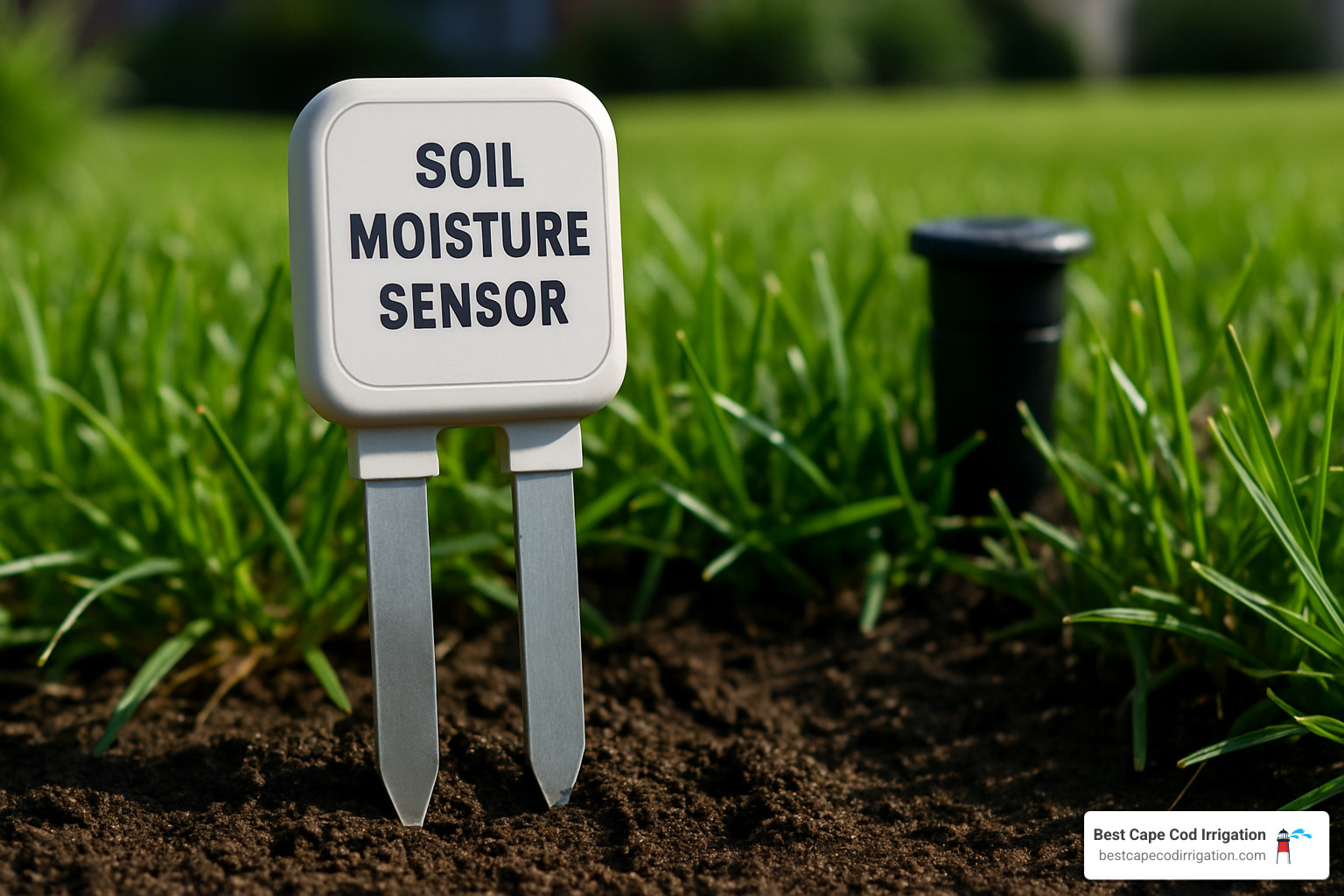
Soil moisture sensors take efficiency to another level by measuring actual soil conditions and only triggering irrigation when needed. For the ultimate in precision, evapotranspiration sensors calculate water loss through evaporation and plant transpiration to determine exact watering needs based on current conditions.
“When we added soil moisture sensors to our client’s system in Chatham, their water usage dropped by 40% while their lawn actually looked better,” notes our lead technician. “It’s the difference between watering on a schedule and watering based on what your plants actually need.”
The best part? These smart features aren’t just for new installations. Many can be retrofitted to existing systems, bringing water-saving intelligence to your current setup. Learn more about upgrading your system with our Smart Irrigation Solutions.
Buying, Installing & Maintaining Your System
Taking the plunge into an automated sprinkler system is exciting, but a little planning goes a long way toward ensuring your investment delivers years of trouble-free performance.
DIY vs. Professional Installation: What to Consider
When weighing your options, consider more than just the initial price tag:
| Factor | DIY Installation | Professional Installation |
|---|---|---|
| Cost Range* | $400-$1,800 | $2,500-$8,500 |
| Installation Time | 1-3 weekends | 1-3 days |
| Expected Lifespan | 5-10 years | 15-25+ years |
| Design Expertise | Limited | Comprehensive |
| Warranty | Parts only (typically 1-3 years) | Parts and labor (typically 3-5 years) |
*Average online data; high-end estimates approximately 3× average, not Best Cape Cod Irrigation pricing
While the DIY route might seem tempting for your wallet initially, professional installation often provides better long-term value. As one of our customers put it, “I tried the DIY approach first and spent three weekends digging trenches. I wish I’d just called the pros from the start!”
Professionals bring crucial expertise to the table – understanding the science of hydraulics, calculating precise pressure requirements, and planning zones that maximize efficiency. What might take you several weekends of backbreaking work can be completed by a team of experts in just a day or two, with minimal disruption to your landscape.
Even dedicated DIYers often find themselves renting specialized equipment. “Renting a pipe-pulling machine at $180 per day saved days of manual digging,” one self-installer told us, highlighting that even DIY projects come with hidden costs beyond the basic components.
Choosing the Right Automated Sprinkler System
Your Cape Cod property has unique needs that should guide your system selection:
Lawn Size and Configuration matters tremendously. A cozy cottage garden under 2,000 square feet might work beautifully with a simpler setup, while sprawling properties over 6,000 square feet typically demand sophisticated controllers and thoughtful zone planning to ensure every corner gets proper coverage.
Cape Cod’s Soil Type presents special challenges. Our predominantly sandy soil drains quickly, which means your system needs to be designed for more frequent but shorter watering cycles. Without proper planning, you might find water running off or draining away before plants can benefit – wasting both water and money.
Before we install any system, we always measure your Water Pressure and Flow Rate. These critical numbers (ideally 40-75 psi for pressure) determine how many sprinkler heads can operate simultaneously and how your zones should be configured. Skipping this step is like buying shoes without checking the size – a recipe for poor performance.
Local Water Restrictions vary across Cape Cod towns, especially during summer months. Modern smart controllers can automatically adjust to allowed watering days and optimize run times within permitted hours, helping you stay compliant without constant reprogramming.
“Having a system that automatically adjusts to our town’s odd/even day watering schedule has been a game-changer,” shares one Barnstable homeowner. “I never have to worry about getting a fine for watering on the wrong day.”
Essential Maintenance Tasks
Even the finest automated sprinkler system needs regular care to perform at its best. Think of it like seasonal car maintenance – a little attention prevents bigger problems down the road.
Seasonal Opening (Spring) sets the stage for success. This includes system activation and pressure testing, cleaning and adjusting heads that may have shifted during winter, programming your controller for spring conditions, and completing the backflow testing required by many Cape Cod municipalities.
A Mid-Season Check-up (Summer) keeps everything running smoothly during peak demand. We look for clogged nozzles or misaligned heads, adjust coverage patterns as plants grow, and review watering schedules to ensure they’re still optimal as temperatures rise.
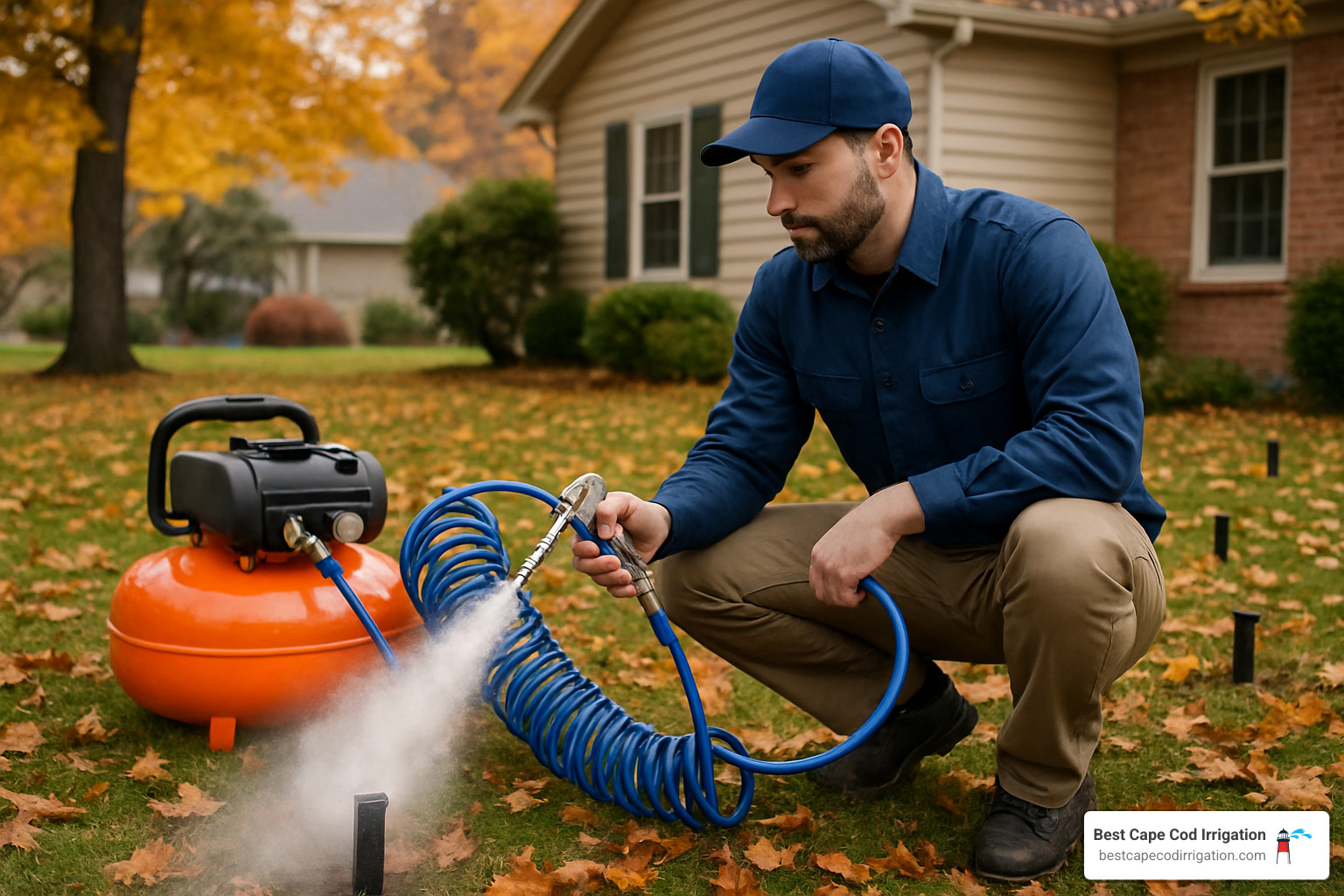
Winterization (Fall) is absolutely critical on Cape Cod. Our freeze-thaw cycles can wreak havoc on improperly prepared systems. Complete system drainage, blowing out pipes with compressed air, and proper controller protection can mean the difference between a system that lasts decades and one that suffers catastrophic damage in a single winter.
With over 25 years of experience weathering Cape Cod’s unique conditions, we’ve seen how proper maintenance extends system life. As one longtime client in Falmouth puts it, “The annual maintenance fee is nothing compared to the peace of mind knowing my system is protected and ready to perform perfectly each season.”
Frequently Asked Questions about Automated Sprinkler Systems
How much water can smart controllers save?
Ever wonder if those fancy smart controllers are worth the investment? The numbers speak for themselves. WaterSense-labeled smart controllers save the average home nearly 8,800 gallons of water annually compared to standard controllers. That’s a whopping 20% reduction in water usage!
For Cape Cod homeowners, this translates to hundreds of dollars in water bill savings over a single season. Not too shabby for a one-time upgrade.
The magic happens through several clever features. Your automated sprinkler system will automatically skip watering when it rains (instead of that sad sight of sprinklers running during a downpour). It adjusts run times based on seasonal needs—more in July, less in September. Plus, soil moisture monitoring prevents that all-too-common problem of overwatering. For those tricky sloped areas of your yard, cycle-and-soak methods ensure water absorbs properly instead of running off into the street.
What’s involved in winterizing an automated sprinkler system?
If there’s one thing we’ve learned in our 25+ years on Cape Cod, it’s that proper winterization isn’t optional—it’s essential. Our freeze-thaw cycles can wreak havoc on irrigation systems left with water in the lines.
A proper winterization process includes five critical steps:
First, we shut off the water supply to your automated sprinkler system at the main valve. Then we drain all water from the system using drain valves or by opening the lowest-point drain outlets. The most critical step comes next: blowing out remaining water using compressed air (typically 40-80 psi, depending on your system design). Finally, we insulate any above-ground components like backflow preventers and set controllers to “rain” or “off” mode for the season.
“I skipped winterizing one year to save money,” a local homeowner once told us. “Ended up with three cracked pipes and a damaged backflow preventer. Never again!”
We strongly recommend professional winterization because the pressure matters—too much air pressure can damage components, while inadequate blowout leaves water that can freeze and crack pipes or heads. It’s a delicate balance best left to experienced pros.
How do I set the ideal watering schedule for my zones?
Creating the perfect watering schedule for Cape Cod’s unique conditions is part science, part art. Our sandy soil requires special consideration:
For frequency, aim for more frequent watering (2-3 times per week) but for shorter durations than you might expect. Timing makes a huge difference—early morning (4-7 AM) is ideal when wind is minimal and evaporation is low. For duration, we typically recommend 10-15 minutes per zone for spray heads and 30-45 minutes for rotors.
Different areas of your yard have different needs. Sunny lawn areas might need 100% of the calculated water requirement, while shaded areas often need only 60-70% of what sunny spots require. Those tricky slopes benefit from cycle-and-soak approaches (multiple short cycles) to prevent runoff. And if you’ve incorporated native plantings (good for you!), they may need only supplemental irrigation during drought once established.
The beauty of smart controllers is that they handle much of this complexity automatically, calculating ideal run times based on plant type, soil, sun exposure, and current weather conditions.
Don’t forget about seasonal adjustments! Spring calls for shorter, less frequent watering as temperatures are cooler. Summer brings peak watering needs, especially July-August. Fall requires gradually reduced watering as temperatures cool. And winter? Your system should be winterized and inactive.
At Best Cape Cod Irrigation, we don’t just install and leave. We program initial schedules based on your specific landscape needs and provide seasonal adjustment guidance to ensure your automated sprinkler system remains efficient year-round.
What maintenance can I do myself vs. calling a professional?
Taking care of your automated sprinkler system is a bit like maintaining a car—there are things you can easily handle yourself, and others best left to the pros.
For DIY maintenance, keep an eye out for damaged or misaligned sprinkler heads during regular walks around your property. A quick adjustment can save water and prevent brown spots. Cleaning clogged nozzles is simple with a small wire brush, and adjusting spray patterns to keep water off sidewalks or driveways takes just a minute. You can also handle basic controller programming adjustments and seasonal schedule modifications.
On the flip side, some tasks really benefit from professional expertise. System activation after winter is crucial to identify any freeze damage before it becomes a bigger problem. Annual backflow testing is actually required by many municipalities to protect the water supply. Other professional services include pressure regulation adjustments, valve repairs or replacements, complete system winterization, and controller upgrades.
“A broken sprinkler head wastes more water than any other part of the system,” our technicians often remind clients. Regular visual inspections can catch these issues early and prevent significant water waste.
Think of it this way: a few minutes of attention each month and professional check-ups twice a year will keep your system running efficiently for decades rather than years.
Conclusion
An automated sprinkler system isn’t just a luxury—it’s a smart investment in your Cape Cod property that pays dividends in multiple ways. From reclaiming those precious weekend hours to nurturing a healthier landscape while actually reducing your water bills, these systems make perfect sense for our unique coastal environment.
Remember when irrigation meant dragging hoses around and hoping you remembered to turn them off? Those days are gone. Today’s systems range from simple timer-based setups that take the manual labor out of watering to sophisticated smart controllers that essentially think for themselves—adjusting to weather patterns and soil conditions in real-time.
Here on Cape Cod, we face specific challenges that make proper irrigation particularly important. Our sandy soil drains quickly, our seasonal rainfall can be unpredictable, and many towns have implemented water restrictions that require strategic planning. After 25+ years of working exclusively with irrigation on the Cape, we’ve seen how the right system can transform a struggling landscape into a thriving oasis—even during those dry summer stretches.
What sets Best Cape Cod Irrigation apart is our singular focus. We’re not landscapers who install sprinklers as a side business—irrigation is all we do. This specialization means we understand the nuances of water distribution, pressure requirements, and zone planning that general contractors often miss.
As one of our clients recently told us with a smile, “It’s not just about having a green lawn—it’s about having the time to enjoy it.” That perfectly captures the true value of an automated sprinkler system. Yes, it conserves water and saves money, but the freedom it provides might be the greatest benefit of all.
The environmental benefits shouldn’t be overlooked either. By delivering precisely the right amount of water exactly where it’s needed, these systems prevent the runoff and waste that often accompany manual watering—an important consideration for preserving Cape Cod’s delicate ecosystem.
Whether you’re building a new home, upgrading an aging system, or simply tired of being tethered to your garden hose, we’re here to help design an eco-friendly solution custom to your specific property. Our commitment to sustainable practices means your landscape will thrive without wasting our precious water resources.
Ready to stop worrying about watering and start enjoying your outdoor space? Contact Best Cape Cod Irrigation today for a personalized consultation. We’d love to show you what’s possible with modern irrigation technology.
Water you waiting for? Your perfect lawn is just an automated system away.
