



A Little Care Goes a Long Way
Irrigation system maintenance is the key to keeping your lawn green, your water bills low, and your sprinkler system running smoothly for years to come. Here’s what you need to know:
Essential Maintenance Tasks:
- Monthly: Run each zone manually, check for clogs and leaks, adjust spray patterns
- Seasonally: Professional spring startup and fall winterization to prevent freeze damage
- Year-round: Clean filters, inspect controller settings, ensure proper head height
- As needed: Replace damaged sprinkler heads, fix leaks, troubleshoot pressure issues
Let’s be honest – nobody wants to think about sprinkler maintenance. You installed that system to make your life easier, not to add another chore to your weekend list. But here’s the thing: a little regular care saves you massive headaches later.
Cape Cod’s sandy soil and unpredictable weather make proper irrigation even more critical. When your system works efficiently, you’ll use less water, spend less money, and enjoy a healthier landscape. When it doesn’t? You’ll deal with dry patches, flooded areas, and repair bills that make you wish you’d spent those 15 minutes a month on basic checks.
The good news is that most maintenance tasks are simple enough for any homeowner to handle. The “set it and forget it” promise is mostly true – you just need to remember it occasionally to keep it that way.
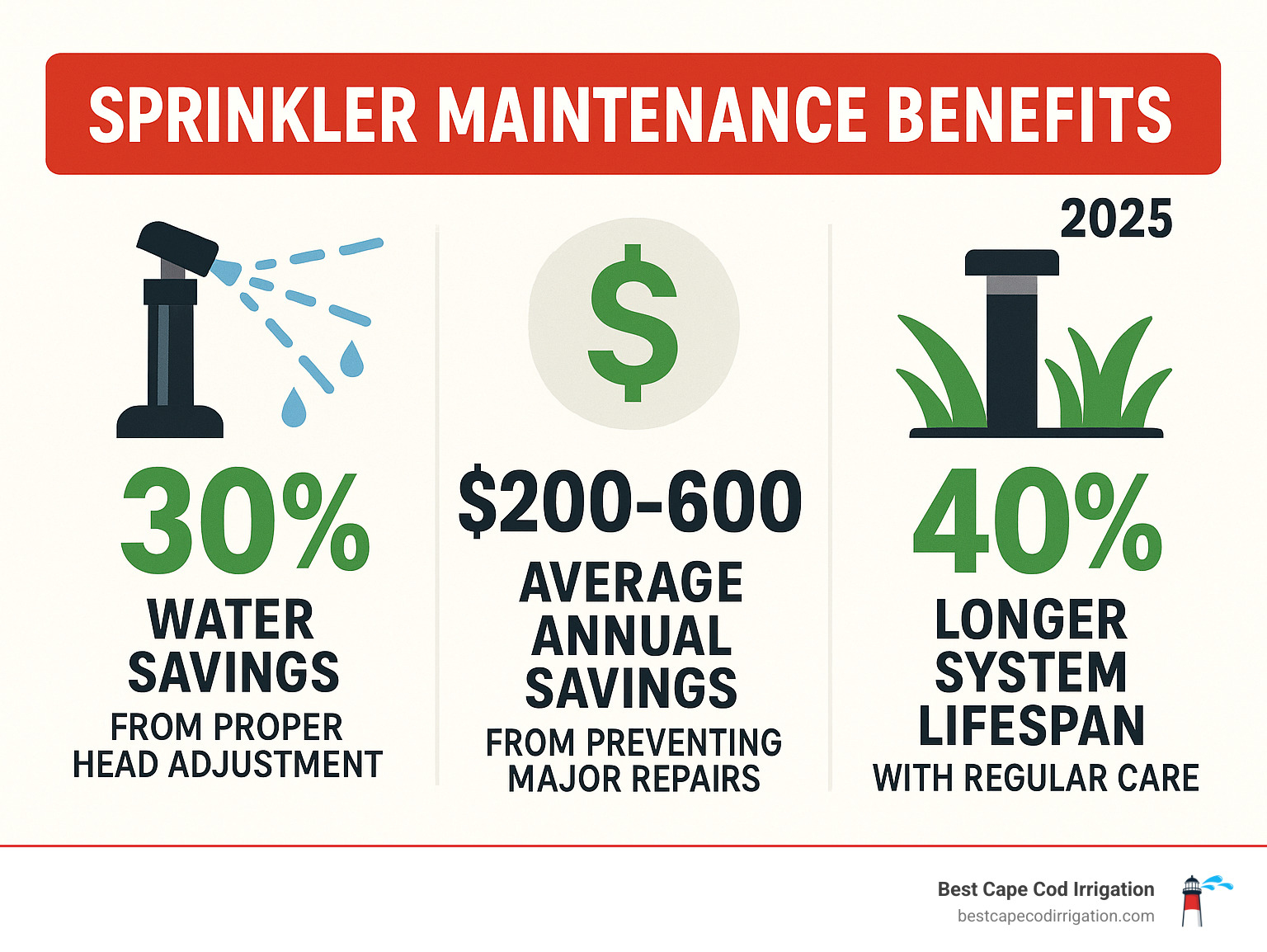
Simple guide to irrigation system maintenance:
Why Regular Sprinkler Maintenance is a Non-Negotiable for Homeowners
Your sprinkler system promised to be “set it and forget it,” right? Well, here’s the thing – that’s mostly true, but only if you remember to check on it once in a while. Think of it like your car: it runs great when you change the oil and check the tires, but ignore it completely and you’ll be calling for a tow truck.
Irrigation system maintenance isn’t just busywork – it’s the difference between a thriving landscape and a water-wasting money pit. When your system runs efficiently, you’ll conserve water, slash your utility bills, and keep your lawn looking like the envy of the neighborhood. Plus, catching small problems early prevents those heart-stopping repair bills that come from major system failures.
Regular maintenance ensures even watering across your entire landscape, which means no more embarrassing brown patches next to your neighbor’s perfect lawn. It also extends your system’s lifespan significantly – we’re talking years of additional service from equipment you’ve already invested in. For homeowners serious about water conservation, the EPA’s WaterSense program offers excellent insights into maximizing your system’s efficiency and reducing water waste.
The Cost of Neglect
Skip maintenance, and your sprinkler system will let you know – usually in the most expensive way possible. Dry patches start appearing where sprinkler heads get clogged or misaligned. Meanwhile, other areas turn into mini swamps from broken heads or faulty valves creating flooded areas that waste water and can damage your foundation over time.
Your water bill becomes the most painful reminder of neglect. A single broken sprinkler head can waste thousands of gallons per month, easily adding $200-300 to your utility costs. Nationwide statistics show that poorly maintained irrigation systems waste up to 50% more water than well-maintained ones – that’s millions of gallons annually from preventable issues.
Damaged sprinkler components don’t just fix themselves, either. What starts as a slightly crooked head becomes a cracked fitting, then a major pipe break. We’ve seen homeowners face repair bills exceeding $2,000 because they ignored a $15 sprinkler head replacement. The cascade effect of neglect can even lead to foundation damage when water consistently pools in the wrong areas.
The Benefits of a Healthy System
Now for the good news – a well-maintained sprinkler system is basically a money-printing machine for your property value. Vibrant lawns and gardens don’t happen by accident; they’re the result of consistent, even watering that only a properly functioning system can provide.
Efficient water use means you’re not literally watching money flow down the drain. When every sprinkler head is clean, properly adjusted, and working correctly, you’ll see immediate savings on your water bill. Many homeowners report 20-30% reductions in water usage after proper system maintenance.
The peace of mind factor is huge, too. No more worrying about whether your vacation-watered lawn will survive, or finding surprise puddles in your yard. A maintained system just works, quietly and efficiently, exactly as promised.
Most importantly, increased property value comes naturally with a lush, healthy landscape. Real estate professionals consistently rank well-maintained landscaping as one of the top factors in curb appeal and home value. Your sprinkler system is the foundation of that investment.
Want to dive deeper into professional maintenance benefits? Check out our comprehensive guide on Residential Sprinkler System Maintenance to see how expert care can transform your system’s performance.
Your Essential Year-Round Irrigation System Maintenance Checklist
Think of irrigation system maintenance like caring for a favorite plant – a little attention goes a long way, and the timing matters. Your sprinkler system doesn’t need daily babying, but it does thrive on consistent monthly and bi-monthly check-ins during the active watering season.
The beauty of a good maintenance routine is that it catches small problems before they become big headaches. A slightly tilted sprinkler head is easy to adjust during your monthly walkthrough. That same head, left alone for a season, might waste hundreds of gallons watering your driveway instead of your lawn.
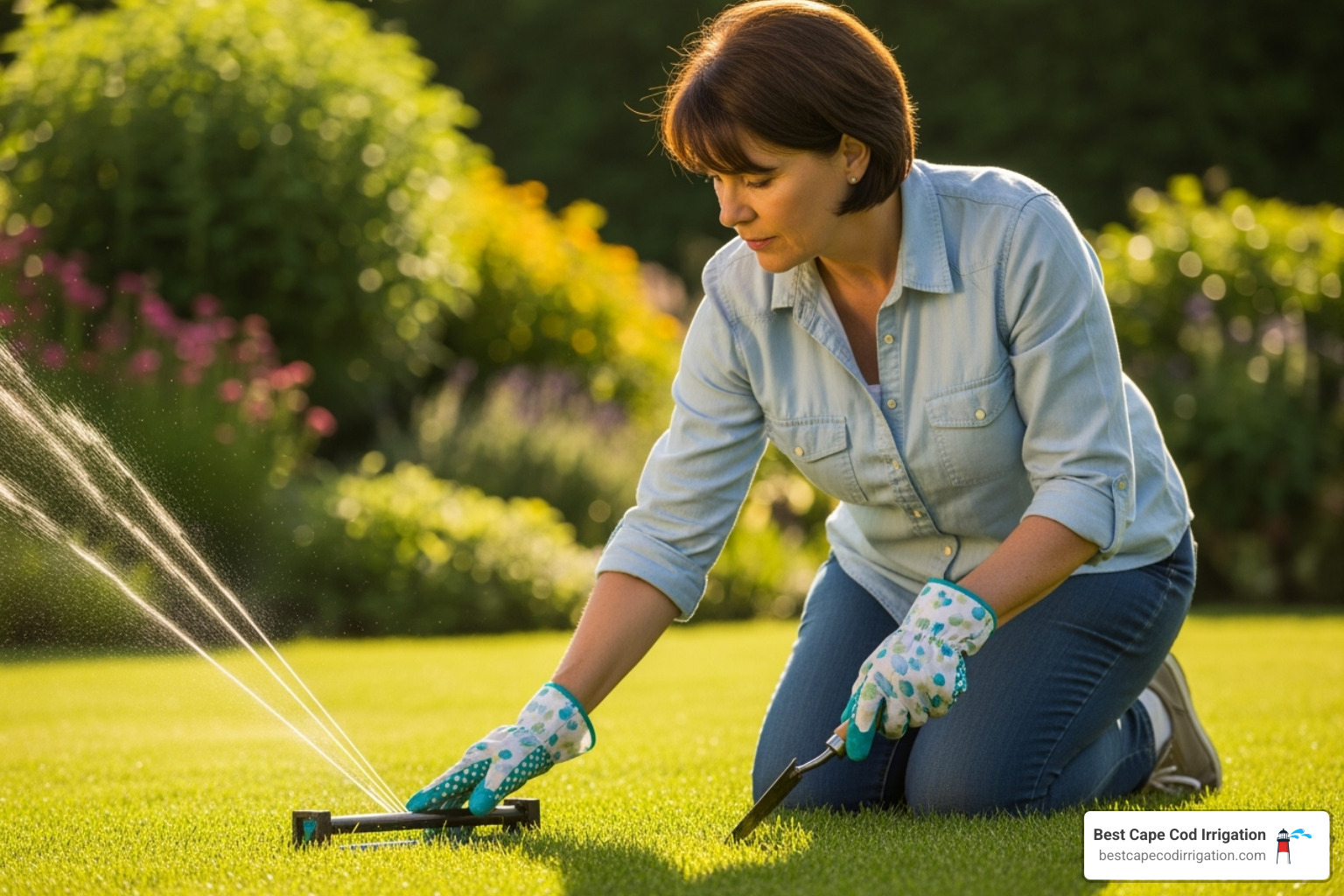
Tools and Supplies for DIY Maintenance
Before you start playing irrigation detective, gather a few basic tools. Most homeowners already have these tucked away in their garage or shed. Having them ready makes those quick fixes feel less like chores and more like small victories.
You’ll want a small shovel or trowel for digging around sprinkler heads when they need adjusting or replacing. A pair of pliers comes in handy for tightening connections or wrestling with stubborn nozzles. Keep both Phillips and flathead screwdrivers nearby for adjusting sprinkler heads or controller settings.
Smart homeowners keep a few replacement sprinkler heads and nozzles on hand – nothing beats fixing a broken head immediately instead of waiting for a trip to the hardware store. Make sure they match your existing system’s brand and model. Small flags are perfect for marking problem areas during your inspection, and garden gloves keep your hands clean and protected.
For the more ambitious DIY-ers, a pipe cutter along with PVC cement and primer can handle minor pipe repairs. Wire strippers and electrical tape are useful for small electrical fixes around valves, though anything more complex should go to a professional.
Monthly & Bi-Monthly DIY Irrigation System Maintenance Tasks
Your monthly maintenance routine starts with running each zone manually. This isn’t just about checking if water comes out – you’re looking for the story each zone tells. Does the water spray evenly? Are there any surprising wet spots or disappointing dry patches?
While each zone runs, check for clogged or damaged heads. Cape Cod’s sandy soil and seasonal debris love to mess with sprinkler heads. Look for heads that spray unevenly, barely spray at all, or create dramatic water geysers around their base. These are clear signs something needs attention.
Look for leaks or puddles as you walk your property. Even small leaks can waste thousands of gallons over a season, turning your water bill into an unwelcome surprise. Unusual wet spots, persistent puddles, or areas where water gushes out all point to problems that need fixing.
Adjust spray patterns and direction as needed. Over time, sprinkler heads get knocked around by lawnmowers, foot traffic, or just settling soil. Make sure each head waters your lawn and plants, not your driveway, sidewalk, or house. This simple adjustment can dramatically improve your system’s efficiency.
Don’t forget to clean filters if your system has them. This is especially important for drip irrigation setups, where clogged filters can shut down entire zones. For detailed guidance on maintaining these systems, check out our Drip Irrigation Maintenance guide.
Ensure proper head height by checking that sprinkler heads clear the top of your grass when fully extended. As lawns grow and settle, heads can get buried or misaligned. Riser extensions can help if heads are sitting too low.
Finally, inspect your controller settings periodically. Are your watering times and days still right for the current weather and season? Cape Cod’s unpredictable weather means what worked in May might be too much or too little by July. Smart controllers make this easier by adjusting automatically, but even they benefit from occasional human oversight.
Seasonal Deep Dives: Spring Startup and Fall Winterization
Think of your sprinkler system like a bear hibernating through winter. You can’t just wake it up with a loud noise and expect it to run a marathon – it needs a gentle, careful awakening. That’s exactly what irrigation system maintenance looks like during the two most critical times of the year: spring startup and fall winterization.
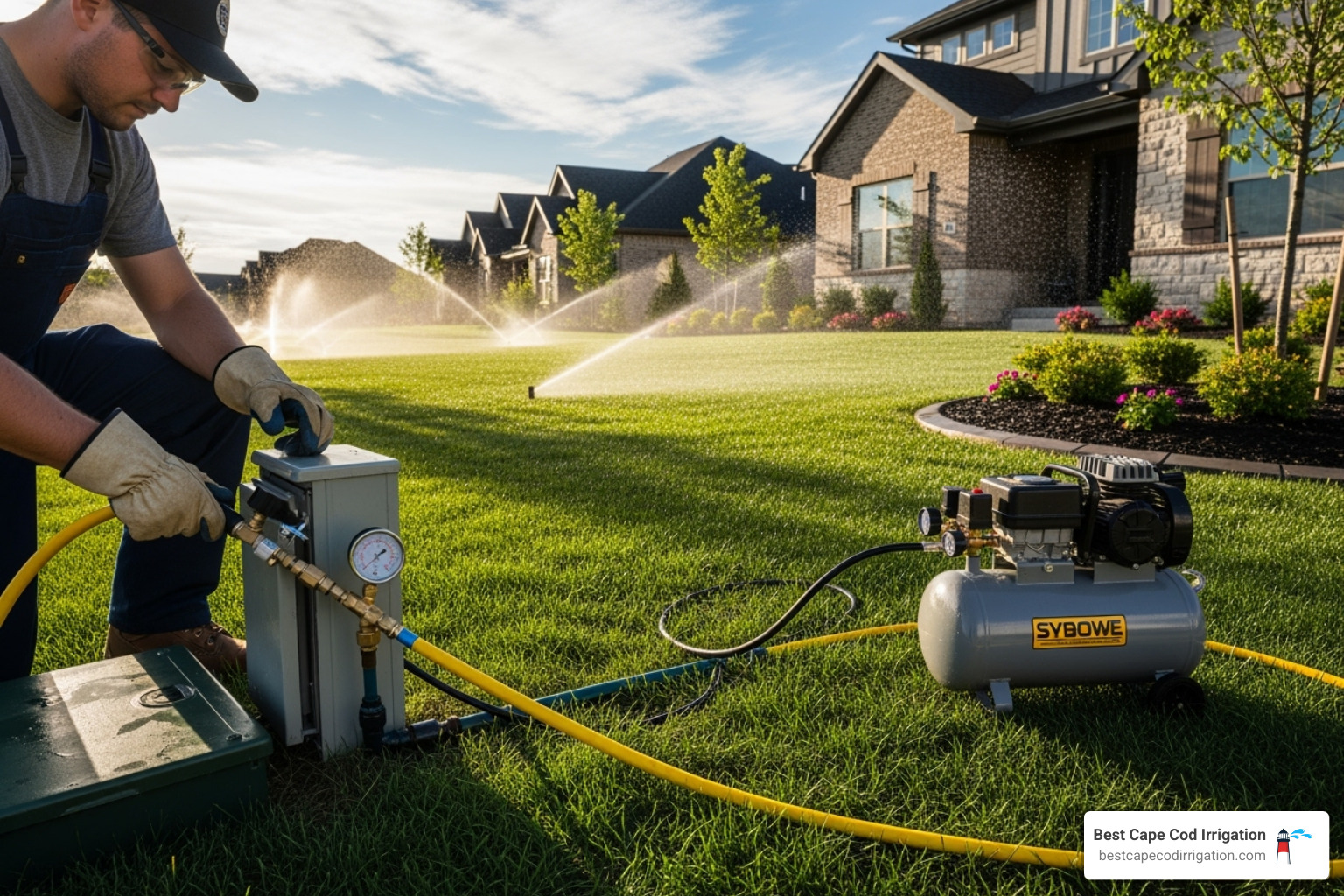
These aren’t just routine tasks – they’re the difference between a system that runs smoothly all season and one that leaves you with a flooded basement or a $3,000 repair bill. Cape Cod’s freeze-thaw cycles are particularly brutal on irrigation systems, making seasonal service absolutely essential.
Here’s what many homeowners don’t realize: water expands about 9% when it freezes. That might not sound like much, but it’s enough to split pipes, crack valve boxes, and turn your backflow preventer into expensive scrap metal. This is where the concept of an “Opening Diagnostic” becomes crucial – it’s not just about flipping a switch, but conducting a thorough health check that can save you thousands down the road.
Spring Startup: Waking Your System Up Right
After months of winter dormancy, your irrigation system needs more than just a quick “turn on and hope for the best” approach. A proper spring startup is like giving your system a physical exam before asking it to run a marathon all summer long.
The process starts with slowly opening the main valve – and we mean slowly. Rushing this step is like chugging a gallon of water after a long run. The sudden pressure surge can damage components that have been sitting dry all winter. Take your time and let the system fill gradually.
Next comes checking the backflow preventer, which is honestly one of the most important (and most ignored) components of your system. This device keeps your irrigation water from flowing back into your drinking water supply – pretty important stuff. Look for any cracks, leaks, or other signs that winter wasn’t kind to it. If you see damage here, call a professional immediately.
Once water is flowing, it’s time to inspect each zone for damage. Run every zone manually and watch carefully. Are heads popping up properly? Any geysers shooting up where they shouldn’t? This is detective work – you’re looking for clues that winter left behind.
Cleaning and adjusting all heads is next on the agenda. Months of sitting idle can leave nozzles clogged with debris, and frost heaving might have shifted heads out of alignment. A few minutes spent here can prevent brown spots and water waste all season long.
Finally, programming the controller for the season brings everything together. Your watering needs in May are completely different from July, so don’t just use last year’s settings. Consider Cape Cod’s sandy soil, your specific plants’ needs, and any local watering restrictions.
While many homeowners tackle spring startup themselves, a professional service can spot subtle issues that might escape the untrained eye. For a detailed walkthrough of the process, check out our guide on Opening Sprinkler System In Spring.
Fall Winterization: Protecting Your Investment from the Cold
If spring startup is like a gentle wake-up call, fall winterization is like tucking your system into bed with a warm blanket – except the blanket is compressed air, and the bed is completely empty of water.
Shutting off the water supply is your first step, but it’s just the beginning. Simply turning off the water doesn’t remove what’s already in the pipes, and that’s where the real danger lies.
Draining the system through manual drain valves helps, but gravity alone won’t get everything out. Pipes rarely have perfect slopes, and water loves to hide in low spots, valve boxes, and sprinkler heads.
This is where the importance of a professional blowout becomes crystal clear. Using compressed air to force every last drop of water from your system isn’t just recommended – it’s essential. But here’s the catch: it takes the right equipment, the right pressure, and the right technique. Too little pressure leaves water behind. Too much pressure can damage components faster than you can say “expensive repair.”
A professional blowout service uses industrial-grade compressors and knows exactly how much pressure each component can handle. They’ll work through each zone systematically, ensuring every pipe, every head, and every valve is bone dry.
Protecting valves and backflow preventers rounds out the winterization process. These components are particularly vulnerable to freeze damage, so they need special attention. Some need to be drained and insulated, others might need to be removed entirely depending on your local codes.
The bottom line? Skipping winterization is like playing Russian roulette with your irrigation system. One hard freeze with water still in the lines, and you could be looking at thousands in repairs come spring. That’s why we strongly recommend our Sprinkler System Blowout Service – it’s a small investment that protects a much larger one.
Troubleshooting Common Sprinkler Problems
Even with diligent irrigation system maintenance, things can go wrong. Your sprinkler system is a complex network of pipes, valves, and moving parts that work together season after season. Like any hardworking system, it’s going to have occasional hiccups. The good news? Most problems announce themselves pretty clearly, and many can be fixed with a bit of detective work and some basic tools.
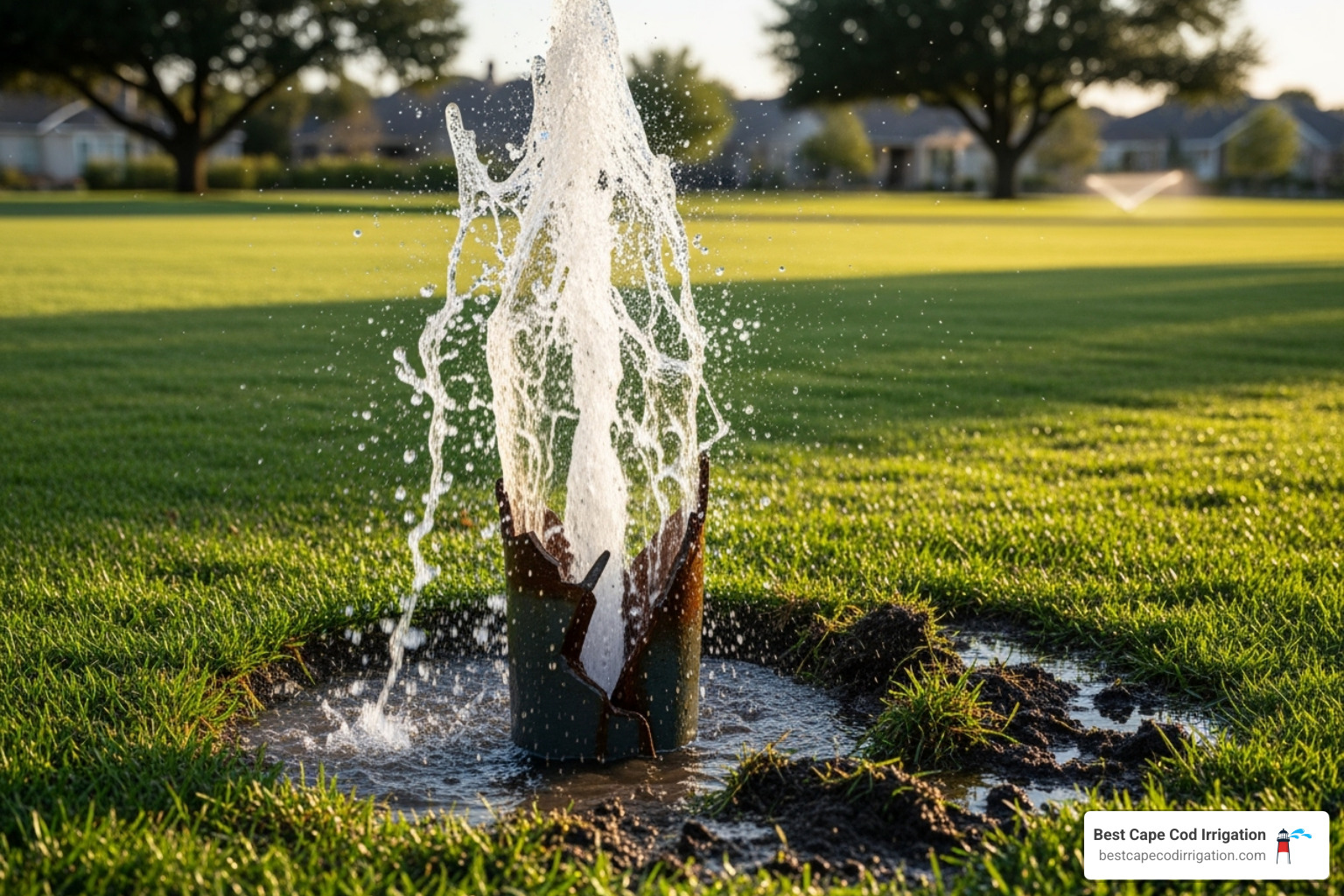
The key is learning to read the signs your system is giving you. Your lawn is basically a giant report card that shows you exactly how your sprinkler system is performing. Brown patches, soggy spots, and unexpected water bills all tell a story – you just need to know how to interpret what they’re saying.
Spotting the Signs of Trouble
Your irrigation system has its own way of crying for help. Sometimes it’s subtle, like a gradual decline in one zone’s performance. Other times, it’s about as subtle as a fire truck – like when you’ve got a geyser shooting water ten feet into the air from your front yard.
Low pressure in one zone is often your first clue that something’s amiss. When one zone suddenly feels weak compared to the others, you’re looking at a problem isolated to that specific area. This could be a clogged nozzle (the most common culprit), a partially closed valve, or a small leak somewhere in that zone’s piping. The good news is that single-zone problems are usually easier and cheaper to fix than system-wide issues.
Sprinkler heads that won’t pop up are another common complaint. These lazy heads might be dealing with low water pressure, debris blocking their mechanism, or they might have simply worn out. Sometimes it’s as simple as cleaning around the head – grass clippings and dirt love to gum up the works.
The most dramatic problem you’ll encounter is geysers or constant wet spots. When you see water shooting up from the ground like Old Faithful, you’ve got a broken underground pipe or a severely damaged sprinkler head. This isn’t just wasteful – it can damage your landscape and even affect your home’s foundation if left unchecked. These situations need immediate attention, and our Sprinkler System Leak Repair service can help get things back under control quickly.
Dry spots in your lawn might seem like the opposite problem, but they’re just as telling. When you’ve got brown patches despite running your system regularly, it usually means a sprinkler head is misaligned, clogged, or broken. Sometimes the fix is as simple as adjusting the spray pattern or cleaning a nozzle.
Controller problems can be the most frustrating because they affect your entire system. If your system isn’t turning on or off as programmed, or if the display is acting up, you might be dealing with electrical issues, a faulty controller, or even a rain sensor that’s stuck in the “on” position.
When to Call a Professional for Repairs
We’re all for DIY irrigation system maintenance, but there’s a fine line between being handy and being in over your head. Some problems are perfect weekend projects for the motivated homeowner. Others? Well, they’re best left to folks who do this for a living.
Electrical issues top the list of “call a professional” problems. If your controller is completely dead, valves aren’t responding, or you’re dealing with wiring problems, it’s time to step back. Water and electricity don’t play well together, and irrigation electrical systems can be surprisingly complex. What looks like a simple wire repair might actually be a symptom of a bigger problem.
Broken pipes underground are another job for the pros. You might be able to locate the general area where water is bubbling up, but finding the exact break, digging it up without damaging other utilities, and making a proper repair requires specialized tools and experience. Our Irrigation Pipe Leak Repair service can locate and fix these problems without turning your yard into a construction zone.
Valve problems can be tricky to diagnose and fix. Irrigation valves can fail mechanically or electrically, and they’re often buried in valve boxes that can be difficult to access. A valve that’s stuck open will flood your lawn, while one that’s stuck closed will leave it bone dry. Either way, valve repairs typically require specific parts and expertise. That’s where our Expert Sprinkler System Valve Repair comes in handy.
Low pressure across your entire system usually points to a problem with your main water supply or backflow preventer. This isn’t a single broken head or clogged nozzle – it’s a system-wide issue that requires comprehensive diagnosis and potentially major repairs.
Backflow preventer issues are both a safety concern and often a legal requirement to fix properly. These devices protect your drinking water supply from contamination, so they’re not something to tinker with. Many areas require annual testing by certified professionals, and repairs often need to meet specific codes and standards.
When it comes to costs, simple repairs like replacing a broken sprinkler head might run anywhere from $50 to $150, while major issues like replacing a valve manifold or extensive pipe repairs can range from $200 to $800 or more. These are average costs based on internet data and not actual costs for Best Cape Cod Irrigation services, which will vary based on your specific situation and local conditions.
Conclusion: Keep Your Lawn Green and Your Wallet Full
Think of irrigation system maintenance as the secret ingredient to a beautiful lawn that doesn’t break the bank. Every monthly check you do, every spray pattern you adjust, and every seasonal service you schedule is like making a deposit in your landscape’s savings account. The returns? Lower water bills, fewer emergency repairs, and a yard that makes your neighbors wonder what your secret is.
The truth is, maintenance really is an investment, not a cost. That 15 minutes you spend walking around your yard each month, watching your sprinklers do their thing, can save you hundreds of dollars in wasted water and thousands in major repairs. Remember the key tasks: run each zone manually to spot problems early, keep those spray patterns dialed in so you’re watering grass instead of sidewalks, and never skip the seasonal services that protect your system from our unpredictable New England weather.
Here’s what we’ve learned works best: handle the simple stuff yourself, but don’t be a hero when it comes to the complex issues. Underground pipe repairs, electrical problems, and those crucial seasonal services like winterization – these are the times when professional help ensures the job gets done right the first time. One botched DIY electrical repair or improperly blown-out system can cost far more than hiring someone who knows what they’re doing.
At Best Cape Cod Irrigation, we’ve spent 25+ years learning exactly what works in our unique Cape Cod conditions. We know how the sandy soil affects drainage, how the salt air impacts equipment, and how to design systems that thrive here. Whether you’re in Barnstable, Falmouth, or anywhere else across the Cape, we understand your local challenges and can tailor solutions that make sense for your specific situation.
The “set it and forget it” dream your irrigation system promised? It’s absolutely achievable – you just need to remember it occasionally to keep it working that way. For everything else, we’re here to help. Schedule Your Irrigation Repairs & Maintenance Today and let us keep your system running perfectly while you enjoy that lush, green lawn you’ve always wanted.
