


Why Fall Prep is Non-Negotiable
Fall irrigation system maintenance is the difference between a system that lasts decades and one that costs you thousands in spring repairs. As autumn arrives on Cape Cod, your sprinkler system needs proper winterization to survive the harsh New England winter ahead.
Essential Fall Irrigation Tasks:
- Shut off water supply – Turn off the main water line to your irrigation system
- Drain manual valves – Remove standing water from accessible drainage points
- Professional blowout – Use compressed air to remove all water from pipes and components
- Inspect sprinkler heads – Check for damage and clear any debris
- Winterize backflow preventers – Protect these critical components from freeze damage
- System audit – Assess efficiency and plan for spring improvements
The stakes are higher than you might think. Lingering water left in sub-zero temperatures will freeze, cracking pipes, valves, and sprinklers. What starts as a winterization service, with average costs reported online ranging from $200 to over $600 (note: this is an industry average, not a quote for our services), can become thousands in replacement costs if you skip this critical step.
Cape Cod’s sandy soil and unpredictable weather patterns make proper fall maintenance even more crucial. Your irrigation investment deserves protection, and your spring lawn depends on a system that’s ready to perform when growing season returns.
The good news? Most of the preparation work can be planned and executed systematically. Some tasks you can handle yourself, while others require professional expertise and specialized equipment.
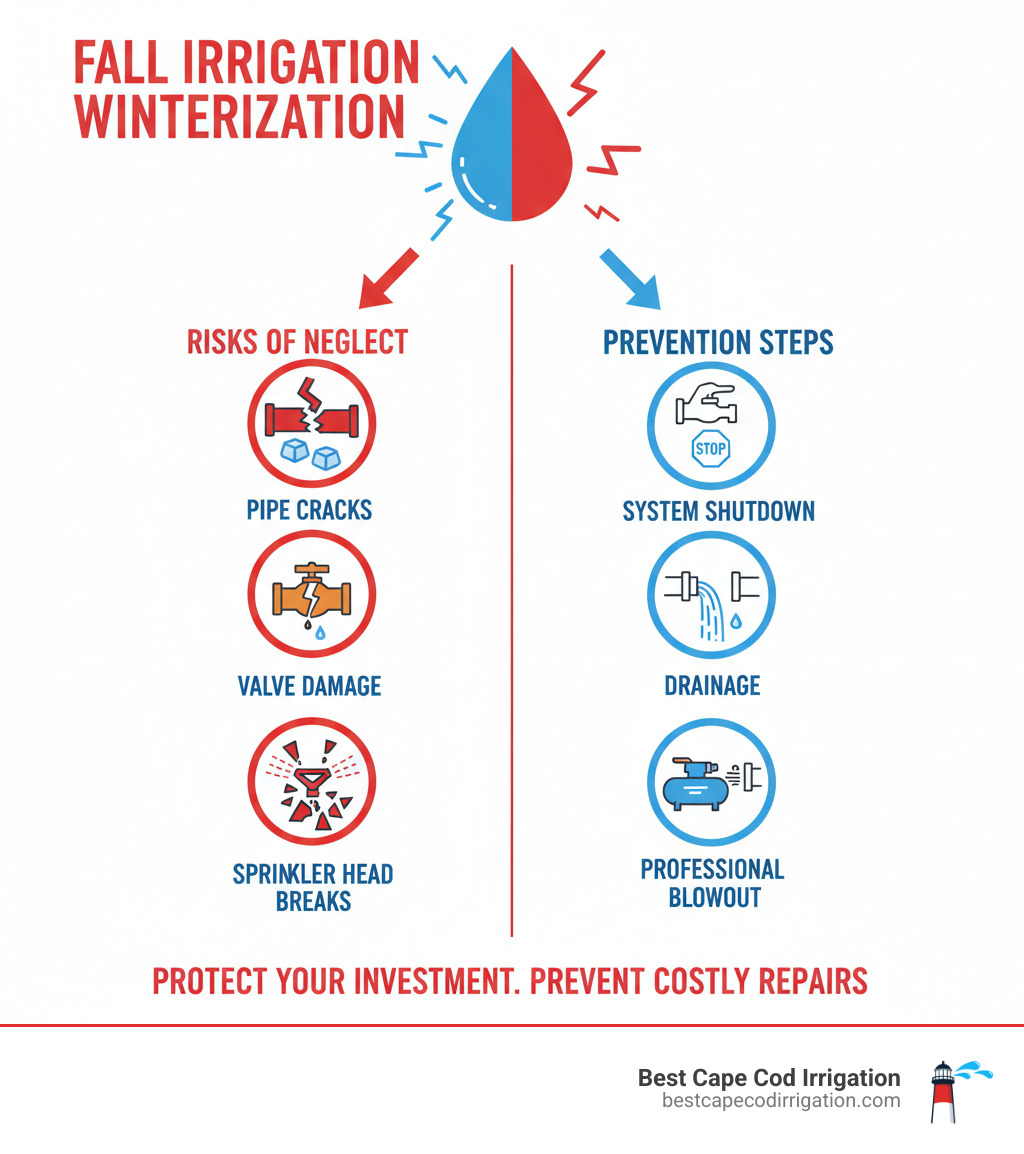
The High Cost of Neglect: Risks of Skipping Winterization
Picture this: You’re excited to fire up your irrigation system on the first warm spring day, only to find water shooting up from your lawn like a mini Old Faithful. Or worse, you notice soggy patches appearing across your yard, signaling hidden leaks that have been quietly draining your wallet all winter long.
This nightmare scenario happens more often than you’d think, and it’s entirely preventable with proper fall irrigation system maintenance. The culprit? Simple physics that packs a devastating punch.
When water freezes, it expands by about 9% – and your irrigation system’s pipes, valves, and sprinkler heads simply can’t handle that kind of pressure. What starts as harmless leftover water transforms into a destructive force that can crack, split, and shatter components throughout your entire system.
The damage shows up in several painful ways. Frozen water damage begins with cracked pipes buried beneath your beautiful lawn. These PVC and polyethylene lines might develop hairline fractures or complete breaks that are expensive to locate and repair. Meanwhile, broken valves stop working properly when their delicate internal parts freeze and crack, leaving you with systems that won’t turn on or won’t turn off.
Your damaged sprinkler heads become another casualty, with frozen water shattering their internal mechanisms and leaving you with uneven spray patterns or heads that won’t pop up at all. But perhaps most concerning are problems with backflow preventers – these critical devices protect your home’s drinking water from contamination, and replacing them often requires specialized expertise.
The financial reality is sobering. What could have been handled with routine fall maintenance suddenly becomes costly spring repairs that can run into thousands of dollars. We’ve seen Cape Cod homeowners face extensive excavation projects, complete system overhauls, and emergency repairs that cost 10 times more than preventative winterization would have.
Beyond immediate repair costs, neglecting winterization creates ongoing problems. Many manufacturers will void warranties on systems that weren’t properly maintained according to their guidelines. Hidden leaks from freeze damage lead to water waste that inflates your utility bills and can damage your landscape before you even notice the problem.
The frustrating part? All of this is completely avoidable. Professional winterization protects your investment and gives you peace of mind through the harsh New England winter. When you’re ready to address existing damage or prevent future problems, our automatic sprinkler system repair services can help restore your system’s performance.
Don’t let winter weather turn your irrigation investment into an expensive spring surprise. Check out our comprehensive Irrigation Repair Services Guide to learn more about protecting and maintaining your system year-round.
Your Essential Checklist for Fall Irrigation System Maintenance
The leaves are changing, the air is getting crisp, and your irrigation system is about to face its biggest test of the year. Fall irrigation system maintenance isn’t just a seasonal chore – it’s your system’s lifeline through the harsh Cape Cod winter ahead.
This comprehensive approach breaks down into manageable chunks: tasks you can confidently handle yourself, the professional-grade blowout process that provides ultimate protection, and knowing when it’s time to call in the experts. Think of it as your roadmap to a worry-free winter and a thriving spring lawn.
DIY Tasks for Fall Irrigation System Maintenance
You don’t need to be a professional to tackle some essential maintenance tasks. In fact, getting hands-on with your system helps you understand how it works and spot potential problems before they become expensive headaches.
Shutting off your water supply is your first and most critical step. Head to your main irrigation shut-off valve – usually located near your water meter or where your irrigation line branches from your home’s main supply. Turn it completely off to prevent any new water from entering the system. If you have a backflow preventer with its own shut-off valves, close those too.
Next comes draining any manual valves you might have. Older systems sometimes include manual drain valves at low points in the system. Open these to let standing water escape, though this alone won’t provide complete protection against our New England freezes.
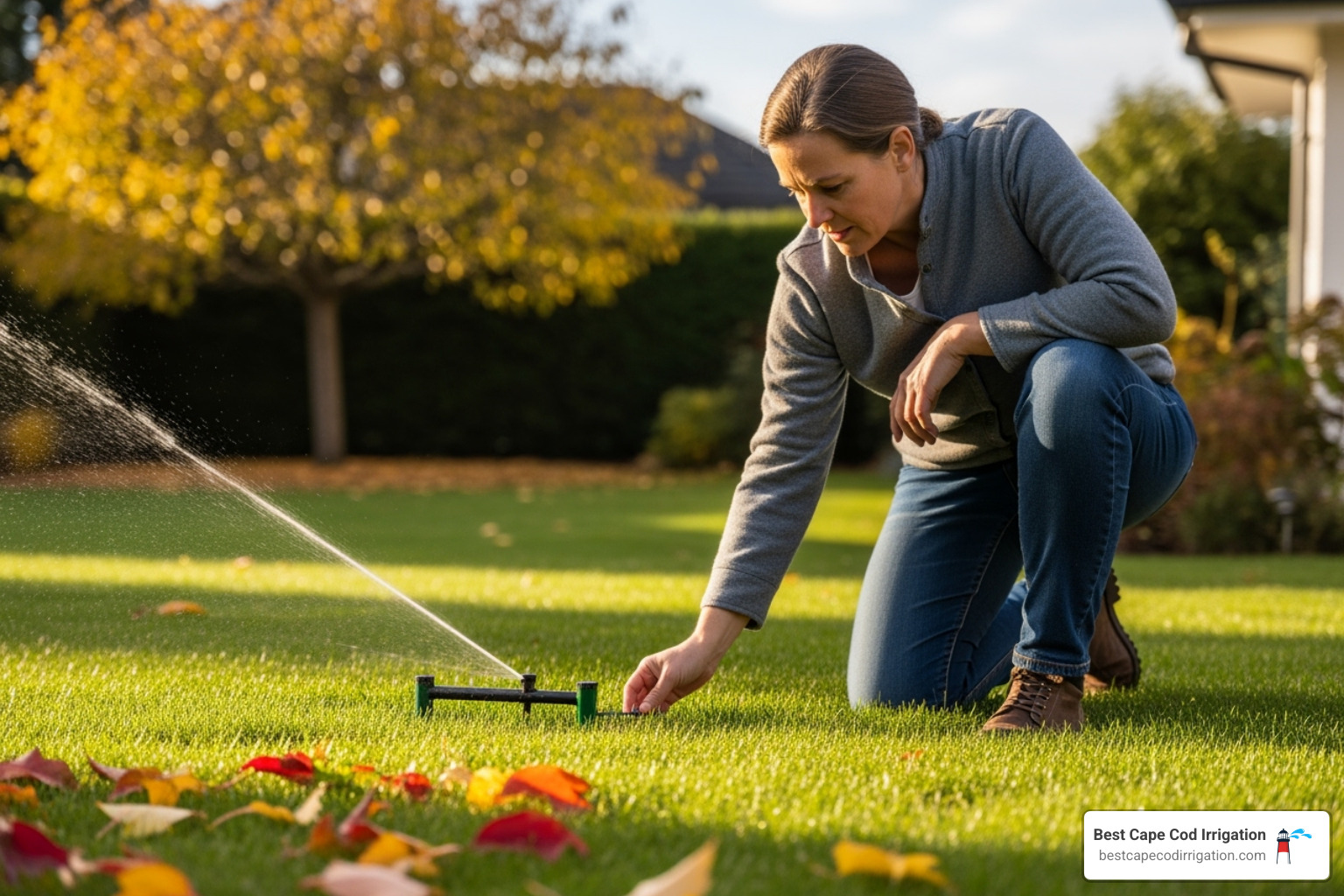
Time for a thorough sprinkler head inspection – consider this your system’s annual physical exam. Walk your entire property and examine each head for damage from lawn mowers, foot traffic, or general wear. Clean any clogged nozzles you find, removing debris, dirt, or grass clippings that have accumulated over the season.
While you’re at it, check for obstructions like overgrown plants or decorative items that might block spray patterns. This is also the perfect opportunity to adjust spray patterns while your system still has pressure. Run each zone briefly to ensure heads are watering your landscape, not your driveway or sidewalk.
Pressure checks can reveal hidden problems. Watch for inconsistent spray patterns or unusually low pressure across a zone – these often signal leaks or other issues that need attention before winter sets in. Look for any visible leaks around sprinkler heads or exposed piping during your inspection.
For more detailed guidance on these tasks, check out our Irrigation System Maintenance Tips and Residential Sprinkler System Maintenance resources.
The Blowout Method: The Ultimate Winter Protection
Here’s where we separate the good from the great in fall irrigation system maintenance. The blowout method isn’t just better than simple draining – it’s in a completely different league.
Why draining falls short becomes clear when you understand water’s sneaky nature. Even with manual drain valves, water settles in low points, pipe joints, and countless little pockets throughout your system. That seemingly harmless residual water becomes ice grenades when temperatures drop, ready to crack pipes and shatter components.
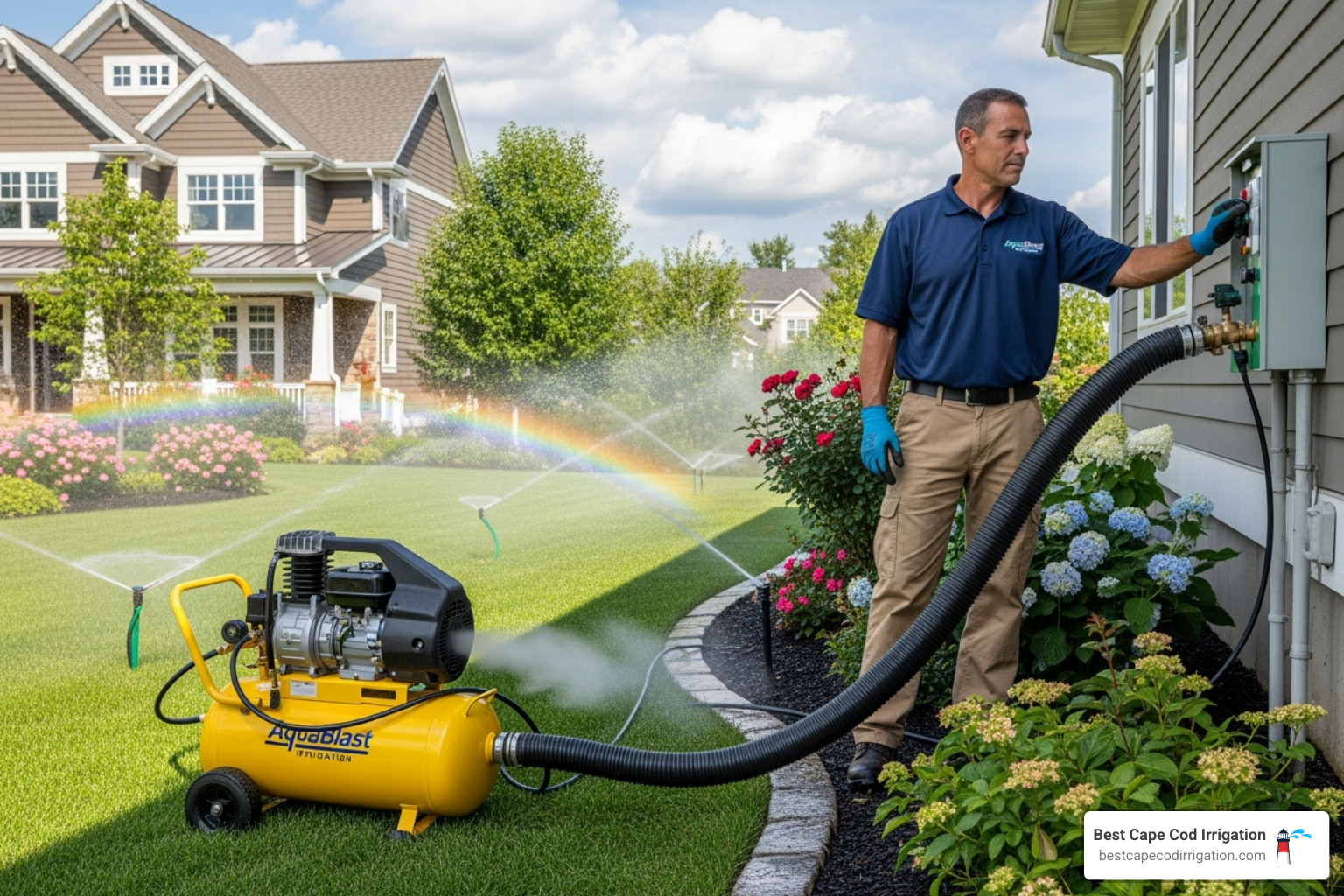
The blowout process connects a powerful air compressor to your system’s main line and systematically forces compressed air through each zone. We watch as water shoots out through sprinkler heads, continuing until only dry air emerges. It’s thorough, it’s effective, and it’s why the blowout method is superior to draining.
But here’s the catch – this isn’t a job for your garage air compressor. Professional air compressor requirements include high-volume units producing 100-200 CFM at 50-80 PSI. Too little power won’t clear the water; too much pressure can damage delicate components.
Safety precautions are non-negotiable. Compressed air demands respect, proper eye protection, and careful pressure management. The step-by-step process involves starting with lower pressure, opening the furthest heads first, and working systematically back toward the source.
Protecting backflow preventers requires special attention during blowouts. These above-ground devices are freeze damage magnets, so proper draining and often insulation coverage keeps them safe through winter.
For professional peace of mind, explore our Sprinkler System Blowout Service.
When to Call the Experts for Professional Maintenance
Knowing your limits isn’t giving up – it’s smart homeownership. Some situations absolutely call for professional expertise, and recognizing them can save you significant money and frustration.
Complex systems with multiple zones, drip irrigation, smart controllers, and various valve types can overwhelm even handy homeowners. Our technicians steer these intricate setups daily, ensuring nothing gets missed.
Lack of proper equipment is the most common reason to call professionals. Without that high-volume air compressor and specialized connections, a complete blowout simply isn’t possible.
Time constraints are real, especially during Cape Cod’s busy fall season. Between work, family, and preparing your home for winter, finding time for thorough system maintenance can be challenging.
Ensuring thoroughness matters more than you might think. We know where water hides in systems – those sneaky low points and valve chambers that seem dry but harbor just enough moisture to cause problems.
Several warning signs indicate you need professional help: persistent low pressure across zones suggests hidden leaks requiring diagnosis, visible component damage beyond simple clogs needs expert assessment, and complex smart systems often require specialized knowledge for proper winterization.
Backflow preventer concerns top our list of “don’t try this at home” scenarios. These critical devices protect your drinking water supply, and improper handling can lead to costly repairs and potential contamination issues.
Ready to protect your investment? Schedule Maintenance with our experienced team, or learn about our comprehensive Seasonal Irrigation Maintenance programs designed specifically for Cape Cod’s unique climate challenges.
Enhancing Efficiency: Smart Tech and System Audits
Fall isn’t just about protecting your system from winter’s wrath – it’s also your golden opportunity to set the stage for an even better irrigation season next year. Think of it as your system’s annual performance review, where we identify what’s working brilliantly and what could use a little TLC.
This is the perfect time to accept the future of irrigation with smart technology and give your system a thorough audit. Trust us, your spring self will thank you when everything runs like clockwork from day one.
Leveraging Smart Technology for Winter Prep
The irrigation world has come a long way from those basic timers that seemed to have a mind of their own. Today’s smart irrigation technology doesn’t just make your life easier – it makes your system incredibly efficient and surprisingly simple to winterize.
Smart controllers are the brain upgrade your irrigation system never knew it needed. These Wi-Fi connected devices let you manage everything from your smartphone, whether you’re sipping coffee in your kitchen or vacationing in Florida. When fall arrives and your watering needs change, you can easily dial back schedules or shut down the entire system remotely. No more trudging around your property in the rain to make adjustments.
The real magic happens with weather-based adjustments. Your smart controller becomes a meteorologist, automatically tweaking watering schedules based on actual weather conditions. During those unpredictable Cape Cod fall days when Mother Nature delivers surprise rainstorms, your system intelligently skips unnecessary watering cycles. Less water in the system means easier winterization later.
Soil moisture sensors take the guesswork out of watering entirely. These clever little devices live in your lawn and garden, constantly monitoring soil conditions and telling your controller exactly when plants actually need water. As temperatures drop and your grass enters its fall slowdown, these sensors ensure you’re not overwatering – a common mistake that can actually harm your lawn before winter.
Don’t overlook the simple brilliance of rain shutoff switches. These unsung heroes detect rainfall and automatically pause your irrigation, preventing your system from watering during storms. On Cape Cod, where fall weather can be wonderfully unpredictable, these switches save water and reduce the amount that needs to be removed during winterization.
Perhaps the most valuable feature for fall irrigation system maintenance is remote system shutdown. When weather forecasts predict an early freeze, you can instantly turn off your water supply from anywhere. This emergency capability has saved countless systems from freeze damage when homeowners were caught off guard by sudden temperature drops.
Drip irrigation deserves special mention as the efficiency champion of watering methods. While not exactly “smart tech,” it pairs beautifully with smart controllers. Drip systems deliver water slowly and precisely to plant roots, making them perfect for fall watering when plants need less moisture. They’re incredibly efficient and much easier to winterize since there’s less water volume in the lines.
If you’re curious about the latest innovations, EXPLORE TORO.COM to see what cutting-edge solutions might transform your irrigation experience.
The Value of a Fall Irrigation Audit
Think of a fall irrigation audit as a comprehensive health checkup for your system. Just like you wouldn’t skip your annual physical, your irrigation system deserves the same thorough attention – especially before the long winter ahead.
An irrigation audit goes far deeper than a casual walk-around inspection. Our professionals systematically test every zone, measuring water pressure, flow rates, and most importantly, distribution uniformity. We place catch cans strategically across your lawn to see exactly how evenly water reaches different areas. It’s detective work that reveals the hidden story of your system’s performance.
The timing couldn’t be better for this detective work. Fall audits excel at checking for uniform coverage across your entire landscape. We often find that some areas have been getting too much water while others have been practically parched. Fixing these imbalances means your lawn will emerge from winter more uniformly healthy and ready for spring growth.
Identifying inefficiencies becomes much easier when plants aren’t actively growing and masking problems. Those slightly clogged nozzles, misaligned sprinkler heads, or pressure issues that seemed minor during peak growing season suddenly become obvious. Catching these problems now prevents them from becoming expensive headaches later.
The water savings potential from a fall audit can be substantial. We regularly find systems that are using 20-30% more water than necessary due to small inefficiencies that add up over time. Fixing these issues means lower water bills and a smaller environmental footprint – something we can all feel good about.
Most importantly, a fall audit creates a clear plan for spring upgrades. Rather than scrambling to address problems when you want to start watering again, we can develop a strategic improvement plan during the off-season. Whether that means adding smart technology, converting certain areas to drip irrigation, or simply replacing worn components, having a plan ensures your system starts the new season at peak performance.
The detailed report from your audit becomes your roadmap for the future. It shows you exactly where your system stands today and outlines the steps to make it even better tomorrow. For additional insights and maintenance strategies, find more irrigation tips to keep your system running efficiently year-round.
Frequently Asked Questions about Fall Irrigation Care
Over our 25+ years serving Cape Cod homeowners, we’ve heard just about every question imaginable when it comes to preparing irrigation systems for winter. The good news? Most concerns are shared by many homeowners, and the answers are straightforward. Let’s explore the most common questions we get about fall irrigation system maintenance.
When is the best time in the fall to winterize my system?
Timing is everything when it comes to winterization, and Cape Cod’s coastal climate keeps us on our toes. The magic phrase to remember is “before the first hard freeze” – that’s when temperatures drop below 28°F for several hours, turning any lingering water into system-damaging ice.
Here on the Cape, we typically see these hard freezes arrive between late October and mid-November, though Mother Nature loves to keep us guessing. Some years we’re scrambling in early October, while others give us the luxury of waiting until Thanksgiving week.
The sweet spot is after your final watering cycle of the season but well before sustained freezing weather arrives. We always tell our customers it’s better to winterize a week too early than a day too late. Once you start seeing consistent nighttime temperatures in the low 30s, it’s time to act.
Cape Cod’s unpredictable weather patterns make professional timing even more valuable. We monitor local forecasts closely and often reach out to remind customers when conditions suggest it’s time to schedule their winterization. The sandy soil conditions here can actually work in our favor – they drain well and don’t hold as much residual moisture as clay soils – but that doesn’t change the fundamental rule about beating the freeze.
Can I just drain the system instead of blowing it out?
This question comes up constantly, and we understand why. Draining seems simpler and less expensive than a professional blowout. Unfortunately, for Cape Cod’s climate, draining alone just isn’t enough protection.
Here’s the reality: draining limitations mean you’ll never get all the water out. Irrigation pipes rarely have perfect slopes, and water naturally settles in low spots, pipe joints, and those sneaky horizontal runs. Even if your system has manual drain valves or automatic drain valves, physics works against complete drainage.
The residual water risk is real. We’ve seen expensive damage from homeowners who thought they’d drained everything properly. Even a tablespoon of water left in the wrong spot can freeze, expand, and crack a pipe or destroy a valve. It’s like playing Russian roulette with your irrigation investment.
Professional blowout thoroughness is what sets our method apart. Using high-volume compressed air, we systematically force every drop of water out of your entire system. This includes those tricky low spots, valve chambers, and the intricate internal mechanisms that simple draining can’t reach.
Backflow preventer vulnerability is another critical factor. These devices, which protect your home’s drinking water supply, have complex internal parts that are especially susceptible to freeze damage. Draining might remove some water, but it won’t clear the delicate check valves and chambers inside these units.
The bottom line? For complete protection against Cape Cod’s winter weather, the blowout method is your only reliable option. Learn more about our comprehensive approach at Openings and Winterization.
How do I choose a reliable irrigation professional?
Selecting the right professional for your fall irrigation system maintenance can feel overwhelming, especially with so many options available. After decades in this business, we know what separates the pros from the pretenders.
License and insurance verification should be your first step. Any legitimate irrigation company in Massachusetts will gladly provide proof of their license and liability coverage. Don’t feel awkward asking – professionals expect this question and respect customers who do their homework.
Local references tell the real story. A company that’s been serving Cape Cod homeowners successfully will have plenty of satisfied customers willing to share their experiences. When you call references, ask specific questions about timeliness, cleanliness, and whether the work held up through the winter.
Equipment quality matters tremendously. Ask what kind of air compressor they use for blowouts. You want to hear about high-volume, professional-grade compressors – not the kind you’d find at a hardware store. If they can’t give you specific details about their equipment, that’s a red flag.
Experience with local conditions is invaluable on Cape Cod. Our sandy soils, salt air, and unpredictable coastal weather create unique challenges. A company that understands how these factors affect irrigation systems will provide better service and catch potential problems that an inexperienced contractor might miss.
Clear communication and transparent pricing should be standard. Beware of companies that provide vague estimates, pressure you into unnecessary services, or can’t clearly explain what their winterization service includes. Professional contractors take time to answer your questions and provide detailed explanations of their process.
At Best Cape Cod Irrigation, we’ve built our reputation on regional expertise and smart technology solutions that work specifically for our local conditions. We’re always happy to discuss our approach and answer any questions you might have. Feel free to Contact Us to learn more about how our 25+ years of Cape Cod experience can protect your irrigation investment.
Conclusion: Secure Your System for a Worry-Free Winter
As Cape Cod’s brilliant autumn colors give way to winter’s stark beauty, there’s one final task that stands between you and months of peaceful slumber: fall irrigation system maintenance. Think of it as tucking your sprinkler system into bed for a long winter’s nap – except this bedtime routine could save you thousands of dollars.
We’ve covered a lot of ground together in this guide, and for good reason. The risks of skipping winterization aren’t just theoretical – they’re painfully real for homeowners who find geysers erupting from their lawns come spring. Frozen water damage, cracked pipes, broken valves, and damaged sprinkler heads aren’t just inconveniences; they’re expensive wake-up calls that proper fall preparation could have prevented entirely.
The path forward is clear and manageable. Start with the DIY tasks we outlined: shutting off your water supply, inspecting sprinkler heads, and checking for visible leaks. These steps alone will put you ahead of many homeowners. But remember, the real protection comes from the professional blowout method – that thorough, compressed-air process that ensures every last drop of water is expelled from your system.
Smart technology and fall system audits aren’t just nice-to-haves anymore. They’re investments in efficiency that pay dividends season after season. Whether it’s a smart controller that adjusts to Cape Cod’s unpredictable weather or sensors that prevent overwatering, these upgrades make your system work smarter, not harder.
Timing is everything in this process. Don’t wait for that first hard freeze to remind you what needs doing. Cape Cod’s coastal climate can surprise us with early cold snaps, and procrastination is the enemy of a well-maintained irrigation system.
Here’s the bottom line: proper fall preparation isn’t just about preventing damage – it’s about setting yourself up for success. When spring arrives and your neighbors are dealing with repair crews and unexpected bills, you’ll be watching your system spring back to life effortlessly, ready to nurture another season of beautiful landscaping.
Our 25+ years of Cape Cod expertise have taught us that the homeowners who sleep best through winter are those who took action in fall. We’ve seen too many “if only I had” stories to count, and we’d much rather help you write a different ending to yours.
Your irrigation system is an investment in your property’s beauty and value. Protect it wisely, act promptly, and enjoy the peace of mind that comes from knowing you’ve done everything right. When spring returns to Cape Cod, your lawn will thank you for the care you showed when it mattered most.
Ready to secure your system for the season ahead? Learn more about turning off your irrigation system for winter and let us help you transition confidently into the colder months.