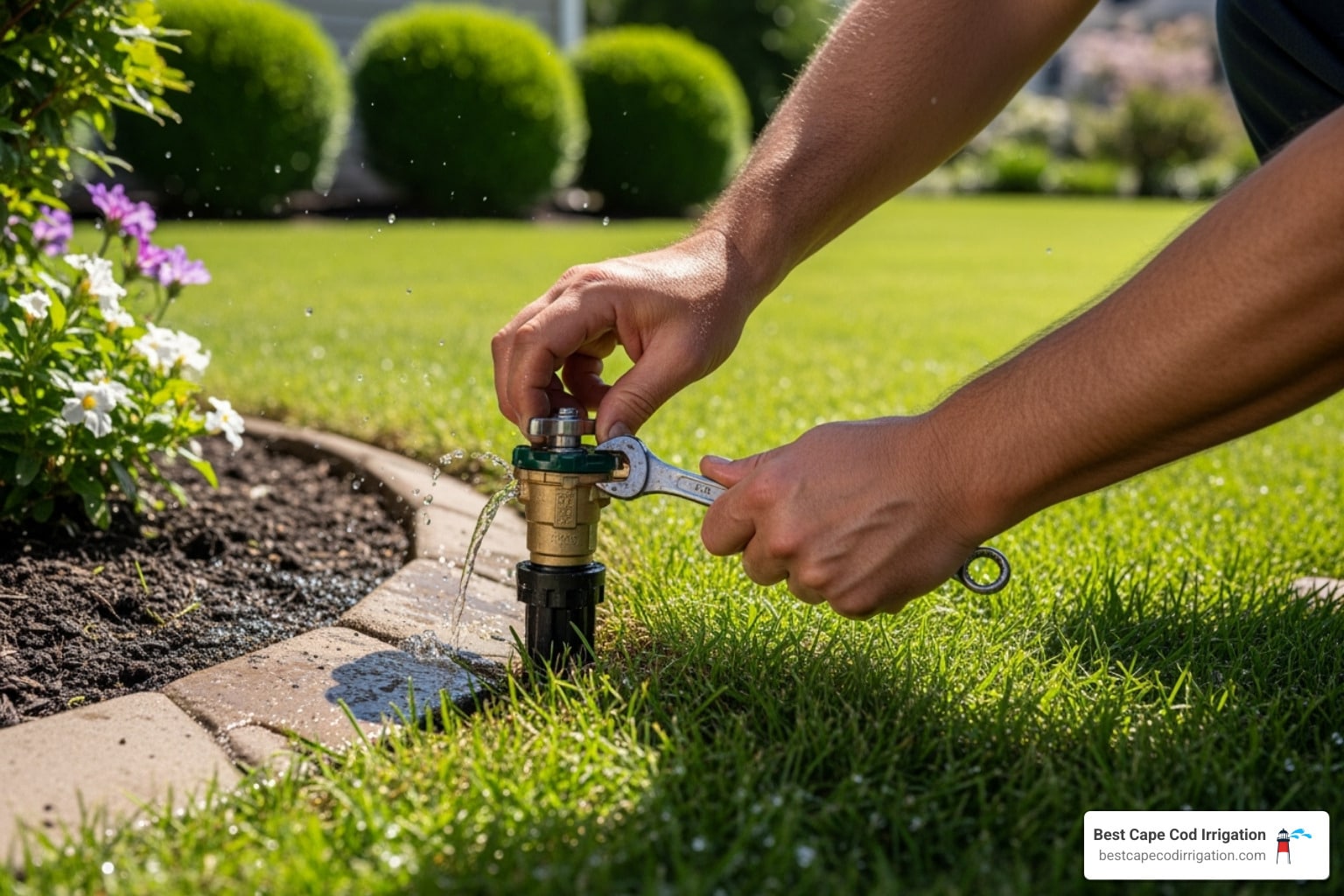



Why Irrigation Valve Leaks Are Costing You Money
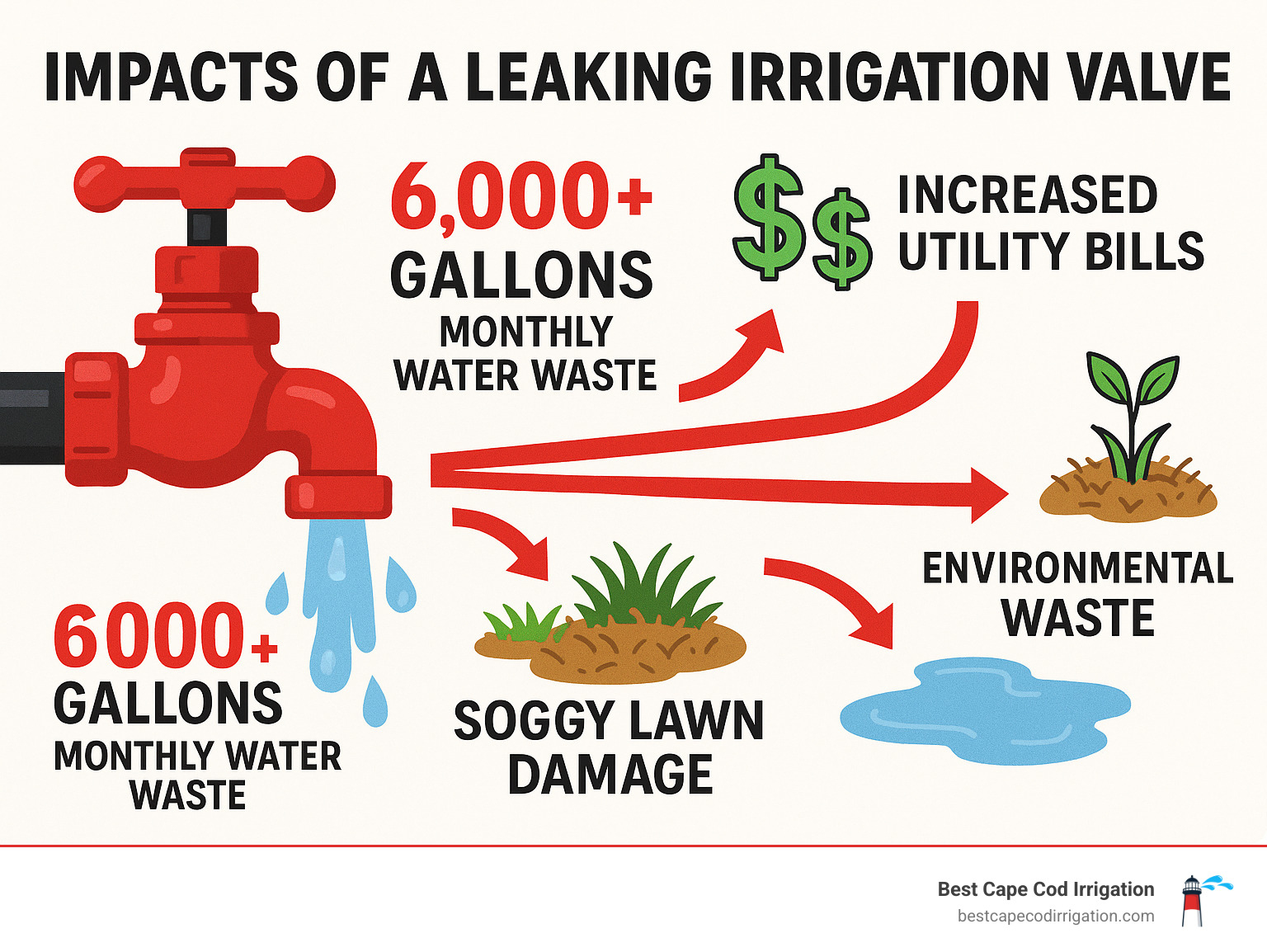
Irrigation valve leak repair is one of the most common issues homeowners face with their sprinkler systems. A single small leak can waste over 6,000 gallons of water per month, turning your beautiful Cape Cod lawn into a soggy mess while driving up your water bill.
Quick Fix Summary for Irrigation Valve Leaks:
- Turn off water supply at the main shutoff valve
- Shut off power to the irrigation controller
- Remove and clean the solenoid – check for debris
- Disassemble the valve – inspect diaphragm for tears
- Clean all parts with water and reassemble
- Replace diaphragm if damaged ($10-15 part)
- Test the system and check for continued leaks
Most valve leaks happen because debris gets stuck in the diaphragm or the rubber parts wear out over time. The good news? You can usually fix these problems yourself with basic tools and about 45 minutes of work.
Common signs you have a leaky valve:
- Water pooling around valve boxes
- One sprinkler zone has low pressure
- Sprinklers won’t turn off completely
- Soggy patches in your lawn
Whether it’s sandy Cape Cod soil clogging your valve or normal wear and tear, catching leaks early saves you money and protects your landscape from overwatering damage.
Quick irrigation valve leak repair terms:
Is It a Leaky Valve or Something Else?
Before you grab your tools and start digging into that soggy mess in your yard, let’s make sure you’re actually dealing with a valve leak. Trust me, there’s nothing more frustrating than spending an afternoon “fixing” the wrong problem!
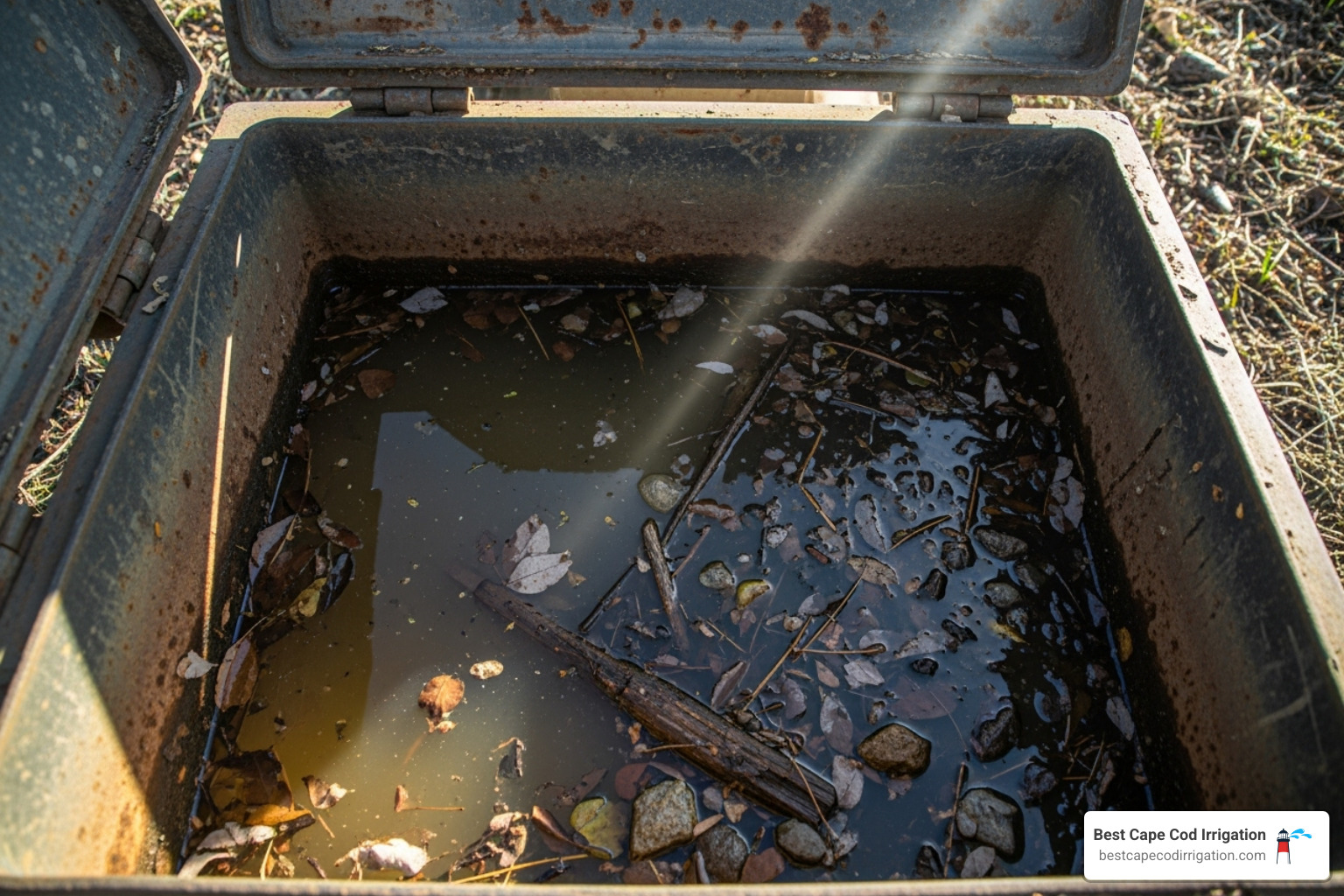
True valve leaks have some telltale signs that are hard to miss. You’ll see standing water in the valve box even when your system has been off for hours. Water keeps dripping from sprinkler heads like a leaky faucet that won’t quit. One zone might have noticeably low water pressure compared to others, or worse yet, sprinklers won’t turn off completely no matter what you do with your controller.
The dead giveaway? Waterlogged soil around valve boxes that stays soggy long after your system should have stopped running.
Here’s where it gets tricky – what you’re seeing might not be a valve leak at all. It could be something called Low Head Drainage, which sounds fancy but is actually pretty simple.
Low Head Drainage happens when gravity pulls leftover water out of your pipes through the lowest sprinkler head in a zone. Think of it like tipping over a full water bottle – the water flows out until it’s empty, then stops. This is completely normal and happens after every watering cycle.
The key difference between Low Head Drainage and a real leak? Timing. Low Head Drainage stops flowing once all the water drains from the pipes, usually within just a few minutes. A genuine irrigation valve leak repair situation means water keeps flowing indefinitely because something’s wrong inside the valve itself.
Here’s your quick test: Turn off your irrigation system and grab a cup of coffee. Wait 15-20 minutes, then check your sprinklers and valve boxes. If water is still flowing or pooling after that time, you’ve got a real leak on your hands that needs attention.
In our 25+ years serving Cape Cod, we’ve noticed that our sandy soil conditions can make valve problems more common. All that sand has a sneaky way of working into places it shouldn’t be. The good news? Most valve leaks are caused by simple debris obstructions that you can clear yourself with a little patience.
If you’re dealing with a continuous leak rather than temporary draining, it’s time to roll up your sleeves and get to work. For more complex leak situations throughout your system, you might want to check out our comprehensive Sprinkler System Leak Repair services.
Gathering Your Tools and Materials for the Job
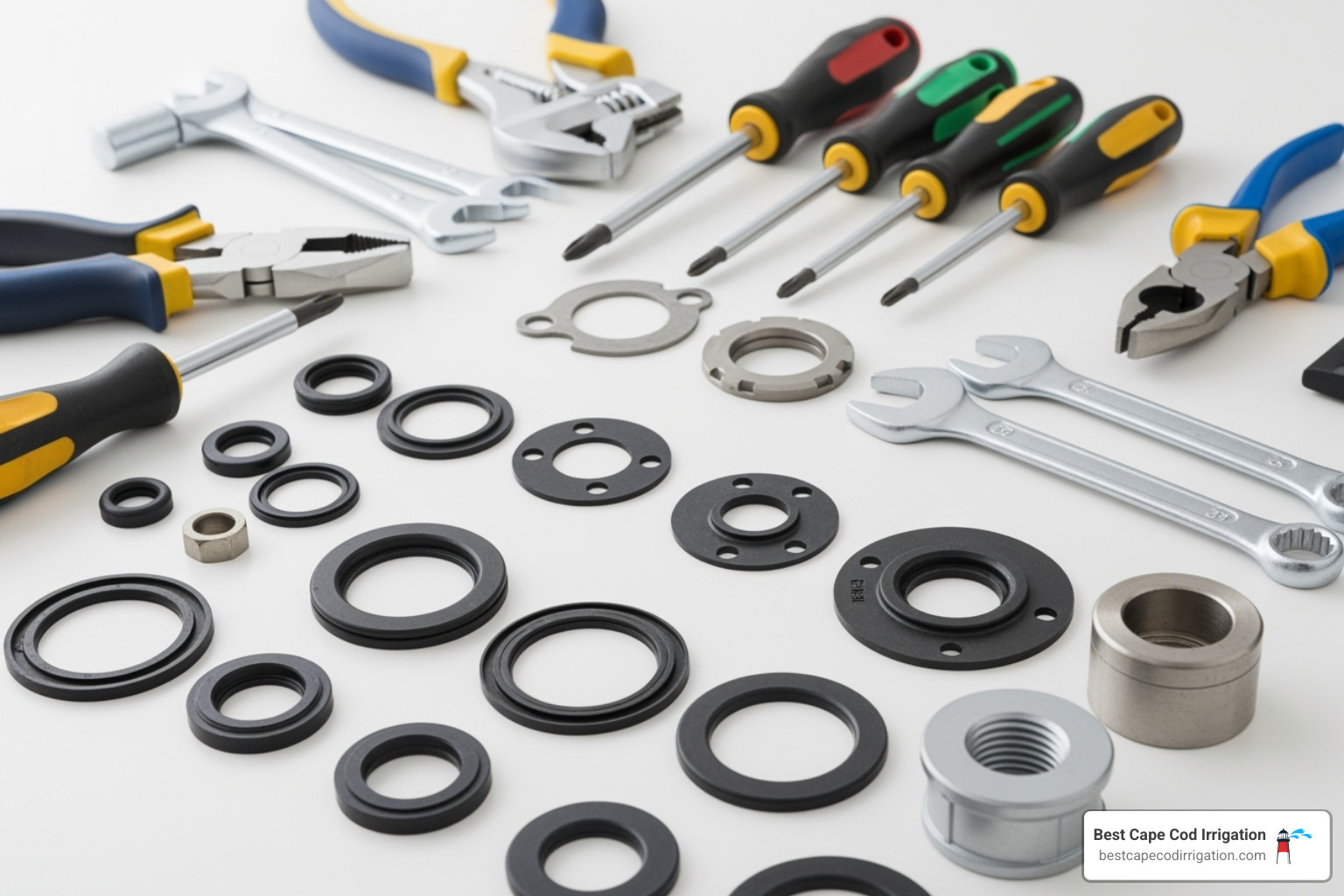
Before you start your irrigation valve leak repair, let’s gather everything you’ll need. Trust me, there’s nothing more frustrating than getting halfway through a job only to realize you’re missing a crucial tool while water is pooling around your valve box.
The good news is that most valve repairs use basic tools you probably already have in your garage. You’ll need a garden trowel to clear debris from the valve box and a Phillips screwdriver for removing the bonnet screws that hold the valve together. Adjustable pliers come in handy for removing the solenoid, and don’t forget a bucket to catch any water that spills out during the repair.
Keep plenty of dry rags or towels nearby – valve boxes can get pretty messy, especially here on Cape Cod where our sandy soil loves to mix with water. If you’re dealing with electrical connections, wire strippers might be necessary for replacing a faulty solenoid.
Now for the materials you might need to buy. A replacement diaphragm typically costs $10-15 and fixes about 70% of valve leaks. If your solenoid is the culprit, expect to spend $20-40 for a new one. You’ll also want waterproof wire connectors ($5-10) and Teflon tape ($2-5) on hand for a proper seal.
Here’s a pro tip from our 25+ years of experience: take photos with your phone before you disassemble anything. Those springs, diaphragms, and tiny O-rings need to go back in exactly the right order, and your future self will thank you for the visual reminder.
If you need to buy a replacement diaphragm, bring your old one to the hardware store. Different valve manufacturers use completely different designs, and getting the wrong size means starting over. In worst-case scenarios where the entire valve body is cracked, a complete replacement valve can cost anywhere from $25-150, but that’s rarely necessary for simple leaks.
Your Step-by-Step Guide to Irrigation Valve Leak Repair
When it comes to irrigation valve leak repair, taking the right safety precautions makes all the difference. Even though irrigation systems use low-voltage electricity, water and electrical components don’t mix well, so let’s start with the basics.
Step 1: Safety and Preparation
First things first – shut off that water supply. Your irrigation system’s main shut-off valve is usually hanging out near your water meter or where the irrigation line branches off from your main water supply. Give it a clockwise turn until it’s completely closed. You’ll know you’ve got it right when you hear the water flow stop within a few seconds.
Next up is the electrical power. Head over to your irrigation controller and flip it to the “OFF” position. If you’re planning to replace electrical components like solenoids, go the extra mile and turn off the circuit breaker that powers your irrigation controller. Better safe than sorry, especially with Cape Cod’s salty air that loves to cause electrical gremlins.
Now for some detective work – locating the problem valve. If you’re scratching your head wondering which valve is the troublemaker, temporarily turn your system back on using just the controller (keep that main water valve off). Activate each zone one at a time, and the problematic valve will reveal itself through signs of leaking.
Here’s a handy tip: most valve boxes contain multiple valves, each controlling a different zone of your sprinkler system. The leaking valve will typically have water pooling around it or wet soil nearby, even when the system is off. Once you’ve found your culprit, mark that valve box with a flag or note so you don’t lose track of it.
Step 2: A Guide to Irrigation Valve Leak Repair Disassembly
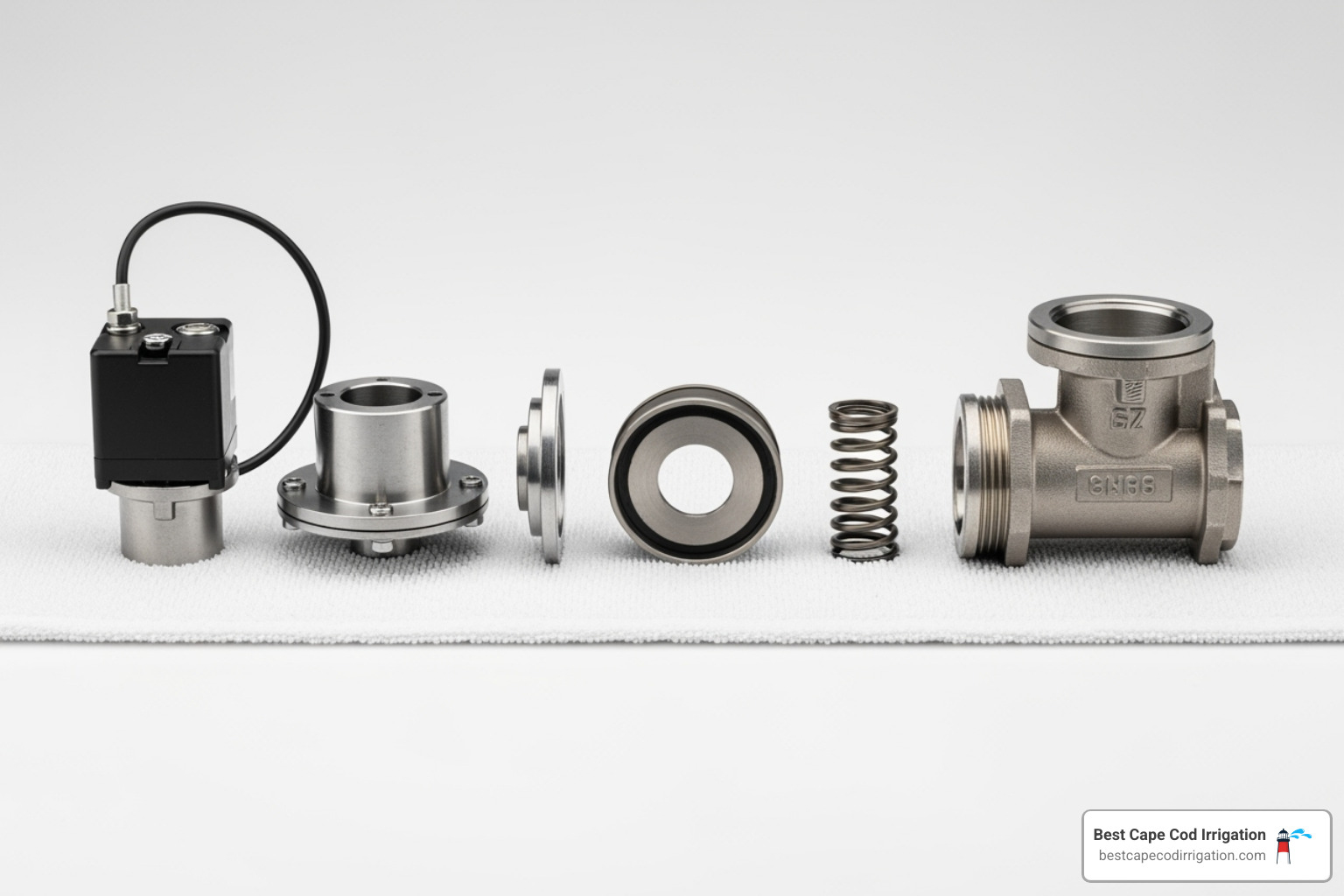
Time to get your hands dirty. Use your garden trowel to clear out mud, debris, and standing water from around the valve. Cape Cod’s sandy soil loves to accumulate in these boxes, so don’t be surprised if you find quite a bit. Place some dry rags in the box to soak up any remaining moisture – this gives you a clean workspace and prevents dirt from falling into the valve during disassembly.
The solenoid comes off first. That’s the cylindrical component sitting on top of the valve, usually black or green. Carefully unscrew it by turning counterclockwise. If you see electrical wires attached, don’t yank on them – disconnect the wire connectors first and make a mental note (or better yet, a photo) of which wire goes where.
Now for the bonnet screws. With the solenoid out of the way, you’ll see several screws around the valve’s top portion, called the bonnet. Using your Phillips screwdriver, remove these screws in a crisscross pattern – this prevents the bonnet from warping. Drop those screws in your bucket so they don’t disappear into the dirt and become another headache.
Here’s where that phone camera becomes your best friend. Before removing any internal parts, snap a photo of the valve’s components. Trust me, when you’re staring at a spring, diaphragm, and various O-rings later, you’ll thank yourself for this reference photo.
The final step in disassembly involves carefully lifting out the diaphragm (that flexible rubber disc), spring, and any O-rings. Handle the diaphragm like it’s made of tissue paper – it’s the most common culprit in valve leaks and tears more easily than you’d think.
Step 3: Inspect, Clean, and Reassemble
Time to play detective with that diaphragm. Look closely for tears or holes, even tiny ones that might not be obvious at first glance. Check for cracks around the edges, warping, or permanent deformation. Also look for sand or debris stuck to the surface – our Cape Cod sand gets everywhere. Here’s a pro trick: hold the diaphragm up to the light, and small holes that aren’t visible otherwise will show up clearly. If you find any damage, that diaphragm needs to be replaced.
Everything gets a good cleaning. Rinse the diaphragm, spring, O-rings, and valve body with clean water. Pay special attention to those tiny bleed ports in the valve body – these small holes love to get clogged with sand or mineral deposits. A soft brush works wonders for gently scrubbing away buildup without damaging the components.
Don’t forget to inspect the valve body itself. Look for cracks, especially around the threaded connections. Unfortunately, cracked valve bodies usually mean you need a complete valve replacement, as they can’t be reliably repaired.
Reassembly is like putting together a puzzle – everything has its place. Start by installing the diaphragm, making sure all holes align with the corresponding holes in the valve body. The diaphragm should sit flat without wrinkles or folds. Next, place the spring directly over the center of the diaphragm.
When reattaching the bonnet, tighten those screws in a crisscross pattern, just like you’d tighten lug nuts on a car tire. This ensures even pressure distribution and prevents leaks. Thread the solenoid back on carefully – snug but not over-tightened.
For the electrical connections, use waterproof wire connectors to prevent corrosion. This is especially crucial here on Cape Cod with our humid, salt-air environment that loves to wreak havoc on electrical connections.
The home stretch involves replacing any rags with clean gravel or stones in the valve box to improve drainage and prevent future silt buildup. When you’re ready to turn your main water supply back on, do it slowly to avoid water hammer that could damage your newly repaired valve.
For more complex irrigation valve leak repair situations, check out our comprehensive guide to fixing sprinkler systems or learn more about Automatic Sprinkler System Repair.
Repair or Replace? A Cost-Effective Decision
When you’re staring at a leaky valve, the big question isn’t just “Can I fix this?” but “Should I fix this?” Sometimes irrigation valve leak repair makes perfect sense, and other times you’re throwing good money after bad.
Here’s the reality check: if you’re dealing with a simple debris blockage, you can fix it for free with a little elbow grease. But if your valve body has a crack running through it, no amount of wishful thinking will make that repair last.
| Condition | Recommended Action | Estimated Cost Range* |
|---|---|---|
| Debris in diaphragm | Clean and reassemble | $0 (DIY) |
| Torn diaphragm | Replace diaphragm | $10-45 |
| Faulty solenoid | Replace solenoid | $20-120 |
| Cracked valve body | Replace entire valve | $75-450 |
| Multiple component failure | Replace entire valve | $75-450 |
Please note: All prices mentioned are national averages based on internet research. Actual costs can vary significantly based on your location, the specific parts needed, and the complexity of the job. For an accurate quote, please contact a local professional.
Common Causes of a Leaking Irrigation Valve
Debris obstruction is probably the most common culprit we see on Cape Cod. Our sandy soil has a sneaky way of working its way into valve boxes during those heavy spring rains or when sprinklers splash soil around. Even a grain of sand in the wrong spot can prevent that rubber diaphragm from sealing properly.
Worn out diaphragms are just a fact of life. These rubber components typically give you 10-15 years of faithful service, but Cape Cod’s weather can be tough on them. Hard water, temperature swings, and UV exposure from uncovered valve boxes all speed up the aging process.
Damaged O-rings and seals might seem like small potatoes, but they’re crucial for keeping water where it belongs. Our winters can make these little rubber rings brittle, and once they crack, you’ve got yourself a leak.
Faulty solenoids contain electrical parts that can burn out or get gummed up with debris. When the solenoid plunger gets stuck, it’s like having a door that won’t close – water keeps flowing no matter what your controller says.
Cracked valve housing is usually the result of freeze damage. If you’ve ever forgotten to winterize your system properly (and we’ve all been there), water expansion can crack plastic valve components faster than you can say “spring startup.”
A Guide to Irrigation Valve Leak Repair vs. Full Replacement
When repair makes sense: You’re looking at a single problem – maybe a torn diaphragm, a stuck solenoid, or some debris that worked its way into the works. If your valve body is solid and the system is less than 15 years old, fixing it is usually the smart move.
When replacement is the better bet: Multiple components are failing, the valve body has cracks, or you’re dealing with a valve that’s been giving you trouble for years. Sometimes it’s better to start fresh than to keep patching problems.
Here’s a money-saving tip from our 25+ years in the business: if you need to replace both the diaphragm and solenoid, consider buying a complete new valve instead. You can often use the top components from the new valve to rebuild your existing setup, and you’ll have spare parts for future repairs.
The DIY vs. professional question really comes down to your comfort level with plumbing. Cleaning valves and replacing diaphragms? Most homeowners can handle that. But if you need to cut and glue PVC pipes for a full replacement, that’s when many folks call in the pros.
For complex repairs or if you’re not sure what you’re dealing with, our Sprinkler System Valve Repair team can diagnose the problem and get your system running efficiently again.
Frequently Asked Questions about Irrigation Valve Leaks
How long do irrigation valves typically last?
Most irrigation valves are built to last 10-15 years with proper care, but here on Cape Cod, we’ve seen some run strong for 20+ years while others need attention after just 5-7 years. It really depends on what your system goes through.
Water quality plays a huge role in valve longevity. If you have hard water with lots of minerals, those deposits can build up and cause components to wear out faster. Our sandy Cape Cod soil can also work its way into valve boxes during heavy storms, creating more cleaning headaches.
Usage frequency matters too. Systems that run every single day naturally wear out faster than those used 2-3 times per week. Think of it like your car – the more miles you put on it, the sooner it needs maintenance.
Cape Cod’s coastal environment adds its own challenges. That salt air we love for beach walks can accelerate corrosion of metal valve components, while our freeze-thaw cycles during winter can be particularly hard on rubber seals and diaphragms.
The good news? Regular maintenance can significantly extend your valve’s life. A simple cleaning and inspection once a year can catch small problems before they become expensive irrigation valve leak repair projects.
Why won’t my valve shut off after I cleaned it?
This is probably the most frustrating question we get! You’ve done everything right, cleaned all the parts, put everything back together… and water is still flowing. Don’t worry – this happens more often than you’d think.
Hidden diaphragm damage is the sneakiest culprit. Sometimes tears or holes are so small you can’t see them during normal inspection. Here’s a pro trick: hold that diaphragm up to a bright light source or even your phone’s flashlight. Those tiny perforations will show up like stars in the night sky.
Faulty solenoids can also cause this problem. The internal plunger might be stuck, or the electrical coil could be burned out. If you have multiple valves of the same model, try swapping solenoids between them. If the leak follows the solenoid to the new valve, you’ve found your problem.
Improper reassembly trips up even experienced DIYers. If the diaphragm isn’t seated perfectly flat or those bonnet screws aren’t tightened evenly in a crisscross pattern, you won’t get a proper seal. It’s like trying to put a lid on a jar that’s not quite straight – it just won’t seal right.
Electrical issues can also prevent proper valve operation. Your solenoid should receive 24-30 volts when activated. If the voltage is low, the valve might not close completely, leaving you with a persistent drip.
Can I just replace the top part of my valve instead of the whole thing?
Absolutely! This is actually one of our favorite money-saving tricks, and it’s perfectly legitimate. If you can find a new valve of the exact same model, you can use its top components – the solenoid, diaphragm, bonnet, and all those internal parts – to rebuild your existing valve.
This approach works because the PVC valve body (the part that’s actually plumbed into your system) rarely fails. It’s usually just the moving parts that wear out over time. Think of it like replacing the engine in your car while keeping the frame.
The benefits are pretty compelling: It’s often cheaper than buying individual replacement parts, you avoid the hassle of cutting and re-plumbing PVC connections, and you’re guaranteed that all components are compatible. Plus, it’s much faster than doing a full valve replacement.
Here’s the catch: This only works if you can find the exact same valve model. Different manufacturers and models have different threading patterns and component designs. It’s like trying to put Ford parts in a Chevy – they might look similar, but they won’t fit properly.
When you’re at the hardware store, bring your old valve’s model number or even a photo of the whole unit. The staff can help you find a compatible replacement, and you’ll have a successful irrigation valve leak repair without the plumbing headaches.
Conclusion: Keep Your System Running Smoothly
Irrigation valve leak repair is one of those home maintenance tasks that looks scarier than it actually is. Most of the time, you’re dealing with a clogged diaphragm or a piece of debris that’s preventing your valve from sealing properly – problems that take more patience than skill to fix.
The beauty of tackling this repair yourself is that you’ll save money and learn how your system works. Plus, there’s something satisfying about stopping that annoying drip and watching your water bill drop back to normal next month.
The Environmental Win
Here’s something that might surprise you: fixing that seemingly small leak can save over 6,000 gallons of water per month. That’s enough water to fill a standard swimming pool! In Cape Cod’s delicate coastal environment, every gallon counts toward protecting our precious groundwater resources.
When you multiply that across all the homes in our region, those individual repairs add up to significant water conservation. Your lawn will thank you too – no more soggy patches or oversaturated soil that can damage grass roots and create perfect conditions for fungal diseases.
Know When to Call for Backup
While we’ve covered the DIY approach thoroughly, some situations call for professional expertise. If you’re dealing with multiple valve failures across different zones, that often signals a bigger issue with your irrigation controller or electrical system. Cracked valve bodies require cutting and re-plumbing PVC pipes – a job that’s definitely easier with the right tools and experience.
Persistent leaks despite multiple repair attempts can be frustrating, and sometimes a fresh set of experienced eyes can spot problems that aren’t obvious to homeowners. Cape Cod’s unique conditions – from sandy soil infiltration to salt air corrosion – create specific challenges that benefit from local expertise.
For complex issues or if you’re unsure about any step in the repair process, the expert team at Best Cape Cod Irrigation can ensure your system is repaired correctly and efficiently. With over 25 years of experience in Cape Cod’s unique conditions, we understand how seasonal weather changes, sandy soil, and salt air affect irrigation systems differently than in other regions.
Keep Your System Happy
The best repair is the one you never have to do. Regular maintenance – like cleaning valve boxes of debris and checking for early signs of wear – can extend your system’s life significantly. Most irrigation valves last 10-15 years with proper care, but proactive attention can push that even further.
Don’t let a small leak turn into a big headache. Whether you roll up your sleeves for a DIY fix or prefer professional peace of mind, addressing valve leaks quickly protects your landscape investment and keeps your water bills under control.
Schedule your Irrigation Repairs & Maintenance today to keep your system running smoothly all season long.