


Why Water Your Lawn in the Rain?
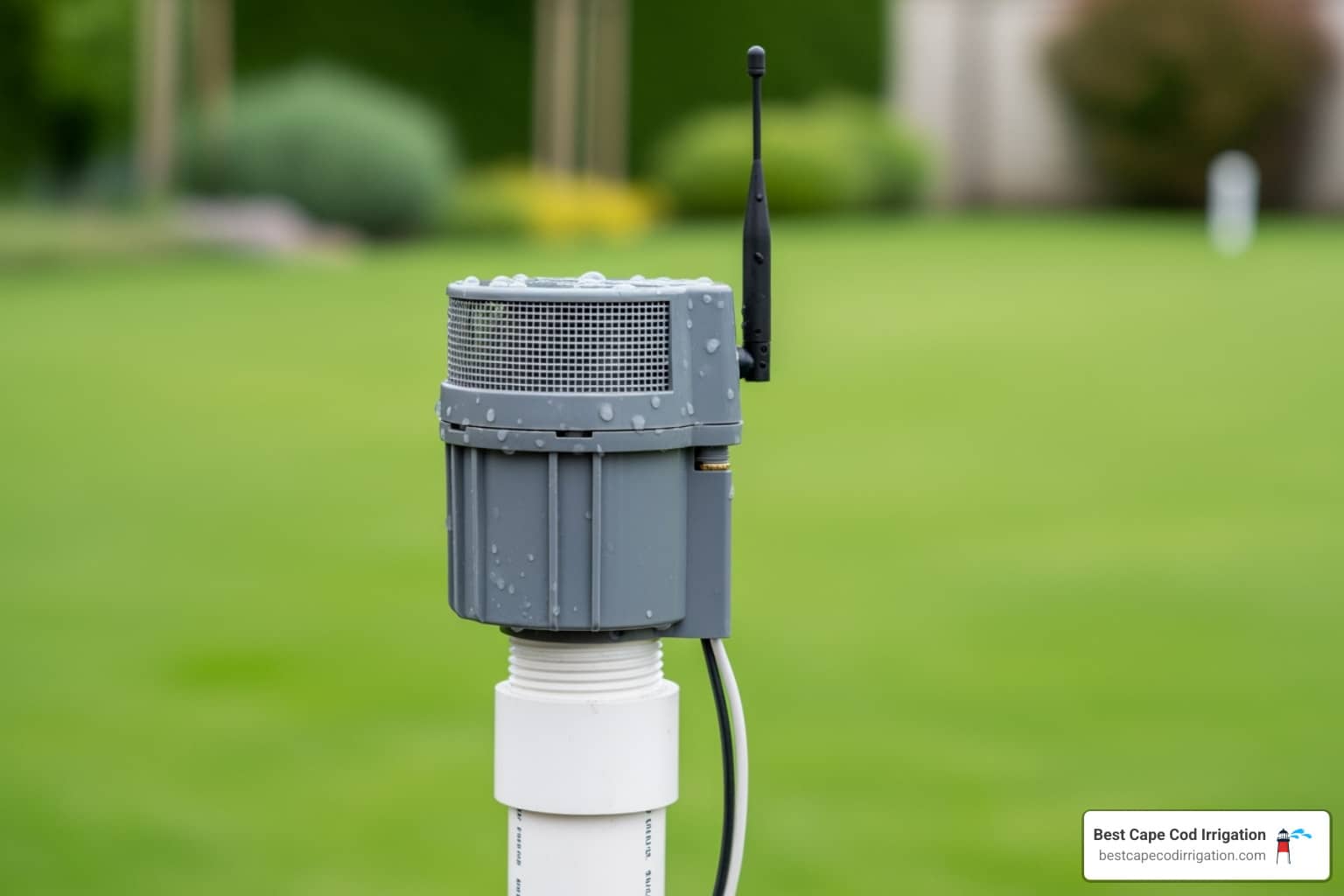
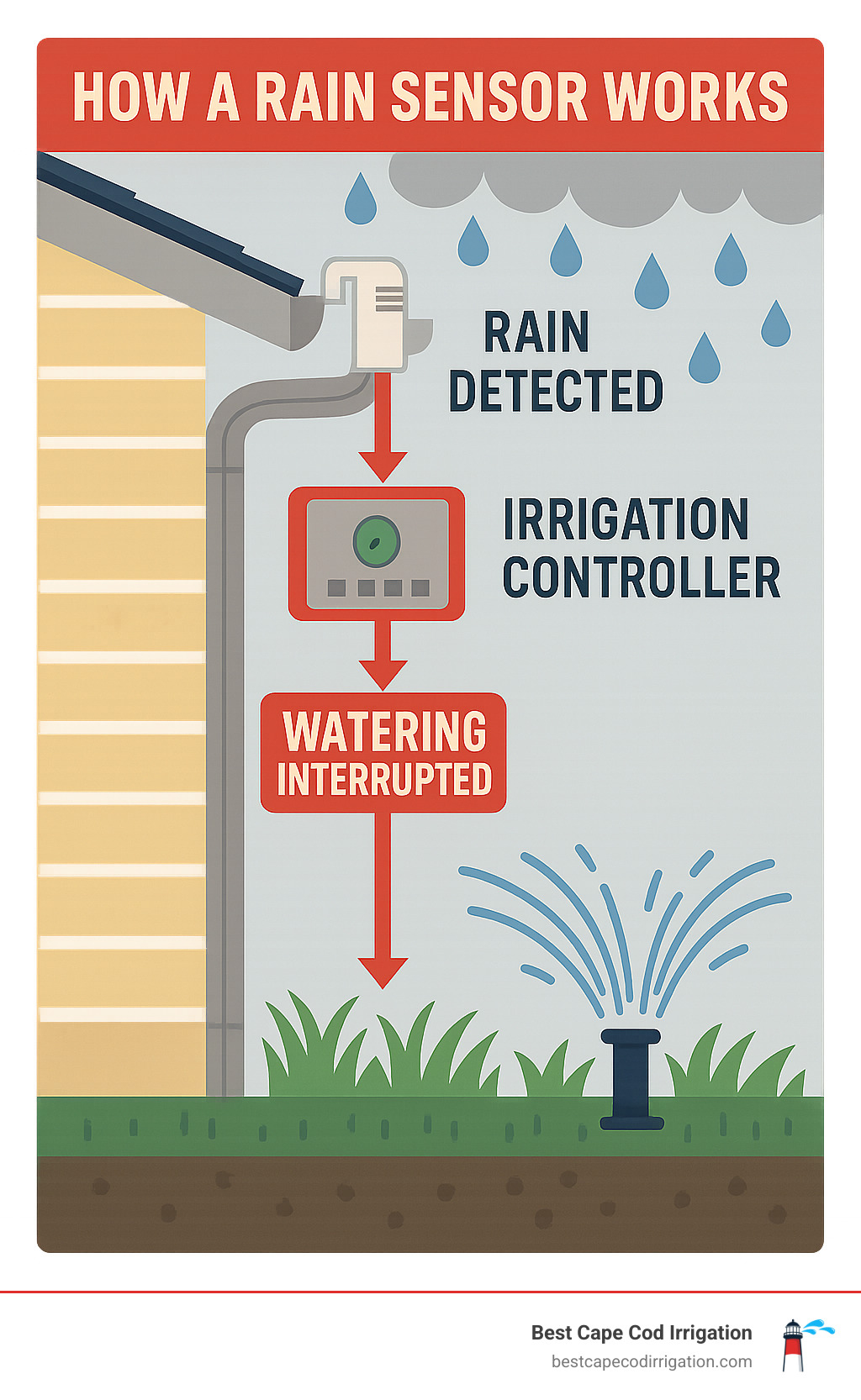
An irrigation system rain sensor is a small device that automatically shuts off your sprinklers when it rains. This simple upgrade prevents unnecessary watering, saving you water and money. By detecting moisture, the sensor interrupts the signal to your irrigation controller, pausing the watering schedule until it’s dry again.
Here’s what rain sensors do:
- Automatically stop watering when it rains
- Save up to 30% on your water bills
- Prevent overwatering that can damage your lawn’s root system
- Reset automatically when conditions dry out
- Work with most irrigation controllers
Seeing a sprinkler system running during a rainstorm is a frustrating waste of resources. On Cape Cod, where sandy soil drains quickly and summer storms are unpredictable, rain sensors help you avoid watering during downpours while protecting your lawn from the damage that overwatering causes.
Rain sensors can save thousands of gallons of water over a season for a typical lawn. With water costs rising, the savings add up quickly. More importantly for your lawn’s health, they prevent the root rot and fungal diseases that come from too much moisture in our challenging sandy soil.
Whether you have a basic timer or a smart controller, adding a rain sensor is one of the simplest upgrades for a more efficient, eco-friendly irrigation system.
Easy irrigation system rain sensors word list:
How Do Irrigation System Rain Sensors Actually Work?
Picture this: it’s 6 AM on a rainy Cape Cod morning, and your neighbor’s sprinklers are watering their already-soaked lawn. Meanwhile, your irrigation system rain sensor has quietly done its job, keeping your system off. But how does it know when to tell your sprinklers to take a break?
A rain sensor acts as a smart override for your irrigation system. It monitors for rainfall and, when it detects enough moisture, interrupts the electrical circuit to your sprinklers. This tells your system to pause its scheduled watering until conditions dry out.
Think of it as a temporary “off switch” that activates automatically. Your irrigation controller still runs its normal schedule, but the rain sensor politely says, “Hold on, we don’t need to water right now.” Once the sensor dries out, it restores the connection, and your system resumes its regular programming.
For homeowners with an automated sprinkler system who want to dive deeper, these Irrigation Control Diagrams | Rain Sensors show how these devices integrate with a controller.
The Technology Behind Water Conservation
Different irrigation system rain sensors use various methods to detect rainfall:
- Hygroscopic Disks: This is the most common technology. Cork or synthetic disks absorb rainwater and expand, which triggers a switch that breaks the electrical connection to the controller. As the disks dry, they shrink, and the system is allowed to run again. Most include an adjustable vent to control the drying time, which is perfect for Cape Cod’s varying humidity.
- Tipping Bucket: These sensors collect rainwater in a small, calibrated bucket. When enough rain accumulates, the bucket tips over, triggering the shutoff switch. This method is extremely accurate.
- Optical Sensors: These use infrared light beams. When water hits the sensor, it scatters the light, triggering the shutoff. They are incredibly sensitive and can detect rain almost instantly.
Many newer sensors also include freeze detection, which shuts down the system when temperatures drop near freezing. This protects your irrigation lines from ice damage and prevents creating hazardous icy patches on walkways.
Understanding Wired vs. Wireless Rain Sensors
Choosing between wired and wireless irrigation system rain sensors comes down to your setup and installation preference. Both are effective, but they have distinct advantages.
| Feature | Wired Sensors | Wireless Sensors |
|---|---|---|
| Cost | More affordable, typically $25 – $150. | Higher upfront cost, typically $75 – $300+. |
| Installation | Requires running a wire from the sensor to the controller, which can be complex. | Simple installation with no wires to run; ideal for DIY. |
| Reliability | Extremely reliable due to the direct physical connection. | Highly reliable with modern radio signals; requires battery changes every 3-5 years. |
| Placement | Limited by the ability to run a wire to an open area. | Highly flexible; can be placed up to 800 feet from the controller for optimal rain capture. |
Wired sensors connect directly to your irrigation controller. They are affordable and don’t require batteries, but installation can involve running wire through walls or attics.
Wireless sensors offer much more flexible installation. The sensor communicates with a receiver at the controller via radio frequency, allowing you to place it in the perfect spot for rain detection without worrying about cables. While they cost more, the convenience often makes them a popular choice.
Choosing the Right Rain Sensor for Your System
Finding the perfect irrigation system rain sensor for your Cape Cod property means matching the tool to the job. You need a device that is compatible with your controller, durable enough for our coastal weather, and adjustable to your lawn’s specific needs.
The most important factor is compatibility with your existing irrigation controller. Most modern sensors work with standard 24-volt systems, but it’s always smart to double-check. You’ll also want to consider durability—look for a sensor made of high-grade, UV-resistant materials that can withstand years of sun and storms.
Adjustability is another key consideration. A good rain sensor lets you customize when it activates and how long it stays off, which is crucial for managing Cape Cod’s sandy soil and varied landscape needs.
Key Features to Look For in an irrigation system rain sensor
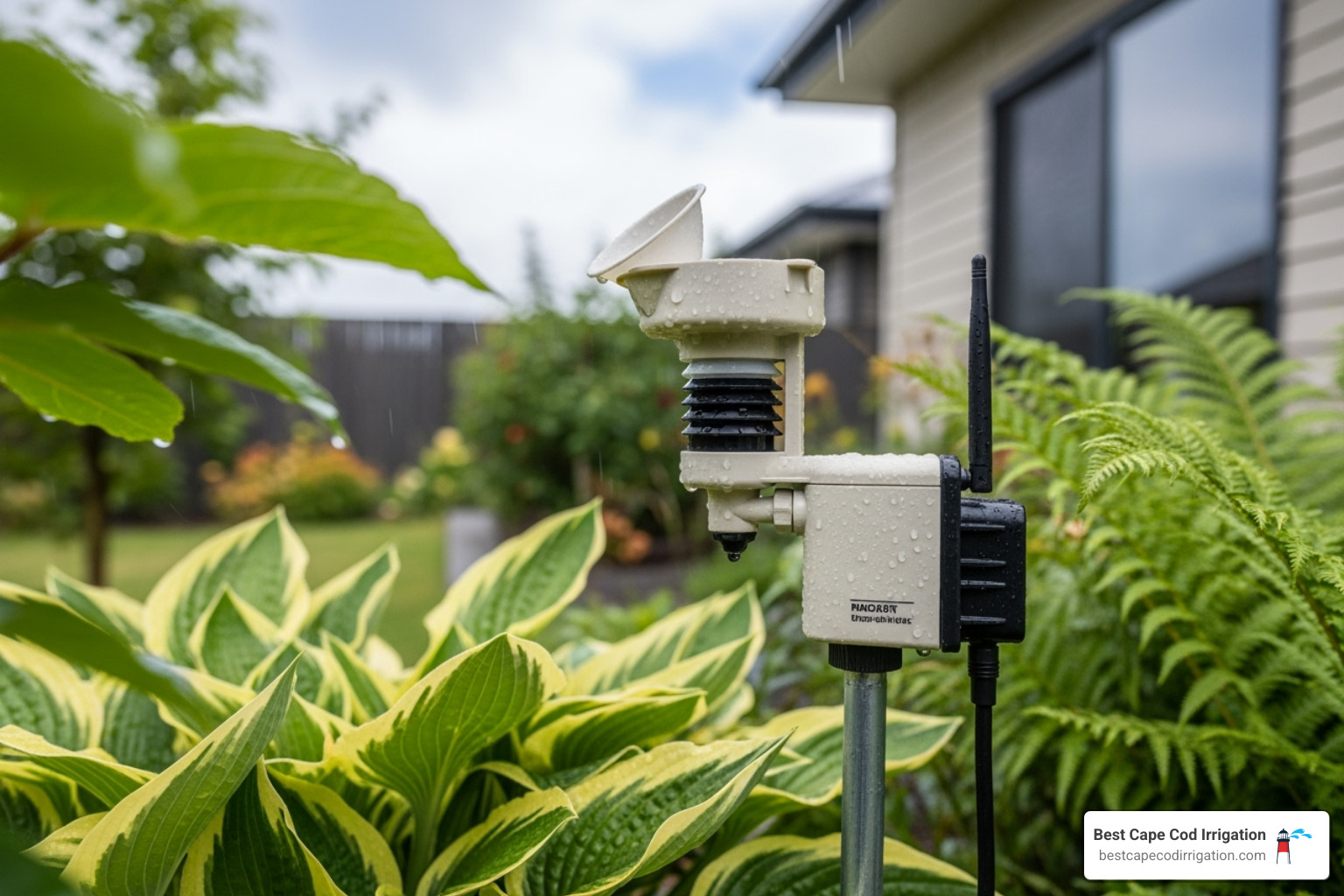
When shopping for a rain sensor, look for these features to improve your irrigation system’s efficiency:
- Adjustable Rainfall Settings: Quality sensors let you set the amount of rain (e.g., 1/8″ to 3/4″) that triggers a shutdown, allowing you to customize watering to your lawn’s specific needs.
- Adjustable Vent Ring: This feature on hygroscopic disk models controls how quickly the sensor dries out, giving you control over when your system resumes watering.
- Freeze Detection: Highly recommended for our climate, this feature automatically shuts off your system around 37°F to prevent ice damage and hazardous conditions.
- Durability and UV Resistance: Look for models made from high-grade polymers with solid warranties (some offer 5-10 years), ensuring a long service life.
- Universal Compatibility: Most sensors work with nearly all irrigation controllers, but it’s always wise to verify compatibility with your specific model.
- Manual Override: This handy feature lets you bypass the sensor to run your system for testing or maintenance.
What Is the Typical Cost?
The investment in an irrigation system rain sensor varies depending on the features and technology.
- Wired sensor costs typically range from $25 to $80+ for basic to feature-rich models.
- Wireless sensor costs generally run higher, from $75 to $250+ for advanced systems with features like freeze detection and extended range.
These are average costs based on internet data and not actual costs for our services, with prices varying widely based on features, brand, and whether you choose professional installation.
A quality rain sensor typically pays for itself within a season or two through water bill reductions. Given Cape Cod’s rising water costs, preventing even a few unnecessary watering cycles results in meaningful savings.
Installation, Maintenance, and Troubleshooting
Installing an irrigation system rain sensor can be a straightforward DIY project, but there’s no shame in calling professionals if you’re not comfortable with electrical wiring. A properly installed sensor is key to maximizing your water savings.
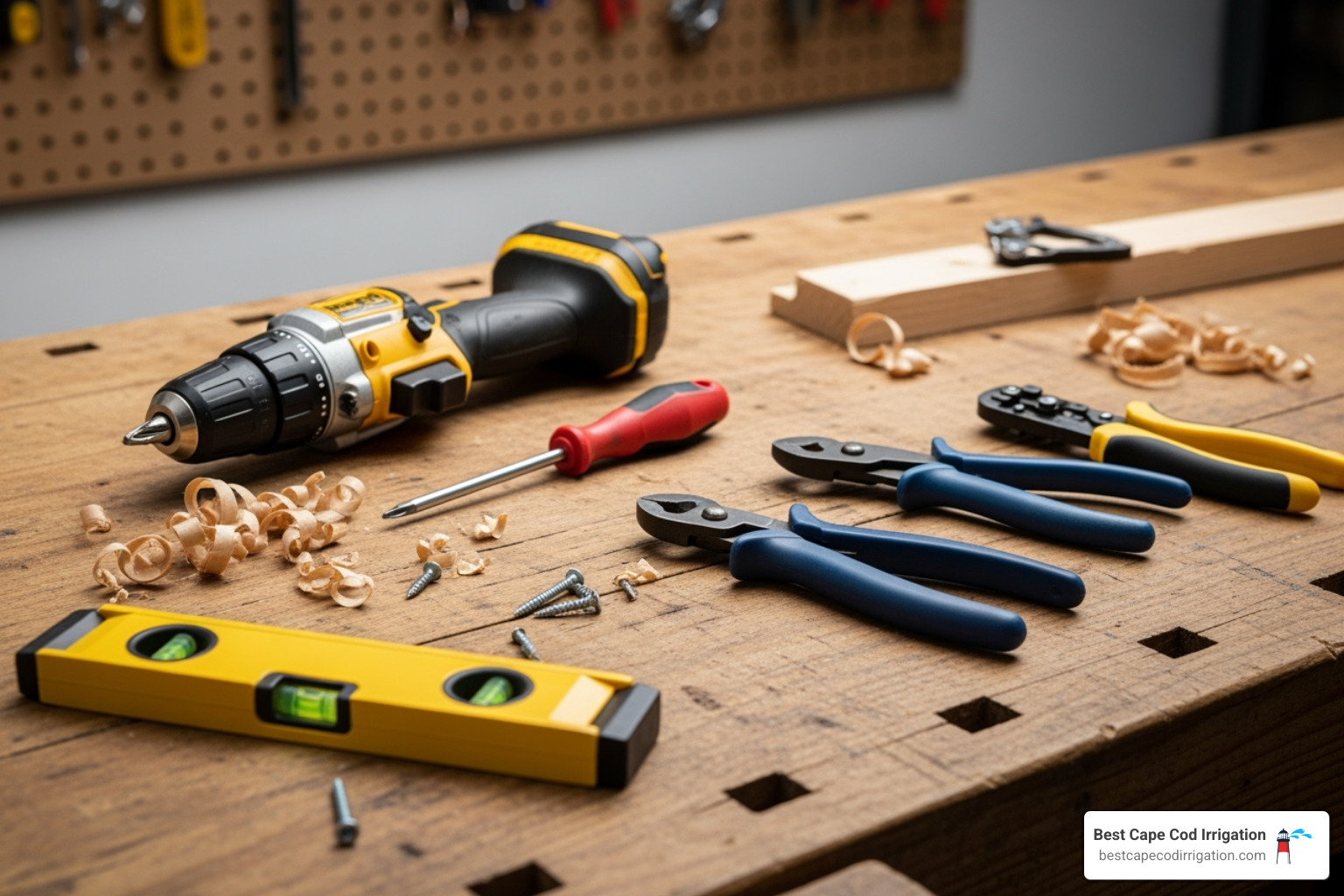
Most modern rain sensors are designed with the homeowner in mind, featuring clear instructions and universal compatibility. You’ll only need basic tools like a drill, screwdriver, and wire clippers/strippers.
A Step-by-Step Guide to Installation
Follow these steps to install your irrigation system rain sensor:
- Safety First: Always turn off the power to your irrigation controller before beginning.
- Find the Perfect Spot: Choose an open area that receives unobstructed rainfall. Avoid placing it under eaves, trees, or in the path of sprinkler spray. Popular spots include gutters, eaves, or fence posts. For wireless models, ensure it’s within the controller’s signal range.
- Mount the Sensor: Use the provided bracket and screws to secure the sensor firmly. Ensure it is level and upright for accurate readings.
- Connect to the Controller: For wired sensors, you’ll typically interrupt the common wire circuit. Disconnect the common wire from its terminal, connect one sensor wire to it, and the other sensor wire to the controller’s common terminal. For wireless sensors, the receiver unit wires in similarly, while the transmitter communicates wirelessly after a simple syncing process.
- Enable the Sensor: Many controllers require you to enable the rain sensor feature in the settings menu.
- Test Your Installation: Turn the power back on and manually start a zone. Simulate rain by spraying the sensor with water. The system should shut off within a few minutes. If it does, you’re all set! For more tips, check out our guide to water efficient sprinklers.
Common Troubleshooting Steps
Even reliable irrigation system rain sensors can have issues. Here are some common problems and solutions:
- System Won’t Turn On After Rain: The sensor may still be wet. Check that the sensor is dry and that the vent ring (if applicable) allows for airflow. If you have a freeze sensor, ensure temperatures are above the 37°F threshold.
- System Won’t Shut Off During Rain: Check the sensor’s location; it may be blocked from receiving rain by an overhang or vegetation. Also, ensure the sensor is clean—debris like leaves or spider webs can interfere with its function. Double-check that the wiring is secure and that the sensor feature is enabled on your controller.
- General Issues: For wired systems, inspect the wiring for breaks or corrosion. For wireless models, the battery may need replacing (they typically last 3-5 years). A gentle cleaning can often resolve mysterious behavior.
When in doubt, don’t hesitate to call us. With over 25 years of Cape Cod irrigation experience, we can solve any sensor mystery.
The Bigger Picture: Sustainability and Regulations
Installing an irrigation system rain sensor is a significant step towards sustainable landscaping. Every drop of water saved is a drop that stays in our groundwater system and doesn’t carry pollutants into Cape Cod’s delicate ponds and bays. We believe in creating healthy Cape Cod landscapes in an environmentally responsible way, and rain sensors are a key part of that mission.
How a rain sensor contributes to sustainable irrigation practices
The environmental benefits of irrigation system rain sensors extend far beyond your property line:
- Reducing Water Runoff: Overwatered lawns can’t absorb excess moisture, leading to runoff that carries fertilizers and pesticides into storm drains and local waterways.
- Protecting Local Water Sources: Cape Cod relies on a sole-source aquifer for its drinking water. Conserving water reduces the strain on this critical resource, especially during peak summer months.
- Conserving Energy: Your irrigation pump uses electricity. By preventing unnecessary watering cycles, rain sensors reduce energy consumption and lower your carbon footprint.
- Promoting Healthier Soil: Preventing waterlogged soil creates a better environment for beneficial microorganisms and promotes stronger, more drought-resistant root systems.
The irrigation industry recognizes these benefits through programs like the Smart Water Application Technologies (SWAT) initiative, which evaluates water-efficient products like Rain Sensors.
Are Rain Sensors Required by Law?
The push for water conservation has led some regions to mandate the use of irrigation system rain sensors, though regulations vary.
Some states, like Florida, have mandated rain sensors for all automatic irrigation systems for decades. Other states and local municipalities have followed suit, especially in water-stressed regions. You can find more information on regulations here: Does My State Require a Rain Sensor for Irrigation Systems?.
Here in Massachusetts and on Cape Cod, there is no statewide mandate for rain sensors. However, many local water districts and conservation groups strongly encourage their use, sometimes offering rebates or incentives. Installing a rain sensor is a simple way to demonstrate the environmental stewardship that is deeply valued in our community.
The trend is clearly moving toward more widespread adoption of these devices. Getting ahead of potential future requirements while enjoying immediate benefits makes a rain sensor a smart investment for any Cape Cod homeowner.
Frequently Asked Questions about Irrigation Rain Sensors
After 25+ years of installing irrigation system rain sensors on Cape Cod, we’ve heard every question. Here are answers to some of the most common ones.
Are rain sensors compatible with all irrigation systems?
Yes, the vast majority of irrigation system rain sensors are designed to be universally compatible with standard 24 VAC low-voltage controllers, which covers almost every residential system. They work by simply interrupting the common wire that controls your sprinkler valves.
While most modern systems use “normally closed” sensors, many sensors include a switch to work with older “normally open” controllers. We can always help you verify compatibility and choose the right sensor for your specific system.
Can a rain sensor be used with a smart controller?
Absolutely. In fact, they are the perfect team. A smart controller uses Wi-Fi to pull weather forecasts, but a rain sensor provides hyper-local, real-time data from your own yard. It acts as an immediate override if an unexpected shower pops up, ensuring your system never waters in the rain even if the forecast is wrong.
The two work together to create a seamless partnership that maximizes water savings. If you’re curious about upgrading, check out our smart sprinkler timer options.
How often do rain sensors need maintenance?
Irrigation system rain sensors are very low-maintenance. We recommend a simple annual check-up, ideally in the spring before the watering season begins.
- Clean away any debris like leaves, twigs, or spider webs that could interfere with the sensor’s operation.
- Check hygroscopic disks (if you have that type) to ensure they can move freely.
- For wireless models, check the batteries. They last several years, but an annual check prevents unexpected failures.
- Test the function by manually running a zone and spraying the sensor with water to confirm it shuts the system off correctly.
With this minimal care, your rain sensor will be a reliable partner in water conservation for years to come.
Make Every Drop Count with a Smarter System
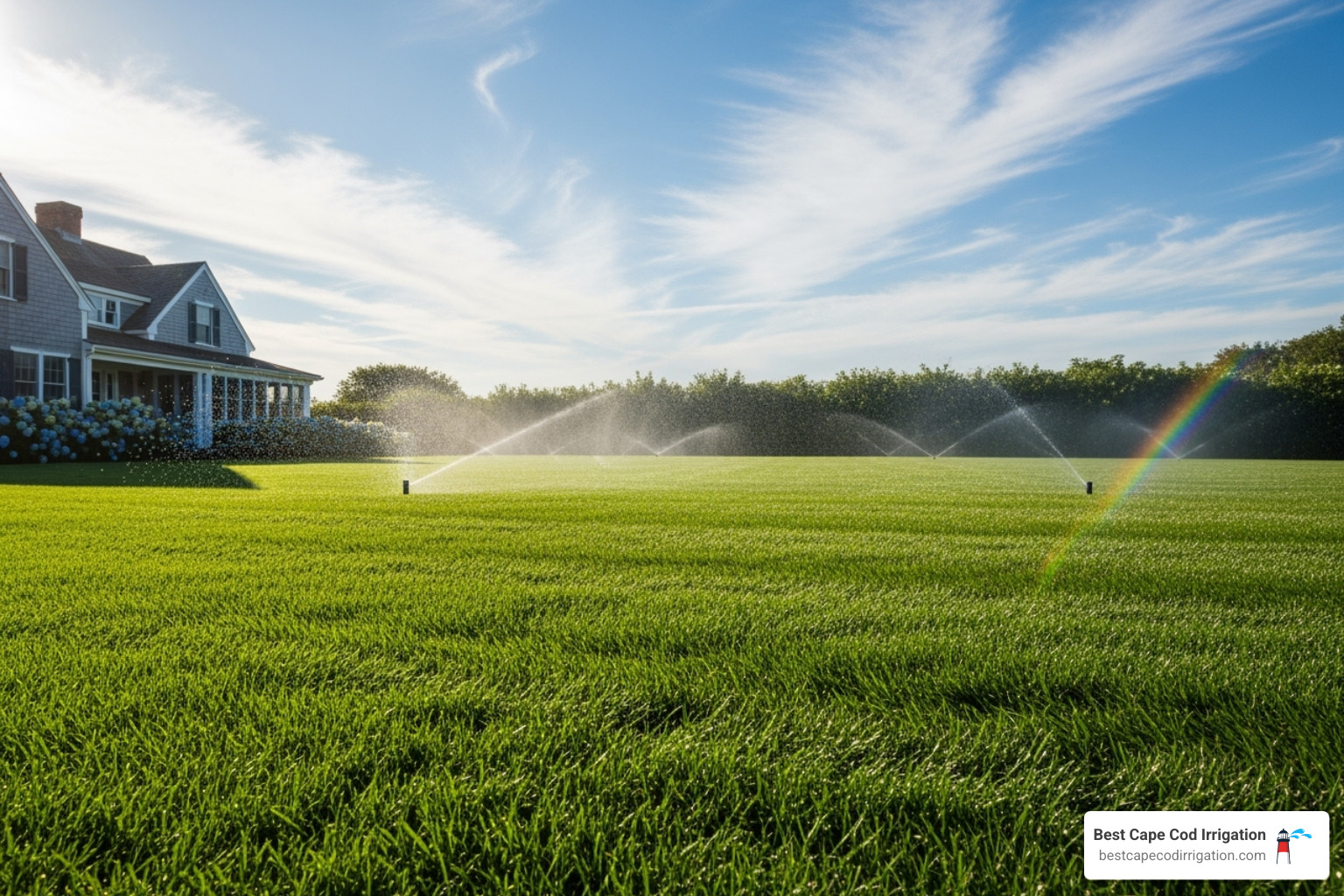
On Cape Cod, with our sandy soil and unpredictable summer storms, an irrigation system rain sensor is an essential tool for any homeowner. It’s a simple, effective way to manage the unique challenges of maintaining a healthy lawn while being a good steward of our precious water resources.
By automatically shutting off your irrigation when it rains, a sensor delivers powerful benefits:
- Water Conservation: You’ll save thousands of gallons annually, helping to preserve our local groundwater and protect Cape Cod’s natural beauty.
- Cost Savings: Lower water usage means lower monthly bills. With water costs on the rise, a sensor quickly pays for itself.
- A Healthier Lawn: Preventing overwatering is key to avoiding root rot and fungal diseases in our sandy soil, leading to a more vibrant, resilient lawn.
At Best Cape Cod Irrigation, we’ve spent over 25 years specializing in smart technology that takes the guesswork out of watering. We know what works in our unique local conditions and can give you the peace of mind that comes with a truly efficient system.
Ready to make your irrigation system work smarter, not harder? Let us help you integrate an irrigation system rain sensor and explore all the possibilities with our Smart Irrigation Solutions. Together, we can make every drop count for a greener, healthier Cape Cod.