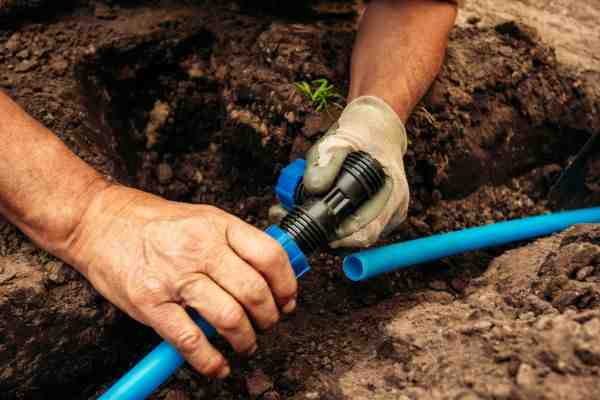



Why Irrigation Sprinkler Head Replacement Matters for Cape Cod Homeowners
Irrigation sprinkler head replacement is a key maintenance task for Cape Cod homeowners. Faulty heads can cause geysers, dry patches, or fail to pop up, but replacing them is often a quick fix to restore your lawn’s health.
Quick Answer: How to Replace a Sprinkler Head
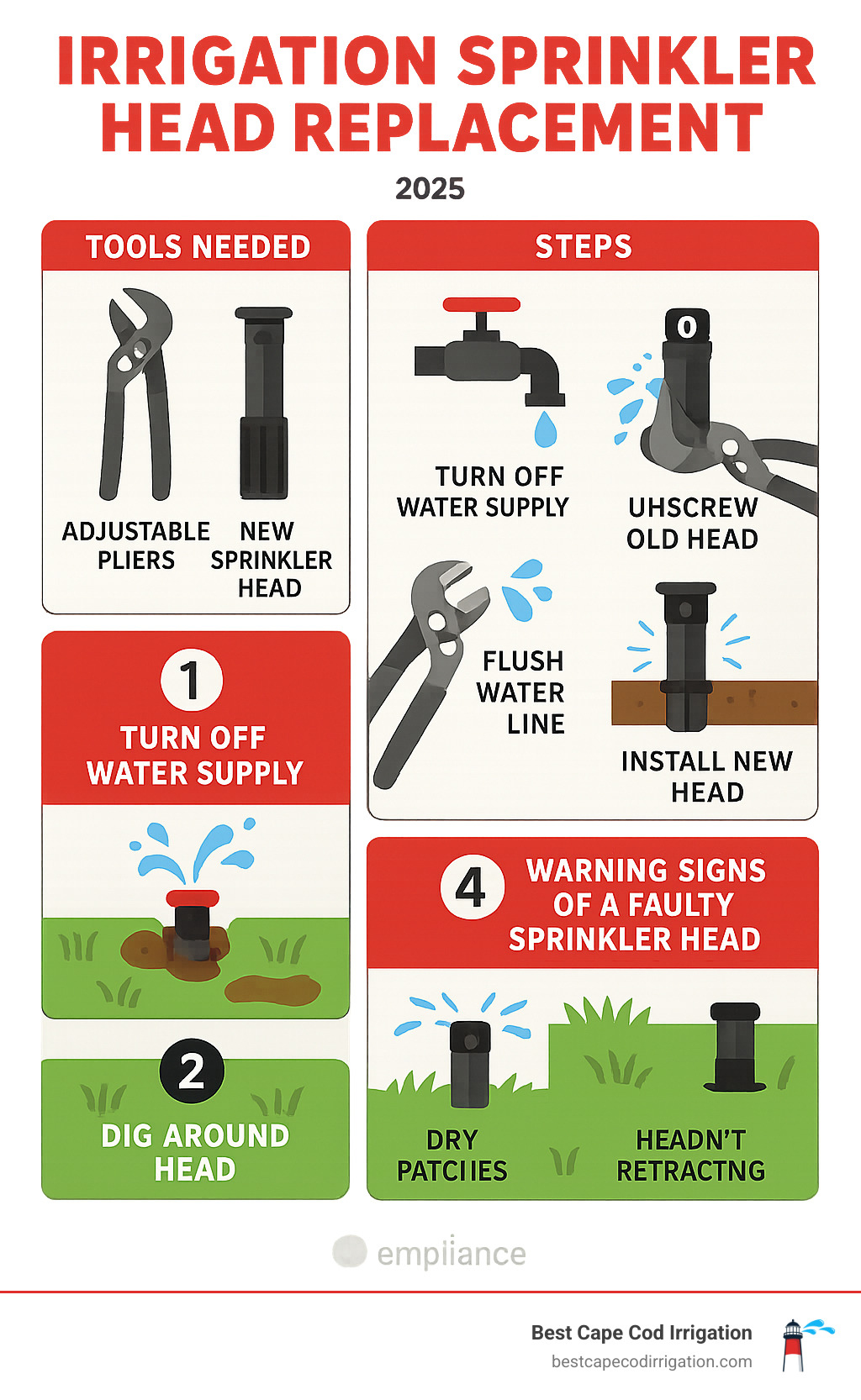
- Turn off the irrigation water supply.
- Dig around the broken head to expose the riser pipe.
- Unscrew the old head counter-clockwise.
- Flush the water line to clear debris.
- Install the new head by screwing it on clockwise (hand-tight only).
- Test for leaks and adjust the spray.
- Backfill the hole and replace the sod.
Cape Cod’s sandy soil and coastal weather are tough on sprinkler systems, causing components to wear out faster. The good news is that most sprinkler head replacements are easy DIY projects that take 20-30 minutes and cost between $6-$40 for basic heads.
A broken sprinkler head wastes water and increases utility bills. On Cape Cod, where water conservation is vital, a single malfunctioning head can waste hundreds of gallons per month.
Must-know irrigation sprinkler head replacement terms:
When and Why to Replace Your Sprinkler Head
If your sprinkler system is creating a water park on your lawn, it’s time for that irrigation sprinkler head replacement you’ve been delaying. Sprinkler heads don’t last forever, especially with Cape Cod’s salty air and sandy soil. Knowing when to replace a head can save water and money. Look for these common warning signs:
- Physical Damage: Cracks or broken plastic from lawnmowers or foot traffic are the most obvious signs. Once a head is cracked, replacement is the only option.
- Persistent Clogs: While nozzles can be cleaned, if they clog repeatedly, the internal filter or the nozzle itself is likely damaged and needs replacement.
- Worn-out Seals: Water leaking around the base of the head when it’s retracted or dripping constantly indicates failed seals, which wastes water and creates soggy patches.
- Mechanical Failure: Heads that fail to pop up, won’t retract after watering, or have a rotor that stops rotating are suffering from internal mechanism failure and must be replaced.
- Uneven Spray Patterns: If a head creates puddles in one area while leaving another dry, its nozzle is likely damaged, leading to inefficient watering.
- Low Head Drainage: On sloped areas, water seeping from the lowest heads after the system shuts off is a common problem. Replacing them with modern heads that have built-in check valves can solve this.
Recognizing these signs early is key. A single faulty head can waste hundreds of gallons of water a month. When you’re unsure if your system needs a simple fix or a more complex one, the professionals at Best Cape Cod Irrigation can help with comprehensive Lawn Irrigation Repair services.
Gearing Up: Tools and Parts for the Job
Organizing your tools and parts before starting an irrigation sprinkler head replacement will make the project smoother and faster. For most replacements, you only need a few items.
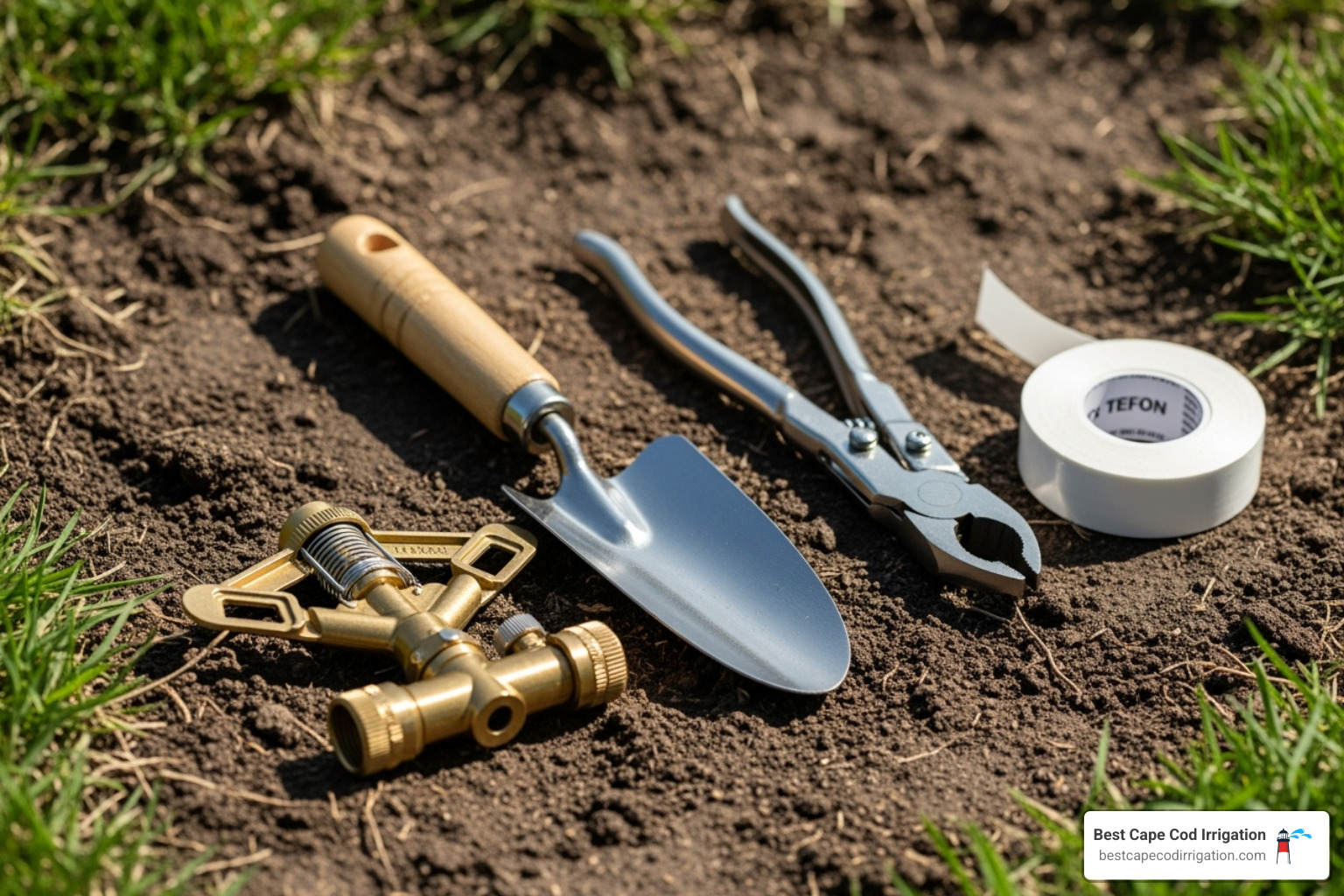
Essential Tools & Parts:
- New Sprinkler Head: The correct replacement part.
- Digging Trowel or Small Shovel: To carefully excavate soil.
- Adjustable Pliers or Wrench: To grip and unscrew the old head.
- Teflon Tape: To ensure a watertight seal on the new head.
- Bucket or Plastic Sheet: To hold excavated soil and keep your lawn clean.
Choosing the Correct Replacement Sprinkler Head
The golden rule of irrigation sprinkler head replacement is to match the specifications, not necessarily the brand. Your system was designed with specific water delivery rates, and using a mismatched head will throw off the balance of the entire zone.
- Identify the Type: Is it a pop-up spray head (fan-like spray) or a rotor head (rotating stream)? These types have different watering rates and cannot be mixed in the same zone.
- Match Critical Specs: Find a new head with the same precipitation rate, spray pattern (e.g., full circle, half circle), spray distance, and pop-up height.
- Confirm Connection Size: Most residential heads use a 1/2-inch or 3/4-inch threaded connection. This must match your existing pipe.
The easiest way to get this information is to read the model number and specs printed on the old head. If it’s unreadable, check another working head in the same zone or bring the old one to the store for a direct comparison. For homeowners looking to improve efficiency, we can offer guidance on Water Efficient Sprinklers.
The Complete Guide to Irrigation Sprinkler Head Replacement
Now let’s get to the “how.” An irrigation sprinkler head replacement is a satisfying DIY project that usually takes just 20-30 minutes. Follow these steps for a successful repair.

Step 1: Preparation and Safety
Before you dig, turn off the water supply to your irrigation system at the main shut-off valve. Next, use a trowel to carefully cut a circle of sod around the broken head, about 6-8 inches in diameter. Set the sod aside on a plastic sheet to keep the area tidy and make replacement easier.
Step 2: Exposing and Removing the Old Head
Carefully dig around the head until the vertical riser pipe and its connection to the sprinkler head are fully exposed. Be gentle to avoid damaging any underground lines. Grip the old head and unscrew it counter-clockwise. If it’s stuck, use adjustable pliers for extra leverage.
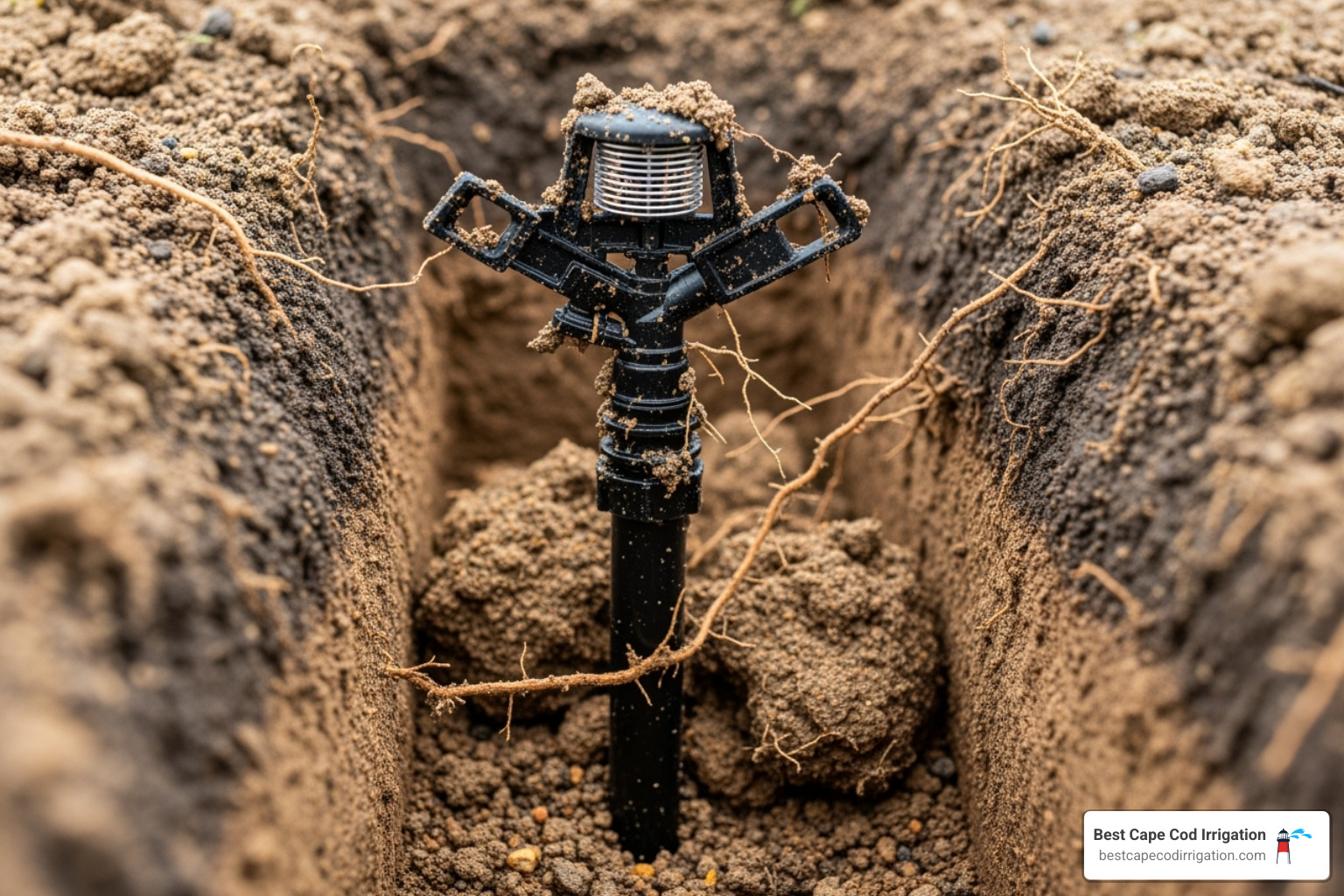
Step 3: Flushing the Line and Installing the New Head
This is the most critical step. Before installing the new head, briefly turn the water supply on for a few seconds to flush out any dirt, sand, or debris from the open pipe. This prevents your new head from clogging immediately. After flushing, wrap the riser’s threads 3-5 times with Teflon tape in a clockwise direction. Now, screw on the new head clockwise, but hand-tighten only. Over-tightening with a wrench can crack the plastic housing.
Step 4: Testing, Adjusting, and Backfilling
Slowly turn the water back on and check for leaks at the connection point. If you see significant leaking, turn the water off and re-apply the Teflon tape. Next, adjust the spray pattern and distance on the new head to ensure it provides proper coverage without watering sidewalks or driveways. Once you’re satisfied, backfill the hole with the soil you excavated, gently compacting it around the head. The top of the head should be level with the ground. Finally, replace the piece of sod you set aside and water it lightly to help it settle.
Advanced Troubleshooting and Maintenance
Mastering irrigation sprinkler head replacement is a great first step, but proactive maintenance is the key to a healthy system and a thriving Cape Cod lawn. Understanding the whole system helps prevent future problems.
How to Ensure Your New Sprinkler Head is Properly Adjusted
Installation is only half the battle; proper adjustment ensures efficiency.
- Set the Spray Arc: Adjust the left and right stops so water lands on your lawn, not your driveway or sidewalk.
- Adjust the Spray Radius: Use the small screw on top of the nozzle to control how far the water travels. The goal is to achieve head-to-head coverage.
- Ensure Head-to-Head Coverage: Each sprinkler should spray far enough to reach the adjacent heads in its zone. This overlap eliminates dry spots. For ultimate control, consider a Programmable Sprinkler system.
Signs of a Faulty Sprinkler Valve
Sometimes a problem that looks like a bad head is actually a faulty valve. Valves control the water flow to each zone. Watch for these signs:
- A Zone Won’t Turn On: The valve may be stuck closed or have an electrical issue.
- A Zone Won’t Shut Off: The valve is likely stuck open due to debris or a worn internal part.
- Constant Leaking Near Valve Box: A puddle around a valve box suggests a cracked valve or a loose fitting.
Valve repairs are more complex than replacing a head. If you suspect a valve issue, it’s best to call professionals for Sprinkler System Valve Repair.
Maintenance Tips to Extend Sprinkler Life
A little prevention goes a long way.
- Regular Cleaning: Periodically check heads and clean out filter screens to prevent clogs.
- Annual Checkups: During your Sprinkler System Spring startup and again mid-season, run each zone and look for problems.
- Winterization: This is critical on Cape Cod. Professional blow-out winterization prevents pipes and heads from cracking due to freezing water.
- Mower Awareness: Be careful when mowing or edging to avoid damaging sprinkler heads—the #1 cause of breakage.
When you need help beyond DIY, Seasonal Irrigation Maintenance professionals can keep your system at its best.
DIY vs. Professional Replacement: Costs and Considerations
When a sprinkler head breaks, you can either tackle the job yourself or call a professional. The right choice for your irrigation sprinkler head replacement depends on the problem’s complexity, your budget, and your available time.
The Cost of DIY Irrigation Sprinkler Head Replacement
The DIY route is very budget-friendly for simple replacements.
- Parts Cost: Basic spray heads typically cost $5 to $15, while rotor heads range from $15 to $40. High-end or commercial-grade heads can cost $100 or more. Please note that these are average costs based on internet data and not actual costs for Best Cape Cod Irrigation services.
- Tool Investment: If you don’t already own them, a trowel, pliers, and Teflon tape are a one-time investment of around $30-$50.
- Time Investment: Your first replacement might take an hour, but with practice, you can do it in 20-30 minutes.
When to Call a Professional
While a single head replacement is a great DIY project, it’s wise to call for professional help when you encounter more complex issues, such as:
- Multiple broken heads across different zones, which may signal a larger pressure problem.
- Suspected underground pipe leaks, indicated by soggy patches in the yard or a high water bill.
- System-wide low water pressure that isn’t fixed by replacing a single head.
- Electrical issues with the controller or wiring that prevent zones from activating.
For these situations, our team at Best Cape Cod Irrigation can quickly diagnose the root cause and perform the correct repair. Schedule Repairs with us for expert service and peace of mind.
Frequently Asked Questions about Sprinkler Head Replacement
With over 25 years of experience in irrigation sprinkler head replacement on Cape Cod, we’ve answered countless questions. Here are the most common ones.
Do I have to use the same brand for the replacement sprinkler head?
No, you don’t need to stick with the same brand. What’s most important is matching the specifications. Ensure the new head is the same type (rotor vs. spray), has a similar precipitation rate, and matches the spray pattern, pop-up height, and thread size of the old one. A different brand with the same specs will integrate seamlessly.
What’s the most common mistake when replacing a sprinkler head?
By far, the most common mistake is forgetting to flush the water line before installing the new head. When you remove the old head, dirt and sand can fall into the pipe. If you don’t flush it out, that debris will be forced directly into your new head, clogging it immediately. Always run water through the open line for a few seconds to clear it.
How do I know what size sprinkler head to buy?
Start by checking the old head for any printed model numbers or specifications. Markings like “4” (for a 4-inch pop-up) or pattern indicators like “180°” are your guide. If the markings are unreadable, the best approach is to bring the old head with you to the store. This allows you to find an exact match for the pop-up height and thread size (which is typically ½-inch or ¾-inch for residential systems).
Keep Your Cape Cod Lawn Green and Healthy
Congratulations on mastering irrigation sprinkler head replacement! This valuable skill puts you in control of your lawn’s health and helps you manage water bills. Promptly fixing a faulty head conserves water—a vital effort on Cape Cod—and ensures your lawn receives even coverage for lush, healthy growth.
Proper irrigation prevents the soggy spots that invite pests and the dry patches that ruin your lawn’s appearance. It promotes stronger roots and a beautiful, resilient green space.
However, some sprinkler problems go beyond a simple head swap. If you’re dealing with system-wide low pressure, multiple broken heads, or electrical issues, it’s time to call in an expert. At Best Cape Cod Irrigation, we specialize in custom, eco-friendly systems designed for our unique coastal conditions.
For complex repairs, a complete system check-up, or professional advice, we’re here to help keep your Cape Cod lawn looking its best. Contact us today for all your Irrigation Repairs & Maintenance needs.