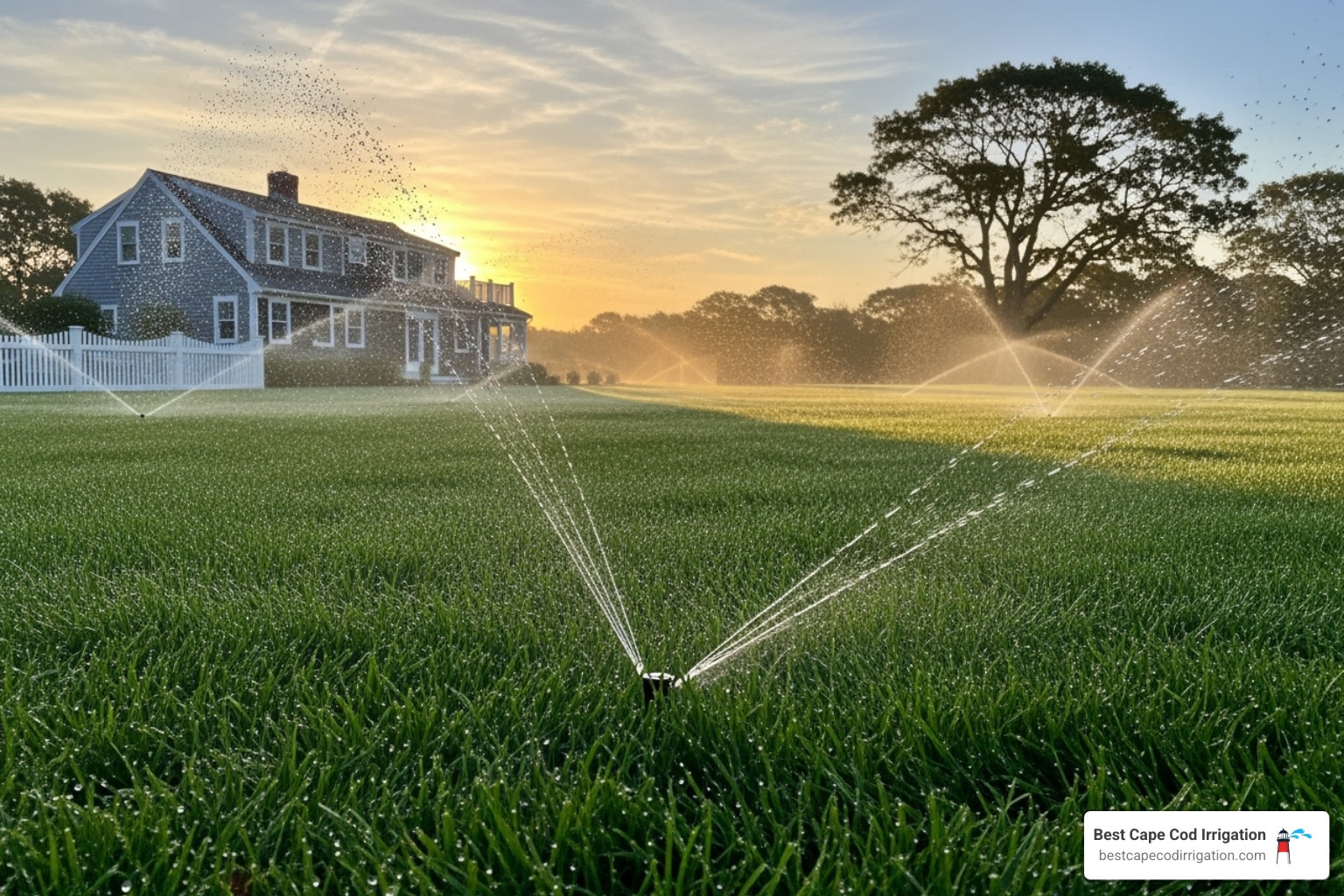



Your Path to a Perfect Lawn: Understanding Irrigation Installation
Are you wondering how are irrigation systems installed? Many homeowners dream of a lush, green lawn, especially here on Cape Cod. But between our sandy soil, unpredictable weather, and your busy schedule, manual watering can feel like a never-ending chore.
An irrigation system takes the hassle out of watering. It delivers water precisely where your plants need it. This saves you time, conserves water, and boosts your property’s value. It’s an excellent investment for a healthier, thriving landscape.
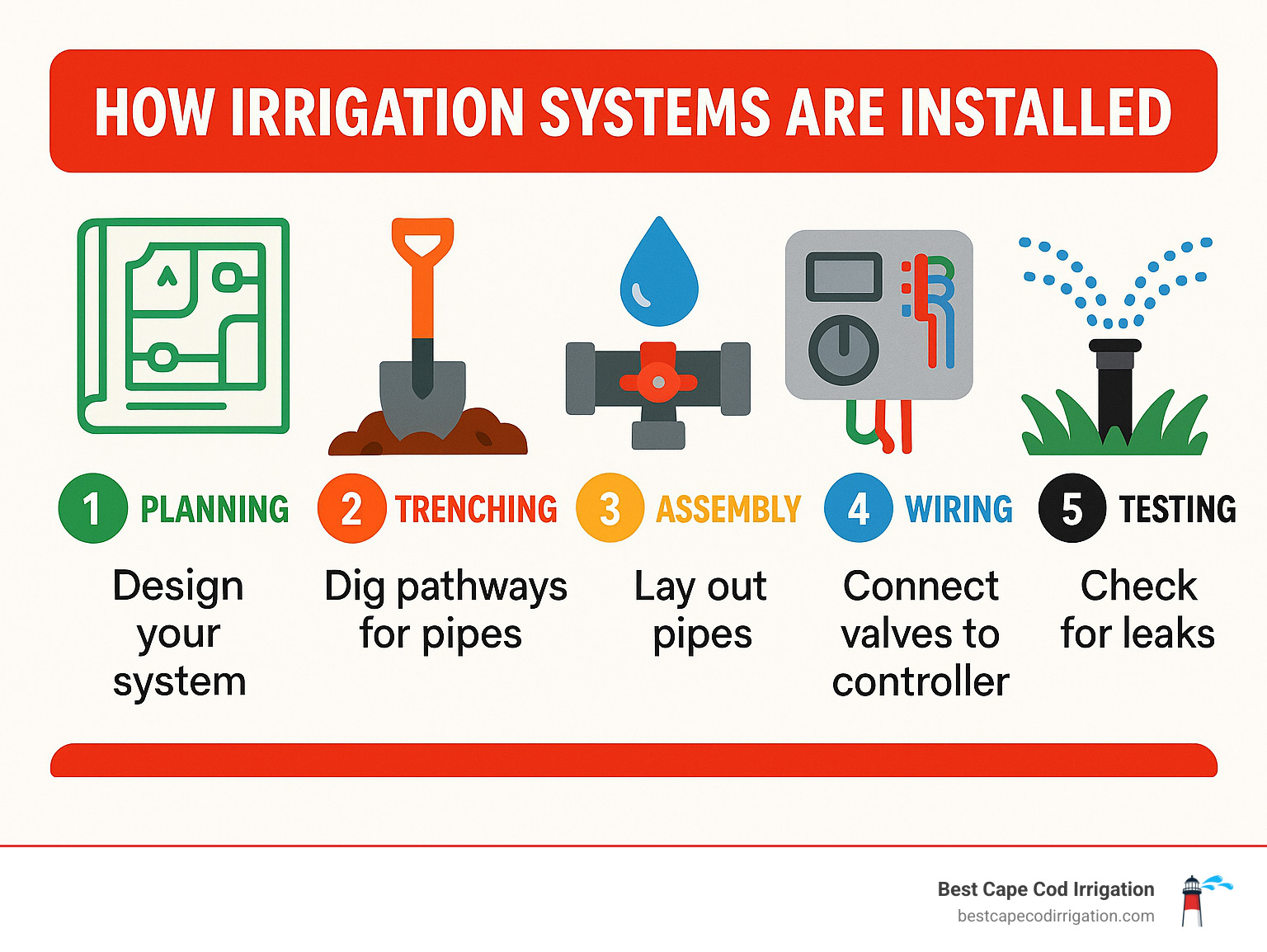
To give you a quick overview, here are the main stages of installing an irrigation system:
- Planning: Design your system, mark locations, and assess your water supply.
- Trenching: Dig pathways for pipes, carefully avoiding utilities.
- Assembly: Connect to your water source, build valve manifolds, and lay out pipes.
- Wiring: Connect valves to a controller and set up your watering schedule.
- Testing: Check for leaks, adjust sprinklers, and fine-tune your system.
Ready to learn more? This guide will walk you through each step.
Essential how are irrigation systems installed terms:
Pre-Installation Planning: Your Blueprint for Success
Before we even think about digging, the most critical phase of any irrigation project is meticulous planning. Think of it as drawing the roadmap for your future green oasis. A well-thought-out plan saves water, prevents costly mistakes, and ensures your system works efficiently for years to come.
Our journey begins by thoroughly evaluating your yard. We’ll measure the entire area, sketching out its unique features like buildings, sidewalks, existing landscaping, and even changes in elevation. This detailed map helps us visualize where pipes will run and where each sprinkler head will be positioned for optimal coverage.
Next, we need to understand your home’s water supply. This involves measuring your water pressure, typically expressed in pounds per square inch (PSI). Most homes have water pressure between 40 PSI and 70 PSI. We’ll also determine your water flow rate, measured in gallons per minute (GPM). A sprinkler system typically requires at least 30 to 35 PSI of pressure and about 10 to 13 GPM of water flow. Knowing these numbers is crucial because they dictate how many sprinkler heads can operate simultaneously in a single zone without compromising performance.
Considering the unique characteristics of your soil, especially our sandy soil here on Cape Cod, is also vital. Sandy soil drains quickly, requiring different watering approaches compared to loamy or clay soils. We also map out sun exposure, identifying areas that receive full sun versus those that are mostly shaded. This allows us to create specific watering zones custom to the needs of different plants and grass types, ensuring no area is over or underwatered.
Finally, we always check local permits and codes. These regulations might cover everything from backflow prevention device requirements (which are often mandatory to protect your drinking water supply) to pipe burial depths. And before any digging commences, we always call 811, the utility marking service. This free service ensures that all buried utility lines – gas, electric, communication, and water – are marked, preventing accidental and potentially dangerous damage. If you’re considering a Professional Sprinkler Installation, we handle all these planning steps for you.
Understanding System Components
To truly understand how are irrigation systems installed, it’s helpful to know the key players in your watering orchestra:
- Controller/Timer: This is the brain of your system. It’s a programmable device that tells your irrigation system when to turn on, how long to run, and which zones to water. Modern controllers can be incredibly smart, integrating with weather data or even controlled via smartphone apps.
- Valves: These are the gatekeepers of your water. A master valve controls the main water flow to the entire system, preventing leaks when the system is off. Zone valves direct water to specific areas or “zones” of your yard. They are typically housed in a valve box, which keeps them protected underground and allows for easy access. Standard rectangular valve boxes can comfortably hold up to four valves.
- Backflow Preventer: This essential safety device is often mandated by local codes. It prevents contaminated water from your irrigation system (containing fertilizers or pesticides) from flowing back into your home’s potable water supply.
- Pipes: These are the arteries of your system. Common materials include PVC (polyvinyl chloride), known for its rigidity and durability, and Poly (polyethylene), which is more flexible and often preferred in colder climates due to its resistance to freezing. Main sprinkler lines should generally be one size larger than your home’s water main supply line to ensure adequate flow. Header lines should not use pipe smaller than 1 inch, and lateral lines should not use pipe smaller than 3/4 inch.
- Sprinkler Heads: These are the “sprayers” of your system. They come in various types, each suited for different applications:
- Rotor heads: Gear-driven, they spray a single stream of water in a rotating pattern, covering large areas. They can spray a distance ranging from 8 to 65 feet.
- Pop-up spray heads: These heads pop up when water pressure is applied and spray a fixed pattern (like a fan or square). Fixed pop-up heads spray about 10 feet.
- Impact sprinkler heads: The classic “click-click-click” heads, often used for larger areas, reaching 15 to 30 feet.
- Drip Emitters: Small devices that deliver water slowly and directly to the plant’s root zone, ideal for garden beds, shrubs, and potted plants. Each bubbler can only irrigate an area of about 3 square feet. Emitters are typically spaced 12-18 inches apart.
- Risers: Short pipes that connect sprinkler heads to the underground lateral lines, allowing the heads to pop up above ground level. Flexible “swing pipe” is often used here for easier positioning and to absorb impact, preventing damage to the main pipe.
Here’s a quick comparison of common sprinkler heads:
| Sprinkler Head Type | Coverage Area | Water Usage | Best Application |
|---|---|---|---|
| Rotor | Large areas (15-65 ft radius) | Moderate-High | Large lawns, open spaces, commercial properties |
| Pop-up Spray | Small-Medium areas (5-18 ft radius) | High (per area) | Small lawns, irregularly shaped areas, corners |
| Drip Emitter | Very localized (3 sq ft per emitter) | Very Low | Garden beds, shrubs, trees, potted plants, vegetable gardens |
How are Irrigation Systems Installed? The Step-by-Step Process
With our comprehensive plan in hand and all the necessary components ready, we’re now ready to get our hands dirty and tackle the physical installation. This is where the magic truly happens, changing your yard into an efficiently watered landscape.
Site Prep and Trenching
Our first step on site is to accurately transfer your detailed plan onto your lawn. We’ll use stakes, flags, or spray paint to clearly mark the proposed routes for all pipes and the exact locations for each sprinkler head and valve box. This visual guide ensures we stick to the design and avoid any surprises.
Next comes the trenching. For most residential sprinkler systems, pipes are typically buried between 6 to 12 inches deep. This depth helps protect the pipes from surface damage from foot traffic, lawn equipment, and temperature fluctuations. While a shovel can be used for smaller, simpler systems, for larger projects, we often use a trenching machine. These machines make quick work of digging narrow, clean trenches, significantly speeding up the process.
A common challenge arises when pipes need to cross under existing walkways or driveways. Rather than tearing up hardscaping, we can bore or tunnel underneath. One effective DIY method involves using a PVC pipe with a hose and a jet spray nozzle to ‘drill’ with water pressure. For larger or more complex obstructions, specialized boring tools are employed. Throughout this entire process, our vigilance for utility lines marked earlier by 811 is paramount – digging carefully around them by hand when necessary.
Connecting the Water Supply and Manifold
Connecting your new irrigation system to your home’s water supply is a critical step. This usually involves temporarily shutting off the main water supply to your house. We then tap into the main water line, typically near an outdoor spigot or directly from the service line. This often involves cutting into the existing pipe and installing a tee fitting. While many DIY enthusiasts tackle this, if you’re uncomfortable with plumbing, it’s always wise to consult a licensed plumber.
Immediately following the connection to the main water supply, we install the backflow preventer. This device is non-negotiable and legally required in most municipalities to safeguard your potable water from contamination. After the backflow preventer, we assemble the valve manifold. This is where your zone valves are grouped together, creating a central hub for water distribution. We ensure there’s enough space between each valve for easy access, maintenance, or future replacement.
Laying Pipes and Installing Emitters
With the trenches dug and the water supply connection ready, we begin laying out the pipes. We carefully unroll or place the main and lateral lines into the prepared trenches, following the design plan. For PVC pipes, we cut straight, smooth edges, then apply primer and PVC cement to join sections. A quick quarter-turn twist ensures a strong, sealed connection. For polyethylene (poly) pipes, which are more flexible, we use barbed fittings and clamps to secure connections.
Before attaching any sprinkler heads or drip emitters, it’s crucial to flush the entire system. We turn on the water and allow it to run through each zone, clearing out any dirt, debris, or plastic shavings that may have entered the pipes during installation. This prevents clogs and ensures your heads operate properly.
Once flushed, we attach the sprinkler heads. For pop-up heads, we often use flexible swing joints or “funny pipe” to connect them to the lateral lines. This allows for easy height adjustment and helps prevent damage if a head is accidentally stepped on or run over. We position each head precisely, ensuring it’s vertical and at the correct height. For drip emitters, we use a hole punch tool to create small openings in the main drip line, then insert barbed connectors and attach the individual emitters, positioning them directly at the base of the plants for targeted watering. For more detailed guidance, check out our Drip Irrigation System Installation guide.
Wiring, Programming, and Final Testing
The physical infrastructure is in place, but now we need to bring your irrigation system to life with its electrical system and intelligent programming. This phase ensures your system runs automatically and efficiently.
How are irrigation valves wired and programmed?
Each zone valve needs to be connected to the controller. This is done using low-voltage electrical wire, typically 24-volt, designed for underground burial. We run a common wire (usually white) from the controller to all valves, and then individual colored wires from the controller to each specific zone valve. These wires are carefully routed and protected within the trenches and valve boxes.
The controller itself is usually mounted on a wall in a garage, utility room, or outdoor shed. Once wired, we program the controller. This involves setting up specific watering schedules for each zone, including start times, run durations, and watering days. For instance, a sunny lawn zone might need more frequent watering than a shaded garden bed. We also recommend integrating a rain sensor. This clever device detects rainfall and temporarily shuts off your system, preventing unnecessary watering and conserving precious resources.
Final Checks and System Activation
Before backfilling all those trenches, we perform a thorough, zone-by-zone test of the entire system. We activate each zone from the controller, carefully inspecting for any leaks at connections, fittings, and sprinkler heads. Any leaks are immediately addressed and repaired.
During this testing phase, we also adjust the spray patterns and arcs of each sprinkler head. The goal is “head-to-head coverage,” meaning the spray from one head reaches the next head in the zone. This ensures uniform water distribution and eliminates dry spots. We also make sure all pop-up heads are flush with the ground when retracted, preventing tripping hazards and damage from lawnmowers.
Only once we are completely satisfied with the system’s performance – no leaks, perfect coverage, and all heads operating correctly – do we begin the final step: backfilling the trenches. We carefully return the excavated soil, tamping it down gently to avoid disturbing the pipes and heads. This step hides the system, restoring your yard to its pristine condition, ready to be watered automatically.
Costs, Challenges, and Advanced Technology
Now that you understand how are irrigation systems installed, let’s talk about the practical side of things – what you can expect to invest, what challenges might pop up, and how modern technology can make your system even better. For more details on getting your system up and running, visit our Irrigation System Set Up page.
DIY vs. Professional Installation: A Cost Breakdown
One of the first questions homeowners ask about how are irrigation systems installed is “what’s this going to cost me?” The answer depends largely on whether you roll up your sleeves and do it yourself or bring in the pros.
If you’re considering the DIY route, you’re looking at material costs typically ranging from $500 to $2,500, plus tool rentals for equipment like trenchers. A basic two-zone system might run you anywhere from $1,000 to $4,500 in materials alone, depending on the quality of components you choose and your property’s complexity.
But here’s the catch – time is money too. A DIY sprinkler installation typically demands 16 to 20 hours of your weekends, and that’s assuming everything goes smoothly. No surprise tree roots, no mystery utility lines, no “why won’t this valve work?” moments at 6 PM on a Sunday.
Professional installation brings specialized equipment, years of experience, and the peace of mind that comes with knowing your system is designed specifically for Cape Cod’s unique sandy soil and coastal conditions. While the upfront investment is higher, you’re paying for expertise that can save you from costly mistakes and future headaches.
Average Costs Disclaimer: Please note, cost estimates like a two-zone system ranging from $1,000 to over $4,500 are based on general internet data and vary widely based on property size, complexity, and region. They are not a quote for services.
Even the best-planned installations can hit some bumps along the way. Erratic water pressure might leave some areas of your lawn looking like a desert while others resemble a swamp – pressure regulators or booster pumps can solve this. Pipe leaks often rear their heads just after you’ve backfilled those trenches, usually from rushed connections or damaged pipes during installation. Electrical malfunctions can leave you scratching your head when zones refuse to turn on, while clogged emitters and heads from construction debris can turn your perfect spray patterns into sad little dribbles. The key is thorough testing at every step and not rushing the process.
How are irrigation systems installed with smart technology?
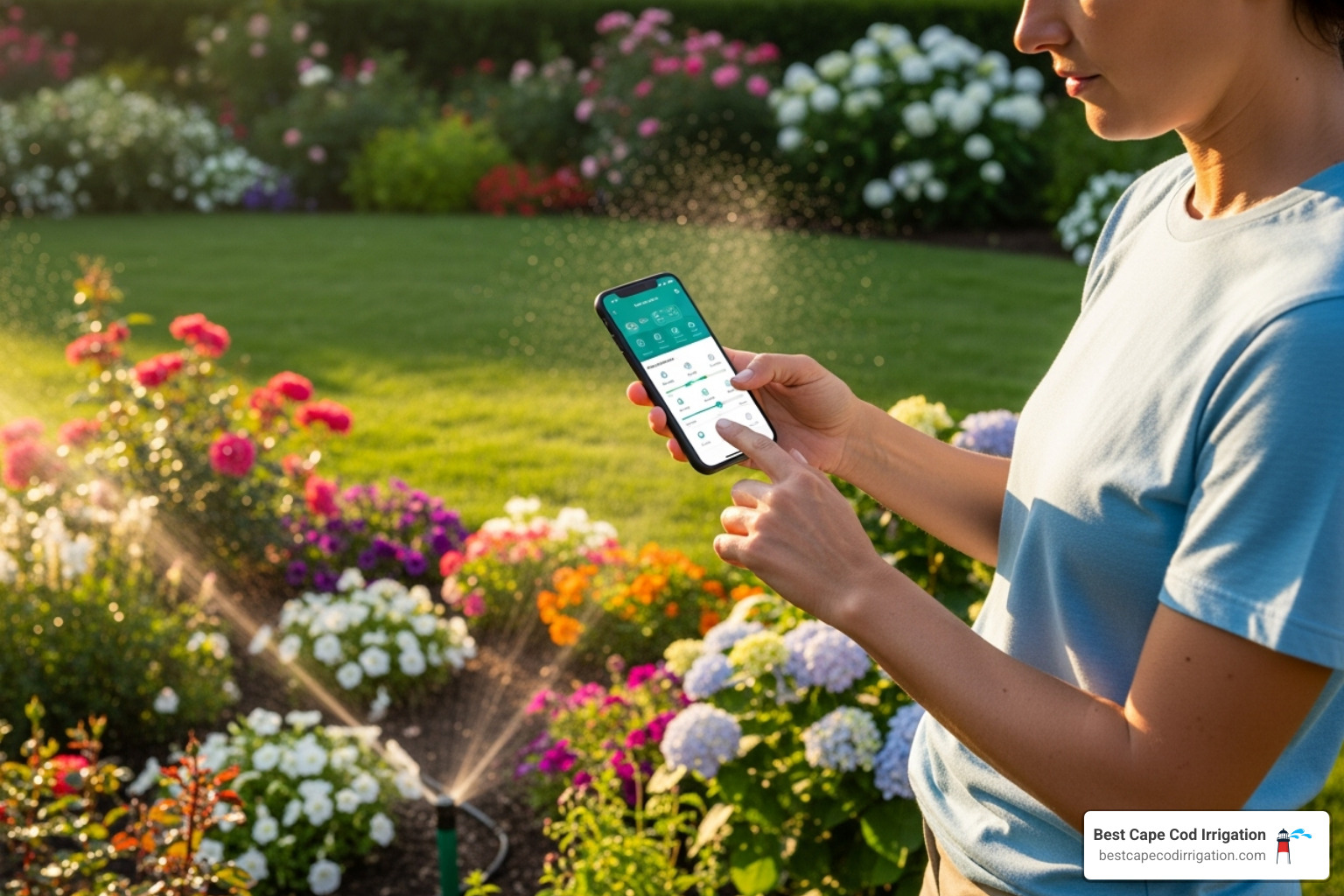
Here’s where things get exciting – modern irrigation systems are getting seriously smart. Gone are the days of basic timers that water your lawn during a thunderstorm. Today’s smart controllers with Wi-Fi connectivity let you manage your entire system from your smartphone, whether you’re at work or vacationing on the Vineyard.
But the real game-changer is weather-based smart technology. These controllers automatically adjust your watering schedule based on real-time local weather data. Rain in the forecast? Your system knows to skip that morning watering. Unseasonably hot week? It’ll bump up the schedule to keep your grass happy.
Even more impressive are soil moisture sensors that actually measure how much water is in your soil. No more guessing games – these sensors only trigger watering when your plants actually need it. Some systems even send you alerts if there’s a problem, like a broken sprinkler head or a leak.
The best part? All this smart technology doesn’t just make your life easier – it can save you hundreds of gallons of water per day. That means lower water bills and the good feeling that comes with being environmentally responsible. Learn more about Smart irrigation technology from Rain Bird and find how these systems can transform your watering routine.
Frequently Asked Questions about Irrigation System Installation
After helping hundreds of Cape Cod homeowners understand how are irrigation systems installed, we’ve noticed the same thoughtful questions come up time and again. Let’s explore the most common concerns we hear.
How deep should irrigation pipes be buried?
Here’s something that surprises many homeowners: irrigation pipes are typically buried just 6 to 12 inches deep. That might seem shallow, but it’s actually the sweet spot for protection and accessibility. This depth shields your pipes from lawn aeration equipment, light digging projects, and those inevitable temperature swings we experience here on the Cape.
However, don’t assume this depth works everywhere. Your local building codes might have different requirements, especially if you live in an area with particularly deep frost lines. In colder regions, pipes sometimes need to go deeper to prevent freezing damage.
The good news? Most Cape Cod systems work perfectly at the standard depth, though proper winterization – draining or blowing out all water before winter – is still essential to keep everything running smoothly year after year.
Can I mix different types of sprinkler heads in one zone?
This is one of those questions that seems logical at first but can lead to real headaches down the road. We strongly recommend against mixing different sprinkler head types – like rotors and pop-up sprays – within the same watering zone.
Here’s why: each type of sprinkler head has its own precipitation rate, which is just a fancy way of saying they deliver water at completely different speeds and coverage patterns. When you mix them, some areas of your lawn will get drenched while others barely get a drink.
The result? You’ll end up with those frustrating brown patches next to overly soggy spots, no matter how much you adjust your watering schedule. For a healthy, evenly green lawn, group similar head types together in their own dedicated zones. Your grass will thank you for the consistency.
What is a backflow preventer and why is it important?
A backflow preventer might not sound exciting, but it’s honestly one of the most important safety features of your entire irrigation system. Think of it as a one-way valve that keeps contaminated water from flowing backward into your home’s drinking water supply.
Why does this matter? Your irrigation system comes into contact with fertilizers, pesticides, and all sorts of ground pollutants that you definitely don’t want in your morning coffee. Without a backflow preventer, changes in water pressure could potentially suck this contaminated water back into your clean water lines.
Most municipalities don’t just recommend backflow preventers – they legally require them on all irrigation systems. It’s a non-negotiable safety feature that protects both your family and the broader community’s water supply. While it might seem like just another component to install, it’s actually your peace of mind in a small metal housing.
Conclusion
Installing an irrigation system is truly one of the smartest investments you can make for your property. Not only does it free up countless hours of your weekend (no more dragging hoses around!), but it also ensures your lawn and gardens get consistent, proper watering that manual methods simply can’t match.
Understanding how are irrigation systems installed gives you valuable insight into what’s involved, whether you’re considering tackling it yourself or hiring professionals. A DIY installation can be incredibly rewarding – there’s something satisfying about seeing your carefully planned system come to life. However, it’s also a complex project that demands careful attention to detail, from proper trenching depths to precise valve wiring.
The reality is that a successful irrigation installation requires getting dozens of details right. Water pressure calculations, proper pipe sizing, correct sprinkler head spacing, and smart controller programming all need to work together seamlessly. One miscalculation can lead to dry spots, overwatering, or system failures down the road.
Here on Cape Cod, we face unique challenges that make local expertise especially valuable. Our sandy soil drains differently than other regions, our coastal climate brings salt air concerns, and our seasonal weather patterns require specific programming approaches. A system that works perfectly in suburban Boston might struggle with our Cape Cod conditions.
That’s where the experience of Best Cape Cod Irrigation makes all the difference. With over 25 years of working exclusively in our local conditions, they understand exactly how to design and install systems that thrive in our environment. They know which sprinkler heads work best with our soil, how to program controllers for our climate, and how to integrate smart technology for maximum efficiency.
Whether you choose the DIY route or professional installation, the end result is the same: a beautiful, healthy landscape that practically takes care of itself. Your mornings can be spent enjoying coffee on the deck instead of moving sprinklers, and your evenings are free for family time rather than watering duties.
Ready to transform your property with a professionally designed system? Learn more about our expert irrigation installation services.