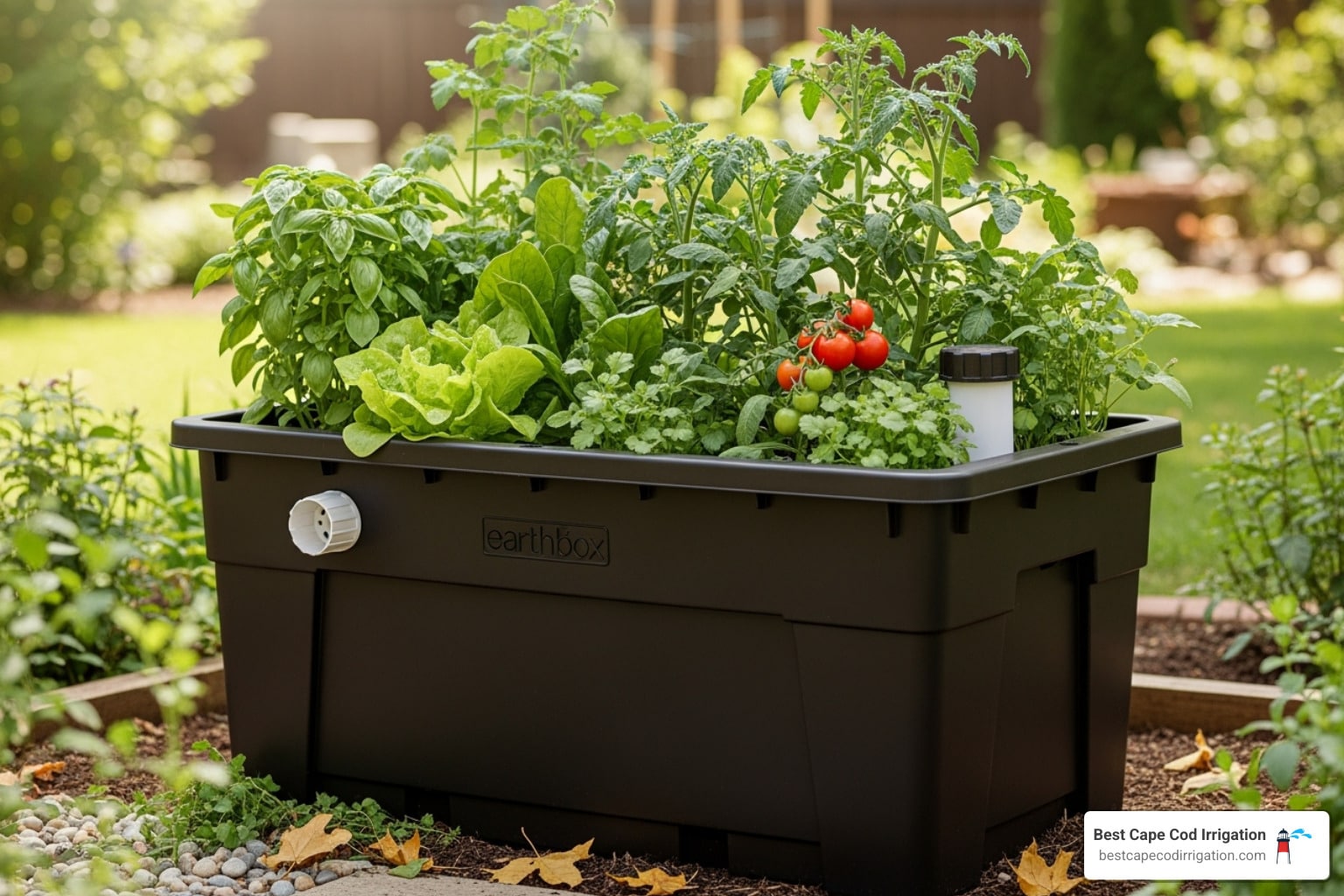



The Secret to a Thriving Container Garden
EarthBox automatic watering systems solve one of container gardening’s biggest challenges: getting the water just right. Too much water leads to root rot, while too little stunts growth and stresses your plants.
Quick Answer: EarthBox Automatic Watering System
- What it is: A sensor-based system that delivers water to EarthBox containers as plants need it
- How it works: Uses air pressure sensing to maintain proper reservoir levels without overwatering
- Key benefits: Up to 80% water savings, stronger roots, consistent moisture, “set-it-and-forget-it” convenience
- Best for: Annual vegetables like tomatoes, peppers, herbs, and leafy greens
- Price range: $50-$175 for complete systems, $15-$35 for individual components
Many gardeners, both experienced and novice, struggle with watering. The EarthBox Automatic Watering System (AWS) takes the guesswork out of this equation.
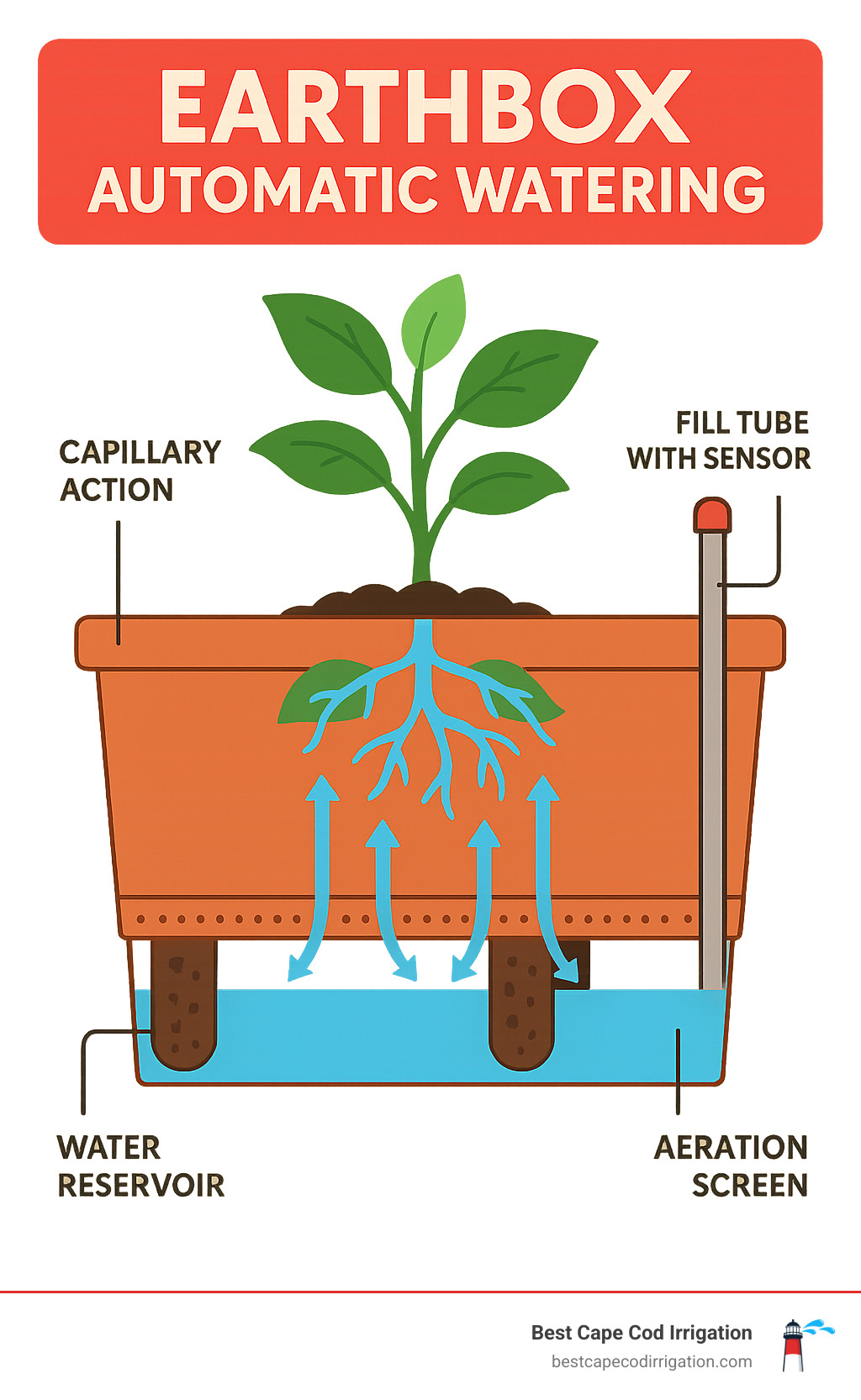
The system works as a sub-irrigated planter (SIP), where plants draw water from a bottom reservoir through natural capillary action. Your plants drink what they need, when they need it, eliminating daily watering schedules and vacation plant stress.
For Cape Cod gardeners dealing with sandy soil and unpredictable weather, an automatic watering system offers complete control over the growing environment. You get lush, healthy plants without the constant worry about watering.
What is the EarthBox Automatic Watering System and How Does It Work?
The EarthBox automatic watering system uses sub-irrigation technology to provide a consistent, slow-drip water source. This eliminates the common pitfalls of over-watering or under-watering.
The EarthBox is a sub-irrigated planter (SIP) with a water reservoir at its base. Plants draw water upwards from this reservoir through capillary action via a wicking medium, ensuring optimal hydration. For more on SIPs, explore why self-watering garden boxes are A Green Thumb’s Best Friend.
The Automatic Watering System (AWS) integrates with your EarthBox, creating a “set-it-and-forget-it” solution. It provides a continuous water supply to the reservoir, maintaining the perfect water level based on your plant’s needs. This means less time watering and more time enjoying your garden.
The Science Behind the Sensor
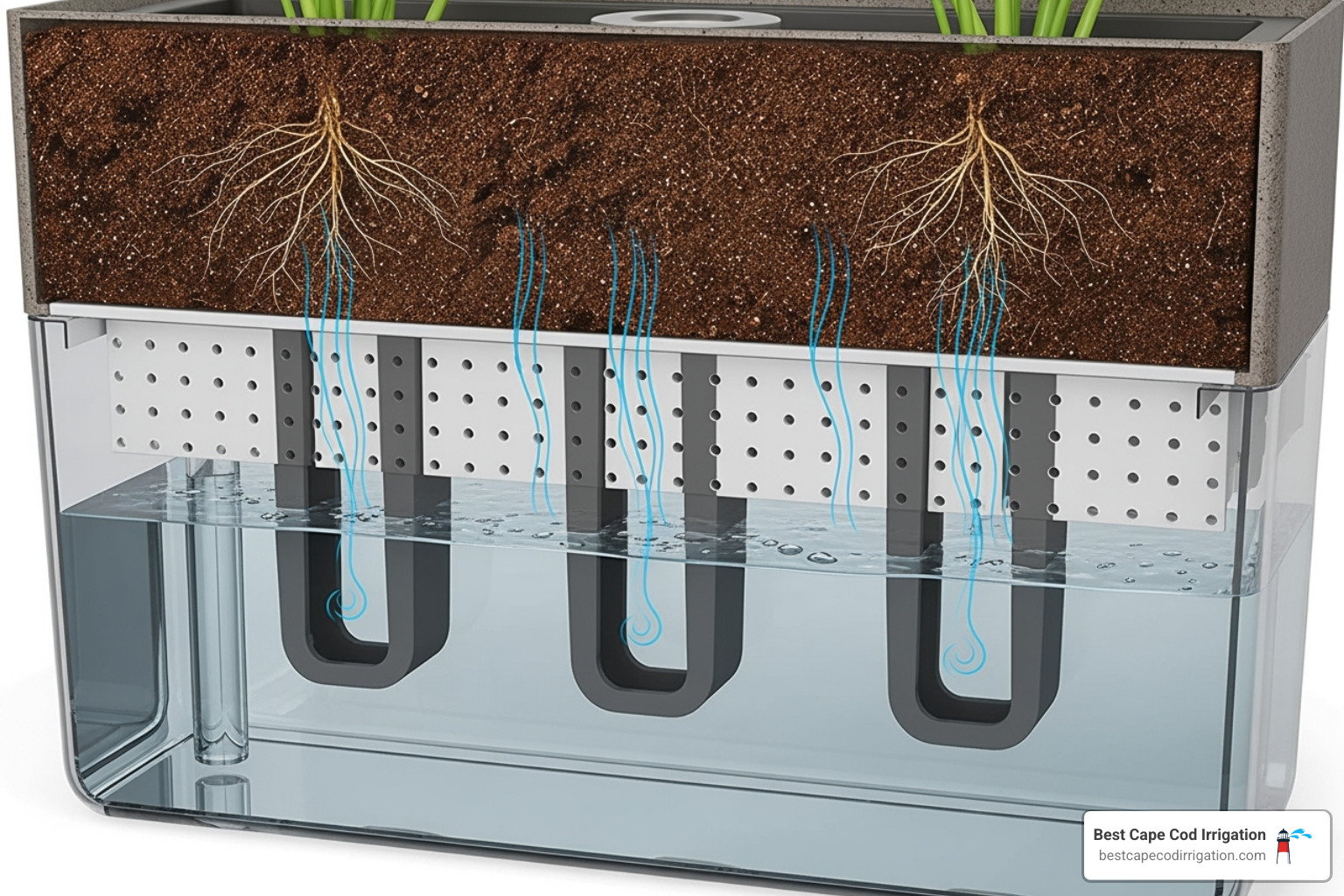
The genius of the EarthBox automatic watering system is its sensor. Integrated into the fill tube, this component responds to air pressure changes in the water reservoir. As plants use water, the level drops, and the change in air pressure signals the sensor to release more water.
This mechanism provides a slow, constant drip that replenishes the reservoir without flooding the soil. The system only adds water as it’s consumed, preventing overwatering. Excess water exits through an overflow drain, protecting roots from rot. This self-regulation makes the system highly efficient. For more details on this component, see the EarthBox Automatic Watering System Sensor.
What Plants and Soil Work Best?
The EarthBox automatic watering system’s consistent moisture is ideal for a wide range of plants.
What plants are best suited for an EarthBox?
Annual vegetables thrive in this environment, including peppers, zucchini, squash, broccoli, kale, lettuce, and carrots. Tomatoes are excellent candidates, as the steady water supply helps prevent issues like blossom end rot. Many fruits and herbs also flourish.
However, avoid perennial plants, as the reservoir can freeze in winter and damage roots. Plants requiring sharp drainage, like rosemary or lavender, may also struggle.
What type of soil is recommended?
A high-quality, lightweight, soilless potting mix is crucial for proper wicking. Avoid heavy garden soil, which can compact. A good mix often includes:
- Peat moss (or coco coir)
- Perlite or vermiculite
- Compost or worm castings
This blend ensures effective water wicking and provides air pockets for healthy roots. For more general advice, see our insights on Garden Watering Solutions.
Your Complete Guide to the EarthBox Automatic Watering System Setup
Setting up your EarthBox automatic watering system is straightforward, but proper planning is key to success.
First, ensure you have a level surface. This is critical for the sensor to function correctly. A tilted EarthBox will cause improper watering, leading to either dry or waterlogged roots.
When planning your layout, cluster your boxes near your water source to avoid long tubing runs. If you’re using different EarthBox models, place any Root & Veg systems closest to the spigot, as their deeper reservoirs work best with strong initial pressure.
For larger-scale automation on Cape Cod, our team also handles Drip Irrigation System Installation for in-ground gardens.
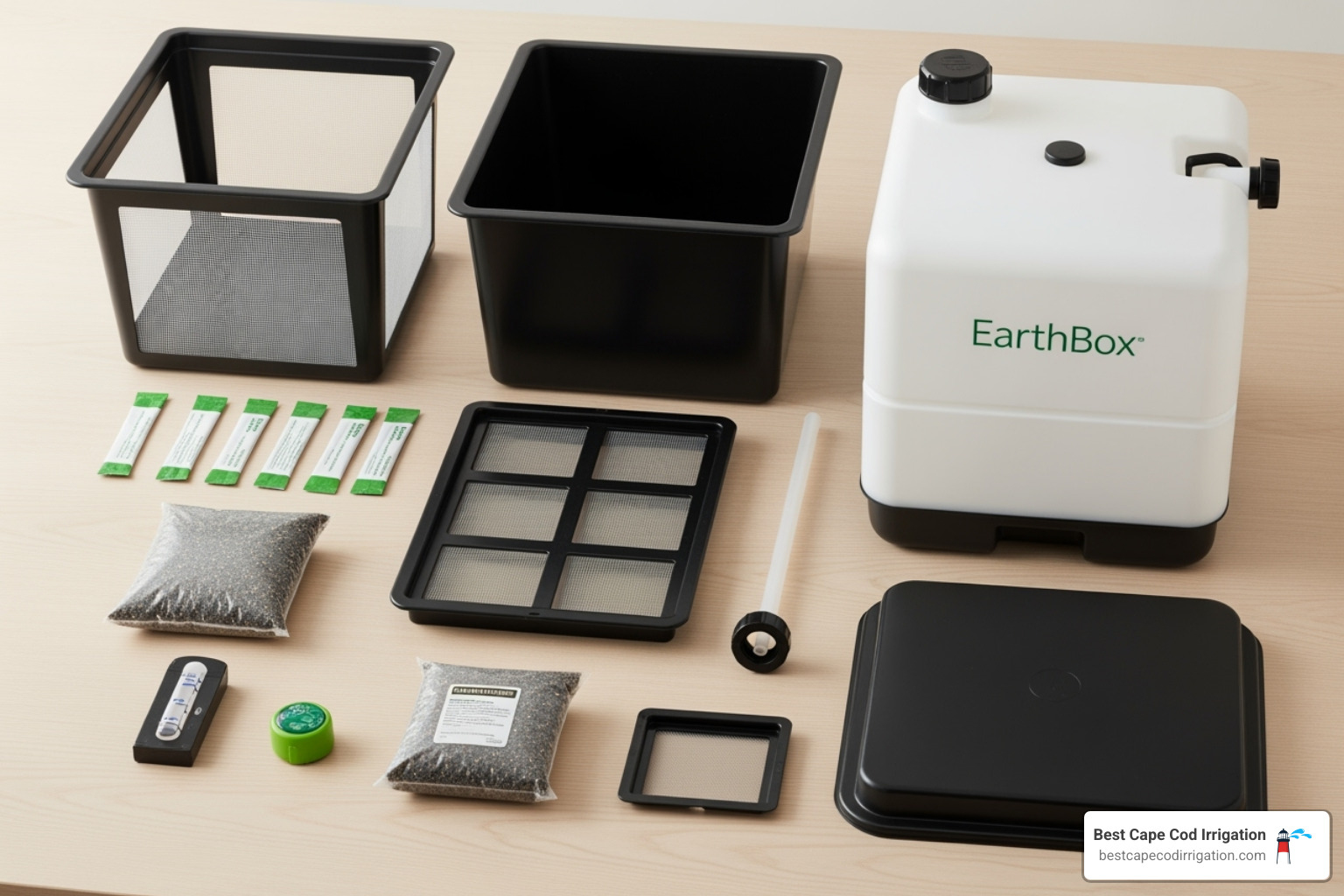
What’s Included with the EarthBox Automatic Watering System?
Understanding each component of your EarthBox automatic watering kit makes assembly much smoother.
- The pressure regulator connects to your spigot, ensuring water flows at the correct pressure to protect the sensors.
- The sensors fit into the fill tube and use air pressure to control water delivery without electricity or timers.
- The kit includes tubing in two sizes (0.25-inch main line and 0.125-inch sensor tubes) along with T-connectors, splitters, and reducers to create a custom layout.
Ready to get started? You can BUY ONLINE » and have everything delivered to your door.
Assembly Tips and Expanding Your Garden
The tubing connections are designed to be tight to prevent leaks. Here are a few tips to make assembly easier:
- Use warm water: Soaking the tubing end in hot water for 30 seconds makes it more pliable.
- Try silicone grease: A small dab on the connector barbs can help, but avoid petroleum-based products.
- Wear grip gloves: Textured gloves provide a better grip for pushing tubing onto connectors.
The system is easily expandable. Expansion kits let you add more EarthBoxes to your setup. For larger installations, you can buy additional tubing and connectors separately, giving you complete design flexibility.
For a visual guide, check out this video on setting up multiple systems, which shows how to connect several EarthBoxes to one water source.
EarthBox AWS vs. Traditional Watering: A Clear Winner
The difference between traditional watering and the EarthBox automatic watering system is stark. Traditional hose watering often works against your plants, causing runoff, leaching nutrients, encouraging weeds, and promoting fungal diseases on wet leaves. The EarthBox automatic watering system flips this approach on its head, giving plants exactly what they need, when they need it.
| Feature | Traditional Hose Watering | EarthBox Automatic Watering System (AWS) |
|---|---|---|
| Water Use | Prone to runoff, evaporation, and overspray; significant water waste. | Conserves water significantly, reducing usage by up to 80% compared to traditional methods. Water goes directly to the roots. |
| Nutrient Retention | Nutrients can be leached away with excess top-down watering. | Fertilizer is more readily available as it doesn’t drain away; nutrients are retained in the system. |
| Weed Growth | Wet soil surface encourages weed germination. | Drier soil surface inhibits weed growth, reducing competition for plants. |
| Root Health | Inconsistent watering can lead to shallow roots, over-watering causes root rot. | Consistent moisture promotes stronger root development and better nutrient absorption. Prevents root rot. |
| Time Spent Watering | Daily or frequent manual watering required, especially in hot weather. | “Set-it-and-forget-it” convenience; significantly reduces manual watering time. |
| Disease Prevention | Wet foliage from overhead watering can encourage fungal diseases. | Bottom-up watering keeps foliage dry, minimizing leaf-wetness period and disease risk. |
| Soil Aeration | Compaction can occur from top-down watering. | Improves soil aeration, promoting healthier root systems. |
Here’s what really gets exciting: water conservation up to 80%. That’s not just good for your water bill – it’s good for the planet. The system delivers water directly to the root zone where plants can actually use it, instead of losing it to evaporation or runoff.
Your plants develop stronger root systems too. When they know water is consistently available below, roots grow deep and strong instead of staying shallow and weak near the surface. This means better nutrient absorption and healthier plants overall.
The beauty of self-watering planters with large reservoirs is they can last as long as four weeks without refilling. Imagine going on vacation without worrying about your tomatoes, or not having to water during a busy work week. That’s the kind of freedom the AWS provides.
For Cape Cod gardeners dealing with sandy soil and unpredictable summer weather, this consistency is a game-changer. Your plants get steady moisture regardless of whether we’re having a dry spell or you’re simply too busy to water daily.
The system also prevents the reduced fertilizer runoff problem that plagues traditional watering. Instead of washing expensive nutrients down the drain, they stay put in your growing medium where your plants can actually use them.
To learn more about getting the most from your container garden watering approach, check out this helpful guide on Watering a Container Garden | EarthBox Planting Boxes. When you compare the two methods side by side, the EarthBox automatic watering system isn’t just better – it’s in a completely different league.
Maintenance, Troubleshooting, and Storage
Your EarthBox automatic watering system is low-maintenance, but a little care ensures years of worry-free gardening.
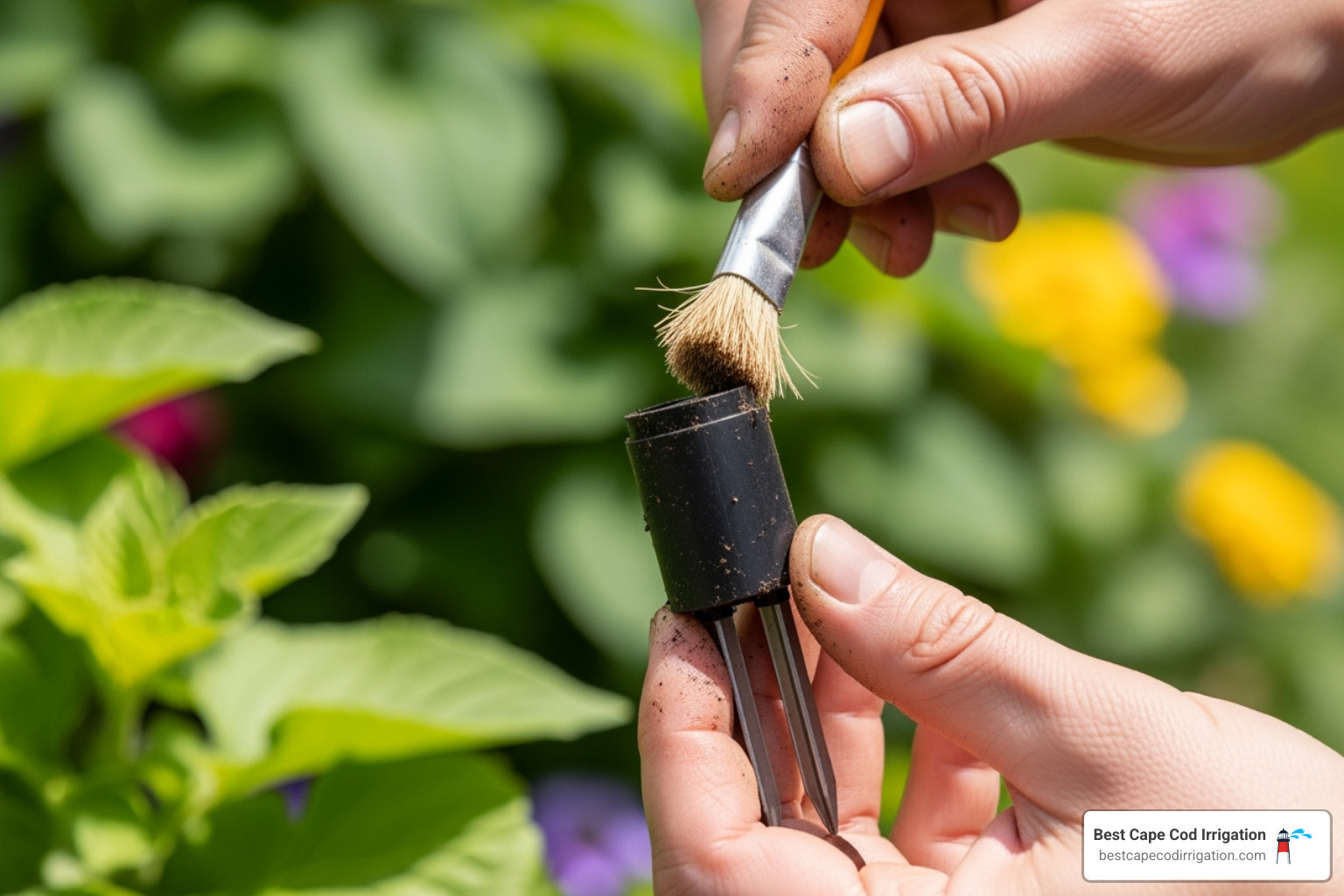
During the growing season, check your system weekly to ensure sensors are dripping and free of debris. The most common long-term issue is mineral buildup, especially with hard water like that found in some Cape Cod wells. Clean the pressure regulator’s filter screen with a small brush monthly to prevent clogs.
Before each season, flush your EarthBox with fresh water to remove accumulated fertilizer salts. This gives your plants a fresh start.
For larger landscape needs, our team offers comprehensive Automatic Watering Systems for Cape Cod.
Common Troubleshooting for the EarthBox Automatic Watering System
Most EarthBox automatic watering issues have simple solutions. Here are the most common problems and how to fix them.
If your overflow drain is leaking:
- Check for level ground: A tilted box can cause water to pool and overflow.
- Verify fill tube length: It should be about 1.5 inches above the rim and pushed to the bottom of the box.
- Look for root clogs: Adventurous roots can grow into the overflow drain; gently pull them out.
- Adjust spigot pressure: Only turn the spigot a quarter-turn to avoid overwhelming the system.
If your EarthBox isn’t getting water:
- Clean the sensor: It may be clogged with debris. A thorough cleaning usually solves the problem.
- Check the pressure regulator: Ensure the spigot is fully open and the filter screen is clean, especially if you have well water.
- Supplement during heat waves: High-demand plants may drink water faster than the system can supply in extreme heat. You may need to add water manually.
The official Automatic Watering system Troubleshooting Guide offers more detailed guidance.
Proper Off-Season Care and Storage
Proper winterization is crucial for protecting your EarthBox automatic watering investment from harsh Cape Cod winters.
Before the first frost, shut off the water and disconnect the system. Remove the pressure regulator and sensors, cleaning them thoroughly. Keep tubing connected to fittings to avoid losing small parts, shake out any water, and coil the system neatly.
Indoor storage is non-negotiable for Cape Cod gardeners. Water left in the tubing can freeze and crack components. Store the system in a plastic bin in a heated garage, basement, or closet to keep it clean, organized, and ready for spring.
Frequently Asked Questions about EarthBox Automatic Watering
Here are answers to the most common questions we hear from Cape Cod gardeners about EarthBox automatic watering systems.
Why are my plants wilting even with the system running?
Seeing plants wilt despite an automatic system can be frustrating, but there are simple explanations.
- High-demand plants: Large plants like indeterminate tomatoes may use water faster than the AWS can supply during peak growth.
- Extreme heat: During heat waves, plants lose water rapidly through their leaves (transpiration).
First, check your sensor function. Ensure it’s dripping water into the reservoir. If not, it may be clogged. During periods of high demand or extreme heat, you may need to supplement with manual watering through the fill tube. Providing temporary shade during the hottest part of the day can also reduce plant stress.
Can I leave the system outside all year?
Absolutely not, especially on Cape Cod where winter temperatures are harsh.
- Freeze damage: Any remaining water in the components can freeze, expand, and crack the plastic. This is the biggest threat to your system.
- Insect damage: Spiders and other insects can nest in sensors and tubing over winter, damaging the delicate internal parts.
Always store your system indoors in a garage, basement, or closet to keep it safe and ready for the next growing season.
How do I fix a leaking or overflowing EarthBox?
A leaking or overflowing EarthBox usually has a simple fix. Here’s what to check:
- Level Ground: Use a level to ensure your EarthBox is not tilted. An unlevel box will cause water to pool and overflow on one side.
- Fill Tube Placement: The tube should be pushed to the bottom of the box and extend about 1.5 inches above the rim. For Root & Veg models, lean it toward an outer corner without pushing it through the screen.
- Root Clogs: Vigorous plant roots can sometimes grow out of the overflow drain. Simply pull them out to fix the issue.
- Water Pressure: Turn your spigot on only a quarter-turn. Too much pressure will overwhelm the system and cause it to overflow.
Conclusion: Automate Your Garden for Effortless Results
After diving deep into EarthBox automatic watering, one thing becomes crystal clear: this isn’t just another gardening gadget. It’s a complete change of how you approach container gardening.
Think about it – no more rushing outside with the hose on hot summer mornings, no more guilty feelings when you forget to water for a few days, and definitely no more watching your plants wilt while you’re away for the weekend. The EarthBox automatic watering system delivers on its promise of “set-it-and-forget-it” convenience while actually improving your plants’ health.
The numbers speak for themselves. Up to 80% water savings compared to traditional watering methods means you’re being kinder to both the environment and your water bill. But the real magic happens underground, where consistent moisture creates stronger root systems that can better absorb nutrients and resist stress.
Your plants literally drink what they need, when they need it. No drowning from overwatering, no stunted growth from drought stress. Just healthier plants with better yields and that satisfaction of finally having a true green thumb – even if technology is doing most of the heavy lifting!
Whether you’re growing juicy tomatoes, crisp lettuce, or aromatic herbs, this system adapts to each plant’s unique needs. The sub-irrigation technology and smart sensors work together to create the perfect growing environment, season after season.
Of course, container gardening is just one piece of the puzzle. Your Cape Cod property might have larger-scale irrigation needs – maybe that vegetable garden you’ve been dreaming of, or landscape beds that could use some automated attention. While EarthBox handles your containers beautifully, in-ground gardens need a different approach.
That’s where we come in. At Best Cape Cod Irrigation, we understand the unique challenges of gardening in our sandy soil and unpredictable New England weather. Our 25+ years of regional expertise means we know exactly what works here, and our custom, eco-friendly systems are designed to keep your entire landscape thriving with minimal effort on your part.
Ready to take your whole property to the next level? Learn more about our professional irrigation installation services and find how we can help your entire outdoor space flourish with the same worry-free confidence your EarthBox provides.