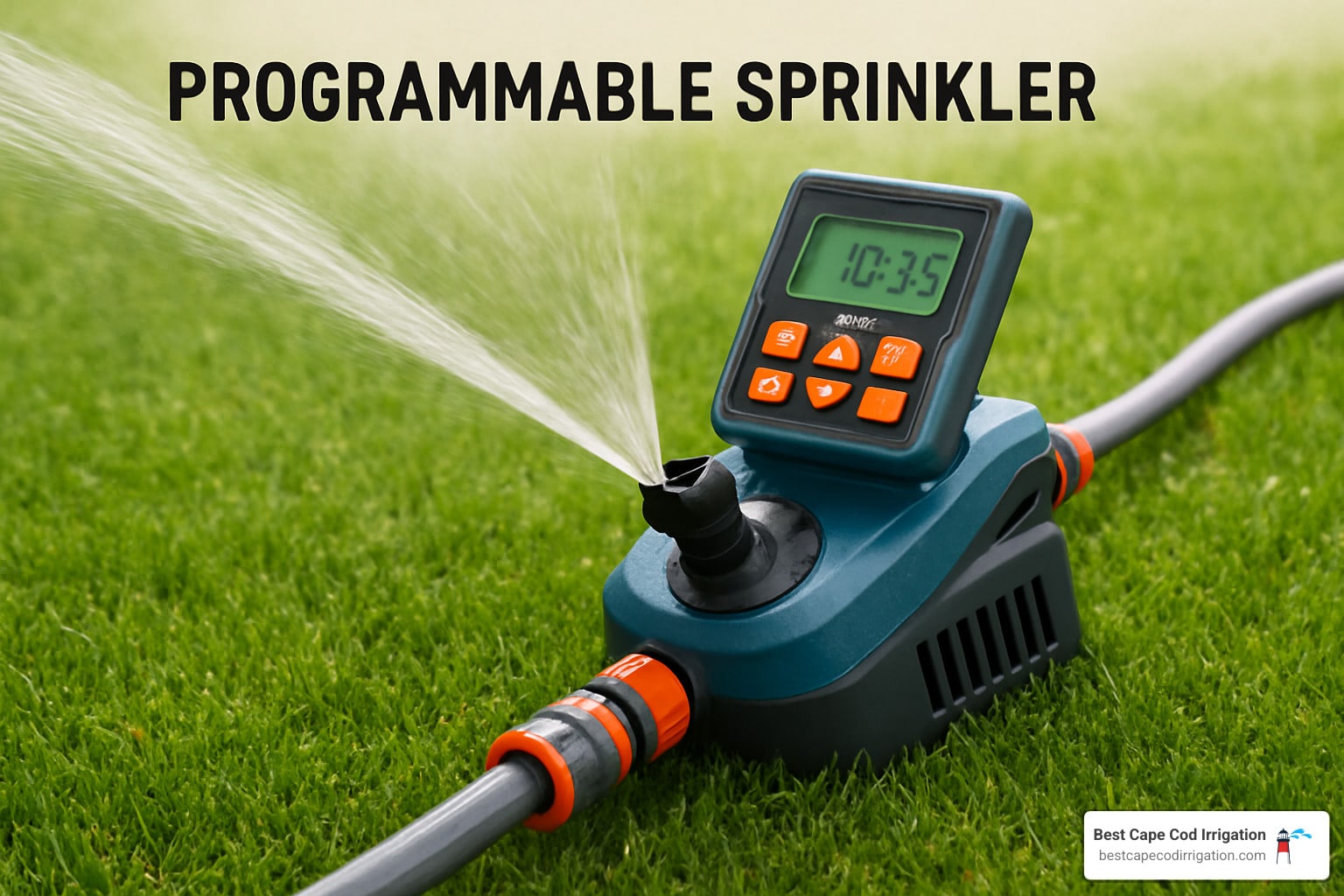



Why Your Lawn Deserves a Smarter Watering Solution
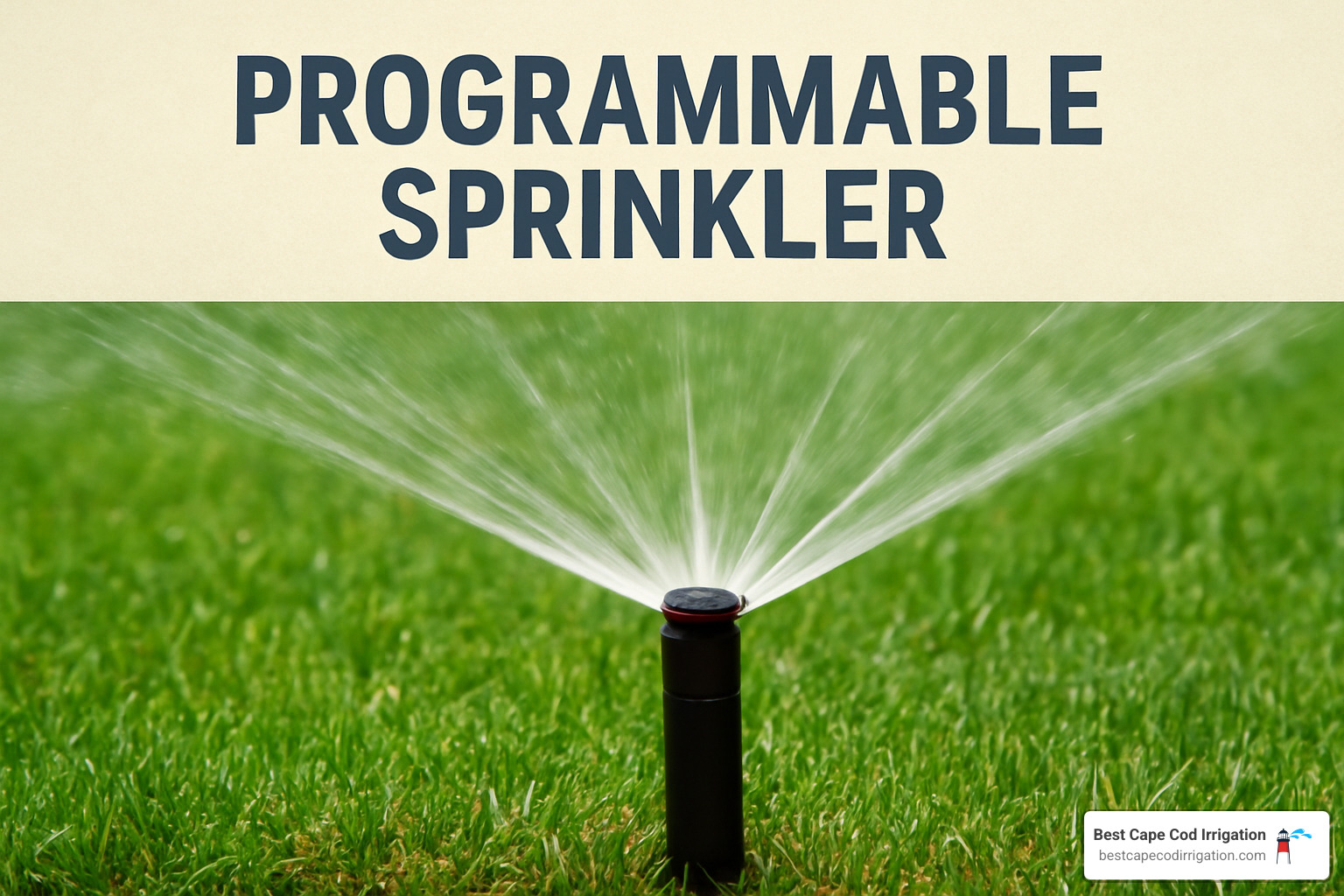
A programmable sprinkler is an automated irrigation system that uses electronic timers, sensors, and weather data to water your lawn precisely when and where it’s needed – eliminating guesswork and waste from manual watering.
Key Benefits of Programmable Sprinklers:
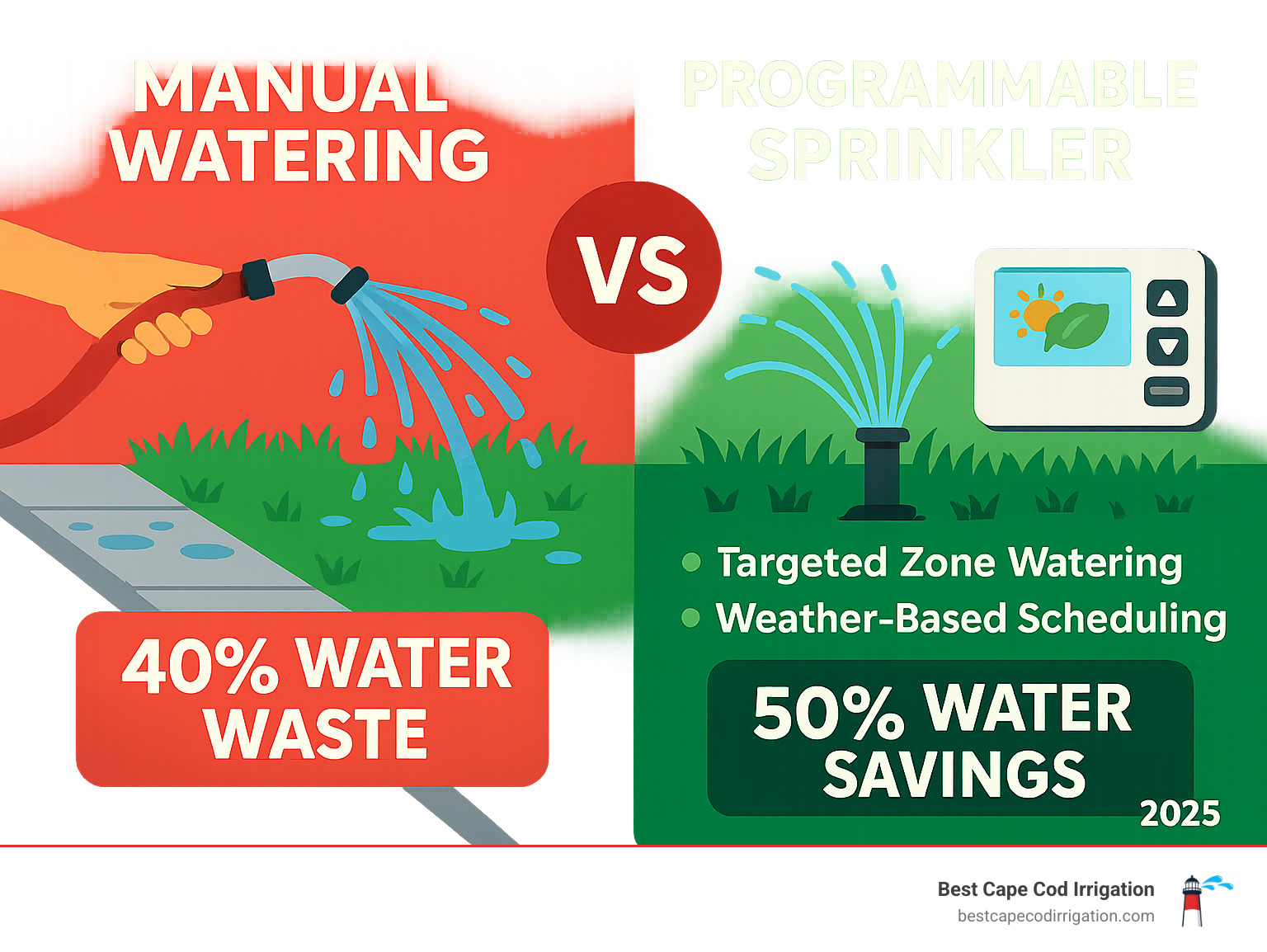
- Water savings: Up to 50% reduction in water usage compared to traditional systems
- Cost savings: Users can save up to $4,240 over two seasons with smart controllers
- Convenience: Set schedules once and forget about daily watering chores
- Weather-smart: Automatically skip watering when rain is forecast
- Zone control: Water different areas of your yard based on specific needs
Have you ever driven by a house and seen the sprinkler system watering the lawn while it was raining? That’s exactly the kind of waste programmable sprinklers prevent. Traditional sprinklers waste water through overspray, overlapping zones, and high evaporation from mist-like droplets.
For Cape Cod homeowners dealing with sandy soil and unpredictable weather, this smart technology solves the constant struggle of when to water, how much to water, and where to focus your efforts. Instead of standing in your yard with a hose or forgetting to move sprinklers around, you get precision watering that adapts to your lawn’s actual needs.
The best part? Modern programmable sprinklers range from simple hose-end timers to sophisticated systems that connect to your smartphone. Whether you’re looking for a basic solution or want full control from anywhere in the world, there’s a programmable option that fits your budget and tech comfort level.
Key terms for programmable sprinkler:
Programmable Sprinkler 101: What It Is & How It Works
Think of a programmable sprinkler as the brain of your irrigation system. While traditional sprinklers are like having a light switch (on or off), programmable systems are like having a smart thermostat that learns your preferences and adjusts automatically.
At its core, a programmable sprinkler system consists of three main components: a controller (the brain), electronic valves (the muscles), and sensors (the eyes and ears). The controller stores your watering schedules and sends signals to open and close valves at specific times. Meanwhile, sensors monitor everything from soil moisture to weather conditions, feeding real-time data back to the controller.
The magic happens when these components work together. Instead of watering your entire lawn for the same duration regardless of conditions, a programmable system can water your sunny front yard for 15 minutes while giving your shaded backyard only 8 minutes. It can skip watering entirely when rain is forecast or increase watering during heat waves.
For more detailed information about scientific research on water-saving irrigation, modern systems use sophisticated algorithms that consider factors like soil type, plant varieties, sun exposure, and local weather patterns.
Anatomy of a Programmable Sprinkler
The controller is the heart of any programmable sprinkler system. Modern controllers range from simple digital timers with LCD displays to sophisticated units with Wi-Fi connectivity and smartphone apps. Inside, you’ll find a microprocessor that stores your schedules, processes sensor data, and communicates with connected devices.
Electronic valves replace the manual valves found in traditional systems. These valves receive 24-volt signals from the controller and open or close in response. Each valve typically controls one zone of your irrigation system, allowing for precise control over different areas of your property.
The newest systems include Wi-Fi or Bluetooth chips that enable remote access and weather data integration. Some controllers can access real-time weather information from services like NOAA, automatically adjusting schedules based on temperature, humidity, wind speed, and precipitation forecasts.
How a Programmable Sprinkler Delivers Precision Watering
Digital timing is the foundation of precision watering. Unlike mechanical timers that rely on clockwork mechanisms, digital controllers can schedule watering down to the minute. You can set multiple start times per day, vary watering duration by season, and even program different schedules for different days of the week.
Zone-by-zone control takes precision further. Your front lawn might need different watering than your flower beds, and your vegetable garden has different requirements than your shrubs. A programmable sprinkler system can manage up to 16 zones or more, with each zone having its own schedule, duration, and frequency.
The most advanced systems use evapotranspiration logic – a fancy term for calculating how much water your plants actually use. By considering factors like temperature, humidity, wind, and solar radiation, these systems can determine exactly how much water your lawn needs to replace what it loses through evaporation and plant transpiration.
Main Types of Programmable Sprinkler Systems
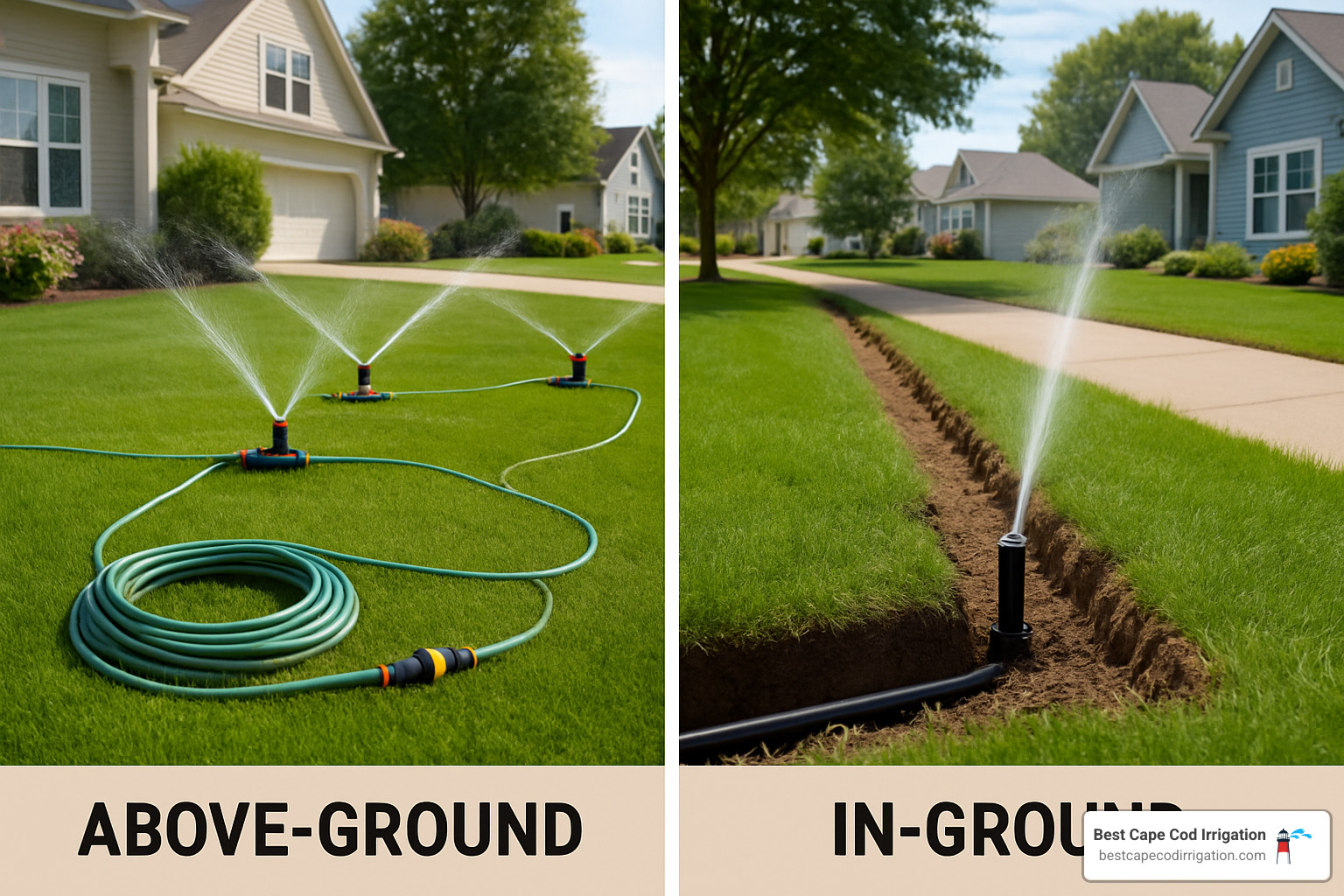
Programmable sprinkler systems come in several configurations, each designed for different needs and budgets. Understanding these options helps you choose the right system for your property.
Above-ground kits are the most affordable entry point into programmable irrigation. These systems typically include a timer, tubing, and several sprinkler heads that you can position around your lawn. Rain Bird’s 32ETI automatic sprinkler kit, for example, covers 1,000-3,000 square feet and connects directly to your garden hose.
In-ground systems offer the most professional appearance and comprehensive coverage. These systems use buried pipes and pop-up sprinkler heads that retract when not in use. Installation requires more work initially, but the results are worth it – no visible equipment cluttering your lawn, and coverage that’s precisely engineered for your landscape.
Hose-end timers are the simplest programmable option. These battery-powered devices screw onto your outdoor faucet and control when water flows to your existing sprinklers or soaker hoses. They’re perfect for small gardens, potted plants, or as a backup system.
Smart Wi-Fi controllers represent the cutting edge of irrigation technology. These systems connect to your home’s Wi-Fi network and can be controlled from anywhere using smartphone apps. They integrate with weather services, can be programmed using voice commands, and often include features like leak detection and water usage tracking.
Smart, Connected & Cloud-Enabled Programmable Sprinkler
Smart programmable sprinkler systems transform your irrigation from a set-it-and-forget-it system into a dynamic, responsive network. These systems connect to your home’s Wi-Fi and can be controlled through mobile apps, making it possible to adjust your watering schedule from anywhere in the world.
Voice assistant integration adds another layer of convenience. Many smart controllers work with Amazon Alexa, Google Home, and Apple HomeKit, allowing you to start watering with simple voice commands like “Alexa, water the front lawn for 10 minutes.”
IFTTT (If This Then That) integration opens up even more possibilities. You can create custom automations like “If the weather forecast shows rain, then cancel tonight’s watering” or “If I’m away from home for more than 3 days, switch to vacation watering mode.”
Weather API integration is perhaps the most valuable smart feature. These systems continuously monitor local weather conditions and adjust watering schedules accordingly. Some systems use hyperlocal weather data that’s more accurate than general forecasts, ensuring your lawn gets exactly the right amount of water.
Basic Programmable Timers vs Smart Controllers
| Feature | Basic Programmable Timer | Smart Controller |
|---|---|---|
| Price Range | $30-$150 | $150-$600+ |
| Installation | DIY-friendly | May require professional setup |
| Scheduling | Fixed schedules, manual adjustment | Dynamic scheduling, automatic adjustment |
| Weather Integration | None | Real-time weather data |
| Remote Access | None | Smartphone app control |
| Zone Control | 1-4 zones typically | Up to 16+ zones |
| Water Savings | 20-30% | 30-50% |
| Maintenance | Manual programming updates | Automatic updates and optimization |
Basic programmable timers use simple run-time dials and fixed schedules. You set them once and they run the same program until you manually change it. They’re reliable and affordable, but they can’t adapt to changing conditions.
Smart controllers use predictive algorithms that learn your landscape’s needs over time. They can automatically extend watering during hot spells, reduce watering during cool periods, and skip watering entirely when rain is expected. This adaptability is what drives the higher water savings rates.
Key Features That Make a Programmable Sprinkler a Money-Saver
Weather skip functionality is the single most important money-saving feature in modern programmable sprinkler systems. This feature monitors local weather forecasts and automatically cancels scheduled watering when rain is expected. Some systems even adjust for wind conditions, pausing watering during high winds to prevent water waste from drift.
Soil moisture integration takes water savings even further. Advanced systems can connect to soil moisture sensors buried in your lawn. When soil moisture levels are adequate, the system skips watering regardless of the schedule. This prevents overwatering, which can actually harm your lawn by promoting shallow root growth and fungal diseases.
Zone mapping allows you to create custom watering zones that match your landscape’s specific needs. Your sunny front yard might need daily watering during summer, while your shaded backyard needs watering only every other day. Precision systems can even create irregular zone shapes that follow your lawn’s exact boundaries, avoiding sidewalks and driveways entirely.
Flow monitoring and leak alerts provide both water savings and system protection. These features monitor water flow through your system and alert you immediately if flow rates indicate a broken pipe, stuck valve, or other problems. Catching leaks early can save thousands of gallons of water and prevent costly damage.
Usage analytics help you understand your water consumption patterns and identify opportunities for additional savings. Many smart controllers track daily, weekly, and monthly water usage, showing you exactly how much water each zone uses and how much you’re saving compared to traditional watering methods.
For more information about water-wise tech, modern systems often qualify for utility rebates and can help you comply with local water restrictions during drought periods.
Programmable Sprinkler Features Checklist
When shopping for a programmable sprinkler system, certain features are must-haves while others are nice-to-haves depending on your specific needs and budget.
Must-Have Features:
- Multiple zone control (at least 4 zones for most residential properties)
- Weather-based scheduling or rain delay function
- Battery backup to maintain schedules during power outages
- Easy-to-use interface (physical controls or smartphone app)
- Seasonal adjustment capabilities
- Manual override options for immediate watering needs
Nice-to-Have Features:
- Soil moisture sensor integration
- Flow monitoring and leak detection
- Remote access via smartphone app
- Voice assistant compatibility
- Water usage tracking and reporting
- Integration with smart home systems
Future-Proofing Considerations:
- Expandable zone capacity for landscape additions
- Firmware update capability for new features
- Open API for third-party integrations
- Compatibility with multiple sensor types
- Cloud-free operation option for reliability
How Programmable Sprinklers Slash Water Bills
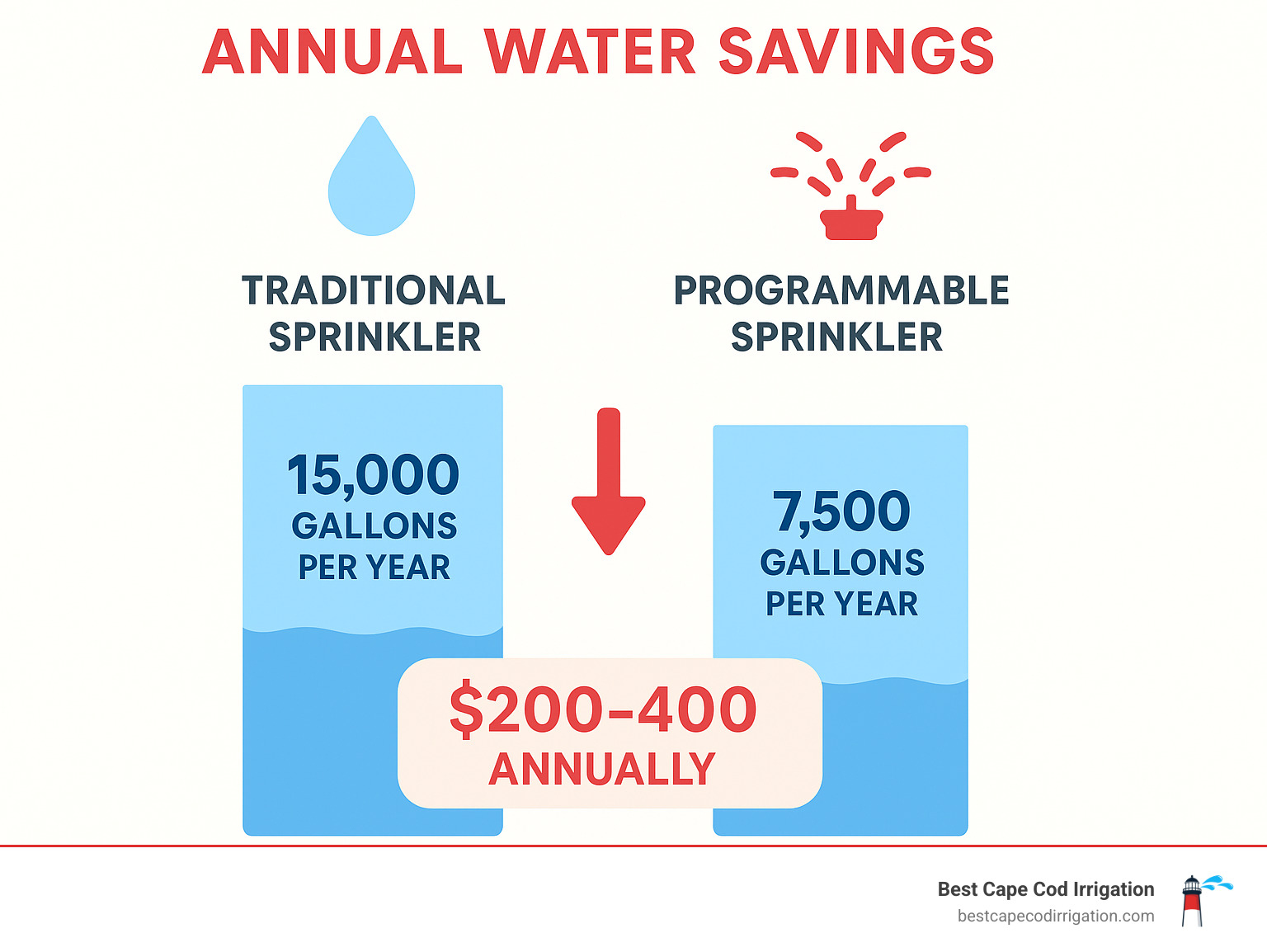
The water savings from programmable sprinkler systems are substantial and measurable. Systems like Irrigreen’s precision controllers can reduce water footprints by up to 50% compared to traditional systems. For the average homeowner, this translates to significant monthly savings on water bills.
Smart controllers like those from Netro use eco-friendly watering algorithms that consider soil type, sun exposure, slope, and local weather conditions. By delivering only the minimum amount of water required for healthy plant growth, these systems eliminate the waste common in traditional irrigation.
The savings compound over time. Lower water usage means lower utility bills, but it also means healthier plants that require less replacement and maintenance. Proper watering prevents both drought stress and overwatering damage, extending the life of your lawn and landscape investments.
Many utility companies offer rebates for installing smart irrigation systems, recognizing their role in water conservation. These rebates can offset 25-50% of the initial system cost, making the payback period even shorter.
Installation, Setup & Maintenance Made Easy
The installation complexity of a programmable sprinkler system varies significantly depending on the type of system you choose. Simple hose-end timers can be installed in minutes, while comprehensive in-ground systems may require professional installation.
DIY installation is feasible for above-ground systems and basic in-ground kits. Rain Bird’s 32ETI kit, for example, is designed for homeowner installation and includes detailed instructions. The process typically involves digging shallow trenches, laying tubing, installing sprinkler heads, and connecting the system to your water supply.
Professional installation becomes worthwhile for complex systems, properties with challenging terrain, or when you want warranty coverage. Professional installers handle backflow prevention requirements, ensure proper water pressure throughout the system, and can integrate advanced features like soil sensors and weather stations.
Backflow prevention is a critical safety requirement that prevents contaminated water from flowing back into your home’s water supply. Most municipalities require backflow prevention devices on irrigation systems, and professional installers ensure these are properly installed and tested.
For comprehensive guidance on irrigation installation, professional services can handle everything from design to final testing, ensuring your system operates efficiently from day one.
Installing a Programmable Sprinkler Step-by-Step
Planning your zones is the first step in any programmable sprinkler installation. Walk your property and identify areas with similar watering needs. Group sunny areas together, shade areas together, and separate lawn areas from flower beds and vegetable gardens.
For above-ground systems, the installation process is straightforward:
- Connect the timer to your outdoor faucet, ensuring a tight seal to prevent leaks
- Layout the tubing following your planned zones, avoiding high-traffic areas
- Install sprinkler heads at recommended spacing (typically 15-30 feet apart)
- Connect everything according to the manufacturer’s instructions
- Program the controller with your desired schedules
- Test each zone to ensure proper coverage and adjust as needed
For in-ground systems, additional steps include digging trenches, installing valves, and burying pipes. The controller installation involves mounting the unit in a protected location and connecting it to your home’s electrical system.
Safety considerations include calling 811 before digging to locate underground utilities, ensuring proper electrical connections for controllers, and installing backflow prevention devices where required by local codes.
Routine Maintenance & Troubleshooting
Regular maintenance keeps your programmable sprinkler system running efficiently and extends its lifespan. Most maintenance tasks are simple and can be performed by homeowners.
Cleaning clogged nozzles is the most common maintenance task. Dirt, grass clippings, and mineral deposits can block spray patterns, reducing coverage and efficiency. Most nozzles can be cleaned by soaking in vinegar or using a small wire to clear blockages.
Valve maintenance involves checking for leaks, ensuring proper operation, and replacing worn components. Valves typically last 5-10 years but may need adjustment or repair sooner if water quality is poor or if the system experiences frequent pressure fluctuations.
Controller maintenance includes checking battery backup systems, updating firmware when available, and reviewing and adjusting schedules seasonally. Many smart controllers update automatically, but it’s good practice to check for updates periodically.
Winterization is crucial in climates where freezing occurs. This involves draining water from pipes and sprinkler heads to prevent freeze damage. Some systems include automatic drain valves, while others require manual draining or professional winterization services.
Common troubleshooting issues include zones not turning on (often a valve or wiring problem), uneven coverage (usually a clogged nozzle or pressure issue), and controller malfunctions (often resolved by checking power connections and resetting the system).
Buying Guide: Choosing the Right System & Average Cost Range
Selecting the right programmable sprinkler system depends on several factors including lawn size, zone complexity, desired features, and budget. Understanding these factors helps you make an informed decision that provides the best value for your specific needs.
Lawn size is the primary factor determining system complexity. Properties under 1,000 square feet can often be served by simple hose-end timers or single-zone systems. Medium properties (1,000-3,000 square feet) typically need 2-4 zone systems, while larger properties may require 6-16 zones or more.
Zone count affects both system cost and water savings potential. More zones allow for more precise watering, which typically translates to greater water savings. However, each additional zone adds to both equipment and installation costs.
Connectivity needs vary by user. Tech-savvy homeowners who want remote control and smart features should invest in Wi-Fi-enabled controllers. Those who prefer simplicity might choose basic programmable timers that don’t require internet connectivity.
Average Cost Ranges (based on internet research, not Best Cape Cod Irrigation pricing):
- Basic hose-end timers: $30-$100
- Simple programmable controllers: $100-$300
- Smart Wi-Fi controllers: $200-$600
- Complete above-ground kits: $150-$500
- Professional in-ground installation: $1,000-$10,500+ (varies significantly by property size and complexity)
These ranges reflect internet averages and actual costs can vary significantly based on local conditions, soil type, water pressure requirements, and specific feature needs.
Rebates and incentives can significantly reduce net costs. Many water utilities offer rebates of $50-$200 for installing smart irrigation controllers. Some areas also offer rebates for converting from spray irrigation to drip irrigation systems.
For information about DIY IoT builds, tech enthusiasts can build custom systems using Arduino or Raspberry Pi platforms, though these require significant technical knowledge.
Checklist for Selecting Your Ideal Setup
Property Assessment:
- Measure your total irrigated area
- Count distinct watering zones (lawn, flower beds, vegetable garden, etc.)
- Note sun/shade patterns throughout the day
- Identify slopes, soil types, and drainage patterns
- Check water pressure at outdoor faucets (should be 30-50 PSI minimum)
System Requirements:
- Determine minimum zone count needed
- Decide on connectivity preferences (Wi-Fi, Bluetooth, or standalone)
- Consider future expansion needs
- Evaluate installation complexity (DIY vs. professional)
- Set realistic budget including installation costs
Feature Priorities:
- Weather integration (essential for maximum savings)
- Remote access capabilities
- Soil sensor compatibility
- Flow monitoring and leak detection
- Integration with existing smart home systems
Local Considerations:
- Municipal water restrictions and regulations
- Backflow prevention requirements
- Available utility rebates and incentives
- Seasonal weather patterns and frost dates
- Local contractor availability and expertise
Frequently Asked Questions about Programmable Sprinklers
How do programmable sprinklers use live weather data?
Modern programmable sprinkler systems access weather data through internet connections, using services like NOAA or private weather providers. The system continuously monitors local forecasts and current conditions, including temperature, humidity, wind speed, and precipitation probability.
When rain is forecast, the system automatically skips scheduled watering sessions. More sophisticated systems also adjust watering duration based on temperature and humidity – extending watering during hot, dry periods and reducing it during cool, humid conditions.
Some systems use evapotranspiration (ET) data to calculate exactly how much water your plants lose through evaporation and transpiration. This allows for incredibly precise watering that replaces only what plants actually use, maximizing both plant health and water savings.
The weather integration typically works through cloud services, but some systems can continue operating on stored schedules if internet connectivity is lost, ensuring your lawn continues to receive water even during outages.
Can I integrate a programmable sprinkler with Alexa or Google Home?
Yes, many smart programmable sprinkler controllers integrate seamlessly with popular voice assistants. This integration allows you to control your irrigation system using simple voice commands like “Alexa, water the front lawn for 15 minutes” or “Hey Google, start the garden sprinklers.”
The integration typically works through the manufacturer’s smartphone app, which connects to your voice assistant’s ecosystem. Once connected, you can start or stop watering, check system status, and even ask about recent watering history using voice commands.
Some systems also support IFTTT (If This Then That) integration, which allows you to create custom automations. For example, you could set up a routine that automatically starts watering when you leave for work or stops watering when your smart weather station detects rain.
Voice control is particularly useful for manual overrides – those times when you need to water outside your normal schedule or want to skip a scheduled session. Instead of finding your phone and opening an app, you can simply speak your command.
What happens if my Wi-Fi goes down—will the system still run?
Most quality programmable sprinkler controllers are designed to continue operating even when Wi-Fi connectivity is lost. The controller stores your programmed schedules locally, so basic watering functions continue regardless of internet connectivity.
However, smart features that depend on internet access – like weather-based adjustments, remote monitoring, and smartphone app control – won’t function during outages. The system will revert to its stored schedule until connectivity is restored.
When Wi-Fi comes back online, most systems automatically reconnect and resume smart features. Some controllers also store data about watering sessions during outages and sync this information once connectivity is restored.
For maximum reliability, look for systems with battery backup that can maintain schedules even during power outages. Some controllers can run on battery power for several days, ensuring your lawn continues to receive water during extended outages.
Conclusion
Programmable sprinkler systems represent a smart investment that pays dividends in both lawn health and wallet savings. By delivering the right amount of water at the right time to the right places, these systems eliminate the guesswork and waste associated with traditional irrigation methods.
The technology has evolved from simple timers to sophisticated systems that integrate weather data, soil sensors, and smartphone controls. Whether you choose a basic programmable timer or a fully connected smart system, you’ll benefit from more consistent watering, reduced water bills, and the convenience of automated lawn care.
For Cape Cod homeowners dealing with sandy soils, variable weather patterns, and increasing water costs, programmable irrigation offers a practical solution that adapts to local conditions. The initial investment typically pays for itself within 2-3 years through water savings alone, while providing the peace of mind that comes with knowing your lawn receives optimal care.
The key is choosing a system that matches your specific needs, budget, and technical comfort level. Start with a clear assessment of your property’s requirements, then select features that provide the best value for your situation.
With over 25 years of experience serving Cape Cod communities from Sandwich to Chatham, we understand the unique challenges of maintaining healthy lawns in our coastal climate. Our expertise in smart irrigation technology ensures you get a system that’s perfectly custom to local conditions and designed for years of reliable, efficient operation.
Ready to transform your lawn care routine? Explore our automated sprinkler system solutions and find how programmable irrigation can save you time, money, and water while keeping your landscape looking its best year-round.