



Why Automatic Lawn Sprinklers Are Essential for Cape Cod Homeowners
An automatic lawn sprinkler system is a game-changer for busy homeowners who want a lush, healthy lawn without the daily hassle of manual watering. These systems use programmable timers, sensors, and strategically placed sprinkler heads to deliver precise amounts of water exactly when and where your grass needs it most.
Quick Answer: Best Automatic Lawn Sprinkler Options
- Budget-Friendly: Above-ground automatic kits starting at $400
- Mid-Range: Rain Bird Easy Install systems around $155 for 1,000-3,000 sq ft
- Premium Smart: OtO Smart Sprinkler covering up to 5,000 sq ft per device
- Professional In-Ground: Full systems averaging $2,500 installed
- Water Savings: Up to 50% reduction in water usage with smart controllers
Modern systems use weather intelligence and soil sensors to prevent overwatering, saving both water and money. Cape Cod’s sandy soil and unpredictable weather make consistent watering challenging, while automatic systems eliminate dry spots, overwatered areas, and high water bills.
Smart sprinkler systems can save up to $4,240 over two seasons compared to traditional methods, while reducing water usage by up to 50%. They’re especially valuable for Cape Cod homeowners dealing with sandy soil that drains quickly, irregular schedules, water restrictions, and vacation travel.
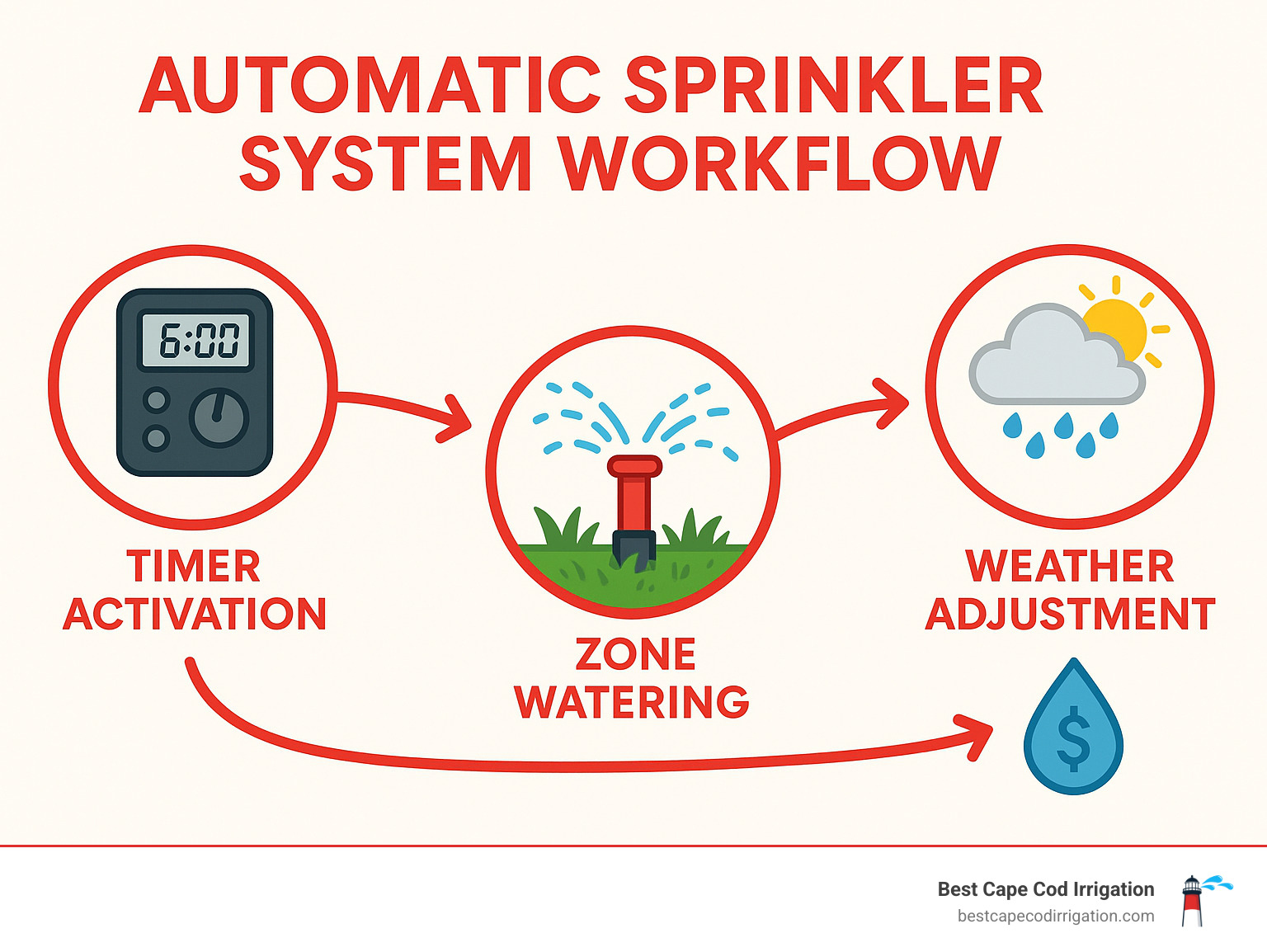
What Is an Automatic Lawn Sprinkler & Why You Need One
Think of an automatic lawn sprinkler system as your lawn’s personal trainer—it shows up consistently, knows exactly what your grass needs, and never lets you down. These systems combine smart controllers, strategically placed sprinkler heads, and advanced sensors to deliver the right amount of water at the perfect time.
The system works through underground pipes or above-ground connections that feed water to different zones across your property. Each zone operates independently, so your shady front yard might get 10 minutes while that sun-baked deck area gets 20 minutes.
Modern systems feature rain sensors that pause watering when it’s wet, soil moisture sensors that detect when grass is thirsty, and weather intelligence that adjusts schedules based on forecasts. No more watering during thunderstorms or wasting water unnecessarily.
The benefits include consistent watering that creates healthier, disease-resistant grass, even coverage that eliminates brown spots, and noticeable curb appeal improvements. For Cape Cod homeowners dealing with sandy soil, unpredictable weather, and frequent travel, automatic systems ensure lawns stay healthy year-round.
Automatic Lawn Sprinkler Basics
Every automatic lawn sprinkler system has core components working together. The controller serves as the system brain—simple models use mechanical timers, while smart controllers connect to WiFi and access weather data for automatic adjustments.
Zones divide your property into separate watering areas, each with customized schedules. Most homes need 3-6 zones to handle different grass types, sun exposure, and soil conditions. Sprinkler heads deliver water—rotary heads work best for large areas, spray heads handle smaller spaces, and drip emitters provide gentle watering for delicate plants.
Behind the scenes, valves control water flow to each zone, while PSI requirements typically range from 40-75 pounds per square inch with at least 6 gallons per minute flow rate. The rainfall override feature prevents watering during or after rain, protecting lawns from overwatering while keeping bills reasonable.
How Automatic Sprinklers Save Water & Money
Automatic systems can reduce water usage by up to 50% compared to manual watering. Weather-based adjustments make the biggest difference—smart controllers access local weather data and automatically skip watering on rainy days, reduce schedules during humid periods, and increase watering during heat waves.
Head-to-head coverage ensures uniform water distribution, eliminating dry spots that tempt homeowners to run sprinklers longer. Precise timing allows systems to split watering into multiple short cycles rather than one long session, improving water absorption in Cape Cod’s sandy soil by 30% or more.
Many Cape Cod municipalities offer local rebates for water-efficient irrigation systems, helping offset installation costs. The financial benefits multiply over time through monthly water bill savings, reduced reseeding needs, lower plant replacement costs, and increased property values.
Best Automatic Lawn Sprinkler Types Reviewed
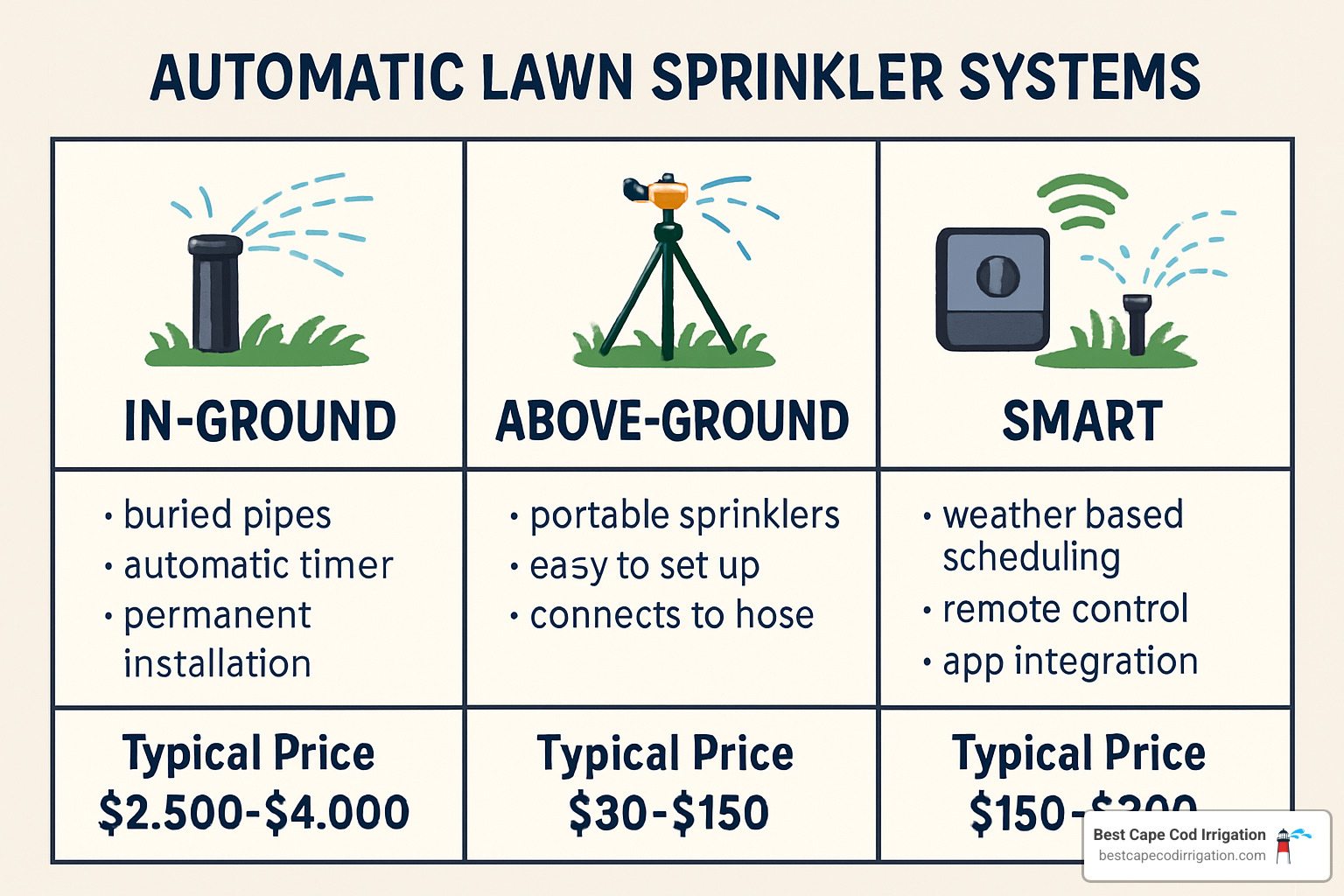
Choosing the right automatic lawn sprinkler system depends on your needs, budget, and long-term plans. After 25+ years installing systems across Cape Cod, we’ve identified what works best in our coastal environment.
In-ground systems are the premium choice for permanent installations. These feature buried pipes and pop-up sprinkler heads that disappear when not in use. Installation requires trenching and costs typically run $2,500-$12,000, but they offer the best performance and aesthetics.
Above-ground systems provide automation without permanent installation. These use existing garden hoses connected to programmable timers and strategically placed sprinklers, covering 1,000-3,000 square feet for $400-$1,200. The trade-off is seasonal setup and visible components.
Smart connected systems represent the newest evolution, featuring WiFi-enabled units that learn your lawn’s needs and adjust based on weather forecasts. Many are solar-powered, covering 2,000-5,000 square feet per device for $1,500-$4,500.
Drip irrigation systems excel in water conservation, delivering water directly to plant roots through tube networks. They use up to 70% less water than traditional sprinklers and work perfectly for flower beds and vegetable gardens.
Top Picks for Automatic Lawn Sprinklers
For rotary head coverage of large areas, quality rotary sprinklers provide even distribution and wind resistance, covering 25-50 feet depending on pressure. Pop-up sprinklers solve aesthetic challenges by rising during operation then retracting completely.
Micro-drip systems shine in flower beds where precision matters more than coverage area. Hose-end kits provide the easiest automation entry point for under $100. Soil sensor bundles eliminate guesswork by measuring actual soil moisture, preventing both drought stress and overwatering.
Automatic Lawn Sprinkler Buying Checklist
Before investing, evaluate key factors that determine satisfaction. Measure your irrigated area carefully—it’s usually smaller than expected once you subtract driveways and walkways. Odd-shaped areas challenge traditional patterns, while modern smart systems handle irregular shapes better.
Test water pressure with a simple gauge—most systems need 40-75 PSI to function properly. Cape Cod’s sandy soils benefit from frequent, shorter cycles, while clay soils need longer, less frequent watering. Consider expansion options if planning landscape changes.
Average costs vary dramatically: DIY setups start around $400, while comprehensive professional installations reach $12,000 for large properties. Most homeowners find their sweet spot in the $1,200-$4,500 range.
Note: These are average costs based on industry data and not specific pricing for Best Cape Cod Irrigation services.
Smart Features & Water-Saving Tech to Look For
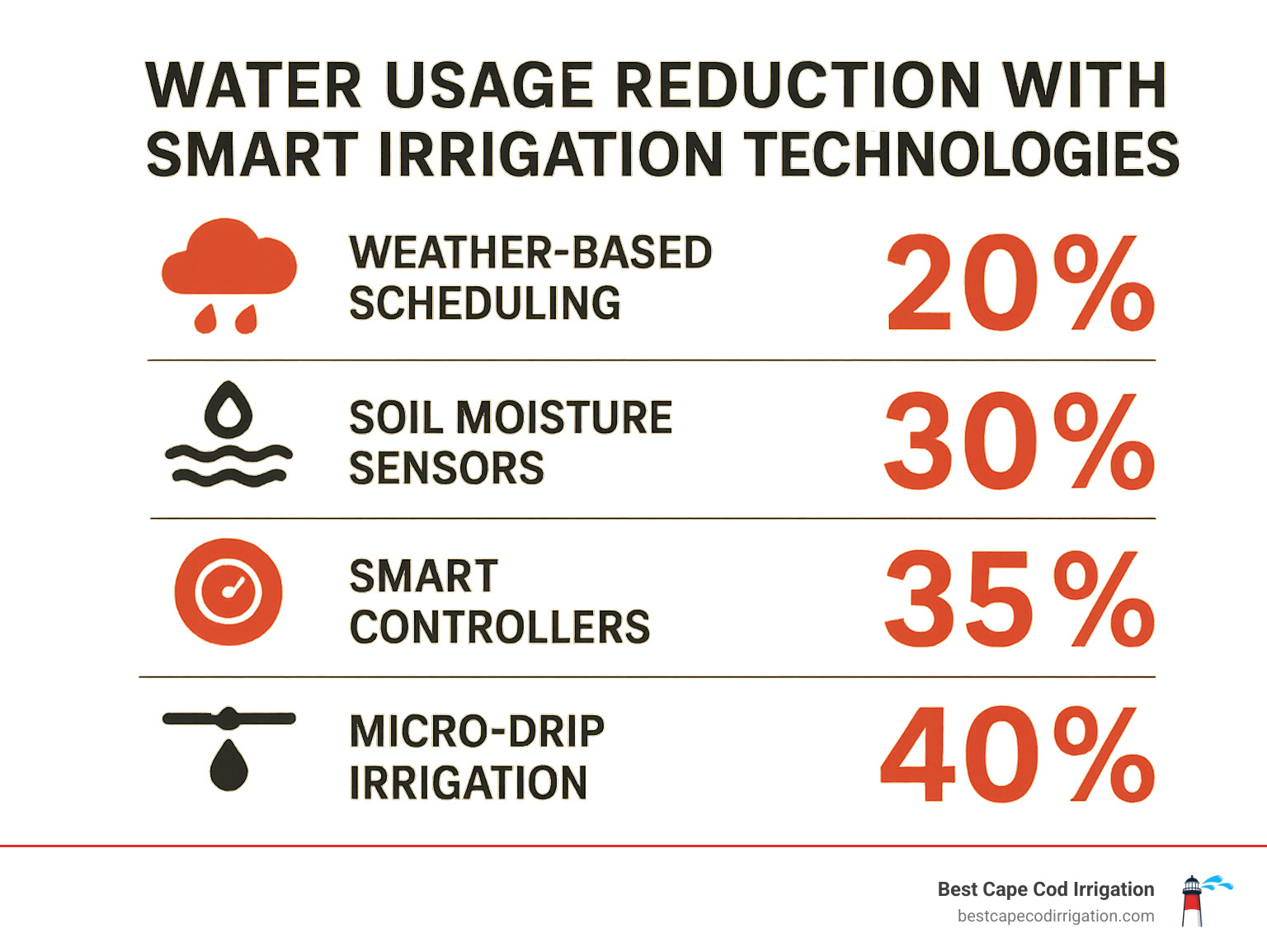
Modern automatic lawn sprinkler technology has evolved from simple timers into sophisticated water management systems that deliver real savings on monthly bills.
Smartphone app control puts your irrigation system in your pocket, allowing schedule adjustments, water usage monitoring, and problem alerts. The best apps feel intuitive and can save 20-30% on water bills through better visibility.
Weather intelligence connects systems to real-time local weather data, considering temperature, humidity, wind speed, and rainfall forecasts instead of blindly following schedules. Flow monitoring acts like a security system, watching for unusual usage patterns and alerting you to breaks or leaks before they cause damage.
Wind skip technology is valuable in coastal locations, delaying watering until conditions are calmer to prevent water waste on sidewalks and neighboring properties. Zone mapping treats different property areas as separate projects—shady areas might need twice-weekly watering while sunny slopes require daily attention.
| Feature | Traditional Controller | Smart Controller |
|---|---|---|
| Weather Integration | Manual rain sensor only | Real-time weather data |
| Remote Control | None | Smartphone app |
| Water Usage Tracking | None | Detailed reports |
| Leak Detection | None | Automatic monitoring |
| Seasonal Adjustment | Manual programming | Automatic adaptation |
| Cost | $50-$200 | $200-$800 |
Latest research on DIY efficiency
Programming Your Automatic Lawn Sprinkler
Modern systems offer programming interfaces that actually make sense. Mobile apps provide the smoothest experience—tap areas on satellite maps, answer questions about grass type and sun exposure, and the app creates optimal schedules automatically.
Touch screen controllers feature color displays with smartphone-like menus. Seasonal adjustment features eliminate manual schedule changes four times yearly, while rain delay functions let you postpone watering with a single button press.
Runtime splitting addresses Cape Cod’s sandy soil challenge by watering in short cycles with absorption breaks, dramatically improving water penetration and reducing waste.
Connected Accessories That Boost Performance
Smart accessories transform good systems into great ones. Soil moisture probes measure actual moisture levels, preventing watering when soil is already moist and triggering additional cycles during dry periods.
Leak detection sensors monitor water flow, comparing actual usage to expected patterns and alerting you to problems by zone. Voice assistant integration brings irrigation into smart home ecosystems, while weather stations provide the most accurate local data possible by measuring conditions right on your property.
Installation, Costs & DIY vs. Professional
Choosing between DIY and professional installation dramatically affects both cost and complexity. The DIY route works well for above-ground systems and straightforward layouts—most handy homeowners can install systems like the Rain Bird 32ETI in a weekend with basic tools.
Professional installation becomes valuable for complex layouts, tricky water pressure situations, or local codes requiring backflow prevention devices. Professional crews bring specialized equipment, design expertise, and warranty protection covering both parts and labor.
Installation costs vary significantly:
– DIY above-ground systems: $400-$1,200
– DIY in-ground kits: $800-$2,500
– Professional above-ground: $1,200-$3,500
– Professional in-ground: $2,500-$12,000
Note: These are average costs based on internet data and not actual costs for Best Cape Cod Irrigation services.
Professional systems typically cost two to three times more than DIY options but include design services, permits, warranties, and ongoing support. Trenching is where many DIY dreams meet reality—professional crews use specialized equipment while DIY installers can rent similar tools or use shovels for smaller systems.
More info about installation services
Automatic Lawn Sprinkler Project Planner
Planning your DIY installation properly makes the difference between a smooth project and a summer-long saga. Week one involves design and paperwork—measure your lawn, create scaled drawings, call 811 for utility marking, check permit requirements, and order components.
Week two focuses on site preparation and tool gathering. Test water pressure and flow rate, plan trenching routes avoiding utilities and landscaping, and gather tools including shovel, pipe cutter, and measuring tape.
Installation weekend involves digging 18-24 inch deep trenches for freeze protection, installing main lines and zone valves, connecting sprinkler heads, testing each zone, and programming the controller. Add 20-30% to estimated costs for inevitable surprises.
When to Call a Pro
Certain situations require professional expertise. Complex property layouts with elevation changes benefit from professional design ensuring uniform coverage. Low water pressure situations need specialized solutions like pressure tanks requiring professional installation.
Smart system integration with weather stations and home automation often requires professional programming. Code compliance varies across Cape Cod municipalities—professionals understand local requirements and handle paperwork. Quality installation companies provide warranties covering equipment and labor, protecting your investment for years.
Maintenance & Seasonal Care for Automatic Lawn Sprinklers
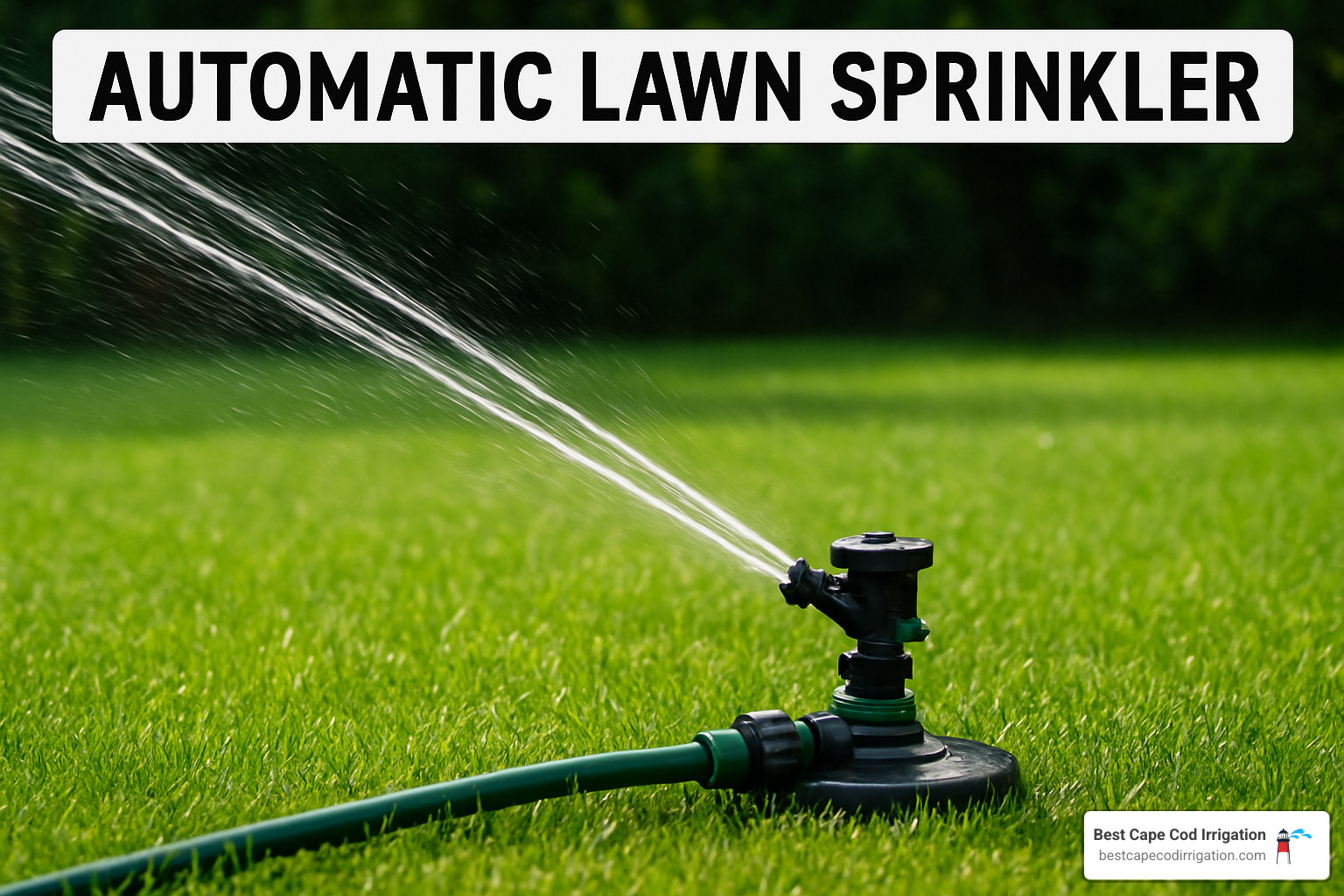
Your automatic lawn sprinkler system needs regular care to perform optimally for 15-20 years. Cape Cod’s coastal conditions—salt air, sandy soil, and freeze-thaw cycles—require seasonal attention to prevent expensive repairs.
Spring start-up involves turning on water supplies, inspecting for winter damage, testing each zone, adjusting shifted sprinkler heads, and updating controller schedules. Monthly walk-throughs during growing season help spot broken heads, dry spots, or misaligned sprinklers before they waste water or damage lawns.
Filter maintenance prevents most clogging problems—clean filters at main valves or individual zones monthly during peak season. Address leaks quickly to prevent water waste and landscape damage. Smart systems with flow monitoring alert you to problems before you see pooling water.
Winterization is critical for Cape Cod systems. Water expands when frozen, cracking pipes and destroying components. Professional winterization uses compressed air to remove every water drop, protecting your investment through harsh winters.
More info about spring opening
Troubleshooting Common Issues
Clogged sprinkler heads top the complaint list, especially with Cape Cod’s sandy soil and hard water. Look for reduced spray distance, wonky patterns, or heads that barely dribble. The fix is usually straightforward—unscrew nozzles, rinse clean, and poke out debris.
Uneven coverage creates brown patches when heads get knocked out of alignment or nozzles wear out. Controller errors range from programming mistakes to complete failures—check power cords, replace backup batteries, and verify program settings.
Low water pressure affects spray distance and creates weak coverage. Check your main water valve and clean system filters first. Surprisingly high water bills often signal hidden leaks or inefficient programming—smart controllers provide usage reports to identify problems quickly.
Automatic Lawn Sprinkler Winterization Steps
Cape Cod winters demand proper winterization to prevent thousands in freeze damage. Draining lines starts the process but isn’t sufficient—gravity removes most water, but “most” isn’t enough when temperatures drop.
Professional compressed air blow-out removes every water drop from pipes, valves, and heads. This requires specialized equipment and proper technique. Controller winterization involves removing backup batteries and switching to “off” mode, while protecting above-ground components with insulated covers.
Document any problems during winterization—spring is perfect for addressing broken heads, valve problems, or coverage issues before growing season begins.
Frequently Asked Questions about Automatic Lawn Sprinklers
How much water will my automatic lawn sprinkler use?
This is probably the most common question we hear from Cape Cod homeowners, and for good reason—nobody wants a surprise water bill! The answer depends on your lawn size, system type, and how smart you get with programming.
A typical automatic lawn sprinkler system uses about 1-2 inches of water per week during peak growing season. For a 1,000 square foot lawn, that translates to roughly 620-1,240 gallons weekly. Sounds like a lot? Here’s the thing—manual watering often uses much more because we tend to overwater some areas while missing others entirely.
The real magic happens with smart systems. Weather-intelligent controllers can slash water usage by 30-50% by skipping watering when it’s humid, rainy, or cool. The OtO Smart Sprinkler system, for example, can save homeowners up to $4,240 over two growing seasons compared to traditional methods.
Cape Cod’s sandy soils throw an extra wrinkle into the equation. Our soil drains fast, so you’ll typically water 3-4 times per week for shorter 10-15 minute cycles rather than long, infrequent sessions. This frequent-but-brief approach actually uses less water overall while keeping your grass healthier.
The bottom line? Most homeowners find their water bills stay about the same or even decrease with automatic systems, while their lawns look dramatically better. The key is choosing a system with smart features and programming it correctly for our local conditions.
Can I integrate my existing garden hose system into an automatic setup?
Absolutely, and this is actually a fantastic way to dip your toes into automatic irrigation! You don’t need to start from scratch or commit to a major installation project.
The simplest upgrade involves adding programmable timers to your existing hose connections. For under $100, you can automate your current sprinkler setup and eliminate the daily chore of turning water on and off. These basic timers work great for small lawns or specific problem areas.
The Rain Bird 32ETI system represents the sweet spot for many homeowners. It connects directly to your outdoor faucet but provides professional-grade coverage with six rotary sprinklers and programmable control. You get the convenience of automation without trenching or permanent installation.
For tech-savvy homeowners, smart hose timers offer WiFi connectivity and smartphone control while working with your existing setup. You can check watering status from vacation, adjust schedules based on weather, and even get alerts if something goes wrong.
Here’s a pro tip from our 25+ years of experience: Start simple and expand as you see the benefits. Many of our customers began with basic hose timers, loved the results, and later upgraded to comprehensive in-ground systems. There’s no shame in starting small—the important thing is getting consistent, automatic watering for your lawn.
What’s the average lifespan of an automatic sprinkler system?
Quality automatic lawn sprinkler systems are built to last, and with proper care, you’re looking at 15-20 years of reliable service. That’s excellent value when you consider the daily convenience and water savings over two decades.
Different components age at different rates, though. Sprinkler heads typically need replacement every 10-15 years as nozzles wear and internal parts accumulate debris. Controllers last about 10-12 years before advancing technology makes upgrades worthwhile. Valves often outlast everything else, running strong for 15-20 years with minimal maintenance.
Underground pipes are the marathon runners of irrigation systems, often lasting 20-25 years or more when properly installed and winterized. Cape Cod’s freeze-thaw cycles can be tough on pipes, which is why proper winterization is absolutely critical here.
Smart controllers and high-tech components might seem like they’d last longer, but they often have shorter lifespans due to rapid technology advancement. The good news? The water savings and convenience features usually justify upgrades every 8-10 years as new capabilities become available.
The secret to longevity is maintenance. Annual professional service, proper winterization, and fixing small problems before they become big ones can easily extend your system’s life beyond 20 years. We’ve serviced systems installed in the 1990s that still run like clockwork because their owners invested in regular care.
Think of it this way—even if your system lasts just 15 years, that’s thousands of hours of manual watering you’ll never have to do, plus the peace of mind knowing your lawn stays healthy whether you’re home or traveling.
Conclusion
Your Cape Cod lawn deserves better than manual watering guesswork. Automatic lawn sprinkler systems offer solutions from simple $400 DIY setups to sophisticated smart systems that adjust to weather conditions automatically.
Over 25+ years serving Cape Cod homeowners, we’ve witnessed remarkable evolution from basic timers to weather-intelligent irrigation with smartphone apps and leak detection. Cape Cod’s unique challenges—sandy soils, unpredictable coastal weather, and salt air—make automatic irrigation especially valuable here.
These systems don’t just save time; they actively promote healthier grass growth through consistent moisture delivery. Smart controllers can cut water usage by up to 50% while maintaining lush lawns, with many customers seeing decreased water bills despite more comprehensive coverage.
Year-round lawn health becomes achievable when you remove human error from watering decisions. Your system doesn’t forget during busy weeks, doesn’t overwater because it “looks dry,” and doesn’t waste water during rainstorms.
Whether you choose weekend DIY projects or comprehensive professional installation, the investment pays dividends in convenience, water savings, and property value. There’s deep satisfaction in coming home to perfectly watered lawns that maintained themselves while you were away.
Ready to join thousands of Cape Cod homeowners enjoying worry-free watering? Schedule your custom smart irrigation consultation and let our team design the perfect automatic lawn sprinkler solution for your property. We’ll assess your specific needs, explain your options, and create a system that works as hard as you do—just more quietly.
