


The Future of Lawn Care is Here
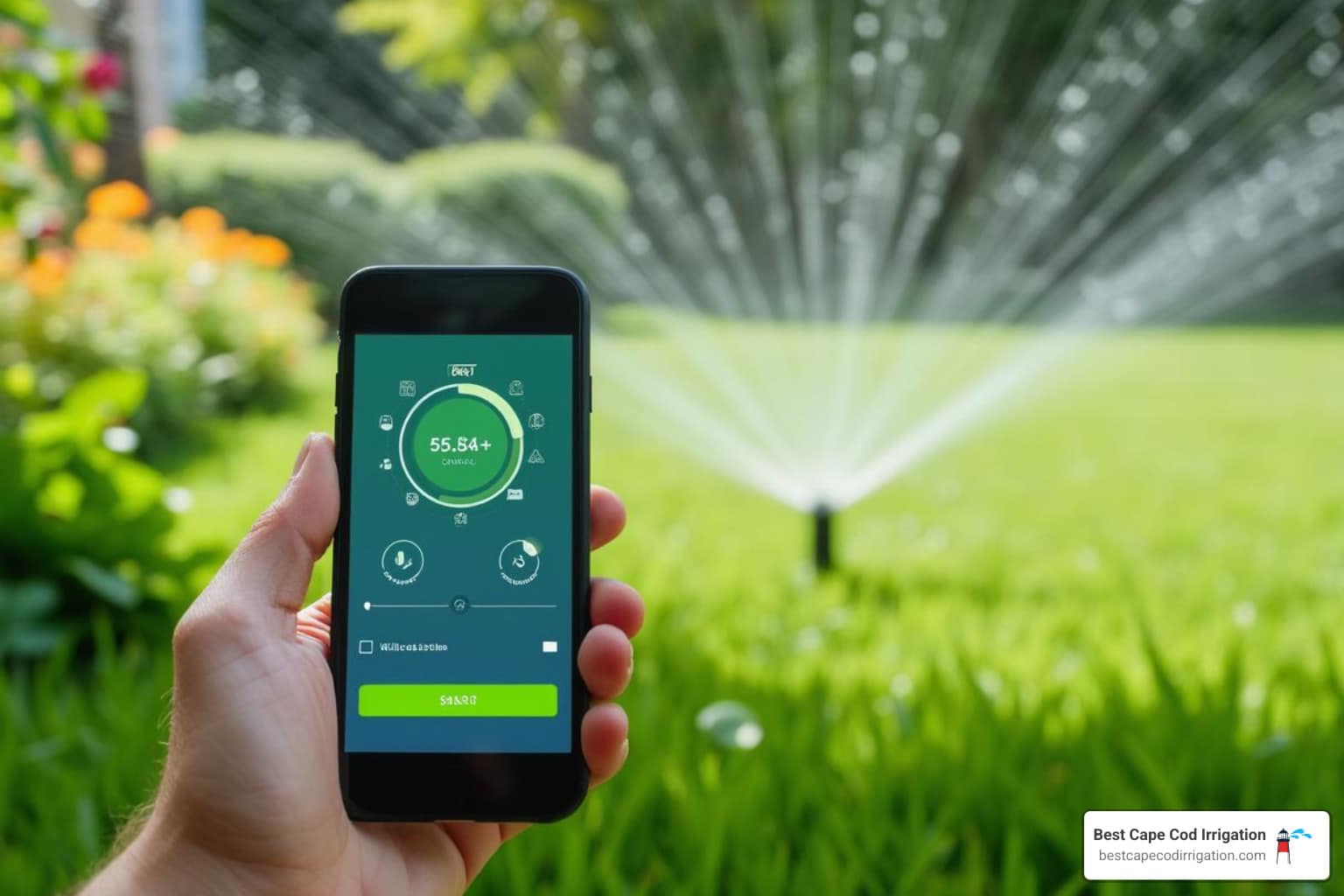
A remote irrigation system lets you control your sprinklers from anywhere with a smartphone, tablet, or computer. These smart systems use Wi-Fi and real-time weather data to water your lawn automatically, eliminating guesswork and manual timers.
What is a remote irrigation system?
- Smart controllers that replace traditional timers
- Wi-Fi connectivity for smartphone control
- Weather sensors that skip watering when it rains
- Soil moisture monitoring for precise watering
- Custom zones for different plant needs
Key benefits:
- Water savings: Up to 50% reduction in water usage
- Convenience: Control from anywhere, anytime
- Plant health: Prevents overwatering and drought stress
- Cost savings: Lower water bills and reduced maintenance
On Cape Cod, sandy soil and unpredictable weather make traditional timers inefficient. A remote system solves this by adapting automatically to local conditions. Instead of a fixed schedule, these systems use sensors, data analytics, and IoT to monitor soil moisture, weather, and seasonal changes, optimizing every drop of water.
Remote irrigation system terms to remember:
How a Remote Irrigation System Works: The Tech Behind the Tap
A remote irrigation system knows what your lawn needs by blending the Internet of Things (IoT), Wi-Fi connectivity, and cloud computing to bring precision to your landscape. The smart controller acts as the brain of the system, connecting to your home’s Wi-Fi. This allows it to access real-time data, like local weather forecasts, and communicate with sensors on your property. This information is processed in the cloud to make intelligent watering decisions. Instead of a rigid schedule, the system makes informed choices based on current conditions, ensuring your landscape gets exactly what it needs.
Core Components of Your Remote Irrigation System
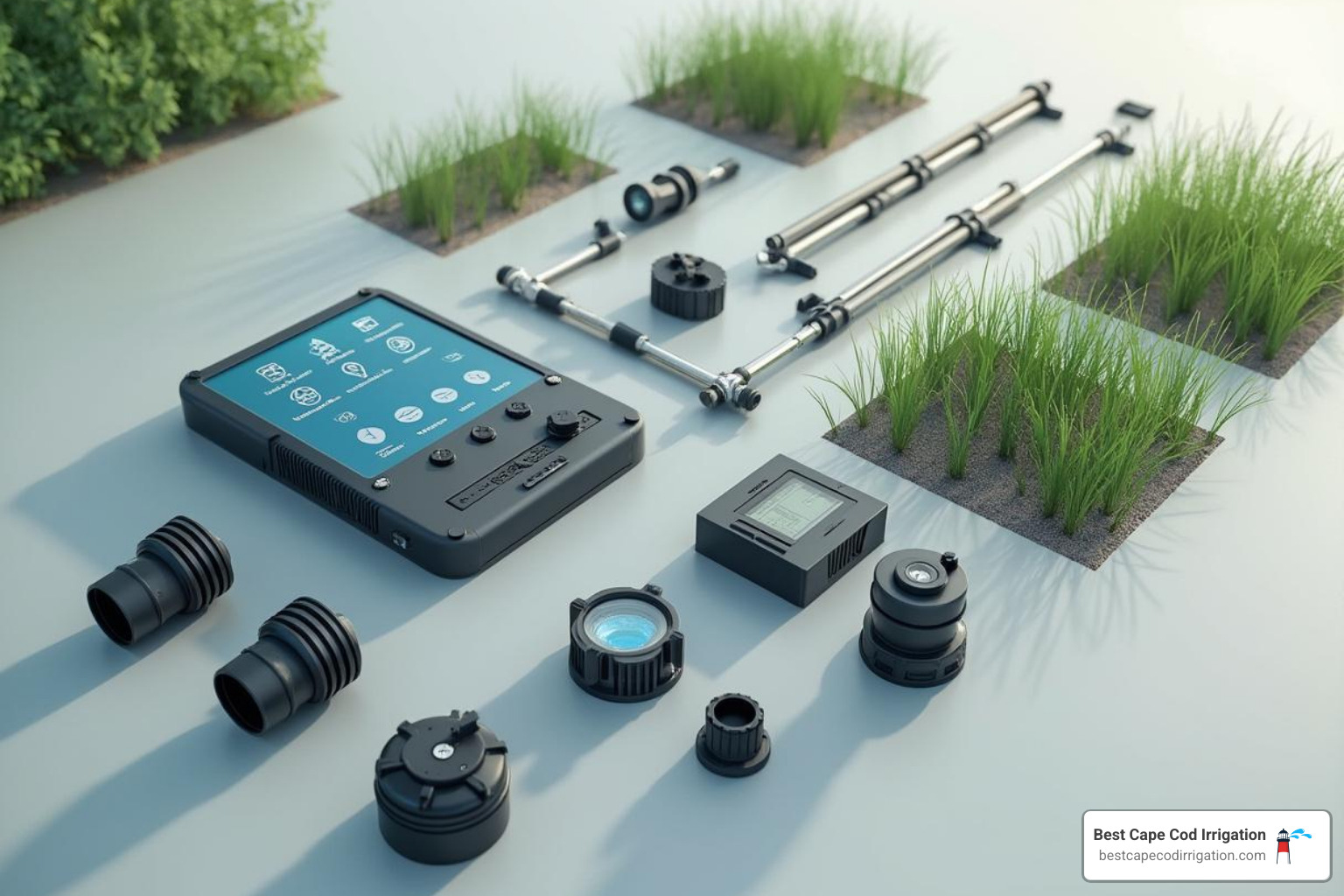
A remote irrigation system has several key components:
Smart Controllers: These central hubs replace old mechanical timers, connecting to your sprinkler setup and Wi-Fi network. Our smart sprinkler timer options allow you to manage multiple irrigation zones from one spot.
Weather Sensors: These can be physical on-site sensors or virtual ones pulling data from local weather services. They monitor rainfall, temperature, and humidity, telling the controller to skip watering cycles when it rains, saving water.
Soil Moisture Sensors: Placed in your lawn, these devices measure soil moisture and signal the controller to prevent unnecessary watering, which encourages healthier root growth.
Flow Meter: This optional component monitors water usage and can detect leaks or breaks in your system, alerting you to problems early.
Mobile Apps: User-friendly apps provide the interface to your system. From your smartphone or tablet, you can monitor activity, get alerts, make adjustments, and manually run zones from anywhere, offering unparalleled convenience.
From Traditional Timers to Smart Automation
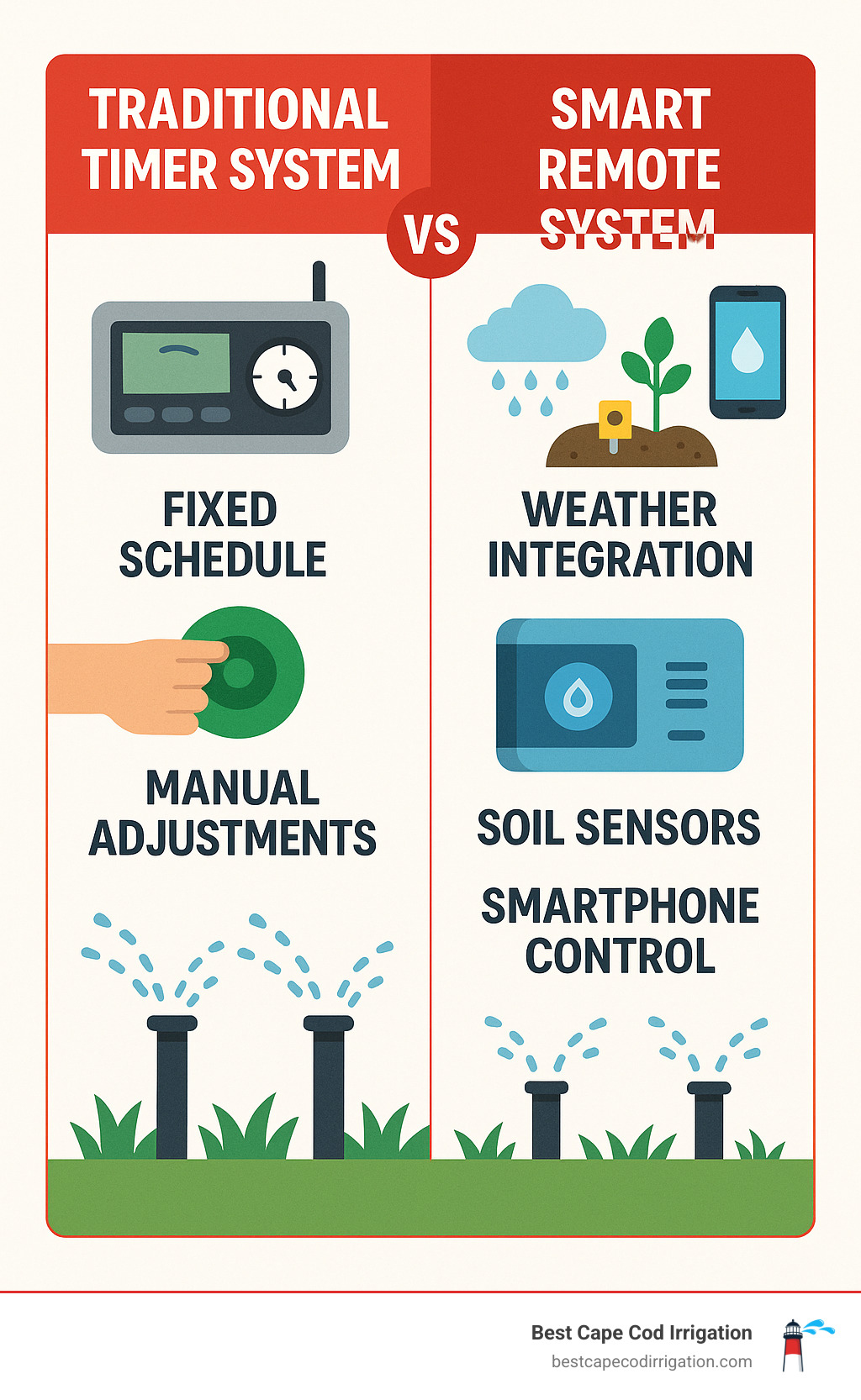
Traditional irrigation relied on fixed schedules and manual adjustments, often leading to wasted water and unhealthy plants by watering regardless of weather or soil conditions. This “set it and forget it” approach was inefficient.
In contrast, a remote irrigation system introduces smart automation through predictive watering. It uses real-time data from sensors and weather forecasts to create an optimal watering schedule. The system automatically skips a cycle if rain is coming or increases watering during a heatwave to prevent drought stress.
This shift to automatic watering systems makes lawn care effortless, reduces human error, and saves you time. The key difference is intelligence: traditional timers are reactive, while remote systems are proactive and data-driven, ensuring every drop of water is used efficiently.
Top Benefits of Upgrading Your Sprinklers
Upgrading to a remote irrigation system is a smart investment in your property, finances, and the environment. These systems create vibrant gardens with healthy plants, and the benefits go beyond convenience to include cost-effectiveness and improved property value. A remote system gives you a lush, green lawn that waters itself by adapting to weather and plant needs.

Open up Significant Water Savings
A compelling reason to switch to a remote irrigation system is its ability to conserve water, which is crucial on Cape Cod. Smart systems can reduce water consumption by up to 50% compared to traditional timers. They achieve this through precision, delivering water only where and when needed based on real-time data, avoiding overwatering. By choosing water efficient sprinklers and controllers, you can increase your impact.
EPA WaterSense certified controllers can save the average household nearly 7,600 gallons of water annually. By integrating weather forecasts, soil data, and custom zones, these systems eliminate waste from overwatering or watering during rain. This efficiency leads to significant water savings and lower utility bills. To learn more, you can Learn about EPA WaterSense certified controllers.
Improve Lawn and Plant Health
A remote irrigation system also improves the health of your lawn and plants. Incorrect watering causes many gardening problems, but our systems solve this by delivering the right amount of water at the right time. This targeted approach prevents both overwatering (which causes root rot) and underwatering (which causes plant stress). Consistent, precise moisture promotes deeper root growth and more resilient, vibrant landscapes. We understand the importance of lawn irrigation for healthy Cape Cod landscapes. Our systems allow for customized zones based on plant type, sun exposure, and soil conditions. This ensures each plant gets the correct amount of water, creating a balanced and thriving yard.
Key Features to Consider When Choosing Your System
Choosing the right remote irrigation system can feel overwhelming with so many options. The key is to focus on features that matter for your landscape and lifestyle. The best systems are reliable, fit your routine, and make your life easier, not more complicated.

Weather Integration and Predictive Watering
The most important feature of a remote irrigation system is predictive watering. This separates intelligent systems from simple Wi-Fi timers. By monitoring local weather data, the system acts as a virtual weather station for your property, adapting to Cape Cod’s climate. It automatically skips watering cycles when rain is forecast, saving money and preventing overwatering. It can also increase watering during a heat wave to reduce plant stress. This weather integration accounts for rainfall, temperature, and seasonal changes, reducing water in winter and increasing it in summer to keep your landscape thriving.
App Usability and Smart Home Integration
A confusing app makes a system useless. The best remote irrigation system apps are intuitive, turning complex scheduling into simple controls. You should be able to easily check status, adjust schedules, and get notifications. A user-friendly interface is critical. Look for systems that integrate with your smart home setup, like Alexa or Google Assistant, for voice control. Remote access is a key benefit, allowing you to monitor and control your system from anywhere with an internet connection. This means you can shut down the system immediately if you get a leak alert, even when you’re away from home.
Key Features for Your Remote Irrigation System
A great remote irrigation system recognizes that every landscape is unique.
- Custom zones: Create distinct watering areas based on plant needs. Quality systems let you specify plant types (e.g., annuals vs. perennials) for each zone and adjust schedules accordingly.
- Sun exposure: Controllers should account for sun exposure, giving more water to sunny areas and less to shady spots.
- Soil conditions: For Cape Cod’s sandy soil, systems should allow for shorter, more frequent watering cycles to prevent runoff. Programming the soil type ensures water reaches the roots.
- Compatibility: Look for systems compatible with your existing lawn sprinkler systems. The right system improves your current setup without a complete overhaul.
- EPA WaterSense certification: This certification ensures the system meets strict efficiency standards and will deliver real water savings.
Your Guide to Installation, Costs, and Maintenance
Installing a remote irrigation system is a great step towards a healthier, more efficient landscape. Key considerations include the installation process, upfront costs, and ongoing maintenance. While many systems are designed for DIY, especially for simple controller swaps, we recommend professional installation. This ensures your system is perfectly calibrated for your Cape Cod property, maximizing its longevity and benefits. Like any home system, regular care will keep it running smoothly for years.
Understanding the Costs and Long-Term Savings
The initial investment for a remote irrigation system varies based on property size, system complexity, and chosen features.
Please note: Costs mentioned are national averages based on internet research for informational purposes. For an accurate quote, a professional consultation is required. Prices can range from a few hundred to several thousand dollars depending on system complexity.
Component costs can be broken down as follows:
- Smart controllers: $70 to over $300 for advanced units.
- Sensors: Soil moisture or flow meters typically range from $40 to $200 per sensor.
- Installation labor: A simple controller swap may cost a few hundred dollars, while a full system installation could be over a thousand dollars.
Despite the upfront cost, the return on investment (ROI) is significant. These systems can cut water consumption by up to 50%, leading to substantial savings on water bills over time. By preventing overwatering and keeping your landscape healthy, you also avoid costs for plant replacement and reduce maintenance.
Common Troubleshooting Tips
Even the best remote irrigation system can have occasional issues. Most have simple fixes:
Wi-Fi connectivity problems: Ensure the controller is near your router. Try resetting both the router and controller. Verify your Wi-Fi password and that your internet is working. Many systems prefer 2.4GHz networks. Check the manual for firmware updates if problems persist.
Watering adjustments not taking effect: Check the mobile app for conflicting schedules or manual overrides. Ensure weather integration settings are correct so the system isn’t mistakenly skipping cycles. Refreshing the app or restarting the controller can help.
Power issues: If the controller is unresponsive, check its power source. For wired units, check the plug and circuit breaker. For battery-operated systems, replace the batteries. After a power outage, controllers may need 24-48 hours to reconnect.
Sensor errors: Clean any dirt or debris from the sensor and check for a snug, corrosion-free wire connection. A damaged or misplaced sensor can give inaccurate readings.
Valve malfunctions and wire connections: If a specific zone isn’t watering, check the wiring at the controller and the valve. Loose connections are a common cause. You can inspect the valve’s solenoid, but if you’re unsure about wiring, it’s always best to call a professional for help.
Frequently Asked Questions about Remote Irrigation
It’s normal to have questions when considering an upgrade like a remote irrigation system. Here are answers to common questions from Cape Cod homeowners to help you make the best choice.
How much water can a remote system really save?
A remote irrigation system can significantly reduce your water usage, often by up to 50% compared to older, fixed-schedule setups. This isn’t just a claim; it’s backed by data. EPA WaterSense certified controllers alone can save the average household nearly 7,600 gallons of water annually. These savings come from real-time adjustments based on weather forecasts, soil moisture, and plant needs. Water is applied only when and where it’s needed, eliminating waste from overwatering or running during rain.
Are these systems difficult to install and use?
Most modern remote irrigation systems are designed to be user-friendly. Many models are DIY-friendly, especially if you’re just replacing an old controller, a process that can take less than an hour. The mobile apps are typically intuitive, simplifying control. However, for new installations, integrating sensors, or for a hands-off approach, professional installation is a smart choice. Our team provides a seamless professional irrigation system setup, ensuring every component is perfectly configured for your Cape Cod landscape for maximum efficiency and peace of mind.
Can a remote system adapt to local watering restrictions?
Yes, a remote irrigation system excels at adapting to local watering restrictions, a key feature for Cape Cod homeowners. You can easily program specific watering days and times to align with municipal regulations. Advanced systems can even adapt automatically by accessing local ordinance information via the cloud. This smart compliance feature helps you avoid violating local rules while keeping your landscape healthy.
Accept Smarter Watering for Your Cape Cod Landscape
The future of lawn care is here. A remote irrigation system is a smart investment for your wallet, your plants, and the Cape Cod environment. Key benefits include water savings of up to 50%, healthier plants, and the convenience of managing your system from anywhere.
The industry continues to evolve with AI integration and advanced sensors, pushing for greater sustainability and efficiency. At Best Cape Cod Irrigation, we combine 25+ years of regional expertise with this cutting-edge technology. We understand Cape Cod’s unique soil and weather, allowing us to design custom, eco-friendly solutions for your property.
From Mashpee to Chatham, we help homeowners achieve efficient, worry-free watering that results in a beautiful, healthy landscape year-round. You’ll no longer worry about wasting water, forgetting to water, or running sprinklers in the rain.
Ready to see what smarter watering can do for your property? Explore our Smart Irrigation Solutions and let’s transform your landscape. Your plants and your water bill will thank you!