


Why Knowing How to Repair Your Lawn Irrigation Pipe Matters
If you’re wondering how to repair lawn irrigation pipe, you’re not alone. A geyser of water or a soggy patch on your lawn are clear signs of a broken sprinkler line.
While it might seem like a big, expensive problem, repairing an irrigation pipe is often a straightforward DIY project that can save you significant money. For example, a DIY repair might cost around $11 in materials, while hiring a pro could be $200 or more.
Quickly fixing a broken pipe saves water and keeps your Cape Cod lawn looking its best.
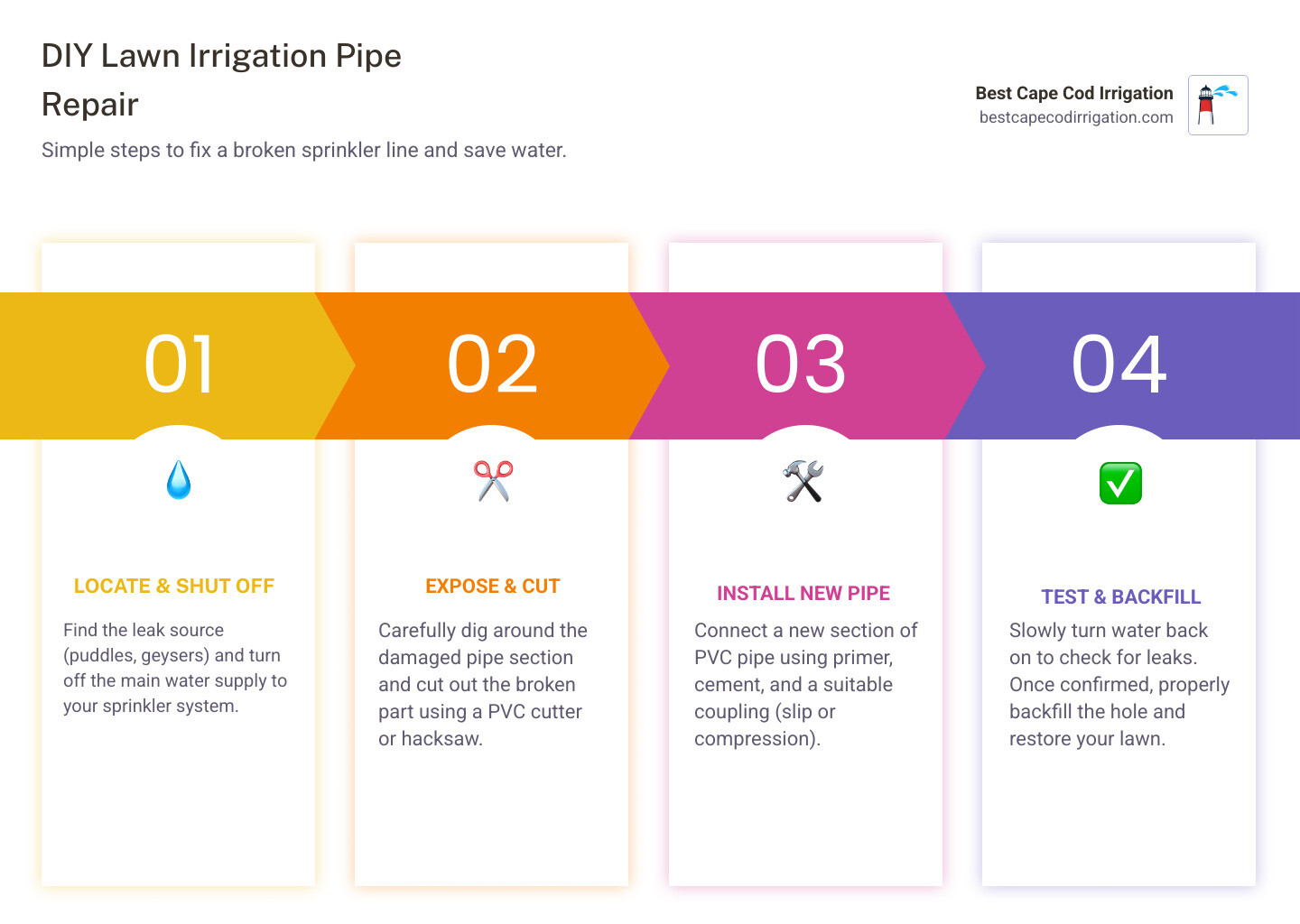
Here’s a quick look at the main steps involved:
- Locate the Leak: Find where the water is escaping.
- Turn Off Water: Shut down your sprinkler system’s water supply.
- Dig Up Pipe: Carefully expose the damaged section of pipe.
- Cut Out Damage: Remove the broken part of the pipe.
- Install New Section: Use a coupling to connect a fresh piece of pipe.
- Test for Leaks: Turn water back on slowly and check your work.
- Backfill Hole: Restore your lawn once the repair is solid.
How to repair lawn irrigation pipe terms you need:
Before You Begin: Diagnosis and Preparation
Good preparation is key to successfully learning how to repair lawn irrigation pipe. Understanding the cause of the break and gathering the right tools beforehand makes the process much smoother.
Identifying the Leak and Its Cause
First, play detective to find the leak. Look for obvious signs like a geyser of water, a soggy spot, dry patches, low pressure, or sunken ground. You might even hear running water when the system is off.
Common causes for leaks include:
- Frost and Frozen Water Damage: Water freezing and expanding in pipes during Cape Cod winters can cause cracks. Proper winterization is crucial.
- Accidental Digging: Shovels or other digging tools can easily puncture pipes. This is a very common cause of leaks.
- Tree Roots: Growing tree roots can wrap around and crush or crack pipes over time.
- Soil Shifting: Natural ground movement can stress pipes and fittings, leading to breaks.
- Lawn Equipment: Weed eaters or edgers can damage pipes that are too close to the surface.
- Bad Installation or Defective Pipes: The problem can sometimes be traced back to improper installation or faulty materials.
To pinpoint a hidden leak, run your sprinkler system one zone at a time and watch for bubbling water or puddles. For more tips, see our guide on sprinkler system leak detection.
Gathering Your Tools and Materials
Having the right tools ready makes learning how to repair lawn irrigation pipe much easier. Lay everything out before you start digging to avoid scrambling mid-repair.
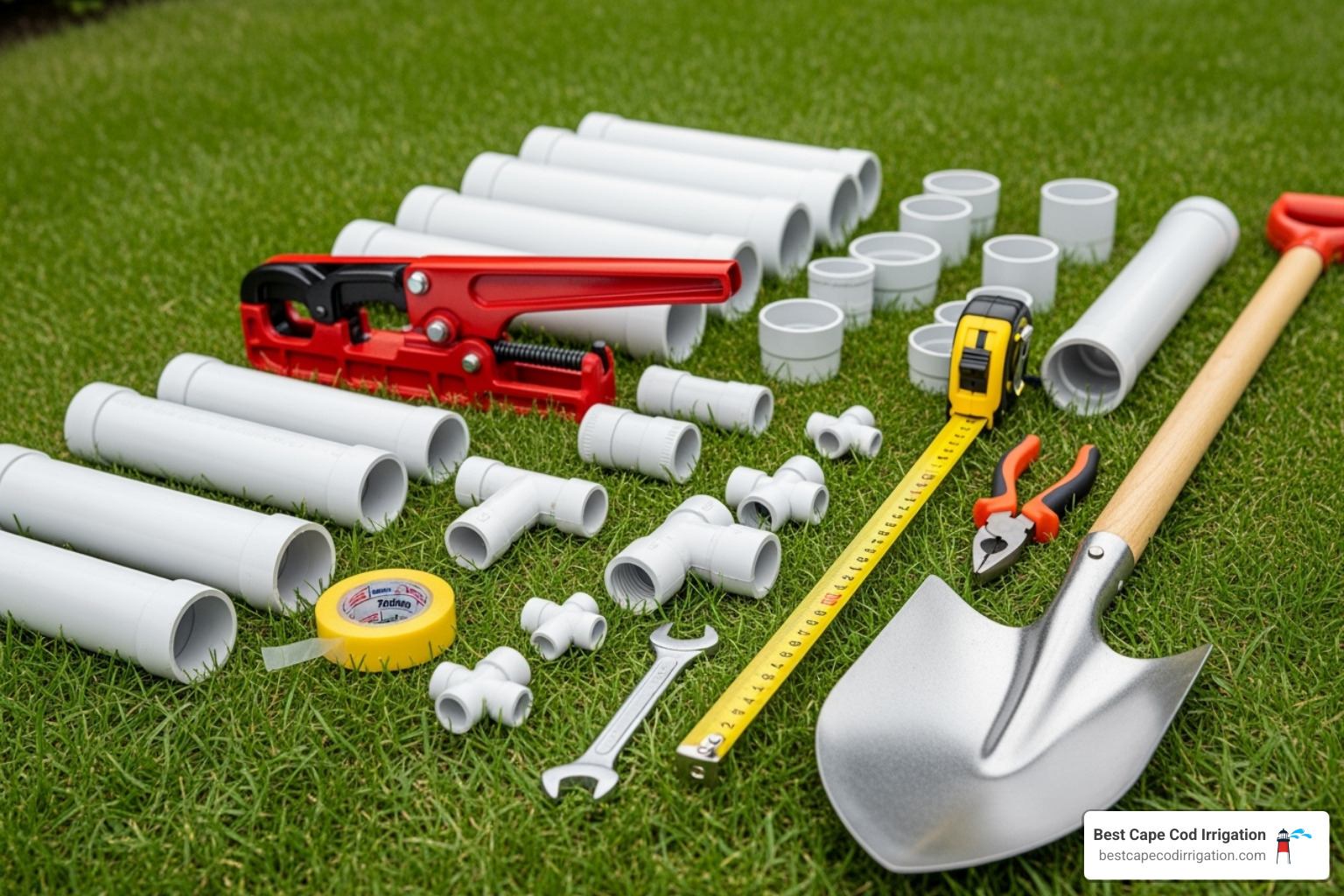
Here’s what you’ll typically need:
- Shovel or Hand Trowel: For digging around the pipe carefully.
- PVC Pipe Cutter or Hacksaw: For making clean, straight cuts on the pipe.
- Measuring Tape: To measure the replacement pipe section.
- PVC Primer: Cleans and softens the PVC to prepare it for a strong bond with the cement.
- PVC Cement: Chemically bonds the pipe and fittings for a watertight seal. Use one rated for wet conditions if needed.
- Replacement PVC Pipe: Must be the same diameter and schedule (thickness) as your existing pipe.
- Couplings: To connect the new pipe to the existing line.
- Slip Couplings: Ideal for repairs as they bridge gaps without needing to flex the existing pipe.
- Compression Couplings: Use gaskets and clamps for a seal without primer or cement. They are handy for tight spots but check the manufacturer’s PSI rating to ensure they are suitable for pressurized systems. Here’s an example of a compression coupling.
- Rags or Towels: For cleaning pipe ends and wiping excess primer/cement.
- Bucket of Water: For quick clean-ups.
Shutting Down and Playing it Safe
Safety is a crucial part of learning how to repair lawn irrigation pipe. Before digging, ensure the area is safe and the water is off.
- Turn Off the Water: Locate your main shut-off valve (usually near the water meter or backflow preventer) and turn it off completely.
- Drain the System: After shutting off the main valve, run a sprinkler zone briefly to relieve pressure and drain water from the lines.
- Call 811 Before You Dig: This is a non-negotiable safety step. Call 811 a few days before you dig to have underground utility lines marked for free. This prevents injury and costly damage. Learn more at Call 811 before you dig.
- Electrical Safety: If working near electrical components like sprinkler valves, turn off the power to your sprinkler controller.
With these steps done, you’re ready to start the repair.
Step-by-Step Guide: How to Repair Lawn Irrigation Pipe
With the prep work done, it’s time to make the repair. This guide will walk you through each step for a lasting, watertight fix.
Step 1: Digging and Exposing the Damaged Pipe
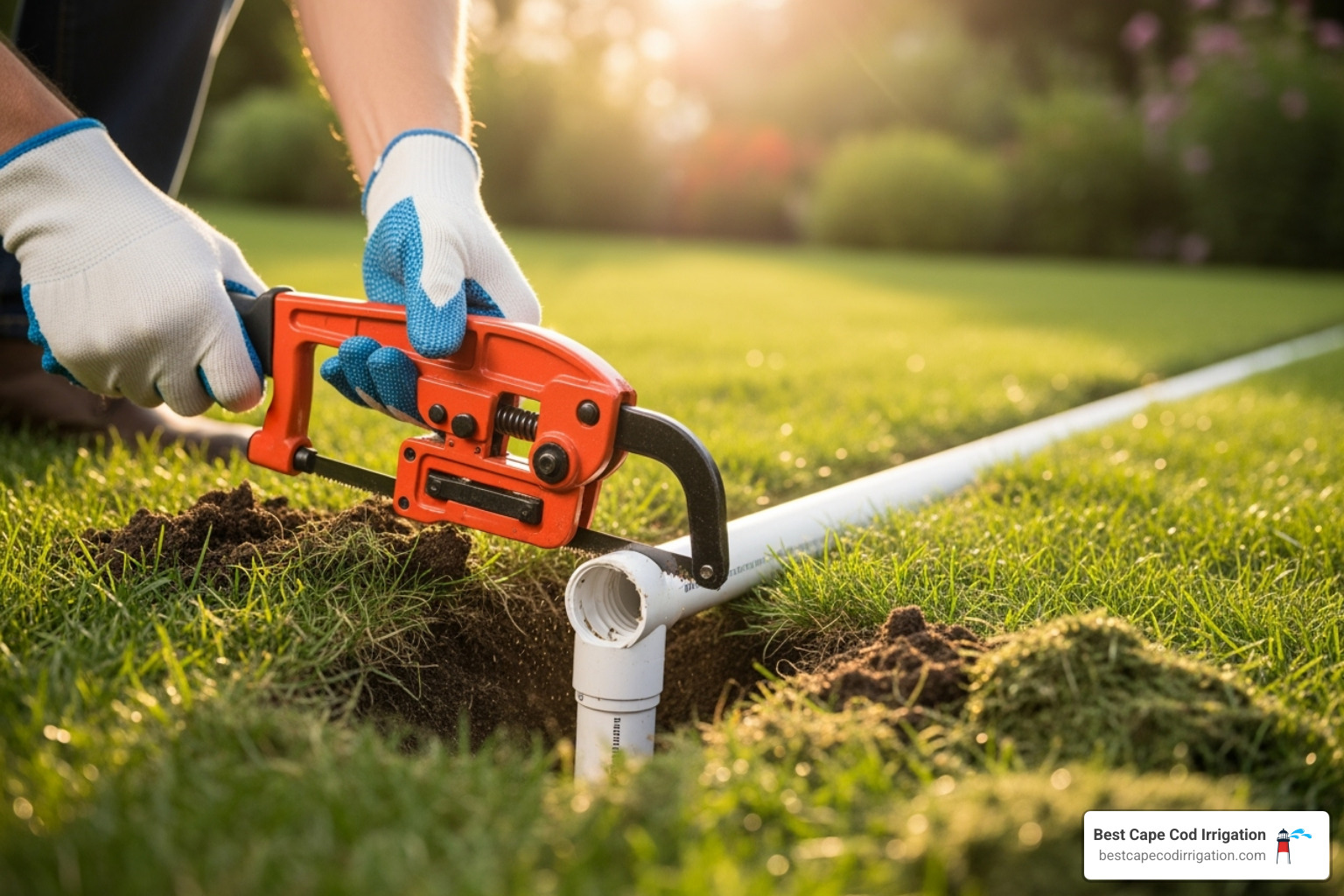
Carefully expose the broken pipe while minimizing lawn disruption. Start by digging carefully around the leak, using a hand trowel to avoid damaging the pipe. If digging in grass, cut a square of sod and set it aside on a tarp. This makes lawn restoration much easier.
Dig a hole wide enough for you to work comfortably, exposing at least 6 inches of pipe on each side of the break and digging about 3 inches below it. Once exposed, use a rag to clean the pipe thoroughly. A clean surface is essential for a good seal.
Step 2: Cutting Out the Damaged Section
Now, remove the damaged section of pipe with precision. Use a PVC pipe cutter or hacksaw to make two straight, square cuts on either side of the break, ensuring you’re cutting into undamaged pipe. Remove at least a 4-inch section. Measure the gap to determine the length of your replacement pipe. After cutting, deburr the edges of the pipe with a utility knife or sandpaper to ensure a proper seal and water flow.
Step 3: Joining the New Pipe: The Key to How to Repair Lawn Irrigation Pipe
This is the key step in how to repair lawn irrigation pipe: joining the new pipe section. Always perform a “dry fit” first by assembling the new pipe and couplings without adhesive to ensure everything fits correctly.
- Apply PVC primer to the outside of the pipe end and the inside of the coupling. The primer cleans and softens the PVC for a strong bond.
- Immediately follow with PVC cement on the same areas. Work quickly, as it dries fast.
- Quickly slide the coupling onto the pipe, twisting slightly as you push. Hold it firmly for 10-30 seconds to allow the cement to set.
- Repeat the process to attach the new pipe section to the other side of the coupling.
- For the final connection, use a slip coupling to easily bridge the gap. Apply primer and cement, then slide the coupling to connect the new pipe to the existing line.
Ensure all connections create a snug, watertight seal. Our irrigation PVC pipe repair service page has more details.
Step 4: Curing and Testing Your Repair
Don’t rush this final step. Patience now prevents re-doing the work later. PVC cement needs time to cure. Wait at least 1-2 hours before testing, but 24 hours is ideal for a full-strength bond, especially on main lines. Check the cement can for specific instructions.
After the cure time, turn the water on slowly at the main shut-off valve to avoid stressing the new joints. Check for leaks by inspecting all new joints for drips or sprays. If you find a leak, you may need to tighten a compression fitting or redo a cemented joint. It’s better to find it now than after backfilling. If there are no leaks, run the system through all zones to confirm the repair is holding strong.
Finishing the Job: Flushing and Backfilling
You’ve learned how to repair lawn irrigation pipe, but don’t skip these final two steps for a professional finish.
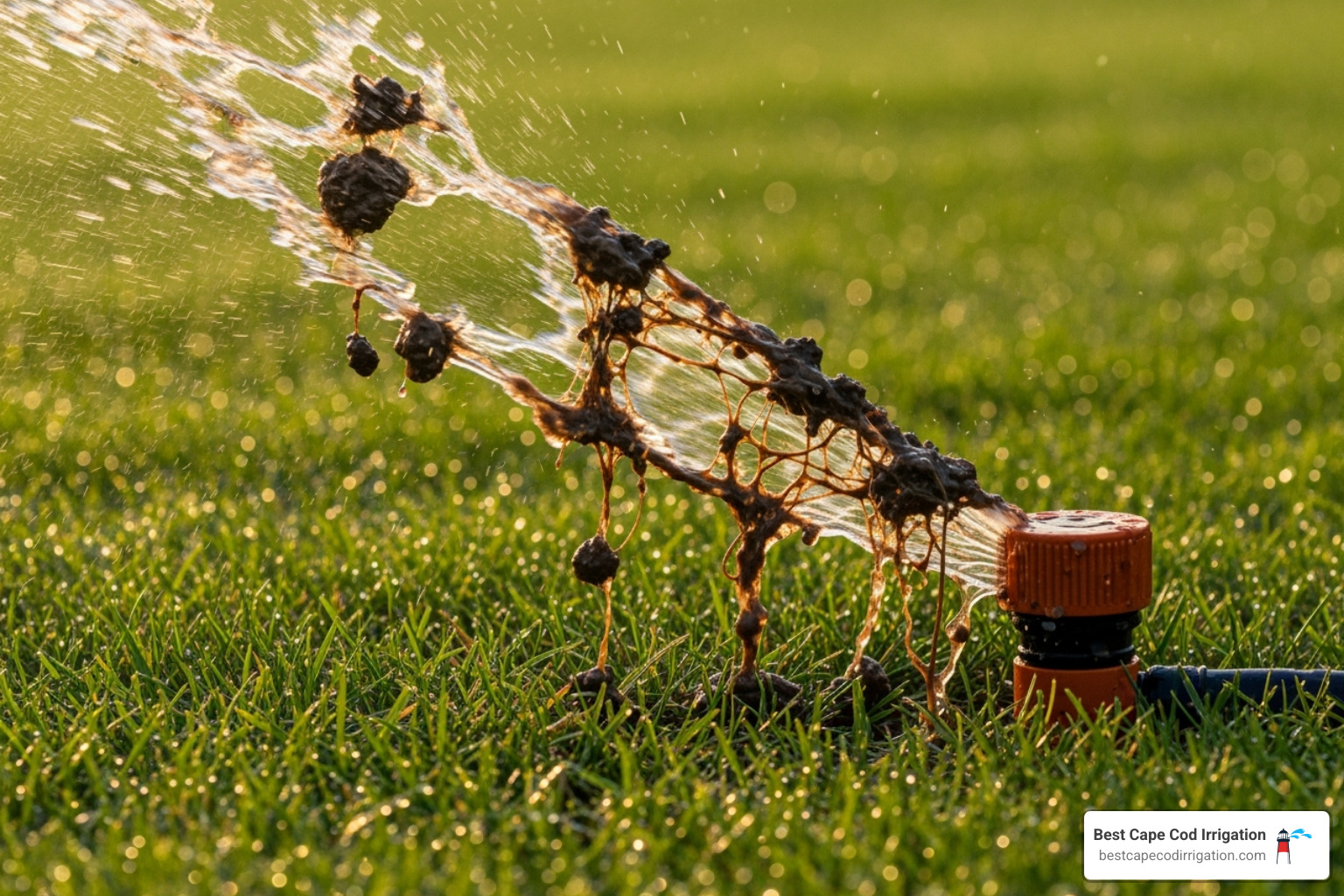
Flushing Dirt and Debris from the Lines
It’s likely that dirt and debris entered the pipe during the repair. Flushing the line prevents this debris from clogging sprinkler heads or damaging valves. To flush the line, temporarily remove the sprinkler heads in the affected zone. This creates an open path for debris to exit.
Turn on the water for that zone and let it run until it’s clear. A pro tip is to start with the furthest sprinkler head from the valve and work your way back. Once the water runs clear, you can reinstall the heads.
How to Properly Backfill and Restore Your Lawn
Proper backfilling supports the repair and helps your lawn recover. First, add support under the pipe by packing soil or sand beneath the repaired section. This prevents sagging and future breaks.
When backfilling with soil, pack it gently but firmly around the pipe. Over-compacting can stress the repair. If you saved the patch of sod, place it back into position, pressing it down gently to ensure good soil contact. Finally, water the new sod thoroughly to help its roots re-establish. Soon, the repair will be invisible.
DIY vs. Hiring a Professional
Learning how to repair lawn irrigation pipe is a manageable DIY project, but sometimes it’s best to call a pro. The decision depends on your budget, time, the problem’s complexity, and your comfort with the work.
| Feature | DIY Repair | Professional Repair |
|---|---|---|
| Cost | Low (supplies only, $11-$100) | Higher (labor + materials, $270-$850+) |
| Time | 3-4 hours | Varies, but often quicker due to expertise |
| Complexity | Simple breaks, visible leaks | Multiple leaks, main line breaks, electrical issues, complex valve problems, hidden leaks |
| Tools | Basic hand tools, pipe cutter, primer, cement | Specialized tools, diagnostic equipment, experience |
The Cost of Repairing a Sprinkler Line
A major benefit of a DIY repair is cost savings. Supplies typically cost between $11 and $100. In contrast, professional repairs naturally cost more due to labor and expertise. Based on national data, most homeowners spend around $270 for professional sprinkler system repairs. Simple fixes might start around $50, while complex issues involving main line breaks can reach $850 or more.
Please note: These are average costs based on national data and do not reflect actual prices for Best Cape Cod Irrigation services. Costs can range from under $100 for simple DIY fixes to over $850 for complex professional repairs, depending on the specific issue, materials, and labor involved.
When to Call for Professional Help
While many repairs are DIY-friendly, calling a professional is the smartest move for certain situations. It’s important to know your limits.
- Multiple leaks or extensive damage: These can signal a systemic problem that needs a professional evaluation.
- Main line breaks: These high-pressure lines require expert knowledge to repair safely and correctly.
- Electrical issues: Faulty wiring, solenoids, or controllers are dangerous and require a professional.
- Complex valve or backflow preventer issues: These require specialized tools and knowledge for diagnosis and repair.
- Hidden leaks: Professionals have specialized equipment to locate leaks without extensive digging.
- Lack of time or tools: If you’re short on time or don’t have the right equipment, hiring a pro ensures the job is done right and can save you from costly mistakes.
For more guidance on when professional help is your best bet, check out our comprehensive information on lawn irrigation repair.
Frequently Asked Questions about Irrigation Pipe Repair
Here are answers to common questions about learning how to repair lawn irrigation pipe.
What is the easiest way to repair a PVC irrigation pipe?
For most DIYers, the easiest repair method uses a slip coupling or a compression coupling. These fittings are designed for repairs and eliminate the need to bend or flex existing pipes, which is difficult in a tight space. They easily bridge the gap from the damaged section you removed.
How long does PVC glue take to dry for a sprinkler system?
The cure time for PVC cement depends on pipe size, temperature, and humidity. As a general rule, wait at least 1 to 2 hours before slowly turning the water back on. For a full-strength bond, especially on a main line under constant pressure, waiting 24 hours is ideal. Always check the manufacturer’s instructions on the can.
Can a sprinkler system leak even when it’s turned off?
Yes, a system can leak when it’s off. This usually indicates a faulty zone valve that isn’t closing completely, allowing water to seep out, often at the lowest sprinkler head in the zone. A leak in the main supply line (which is always under pressure) is another, less common, possibility.
Keep Your Lawn Green and Your Water Bill Low
Learning how to repair lawn irrigation pipe is a valuable skill. It saves you money, conserves water, and keeps your Cape Cod lawn healthy. There’s a great sense of accomplishment in fixing it yourself.
While many repairs are DIY-friendly, some problems are more complex. Multiple leaks, main line breaks, or a lack of time or tools are all valid reasons to call a professional.
That’s where Best Cape Cod Irrigation can help. With over 25 years of experience on Cape Cod, we are experts at diagnosing and fixing any irrigation issue. We use eco-friendly solutions and smart technology to ensure your system runs efficiently and reliably.
Don’t let a broken pipe damage your landscape or your budget. If you’re facing a complex repair, need routine maintenance, or prefer to leave it to the experts, we’re here to help.
Let us help keep your Cape Cod lawn perfectly watered and worry-free. Schedule your irrigation repairs and maintenance with us today!