


Why Cape Cod Homeowners Choose Poly Pipe for Sprinkler Connections
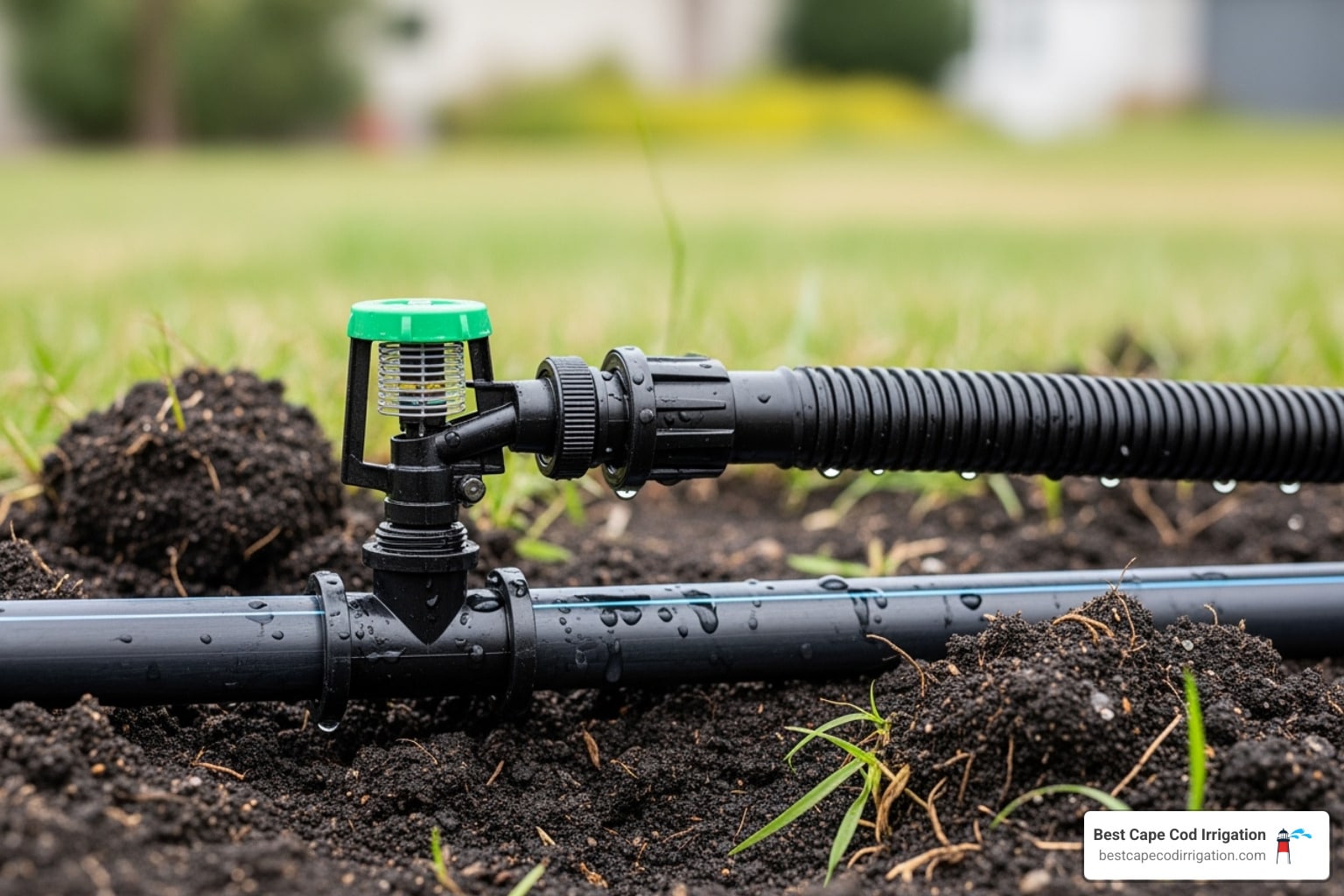
Connecting sprinkler head to poly pipe is one of the smartest moves you can make for your Cape Cod irrigation system. This flexible connection method protects your sprinklers from damage while adapting to our region’s unique challenges – from sandy soil shifts to freeze-thaw cycles.
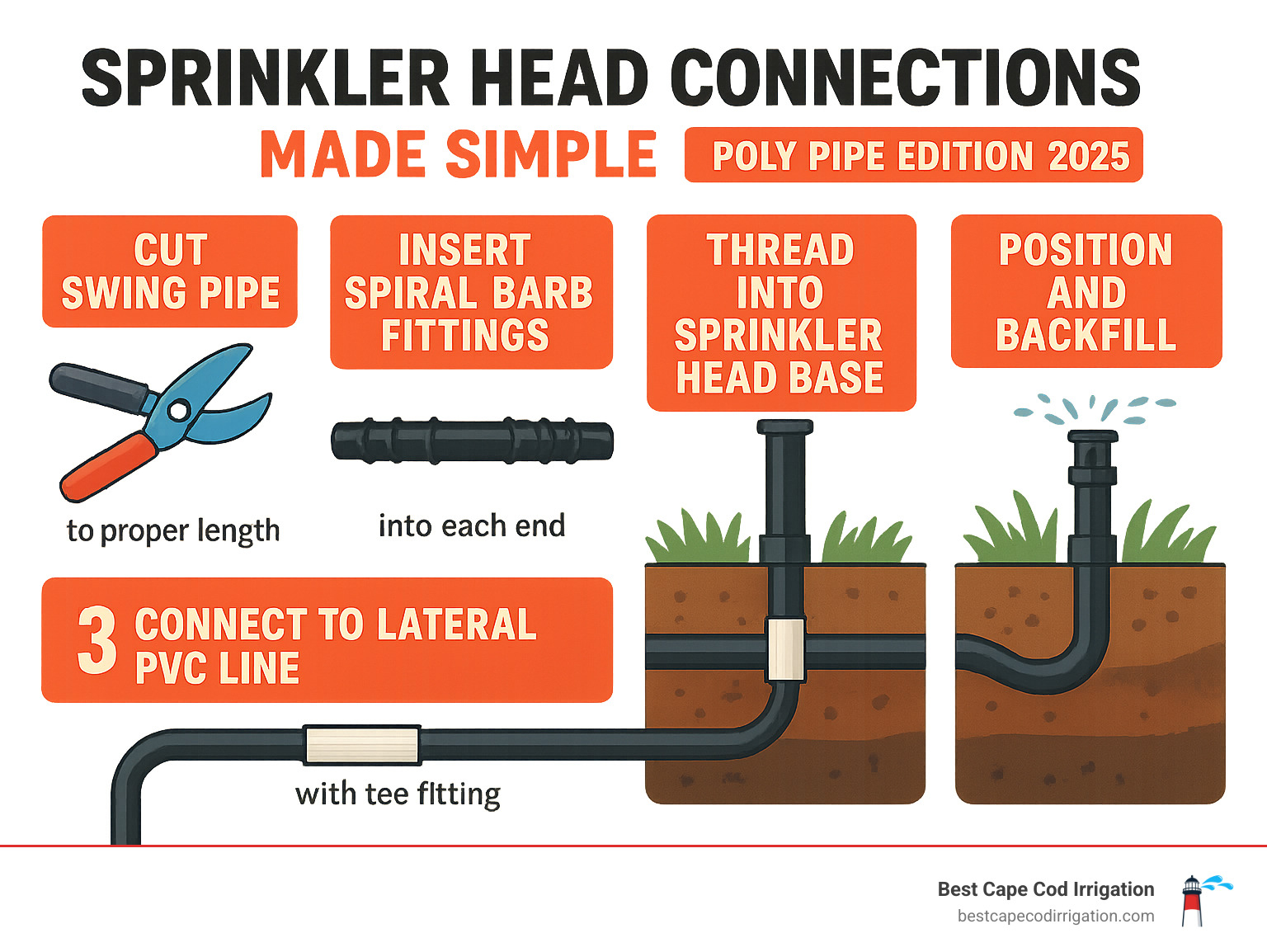
Quick Answer: How to Connect Sprinkler Head to Poly Pipe
- Cut swing pipe to 12-18 inches length
- Insert spiral barb fittings into each end of the poly pipe
- Connect one end to your lateral PVC line with a tee fitting
- Thread the other end into your sprinkler head base
- Position and backfill ensuring proper drainage
This method uses what’s called “swing pipe” or “funny pipe” – a flexible polyethylene tubing that acts as a shock absorber between your rigid underground pipes and sprinkler heads.
Unlike rigid risers that crack under pressure from lawn mowers or freeze damage, poly pipe connections bend and flex. They’re perfect for Cape Cod’s challenging conditions where sandy soil can shift and winter temperatures can wreak havoc on traditional systems.
The beauty of this connection method lies in its simplicity. You don’t need special tools or professional expertise – just basic fittings and a willingness to dig a small trench.
Essential connecting sprinkler head to poly pipe terms:
- how are irrigation systems installed
- irrigation pipe installation
- professional irrigation installation
Why Choose Poly Pipe for Sprinkler Connections?
Imagine mowing your lawn and hitting a sprinkler head. With rigid PVC risers, you’d likely face a cracked pipe. But with polyethylene pipe—specifically swing pipe or funny pipe—the connection flexes and bounces back, preventing damage.
Modern poly pipe is engineered from high-quality polyethylene that resists UV rays, absorbs impacts, and bends without breaking. It’s revolutionizing irrigation system design by offering a balance of durability and flexibility, simplifying both installation and maintenance. Unlike rigid systems that require precise measurements, poly pipe is forgiving and adapts to your landscape. For homeowners or professionals, our Irrigation Pipe Installation services can help you choose the right solution.
Best Flexibility and Protection
Swing pipe excels at navigating obstacles like tree roots or hardscaping. This flexibility also provides impact absorption. Stress from lawn mowers or foot traffic can crack rigid risers, but swing pipe absorbs these impacts, protecting the system. Adjustments are also simpler. If you need to change your sprinkler height, swing pipe allows for simple tweaks instead of major reconstruction, which is key to preventing broken risers.
Ideal for Cape Cod’s Climate and Soil
On Cape Cod, irrigation systems must be adaptable. The freeze resistance of poly pipe is a game-changer in our cold climates. When water freezes, rigid pipes crack, but poly pipe’s flexibility allows it to expand and contract, reducing frost heave damage.
Our sandy soil also shifts and settles. Rigid connections can’t handle this movement and often develop leaks. Swing pipe moves with the soil, maintaining tight connections and promoting water conservation. For precise watering in sandy soil, consider our Drip Pipe Installation options.
Swing Pipe vs. Rigid Risers
While both have their place, connecting sprinkler head to poly pipe offers clear advantages for most homes:
| Feature | Swing Pipe | Rigid PVC Risers |
|---|---|---|
| Flexibility | Bends easily around obstacles, absorbs impact | Requires precise cuts, breaks under stress |
| Installation Ease | Quick connections, forgiving measurements | Exact measurements needed, priming and cementing required |
| Cost | Higher upfront, lower long-term repair costs | Lower initial cost, expensive repairs from breakage |
| Durability | Impact and freeze resistant | Brittle, cracks from impact or temperature changes |
| Friction Loss | Minimal at typical sprinkler head flow rates | Lower for very high flow applications |
While friction loss is a consideration, it’s negligible for individual sprinkler heads at normal flow rates (under 10 GPM). For residential use, the benefits of flexibility and protection far outweigh minor pressure differences. Swing pipe excels in real-world conditions, providing reliable watering that withstands daily life.
Essential Tools and Materials for the Job
Before connecting sprinkler head to poly pipe, gather your tools and materials. This project doesn’t require specialized equipment; most items are common tools or easily found at a hardware store.
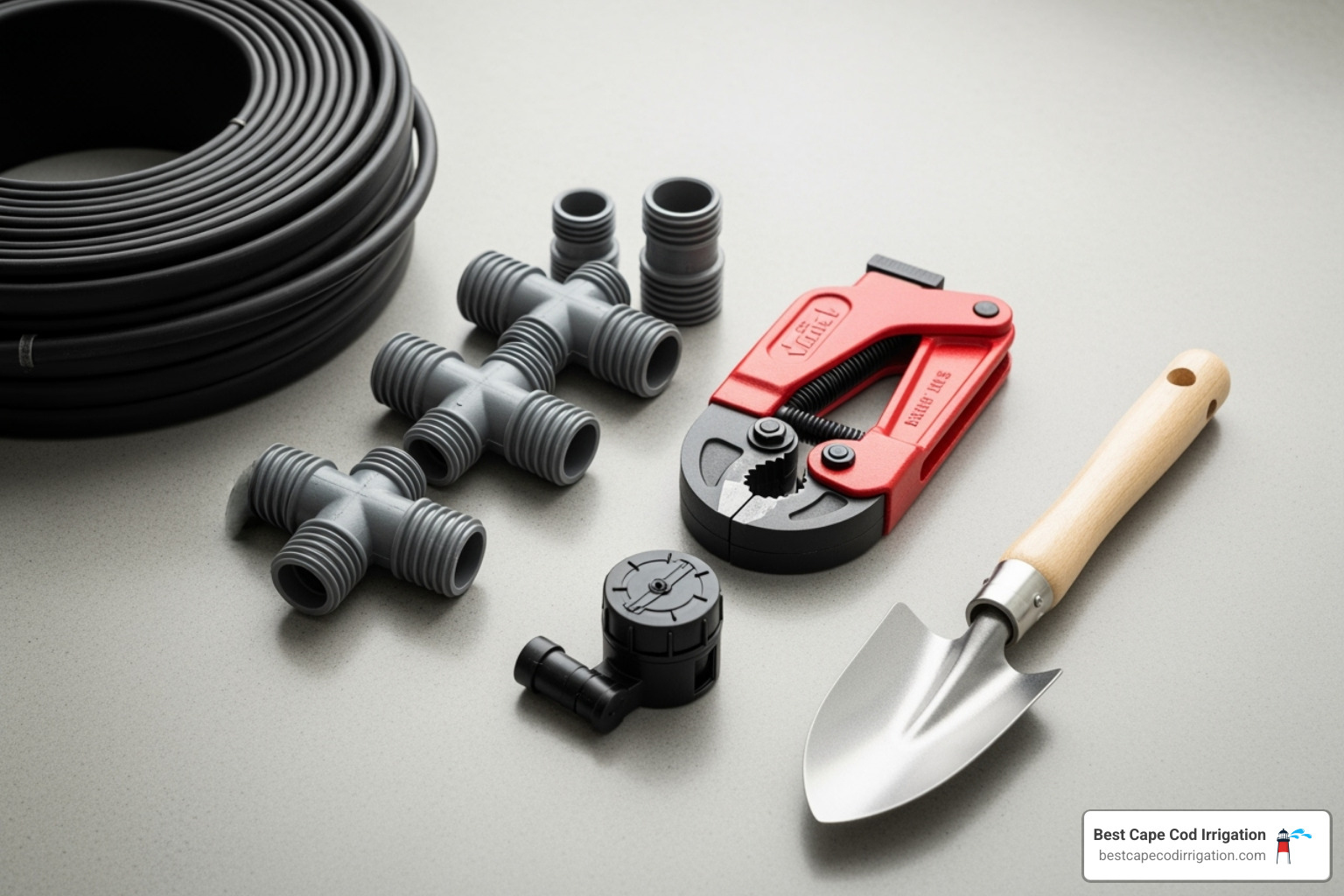
Here’s what you’ll need:
- Shovel: A narrow trenching shovel is ideal, but any shovel will work for digging and backfilling.
- Pipe Cutter: A sharp pipe cutter or utility knife is essential for clean, straight cuts to ensure leak-proof connections.
- Swing Pipe: Use 1/2-inch diameter swing pipe, a flexible tubing specifically designed for this purpose.
- Sprinkler Heads: Choose pop-up spray heads or rotors based on your lawn’s needs.
- Spiral Barb Fittings: These create watertight seals without glue or primer.
Selecting the Right Fittings for Poly Pipe
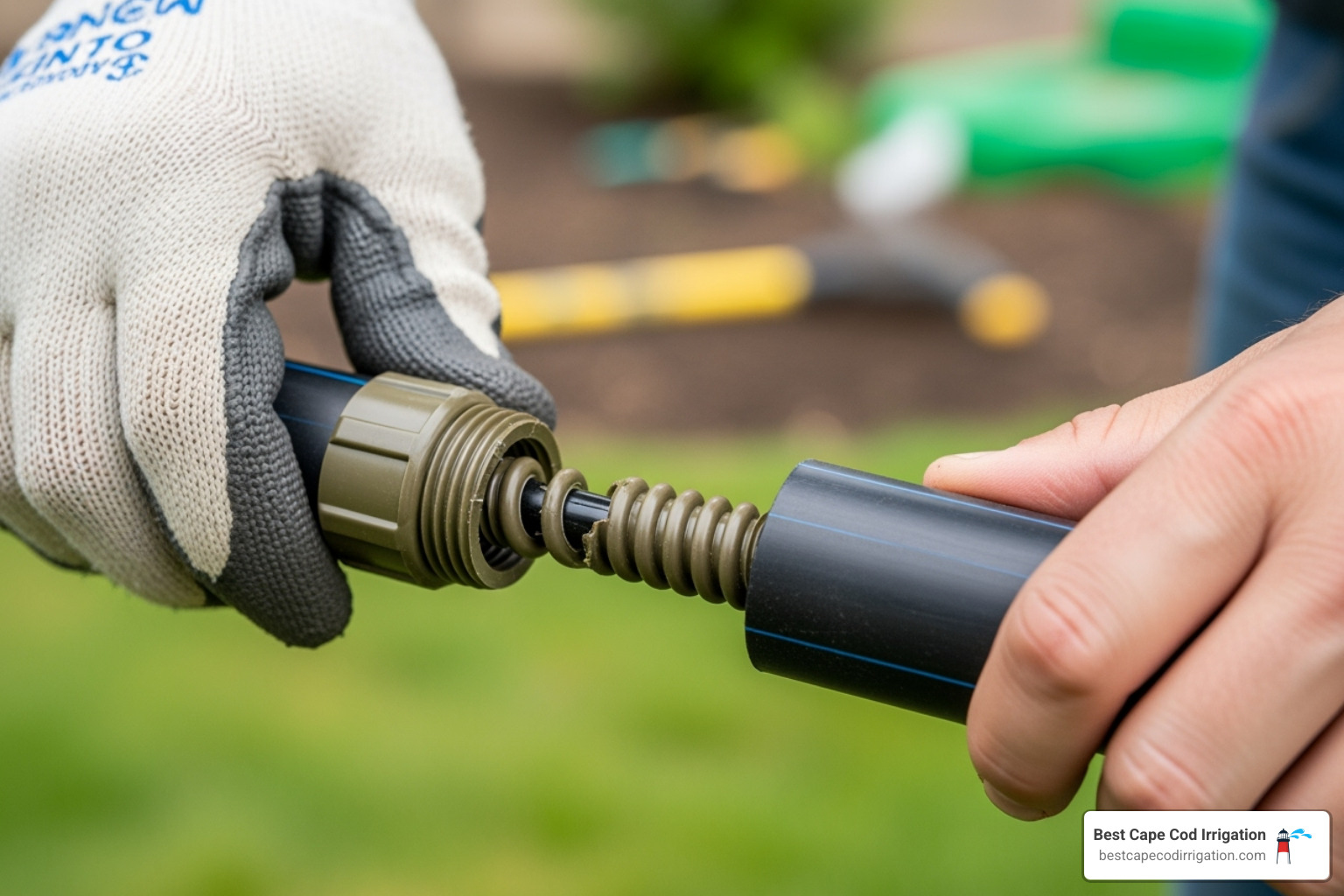
Choosing the right fittings is crucial. For swing pipe, spiral barb fittings are the best choice. Their barbs grip the inside of the pipe with a simple push-and-twist motion, creating a strong mechanical seal.
Other options include:
- Compression fittings: These squeeze the outside of the pipe and are reusable, but you must know the pipe’s exact Outside Diameter (OD).
- Threaded adapters: Use these to connect poly pipe to existing PVC pipes or other threaded components.
Understanding pipe diameter is key. Spiral barb fittings rely on the Inside Diameter (ID), while compression fittings use the Outside Diameter (OD). Always measure carefully and check manufacturer specifications. For a detailed overview, see this guide to swing pipe fittings.
For most swing pipe connections on Cape Cod, start with spiral barb fittings. They are reliable, forgiving, and ideal for our local conditions, helping you avoid future leaks.
How to Master Connecting Sprinkler Head to Poly Pipe: A Step-by-Step Guide
This guide details how to connect a sprinkler head to poly pipe for a robust, efficient system. Swing pipe is forgiving, allowing for adjustments that rigid PVC does not. Follow these steps for a professional result.
Step 1: Prepare Your Lateral Line and Dig the Trench
First, call 811 a few days in advance to have underground utilities marked. Once cleared, mark your sprinkler point locations. Trenching should be 6 to 12 inches deep, wide enough to work comfortably. At each sprinkler location, install a clean tee fitting or elbow fitting into your lateral pipe (PVC or poly). This fitting is where your swing pipe will connect.
Step 2: Cut the Swing Pipe and Attach the Fittings
Measure your swing pipe to 12-18 inches per connection. This length provides flexibility while minimizing friction loss. Use a pipe cutter to make clean, square cuts for a good seal. Then, attaching those spiral barb fittings is as simple as pushing and twisting them into each end of the swing pipe until they are secure.
Pro-tip: On a cool day, let the swing pipe warm in the sun to make it more pliable and easier to work with. If you encounter issues with existing pipes, our Irrigation PVC Pipe Repair Service can help.
Step 3: The Final Connection: Attaching the Sprinkler Head to Poly Pipe
Connecting to your lateral line is the next step. Thread one end of your swing pipe assembly into the tee or elbow fitting. Hand-tighten these connections firmly but do not overtighten, as this can crack plastic fittings. For extra security on threaded connections, you can use thread seal tape. Next, thread the sprinkler head onto the other end of the swing pipe. The sprinkler head base should be secure, and the swing pipe’s flexibility allows for easy final adjustments. For issues with existing hoses, we offer Repairing Underground Sprinkler Hoses services.
Step 4: Positioning, Backfilling, and Testing
Setting the head grade is critical. Position the sprinkler head so it sits level with the soil when retracted. For better freeze protection, position the head slightly above the lateral line to allow water to drain back. When backfilling the trench, compact the soil gently around the head to keep it stable.
Before finishing, flush the system to clear debris. Then, turn the water on and run each zone, checking for leaks at every connection. This is also the time for adjusting spray patterns for even coverage. Finding and fixing issues now is much easier than digging up your lawn later. If you find a leak, our Irrigation Pipe Leak Repair service can assist.
Common Issues and Pro Tips for a Flawless Finish
Even with good planning, issues can arise when connecting sprinkler head to poly pipe. Most problems have simple solutions. The key is to stay calm and check the basics first.
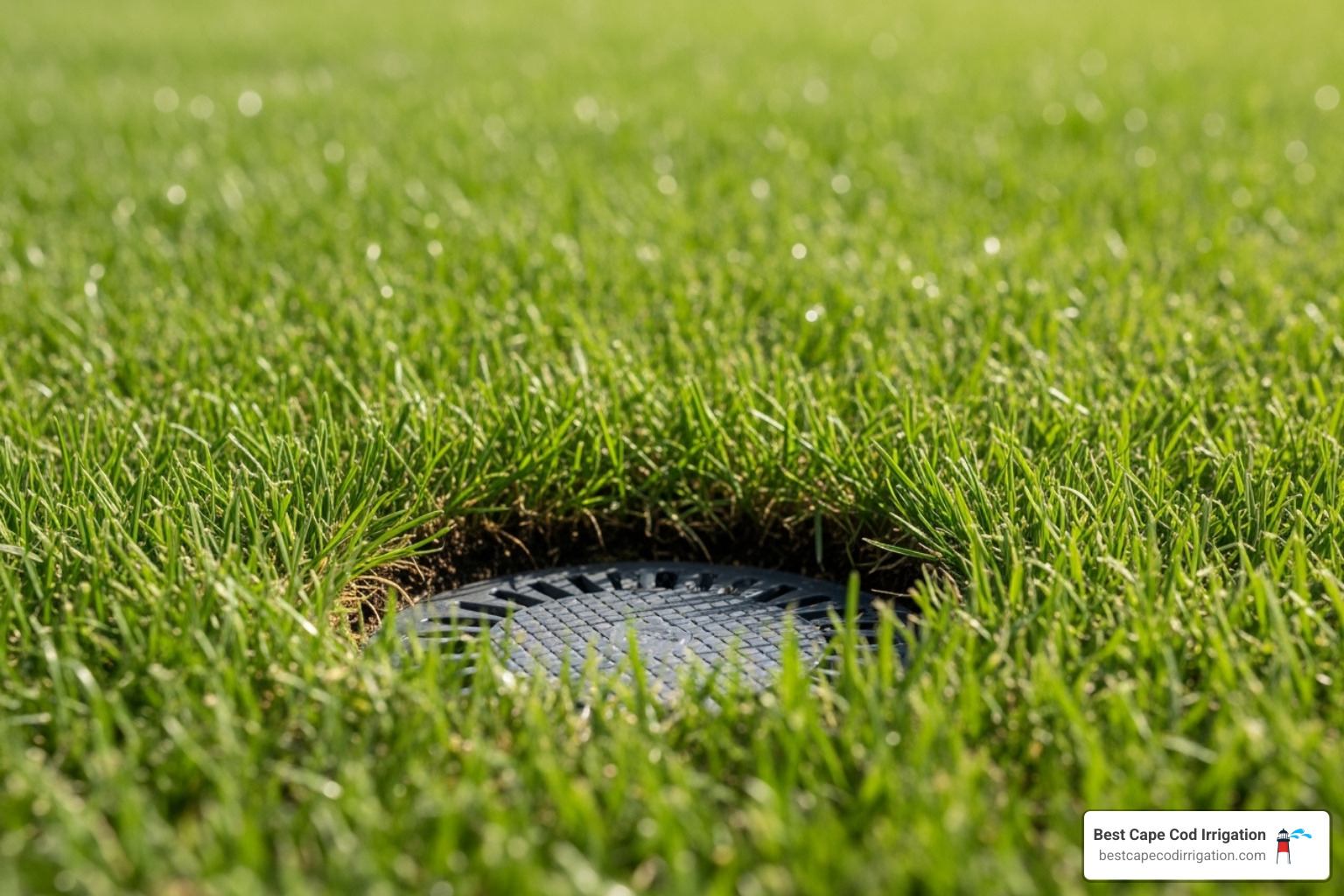
Troubleshooting Leaks and Loose Connections
Leaks are common and usually easy to fix. Start by checking your secure fittings. With spiral barb fittings, ensure they are pushed far enough into the swing pipe. For threaded connections, hand-tight plus a quarter turn is usually sufficient. Run a water pressure test to watch each connection carefully, as some leaks only appear under full pressure.
Also, be careful to avoid checking threads that are cross-threaded. If you suspect this, unscrew the connection and realign it. While not always necessary, thread seal tape (wrapped clockwise) can provide extra insurance on threaded fittings.
The most common installation mistakes are ragged pipe cuts, not fully seating barb fittings, or overtightening connections. Take your time with each step for a durable system.
Understanding Flow Rate and Pressure Limitations
Understanding flow rate and pressure will improve system efficiency and help avoid friction loss. Swing pipe is designed for 5 to 10 gallons per minute (GPM), which is well within the range for typical spray heads (2-4 GPM) and rotors (3-6 GPM).
Your water pressure (PSI) should be between 30-50 PSI for optimal performance. Regarding length considerations, stick to the recommended 12-18 inches. Using pieces over 36 inches can reduce pressure and affect system performance, especially with low-flow heads.
For detailed technical information, Rain Bird’s Swing Pipe Installation Tips is an excellent professional resource.
Pro Tip for connecting sprinkler head to poly pipe in Cold Climates
On Cape Cod, proper winterization is crucial for freeze damage prevention. When positioning your sprinkler head, set it slightly higher than the lateral line. This simple trick creates proper drainage, allowing water to flow back into the main system instead of freezing in the head.
For the best protection, a professional system blowout with compressed air is recommended. This process removes all water from the lines, providing complete peace of mind during our harsh winters. While poly pipe is freeze-resistant, proper drainage and winterization are key to a long-lasting system.
Frequently Asked Questions about Poly Pipe Connections
After helping Cape Cod homeowners with irrigation systems for over 25 years, we’ve heard just about every question you can imagine about connecting sprinkler head to poly pipe. Here are the ones that come up most often, along with our straight-forward answers.
What is the difference between standard poly pipe and swing pipe?
Think of standard poly pipe as the workhorse of your irrigation system. It’s the sturdy, thicker tubing that carries water along your main or lateral lines – basically doing the same job as PVC pipe, but with more flexibility. It’s built to transport water over longer distances and handle higher pressures.
Swing pipe (or “funny pipe” as some folks call it) is the flexible little connector that makes everything work smoothly. It’s much smaller in diameter and way more bendy than standard poly pipe. Its whole purpose is to create that crucial flexible joint between your rigid lateral line and your sprinkler head.
Picture it this way: if your irrigation system were a person, the standard poly pipe would be the bones, and the swing pipe would be the joints that let everything move and bend without breaking.
How long can a piece of swing pipe be?
When connecting sprinkler head to poly pipe, we always recommend keeping your swing pipe pieces between 12 to 18 inches long. This sweet spot gives you plenty of flexibility for installation and protection from lawn mower bumps, while keeping water flowing at full strength to your sprinkler heads.
You could go longer – swing pipe doesn’t just stop working at 18 inches. But here’s the thing: once you get past 36 inches, you start losing water pressure due to friction loss. Your sprinkler heads won’t perform as well, and you might end up with weak, uneven coverage. Nobody wants brown spots on their lawn because they got a little too generous with the swing pipe length!
Can I use this method to add a drip line to a sprinkler head?
Absolutely! This is actually a pretty clever way to get more bang for your buck from your existing irrigation system. The trick is using a multi-port tee fitting right at your sprinkler riser connection.
Here’s how it works: instead of connecting your swing pipe directly to a single sprinkler head, you connect it to this special tee fitting. One port gets your regular sprinkler head, just like normal. But now you’ve got extra threaded ports to work with. From one of these additional ports, you can run a small 1/4 inch poly drip line using the right adapters.
This setup lets you water your prize tomatoes or herb garden through the same system that’s already watering your lawn. It’s like getting two irrigation systems for the price of one – and who doesn’t love that kind of efficiency?
Conclusion: Achieve a Professional, Resilient Sprinkler System
You’ve now learned how to connect a sprinkler head to poly pipe using the flexible swing pipe method. This is a smart investment in your lawn’s health and a great DIY success.
This method is simple and resilient. By choosing swing pipe, you’ve built a system that handles Cape Cod’s freeze-thaw cycles and daily impacts. Your sprinklers can now absorb shocks, adjust to soil shifts, and drain properly for winter. This knowledge puts you in control, allowing you to troubleshoot and expand your system as needed, leading to long-term durability and water-efficient landscaping.
However, not every irrigation challenge is a simple DIY project. Complex layouts, slopes, or complete system overhauls often require professional expertise.
For complex layouts or a complete system overhaul on Cape Cod, the team at Best Cape Cod Irrigation offers 25+ years of regional expertise. We understand our sandy soils and coastal climate, designing custom, eco-friendly solutions with smart technology for your property’s unique needs.
Whether you’re ready for the next step or want professionals to handle your project, we’re here to help. Schedule your professional sprinkler installation today! and let’s create a system that keeps your Cape Cod landscape thriving.