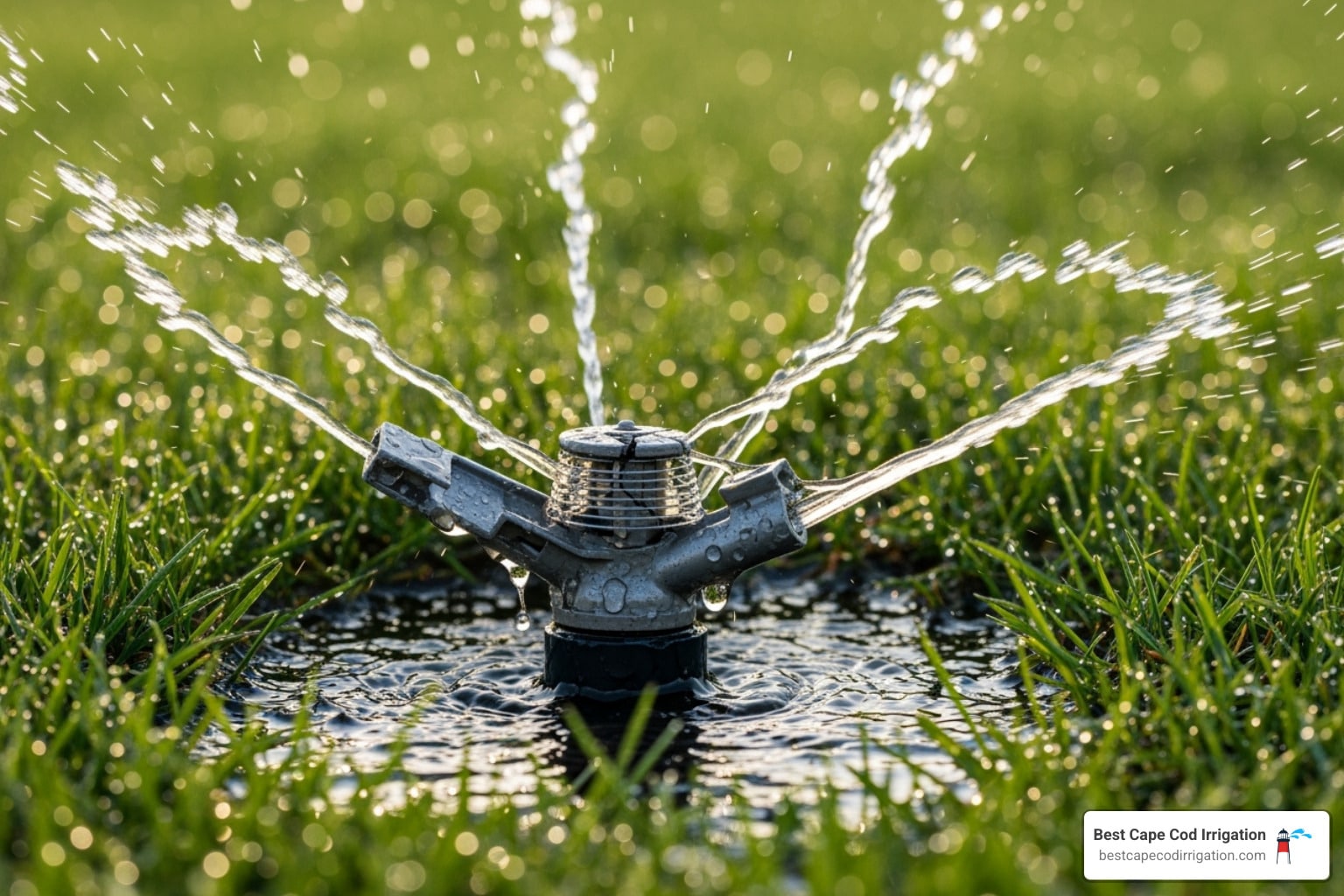



Why Quick Broken Sprinkler Head Repair Matters for Your Lawn
Broken sprinkler head repair is a common DIY fix that saves both water and money. A single damaged head can waste up to 4,200 gallons of water per month and leave brown patches on your lawn.
Quick Fix Summary:
- Time needed: 20 minutes average
- DIY cost: $10-$20 for parts
- Tools required: Shovel, replacement head, pliers, Teflon tape
- Main steps: Turn off water → Dig carefully → Unscrew old head → Install new head → Test system
Replacing a sprinkler head is easier than most homeowners think. Whether damaged by a lawn mower, clogged with Cape Cod’s sandy soil, or worn out from use, this repair is typically a quick job.
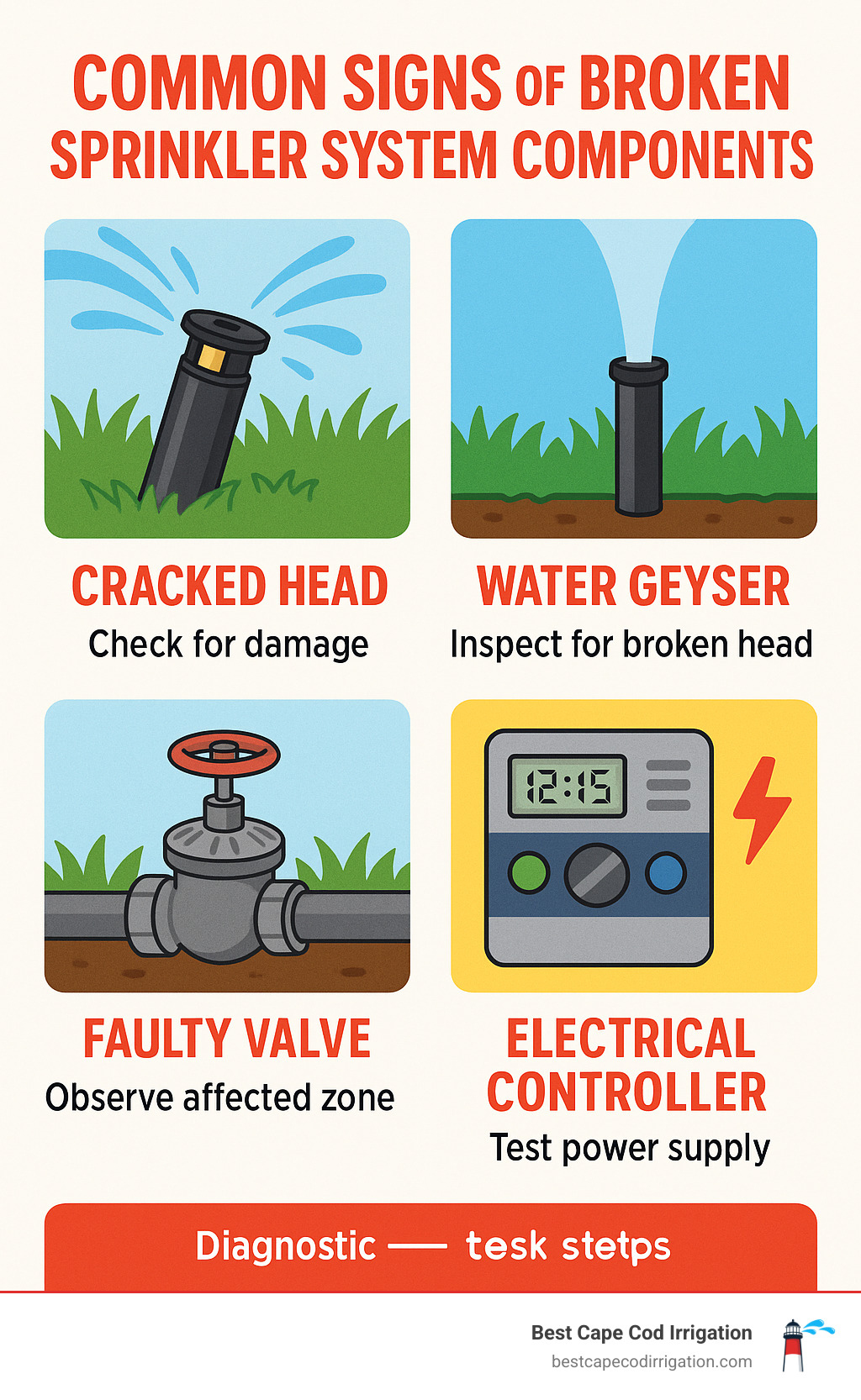
Most broken heads show obvious signs like wild water sprays, cracked casings, or heads that won’t pop up. However, the problem isn’t always the head. It could be a faulty valve affecting an entire zone or low-head drainage, which causes water to leak from the lowest sprinkler.
Before you dig, make sure you’re fixing the right problem. A geyser from one spot is likely a broken head. An entire zone that won’t turn on probably indicates valve or electrical issues.
Learn more about broken sprinkler head repair:
Diagnosing the Problem: Is It Really the Sprinkler Head?
A geyser in your yard might seem like a clear-cut case for a broken sprinkler head repair, but it’s wise to investigate first, as the real issue could be something else entirely. Your sprinkler system has many parts that can cause similar symptoms. A puddle around a sprinkler might be a cracked head, but it could also be low-head drainage—water trickling from the lowest head on a slope after the system is off.
Clogged pipes filled with Cape Cod’s sandy soil or other debris can also create pressure imbalances that make good sprinkler heads appear faulty. The key is to read the signs. A single malfunctioning head points to a local problem, while issues with multiple heads in one zone suggest a faulty valve or electrical trouble.
Identifying the Cause of a Broken Sprinkler Head
A truly broken sprinkler head is usually obvious. You’ll see wild streams of water, no water at all, a cracked plastic casing, a missing nozzle, or a pop-up stem that won’t move.
Common causes include lawn mower damage and heavy foot traffic. Here on Cape Cod, frozen ground damage is a major concern if a system wasn’t properly winterized, as expanding ice can crack heads and pipes. Simple old age also takes its toll, with most heads needing replacement every few years.
Sometimes the head is just clogged with grass, dirt, or debris, which can turn a strong spray into a weak dribble or cause the pop-up stem to get stuck. A money-saving tip: if only the nozzle is cracked or clogged, you can often just replace it instead of the entire head. You’ll need to replace the whole unit if the stem is stuck or the casing is damaged.
Is it the Head or a Faulty Valve?
Knowing the difference between a broken head and a faulty valve saves time and frustration.
Signs of a broken head are localized and dramatic. A geyser of water, a cracked casing, or no spray from a single head are classic indicators. Weak misting can also point to a broken nozzle, clogged filter, or a stuck pop-up stem.
Signs of a faulty valve affect entire zones. If an entire zone won’t turn on or a zone won’t turn off, the problem is likely the valve. Solenoid issues can also be the culprit, sometimes indicated by clicking or buzzing from the valve box with no water flow. Leaking when the system is off, with water pooling in valve boxes or trickling from multiple heads, also points to a valve that can’t close properly.
Valve problems are often fixable by replacing universal parts like solenoids or by clearing debris from worn seals.
If you’re dealing with zone-wide problems, you’ll want to check out our detailed guide: More info about sprinkler valve repair
Gearing Up: Tools and Safety for Your Repair
With the problem diagnosed, it’s time to gather your tools and prepare for a safe repair. A few minutes of prep work can prevent major headaches. Fortunately, broken sprinkler head repair doesn’t require specialized equipment; you likely have most tools already.
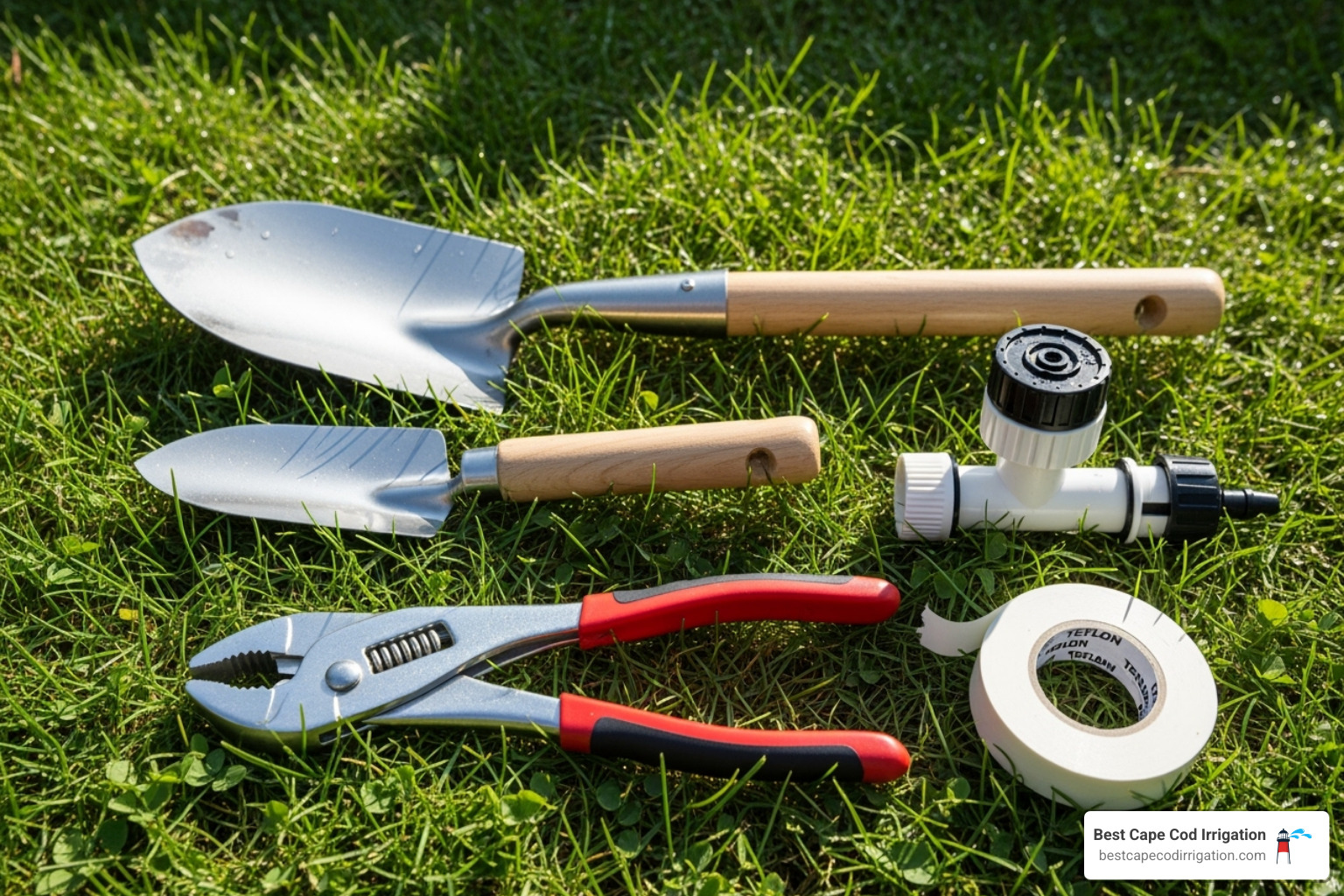
Essential Tools and Materials
The most important item is a matching replacement sprinkler head. You’ll also need a shovel or small garden trowel to dig carefully. For stubborn or corroded parts, adjustable pliers or a wrench are essential, especially with Cape Cod’s salty air.
Don’t forget Teflon tape to create a watertight seal and a bucket for debris to keep your work area clean. A shop vacuum can also be useful for clearing loose dirt from the hole before installing the new head, preventing debris from entering the irrigation lines.
Most local hardware and irrigation supply stores carry these items. Bringing the old broken part with you is the best way to ensure you get an exact match.
Safety Precautions Before You Dig
Safety is about protecting yourself and avoiding costly mistakes.
First, turn off the water supply. Find the main irrigation shut-off valve and turn it completely off to prevent a surprise shower.
Next, turn off the system controller or set it to “rain” mode. This prevents the system from running its cycle while you’re working.
It’s also wise to call 811 before digging. Even for a shallow repair, this free service marks underground utility lines, helping you avoid a dangerous and expensive accident.
Finally, wear gloves to protect your hands from dirt and sharp plastic edges.
These precautions ensure your broken sprinkler head repair goes smoothly.
Step-by-Step Guide to Broken Sprinkler Head Repair
This DIY project is rewarding, saving you money and conserving water. Fixing even a small leak can prevent the waste of thousands of gallons monthly. The key is to work carefully and keep the irrigation line free of dirt. Follow these steps for a professional-quality broken sprinkler head repair.
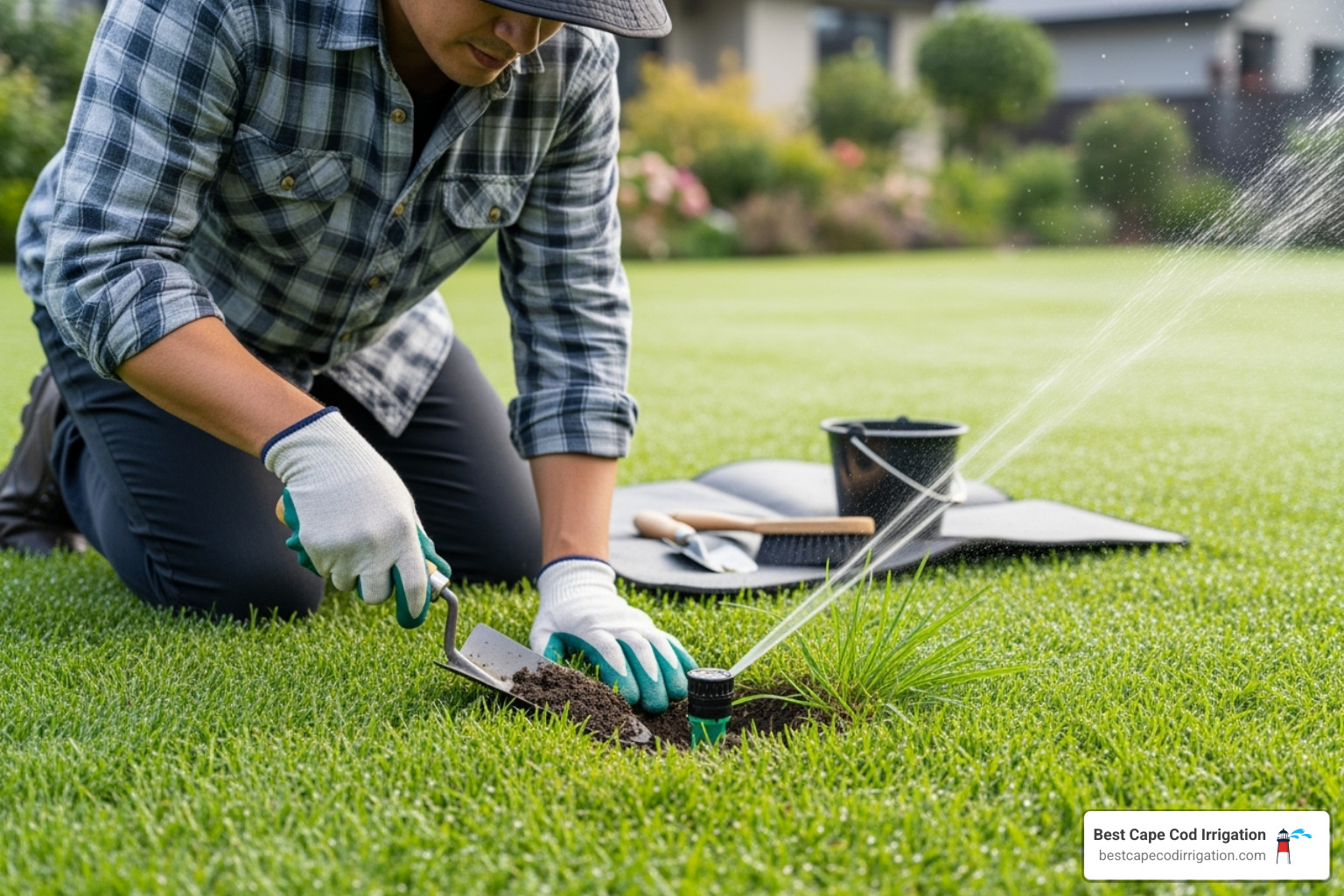
Step 1: Expose the Sprinkler Body
This step requires careful digging to avoid damaging the surrounding area. First, locate the broken head by briefly running the zone to spot the leak, then shut it off.
Next, remove the sod around the head by cutting a circle about 6-8 inches in diameter. Dig slowly to avoid hitting irrigation lines, which are typically 8-12 inches deep. Make the hole large enough to prevent dirt from falling into the pipe when you remove the old head. Clear all loose dirt from around the sprinkler body and the riser pipe it’s attached to.
Step 2: Remove the Old Sprinkler Head
With the area exposed, you can now remove the old head. Most heads unscrew counter-clockwise from the riser pipe. Use an adjustable wrench or pliers if it’s stuck. As you unscrew it, keep the head upright to prevent dirt from falling into the open line.
Once it’s free, inspect the riser pipe for cracks or damage. Sometimes the threaded portion breaks off inside the riser, which is a common issue. Before installing the new head, flush the line by turning the water on for a few seconds to clear out any debris. Be ready to shut it off quickly!
Step 3: Install the New Sprinkler Head
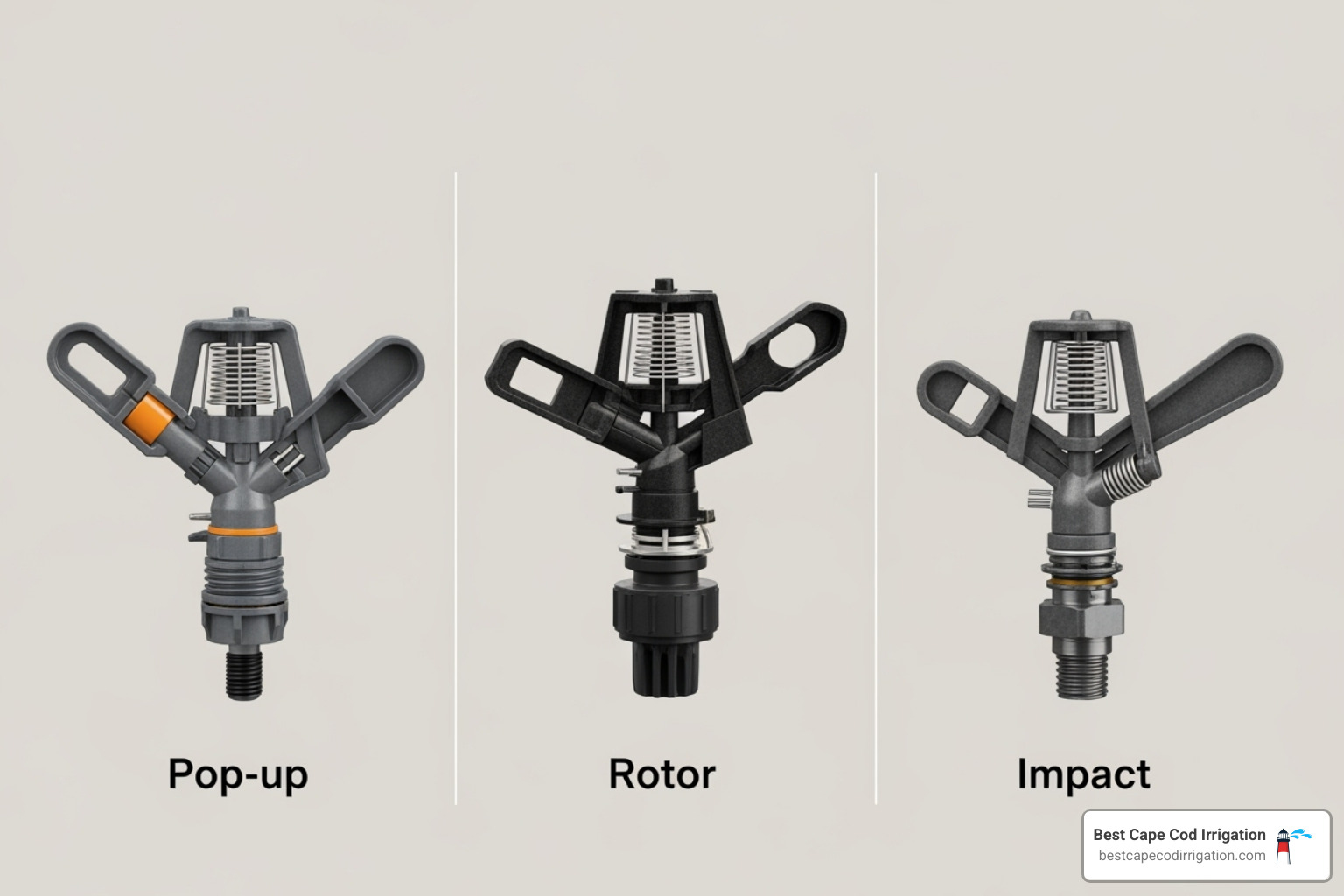
Success here depends on choosing the right replacement and creating a proper seal. Your new head must match the old one in type (pop-up, rotor), inlet size (½-inch or ¾-inch), and spray pattern. The best way to ensure a match is to take the broken head to the store with you.
For a professional touch, wrap the male threads with Teflon tape. Wind the tape clockwise 3-5 times to create a watertight seal. Screw on the new head by turning it clockwise. Hand-tighten until it’s snug, but don’t over-tighten, as this can crack the new head. The head should sit level with or slightly below the ground to avoid lawn mower damage.
Step 4: Test and Backfill
Now, ensure your repair is solid. Turn the water back on slowly at the main shut-off valve to prevent pressure surges. Go to your controller and activate the repaired zone. Watch the new head to ensure it pops up smoothly and sprays correctly. Most importantly, check for leaks around the base. If you see a leak, turn off the water, tighten the head slightly, and test again.
Once you’re satisfied, replace the soil and sod. Pack the soil firmly around the new head’s base for stability, then press the sod down. You’ve now completed a professional-quality repair.
More info about sprinkler system leak repair
Fine-Tuning and Future-Proofing Your Sprinklers
After your broken sprinkler head repair, the final step is to fine-tune the system. Proper adjustments and preventative care will ensure a lush lawn and prevent future issues.
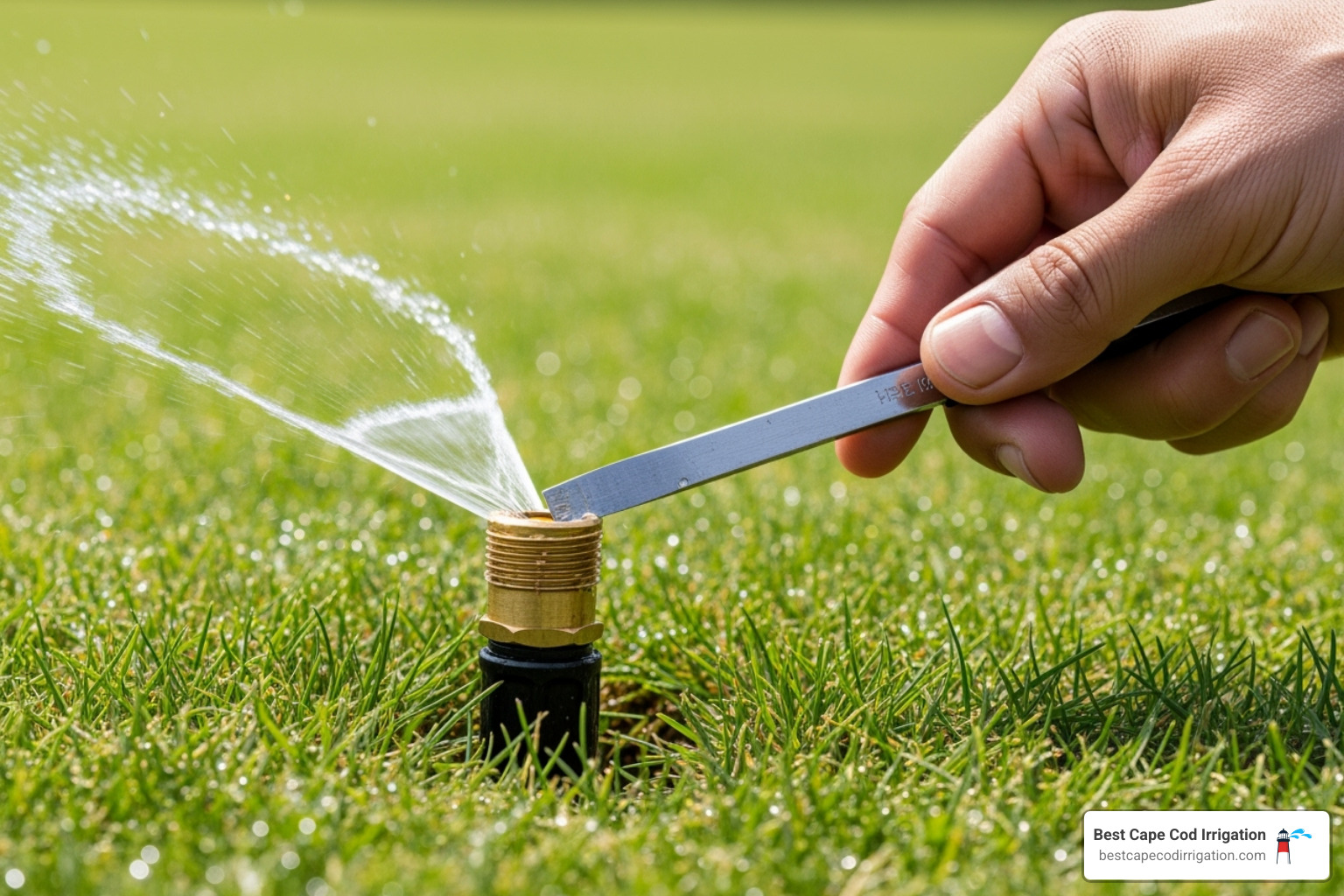
How to Adjust Spray Pattern and Distance
Fine-tune your new head’s performance to achieve head-to-head coverage, where one sprinkler’s spray reaches the next for uniform watering.
- Fixed spray heads: Use the small screw on top of the nozzle to control spray distance. Turn it clockwise to decrease distance and counter-clockwise to increase it. Gently twist the pop-up stem to change the spray direction.
- Rotor sprinkler heads: These have separate adjustments for the arc (rotation) and radius (distance). Use the specific adjustment tool or a small screwdriver, making small changes and testing each one.
- Impact sprinkler heads: Adjust the spray pattern by moving the metal stops with pliers. The nozzle itself often turns to adjust the distance.
Consider upgrading to water-saving nozzles. They can reduce water use by 30-50% by applying water more slowly and evenly, which means less runoff and healthier grass.
Learn about sprinkler efficiency from the EPA
Preventing Future Sprinkler Head Damage
Most sprinkler head damage is preventable with a few simple habits.
- Mark your heads: Before mowing or aerating, place landscaping flags next to each sprinkler head to avoid hitting them.
- Get the height right: Heads should sit flush with the soil when retracted. If a head is too low, add a riser extension to ensure it pops up correctly.
- Proper winterization: This is essential on Cape Cod. A professional blowout service removes all water from the system, preventing freeze damage.
More info about sprinkler system winterization
- Regular inspections: Check your system in the spring and fall. Look for pop-up issues, uneven spray, or leaks. Clean sprinkler head filters annually to maintain efficiency.
- Use swing pipe connections: For major repairs, consider flexible swing pipe instead of rigid risers. It acts like a shock absorber, flexing on impact to prevent cracks.
Following these steps will help you enjoy a beautiful lawn with a reliable sprinkler system.
Frequently Asked Questions about Broken Sprinkler Head Repair
Here are answers to the most common questions we receive about broken sprinkler head repair.
How much does it cost to repair a broken sprinkler head?
The cost depends on whether you do it yourself or hire a professional.
DIY repair costs are minimal. You can expect to pay $10-$20 for parts, such as a replacement head and Teflon tape. For a 20-minute job, this is a very cost-effective solution.
Professional repair services have a wider cost range. Based on national internet data, professional repairs can range from $75 to over $300. This range accounts for service call fees, the type of head, additional pipe damage, and regional pricing. Please note these are not quotes for services but industry averages.
If you have one broken head and are comfortable with basic tools, DIY is a great option. For multiple issues or if you prefer to save time, a professional may be the better choice.
How do I know what kind of sprinkler head to buy?
Our best advice is to take the old, broken head with you to an irrigation supply or hardware store. This ensures you get an exact match.
You need to match the type (pop-up spray, rotor), inlet size (usually 1/2-inch or 3/4-inch), and spray pattern (full circle, half-circle, adjustable). Matching these ensures your lawn receives consistent coverage, preventing brown or soggy spots.
Can I just replace the nozzle instead of the whole head?
Yes, and this is a great way to save time and money. You can replace just the nozzle if only the top nozzle is cracked or clogged, while the main body and pop-up stem are working correctly. Simply unscrew the old nozzle and screw on the new one.
This is an effective fix for clogs from sandy soil or plastic that has cracked over time. However, if the head is leaking from its base or the pop-up mechanism is broken, you will need to replace the entire unit.
When DIY Isn’t Cutting It, Call the Pros
Sometimes, a simple broken sprinkler head repair reveals a more complex problem that requires professional expertise. What starts as a simple fix can uncover deeper issues with your system.
If you’re facing persistent leaks, low pressure across multiple zones, or electrical problems, it’s time to call an expert. These symptoms often point to issues with your main water line, pressure regulator, wiring, or controller that require specialized tools and knowledge to diagnose and fix.
On Cape Cod, our sandy soil and coastal conditions create unique challenges. Salt air can corrode connections, and freeze-thaw cycles can cause hidden damage to pipes and valves that may look like a simple broken head. An experienced professional can identify these region-specific issues.
Best Cape Cod Irrigation has over 25 years of experience with these complex problems. We’ve handled every irrigation issue our local conditions can create, from salt damage to pressure problems in Cape Cod’s varied water systems.
When you’re dealing with widespread system failures, multiple broken heads, or problems you can’t diagnose, our expert irrigation repairs and maintenance services can save you time and frustration. We will find the root cause and get your system running perfectly, protecting your landscape and preventing water waste.