



Why Switch to Drip Irrigation? The Benefits for Your Garden and Wallet
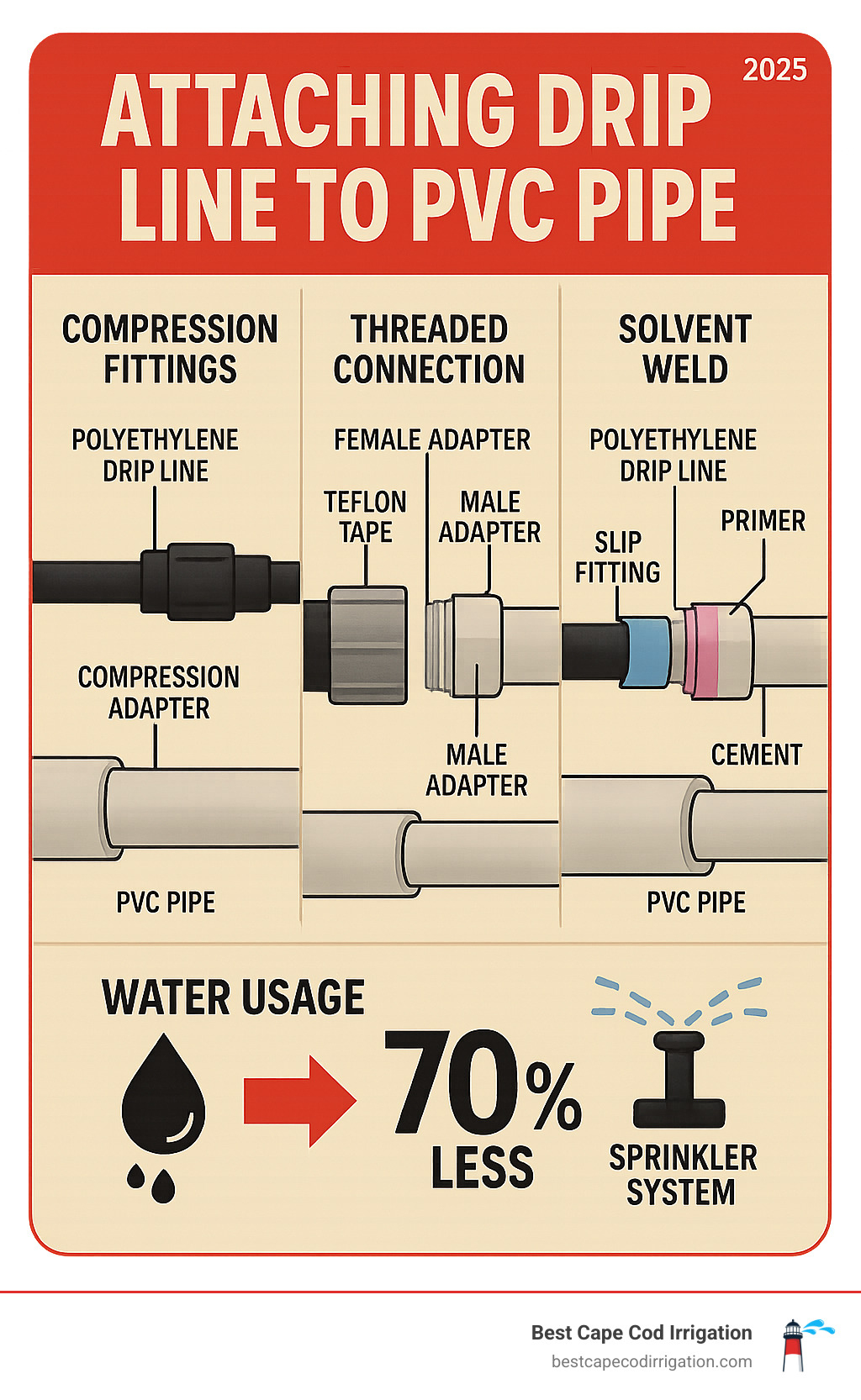
Attaching drip line to PVC pipe is the key to changing your Cape Cod garden into a water-efficient oasis. Here’s what you need to know:
Quick Connection Methods:
- Compression fittings – No glue needed, uses adapters that turn PVC couplers into compression fittings
- Threaded adapters – Male/female pipe thread connections with Teflon tape for sealing
- Solvent weld – Permanent bond using PVC primer and cement with slip fittings
Essential Components:
- PVC pipe cutter and measuring tape
- Compression adapters or threaded fittings
- PVC primer and cement (for permanent connections)
- Polyethylene drip tubing
Cape Cod’s sandy soil and unpredictable weather make traditional sprinklers wasteful and ineffective. Drip irrigation systems can reduce water usage by up to 70% compared to traditional sprinkler systems, according to industry data—a level of efficiency promoted by organizations like the U.S. Environmental Protection Agency’s WaterSense program. The global drip irrigation market is booming – growing from $3.5 billion in 2023 to a projected $7.2 billion by 2030.
But here’s the thing: most homeowners get stuck at the connection point. As one frustrated gardener posted in a home improvement forum: “I’m trying to water my kitchen herbs through the yard irrigation system without having to set up a separate line and timer.”
The good news? Connecting drip lines to your existing PVC system is simpler than you think. Whether you’re retrofitting an old sprinkler head or tapping into your main irrigation line, the right adapter makes all the difference.
Your plants will thank you with healthier growth, fewer weeds will compete for water, and your water bill will shrink. Plus, you’ll eliminate the daily hassle of dragging hoses around your property.
Basic attaching drip line to pvc pipe vocab:
- how are irrigation systems installed
- irrigation system installation
- professional irrigation installation
Before You Begin: Tools and Materials
Getting ready for attaching drip line to PVC pipe is like preparing for any good DIY project – success starts with having the right tools within arm’s reach. Trust me, there’s nothing more frustrating than being halfway through a connection only to realize you’re missing that one crucial fitting.
Let’s talk about your essential toolkit first. You’ll need a PVC pipe cutter for making those clean, square cuts that prevent leaks down the road. A good measuring tape is your best friend for accuracy, and you’ll want PVC primer and cement if you’re going the permanent route with solvent welding.
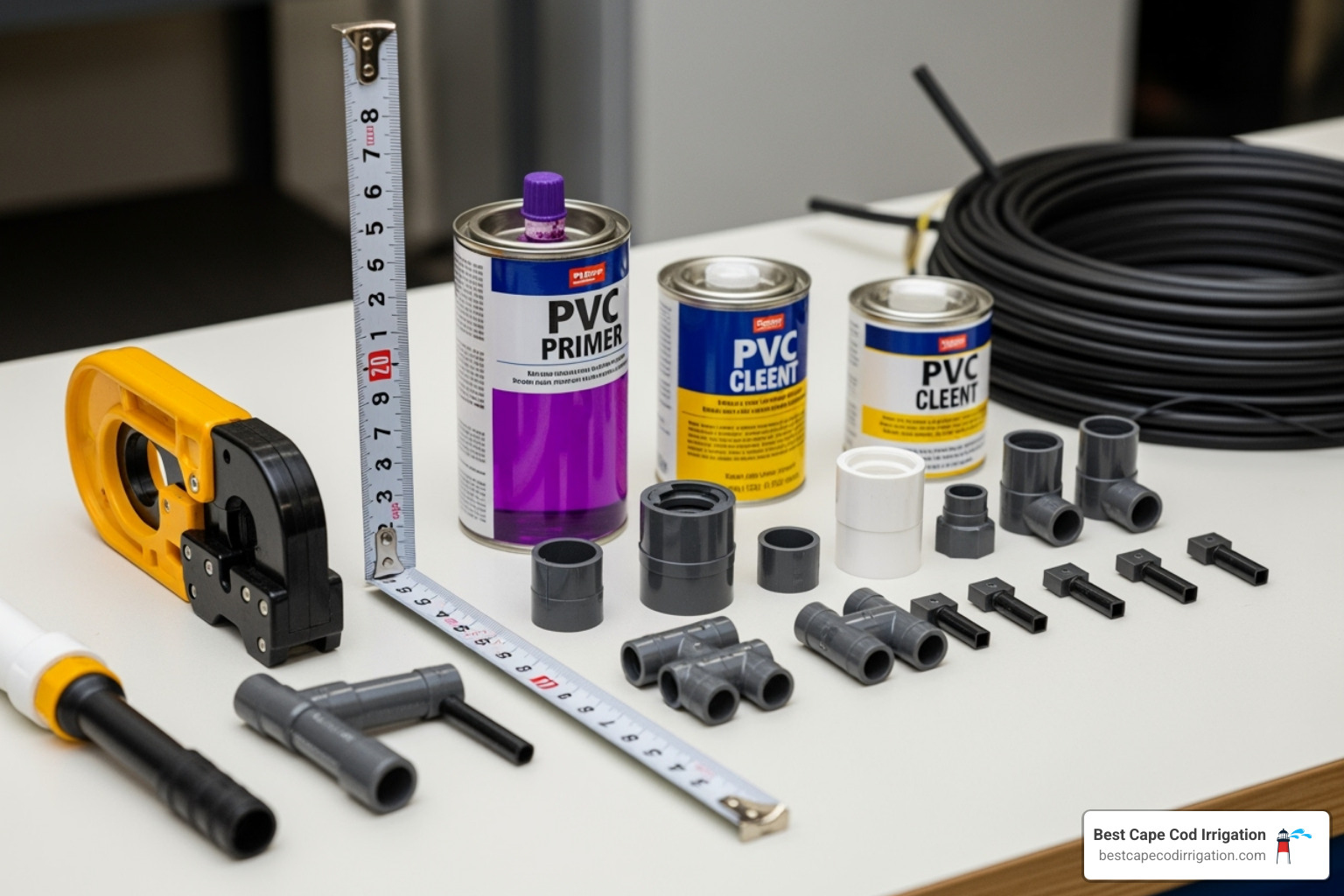
The star of the show is your drip tubing – typically made of polyethylene and available in sizes like 1/2″ and 3/4″ for main lines. Don’t forget Teflon tape for those threaded connections, and if you’re planning to run smaller 1/4″ micro-tubing, grab a hole punch tool too.
Your adapters and fittings are the unsung heroes here. These little connectors bridge the gap between your rigid PVC and flexible drip tubing, making the whole system work seamlessly. We’ll dive deeper into choosing these in just a moment.
For a comprehensive look at the entire setup process, check out our guide on Drip Pipe Installation.
Choosing the Right Adapters
Here’s where things get interesting – and where many DIYers get a bit overwhelmed. The key is understanding that you’re essentially translating between two different “languages” of plumbing.
PVC pipe sizes in irrigation systems usually run 1/2 inch, 3/4 inch, or 1 inch. But here’s the catch – these are nominal sizes, meaning the actual outside diameter is slightly larger. Meanwhile, drip tubing sizes made of polyethylene often use their actual Outside Diameter measurements. A “half-inch” poly tubing might actually measure 0.700, 0.710, or 0.670 inches across.
This is why measuring Outside Diameter (O.D.) matters so much. When you’re unsure about your tubing size, break out that measuring tape. This measurement becomes your guide for selecting the right fittings, especially with compression connections.
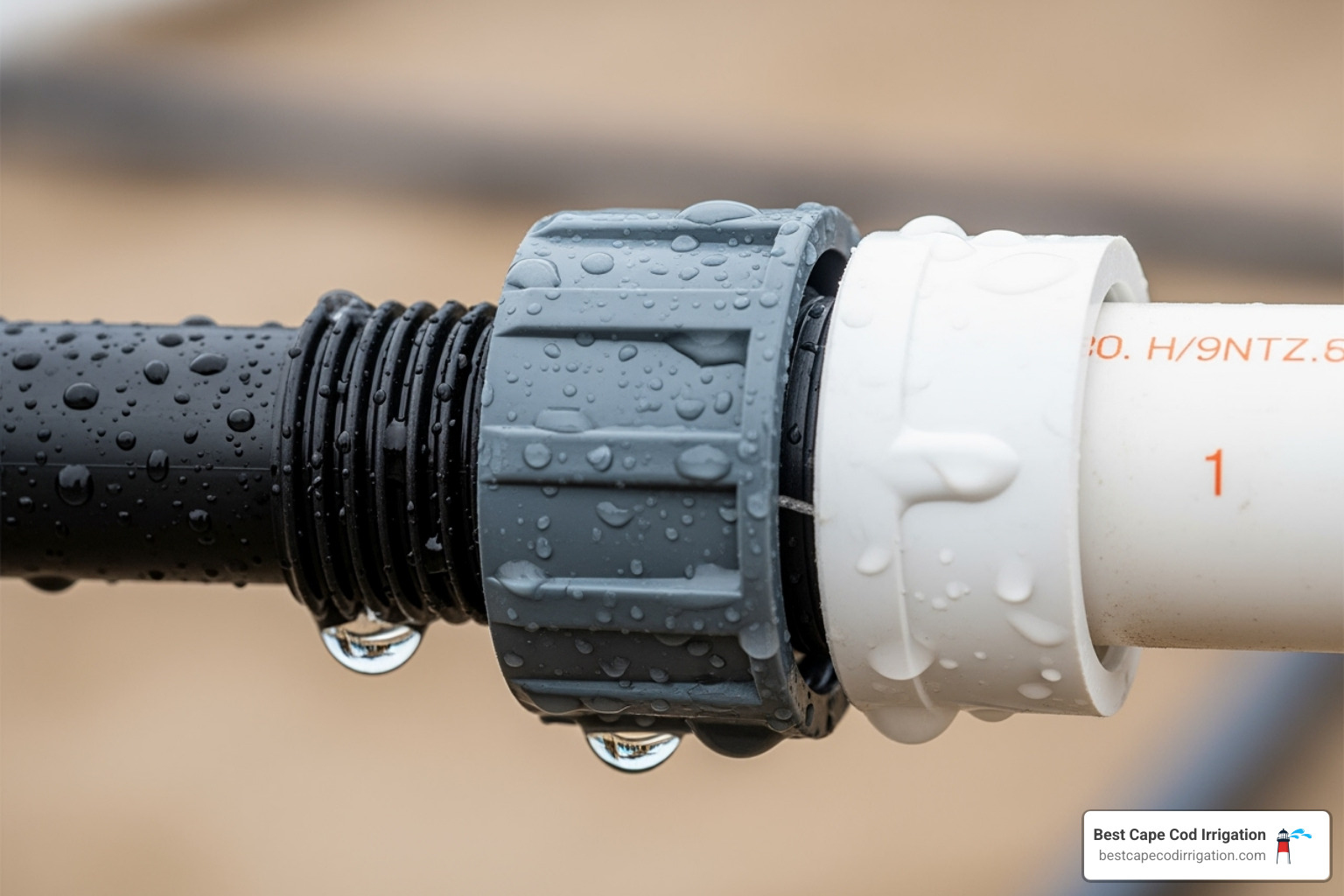
Compression fittings offer a fantastic no-glue solution. They work by inserting your poly tubing into a fitting that compresses around it, creating a watertight seal. Some clever adapters can transform a standard PVC coupler into a compression fitting. Just remember – these are generally one-time use connections.
Threaded fittings give you versatility with their Male Pipe Thread (MPT) or Female Pipe Thread (FPT) options. These connect beautifully to existing threaded PVC components like sprinkler risers, and the best part? You can take them apart later if needed.
For permanent installations, slip fittings are designed for solvent welding directly onto your PVC pipe. They create a rock-solid connection point that won’t budge.
Please note: based on online data, individual adapters can range from $2 to over $20 depending on size and complexity. This is an average cost estimate and not a quote for services.
Planning Your Connection Point
Where you connect matters just as much as how you connect. This decision shapes your entire system’s effectiveness and often depends on what you’re already working with.
Converting a sprinkler head is probably the most popular retrofit approach. Instead of overhauling everything, you simply remove an existing sprinkler head from its PVC riser and install your adapter there. Many homeowners successfully piece together solutions using T-connectors, manifold heads for 1/4″ drip lines, and 90-degree elbows. This approach works beautifully for targeted watering – like those kitchen herbs you want to keep thriving.
Sometimes you’ll need to tap into a mainline for a completely new drip zone. This involves cutting into your existing PVC pipe and installing a T-fitting or similar adapter to create your branch-off point.
Here’s something critical that trips up many DIYers: pressure regulation. Your PVC sprinkler system likely runs at 40-60 PSI or higher, but drip irrigation needs a gentle 15-30 PSI. Installing a pressure regulator downstream from your PVC connection isn’t optional – it’s essential. Skip this step, and you’ll watch your drip emitters blow off or burst.
Don’t forget about backflow prevention either. This device keeps irrigation water from flowing back into your drinking water supply – a safety feature that’s required in most areas.
Ready to take your system to the next level? Consider exploring a Smart Drip Irrigation System for automated, worry-free watering.
How to Master Attaching Drip Line to PVC Pipe: 3 Core Methods
Now for the exciting part! We’re going to walk through the three most reliable methods for attaching drip line to PVC pipe. Each approach has its sweet spot – whether you want a quick fix, need flexibility, or are building something that’ll last decades.
Think of these methods like choosing the right tool for the job. Compression fittings are your go-to for quick, no-mess connections. Threaded adapters give you the flexibility to take things apart later. And solvent welding creates that rock-solid, permanent bond that’ll outlast your garden gnomes.
| Method | Ease of Installation | Tools Required | Permanence |
|---|---|---|---|
| Compression | Easy | PVC cutter, measuring tape | Semi-Permanent |
| Threaded | Moderate | PVC cutter, measuring tape, wrench, Teflon tape | Reversible |
| Slip/Solvent Weld | Moderate | PVC cutter, measuring tape, primer, cement | Permanent |
Method 1: Using Compression Fittings for a Simple, No-Glue Connection
This is my favorite method for beginners – no messy glues, no waiting for things to cure, and you can see results immediately. Compression fittings work by gripping your poly drip tubing from the outside, creating a watertight seal that’s surprisingly strong.
Start by making a clean, square cut on your PVC pipe using your pipe cutter. Those rough edges? They’re connection killers, so take a moment to smooth them out. Here’s where it gets interesting – most compression adapters are designed to work with a standard PVC coupler, essentially changing it into a compression fitting. Pretty clever, right?
First, you’ll need to attach that PVC coupler to your pipe using primer and cement (we’ll cover this technique in Method 3). Once that’s cured, you’re ready for the magic moment.
Double-check your tubing’s Outside Diameter – this is crucial! That “half-inch” poly tubing might actually measure 0.700, 0.710, or 0.670 inches. Compression fittings are picky about these measurements, so measure twice, connect once.
Now comes the satisfying part. Push your poly drip tubing firmly into the compression end of the adapter. You’ll often hear a distinct click when those internal barbs grab hold. If your tubing feels stubborn (especially when it’s cold), don’t fight it. Soak the end in warm soapy water for about 10 seconds – it’ll slide in like butter.
Here’s the trade-off: compression fittings are generally one-time use. If you need to make changes later, you’ll likely need to cut and start fresh. For a wide selection of these handy components, you can Shop Compression Adapters through our team.
Method 2: The Threaded Adapter Method for Versatility
Threaded adapters are the Swiss Army knife of irrigation connections. They’re perfect when you’re converting an existing sprinkler head or when you think you might need to modify your system later. Plus, they give your setup that professional, finished look.
The beauty of this method lies in its two-part design. You’ll use a Male Pipe Thread (MPT) adapter that screws into female fittings, or a Female Pipe Thread (FPT) adapter for male fittings on your existing PVC. The other end transitions to your poly tubing with either a barb or compression connection.
Here’s where many DIYers stumble: Teflon tape is absolutely essential. Wrap it clockwise around those male threads 3-5 times. Think of it as insurance against leaks – it fills microscopic gaps and lubricates the connection. Skip this step, and you’ll be dealing with annoying drips later.
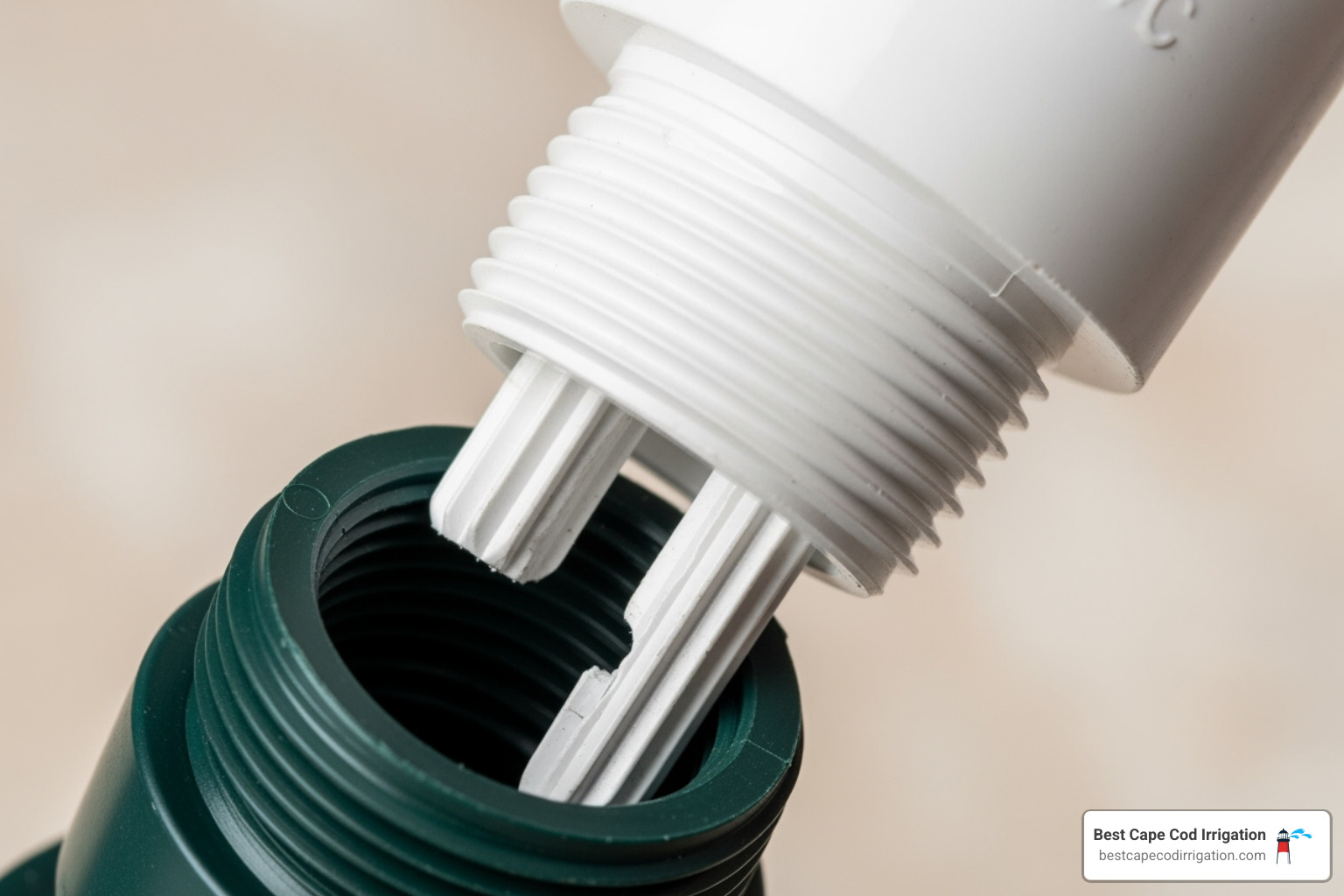
Hand-tighten first to avoid cross-threading – trust me on this one. Once it’s snug by hand, use a wrench for another quarter to half turn. You want secure, not Superman-tight. Over-tightening can crack PVC fittings faster than you can say “expensive mistake.”
The final step is connecting your drip tubing to the adapter’s barbed end. A little warmth makes all the difference here – cold tubing can be surprisingly stubborn, but a few seconds in warm water transforms it into a cooperative partner.
If you run into any hiccups with threaded connections, our team specializes in Irrigation PVC Pipe Repair Service and can get you back on track.
Method 3: Using Solvent Weld (Primer & Cement) for a Permanent Bond
When you want a connection that’ll outlast your mortgage, solvent welding is your answer. This isn’t just gluing pieces together – you’re actually chemically fusing the PVC materials into one solid unit. It’s the gold standard for permanent irrigation connections.
The secret to success lies in preparation and timing. Make that initial cut clean and square – your PVC cutter should slice through like it’s cutting cheese, not chewing through it. Remove all burrs from both inside and outside edges. These little plastic shavings can prevent proper fitting and create weak spots.
Always test fit before applying anything. Your PVC slip adapter should slide on smoothly but snugly. If you need a hammer, something’s wrong.
PVC primer is your prep work hero – it cleans and softens the surface for maximum bond strength. Apply it liberally to both the pipe end and the inside of the adapter socket. Work quickly here; primer evaporates faster than morning dew on Cape Cod.
The cement application is where timing becomes critical. Apply generous, even coats to both primed surfaces immediately after priming. Don’t be stingy – you want complete coverage of all contact areas.
Now for the quarter-turn technique: push the pieces together firmly while giving a slight 90-degree twist. This distributes the cement evenly and ensures maximum contact. Hold everything steady for 10-30 seconds to prevent the pieces from pushing apart.
Patience pays off during curing. While you might get an initial set in 30 minutes, give it several hours before putting any pressure on the system. The longer cure time means a stronger bond that’ll handle Cape Cod’s freeze-thaw cycles without missing a beat.
This permanent connection becomes the backbone of reliable drip systems. For professional guidance on these techniques, explore How To Attach Drip Irrigation Tubing Directly to PVC Pipe with our experienced team.
Best Practices for a Leak-Free System
Picture this: you’ve spent a Saturday afternoon carefully attaching drip line to PVC pipe, feeling pretty proud of your handiwork. Then Monday morning arrives, and you find your beautiful new system has turned your flower bed into a swamp. Trust me, we’ve all been there!
The difference between a system that works flawlessly for years and one that becomes a constant headache lies in the details. Let’s walk through the essential practices that separate the pros from the weekend warriors.
Clean, square cuts are your foundation for success. That fancy PVC pipe cutter isn’t just showing off – it creates perfectly straight cuts that allow fittings to seat properly. A wonky cut from a hacksaw might look “good enough,” but it’s often the culprit behind mysterious leaks that appear months later.
After cutting, take a moment to deburr your PVC pipe. Those little plastic shavings and rough edges aren’t just cosmetic issues. They can slice through O-rings in compression fittings or prevent proper seating. A simple deburring tool or even a utility knife will smooth things out in seconds.
When it comes to proper primer and cement use, think of it as creating a chemical weld, not just gluing pieces together. Don’t be stingy – apply both primer and cement liberally and evenly to all surfaces that will touch. The primer softens the PVC, allowing the cement to create a molecular bond. Work quickly though, because this stuff dries faster than you’d expect!
Here’s where many DIYers go wrong: hand-tightening threaded fittings first. I know it’s tempting to grab that wrench right away, but starting by hand prevents cross-threading – one of those mistakes that’ll haunt you later. Once it’s hand-tight, a final quarter to half turn with the wrench is usually plenty. Over-tightening is like a firm handshake that goes too far – it just cracks things.
Before you start celebrating your installation success, system testing is non-negotiable. Turn on that water and become a detective. Check every single connection point, looking for even the tiniest drips. What seems like a minor weep now can become a geyser later when the system is under full pressure.
Finally, flushing your lines before connecting emitters might seem like overkill, but it’s insurance against future headaches. All those tiny PVC particles from cutting and drilling have to go somewhere. Better to flush them out now than have them clog your expensive drip emitters later.
These steps might add an extra hour to your project, but they’ll save you countless hours of troubleshooting down the road. If you do run into persistent leak issues despite your best efforts, our team is ready to help with Irrigation Pipe Leak Repair services.
Frequently Asked Questions about Connecting Drip Lines to PVC
We’ve covered the “how-to,” but let’s tackle some real-world questions that come up when homeowners are working on attaching drip line to PVC pipe. These are the scenarios we see most often here on Cape Cod.
How do I convert an existing sprinkler head to a drip line?
This is hands-down the most popular retrofit project we hear about. It’s brilliant because you’re using what’s already there – no digging up your yard or running new lines.
Start by unscrewing the existing sprinkler head from the PVC riser. That threaded connection becomes your new starting point. Many manufacturers make sprinkler retrofit kits specifically for this purpose – they’re designed to screw right onto your existing riser threads.
For multiple small zones, a manifold head is your best friend. These clever devices screw onto the riser and give you 4, 6, or even 12 small barbed outlets. One homeowner shared how they used a manifold head to run individual 1/4″ lines to their kitchen herb garden – perfect for targeted watering without setting up a whole new zone.
If you’re converting an entire sprinkler zone to drip, remember to cap any other sprinkler heads on that zone that you won’t be using. And here’s the critical part: install a pressure regulator right after your PVC connection. Your sprinkler system runs at much higher pressure than drip systems can handle.
For a complete conversion that takes all the guesswork out of the process, check out our Drip Irrigation System Installation services.
What water pressure is needed for a drip system connected to PVC?
This question is absolutely crucial – get this wrong, and you’ll be dealing with burst lines and blown-off emitters.
Drip systems are low-pressure systems, designed to work efficiently at just 15-30 PSI. That gentle pressure is what gives you those perfect, slow drips that plants love. But here’s the problem: PVC sprinkler systems operate at high pressure – often 40-60 PSI or even higher, depending on your water source.
Connect them directly without a pressure regulator? You’re asking for trouble. Emitters will pop off like champagne corks, drip tape will burst, and your water-saving dream becomes a soggy nightmare.
Installing a pressure regulator right after your PVC connection point isn’t optional – it’s essential. This device drops that aggressive sprinkler pressure down to the gentle flow your drip system needs. Think of it as a translator between two different languages of water delivery.
Can I connect small 1/4″ tubing directly to PVC?
Technically, yes – but it’s a bit like using a sledgehammer to crack a walnut. You can do it, but there are better ways.
The direct approach involves drilling small holes (about 1/16 inch) directly into your PVC pipe and using barbed connectors to attach the 1/4″ micro-tubing. You’ll need a punch tool designed for the barb size to create clean holes – a regular drill can work, but it’s harder to get that perfect seal.
But here’s the catch: PVC is rigid, and over time, the plasticizer in that flexible 1/4″ tubing can break down. The tubing gets stiff and may pull away from the barb, creating leaks. One experienced gardener noted how the tubing becomes “like a hard plastic straw” after a few seasons in the sun.
For a more reliable connection, it’s usually better to transition from PVC to a larger poly drip line first (using those compression or threaded adapters we discussed), then tap your 1/4″ tubing from the flexible poly line. This gives you the best of both worlds – the strength of PVC where you need it, and the flexibility of poly where it matters.
Need help figuring out the best approach for your specific setup? Contact Us for Drip Irrigation Solutions – we love solving these kinds of puzzles.
Achieve a Flawless Irrigation System
You’ve done it! By mastering the art of attaching drip line to PVC pipe, you’re now equipped to transform your Cape Cod garden into a water-wise wonder. Think about it: you can reduce your water usage by up to 70% while keeping your plants healthier and your weeds under control. That’s what we call a win-win-win situation.
The secret sauce really comes down to those connection points we’ve explored together. Whether you choose the no-fuss compression fittings, the flexible threaded adapters, or the rock-solid solvent weld method, success lies in the details. Clean cuts, proper sealing, and that all-important pressure regulator will make the difference between a system that works beautifully and one that leaves you scratching your head.
Here’s the thing about Cape Cod gardening – our sandy soil and unpredictable weather patterns make water efficiency more than just an environmental choice. It’s a smart financial decision that pays dividends season after season. When you get your drip system connections right, you’re not just watering plants; you’re investing in a sustainable future for your landscape.
At Best Cape Cod Irrigation, we’ve been helping homeowners steer these exact challenges for over 25 years. We understand that every property is unique, and every gardener has different needs. Maybe you’re that person trying to keep kitchen herbs happy without setting up a completely separate system. Or perhaps you’re ready to retrofit your entire sprinkler zone for maximum efficiency.
The beauty of proper connection techniques is that they give you options. You can start small – convert one sprinkler head to drip – and expand your system as you see the benefits. There’s no pressure to overhaul everything at once.
For professional help with your garden’s watering needs, explore our expert irrigation installation services. Let our regional expertise take the guesswork out of creating your perfect irrigation system – because your plants deserve the best, and so do you!
