



Why Choosing the Right In-Ground Sprinkler Pipe Matters
In ground sprinkler pipe is the backbone of any irrigation system, delivering water to keep your lawn green. The type of pipe you choose affects installation, durability, and long-term costs.
Quick Answer for Pipe Selection:
- PVC Pipe: Best for warm climates, rigid installation, high pressure systems
- Polyethylene (Poly) Pipe: Ideal for cold climates, rocky soil, flexible installation
- Common Sizes: 3/4″ to 1″ for main lines, 1/2″ for lateral runs
- Depth: 8-12 inches deep depending on climate (10-12″ recommended for Cape Cod)
For Cape Cod homeowners, the wrong pipe can lead to costly repairs, frozen lines, or inefficient watering due to our sandy soil and unpredictable weather. The choice between PVC and polyethylene isn’t just about cost—it’s about matching the material to your specific soil, climate, and installation needs.
While Schedule 40 PVC is popular in warmer regions for its pressure handling, its rigidity is a liability in Cape Cod’s winters. Flexible polyethylene tubing is often a better choice here, as it resists cracking when the ground freezes.
Understanding pipe specs, sizing, and depth ensures an efficient system. Knowing these basics saves time and money, whether you’re doing a DIY installation or hiring a pro.
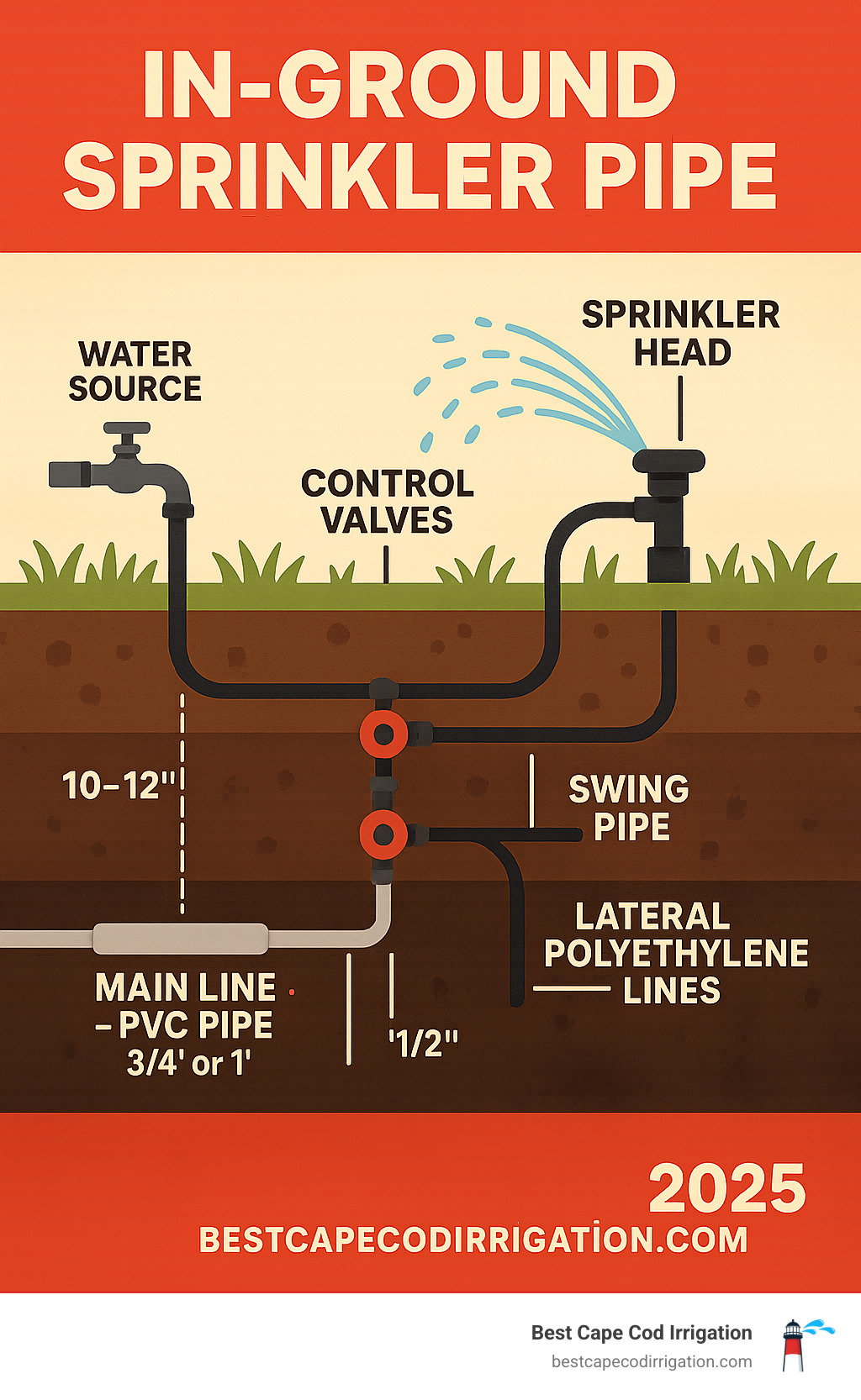
In ground sprinkler pipe word guide:
Choosing Your Pipe: PVC vs. Polyethylene
The choice between PVC and polyethylene pipe for your in ground sprinkler pipe system is about understanding what works best for your property. With over 25 years of experience on Cape Cod, we know that choosing the right pipe from the start prevents costly future repairs.
PVC pipe is a rigid, strong option that handles high water pressure, making it ideal for main lines. Its connections are durable and long-lasting.
Polyethylene (poly) pipe is flexible, making it easy to install around obstacles like rocks and roots. It’s also freeze-resistant, a major advantage for lateral lines in difficult terrain.
Climate is a key factor. On Cape Cod, poly pipe’s flexibility is crucial for handling our freezing winters, which can easily burst rigid pipes. This makes polyethylene tubing more commonly used in home sprinkler systems in our region.
Installation methods also differ. PVC uses permanent, solvent-welded joints, while poly pipe uses clamp fittings, which are often faster and easier to install.
| Material | Pros | Cons | Best Use Case |
|---|---|---|---|
| PVC | Durable, high-pressure rating, rigid, uniform connections | Brittle in cold, susceptible to UV damage, requires specific glues/primers, less forgiving in rocky soil | Main lines in warm climates, areas requiring rigid, stable pipe runs |
| Polyethylene | Flexible, freeze-resistant, easy to install in rocky/uneven soil, uses clamp fittings | Lower pressure ratings (generally), can be chewed by rodents, less rigid for straight runs | Lateral lines, cold climates, rocky or shifting soils, drip irrigation systems |
The Pros and Cons of PVC Pipe
PVC’s rigidity provides structural integrity, making it a backbone for many systems. Schedule 40 PVC can handle impressive amounts of pressure for residential use, while the thicker Schedule 80 is used for commercial applications.
Properly installed with solvent cement, PVC joints are permanent and leak-proof. This reliability makes it a top choice for main supply lines.
However, PVC’s rigidity is a major drawback in cold climates. Freezing water can expand and burst the pipe, leading to significant spring repairs.
UV sensitivity is another issue; exposed PVC becomes brittle and can fail. Above-ground sections must be protected from sunlight. In rocky soil, PVC installation is also more difficult as it requires more precise and extensive trenching.
For homeowners dealing with PVC issues, our irrigation PVC pipe repair service can help. If you’re curious about pipe markings, decoding SCH, Class & SDR pipe markings provides valuable insight.
The Pros and Cons of Polyethylene (Poly) Pipe
Polyethylene (poly) pipe’s flexibility simplifies installation in difficult terrain. It easily bends around obstacles like roots and rocks, reducing the need for extensive trenching.
For Cape Cod, poly pipe’s freeze resistance is a key benefit. It can expand with freezing water without cracking, significantly reducing the risk of burst pipes during winter.
Installation is simpler with poly pipe. Clamp fittings are used instead of primers and solvents, making the process faster and more user-friendly. Its excellent cold climate performance means it stays flexible in freezing temperatures, leading to fewer failures.
Poly pipe does have limits. Its lower pressure ratings make it less suitable for high-pressure main lines, and its flexibility can make achieving straight runs challenging. Rodents can also sometimes chew on poly pipe if it’s not buried deep enough.
Poly pipe is also excellent for drip pipe installation. The choice between PVC and poly depends on your climate, soil, and pressure needs. Understanding these factors ensures a reliable in ground sprinkler pipe system.
Understanding Pipe Specifications and Sizing
Choosing the right in ground sprinkler pipe is crucial, but proper sizing is what makes a system work efficiently. A balance of water pressure (PSI), flow rate (GPM), friction loss, and pipe diameter is essential. Get it wrong, and you’ll have poor sprinkler performance.
An irrigation system needs 40 to 65 PSI to work correctly. Water loses pressure to friction as it travels through pipes. Pipes that are too small cause significant friction loss, resulting in weak or misting sprinkler heads.
Oversizing pipes is also problematic, as it increases costs and can slow water velocity. The goal is to find the right balance for optimal performance.
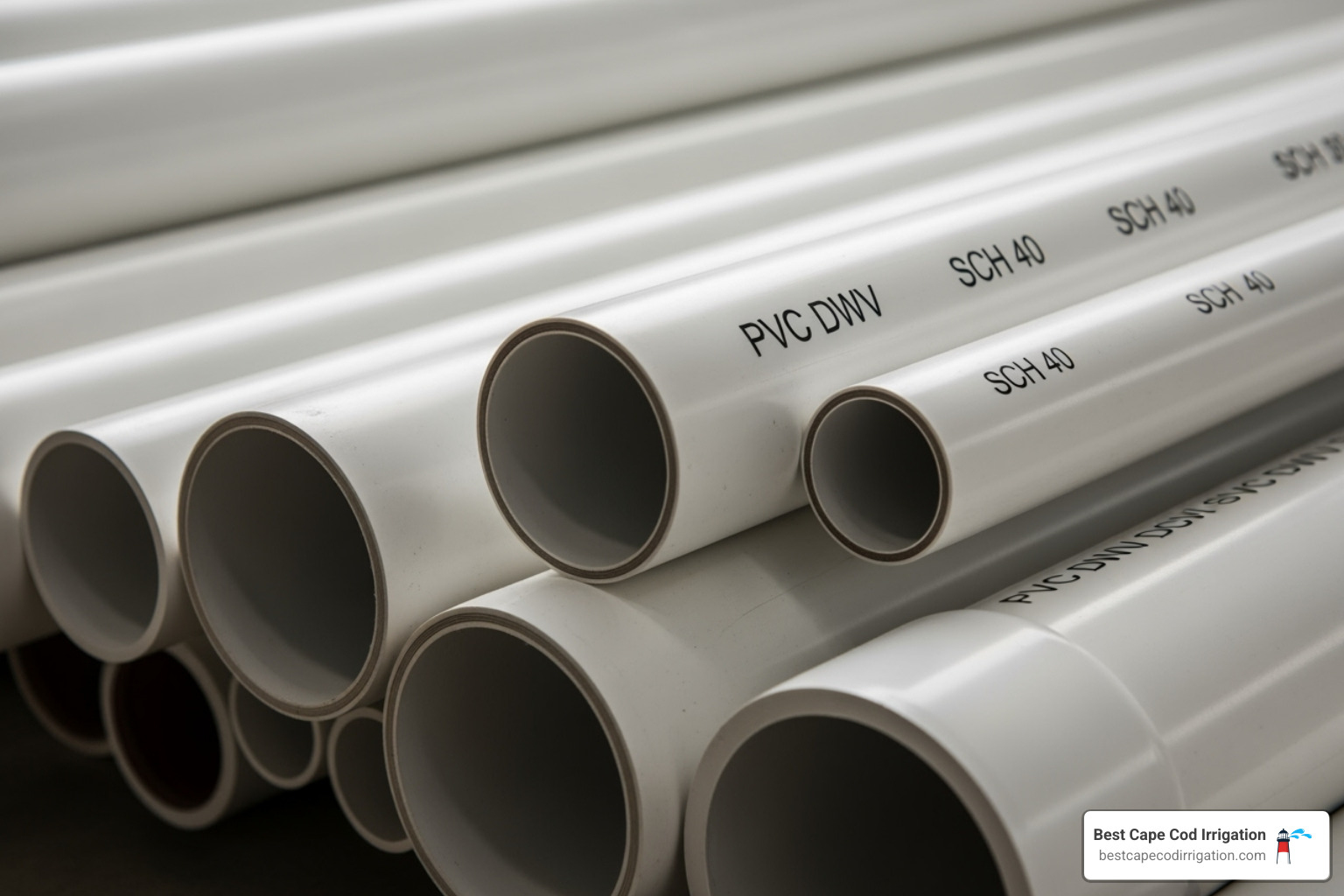
Decoding PVC Pipe: Schedules and Classes
Understanding PVC pipe classifications like Schedule 40, Schedule 80, and Class 200 simplifies your choice.
- Schedule 40 PVC is the standard for residential irrigation. The “Schedule” number indicates wall thickness, and SCH 40 offers a good balance of strength and cost for home use.
- Schedule 80 PVC has thicker walls, making it stronger for high-pressure main lines or stressful applications. It is more expensive and has a smaller internal diameter.
- Class 200 PVC is rated by pressure (200 PSI) rather than wall thickness. It often has thinner walls than SCH 40, making it a lighter, cost-effective choice for lateral lines with consistent pressure.
The key is to match the pipe to the need: Schedule 80 for high-pressure main lines and Class 200 for efficient lateral lines.
Understanding Poly Pipe: Pressure Ratings and SDR
Polyethylene pipe is simpler: its PSI rating is printed directly on it, indicating the maximum pressure it can handle (e.g., 80, 100, 160 PSI).
You’ll also see a Standard Dimension Ratio (SDR). A lower SDR means thicker walls and a higher pressure rating. The industry standard is 80 SDR poly tube, offering a great balance of flexibility and strength for residential lateral lines and sprinkler connections.
Poly pipe is also ideal for Drip Pipe Installation due to its flexibility and easy-to-use fittings, which save time and materials.
How to Determine the Correct In-Ground Sprinkler Pipe Size
Correctly sizing your in ground sprinkler pipe is critical for an efficient, long-lasting system and prevents pressure issues.
- Measure Static Water Pressure: Use a pressure gauge on an outdoor spigot. A system needs 40 to 65 PSI to work well.
- Calculate Flow Rate (GPM): Time how long it takes to fill a 5-gallon bucket from a spigot on full blast. This determines your available water supply.
- Plan Your Zones: Divide your property into sections with similar watering needs. The total GPM of any single zone must not exceed your available flow rate.
- Account for Friction Loss: This is the pressure drop from water flowing through pipes and fittings. Smaller pipes and longer runs increase friction loss. For example, 1/2-inch tubing runs should be kept under 200 feet.
Using friction loss charts helps determine the optimal diameter for each pipe run. For additional guidance, Determine What Size Pipe You Need provides valuable technical resources.
The Role of Flexible Connectors: Swing Pipe and Funny Pipe
After laying your main and lateral in ground sprinkler pipe, the final connection to the sprinkler heads requires precision. This is where flexible connectors like swing pipe and funny pipe are essential.
These connectors solve the problem of connecting rigid pipes to sprinkler heads, allowing for adjustments and preventing issues from ground shifts or minor miscalculations.
Swing pipe and funny pipe are flexible connectors between lateral lines and sprinkler heads. They act as shock absorbers, protecting the system from impacts from foot traffic or mowers. Made from durable, flexible polyethylene, they simplify installation for professional results.
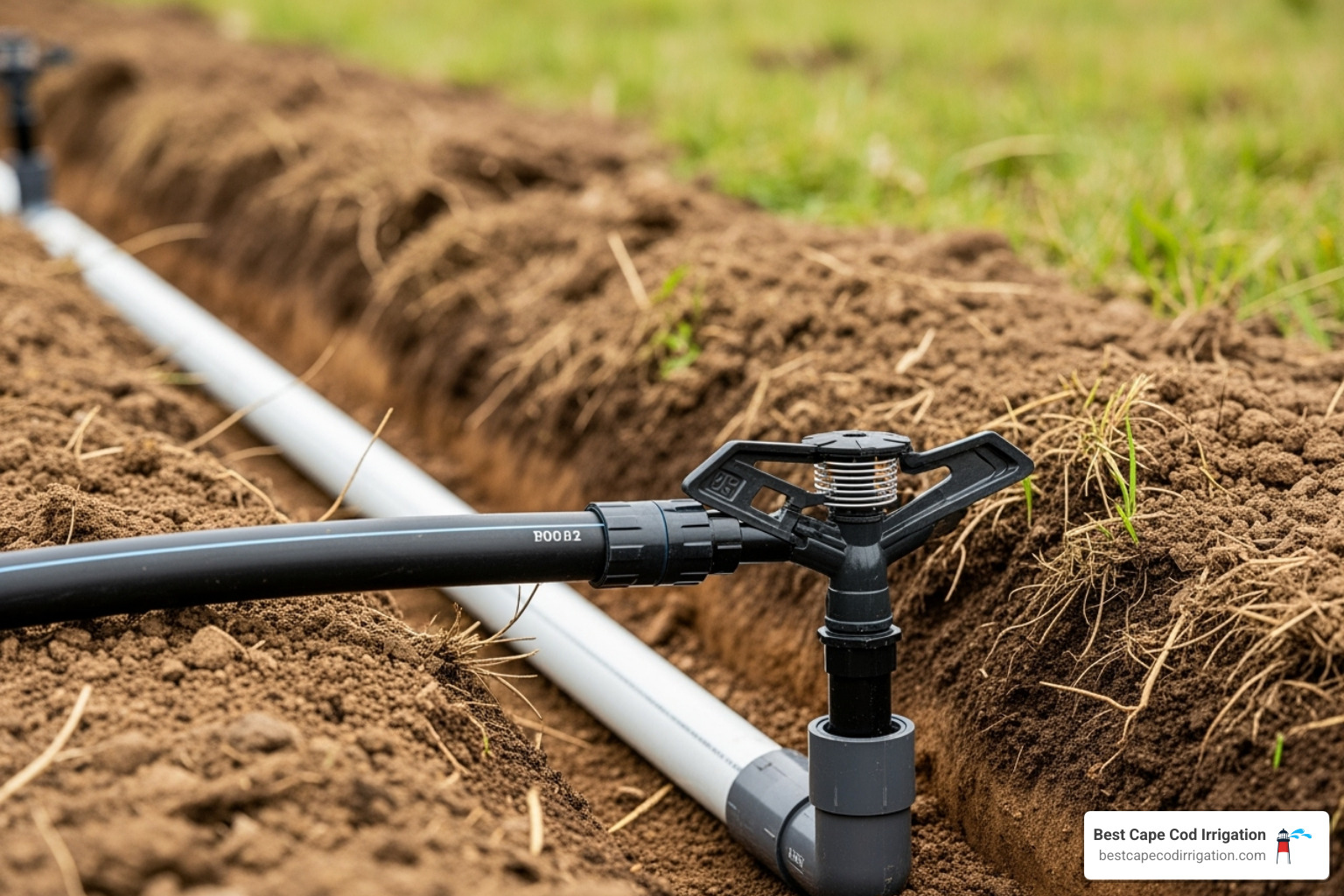
What is Swing Pipe and How Does It Work?
Swing pipe (often used interchangeably with “funny pipe”) is a short, flexible polyethylene tube connecting the lateral pipe to a sprinkler head.
Installation is simple: spiral barb fittings are pushed into each end of the swing pipe to create a watertight seal without glue or special tools. One end connects to the lateral line and the other to the sprinkler head.
This flexibility is invaluable for adjusting head height and position in the field, allowing you to easily set heads at the correct depth and steer around obstacles like roots. The material is durable yet flexible, bending without kinking to avoid obstacles. For detailed instructions, see this guide on How to Use Swing Pipe to Install Sprinkler Heads.
A key feature is its ability to protect heads from mowers and foot traffic. The flexible connection absorbs impacts, preventing damage to rigid pipes and extending the system’s life.
Benefits of Using Flexible Connectors
The benefits of flexible connectors in an in ground sprinkler pipe system extend beyond easy installation. Based on our 25+ years on Cape Cod, they are key to a durable, low-maintenance system.
- Easier Installation: Swing pipe allows for on-the-fly adjustments, which is ideal for Cape Cod’s varied terrain. It reduces digging and speeds up installation.
- Reduced Stress on Fittings: Flexible connectors absorb ground movement from frost heave or settling, protecting rigid pipes and fittings from damage.
- Fewer Future Repairs: This protection leads to fewer repairs. The small additional cost is offset by savings on service calls. If you do have issues, our Repair Underground Sprinkler Hose service can help.
- Precise Head Positioning: This is critical for safety and performance. Swing pipe allows you to set heads perfectly flush with the ground, ensuring even water coverage, even when positioning heads around roots and rocks.
Essential Steps for In-Ground Sprinkler Pipe Installation
Installing an in ground sprinkler pipe system is a rewarding project that requires careful planning. Each step is vital for a long-lasting, efficient system. Skipping steps leads to future problems. The process requires planning, digging, and assembly to install pipes correctly and safely.
Planning and Layout: Your System Blueprint
Meticulous planning is the first and most important step.
- Map Your Property: Draw a scaled map of your property, including all features and noting areas with different watering needs (e.g., sun vs. shade). A 1 inch = 10 feet scale is common.
- Determine Water Supply: Measure your static water pressure (PSI) and flow rate (GPM). This data is the foundation of your design.
- Zone Your System: Group areas with similar watering needs into zones. The total GPM for each zone must not exceed your available flow rate. Each zone is controlled by its own valve for efficient, independent watering.
- Place Sprinkler Heads: Place sprinkler heads on your map to achieve head-to-head coverage for uniform watering. Consider grass and soil types.
- Route Pipes: Draw the shortest, most direct routes for main and lateral lines to minimize friction loss and avoid obstacles.
This plan prevents costly mistakes. For more guidance, our How Are Irrigation Systems Installed page offers insights.
Safety First: The Importance of Calling 811
Always call 811 before you dig. This free service notifies local utilities to mark underground lines (gas, electric, water, etc.) on your property.
Hitting a utility line can cause:
- Serious injury or death
- Service disruptions
- Expensive repair costs and fines
Utility line locations can change, so don’t assume you know where they are. Call 811 a few days before digging to prevent accidents.
Trenching and Laying Your In-Ground Sprinkler Pipe
With utilities marked, you can begin trenching. This is labor-intensive but crucial for protecting your in ground sprinkler pipe.
- Trench Depth: Trench depth is typically 6-12 inches. On Cape Cod, 10-12 inches is necessary to protect pipes from freezing and allow heads to retract fully.
- Trenching Tools: Use a spade for small jobs or rent a trencher for larger ones. To avoid hazards, only dig what you can install in one day.
- Laying Pipe: Lay the in ground sprinkler pipe according to your plan. Assemble PVC with primer and cement, or poly pipe with barb fittings. It’s often easier to assemble sections outside the trench before laying them in, starting from the manifold.
- Connecting Components: Connect all components, ensuring watertight seals. Use swing pipe for sprinkler heads to add flexibility and protection.
- Backfilling: After testing for leaks, backfill the trenches, compacting soil around the pipes. Replace sod carefully. Turn the water on slowly to prevent pressure surges. For more tips, see guides on How to Dig Irrigation Trenches and how to Install Sprinkler Pipe Under Driveway.
Maintenance and Repair for a Healthy System
Regular maintenance for your in ground sprinkler pipe system is essential, especially with Cape Cod’s extreme weather. It prevents costly repairs and water waste. Proactive seasonal maintenance prevents major failures like burst pipes. Recognizing problems early can make for an easy fix. Learn more about The Importance of Lawn Irrigation for Healthy Cape Cod Landscapes.
Winterizing Your Pipes to Prevent Freeze Damage
Proper winterization is the most critical maintenance task for an in ground sprinkler pipe system on Cape Cod. Freezing water expands with enough force to crack pipes and valves, leading to expensive spring repairs.
The blow-out method is the most effective way to winterize. Using a powerful air compressor (50-100 PSI), connect to the main line and blow out each zone individually until only air and mist emerge from the heads. Start with the highest zones and work your way down. Stop when only mist comes out to avoid over-pressurizing and damaging the system.
Manual drain valves, located at low points in the system, offer a simpler but less thorough alternative. They rely on gravity and may not remove all water from pipes with dips.
Before winterizing, shut off the main water supply and the controller. The backflow preventer is also vulnerable to freezing and may need to be insulated or removed.
Diagnosing and Fixing Common Pipe Problems
Even well-maintained systems can have issues. Here’s how to diagnose common problems:
- Low Pressure: First check that the main valve is fully open and look for visible leaks or wet spots.
- Geysers and Pooling Water: These indicate a cracked pipe or failed fitting, often caused by freeze damage, shovel strikes, or tree roots. If you see a leak, mark the spot, turn off the water, and excavate carefully.
- Sunken Sprinkler Heads: Caused by settling soil or mower damage, these can often be easily adjusted if connected with swing pipe. Damaged heads are simple to replace.
- Clogged Nozzles: These cause uneven watering. Sand and mineral deposits are common culprits. Most can be cleaned by rinsing the nozzle, but some may need replacement.
- Misting: This indicates pressure is too high, which wastes water. This can be fixed with a pressure-reducing valve or pressure-regulating heads.
For complex problems, professional help is available. Our team specializes in Irrigation Pipe Leak Repair and Sprinkler System Leak Detection services.
Frequently Asked Questions about In-Ground Sprinkler Pipes
With over 25 years of experience on Cape Cod, we’ve answered many questions about in ground sprinkler pipe systems. Here are the most common ones.
How deep should sprinkler lines be buried?
Proper burial depth is critical for surviving a Cape Cod winter. Trench depth is typically 8 to 12 inches, depending on the local frost line. For Cape Cod, we recommend burying lines 10-12 inches deep to protect them from freezing and accidental damage from lawn care activities like aeration. This depth also allows sprinkler heads to retract fully below ground, preventing them from becoming hazards.
Can I mix PVC and Poly pipe in the same system?
Yes, mixing PVC and poly pipe is not only possible but often the best approach. The key is using each material where it performs best and connecting them correctly. A common strategy is to use rigid PVC for main lines and flexible poly pipe for lateral lines. Proper transition fittings are essential to create a durable, watertight seal between the two different pipe materials and prevent future leaks.
What are the most common causes of sprinkler pipe leaks?
Leaks are a common issue. The most frequent causes are freeze damage from improper winterization, accidental shovel strikes, tree root intrusion, and failing fittings.
- Freeze damage is the number one cause on Cape Cod. Expanding ice can crack any pipe, which is why proper winterization is so critical.
- Accidental shovel strikes during gardening are another common cause. Keeping a map of your pipe layout can help prevent this.
- Tree root intrusion happens gradually as roots seek water and crush or penetrate pipes over time.
- Failing fittings can be due to age, improper installation, or environmental stress like ground movement and temperature changes.
If you suspect a leak, our team specializes in Sprinkler System Leak Repair and can diagnose and fix issues before they cause major damage.
Conclusion
Building an effective in ground sprinkler pipe system is achievable when you understand the fundamentals: choosing the right pipe (PVC vs. poly), correct sizing, and proper installation.
Key decisions include choosing the right pipe material for your climate, proper sizing for adequate pressure, safe installation, and proactive maintenance like winterization to handle Cape Cod’s seasons.
On Cape Cod, a successful system must account for our unique challenges: sandy soil, cold winters requiring freeze-resistant design, and a harsh coastal environment. Local knowledge is essential.
While DIY is an option, a professional who understands these local nuances can design a superior system. Experience with local conditions, pressure calculations, and materials makes a significant difference.
At Best Cape Cod Irrigation, our 25+ years of experience across the Cape allows us to build efficient, worry-free systems custom to our unique climate using smart technology.
Getting the in ground sprinkler pipe foundation right is the key to a beautiful landscape. A well-designed system is the invisible backbone that keeps your lawn healthy. Ready to create the irrigation system your lawn deserves? Contact us for professional irrigation installation and let’s build a system that lasts.
