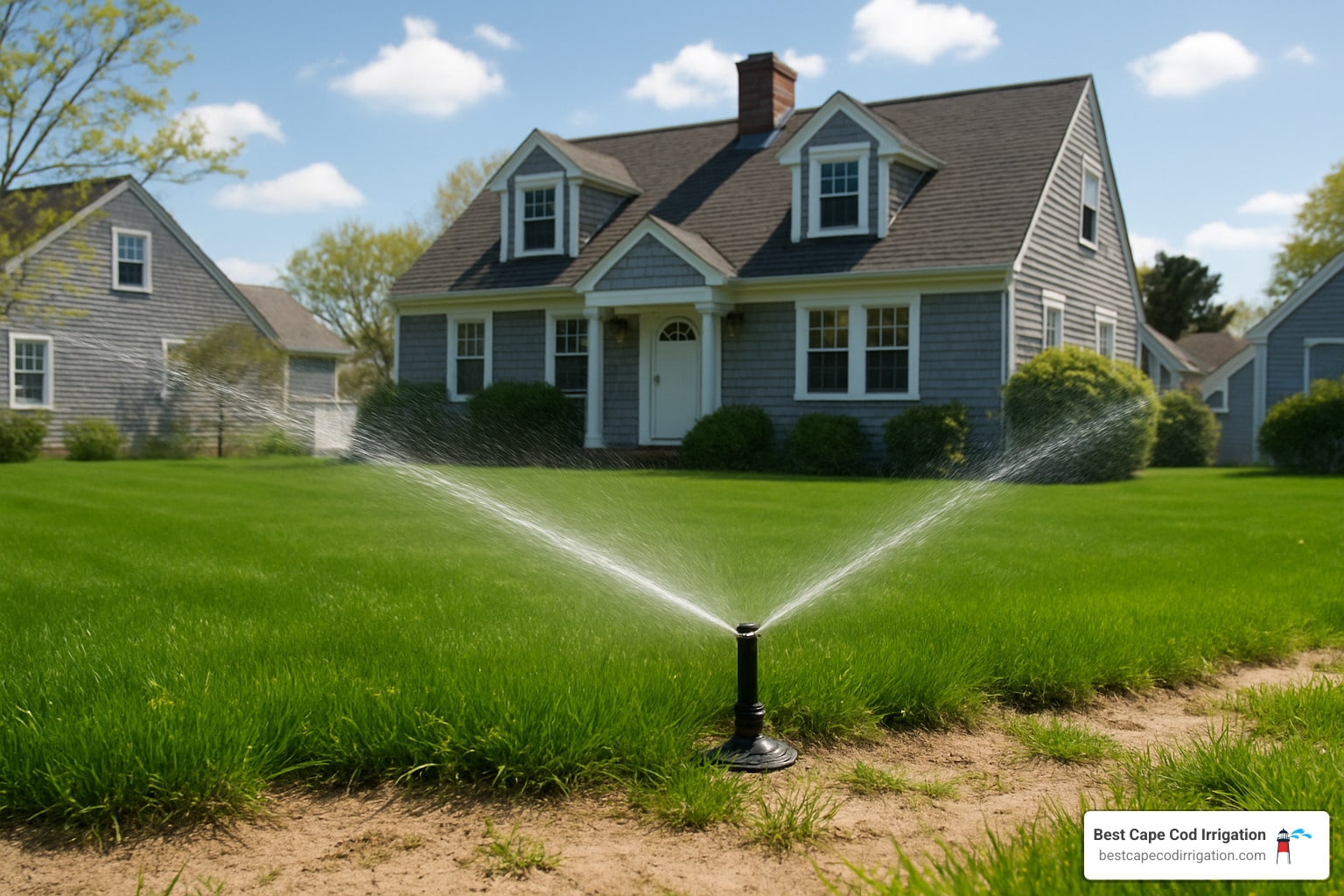



Spring Rain Solutions for Cape Cod’s Sandy Soils
Spring rain lawn sprinklers are essential systems for Cape Cod homeowners looking to maintain lush, healthy lawns despite the region’s uniquely challenging sandy soil and coastal climate. Here’s what you need to know about spring rain lawn sprinkler services:
| Spring Rain Lawn Sprinkler Facts | Details |
|---|---|
| Best Time to Start Up | After soil is thawed 12″ deep (typically late April) |
| Professional Service Cost | $80-350 for spring tune-up (internet averages) |
| DIY Maintenance Cost | $40-120 for basic supplies |
| Common Issues | Clogged heads, misalignment, leaks, pressure problems |
| Water Pressure Needed | 40-65 PSI for optimal performance |
As Cape Cod’s recent weather patterns show, with July 2023 being the driest since 1893, proper irrigation is no longer optional for maintaining a healthy landscape. The region’s sandy soil drains quickly while coastal winds accelerate evaporation, creating a perfect storm that can leave your garden struggling.
“Standard irrigation methods that work elsewhere are nowhere near adequate in this region,” notes a local Cape Cod irrigation expert. The soil here becomes “as dry as moon dust” just hours after watering without proper system setup.
Spring is the critical time to ensure your sprinkler system is ready for the season ahead. A proper spring tune-up includes checking for frost damage, cleaning nozzles, inspecting backflow preventers, and testing each zone for proper coverage. This maintenance not only ensures your lawn stays green but can reduce water waste by up to 30%.
For Cape Cod homeowners, the right sprinkler system isn’t just about convenience—it’s about water conservation and plant survival in our unique coastal environment.
Understanding Spring Rain Lawn Sprinklers – The Basics
Let’s talk about what makes spring rain lawn sprinklers tick! These aren’t just pipes and sprinkler heads—they’re sophisticated systems designed specifically to nurture your Cape Cod landscape through our unique spring growing season.
A good sprinkler system works like a team, with each component playing a crucial role. You’ve got your sprinkler heads doing the actual watering, valves controlling the water flow, a smart controller acting as the brain, and underground pipes carrying water throughout your property. Many modern systems also include rain sensors—a game-changer for efficiency that we’ll explore shortly.
For Cape Cod homeowners, proper zoning is absolutely essential. Our sandy soils and coastal microclimates mean your front yard might have completely different watering needs than your backyard! We often create separate zones based on sun exposure (that south-facing slope dries out faster), plant types (your hydrangeas are thirstier than your native grasses), and even soil variations across your property.
When it comes to water pressure, think of it as the engine that powers your whole system. Most homes on Cape Cod perform best with pressure between 40-65 PSI. Too little pressure and you’ll get sad, dribbly sprinklers that barely reach the grass. Too much and you risk damaging components while creating a fine mist that just blows away in our coastal breezes.
One component you should never overlook is the backflow preventer. This safety device isn’t just a good idea—it’s typically required by local regulations. It prevents irrigation water (which might contain fertilizers or other additives) from flowing backward into your drinking water. We recommend annual testing to ensure it’s working properly.
How They Work & Why Spring Matters
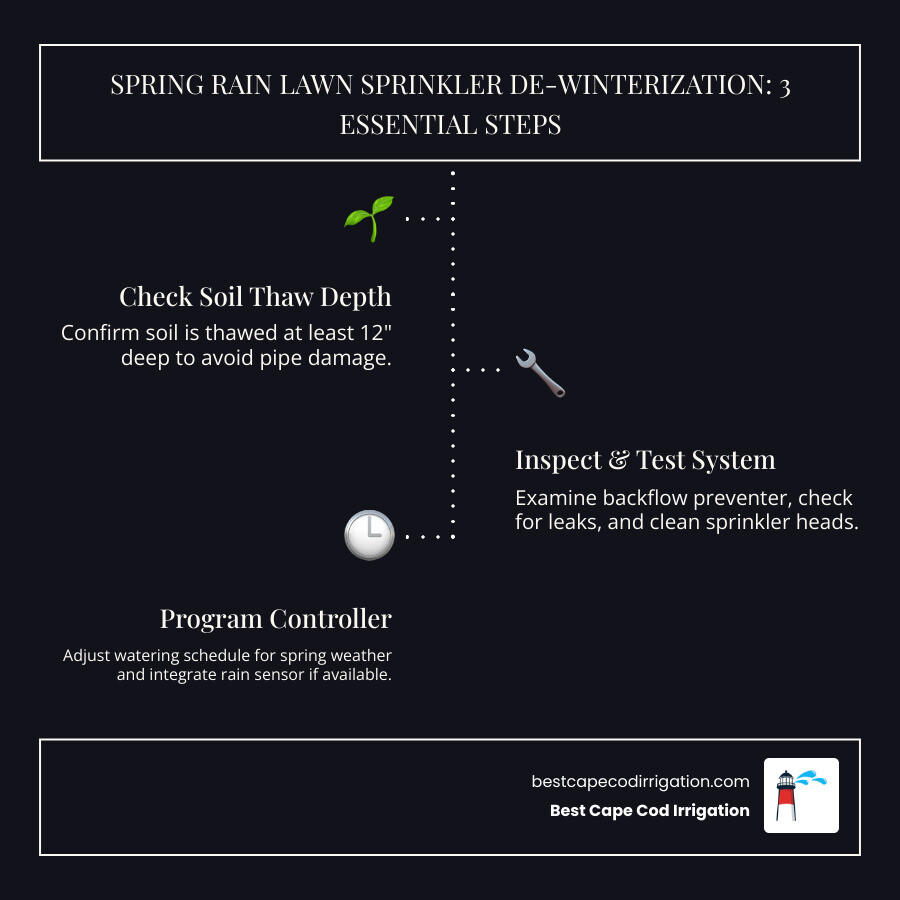
Timing is everything when waking up your sprinkler system after winter hibernation. The golden rule? Wait until the soil has completely thawed to at least 12 inches deep. Trying to force water through partially frozen pipes is a recipe for cracks and leaks that can turn into expensive repairs.
Here’s a local tip we share with all our Cape Cod customers: watch for the “forsythia test.” When those bright yellow flowers start blooming around your neighborhood, it typically means soil temperatures have stayed above 55°F for about a week—making it safe to bring your irrigation system back to life.
The technique for opening your system matters just as much as the timing. Always open the main water valve slowly—we’re talking turtle-pace slow. This prevents water hammer, that alarming banging sound that happens when a pressure surge hits your pipes. A gradual approach allows air to escape gently while water fills the system, protecting your pipes, fittings, and sprinkler heads.
While you’re doing your spring startup, don’t forget about your controller battery! Most irrigation controllers have a backup battery that keeps your programs saved during power outages. Spring is the perfect time to pop in a fresh one—consider it cheap insurance against losing all your carefully calibrated watering schedules.
Types Best Suited for Spring Showers
Cape Cod’s spring weather is notoriously fickle—we might get a week of soaking rain followed by ten days of bone-dry conditions. Your irrigation system needs to handle both scenarios with ease.
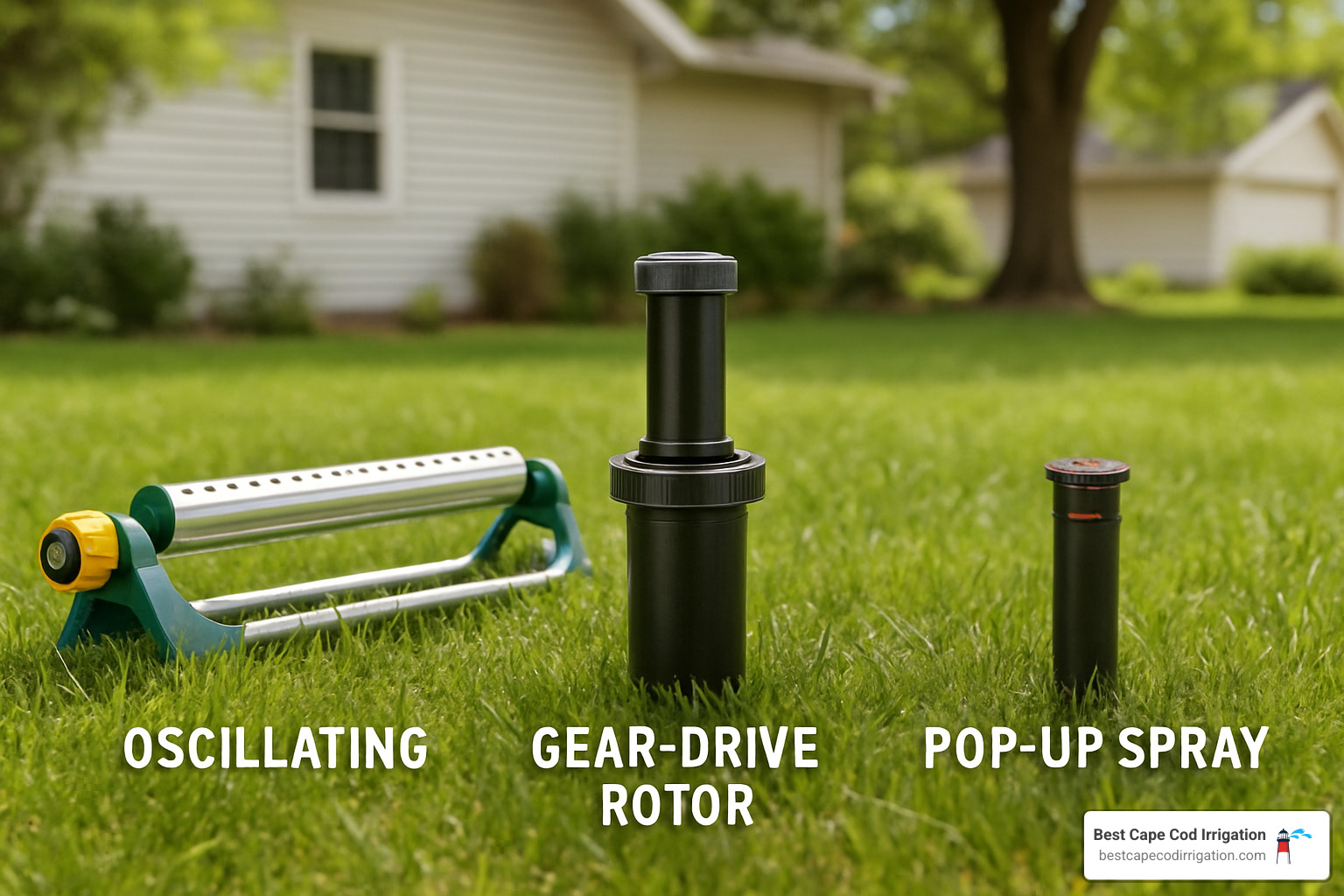
Oscillating sprinklers remain a popular choice for many Cape Cod lawns during spring. Models like the Husky 4000 sq. ft. Poly Base deliver a gentle, rain-like spray that’s perfect for newly seeded areas and tender spring growth. They’re especially effective for those larger, rectangular sections of lawn that make up most Cape properties.
For more complex landscapes, gear-drive rotor sprinklers like the Orbit H2O-6 offer tremendous versatility. These workhorses can cover up to 5,000 sq. ft. and feature adjustable spray patterns that work beautifully for our irregularly shaped Cape Cod lots. Their strong customer satisfaction (4.3/5 stars across 7,000+ reviews) speaks to their reliability in real-world conditions.
Pop-up spray heads are practically invisible until needed—they rise up to water your lawn, then disappear back into the landscape. For spring conditions, we particularly recommend models with matched precipitation rates and pressure-regulating features to ensure consistent coverage despite our sometimes fluctuating municipal water pressure.
The smartest addition to any Cape Cod spring irrigation system is a rain sensor. These small but mighty devices detect natural rainfall and automatically skip scheduled watering cycles when Mother Nature has already done the job. Some advanced models even measure rainfall amounts and adjust future schedules accordingly—perfect for our unpredictable spring weather patterns.
| Feature | Oscillating Sprinklers | Gear-Drive Rotors |
|---|---|---|
| Coverage Area | Up to 4,500 sq. ft. | Up to 5,000 sq. ft. |
| Pattern | Rectangular pattern | Adjustable 40°-360° |
| Best For | Open, rectangular lawns | Irregular shapes, varied distances |
| Water Delivery | Gentle, rain-like spray | Focused streams |
| Spring Benefits | Even coverage for new growth | Adjustable to avoid overwatering |
| Typical Rating | 4.4/5 stars (37,000+ reviews) | 4.3/5 stars (7,000+ reviews) |
According to scientific research on soil thaw depth, rushing your system startup before the ground is properly thawed is one of the most common and costly mistakes homeowners make. Taking the time to ensure your soil is ready can save you hundreds in potential repairs.
Step-By-Step Review of Spring Start-Up Service
There’s something magical about that first spring day when your irrigation system awakens after its winter hibernation. At Best Cape Cod Irrigation, we don’t just turn on your sprinklers – we perform a comprehensive revival that ensures your system is ready to nurture your landscape through the growing season ahead.
Our spring start-up service begins with the most fundamental safety check: confirming your soil has completely thawed to a depth of 12 inches. This isn’t just a recommendation – it’s a necessity for preventing costly pipe damage. Using a specialized soil probe, our technicians carefully test multiple areas before proceeding further.
“Many homeowners are eager to get their systems running at the first sign of warm weather,” shares our lead technician. “But patience pays off. We’ve seen too many cracked pipes from systems activated while frost still lingers underground.”
Next comes a thorough inspection of your backflow preventer – that critical safety device that keeps irrigation water from contaminating your household supply. Annual testing isn’t just good practice; it’s often required by local regulations to protect public water systems.
Leak detection forms the cornerstone of our spring service. We carefully examine all visible components, including valve boxes, connections, and sprinkler heads. But our inspection goes deeper – we conduct systematic pressure tests in each zone to identify underground leaks that might otherwise remain hidden until they create soggy lawn patches or trigger an alarming water bill.
Those tiny sprinkler nozzles that seemed fine last fall? They’ve likely collected debris over winter that can clog and distort spray patterns. Our technicians carefully clean each one, ensuring water distributes evenly across your landscape. We also verify your system operates within the optimal 40-65 PSI range using professional-grade pressure gauges, installing regulators if needed to protect your investment.
Spring Rain Lawn Sprinklers Tune-Up Checklist
Our comprehensive tune-up process has been refined over 25 years of working with Cape Cod’s unique conditions. We begin with that crucial soil probe test to verify proper thawing before moving to our zone-by-zone testing protocol. Each irrigation zone runs for a full 15 minutes while our technicians evaluate performance, coverage, and pressure consistency.
Winter frost heave and snow removal equipment can wreak havoc on sprinkler head positioning. Our head alignment adjustment ensures each sprinkler sits at the proper height and angle for optimal coverage. We also conduct thorough backflow prevention testing to verify this critical safety device functions correctly.
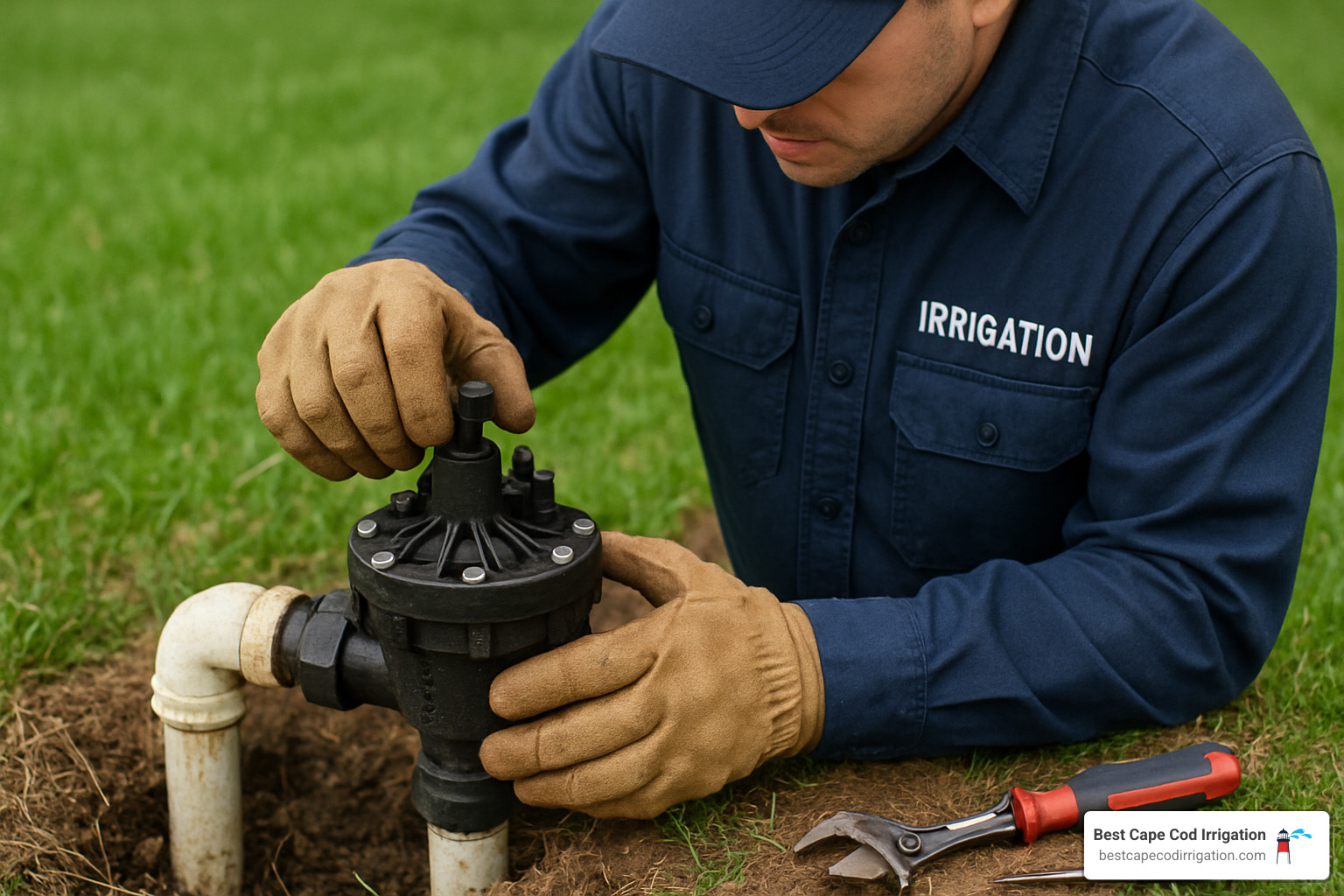
Those often-overlooked valve boxes get special attention during our valve box clean-up process. We remove accumulated debris and carefully inspect solenoids and diaphragms for signs of wear or damage. Your irrigation controller receives updated spring-appropriate programming that accounts for current weather patterns and the specific needs of your landscape.
If you have a rain sensor installed (and we highly recommend one), we perform rain sensor verification to confirm it properly interrupts irrigation cycles during rainfall. Finally, we fine-tune spray pattern optimization for each head, ensuring water reaches intended areas while avoiding sidewalks, driveways, and structures.
“When we awaken our Cape Cod irrigation systems from their winter slumber, we check and adjust every head, inspect and test the backflow preventer, and ensure the entire system is operating at peak efficiency,” explains our lead technician. “You deserve every minute of that being dedicated to locating problems before they become costly repairs.”
Efficiency Tips & Water Savings
Cape Cod’s sandy soils and coastal winds create unique irrigation challenges that require specialized approaches. During our spring service, we implement several water-saving strategies that benefit both your landscape and your wallet.
Run-time calibration involves fine-tuning watering durations based on current conditions. Spring typically demands shorter, more frequent cycles than summer’s intense heat, and we adjust your controller accordingly. For clients with particularly sandy soil, we recommend the cycle-soak method – breaking watering into multiple shorter periods with rest intervals that allow moisture to penetrate deeply without wasteful runoff.
We also program your controller to account for typical spring rainfall patterns, reducing unnecessary irrigation during naturally wet periods. Clients with smart controllers benefit from our expertise in setting up weather-based adjustments that automatically modify schedules based on local conditions.
For garden beds and ornamental plantings, we often suggest drip conversion where appropriate. This highly efficient approach delivers water directly to plant roots, reducing evaporation by up to 50% compared to conventional sprinklers – particularly valuable in Cape Cod’s windy coastal areas where spray drift can significantly diminish efficiency.
Our maintenance programs include regular bi-monthly system checks that catch small issues before they become major problems. These periodic inspections ensure your spring rain lawn sprinklers remain efficient throughout the growing season, saving water while keeping your landscape lush and healthy.
For more information about keeping your irrigation system in top condition year-round, visit our detailed guide on Irrigation Repairs & Maintenance or learn about our spring opening services at Opening Sprinkler System in Spring.
Performance, Smart Tech & Cape Cod Conditions
If you’ve spent time on Cape Cod, you know our unique environment creates special challenges for keeping lawns lush and gardens thriving. Our sandy soil drains faster than a bathtub without a plug – local hydrologists have aptly called it “the sand pile in the ocean.” Add in our persistent coastal winds that accelerate evaporation, and you’ve got conditions that can leave traditional irrigation systems struggling.
This is where modern smart technology truly shines for Cape Cod homeowners. ET-based scheduling (that’s Evapotranspiration for the technically minded) works like a weather scientist for your yard. These systems analyze temperature, humidity, wind patterns, and sun intensity to calculate exactly how much water your plants actually need – not just what a timer thinks they need. The difference in water conservation can be remarkable.
Wi-Fi controllers have transformed how we manage irrigation on the Cape. These clever devices connect to weather services and automatically adjust your watering schedule based on what Mother Nature has planned. Rain in tomorrow’s forecast? Your system will skip watering, saving you money and preventing that soggy lawn feeling we all dislike.
For our unpredictable Cape Cod spring weather, rain-freeze sensors are particularly valuable additions. These devices detect when it’s raining or when temperatures drop toward freezing, preventing your system from running when it shouldn’t. This not only conserves water but also protects your irrigation investment from potential freeze damage during those surprise late spring cold snaps we sometimes experience.
At Best Cape Cod Irrigation, we’ve spent over 25 years learning how to blend these smart technologies with traditional irrigation components to create systems specifically designed for our unique coastal conditions. The result? Healthier landscapes with significantly less water waste.
Does Spring Rain Lawn Sprinklers Deliver on Smart Features?
The technology behind spring rain lawn sprinklers has evolved dramatically in recent years, changing from simple timers to sophisticated systems that think for themselves.
Remote monitoring puts control literally in the palm of your hand. With user-friendly smartphone apps, you can adjust watering schedules while enjoying dinner in Provincetown or vacationing in Florida. Notice clouds gathering while you’re at work? A quick tap lets you pause your system before the rain even starts.
One of the most valuable features in modern systems is flow alerts. Advanced controllers continuously monitor water flow, quickly detecting abnormalities that might indicate a broken pipe or malfunctioning valve. When problems occur, the system can automatically shut down to prevent water waste and property damage, then send an alert to your phone – often before you’d even notice a problem developing.
Zone pausing during storms works beautifully with Cape Cod’s changeable spring weather. Smart controllers connected to weather services automatically suspend irrigation when rain is detected or forecast, then resume normal operation when conditions are appropriate – no more embarrassing sprinklers running during downpours.
The ease-of-use of modern irrigation apps has improved tremendously. Today’s interfaces are intuitive and straightforward, making it simple to adjust schedules, check system status, and review water usage data. Some even provide personalized water-saving recommendations based on your specific landscape and local conditions.
“Smart irrigation controllers that adjust schedules based on real-time weather data are game-changers for Cape Cod properties,” notes our irrigation specialist. “They can reduce water usage by 30-50% while actually improving plant health by providing water only when needed.”
Fine-Tuning Coverage to Avoid Sidewalk Splash
Nobody enjoys walking through unexpected sprinkler spray on sidewalks or seeing water running down the street. During our spring tune-up service, we implement several precise techniques to ensure water goes exactly where it’s needed – on your plants, not your pavement.
Nozzle swapping might sound simple, but it’s one of our most effective techniques. We replace standard nozzles with specialized versions designed for specific areas. Those narrow strips between your sidewalk and street? We install strip nozzles that distribute water in precise patterns. For curved landscape features, adjustable-arc nozzles ensure water stays on plants, not pavement.
The humble arc adjustment key is worth its weight in gold for water conservation. This simple tool allows our technicians to precisely control the coverage pattern of rotor sprinklers. We carefully adjust each head to create perfect coverage of planted areas while preventing overspray onto driveways, patios, and walkways.
Pressure regulation at individual heads helps maintain consistent spray patterns regardless of variations in your main water supply. When pressure is too high, water tends to atomize into a fine mist that drifts away before reaching your plants. Properly regulated pressure creates heavier droplets that fall where intended, even on breezy Cape Cod days.
Proper head height trimming ensures sprinkler heads work as designed. Heads set too low get blocked by surrounding grass, creating dry spots. Heads standing too tall are more likely to spray beyond intended areas and risk damage from mowers or foot traffic. We adjust each head to the optimal height relative to your turf and plants.
These fine-tuning techniques might seem like small details, but together they create irrigation systems that maximize efficiency while minimizing waste and inconvenience – exactly what you need for Cape Cod’s unique conditions.
Value for Money – What Does a Tune-Up Really Cost?
Let’s talk dollars and sense when it comes to spring sprinkler maintenance. While the upfront cost might make you wince, the long-term savings often tell a different story.
Based on internet data (not specific to Best Cape Cod Irrigation), a professional spring start-up service typically runs between $80 and $350. This wide range reflects differences in system size, complexity, and the specific services included in your tune-up package.
When major repairs enter the picture, costs can climb considerably. Replacing broken sprinkler heads might set you back $10-$30 per head plus labor, while fixing leaky valves typically costs $100-$250. More extensive issues like broken underground pipes? Those repairs generally fall between $150-$350 per location, but complex situations can push costs well beyond $1,000.
The DIY route might seem tempting if you’re handy. Basic supplies like replacement nozzles, head cleaning tools, and common parts usually total $40-$120. But before you roll up your sleeves, consider what you’re not getting: professional diagnostics, access to commercial-grade parts, and perhaps most importantly, warranty protection.
Speaking of warranties – this is an often overlooked factor in the value equation. Professional services typically include warranties on both parts and labor. What’s more, some irrigation component manufacturers only honor their warranties when licensed professionals handle the installation. That $20 you saved doing it yourself might cost you $200 if something fails later.
“The true cost of an irrigation system isn’t what you pay to install or maintain it,” our service manager often reminds customers. “It’s the water bill you’ll pay over its lifetime. That’s where the real money goes.” A properly maintained system can reduce water consumption by 20-30%, creating substantial savings that often exceed the maintenance cost within a single season.
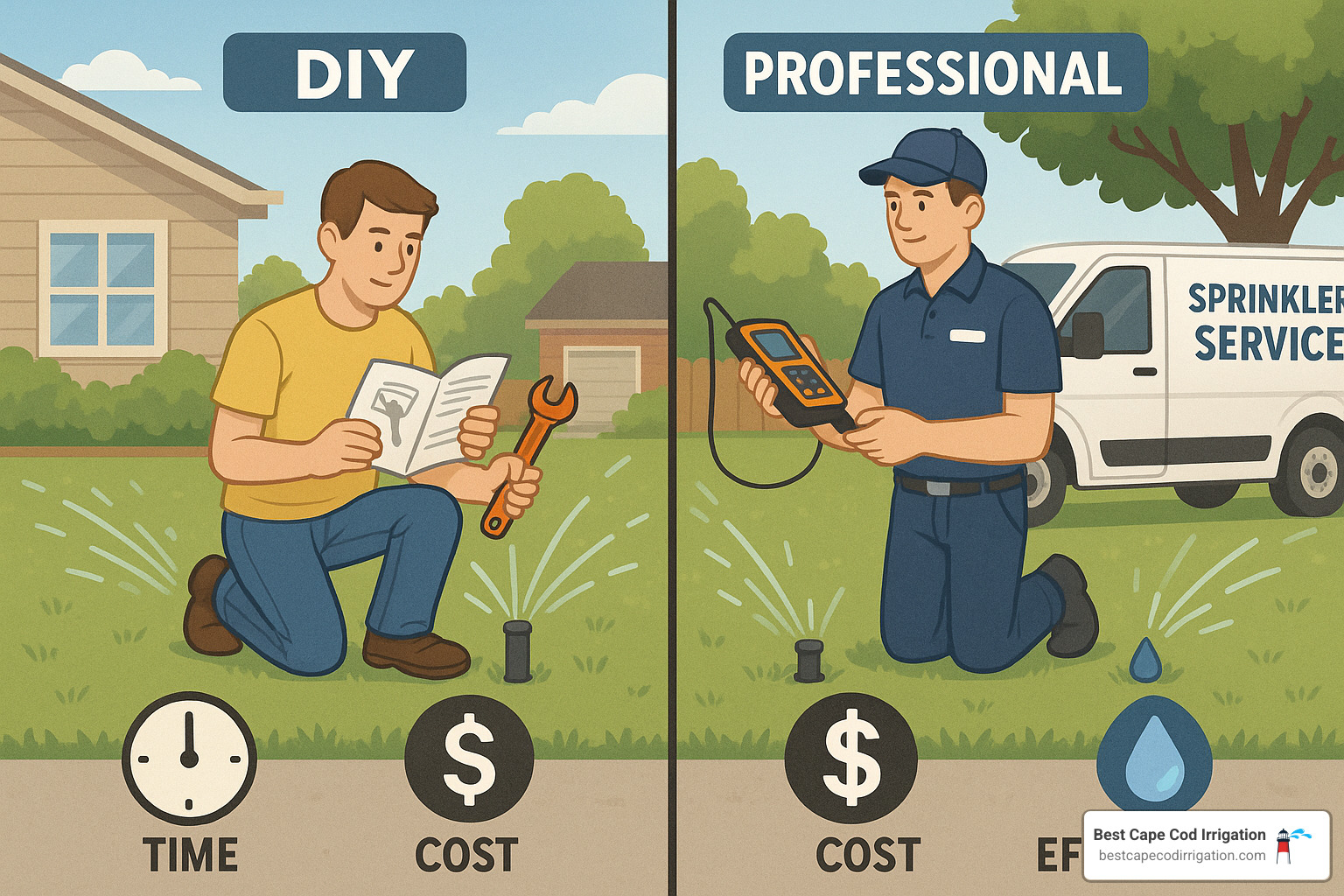
DIY vs Professional: Which Pays Off?
The DIY versus professional decision involves more than just comparing price tags.
Time investment is substantial for DIY maintenance. Even if you’re somewhat familiar with your system, expect to spend 3-5 hours on a thorough spring check. First-timers might dedicate an entire weekend to the task, researching procedures, locating components, and troubleshooting unexpected issues.
Risk of damage is considerably higher without professional training. I’ve seen well-intentioned homeowners create $500 problems while trying to fix $50 issues. Without proper tools and knowledge, you might inadvertently damage valve diaphragms, crack fittings, or create electrical shorts in the controller.
Water bill savings tend to be greater with professional maintenance. Our technicians can calibrate your system with precision that most homeowners simply can’t match, often reducing water consumption by 20-30% compared to poorly maintained systems.
Pros and Cons of DIY Maintenance:
Pros:
* Lower immediate cost
* Flexibility to work on your own schedule
* Learning opportunity for those interested in irrigation technology
* Can address simple issues quickly without waiting for service appointments
Cons:
* Time-consuming process requiring research and learning
* Lack of professional diagnostic equipment
* No warranty protection on work performed
* Risk of causing additional damage
* May miss subtle issues that professionals would catch
* Limited access to commercial-grade replacement parts
Pros and Cons of Professional Service:
Pros:
* Comprehensive system evaluation by trained experts
* Access to professional-grade parts and equipment
* Warranty protection on parts and labor
* Time-saving for the homeowner
* Potential for greater water efficiency and bill savings
* Early detection of developing problems
* Expert recommendations for system improvements
Cons:
* Higher upfront cost
* Need to schedule and be available for service appointments
* May include services you could handle yourself
For most Cape Cod homeowners, professional spring rain lawn sprinklers maintenance provides the best long-term value. The combination of water savings, system protection, and peace of mind typically outweighs the higher initial cost – especially given our region’s unique sandy soil and coastal conditions that require specialized knowledge for optimal irrigation performance.
Frequently Asked Questions about Spring Rain Lawn Sprinklers
What if the ground is still frozen?
One of the most common questions we hear each spring is about frozen ground. Here’s the simple truth: activating your irrigation system while the soil is still frozen is a recipe for disaster.
When water flows through pipes surrounded by frozen soil, the pipes can crack or burst as they expand, leading to repairs that could have been easily avoided with a little patience. On Cape Cod, we’ve seen countless examples of eager homeowners who jumped the gun and ended up with costly underground leaks.
To properly check if your soil is ready, grab a shovel and dig down about 12 inches in several spots around your yard. If you hit frozen soil at this depth, your system isn’t ready yet. Wait another week and check again. Many local gardeners rely on the “forsythia test” – when those bright yellow blooms appear, it typically signals that soil temperatures have stayed above 55°F long enough to proceed safely.
For most Cape Cod properties, late April is generally safe for spring rain lawn sprinkler activation, but Mother Nature doesn’t always follow the calendar. Every season is different, which is why we recommend consulting with professionals who understand our unique local conditions.
How do I know my rain sensor is working?
Rain sensors are small but mighty components that prevent your system from watering during or after rainfall – a simple technology that can save thousands of gallons of water annually. But how do you know if yours is functioning correctly?
Testing your rain sensor is surprisingly simple:
First, locate the sensor – it’s typically mounted on a roof edge, gutter, or post where it can receive unobstructed rainfall. Check for any debris, spider webs, or mineral deposits that might interfere with its operation and gently clean if necessary.
Next, pour a small amount of water directly onto the sensor’s collection disc or cup. Then, attempt to run a manual cycle from your controller. If the sensor is working properly, it should interrupt the irrigation cycle, preventing the system from operating.
If your sprinklers run despite water on the sensor, it likely needs adjustment or replacement. Most modern rain sensors should trigger after collecting just 1/8 to 1/4 inch of rain.
Here’s an interesting tidbit from our field experience: we’ve encountered several situations where steam from outdoor showers has accidentally triggered rain sensors on Cape Cod properties! Proper placement away from such sources ensures more reliable operation of your spring rain lawn sprinklers.
Can I upgrade to a smart controller without replacing heads?
Yes! This is one of our favorite upgrades to recommend because it delivers tremendous value without requiring a complete system overhaul. Smart controllers are compatible with virtually all standard irrigation valves and sprinkler heads, making them an excellent “brain transplant” for older systems.
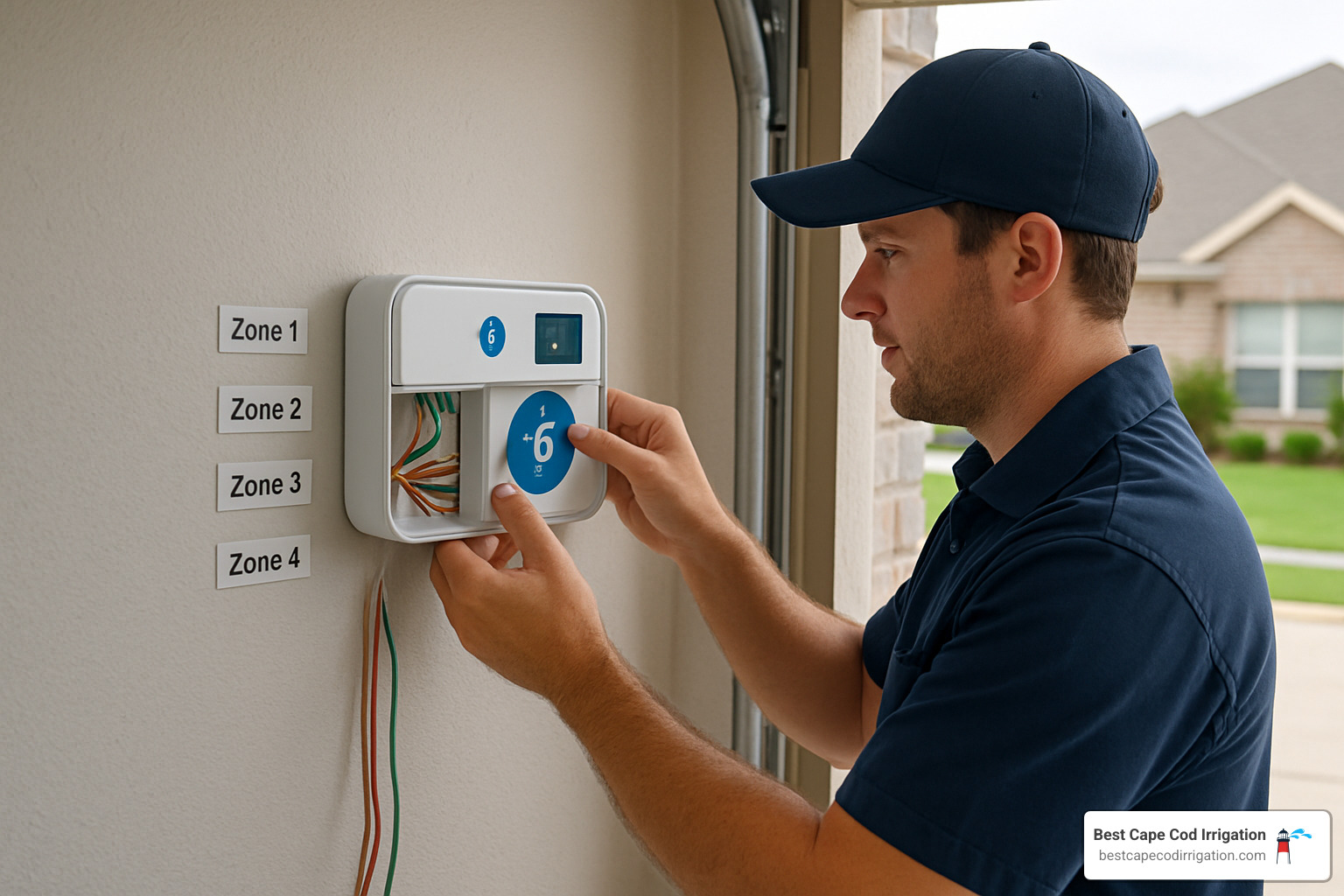
The typical installation process is straightforward: we remove your old controller, mount the new smart controller in the same location, connect your existing valve wires, set up Wi-Fi connectivity, and program your zone-specific information. Some homeowners opt to add optional sensors like flow meters or soil moisture probes for even greater precision.
While the physical installation isn’t complicated, we strongly recommend having a professional evaluation of your system when upgrading to a smart controller. This ensures your zones are properly configured and that the controller has accurate information about your specific landscape needs.
The benefits are substantial – smart controllers typically reduce water usage by 20-50% while actually improving plant health. They accomplish this by providing water only when needed based on real-time weather conditions, soil moisture levels, and plant requirements.
For Cape Cod’s sandy soils and variable coastal weather, smart controllers are particularly valuable as they can make daily adjustments that would be impossible with traditional timers. Your lawn stays healthier while using less water – a win-win upgrade that typically pays for itself within 1-2 seasons.
Conclusion & Next Steps
After exploring the ins and outs of spring rain lawn sprinklers, one thing becomes crystal clear – proper spring activation and maintenance aren’t just helpful, they’re essential for Cape Cod homeowners. Our region presents unique challenges with its sandy soil, persistent coastal winds, and unpredictable weather patterns that make professional irrigation management particularly valuable.
At Best Cape Cod Irrigation, we bring more than 25 years of local expertise to every property we visit. We’ve seen how Cape Cod’s distinctive environment affects irrigation needs, allowing us to develop systems that deliver outstanding performance while respecting our precious water resources.
Our eco-friendly approach combines cutting-edge smart technology with time-tested irrigation techniques. We’re passionate about creating systems that respond intelligently to changing conditions – from rain sensors that prevent unnecessary watering during rainfall to sophisticated ET-based controllers that fine-tune schedules based on what your plants actually need.
“The right spring maintenance doesn’t just save water – it protects your entire irrigation investment,” explains our lead technician. “We’ve seen how proper spring care prevents costly mid-summer emergencies when your landscape needs water most.”
For homeowners considering their spring irrigation needs, we recommend scheduling a comprehensive system assessment once your soil has thawed completely. This proactive step allows us to identify and address potential issues before the peak growing season arrives, ensuring your landscape thrives throughout the summer months.
Whether you’re looking to tune up an existing system, upgrade to water-saving smart technology, or install a completely new irrigation solution, our team is ready to provide expert guidance and service across Cape Cod. From the canal to the outer cape, we understand the specific irrigation challenges of each Cape Cod microclimate.
Proper spring maintenance extends beyond simply keeping your lawn green – it’s about protecting your investment, conserving our water resources, and ensuring your landscape flourishes in our unique coastal environment. With the right approach to spring rain lawn sprinklers, you can enjoy a beautiful, healthy landscape while being a responsible steward of our environment.
To learn more about our services or schedule your spring assessment, visit our website or contact our team directly. We look forward to helping you achieve irrigation excellence this spring and for many seasons to come.