


Why Lawn Sprinkler Systems Are Essential for Cape Cod Homeowners
Lawn sprinkler systems are automated irrigation solutions that deliver water to your yard through strategically placed heads, zones, and timers. Whether you choose an in-ground system, above-ground hose setup, or smart Wi-Fi controller, these systems eliminate manual watering while ensuring even coverage across your landscape.
Quick Overview: Types of Lawn Sprinkler Systems
• In-ground systems – Permanent installation with pop-up heads ($2,000-$6,000 professionally installed)
• Above-ground/hose-based – Portable sprinklers on timers ($200-$500 DIY setup)
• Smart systems – Wi-Fi controllers with weather sensors and app control
• Drip irrigation – Targeted watering for gardens and shrubs
• Hybrid setups – Mix of permanent and portable components
As one Cape Cod homeowner finded: “It’s Saturday afternoon, and you’re wandering through the crunchy grass, wondering what the next step is for you and your lawn.” This scenario plays out across the region every summer.
Cape Cod’s sandy soil drains quickly, making consistent watering critical for healthy turf. Manual watering with hoses becomes time-consuming and often results in uneven coverage – some areas get soaked while others stay dry.
Modern sprinkler systems solve this by:
- Automating schedules so you never forget to water
- Delivering precise amounts based on your soil and plant needs
- Saving water through smart sensors and zone control
- Protecting your investment in landscaping and property value
The key is matching the right system type to your yard size, budget, and maintenance preferences.
Understanding Lawn Sprinkler Systems
Picture this: you turn a dial on your kitchen wall, and minutes later, your entire yard is getting the perfect amount of water – no dragging hoses, no forgetting to move sprinklers, no brown patches next to swampy spots. That’s the beauty of a well-designed lawn sprinkler system.
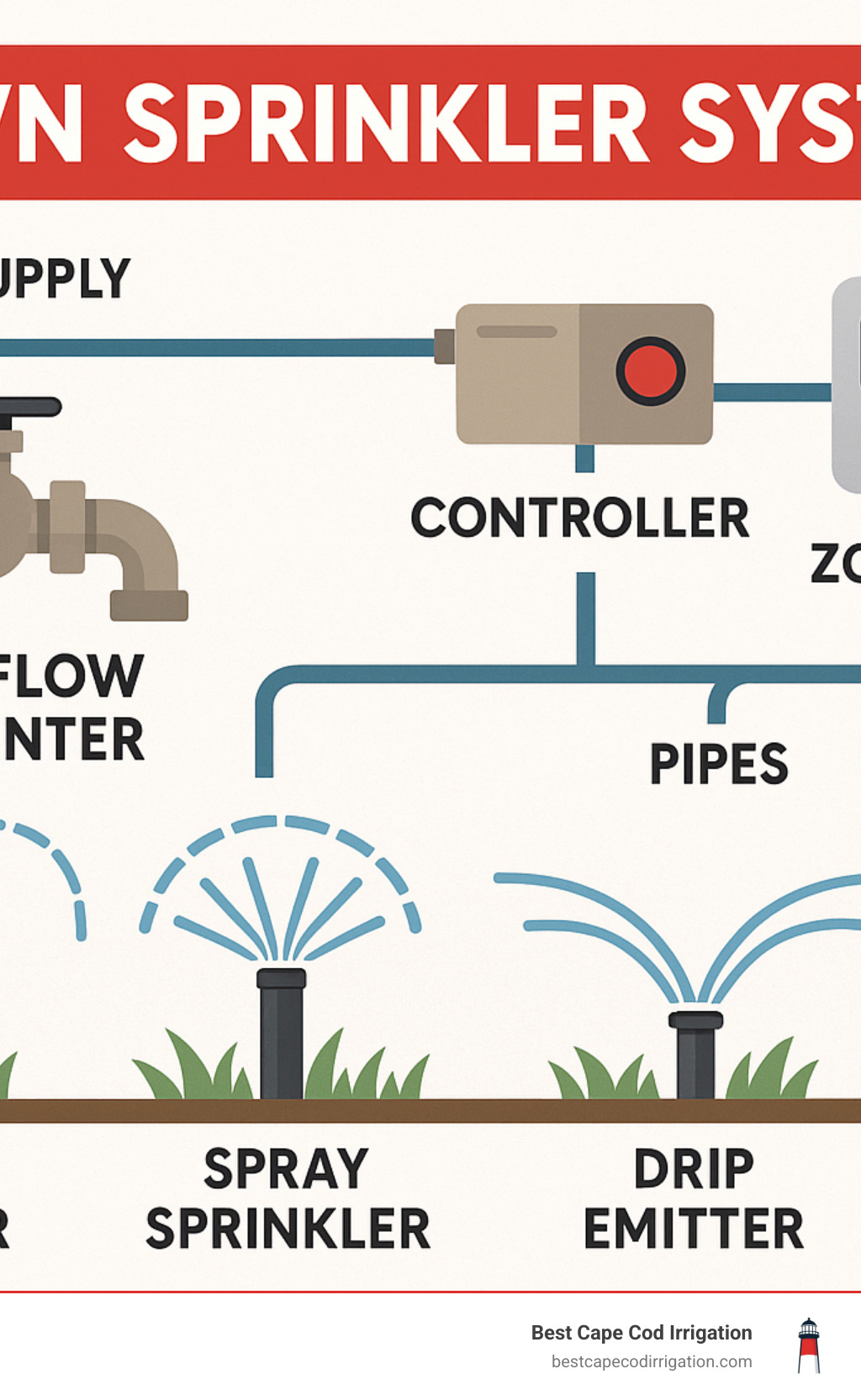
At their core, lawn sprinkler systems work like a carefully orchestrated dance. Water flows from your home’s main supply through a network of pipes, valves, and heads to deliver precise amounts exactly where and when your landscape needs it. Think of it as giving your yard its own personal watering assistant that never calls in sick.
The magic starts with your water source – whether that’s your municipal connection or a private well here on Cape Cod. From there, water passes through a backflow preventer (a crucial safety device that keeps irrigation water from contaminating your drinking supply), then to your controller or timer – the “brain” of the operation that decides when each area gets watered.
Zone valves act like traffic controllers, directing water flow to different areas of your property. Pipes and tubing transport water throughout the system, while sprinkler heads deliver water in specific patterns designed for each area’s needs. Modern systems can handle multiple zones sequentially, ensuring you have adequate water pressure while covering large areas efficiently.
Here’s where Cape Cod’s unique conditions come into play: our sandy soil drains quickly, but it also means excellent water pressure in most areas. Most residential systems need at least 30-35 PSI and 10-13 gallons per minute to operate effectively. You can easily test your home’s capacity using a pressure gauge on an outdoor faucet and timing how long it takes to fill a 5-gallon bucket.
The real beauty lies in how these components work together. Your controller sends a signal to open a zone valve, water flows through the pipes, and heads pop up to spray your lawn. It’s like having a personal irrigation team that works while you sleep.
Common Lawn Sprinkler Systems Types
When it comes to lawn sprinkler systems, choosing the right type of head for each area is like picking the right tool for the job – use a hammer for nails, not screws.
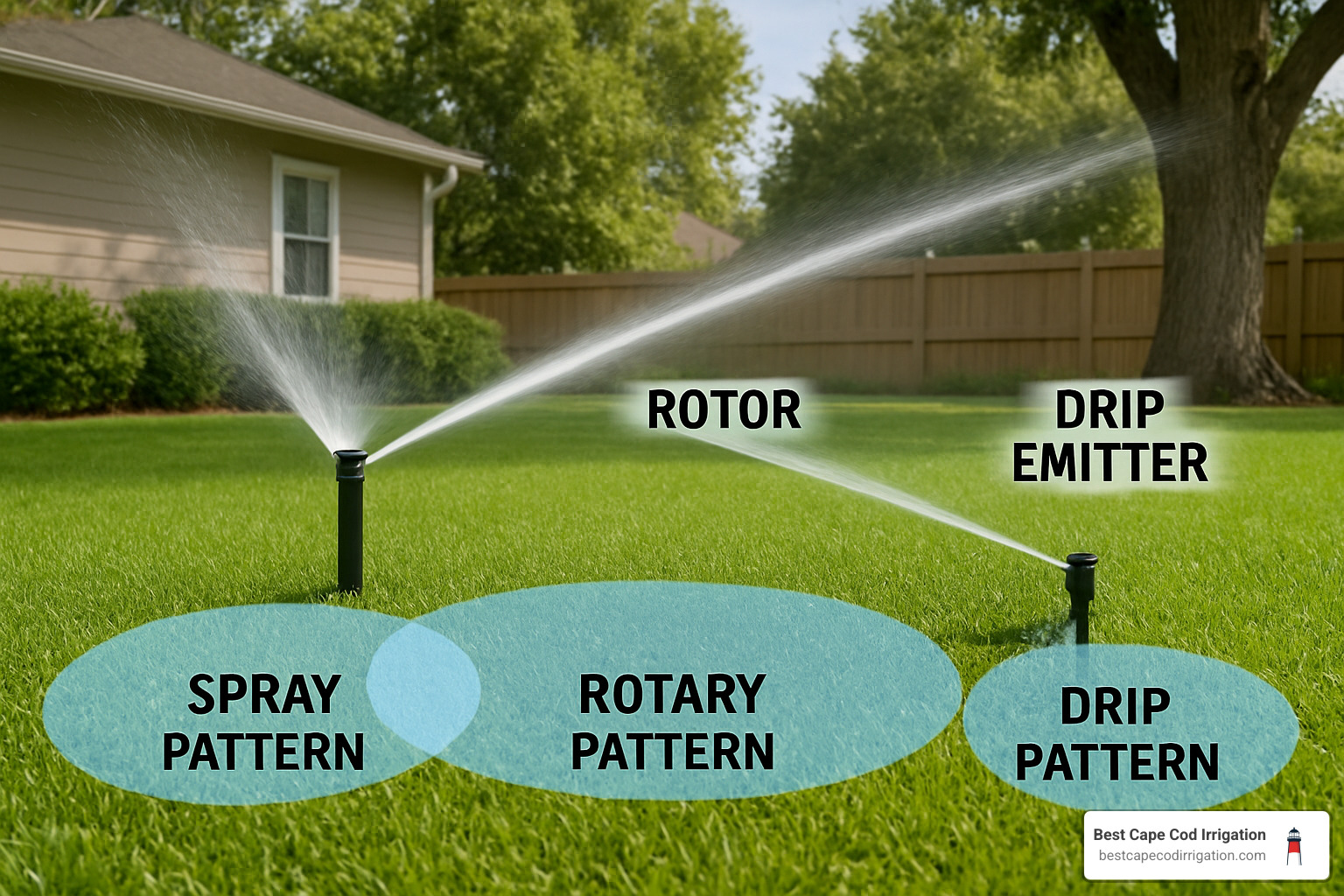
Rotary sprinkler heads are the workhorses for large lawn areas. These gear-driven units rotate slowly, throwing water streams 15-45 feet in adjustable patterns from 40° to full 360°. They’re perfect for open turf areas because they deliver water slowly enough for good soil absorption – especially important in Cape Cod’s sandy soil that can’t handle heavy, fast watering.
For smaller spaces, spray heads are your best friend. They work best for areas up to 15 feet radius, spraying a fixed fan pattern. Here’s an interesting comparison: what rotary heads accomplish in 20 minutes, spray heads do in just 5 minutes. This makes them ideal for narrow strips between sidewalks and flower beds where you need quick, thorough coverage.
Oscillating sprinklers bring automation to above-ground setups. These popular options can cover up to 4,500 square feet by sweeping back and forth, making them perfect for rectangular lawn areas. Models range from simple $10 units to feature-rich $40 versions that work beautifully with hose timers for full automation.
Traveling sprinklers are like having a robot gardener. They move across your lawn automatically, following a hose path, which makes them excellent for large, open areas. You eliminate the hassle of manually moving sprinklers around. Cast-iron models offer durability for years of reliable service.
Drip irrigation takes a completely different approach, delivering water directly to plant roots through emitters or soaker tubing. This method minimizes evaporation and is perfect for garden beds, shrubs, and trees. It works subsurface or on top of soil under mulch – particularly effective for Cape Cod’s water conservation goals.
Bubbler heads provide gentle, localized watering that’s perfect for trees and large shrubs. They deliver high volumes of water slowly, allowing deep root penetration without runoff – crucial for establishing strong root systems in our sandy soil.
Micro-spray systems offer the best of both worlds, combining drip irrigation’s precision with wider coverage patterns. They’re excellent for flower beds and vegetable gardens where you need more coverage than individual drip emitters provide, but don’t want the intensity of traditional spray heads.
Pros & Cons of Lawn Sprinkler Systems
Choosing between system types often comes down to balancing convenience, cost, and your long-term plans for your property.
In-ground systems offer the ultimate in convenience and curb appeal. Pop-up heads stay completely hidden when not in use, giving you that professional, seamless look. The coverage and pressure consistency are excellent, and a well-installed system can increase your property value while lasting 10-15 years with proper maintenance. However, the upfront investment is significant – typically $2,000-$6,000+ based on internet data, not Best Cape Cod Irrigation prices. Installation requires trenching that temporarily disrupts your landscape, and many areas require permits and professional backflow testing. Cape Cod’s climate also means annual winterization is essential, and repairs can be complex.
Above-ground and hose-based systems shine in their simplicity and affordability. A complete setup typically runs $200-$500, requires no trenching or permanent installation, and easily adapts as your landscaping evolves. Winterization is as simple as disconnecting and storing components, making them perfect for renters or temporary solutions. The trade-offs include visible equipment in your yard, the need to move components for mowing, and limited water pressure compared to in-ground systems. There’s also more hands-on maintenance and potential tripping hazards to consider.
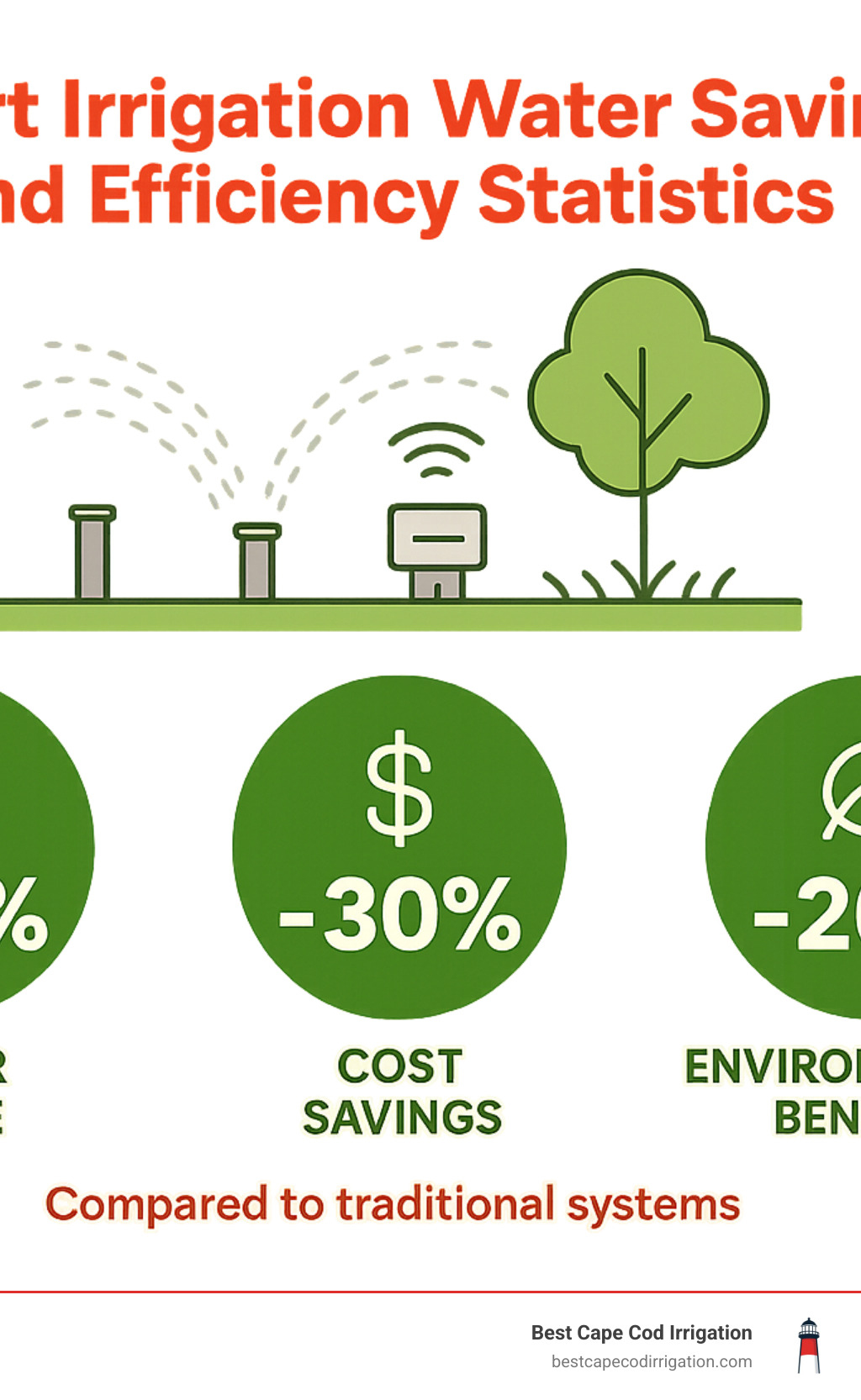
Smart systems – whether in-ground or above-ground – represent the future of water management. Weather-based scheduling automatically adjusts for rainfall and temperature, potentially saving 20-50% on water usage. Remote smartphone control means you can adjust watering from anywhere, while automatic rain shut-off prevents overwatering. You’ll get detailed reports showing exactly how much water you’re using and when. The convenience of easy seasonal adjustments makes these systems particularly appealing for busy homeowners.
The key is honestly assessing your needs, budget, and how long you plan to stay in your current home. Sometimes a simple hose timer setup perfectly serves a small yard, while larger properties with diverse plantings truly benefit from professionally designed multi-zone systems.
Choosing the Right Components for Your Yard
Building an effective lawn sprinkler system starts with understanding that your yard isn’t just one big watering zone. Think of it like cooking – you wouldn’t use the same heat setting for everything in your kitchen. Your lawn has sunny spots that dry out quickly, shady areas that stay moist longer, narrow strips along walkways, and open expanses that need different coverage patterns.
The biggest mistake we see homeowners make? Mixing spray heads and rotary heads on the same zone. It’s like having a garden hose and a fire hose watering the same area – one delivers water four times faster than the other, creating a soggy mess in some spots while others stay bone dry.
When selecting pipe materials, you’ll want PVC pipe for your main lines since it handles up to 200 PSI without breaking a sweat. For areas where you need flexibility – like around trees or in tight spaces – polyethylene pipe works beautifully and won’t crack if the ground shifts. The connection between your main lines and sprinkler heads uses what installers call “funny pipe” – flexible tubing that makes adjustments easy when you inevitably need to move a head a few inches.
Your system’s control center includes several critical components. Zone valves act like traffic lights, controlling which areas get water when. Backflow preventers aren’t just recommended – they’re required by code to keep your drinking water safe. Ball valves give you manual override capability, and pressure regulators protect your expensive components from Cape Cod’s sometimes inconsistent water pressure.
For timers and controllers, you can start simple with basic mechanical timers that cost $20-$40 and work fine for small systems. Digital programmable controllers in the $50-$150 range offer multiple programs and more flexibility. If you want the latest technology, smart Wi-Fi controllers ($100-$300) connect to weather services and adjust automatically. For above-ground systems, hose timers costing $40-$70 can automate your entire setup without any digging.
Matching Sprinkler Heads to Yard Zones
Your large open lawn areas are perfect candidates for rotary heads spaced 15-30 feet apart. These workhorses throw water in slow, steady streams that give sandy Cape Cod soil time to absorb moisture instead of running off. Choose gear-drive rotors with 25-35 foot radius capability – they deliver about half an inch per hour, which sounds slow but prevents the “puddle and run” problem you get with faster application rates.
Narrow strips and side yards need a completely different approach. Here’s where spray heads with strip patterns shine. Use 8-foot or 10-foot radius nozzles spaced 8-12 feet apart, and invest in side strip nozzles that keep water off your driveway and sidewalks. Your neighbors will thank you for not watering their cars every morning.
Flower beds and gardens deserve the VIP treatment that drip irrigation provides. You can bury drip lines under mulch for a clean look, or run them on the surface if you need easy access for garden maintenance. Space emitters 12-18 inches apart, and your plants will get consistent moisture right at root level.
Slopes and hills present special challenges that many DIY installations get wrong. Use lower precipitation rate heads – rotors work well here – and program multiple short cycles instead of one long watering session. This prevents the frustrating sight of water running down your hill instead of soaking in.
Trees and large shrubs need deep watering that reaches their extensive root systems. Bubbler heads or drip rings around the base deliver 1-2 gallons per hour directly where it’s needed. This is especially important for established trees that have roots extending well beyond their canopy.
Cape Cod’s sandy soil drains quickly and needs frequent, shorter watering cycles. If you have clay soil in some areas, it absorbs water slowly and needs longer cycles with breaks between them. The ideal loamy soil provides the best balance for most sprinkler types, but it’s not common in our region.
Planning Zones & Coverage Maps
Creating a proper zone design prevents the expensive mistake of mixing different sprinkler types with vastly different precipitation rates. Start by sketching your property on graph paper at a scale of 1 inch equals 10 feet. This visual approach helps you see patterns and potential problems before you start digging.
The golden rule for head-to-head spacing is simple: space heads so each one’s spray reaches the next head. This creates overlapping coverage that eliminates dry spots and ensures even watering. For rotary heads, space them at 50-60% of the head’s maximum radius. For spray heads, use 50% of maximum radius.
Understanding your pressure and flow calculations determines how many heads you can run simultaneously. Most residential water meters are 5/8″, 3/4″, or 1″ diameter, and your available flow rate is the limiting factor. A typical spray head uses 2-4 gallons per minute, while rotary heads use 3-6 gallons per minute. Exceed your available flow, and every head in the zone performs poorly.
Smart zone design strategy groups areas with similar watering needs while keeping zones under your available flow rate. Never mix spray and rotor heads on the same zone – their different precipitation rates make this a recipe for overwatering some areas and underwatering others. Consider sun and shade differences when grouping areas, and plan for future landscape changes that might require adjustments.
Your service line – the pipe from your water meter to your house – significantly affects available pressure. Longer runs and smaller diameter pipes reduce pressure throughout your system. If you’re experiencing low pressure issues, consider having a professional tap into the main line before it enters your house rather than using outdoor faucets, which often have additional pressure restrictions.
| Sprinkler Head Type | Coverage Radius | Precipitation Rate | Best Use | Spacing |
|---|---|---|---|---|
| Rotary/Rotor | 15-45 feet | 0.4-0.8 in/hr | Large lawn areas | 15-30 feet |
| Fixed Spray | 4-15 feet | 1.5-2.5 in/hr | Small areas, strips | 8-12 feet |
| Drip Emitters | 1-3 feet | 0.5-2.0 gal/hr | Gardens, shrubs | 12-18 inches |
| Bubbler | 2-5 feet | 1-4 gal/hr | Trees, large plants | At root zone |
Smart Automation & Water Efficiency
The days of “set it and forget it” basic timers are behind us. Today’s lawn sprinkler systems use smart technology that actually thinks about your yard’s needs, and the results are impressive – homeowners typically see 20-50% reductions in water usage while maintaining healthier landscapes.
Think of modern smart controllers as having a personal weather forecaster built right in. These systems constantly monitor local conditions and adjust your watering schedule accordingly. When it rained overnight, your system knows not to run that morning. During a heat wave, it automatically increases watering frequency. It’s like having a professional landscaper making decisions for your yard 24/7.
Rain sensors are the simplest smart upgrade you can make. These small devices detect rainfall and tell your system to skip scheduled cycles when Mother Nature is already doing the watering. Soil moisture sensors take this a step further by measuring actual ground conditions rather than just relying on weather data.
The real game-changer is weather station integration. Smart controllers pull data from local weather services to understand not just current conditions, but upcoming forecasts. They’ll reduce watering before expected rain and increase it ahead of hot, dry spells.
Modern Wi-Fi controllers put this intelligence right in your pocket. You can check your system status from work, adjust schedules from vacation, and receive alerts if something goes wrong. The convenience factor alone makes many homeowners wonder how they managed without smart technology.
But the real magic happens with precision nozzle technology. Today’s sprinkler heads create incredibly uniform water distribution patterns. Pressure-compensating nozzles maintain consistent output even when water pressure fluctuates throughout the day. This means every corner of your yard gets exactly the right amount of water.
Hose Timers & Multi-Port Connections
You don’t need to dig up your entire yard to enjoy smart irrigation benefits. Multi-port hose timers offer a clever solution that transforms any outdoor faucet into a sophisticated watering station. These devices can control 2-4 separate zones, each running on its own schedule.
Setting up a multi-port system is surprisingly straightforward. You connect the timer to your outdoor faucet, attach hoses to each outlet, and run them to different areas of your yard. The beauty is in the sequential scheduling – each zone gets full water pressure because only one runs at a time.
A typical morning might look like this: your front yard gets watered from 5:00-5:30 AM, the vegetable garden from 5:30-6:00 AM, and flower beds from 6:00-6:30 AM. Each area receives exactly what it needs without compromising water pressure.
Battery-powered timers typically last 6-12 months on a set of AA batteries, while solar models eliminate battery changes entirely (as long as they get adequate sunlight). Some units offer both power options for ultimate reliability.
Water pressure management becomes crucial with hose-based systems. Pressure-compensating sprinkler heads maintain consistent coverage even if your home’s pressure varies throughout the day. If your water pressure exceeds 80 PSI, consider adding pressure regulators to protect your equipment and ensure even distribution.
For homeowners ready to explore more sophisticated automation options, smart irrigation solutions can integrate multiple technologies for maximum efficiency and convenience.
Cutting Water Waste with Technology
The smartest irrigation systems learn your landscape’s unique personality. Zone customization means your sunny front lawn might water daily during summer heat, while the shaded area under your oak tree only needs watering twice a week. Your rose garden gets gentle, frequent moisture, while your established shrubs receive deep, weekly soaking.
Seasonal adjustments happen automatically with smart controllers. Spring schedules might run three times weekly as plants wake up from winter dormancy. Summer brings daily watering during peak growing season. Fall tapers back to every other day as temperatures cool and growth slows. No more remembering to manually adjust your timer every few months.
Rain shut-off technology has evolved beyond simple sensors. Advanced systems consider not just current rainfall, but recent precipitation history. If you received a heavy downpour yesterday, today’s watering cycle might be shortened or skipped entirely, even if the ground appears dry on the surface.
Flow monitoring acts like a security system for your irrigation. Smart controllers track water usage patterns and alert you to unusual consumption that might indicate broken pipes, stuck valves, or missing sprinkler heads. Catching these problems early prevents water waste and expensive damage.
EPA WaterSense certified controllers meet strict efficiency guidelines and often qualify for rebates from local water utilities. These systems use real-time weather data and scientific plant water requirements to automatically optimize schedules. According to EPA research on water efficiency, properly programmed smart controllers can reduce outdoor water use by 20% or more.
The technology keeps improving too. Some systems now integrate with home automation platforms, allowing voice control through smart speakers. Others provide detailed water usage reports that help you understand your landscape’s changing needs throughout the seasons.
DIY vs Professional Installation & Average Costs
When it comes to lawn sprinkler systems, the choice between rolling up your sleeves or calling in the pros often comes down to three things: your comfort with getting dirty, the complexity of your yard, and how much you want to spend upfront versus over time.
Above-ground DIY systems represent the sweet spot for many Cape Cod homeowners. You’re looking at roughly $200-$500 for a complete setup that includes a multi-port timer, quality hoses, and the right sprinkler heads for your space. This approach works beautifully for yards under 5,000 square feet with straightforward layouts – think rectangular lawns without too many obstacles or elevation changes.
In-ground DIY installations require significantly more commitment. The kits themselves run about $150 per zone, but that’s just the beginning. You’ll need to rent trenching equipment (expect to pay $180+ per day), obtain permits, and coordinate utility marking. When all is said and done, most DIY in-ground projects cost between $500-$1,500 depending on your yard’s size and how many zones you need.
Professional installation costs vary widely based on internet data (not Best Cape Cod Irrigation prices). Most residential systems fall between $2,000-$6,000, though complex installations with challenging terrain, multiple zones, or premium smart technology can reach $8,000-$12,000 or more.
Several factors drive these costs up or down. Yard size and shape complexity matter most – a simple rectangular lawn costs far less than a property with multiple planting areas, slopes, and obstacles. Soil conditions also play a role; Cape Cod’s sandy soil is generally easier to work with than rocky or clay-heavy ground. Local permit requirements and the level of automation you want add to the final bill.
The hidden cost many homeowners don’t consider? Your time and energy. A DIY in-ground system might save money upfront, but it typically involves several weekends of hard physical labor, plus the learning curve of understanding water pressure, pipe sizing, and zone design.
Step-by-Step DIY Above-Ground Setup
Starting with an above-ground system makes perfect sense if you want to test the waters (pun intended) before committing to a permanent installation. The beauty of this approach is that you can have it running in a single afternoon.
Begin by sketching your yard and identifying areas that need different watering schedules. Your sunny front lawn might need daily attention during summer, while that shaded side yard can probably get by with every other day. Measure the distances between your outdoor faucet and each area to ensure you buy hoses long enough to reach comfortably.
Assembly starts at your outdoor faucet with the multi-port timer installation. These clever devices let you control 2-4 separate zones from one connection point. Connect your hoses to each timer outlet, choosing quality hoses that won’t kink or crack under pressure. There’s nothing more frustrating than finding a kinked hose has left half your lawn brown while the other half is flooded.
Running hoses strategically makes the difference between a system that works and one that drives you crazy. Secure hoses with landscape staples along fence lines, through flower beds, or anywhere they won’t interfere with foot traffic or mowing. Earth-tone hoses blend much better with your landscape than bright green or blue options.
Concealing the equipment under mulch, behind shrubs, or along existing landscape borders keeps everything functional but unobtrusive. You’d be surprised how invisible a well-planned hose layout can be, especially once plants fill in around it.
Testing each zone individually reveals coverage gaps and overspray issues before they become problems. Walk around while each zone runs, looking for dry spots or water hitting your driveway instead of your grass. Most sprinkler heads adjust easily with a screwdriver or Allen wrench.
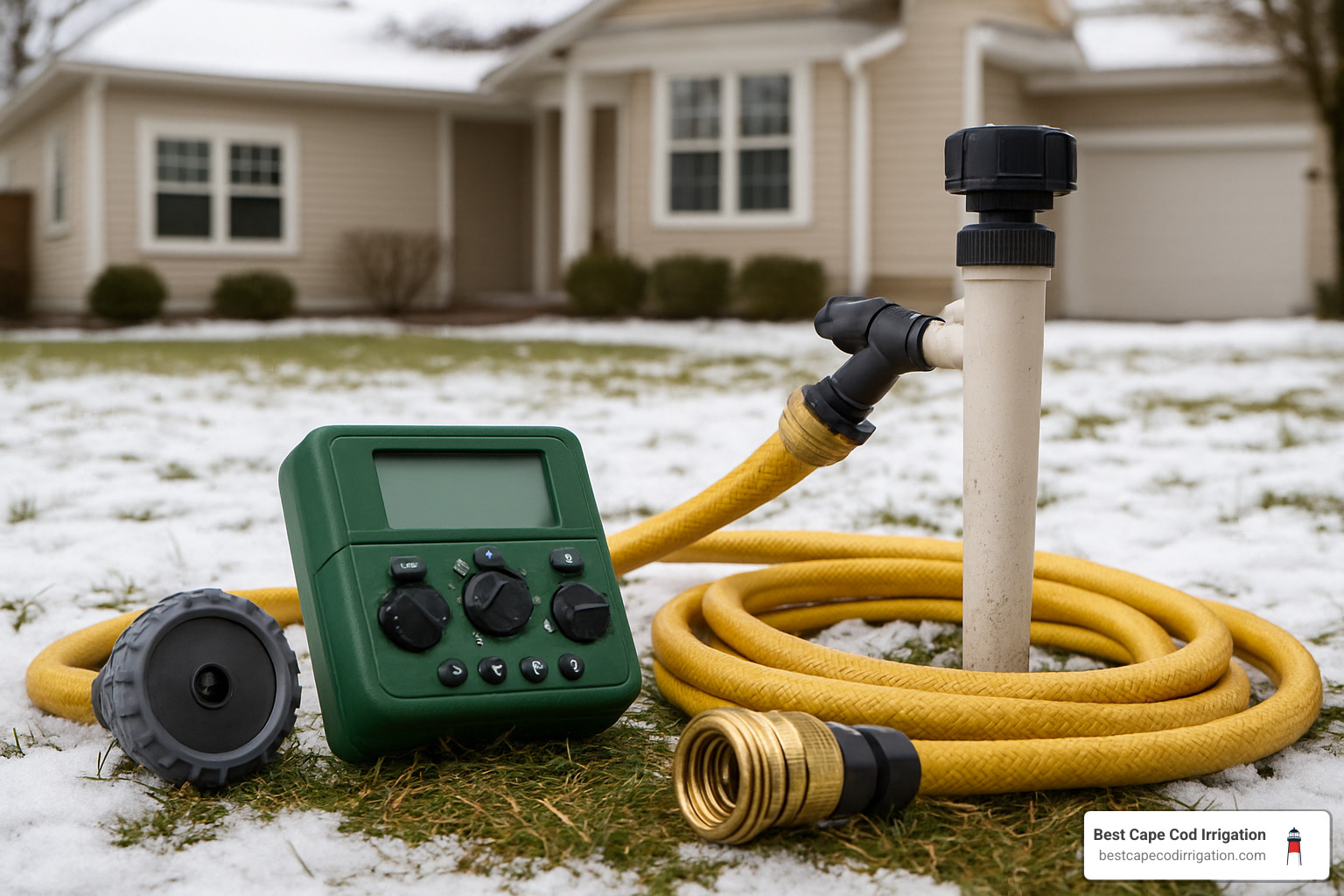
Winter preparation couldn’t be simpler with above-ground systems. Before the first hard freeze, disconnect everything and store it in your garage or basement. No winterization service calls, no worry about frozen pipes – just disconnect and store.
When to Call a Pro
Some yard situations practically scream for professional help, and recognizing them upfront can save you headaches and money down the road. Multiple elevation changes create pressure regulation challenges that require experience to solve properly. What seems like a simple slope might need pressure-reducing valves or special nozzles to prevent geysers at the bottom and weak coverage at the top.
Rocky soil or established landscapes with mature trees and extensive root systems turn DIY trenching from a weekend project into an ordeal. Professional installers have the equipment and experience to steer these obstacles without damaging existing plants or utilities.
Large properties requiring six or more zones involve complex calculations for water pressure, flow rates, and valve sequencing. Getting these wrong means some zones won’t work properly, no matter how perfectly you install the heads.
Local regulations often require professional involvement whether you like it or not. Backflow preventer installation and testing typically need licensed professionals in most Cape Cod communities. Electrical connections for controllers and permit applications add layers of complexity that many homeowners prefer to avoid.
The long-term value equation also favors professional installation in many cases. A properly designed and installed system typically lasts 10-15 years with regular maintenance, while DIY above-ground systems usually need component replacement every 3-5 years. Factor in your time value and the peace of mind that comes with professional warranties, and the math often works out surprisingly close.
For homeowners ready to invest in a permanent solution custom to Cape Cod’s unique conditions, professional irrigation installation ensures your system works efficiently from day one and continues performing for years to come.
Maintenance, Troubleshooting & Seasonal Care
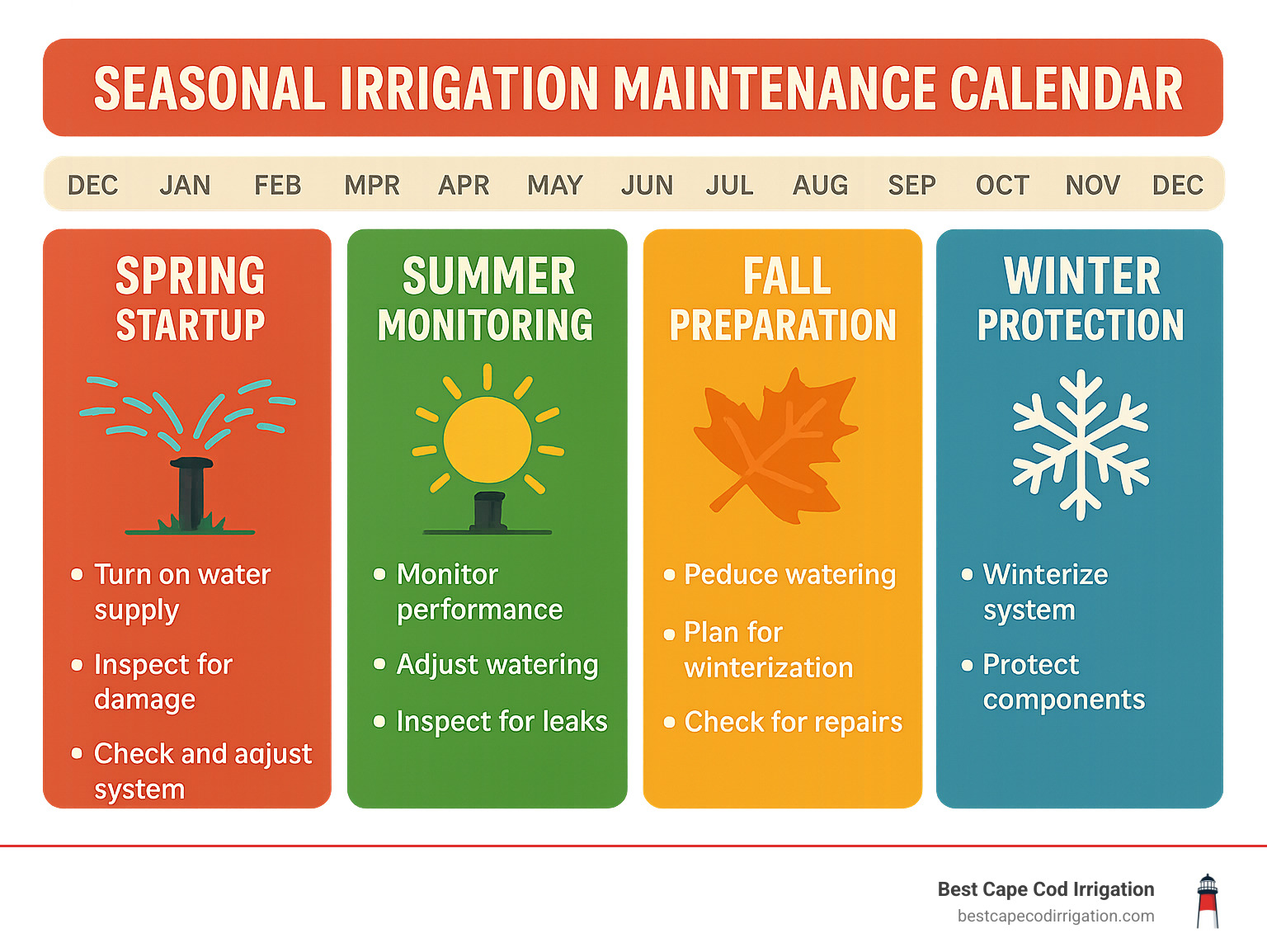
Think of your lawn sprinkler systems like your car – regular maintenance keeps everything running smoothly and prevents expensive breakdowns. Cape Cod’s unique climate throws some curveballs at irrigation systems, from salty ocean air that corrodes components to freeze-thaw cycles that can crack pipes faster than you can say “nor’easter.”
Spring awakening is when your system comes back to life after winter’s hibernation. Start by slowly turning on your water supply – rushing this step is like chugging coffee first thing in the morning; it rarely ends well. Check each zone individually, looking for any winter damage like cracked heads or shifted pipes. Clean out those nozzles that collected debris over the winter months, and don’t forget to test your rain sensor. Nothing’s more embarrassing than watering during a downpour because your sensor gave up the ghost.
Summer vigilance keeps your system performing at its peak when your lawn needs it most. Watch for telltale dry spots that scream “my sprinkler head is clogged!” or soggy areas that whisper “I’m leaking underground.” Keep vegetation trimmed back from sprinkler heads – your prize roses shouldn’t block water from reaching your prize lawn. Adjust watering schedules as the Cape Cod summer heat intensifies, because what worked in June might leave your grass gasping in August.
Fall preparation starts earlier than you might think. By September, you can begin reducing watering frequency as temperatures cool and days shorten. This is also prime time for any repairs before winter arrives. Think of it as getting your system ready for its long winter nap.
Winterization isn’t optional on Cape Cod – it’s survival. Water left in pipes becomes ice, and ice becomes expensive pipe replacement projects. Professional blow-out services use compressed air to remove every drop of water from your system. Above-ground systems have it easy – just disconnect and store everything in your garage.
Troubleshooting Common Issues in Lawn Sprinkler Systems
Dry spots in your lawn are like bald spots – they’re obvious, embarrassing, and usually fixable. Most often, you’re dealing with clogged sprinkler heads that need a good cleaning. Pop off the nozzle and rinse out any sand or debris (Cape Cod’s sandy soil loves to gum up the works). Sometimes heads get knocked out of alignment by enthusiastic mowing or kids playing soccer. A quick adjustment usually solves the coverage problem.
Low water pressure makes your lawn sprinkler systems perform like a garden hose with a kink in it. Check for underground leaks first – soggy spots in your yard are dead giveaways. Clean those nozzles again (seriously, they collect debris like magnets), and make sure your main water valve is fully open. Well water systems sometimes need pressure booster pumps to keep everything flowing properly.
Overspray problems waste water and can turn your neighbor’s driveway into a slip-and-slide. Adjust spray patterns to match your landscape borders, or swap out full-circle heads for part-circle models near walkways and driveways. If heads are creating a fine mist instead of proper droplets, your water pressure might be too high.
Controller headaches often start with dead batteries – replace them annually like you do smoke detector batteries. Salt air from the ocean corrodes wire connections faster than inland areas, so check those connections periodically. If a zone won’t turn on, test the valve manually before assuming the controller is toast.
Zone imbalances develop as seasons change and your landscape matures. That sunny south-facing slope that needed daily watering in July might only need every other day in September. Your system should evolve with your yard’s changing needs.
Integrating Watering with Mowing & Landscaping
Your sprinkler system and lawn care routine need to work together like dance partners – when one steps, the other should follow. Sprinkler height matters more than you might think. Heads sitting too high become mower magnets, while heads that have settled too low don’t provide proper coverage.
Timing coordination prevents those frustrating moments when you’re trying to mow wet grass. Schedule watering for early morning hours so grass has time to dry before your typical mowing time. Wet grass doesn’t cut cleanly and turns your mower deck into a clumpy mess.
When you add new landscape features like flower beds, trees, or that fire pit you’ve been planning, think about how they affect your existing sprinkler coverage. You might need to relocate heads, adjust spray patterns, or convert areas to drip irrigation. It’s easier to plan these changes than to fix coverage problems later.
Head realignment becomes necessary after any yard work. Construction projects, new plantings, or even heavy foot traffic during parties can shift sprinkler heads out of position. A quick check and adjustment keeps your coverage patterns on target.
Converting to drip irrigation makes sense when lawn areas transition to garden beds. Instead of spraying water where you don’t want it, drip systems deliver moisture directly to plant roots while reducing weeds and water waste. It’s like upgrading from a spray bottle to a precision tool.
Frequently Asked Questions about Lawn Sprinkler Systems
How do I figure out how many zones my lawn needs?
The answer starts with your home’s water capacity – most Cape Cod homes can handle 8-15 gallons per minute for irrigation. You’ll want to test this by timing how long it takes to fill a 5-gallon bucket from your outdoor faucet, then checking water pressure with a gauge.
Once you know your flow rate, you can plan zones that stay within this limit. Large lawn areas typically need one zone for every 2,000-3,000 square feet when using rotary heads, while smaller areas with spray heads work well with zones covering 1,000-1,500 square feet.
The real key is grouping areas with similar watering needs rather than just going by size. Your sunny front lawn, shaded back yard, and flower beds all have different requirements. Garden beds often benefit from their own drip irrigation zones, while sun and shade areas of turf should be separated since they need vastly different watering schedules.
A typical Cape Cod home might have 4-6 zones: front lawn, back lawn, side yard strips, foundation plantings, vegetable garden, and perhaps a separate zone for newly planted areas that need extra attention. You can always start with fewer zones and expand later as your lawn sprinkler systems needs evolve.
What’s the simplest way to automate hoses without digging?
Here’s where multi-port hose timers become your best friend – they’re like having an irrigation system without any of the trenching headaches. The concept is beautifully simple: one timer connects to your outdoor faucet and controls 2-4 separate hoses running to different yard areas.
Start by choosing a quality multi-port timer in the $40-$70 range that can handle your yard’s zones. Connect good hoses (trust us, cheap ones that kink will drive you crazy) to each timer outlet and run them to your target areas. The magic happens when you program sequential schedules – your front yard waters from 5:00-5:30 AM, side yard from 5:30-6:00 AM, and so on. This keeps full water pressure going to each area.
For coverage, oscillating sprinklers work great for rectangular lawn areas, while rotary sprinklers handle circular patterns beautifully. Soaker hoses are perfect for flower beds and can be hidden completely under mulch.
The best part? You can hide most hoses along fence lines, under mulch, or behind landscape borders. With a little planning, the system looks surprisingly professional while costing just $200-$500 total compared to thousands for in-ground installation.
How do I winterize an above-ground system in Cape Cod’s climate?
Cape Cod’s freeze-thaw cycles can be brutal on irrigation equipment, but above-ground systems are refreshingly easy to protect. The secret is getting everything disconnected and stored before that first hard frost hits in late October.
Disconnecting and draining takes just an hour or two. Remove all hoses and timers from outdoor faucets, then drain the hoses by lifting one end higher than the other. Those expensive timer units and quick-connect fittings should come inside to your garage or basement where they’ll stay safe and dry.
Don’t forget to mark your sprinkler locations before storing them – nothing’s more frustrating than trying to remember your perfect setup come spring. A few landscape flags or even photos on your phone save lots of trial and error later.
In-ground systems require professional attention with compressed air blow-outs to remove water from buried pipes. The investment in proper winterization prevents those costly spring surprises when frozen pipes crack and need replacement.
One Cape Cod homeowner told us: “I learned the hard way that ‘just one more week’ of watering in November cost me three new sprinkler heads and a timer replacement.” The lesson? When the forecast shows consistent nights in the 20s, it’s time to winterize regardless of how nice the days still feel.
Your outdoor faucets should be left slightly open after disconnecting hoses to prevent the pipes inside your house from freezing – just one more Cape Cod winter survival tip that saves headaches and repair bills.
Conclusion
Lawn sprinkler systems transform yard care from a daily chore into an automated, efficient process that protects your landscape investment while conserving water. Whether you choose a simple hose timer setup or a sophisticated smart irrigation system, the key is matching the technology to your yard’s specific needs and your maintenance preferences.
Cape Cod’s unique climate and soil conditions create special challenges that require local expertise. Our sandy soils drain quickly, demanding frequent but precise watering. The salt air can corrode components over time. Summer droughts stress lawns while winter freeze-thaw cycles threaten unprotected systems. These aren’t just technical details – they’re the difference between a system that thrives for decades and one that fails after a few seasons.
The right system adapts to these seasonal changes seamlessly. Smart technology continues to advance, offering better water conservation, remote monitoring, and automated adjustments that reduce both water waste and utility bills. Modern controllers learn your landscape’s needs and adjust automatically – watering more during July heat waves and backing off during September’s cooler nights.
These systems pay for themselves through water savings while ensuring your lawn stays healthy through Cape Cod’s challenging conditions. We’ve seen homeowners cut their water bills by 30-40% while achieving the best-looking lawns in their neighborhoods.
For homeowners ready to upgrade from manual watering, start by assessing your yard’s zones and testing your water pressure. Decide between DIY and professional installation based on your system’s complexity and local requirements. A simple above-ground setup can work wonders for smaller properties, while larger or more complex landscapes benefit from professional design and installation.
The investment in quality irrigation pays dividends beyond just convenience. Your landscape investment stays protected, your property value increases, and you gain peace of mind knowing your yard will look great whether you’re home or away.
Ready to design a water-smart irrigation system custom to your Cape Cod property? Learn more about professional irrigation system installation and find how our 25+ years of regional expertise can create an efficient, worry-free watering solution for your yard today.