


Transform Your Cape Cod Lawn with Simple Irrigation
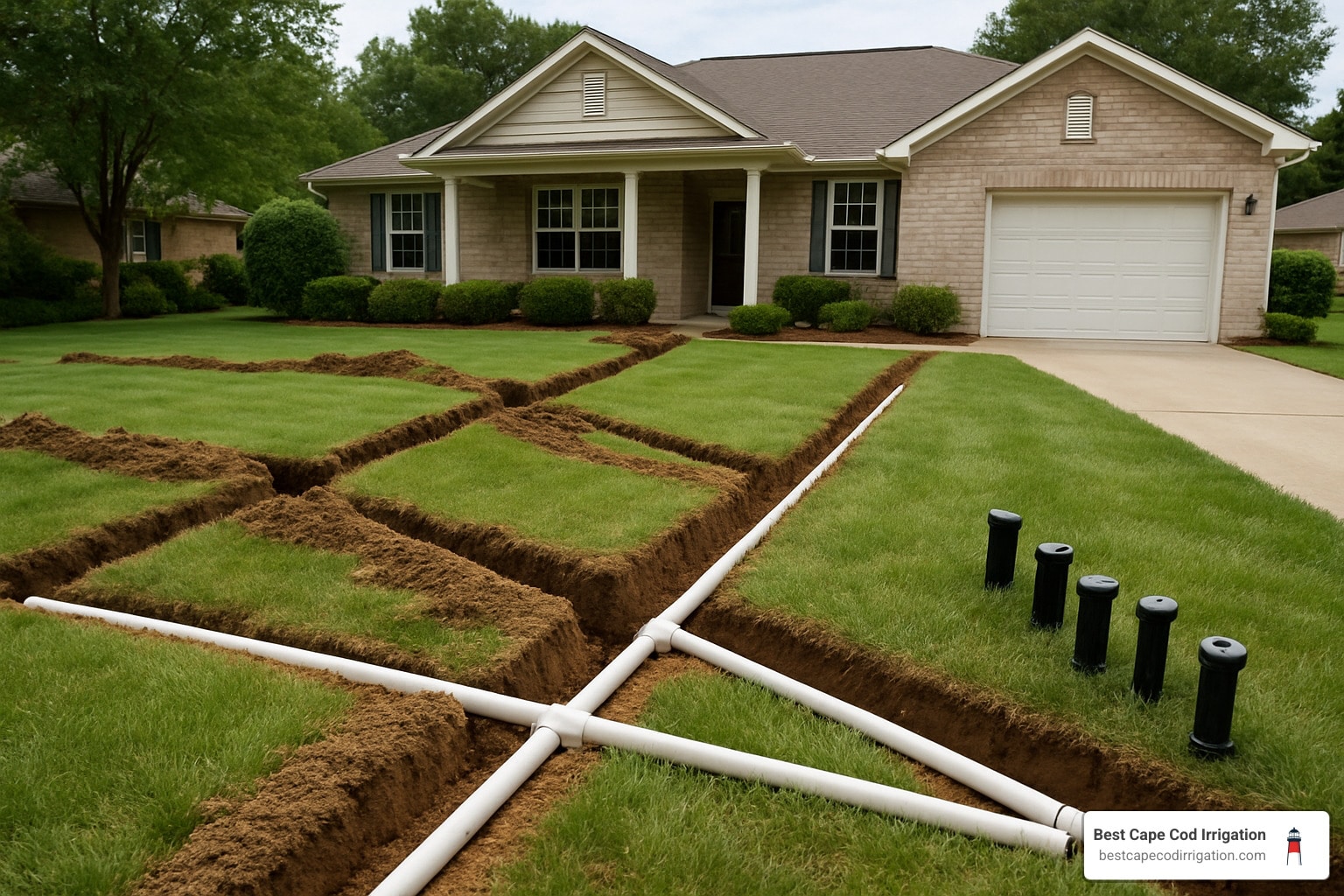
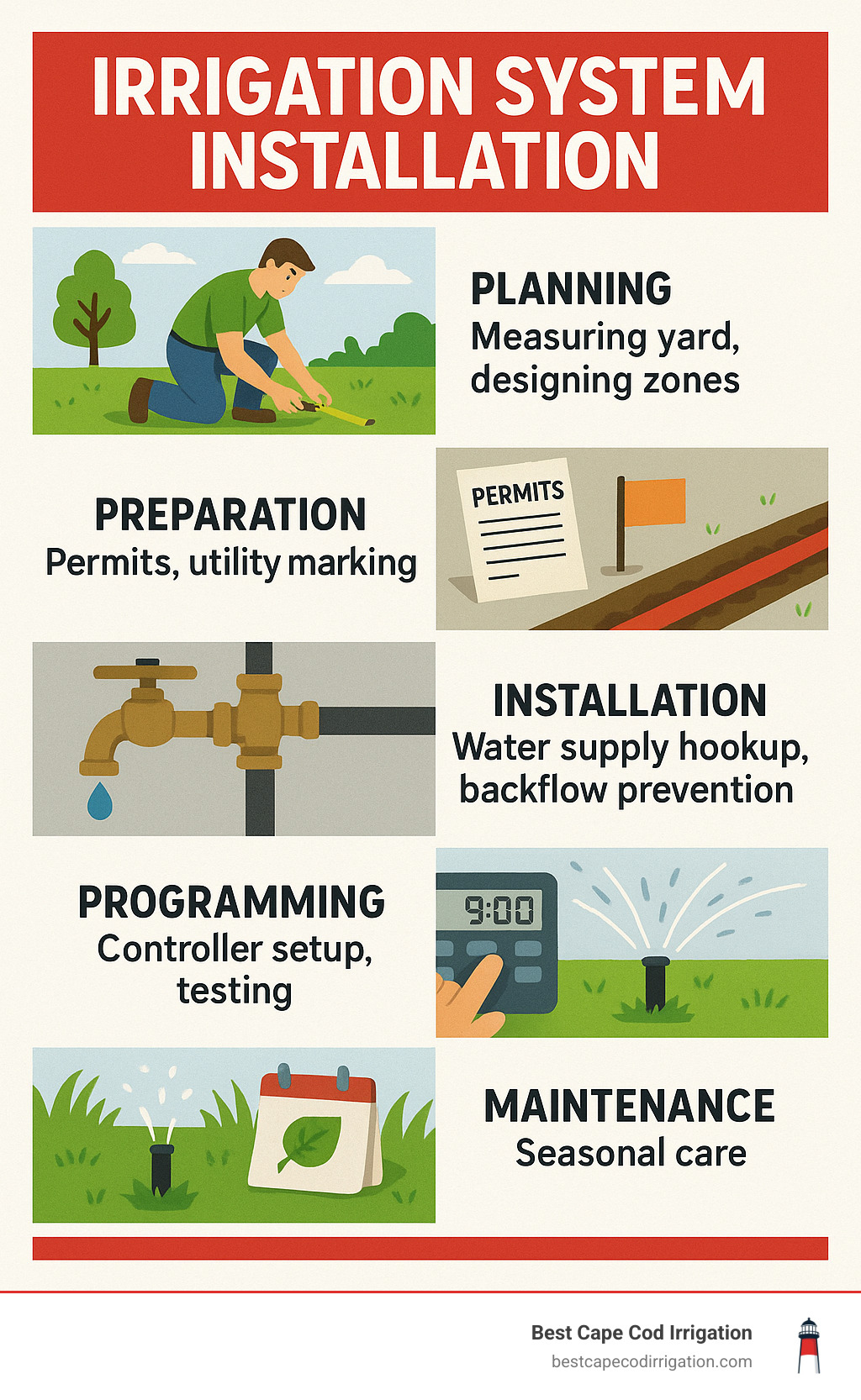
Irrigation system installation involves connecting a network of pipes, valves, and sprinklers to your home’s water supply to automatically water your lawn and garden. Here’s what the process typically includes:
- Planning: Measuring your yard and designing zones based on water needs
- Preparation: Obtaining permits and marking utilities (call 811)
- Installation: Digging trenches, laying pipes, installing valves and sprinklers
- Connection: Hooking up to water supply and installing a backflow preventer
- Programming: Setting up controllers and testing the system
- Maintenance: Regular seasonal care and adjustments
Are you tired of dragging hoses across your Cape Cod yard? Do you worry about wasting water on your sandy soil? You’re not alone. The average American uses nearly 9 billion gallons of water each day for outdoor purposes, with experts estimating that up to 50% is wasted through inefficient watering methods.
An automated irrigation system can save you time, conserve water, and keep your landscape looking its best through Cape Cod’s unpredictable weather patterns.
While professional installation typically costs between $2,000 and $4,000 for a basic setup on a quarter-acre lot, the investment pays off. A well-installed system can last upwards of 20 years and provide an average ROI of 86% through water-bill savings and increased property value.
Whether you choose to DIY or hire professionals, this guide will walk you through everything you need to know about irrigation system installation – even if you’ve never picked up a wrench before.
Why Automate? The Benefits of a Home Irrigation System
Picture this: You’re enjoying your morning coffee while your lawn receives the perfect amount of water—no hoses to drag, no sprinklers to move. This everyday convenience is just the beginning of what an irrigation system installation can do for your Cape Cod home.
The advantages go far beyond simply making your life easier. When you automate your watering, you’re making a smart investment in both your property and the environment.
Your plants will thank you for the consistent, measured watering that promotes deeper root systems and greater resilience. Your wallet will appreciate the boost in property value—up to 12% according to real estate experts, with an impressive 86% return on investment. And our fragile Cape Cod ecosystem benefits from your reduced water consumption, especially in designated Nitrogen Sensitive Areas.
Did you know that Americans use nearly 9 billion gallons of water daily just for outdoor purposes? Even more startling is research from Forbes showing that up to half of this water never reaches its intended destination—it’s lost to evaporation, runoff, or simply poor distribution.
An automated system puts an end to this waste by delivering water precisely where and when it’s needed. Your lawn stays lush and green while actually using less water—a win-win for your curb appeal and the environment.
Manual Watering vs. Irrigation Efficiency
Let’s be honest about manual watering. Despite our best intentions, hand-watering creates a patchwork of soggy spots and parched areas. You’re either underwatering or overwatering, rarely hitting that perfect balance.
With an irrigation system installation, uniform coverage becomes the norm. Every square inch receives exactly what it needs—no more, no less. Early morning scheduling (when most of us would rather be sleeping!) reduces evaporation by up to 30% compared to daytime watering. Smart controllers adjust automatically to Cape Cod’s weather patterns, and you can even control everything from your smartphone.
“A properly designed system with a smart controller can save hundreds of gallons daily,” explains Scott McLeod, who has guided Cape Cod homeowners through irrigation projects for over thirty years. “The technology has advanced tremendously, making conservation easier than ever.”
Imagine the freedom of never again rearranging weekend plans to accommodate lawn care. Whether you’re home or away, your system quietly maintains your landscape’s health and beauty. During Cape Cod’s seasonal water restrictions, your programmable timer ensures compliance while preserving your lawn’s vitality.
The time you save, the water you conserve, and the improved beauty of your property make automated irrigation one of the smartest home improvements you can make for your Cape Cod home.
Choosing the Right System for Your Yard
Finding the perfect irrigation system for your Cape Cod property is a bit like choosing the right pair of shoes—what works beautifully for your neighbor might leave you with blisters. Our unique Cape conditions—sandy soil that drains quickly, salty air that tests equipment, and those seasonal water restrictions we all know too well—all play important roles in making the right choice.
Let me walk you through the main types of systems you might consider:
Spray Heads deliver a fan-shaped spray over smaller areas (typically 3-15 feet radius). They’re perfect for those tidy, rectangular lawn sections and work well even with lower water pressure (20-30 PSI). Many Cape homeowners choose these for their front yard displays.
Rotors are the marathoners of the irrigation world. These rotating heads cover much larger areas (15-50 feet radius) and need a bit more pressure (30-50 PSI) to perform well. What’s especially nice for our Cape Cod sandy soil is that rotors deliver water more slowly, giving it time to soak in rather than run off.
Drip Lines are the quiet, efficient workers of your garden. They deliver water directly to plant roots, measured in gallons per hour rather than minutes. If you’ve invested in beautiful perennial beds or a vegetable garden, drip irrigation will keep them thriving while using remarkably little water.
Micro-Sprays create gentle spray patterns over small areas, making them ideal for ground covers and densely planted sections. They’re like the perfect middle ground between spray heads and drip systems.
Soaker Hoses are the budget-friendly option—porous hoses that “weep” water along their length. While affordable, they typically don’t last as long as other options and provide less precise control.
When deciding between above-ground and in-ground systems, you’re essentially choosing between convenience and initial cost:
Above-ground systems cost less upfront ($1,500-$3,500) and are easier to install yourself, but they’re more visible, more vulnerable to damage, and typically last just 5-10 years.
In-ground systems require a larger initial investment ($2,000-$10,000+) and often benefit from professional installation, but they’re virtually invisible when not running, protected from damage, and can last 15-20+ years or more. For many Cape Cod homeowners, the long-term value makes this the preferred choice.
Matching System Types to Landscape Needs
Your yard isn’t just one environment—it’s many microenvironments with different watering needs. Here’s how to match irrigation methods to each area:
For lawns, rotary sprinklers or spray heads with head-to-head coverage deliver consistent results. Larger lawn areas do better with rotor heads, which reduce misting and drift on those breezy Cape afternoons.
Your shrub beds will thrive with drip irrigation or micro-sprays that deliver water directly to the roots. This targeted approach not only saves water but helps prevent the fungal diseases that can develop in our humid Cape Cod climate.
For vegetable gardens, drip lines spaced about 12 inches apart provide the consistent moisture that produces abundant harvests. In our sandy Cape soils, 2 GPH (gallons per hour) emitters placed 10-12 inches apart tend to work best.
If you have potted plants on your deck or patio, individual drip emitters or micro-tubing can be customized to give each container exactly what it needs.
“The smartest thing you can do is group plants with similar water needs into the same irrigation zones,” shares our installation team at Best Cape Cod Irrigation. “This simple planning step dramatically improves both water efficiency and plant health.”
Estimating Costs & ROI
Understanding what irrigation system installation might cost helps you plan and budget effectively. Several factors will influence your total investment:
The national average for a basic installation runs about $2,527, with most homeowners spending between $1,640 and $3,566. For professional installation on a quarter-acre Cape Cod property, expect to pay between $3,000 and $6,500, while a DIY approach might cost $1,600-$2,200 for materials.
Looking at it by square footage, professional installation typically costs $0.29-$1.00 per square foot, while DIY materials run $0.15-$0.40 per square foot.
Your system will be divided into zones based on water needs and available water pressure. The first zone usually costs $500-$1,000, with each additional zone adding approximately $1,000. Most Cape homes need 2-4 zones for complete coverage.
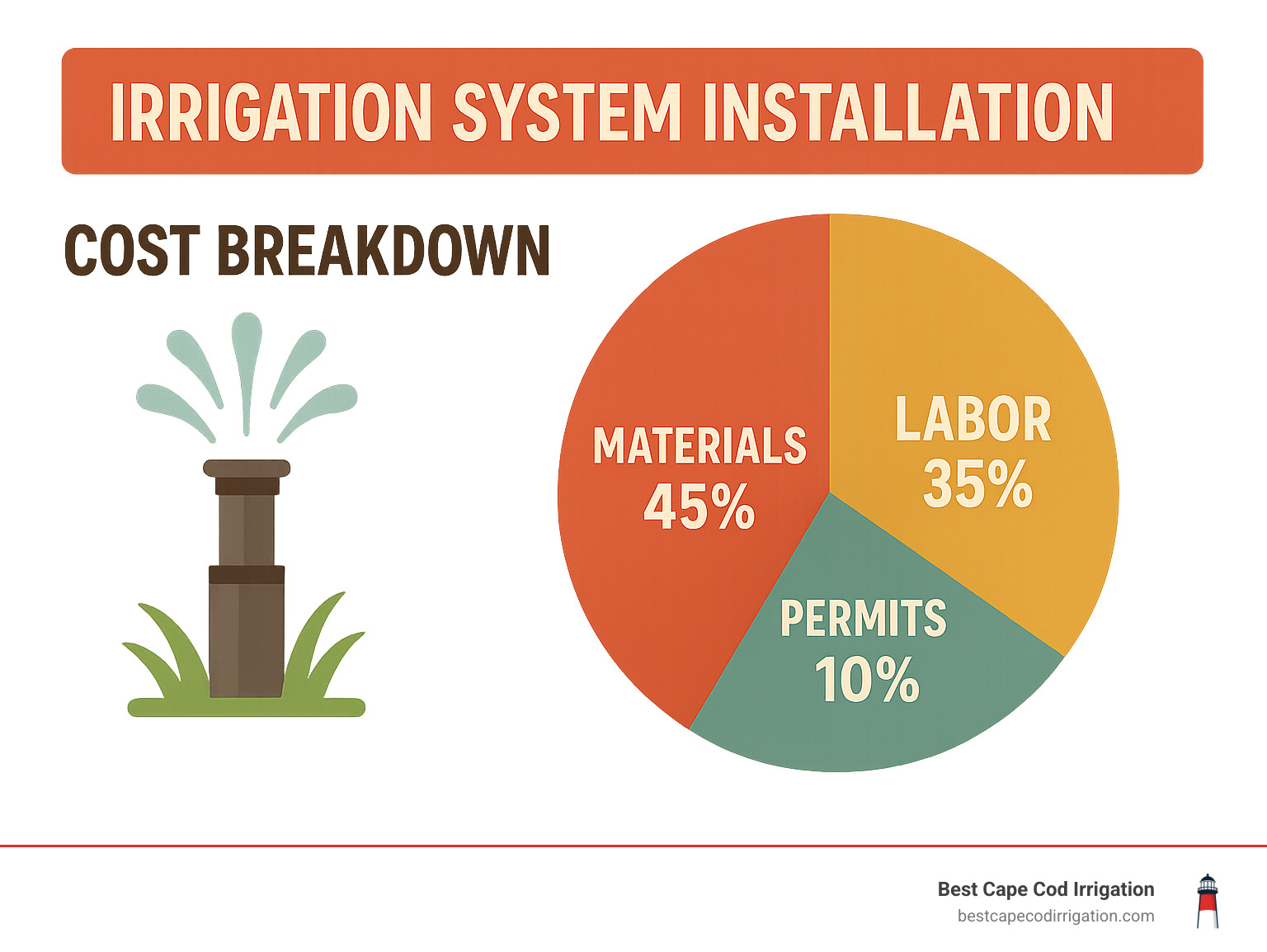
Here on Cape Cod, we have some specific pricing considerations to keep in mind. Permit costs run $50-$200 depending on which town you’re in. Labor rates tend to be higher during the peak season (May-August), so planning an installation for spring or fall might save you money. Our sandy soil is actually a plus when it comes to trenching costs, but it may require more sprinkler heads for proper coverage. And if your property is in one of the Cape’s Nitrogen Sensitive Areas, there may be additional considerations.
The good news? The return on investment is impressive. According to the National Association of Realtors, a well-installed irrigation system provides an average ROI of 86%. Beyond that, proper irrigation can boost your property value by up to 12% while saving thousands of gallons of water each year—good for both your wallet and our fragile Cape environment.
Step-by-Step Irrigation System Installation
Ready to transform your lawn care routine? Whether you’re rolling up your sleeves for a DIY project or just want to understand what the professionals will be doing, knowing the irrigation system installation process helps ensure you get a system that works beautifully for years to come. Let’s walk through how a proper installation unfolds on Cape Cod properties.
Irrigation System Installation: Planning Your Layout
I can’t emphasize this enough: great irrigation starts on paper, not with a shovel. This planning phase is where the magic happens (and where costly mistakes are prevented).
Start by creating a detailed sketch of your yard, measured to scale. One inch equaling 10 feet works perfectly for most Cape Cod properties. Include everything – your home, driveway, walkways, existing gardens, trees, and those beautiful hydrangeas you planted last spring.
Next, identify your yard’s “hydro-zones” – areas with similar watering needs grouped together. Your sun-baked front lawn has very different requirements than those shade-loving hostas along the north side of your house. Grouping similar areas saves water and promotes healthier plants.
Before you place a single sprinkler, you’ll need to know your water supply capabilities. Most Cape Cod municipal water provides between 40-65 PSI, but your specific location might vary. This measurement determines how many sprinklers you can run simultaneously.
For lawn areas, plan for what we call “head-to-head coverage” – where each sprinkler’s spray reaches the adjacent sprinklers. This overlap is the secret to those lush, even lawns without dry patches or soggy spots.
“I see it time and again,” says our lead designer at Best Cape Cod Irrigation. “Homeowners who invest an extra hour planning their system save days of frustration and hundreds of gallons of wasted water down the road.”
Gathering Tools & Materials for Irrigation System Installation
Having everything ready before you start digging makes installation day go much smoother. Trust me, the last thing you want is to be halfway through trenching when you realize you’re missing crucial components!
For tools, you’ll need a pressure gauge to test your water supply, a trenching shovel (or consider renting a trenching machine for larger properties), PVC pipe cutter, tape measure, utility knife, pliers, screwdrivers, marking flags, and a hammer for stakes.
Material-wise, prepare to gather PVC or polyethylene pipe (PVC is our recommendation for Cape Cod’s climate), PVC primer and cement if going that route, appropriate sprinkler heads for your different zones, valve components, valve boxes, flexible “funny pipe” for connecting heads, control wiring, waterproof connectors, filters, pressure regulators, a backflow prevention device, controller/timer, and a rain sensor.
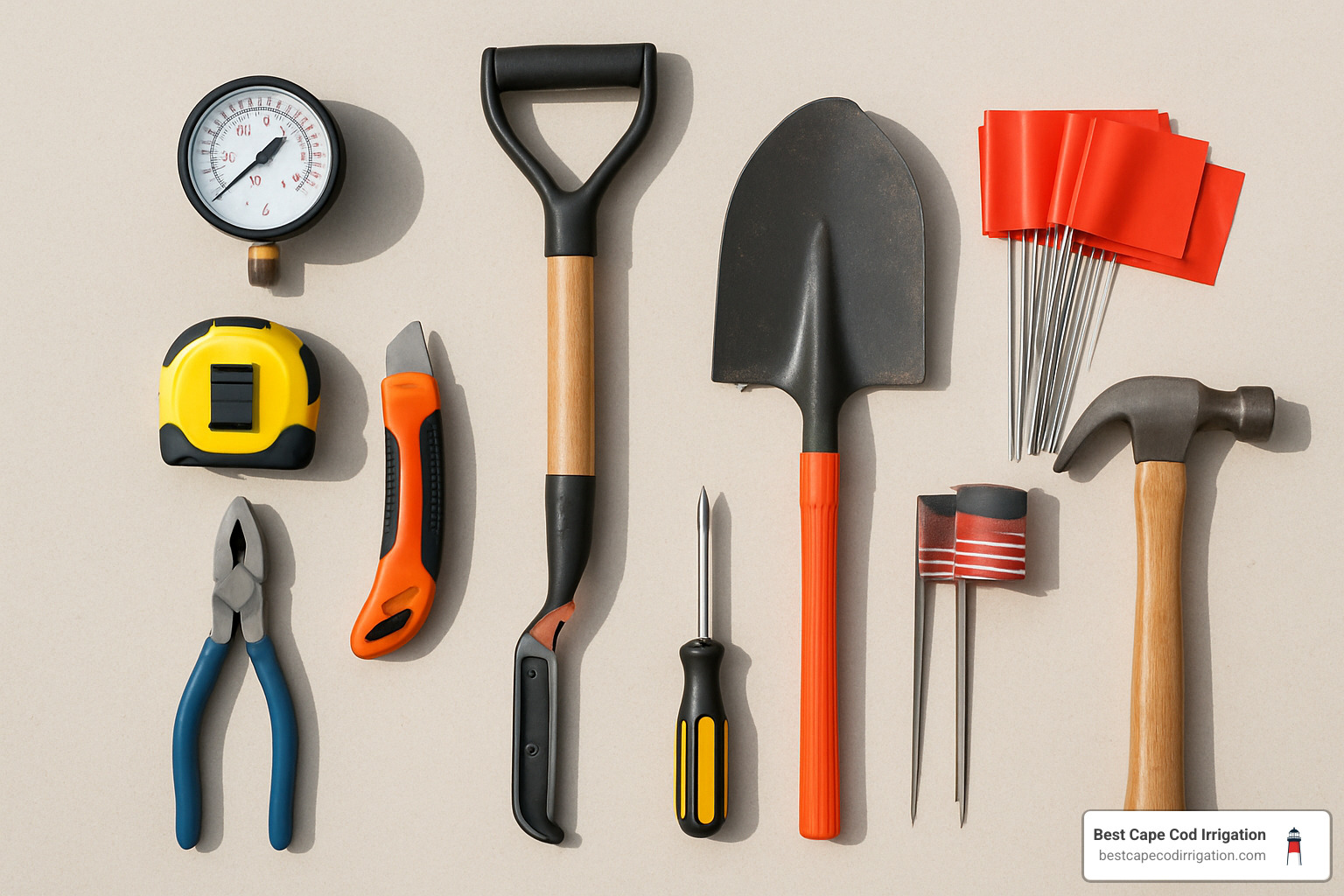
Here on Cape Cod, we typically recommend schedule 40 PVC pipe of at least ¾” diameter for main lines. This ensures you have adequate water flow and durability against our coastal conditions. While polyethylene is more flexible, our relatively mild winters compared to northern New England make PVC the preferred choice for most installations.
Installing Underground Piping & Valves
Now we’re getting to the heart of irrigation system installation – the underground network that makes everything work!
First things first – call 811 at least 72 hours before digging. This isn’t just good advice; it’s Massachusetts law. Dig Safe will mark underground utilities for free, helping you avoid potentially dangerous and costly utility strikes. While you’re making calls, check with your local town hall about permits – all Cape Cod towns require them for irrigation installations.
When it’s time to dig, aim for trenches 8-10 inches deep – perfect for our Cape Cod frost line. A trenching machine makes quick work of open areas, but switch to hand digging when you’re within a few feet of marked utilities. (Your back might not thank you, but your wallet will when you avoid repair costs!)
Lay your main supply line from your water source to where your valve manifold will sit. A simple trick: cover pipe ends with duct tape during installation to keep dirt out. For your valve manifold, group your zone valves together in a valve box with a gravel base for drainage. This central “command center” makes future maintenance much easier.
From there, run your zone lines following your carefully crafted plan. When making connections, proper technique prevents future headaches. For PVC, use primer and cement on all connections. For main lines under constant pressure, double crimp clamps provide extra security against leaks.
Before connecting any sprinkler heads, flush the system by running water through the pipes. This clears out any debris that might have found its way in during installation. “You’d be surprised what can end up in those pipes during installation,” our team often remarks. “Taking five minutes to flush can save hours of troubleshooting clogged heads later.”
Setting Heads, Drip Lines & Emitters
With your underground network in place, it’s time to install the components that actually deliver water to your landscape.
Connect sprinkler heads to your lateral lines using swing pipe or funny pipe – this flexible connector provides wiggle room and reduces breakage risks when someone inevitably steps on a head. In lawn areas, heads should sit flush with the ground (your mower will thank you), while beds often benefit from heads on risers positioned above plant growth.
For drip irrigation, Cape Cod’s sandy soil requires specific consideration. We typically recommend 2 GPH (gallons per hour) emitters spaced about 10-12 inches apart. If you’re one of the lucky few with loamy soil, 1 GPH emitters at 16-18 inches work well. Those rare clay soil patches might need 0.5 GPH emitters at 18-24 inches.
Drip lines have a tendency to wander, especially on slopes, so secure them with landscape staples. And don’t forget to cap all line ends before the final system flush.
For consistent watering, try to use the same type of sprinkler head within each zone. Mixing rotors with spray heads in the same zone is a common mistake that leads to some areas getting soaked while others stay dry.
Connecting Controllers, Sensors & Backflow Devices
The final phase connects the “brains” of your system and ensures everything operates safely and efficiently.
First, install your backflow preventer – this isn’t optional. This critical safety device prevents irrigation water from flowing back into your drinking water supply and is required by code in all Cape Cod towns. If you’re uncertain about this installation, this is one area where professional help is worth every penny.
Mount your irrigation controller in a protected location with access to power. Garages and utility rooms are ideal spots. From there, run direct burial irrigation wire from each valve to the controller. Always use waterproof connectors at all splices and leave a service loop at connections – this extra bit of wire makes future maintenance much easier.
A rain sensor is a must-have for Cape Cod’s unpredictable weather patterns. Mount it in an open area where it can accurately detect rainfall and prevent your system from watering during or after a good soaking rain. Your water bill (and local water conservation efforts) will benefit tremendously.
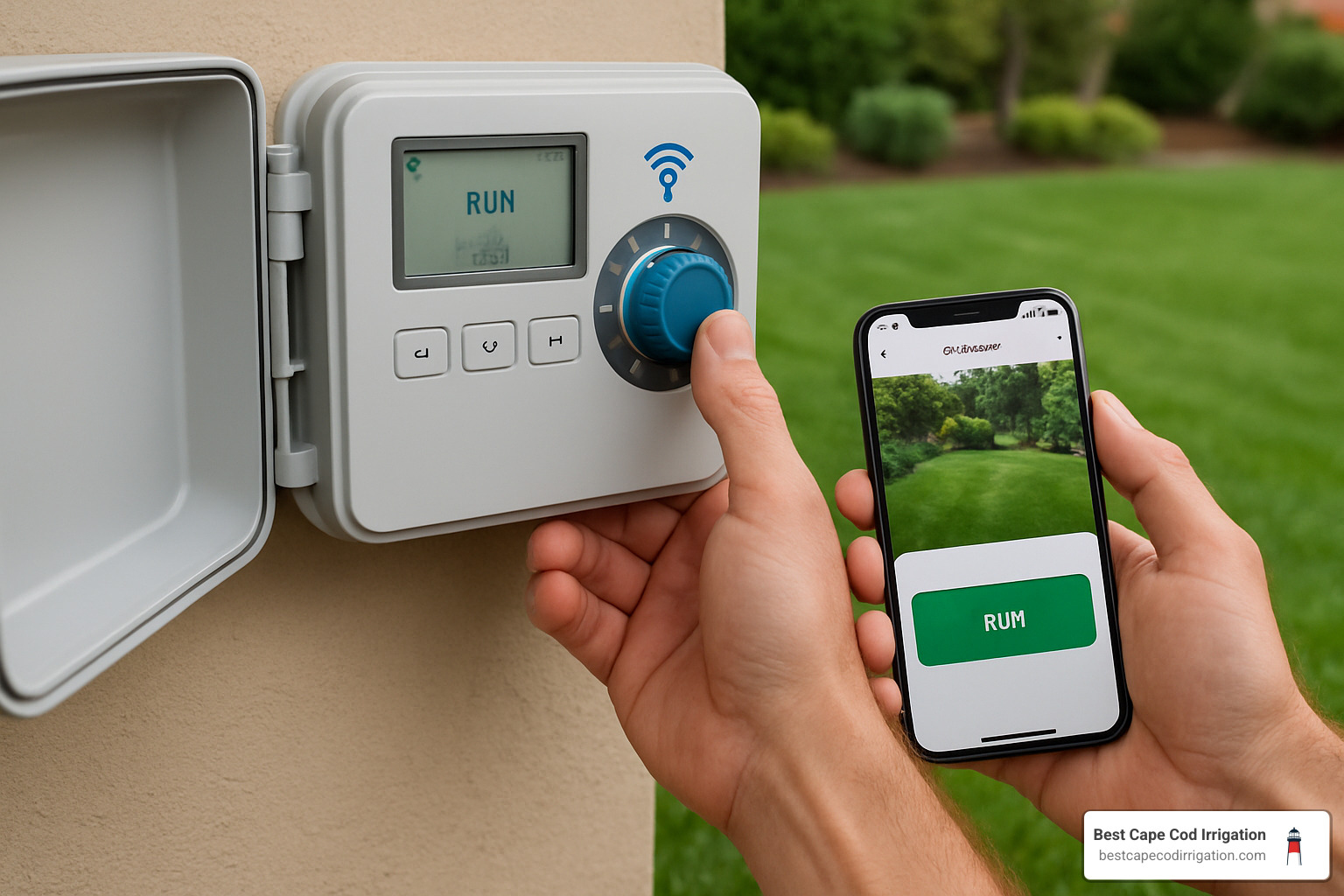
Programming your controller is where the science of irrigation meets the art. Set appropriate watering schedules for each zone based on plant needs, soil type, and local water restrictions. Most Cape towns have specific days and times when irrigation is permitted – your system needs to comply.
Finally, test each zone thoroughly, checking for proper coverage, leaks, and pressure issues. Make adjustments to sprinkler heads to fine-tune their spray patterns and ensure uniform coverage.
“In Cape Cod’s sometimes salt-affected soils, protecting your valve wires with direct-burial connectors in grease-filled tubes isn’t just a good idea – it’s essential for system longevity,” notes our maintenance supervisor. “Those little details make the difference between a system that lasts 5 years and one that serves you for 20.”
Looking for more information about smart irrigation solutions that can take your system to the next level? Learn about the latest technology at our Smart Irrigation Solutions page.
Smart Controllers & Water-Saving Upgrades
The technology behind irrigation has advanced dramatically in recent years. Modern smart controllers can reduce water usage by 15-30% while improving plant health.
Smart irrigation controllers offer several advantages:
-
Weather-based scheduling: These controllers use local weather data to automatically adjust watering times and frequency.
-
Zone calibration: Each zone can be precisely calibrated for soil type, plant type, sun exposure, and slope.
-
Flow monitoring: Advanced systems can detect leaks by monitoring water flow and automatically shut down to prevent waste.
-
Mobile control: Adjust your system from anywhere using smartphone apps – perfect for Cape Cod’s seasonal residents.
-
Usage reports: Track water consumption to identify opportunities for further conservation.
“A well-planned design along with a properly functioning smart controller can save a couple hundred gallons of water per day,” according to industry experts. On Cape Cod, where water conservation is increasingly important, these savings are particularly valuable.
Integrating Sensors for Peak Efficiency
Adding sensors to your irrigation system dramatically improves efficiency:
Rain Sensors: These simple devices prevent watering when it’s raining or when the soil has received sufficient natural precipitation. They’re especially valuable on Cape Cod, where summer thunderstorms can be unpredictable.
Freeze Sensors: These prevent system operation when temperatures approach freezing, protecting your system from damage during unexpected cold snaps.
Soil Moisture Sensors: These measure actual soil moisture levels and prevent watering when the soil already contains adequate moisture. They’re particularly effective in Cape Cod’s sandy soils, which can drain quickly but also waste water if overwatered.
Flow Sensors: These detect abnormal water flow that might indicate a broken pipe or sprinkler head, automatically shutting down the system to prevent water waste and property damage.
We’ve seen clients at Best Cape Cod Irrigation reduce their water usage by up to 30% after upgrading to smart controllers with appropriate sensors – a significant saving both environmentally and financially.
Calculating Water Pressure & Flow
Understanding your water supply capabilities is essential for proper irrigation system installation. Here’s how to gather this critical information:
Measuring Water Pressure (PSI):
- Attach a pressure gauge to an outside faucet
- Ensure no other water is being used in the house
- Turn the faucet on fully and read the pressure
- Record both static pressure (water not flowing) and working pressure (with water flowing)
Most residential irrigation systems require 30-50 PSI for optimal performance. Too little pressure results in poor coverage; too much can damage components.
Determining Flow Rate (GPM):
- Place a 5-gallon bucket under an outdoor faucet
- Turn the water on full and time how long it takes to fill
- Divide gallons by seconds, then multiply by 60 to get GPM
- Example: 5 gallons in 30 seconds = 10 GPM
The average residential system requires 10-13 GPM. Your flow rate determines how many sprinkler heads can operate simultaneously and helps define your irrigation zones.
Service Line Size:
- Wrap a string around your water supply pipe
- Measure the string’s length and divide by 3.14
- This gives you the pipe’s diameter, typically 3/4″ or 1″
Larger service lines (1″ or greater) provide better flow for irrigation systems.
Maintenance, Repairs & Seasonal Care
Your irrigation system is like a faithful garden companion that needs regular TLC to thrive. With proper care, a quality system can last 20+ years, while neglected ones often struggle to reach the 5-year mark. Here on Cape Cod, our unique seasonal patterns make maintenance particularly important.
Think of your irrigation system installation as just the beginning of a long-term relationship with your landscape. The real secret to lasting performance is consistent, thoughtful care throughout the year.
“Most irrigation systems don’t wear out—they’re neglected to death,” says our service manager at Best Cape Cod Irrigation. “The most common repairs we see could have been prevented with simple seasonal attention.”
When spring arrives on the Cape, it’s time for a thorough system wake-up. Start by inspecting for any winter damage—cracked pipes, damaged heads, or settled components. Then slowly pressurize your system (rushing this step can cause damaging water hammer). Clean those filters that have been sitting all winter, test each zone methodically, and reprogram your controller for spring conditions. This is also the perfect time to adjust any heads that might have shifted during winter’s freeze-thaw cycles.
During the summer months, ongoing maintenance keeps everything running smoothly. Look for clogged nozzles—Cape Cod’s iron-rich water can sometimes cause mineral buildup. Watch for suspicious wet spots that might indicate underground leaks, and rescue any heads that have fallen victim to your mower. Your rain sensor deserves a quick check too—it’s your first line of defense against wasteful watering during summer thunderstorms.
As autumn leaves begin to fall, it’s time to prepare your system for winter’s sleep. This step is absolutely critical on Cape Cod, where winter temperatures can cause extensive damage to water-filled pipes. Proper winterization includes:
- Shutting off the water supply to your irrigation system
- Removing all water using compressed air (we recommend 80 CFM)
- Insulating any exposed components
- Setting your controller to “rain” or “off” mode
- Carefully draining your backflow preventer according to manufacturer instructions
While some homeowners attempt DIY winterization, most find that professional service (typically $50-$120) provides peace of mind worth every penny. Our technicians at Best Cape Cod Irrigation have seen single freeze damages exceed $500 in repairs—far more than the cost of proper winterization.
Common Mistakes & How to Avoid Them
Even experienced gardeners make mistakes with their irrigation systems. Learning from others’ missteps can save you time, money, and frustration.
Shallow trenches are perhaps the most common error we see. When pipes aren’t buried deep enough, they’re vulnerable to damage from lawn aerators and freezing temperatures. Always aim for trenches 6-12 inches deep, depending on Cape Cod’s local frost patterns in your area.
Mixed head types in the same zone create headaches and patchy lawns. Different sprinkler heads deliver water at different rates, so combining them leads to some areas getting soaked while others stay thirsty. Stick with one type per zone for consistent, even coverage.
Ignoring pressure requirements is like expecting a whisper to be heard in a hurricane. Each sprinkler type needs specific water pressure to perform properly. Too little pressure creates weak coverage; too much can damage components and waste water. Use pressure regulators when needed to keep everything in the sweet spot.
Inadequate head spacing creates those frustrating dry spots between sprinklers. For proper coverage, follow the manufacturer’s spacing guidelines and ensure head-to-head coverage where one sprinkler’s spray reaches the next sprinkler.
“We once had a client attempt a DIY installation where they cut poly pipe with a saw,” our repair technician recalls with a smile. “The plastic shavings clogged nearly every sprinkler head in the system. Always use proper cutting tools!”
Winterizing Your System the Right Way
Cape Cod winters might not be as harsh as northern New England, but they’re still cold enough to damage irrigation systems. Proper winterization isn’t just recommended—it’s essential.
Start by shutting off the main irrigation water supply valve completely. Next, either set your controller to “rain mode” or disconnect power entirely—this prevents accidental system activation during winter thaws.
The most critical step is blowing out the system using an air compressor (80 CFM minimum) to force all water out of the lines. This specialized process requires connecting the compressor to your system via special adapters and methodically clearing each zone.
Don’t forget to drain the backflow preventer by opening all drain valves and insulating any above-ground components. While you’re at it, make notes of any issues you spot that might need attention before spring startup.
“Skipping winterization often leads to expensive repairs that could have been avoided,” explains our winterization specialist. “It’s like leaving your car outside with a full radiator in freezing weather—you’re just asking for trouble.”
For most Cape Cod homeowners, professional winterization is the smartest choice. Our winterization service provides thorough protection using professional-grade equipment that most homeowners don’t have access to.
Your irrigation system is an investment in your property’s value and your free time. With proper seasonal care, it will reward you with years of reliable service and a landscape that’s the envy of the neighborhood.
DIY vs. Professional Installation on Cape Cod
So you’re standing in your yard, garden hose in hand, wondering if you should tackle irrigation system installation yourself or call in the pros. It’s a question we hear every day at Best Cape Cod Irrigation, and the answer depends on your skills, time, and how much you enjoy weekend projects.
Let me walk you through the honest pros and cons of both approaches, especially for our unique Cape Cod conditions.
DIY installation can save you considerable money on labor—typically $400 to $1,600 depending on your yard size. There’s also that satisfying feeling of stepping back and saying, “I built that!” Plus, when you install your own system, you’ll know exactly where every pipe and valve is buried for future maintenance.
But before you rush to rent a trencher, consider the flip side. Most homeowners spend 16-20 hours on their first irrigation project—that’s several weekends of your life. There’s a significant learning curve to proper design, and equipment rentals aren’t cheap (trenchers run $75-$200 per day). And perhaps most importantly, there’s no warranty when things go wrong.
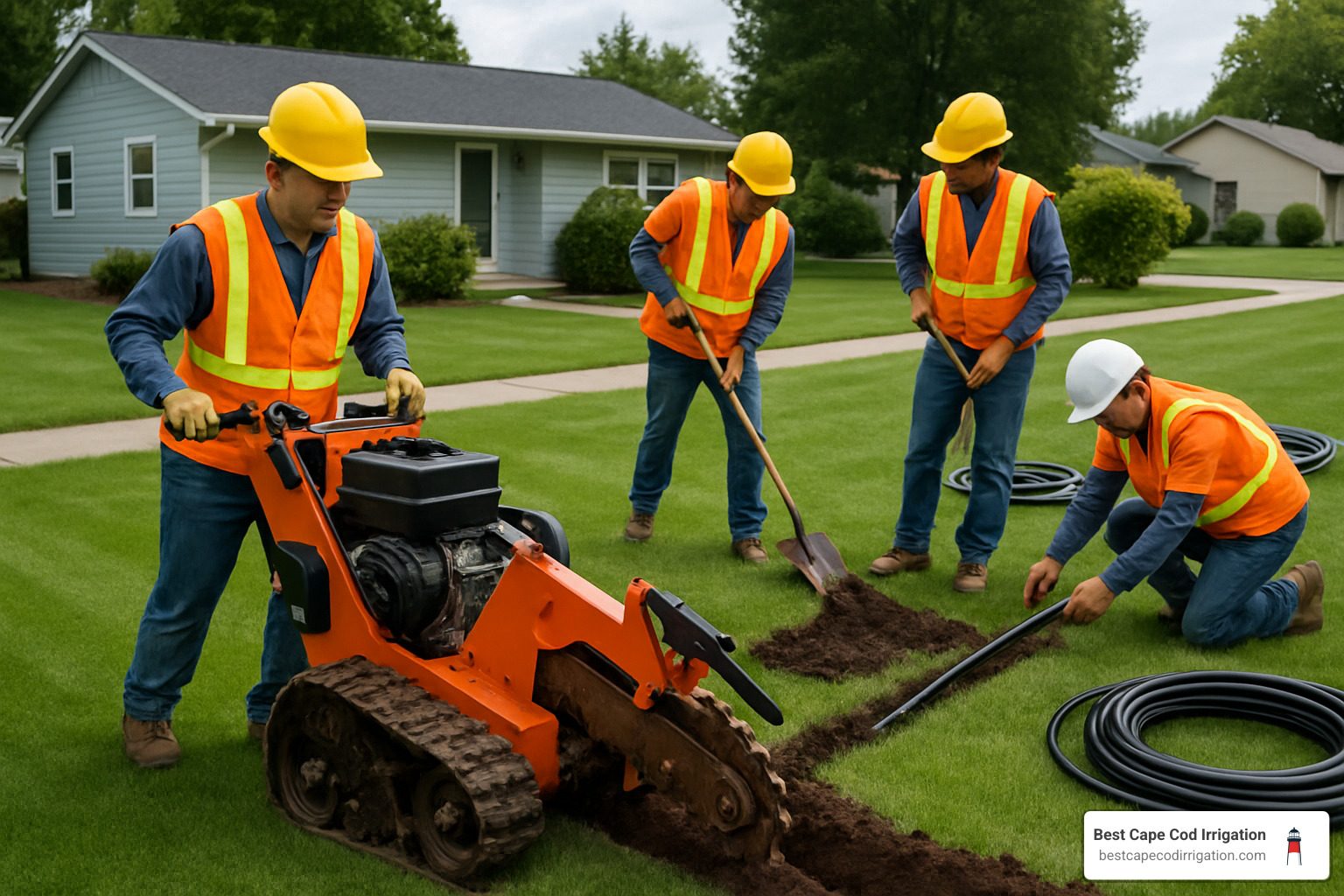
Professional installation, while more expensive upfront, comes with significant advantages. Our team at Best Cape Cod Irrigation brings expert design skills optimized for your specific landscape and plant needs. We handle all the paperwork for local permits (which vary by town across the Cape), and we stand behind our work with 1-3 year warranties. What might take you weeks of evenings and weekends, we typically complete in 3-4 days.
Cape Cod presents unique challenges that even experienced DIYers from other regions might not anticipate. Our sandy soils require specific head spacing and precipitation rates. Many towns have strict water restrictions and Nitrogen Sensitive Area designations that affect system design. Properties near the coast face potential corrosion issues, and high water tables in some locations can complicate trenching.
“With over 25 years of experience installing irrigation systems on Cape Cod, we’ve encountered every soil condition and municipal requirement,” says our installation manager. “That knowledge prevents costly mistakes and ensures systems that last.”
Questions to Ask Before Hiring a Contractor
If you decide to hire professionals for your irrigation system installation, don’t just choose the lowest bid. Ask these important questions to ensure quality work:
Are they properly licensed and insured? Verify both liability insurance and workers’ compensation coverage before anyone starts digging on your property.
Do they handle permits for you? Experienced contractors should manage all the paperwork and know exactly what each Cape Cod town requires.
Will they perform a water audit to ensure your system design matches your water supply capabilities? This step is crucial for system performance.
What brands and components do they use? Quality parts from established manufacturers ensure better performance and availability when replacements are needed.
Ask about their warranty coverage and ongoing maintenance services. The best contractors stand behind their work and offer seasonal support to keep your system running efficiently.
Don’t forget to request references from recent installations similar to yours, preferably from your town or neighborhood.
Hidden Costs & Time Considerations
When planning your irrigation project, be prepared for these often-overlooked expenses:
Equipment rental costs add up quickly. Trenching machines run $75-$200 daily, and most DIY installations require at least 1-2 days with this equipment.
After trenching, your yard will need landscape repair. Budget for reseeding (9-18 cents per square foot) or new sod ($1-$2 per square foot) to restore your lawn’s appearance.
Don’t forget about ongoing costs like annual backflow testing ($75-$150) required by code and professional winterization ($50-$120)—both essential in our Cape Cod climate.
The time investment for DIY installation is substantial. Most homeowners spend 4-6 hours planning, 8-12 hours trenching and laying pipe, 4-6 hours installing heads, and 2-4 hours setting up controllers. That’s a lot of weekends!
“Many DIYers underestimate the time required, especially for trenching,” notes our lead installer. “What professionals can accomplish in a day often takes homeowners an entire weekend or more.”
Whether you choose the DIY route or hire professionals like our team at Best Cape Cod Irrigation, understanding these factors will help you make the best decision for your property, budget, and peace of mind. After all, the goal is a beautiful, water-efficient landscape that improves your Cape Cod home for years to come.
More info about Irrigation Installation
Frequently Asked Questions about Irrigation System Installation
How do I determine my water pressure and flow rate?
Ever turned on a garden hose only to get a disappointing trickle instead of the powerful spray you expected? Understanding your water pressure and flow rate helps avoid this frustration with your irrigation system.
Checking your water pressure is surprisingly simple. Pick up an inexpensive pressure gauge from any hardware store and attach it to the outdoor faucet closest to your water meter. Make sure all water in your home is turned off—no running faucets, no washing machines, nothing. Turn the spigot on fully and watch the needle settle. That reading is your static water pressure.
Most residential irrigation system installations need between 30-50 PSI to function properly. If your reading falls below 30 PSI, you might need to consider a booster pump to get those sprinklers working effectively.
For flow rate, grab a 5-gallon bucket (the kind you find at home improvement stores) and time how long it takes to fill completely from your outdoor faucet. A little math gives you your gallons per minute: divide 5 by the number of seconds, then multiply by 60. For example, if it takes 30 seconds to fill the bucket: (5 ÷ 30) × 60 = 10 GPM.
“Understanding your water supply capabilities is the foundation of proper system design,” explains our water management specialist at Best Cape Cod Irrigation. “Without this information, you risk installing a system that either doesn’t work properly or wastes water.”
Most homes need at least 10-13 GPM for an effective irrigation system. If your flow rate is lower, we might need to design a system with more zones running fewer heads simultaneously.
Do I need a permit for irrigation on Cape Cod?
Yes, you absolutely need permits for irrigation system installation on Cape Cod, and skipping this step can lead to headaches down the road. Every town on the Cape requires some form of permitting, though specific requirements vary.
Generally, you’ll need a building department permit at minimum. If your system connects to the municipal water supply (most do), you’ll also need a plumbing permit for the backflow prevention device—a crucial safety component that keeps irrigation water from flowing back into your drinking water.
Many areas of Cape Cod are designated as Natural Resource Area Nitrogen Sensitive Areas, which may trigger additional requirements or restrictions. These environmentally sensitive designations reflect our region’s commitment to protecting groundwater and coastal ecosystems.
Permit costs typically range from $50-$200 depending on your town and project scope. When you work with Best Cape Cod Irrigation, we handle all permitting paperwork as part of our installation service, saving you time and ensuring everything meets local code requirements.
Don’t forget about Dig Safe! Massachusetts law requires contacting Dig Safe (811) at least 72 business hours before any digging begins. They’ll mark underground utilities for free, helping prevent potentially dangerous and expensive accidents.
Will a sprinkler system really boost my home’s value?
The short answer: Absolutely! A well-designed irrigation system installation offers one of the better returns on investment for home improvements, especially here on Cape Cod.
According to the National Association of Realtors, irrigation systems provide an average ROI of about 86%—meaning if you spend $4,000 on a system, you could recoup around $3,440 in added home value. That’s significantly better than many other home improvements.
Here on Cape Cod, where our sandy soils make maintaining lush landscaping particularly challenging, an efficient irrigation system is even more valuable. Local real estate data suggests homes with well-maintained irrigation systems can see value increases of up to 12%.
Beyond the direct financial return, buyers recognize several benefits that make properties with irrigation systems more attractive:
Time savings from automated watering versus dragging hoses around the yard (especially valuable for seasonal residents)
Lower water bills through precise application and smart technology
Healthier, more attractive landscaping that improves curb appeal
Smart home integration with modern controllers that allow remote operation
“In our experience, Cape Cod homes with established, efficient irrigation systems not only sell for more but often sell faster,” notes a local real estate professional we work with regularly. “Buyers recognize the value of having this infrastructure already in place.”
When you think about it, an irrigation system is really an investment in your property’s long-term value and appeal, not just a convenience for yourself while you live there.
Conclusion
You’ve made it to the finish line! Whether you’re rolling up your sleeves for a DIY project or calling in the pros, irrigation system installation is an investment that truly pays dividends. On Cape Cod, where our sandy soils and unpredictable weather patterns can make landscape maintenance challenging, a well-designed irrigation system is nothing short of transformative.
Think about it – no more dragging hoses across the yard on hot summer mornings. No more brown patches from forgotten watering. No more wasted water running down the driveway. Instead, you’ll enjoy a lush, healthy landscape that practically takes care of itself.
For those brave DIY souls, patience and planning are your best friends. Take the time to map your yard thoroughly, understand your water supply capabilities, and select components that match your landscape’s specific needs. Don’t rush through trenching or connections – these hidden elements are the foundation of a system that should serve you for decades.
Living on Cape Cod comes with unique considerations for irrigation. Our sandy soil drains quickly but wastes water if overwatered. Many towns have seasonal restrictions and nitrogen-sensitive designations that affect when and how you can water. These local quirks are why many homeowners ultimately choose professional installation from companies with deep Cape-specific knowledge.
After 25 years of installing irrigation systems across the Cape, we’ve seen it all – from simple lawn setups to elaborate multi-zone designs for sprawling properties. What we’ve learned is that each yard tells its own story and deserves a customized approach. Cookie-cutter systems simply don’t cut it in our unique environment.
The technology has evolved dramatically over the years, too. Today’s smart controllers can sense rainfall, adjust to weather forecasts, and even alert you to leaks on your smartphone. These innovations have transformed irrigation from a water-wasting necessity to an environmentally responsible tool that actually conserves our precious resources.
In the end, a properly installed irrigation system delivers the perfect trifecta of benefits: it saves water through efficient application, saves time through automation, and saves money through reduced water bills and increased property value. Your lawn stays greener, your plants grow healthier, and you get to enjoy your outdoor space rather than constantly maintaining it.
Ready to transform your Cape Cod landscape with efficient, automatic irrigation? Contact us today to schedule your free consultation and custom system design. With Best Cape Cod Irrigation’s 25 years of local expertise, you’ll get a system perfectly custom to your property’s unique needs – and the peace of mind that comes with professional installation and support.
Your yard deserves it, and frankly, so do you.