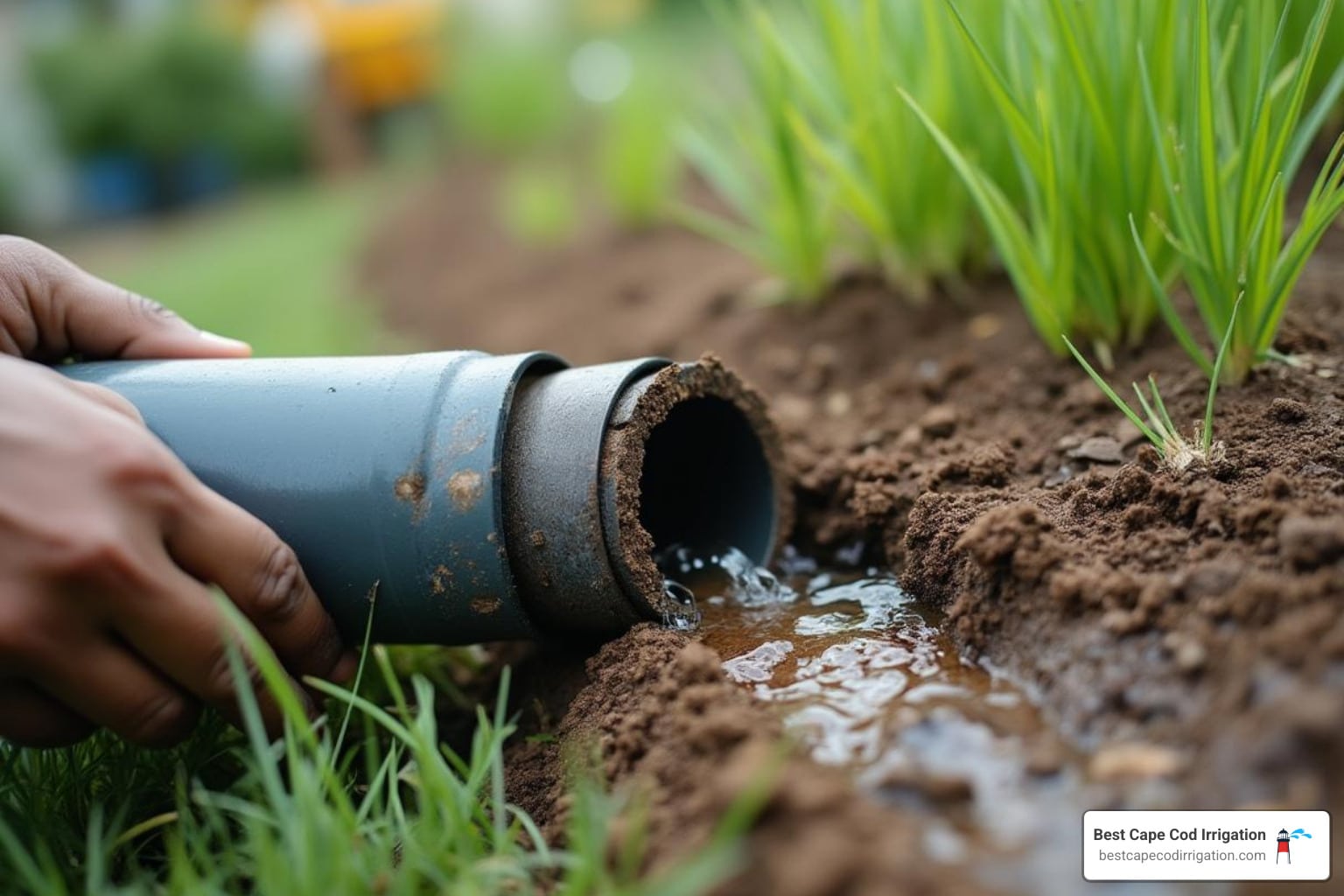



Why You Need to Address Irrigation Pipe Cracks Quickly
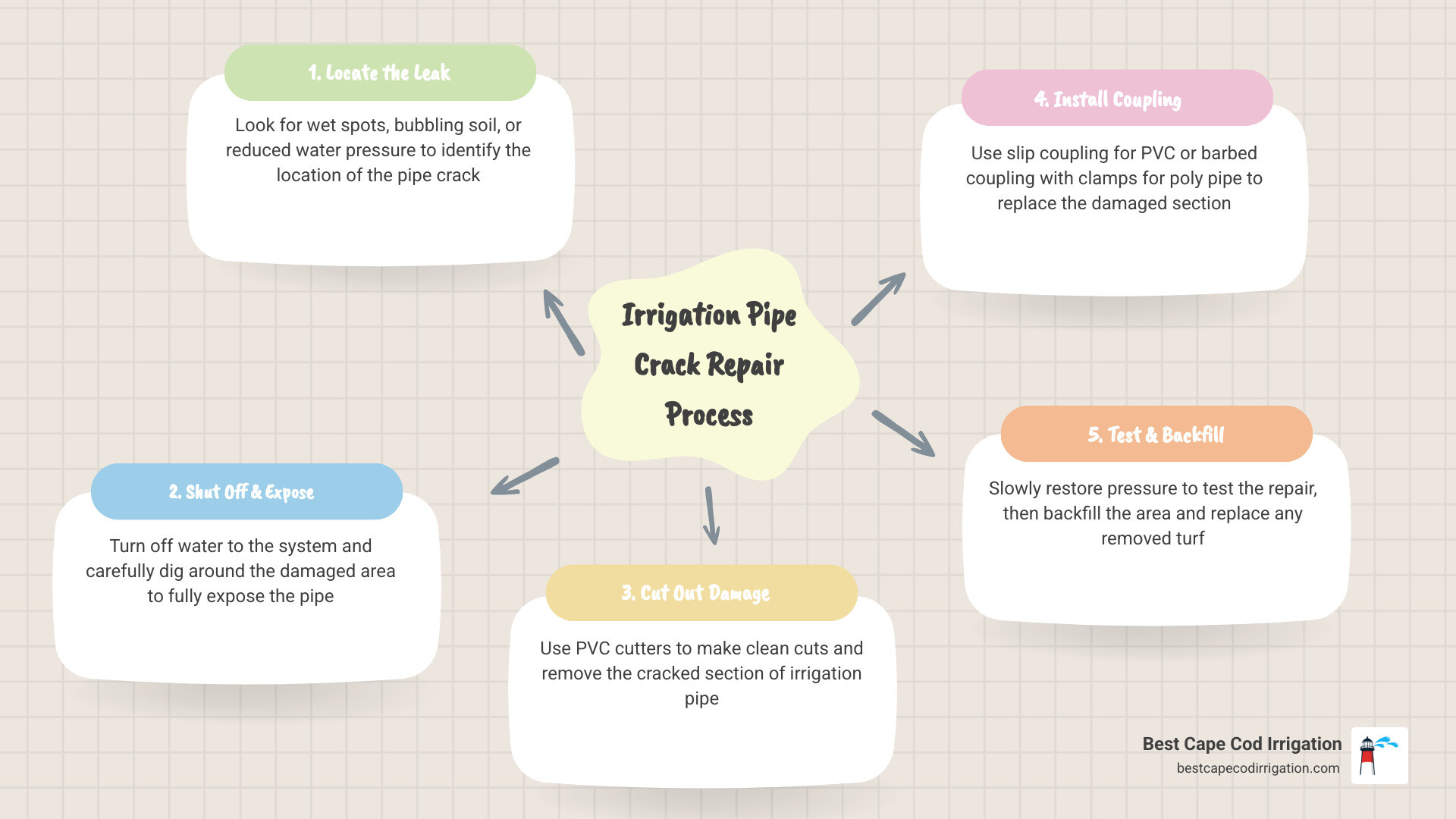
Irrigation pipe crack repair is a common challenge for Cape Cod homeowners. A quick solution is to:
- Locate the leak by looking for wet spots or reduced water pressure
- Turn off water to the irrigation system
- Dig carefully around the damaged area
- Cut out the cracked section with PVC cutters
- Install a coupling (slip coupling for PVC or barbed coupling for poly pipe)
- Test the repair by slowly restoring pressure
- Backfill the area and replace any removed turf
Ever noticed a mysterious puddle in your yard when it hasn’t rained? Or perhaps your water bill suddenly spiked? These are telltale signs of a cracked irrigation pipe.
A broken sprinkler line might seem difficult to fix, but it’s actually simple to repair yourself. With the right tools and about 2-4 hours, you can fix that leak for around $40-$70 in materials – much less than a professional service call.
Addressing pipe cracks promptly is crucial. Even small leaks waste hundreds of gallons of water, driving up utility bills. That excess water can damage your landscape by creating soggy areas that kill grass. What starts as a minor crack can quickly worsen if left unattended.
Sandy Cape Cod soil presents unique challenges for irrigation systems. The constant shifting can stress pipes, while freeze-thaw cycles in our unpredictable New England weather often cause cracks to form.
In this guide, we’ll walk you through the process of identifying, accessing, and repairing cracked irrigation pipes so you can maintain your lawn without wasting water or money.
Why Irrigation Pipes Crack & Leak
Ever wondered why your sprinkler line fails every season? After decades of irrigation pipe crack repair on Cape Cod, we see the same troublemakers again and again:
Most common causes of irrigation pipe crack repair
- Freezethaw cycles trapped water expands in winter and splits pipe walls.
- Root intrusion thirsty tree and shrub roots wrap pipes and squeeze until they give way.
- Accidental nicks a shovel strike or lawn-aerator tine leaves a weak spot that widens over time.
- Ground movement our sandy soil shifts after heavy rain, stressing rigid pipes and couplings.
- UV degradation sunlight makes exposed plastic brittle.
- Age & material fatigue even quality pipe eventually loses flexibility.
- High-pressure spikes sudden surges (water hammer) can blow fittings apart.
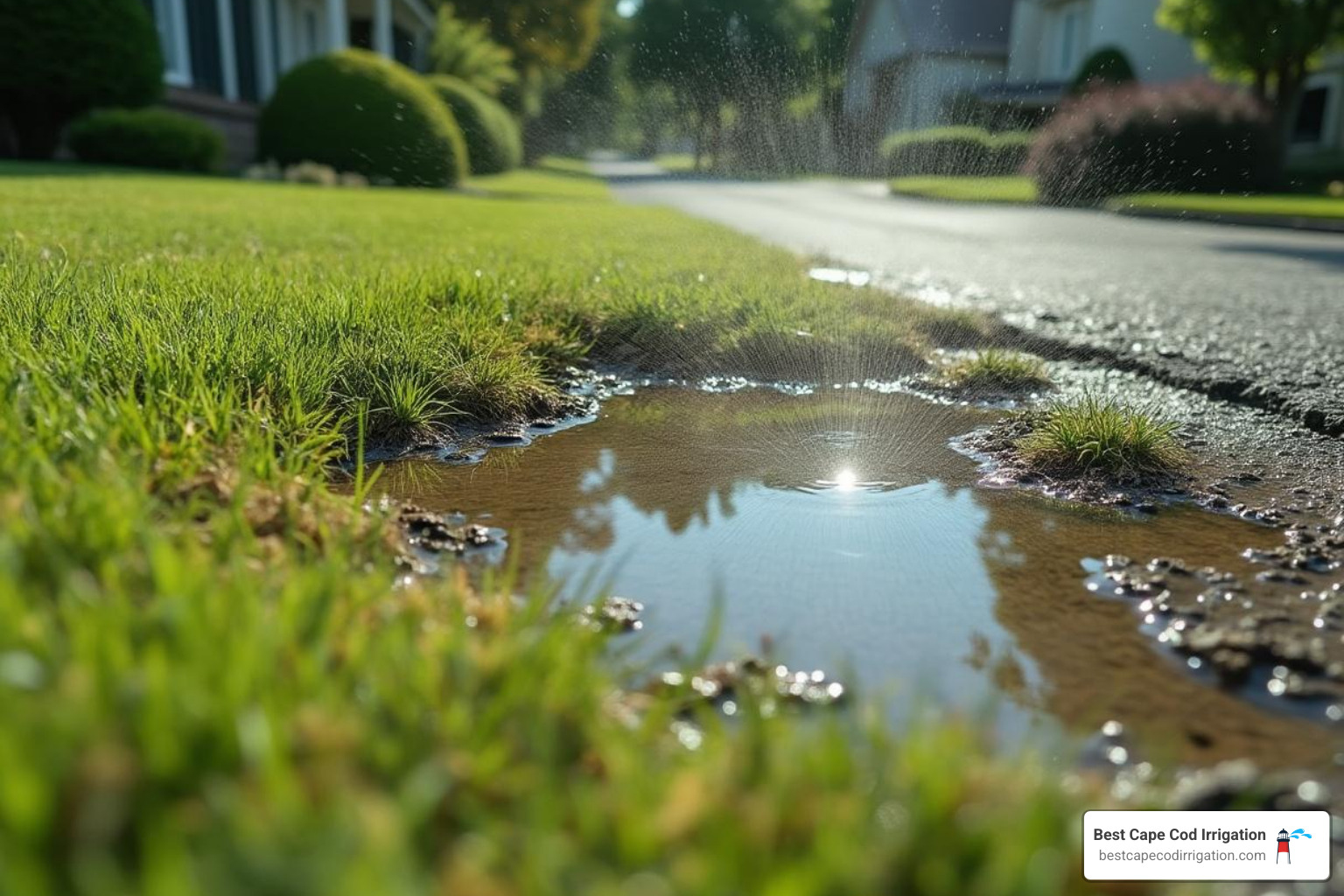
Knowing the causes lets you tackle todays leak and prevent tomorrows repair.
How to Detect & Pinpoint a Crack
Before you can fix a cracked irrigation pipe, you need to find it. Here’s how to locate that elusive leak:
Visual inspection: Look for unusual wet spots, especially areas that remain damp when your irrigation system hasn’t run recently. Pay attention to unusually lush patches of grass – they might be getting extra water from an underground leak.
Reduced water pressure: If certain zones or sprinkler heads aren’t performing well, it could indicate a leak is siphoning off pressure.
Listen carefully: When your system is running, listen for hissing or bubbling sounds that might indicate water escaping from a pressurized pipe.
Check your water meter: Turn off all water-using appliances, then watch your meter for movement. If the dial is still turning, you likely have a leak somewhere.
Monitor your water bill: A sudden unexplained increase in your water bill is often the first sign of an irrigation leak.
Zone-by-zone testing: Run each irrigation zone individually while watching for unusual water patterns or wet spots.
Look for bubbling soil: When pressurized water escapes from an underground pipe, it can create bubbling in the soil above the leak.
DIY leak-location tricks
Compressed air method: Turn off the water supply, drain the system, then connect an air compressor. Pressurize to about 50-60 PSI and listen for escaping air, which is often easier to locate than water.
Food coloring test: For visible puddles, add food coloring to the water in your system. The colored water will help trace the path back to the source.
Sprinkler head isolation: If you suspect a leak is near a particular head, unscrew it and insert a threaded cap. If the leaking stops, the issue is with the head itself.
A wet spot might not be directly above the leak – water can travel along the pipe trench before surfacing. Start your search near valve boxes, sprinkler heads, or known pipe routes.
For more information about checking your system when opening it in spring, visit our guide on Opening Sprinkler System in Spring.
Tools & Materials You’ll Need
A little prep time saves a lot of digging time. Gather these items before you start your irrigation pipe crack repair:
- Digging tools: garden spade, trenching shovel, and a hand trowel for careful work near the pipe. Lay soil on a tarp for easy cleanup.
- Cutting tools: PVC pipe cutters (or a hacksaw); a sharp utility knife for poly pipe; measuring tape and marker.
- Repair parts:
- PVC system Schedule 40 pipe, slip or standard couplings, purple primer, and irrigation-grade PVC cement.
- Poly system matching pipe, barbed insert couplings, stainless hose clamps, and a dab of dish soap for lubrication.
- Emergency items: silicone self-fusing repair tape or epoxy putty for a temporary seal.
- Safety gear: work gloves and safety glasses.
Most of these supplies are at local hardware stores; specialty couplings are easy to find on Amazon.
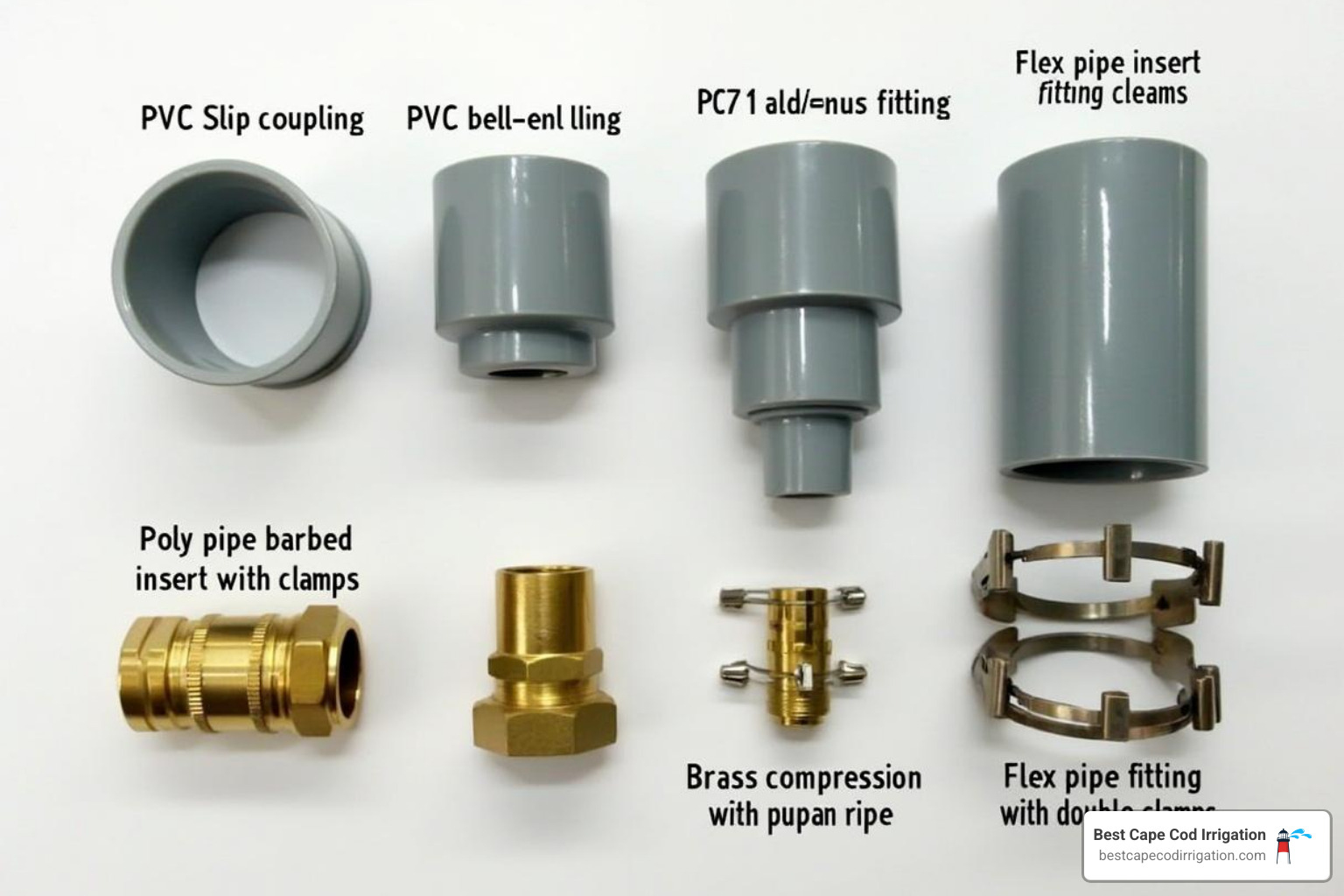
Choosing fittings for irrigation pipe crack repair
Match the fitting to both pipe material and Cape Cod conditions:
- PVC: Schedule 40 slip couplings slide over the pipe, making tight repairs in small trenches possible.
- Poly: Brass barbed fittings last longer than plastic in our coastal environment; always double-clamp high-pressure lines.
- Flexible PVC: Use aggressive-barb specialty fittings and two clamps for security.
Step-by-Step Irrigation Pipe Crack Repair
Now that you’ve identified the leak and gathered your materials, it’s time to get your hands dirty. Follow these steps for a professional-quality irrigation pipe crack repair:
1. Call 811 & Prepare the Site
Safety isn’t just a precaution—it’s a necessity when digging. Before grabbing that shovel, call 811 or visit call811.com to have underground utilities marked. This free service helps you avoid hitting gas, electric, or communication lines. Remember to plan ahead—utility marking typically takes 72 hours.
Once your yard is properly marked:
Turn off the water supply to your irrigation system completely.
Drain any remaining water from the system by opening a drain valve or removing a sprinkler head at a low point.
Mark your suspected leak area clearly, giving yourself enough space to work comfortably.
For grassy areas, preserve your lawn by carefully cutting a clean turf square. Use a garden knife to cut straight down into the soil in a square pattern around your work area. Then gently lift the turf with roots intact and set it aside for later replanting.
Begin digging with care, working in a circle around the suspected leak. In Cape Cod’s sandy soil, you can often dig by hand once you get past the root zone.
Pro tip: When removing turf, leave 2-3 inches of soil attached to the root system. This increases the survival rate of your grass when you replace it later, giving you a nearly invisible repair site within a week or two.
2. Cut Out the Damaged Section
Once you’ve exposed the pipe and located the crack:
- Clean around the pipe to create adequate working space. Aim for at least 3 inches beneath and 6 inches around the pipe.
- Examine the full exposed section to ensure there aren’t additional cracks nearby.
- Mark your cut lines at least 1-2 inches beyond the visible damage on each side.
- Double-check your measurements, ensuring you have enough replacement pipe and that your cuts will create a straight, clean repair.
- Use PVC cutters (for PVC) or a sharp utility knife (for poly pipe) to make square, clean cuts.
- Remove the damaged section.
- Clean the cut ends with a clean cloth and lightly sand or deburr them to ensure smooth connections.
Pro tip: When cutting, rotate the pipe slightly between passes to ensure a straight, even cut. Jagged or angled cuts will compromise your repair.
3. Install New Pipe & Couplings
Time to reconnect everything.
For PVC pipe:
- Dry-fit the parts to check alignment.
- With slip couplings, leave 1 in. of insertion depth on each side. Standard couplings need a precisely cut pipe segment between them.
- Prime, cement, push together, then give a quarter-turn and hold 30 seconds. Follow the cement label for cure time before pressurizing.
For poly pipe:
- Slide two stainless clamps onto each existing pipe end.
- Warm the pipe ends in hot water or use a drop of dish soap, then push the barbed coupling fully home.
- Add the replacement pipe section, position clamps over the barbs (about 1⁄4 in. from the ends) and tighten evenly.
Pro tip: Tighten all clamps lightly first, then finish snugging each one. This prevents the pipe from walking off the fitting.
4. Pressure-Test the Repair
Now comes the moment of truth – testing your irrigation pipe crack repair before covering everything back up. This step might seem tempting to skip, but spending an extra 10 minutes now can save hours of frustration later.
Start by making sure all drain valves are closed and any removed sprinkler heads are replaced. Then, slowly turn the water supply back on. Let the water gradually fill the pipe section you’ve just fixed.
As the system pressurizes, inspect your repair connections carefully. For PVC repairs, look for any moisture around the cemented joints. With poly pipe repairs, check that each hose clamp is holding tight.
Pro tip: Place a piece of toilet paper under connections while testing. Even the tiniest leak will immediately show up as a wet spot on the paper.
Let your system run for at least 5 full minutes. Many leaks don’t appear immediately, especially with PVC cement that hasn’t fully cured.
If you spot a leak, turn off the water supply immediately and address the issue. For PVC, this might mean cutting out the section and trying again. For poly pipe, often just tightening the clamps will solve the problem.
Remember to purge any air from the lines by running the system until water flows smoothly from all sprinkler heads.
5. Backfill & Restore Landscape
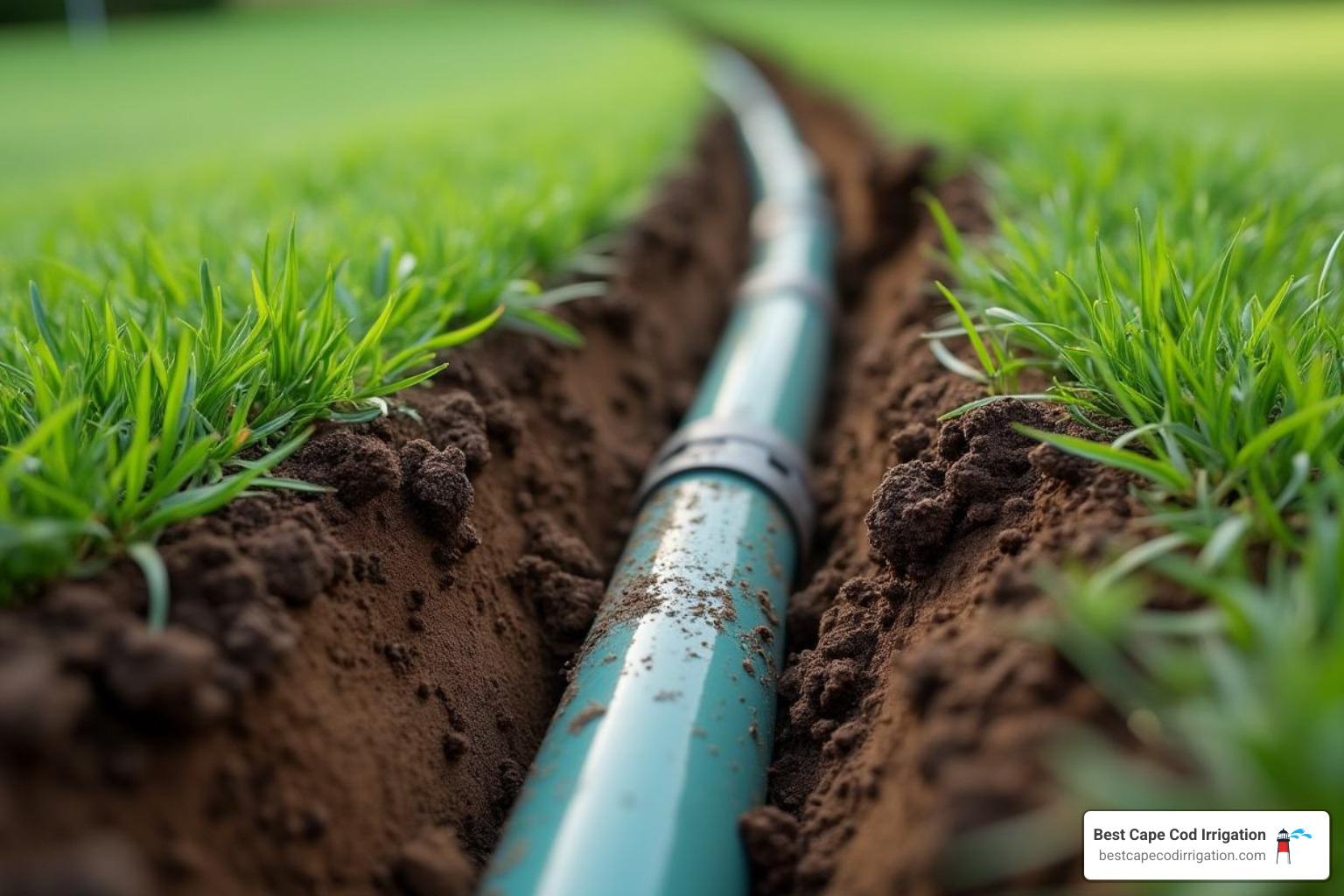
With your irrigation pipe crack repair successfully tested, it’s time to put everything back together. This final step is just as important as the repair itself.
Start by adding soil back into your trench in thin layers, about 2-3 inches at a time. This layered approach prevents air pockets that could cause settling later. Gently tamp down each layer, but be careful not to compact the soil too firmly right against the pipe.
Cape Cod’s sandy soil works to your advantage during backfilling. It settles nicely around pipes without creating excessive pressure. Consider mixing in a small amount of topsoil with your excavated sand, especially in the upper layers to help grass roots reestablish quickly.
When you’ve filled the hole to about an inch below the original grade, replace any turf you removed. Prepare the soil surface by gently raking it level, then position your turf patch precisely where it came from. Press it down firmly to ensure good contact between the roots and soil.
Give the repaired area a thorough soaking with your garden hose. This helps settle the soil naturally and provides hydration to your replaced grass.
For the next few days, keep an eye on both the repair site and your sprinkler system. Watch for any unusual wet spots that might indicate your repair didn’t hold.
Pro tip: If you’re doing this repair during hot summer months, consider placing a bit of shade over your replaced turf for a day or two to improve recovery rates.
Temporary vs. Permanent Fixes
Sometimes you need a quick fix until you can make a proper repair. Here are some emergency solutions for irrigation pipe crack repair:
Rubber repair tape is ideal for emergency fixes. This self-fusing silicone tape creates an effective temporary seal for small pinhole leaks or hairline cracks. Despite being marketed as “temporary,” these repairs can last several seasons. Just make sure you depressurize the pipe first, then stretch the tape tightly as you wrap.
A pipe repair clamp works beautifully for straight sections with small to medium cracks and can last for years if properly installed. You’ll need enough clearance around the pipe to get the clamp in place.
For irregular surfaces or odd-shaped fittings, epoxy putty can be a lifesaver. This two-part compound hardens to seal cracks and can withstand significant pressure once cured. You need completely dry conditions for it to set properly.
For medium-sized cracks, fiberglass pipe wrap creates a surprisingly durable repair. These resin-impregnated bandages harden around the pipe and can withstand high pressure and temperature variations.
When to patch vs fully replace during irrigation pipe crack repair
Patching makes sense when dealing with a small crack (less than 1 inch long), a simple pinhole leak, or when the pipe is otherwise in excellent condition. Patches are also practical for difficult-to-access areas.
Opt for full replacement when the damage is more extensive—if the crack wraps more than 1/3 around the pipe, you notice multiple cracks in the same area, or the pipe shows signs of brittleness. Also, if the damage is at or near a fitting or if previous patches have failed, it’s time for a proper replacement.
While temporary fixes can buy you time, they rarely match the longevity of a proper cut-and-replace repair. Here on Cape Cod, where freeze-thaw cycles put extra stress on irrigation systems, we recommend upgrading any temporary repairs to permanent solutions before winter.
Preventing Future Breaks & Routine Maintenance
A few simple habits can spare you a lot of digging:
- Winterize completely. We blow every line clear with commercial compressors before the first hard freeze.
- Control pressure. Most residential sprinklers like 30–50 PSI. A $40-$60 regulator can prevent water-hammer damage.
- Bury at proper depth. Laterals 8–12 in.; mains 12–18 in. Deeper lines are safer from cold snaps and shovels.
- Add root barriers near thirsty trees.
- Walk the system monthly during the growing season. Look for wet spots, weak pressure, or odd spray patterns.
- Upgrade to a smart controller. Modern models sense abnormal flow and shut a zone down before gallons are wasted.
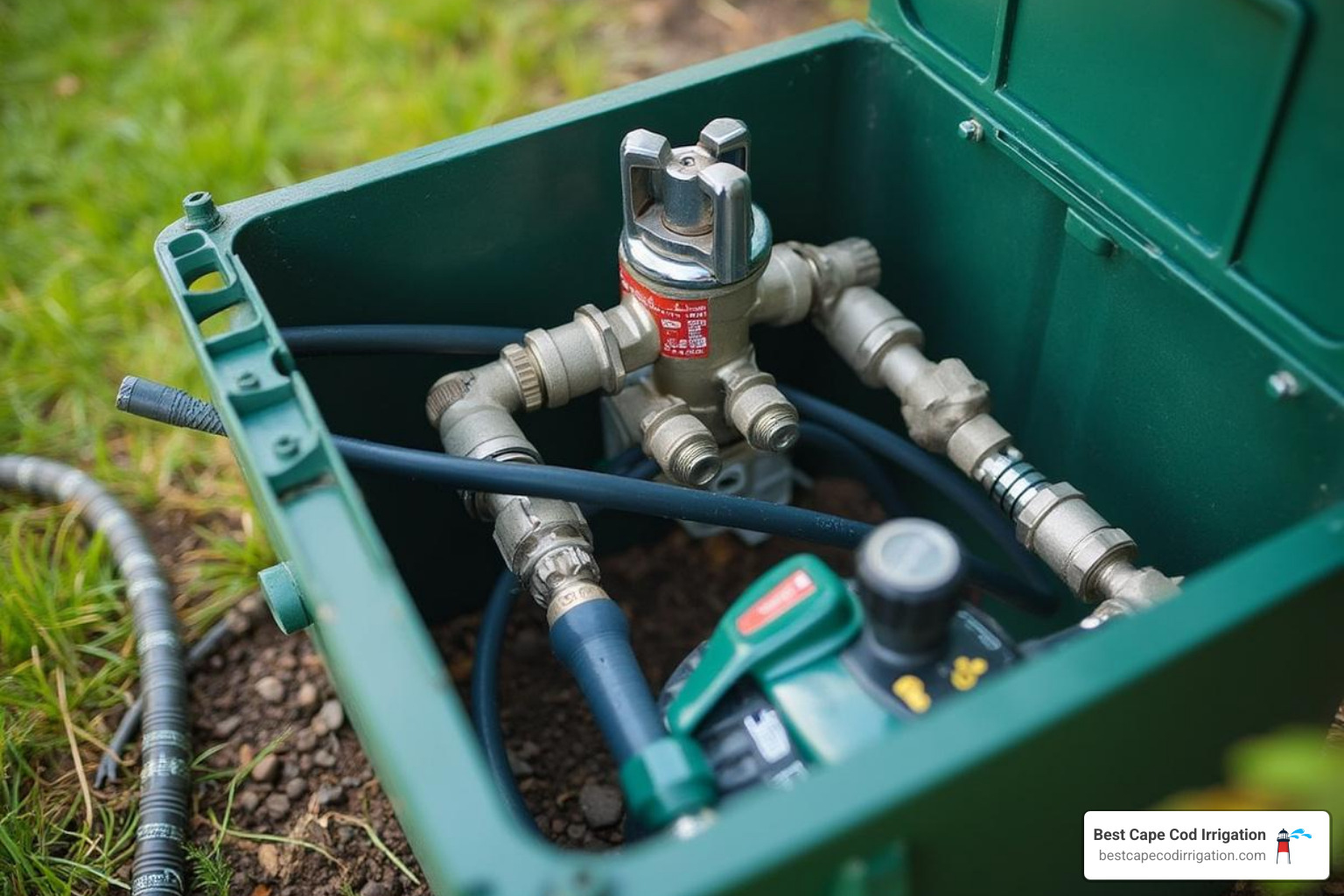
For installation tips that minimize future repairs, visit our Irrigation System Installation page.
Cost & When to Call a Pro
A DIY irrigation pipe crack repair usually runs $40–$70 in materials and 2–4 hours of effort. Multiple breaks or specialty parts can push costs toward $120 (all figures are broad internet averages, not Best Cape Cod Irrigation pricing).
Hiring a professional typically ranges $150–$250 for a straightforward fix and $250–$450 for complex, multi-break jobs. Youre paying for specialized tools, local code knowledge, and the peace of mind of a warranted repair.
When to bring in the experts
- The leak hides under a patio, driveway, or dense root mass.
- Youve patched the same spot twice already.
- Valve manifolds or electrical work are involved.
- Local regulations require a licensed tech.
Ready for help? Book a visit on our Schedule Repairs page.
Frequently Asked Questions about Irrigation Pipe Crack Repair
How can I tell if the crack is small enough for a patch?
A crack is generally suitable for patching if it’s relatively minor – less than an inch long and doesn’t wrap around more than a quarter of the pipe’s circumference. The surrounding pipe should still feel flexible and resilient, not brittle or crumbly. Water should be seeping rather than forcefully spraying from the damaged area.
With PVC pipes, barely-visible hairline cracks that don’t actively leak under pressure might work with a simple external patch using PVC cement and a small piece of thin-wall PVC as a sleeve. For poly pipes, pinhole leaks often respond well to repair tape or pipe clamps.
Just remember – while patches can be effective, they’re usually considered temporary solutions in our Cape Cod climate. The freeze-thaw cycles we experience put extra stress on repairs.
Are slip couplings strong enough for buried lines?
Absolutely! Properly installed slip couplings are completely suitable for buried irrigation lines. We use them regularly because they’re reliable and make repairs much easier, especially in tight spaces.
The key to long-lasting slip coupling installations comes down to proper preparation, using quality couplings specifically designed for irrigation use, and allowing adequate curing time before pressurizing the system.
Many homeowners worry about flow restriction with slip couplings, but the difference in internal diameter is so minimal that it won’t noticeably affect performance unless your system is already maxed out.
Can I repair polyethylene and PVC the same way?
No, these materials need completely different repair approaches.
PVC pipe is rigid and joins through a chemical welding process using solvent cement. When repairing PVC, you’ll cut out the damaged section and cement in a new piece using couplings. The cement actually melts the surfaces slightly, fusing them together into a single piece when cured.
Polyethylene (poly) pipe is flexible and cannot be glued – the cement simply won’t bond to it. Instead, poly pipe relies on barbed insert fittings secured with clamps, or compression fittings that create a mechanical seal.
If you’re unsure what type of pipe you have, here’s a quick test: PVC is rigid and typically white or gray, while poly pipe is flexible and usually black or blue.
Conclusion
Taking on an irrigation pipe crack repair project might feel intimidating at first, but it’s absolutely within reach for many homeowners. There’s something deeply satisfying about solving a problem with your own hands, especially when that solution saves water, protects your landscape, and keeps your Cape Cod property looking its best.
While quick emergency fixes have their place, nothing beats a proper cut-and-replace repair for long-term reliability. This is especially true here on Cape Cod, where our unique combination of sandy soil and dramatic seasonal temperature swings puts extra stress on irrigation systems.
Timing matters too. A small leak addressed promptly typically means a simpler, less expensive fix. That same leak left for weeks can erode soil, damage surrounding landscape features, and potentially evolve into a much bigger problem.
At Best Cape Cod Irrigation, we’ve spent over 25 years helping homeowners across the region maintain irrigation systems that work beautifully while respecting our precious water resources. We understand how local conditions affect your system because we’ve been solving these exact challenges for decades.
Whether you decide to roll up your sleeves for a DIY fix or prefer to call in our experienced team, addressing irrigation leaks promptly reflects good stewardship of both your property and our environment. A well-maintained system delivers exactly the right amount of water exactly where it’s needed.
The best part? That careful attention to maintenance typically pays for itself through lower water bills and fewer emergency repairs down the road.
For more information about our comprehensive approach to irrigation system care, visit our Irrigation Repairs & Maintenance page.