



Why Poly Pipe is the Smart Choice for Cape Cod Homeowners
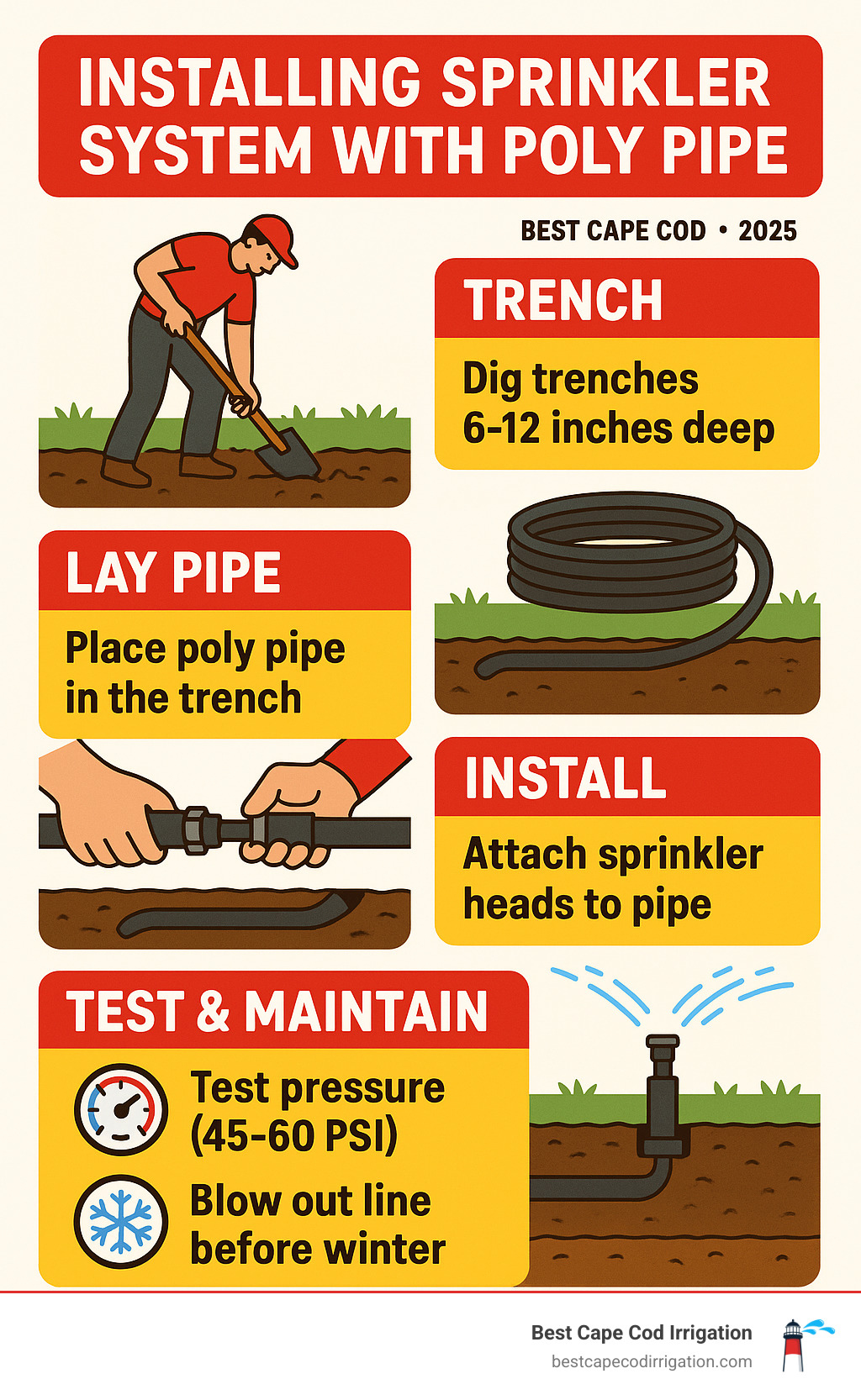
Installing sprinkler system with poly pipe is a practical and cost-effective way to achieve reliable lawn irrigation, especially for Cape Cod’s sandy soil. Many homeowners find the installation process surprisingly straightforward.
Quick Installation Guide:
- Plan your layout: Map zones and measure water pressure (40-65 PSI needed).
- Dig trenches: Aim for 6-12 inches deep for poly pipe lines.
- Connect the pipe: Use barb fittings and crimp clamps for leak-free joints.
- Install sprinkler heads: Connect with flexible swing pipe.
- Test the system: Check for leaks and adjust spray patterns.
- Winterize properly: Blow out lines to prevent freeze damage.
Poly pipe offers key advantages for Cape Cod’s conditions. Unlike rigid PVC, polyethylene pipe is flexible, withstanding freeze-thaw cycles without cracking. It’s also lightweight, resistant to UV exposure, and won’t deteriorate from chemical interactions.
With proper maintenance, a poly pipe system can last 25 to 30 years or more, providing decades of worry-free watering. Its flexibility simplifies DIY installation by reducing the need for numerous fittings. A poly pipe sprinkler system solves the challenges of sandy soil and inefficient manual watering, saving you time and money.
Learn more about installing sprinkler system with poly pipe:
Planning and Preparation: Your Blueprint for Success
Proper planning is the most critical step and will save you significant headaches later. Before digging, understand your water supply, as this dictates your entire system design.
Understanding Your Water Supply
First, measure your water pressure with a pressure gauge on an outdoor faucet (with all other water off). Most Cape Cod homes have 40-70 PSI; your system will need at least 40 PSI to function correctly.
Next, determine your flow rate in gallons per minute (GPM). A simple method is to time how long it takes to fill a 5-gallon bucket. If it takes 30 seconds, your GPM is 10. Most systems require 10 to 13 GPM.
Mapping Your Property
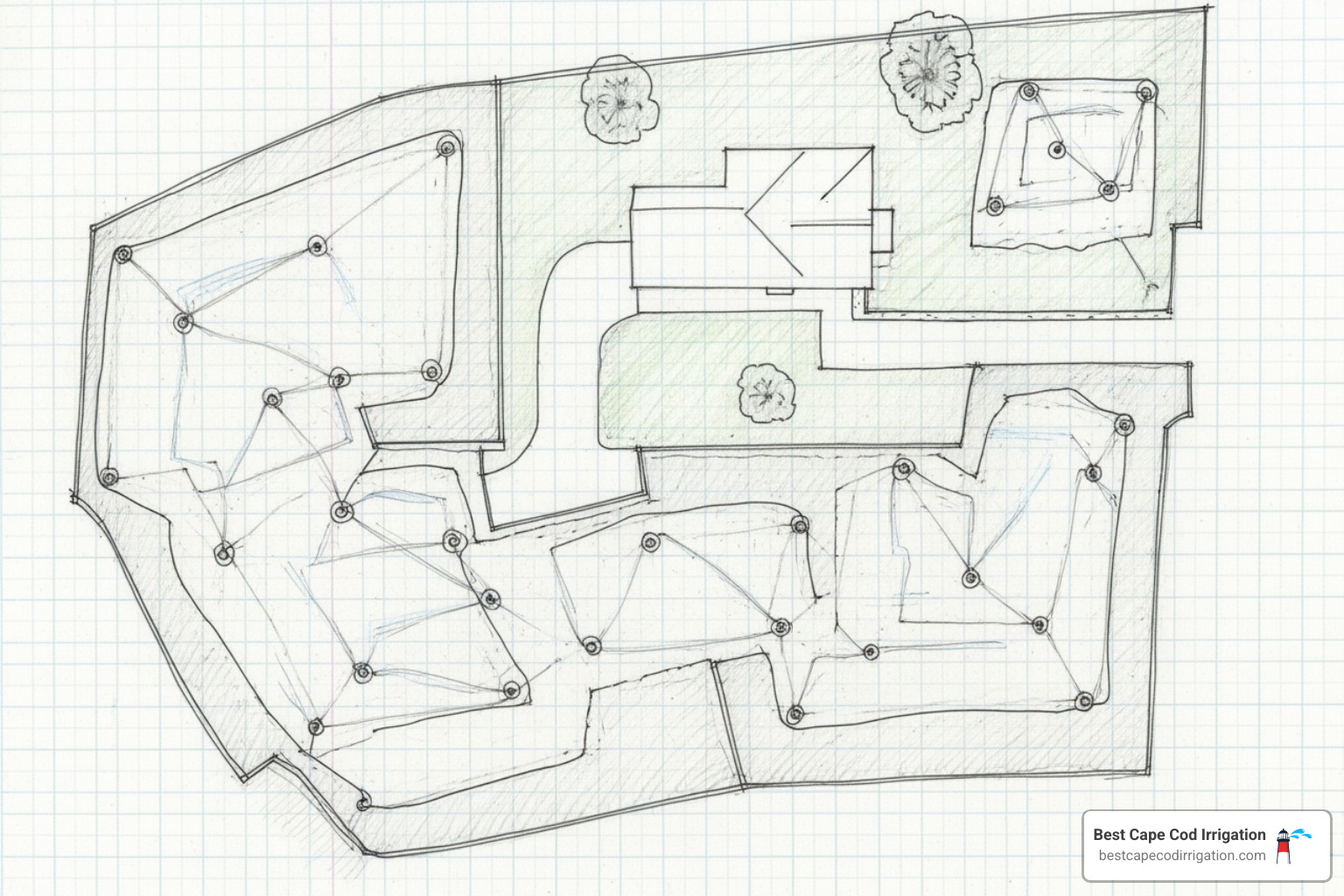
Sketch your yard to scale on graph paper, marking the house, walkways, trees, and lawn areas. This map is your guide for placing sprinkler heads and pipe.
Cape Cod’s sandy soil drains quickly, so design zones based on sun exposure and plant types. A sunny lawn will need different watering cycles than a shady flower bed. The key to professional results is head-to-head coverage, where each sprinkler’s spray reaches the next, ensuring no dry spots.
Essential Tools and Materials
For a poly pipe installation, you’ll need poly pipe cutters, a measuring tape, shovels, marking stakes, and crimping pliers. Safety gear like gloves and goggles is also essential.
Materials include polyethylene pipe, fittings, sprinkler heads, zone valves, and a timer. The quantities will depend on your design.
Key Considerations Before Installing Sprinkler System with Poly Pipe
Choosing the right poly pipe is crucial. HDPE (High-Density Polyethylene) is tough and ideal for high-pressure mainlines. LDPE (Low-Density Polyethylene) is more flexible, perfect for lateral lines that need to bend around obstacles.
Pipe diameter also matters: a 3/4″ pipe handles about 8 GPM, while a 1″ pipe manages 13 GPM. Your pipe’s pressure rating (PSI) must exceed your water supply’s maximum pressure. For connections, barb fittings with clamps are reliable for DIY, while compression fittings are tool-free. Self-tapping saddles are great for adding heads to existing pipe runs.
For more specialized applications, see More info about Drip Pipe Installation. A simple pipe cutter is essential for clean cuts.
Designing Your Layout and Measuring Water Capacity
Use your property map to place sprinkler heads for complete coverage. Divide the system into zones based on GPM capacity and each area’s watering needs. Use online irrigation design templates to refine your layout, then mark the locations in your yard with flags or paint.
Safety First: Permits and Utility Lines
Before digging, check with your local Cape Cod building department for permit requirements. Most areas require a backflow preventer to protect your drinking water supply.
The most important safety step is to Call 811 before you dig. This free service marks underground utilities, preventing dangerous and expensive accidents. Visit Call 811 before you dig to get started.
The Main Event: A Step-by-Step Guide to Installing Sprinkler System with Poly Pipe
With a solid plan, it’s time to begin the installation. The forgiving nature of poly pipe makes installing sprinkler system with poly pipe a manageable project, but following the correct steps is key to a long-lasting, efficient system.
Step 1: Site Prep and Trenching
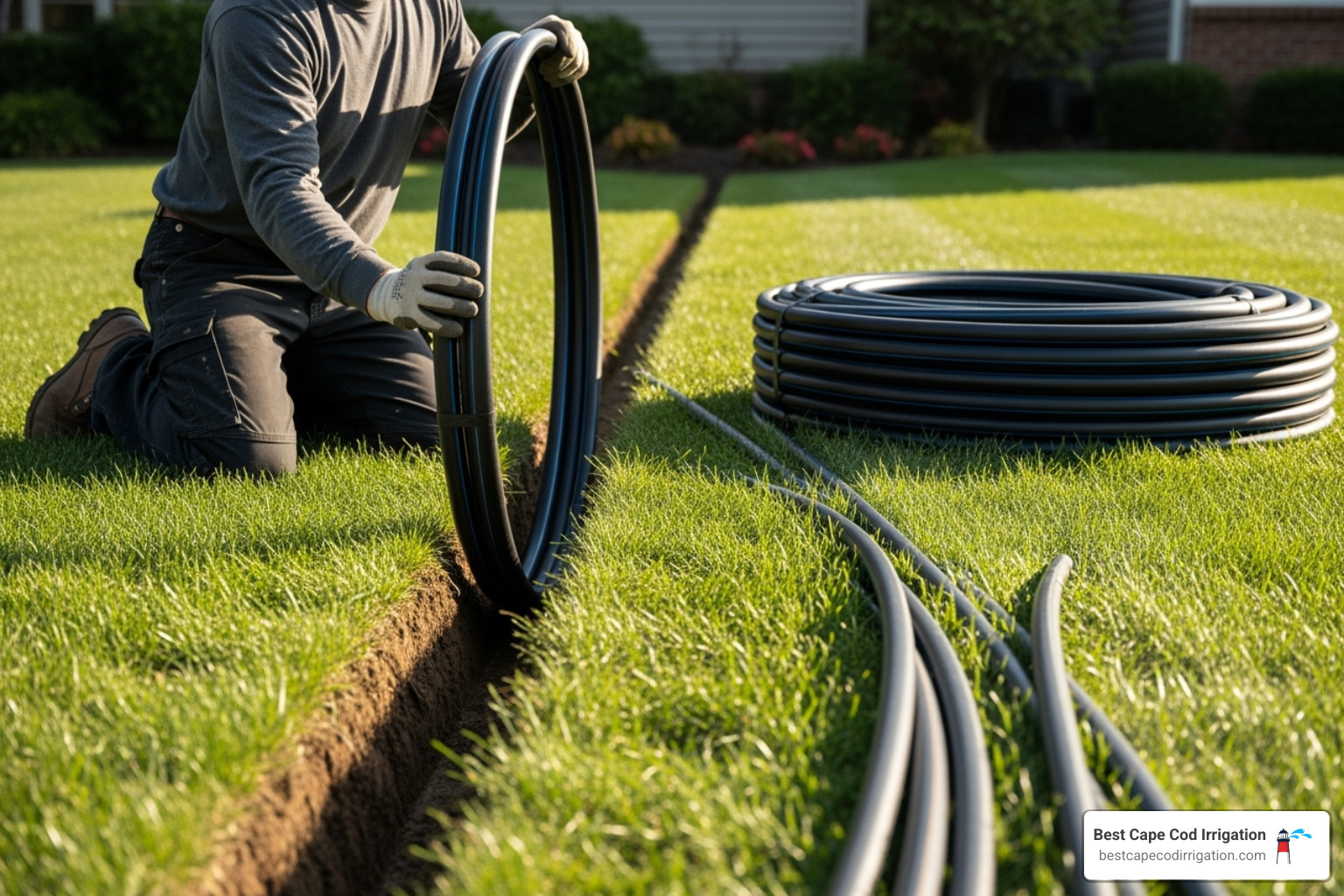
To preserve your lawn, carefully cut and remove sod in strips, rolling them up to be replaced later. Keep them in a shady spot and water them occasionally.
Dig trenches 6 to 12 inches deep. Main lines should be deeper (10-12 inches), while lateral lines to sprinkler heads can be shallower (6-8 inches). Cape Cod’s sandy soil makes digging relatively easy with a shovel. For larger areas, renting a vibratory plow can dramatically speed up the process by pulling the pipe into the ground as it digs.
To cross under a walkway, use a technique called boring. Attach a nozzle to a piece of PVC pipe and use water pressure to tunnel underneath without damaging the hardscape. Throughout the process, cover pipe ends with duct tape to keep out dirt and debris, which can clog sprinkler heads later.
For more details, see More info about How Are Irrigation Systems Installed.
Step 2: Laying and Connecting the Poly Pipe
Roll out the poly pipe along your trench lines. Properly cutting poly pipe with specialized cutters is crucial for creating clean, square cuts that prevent shavings from clogging the system.
If you find a kink in the pipe, don’t try to straighten it. A kink creates a permanent weak spot. Instead, cut out the damaged section and use a coupler to join the two ends.
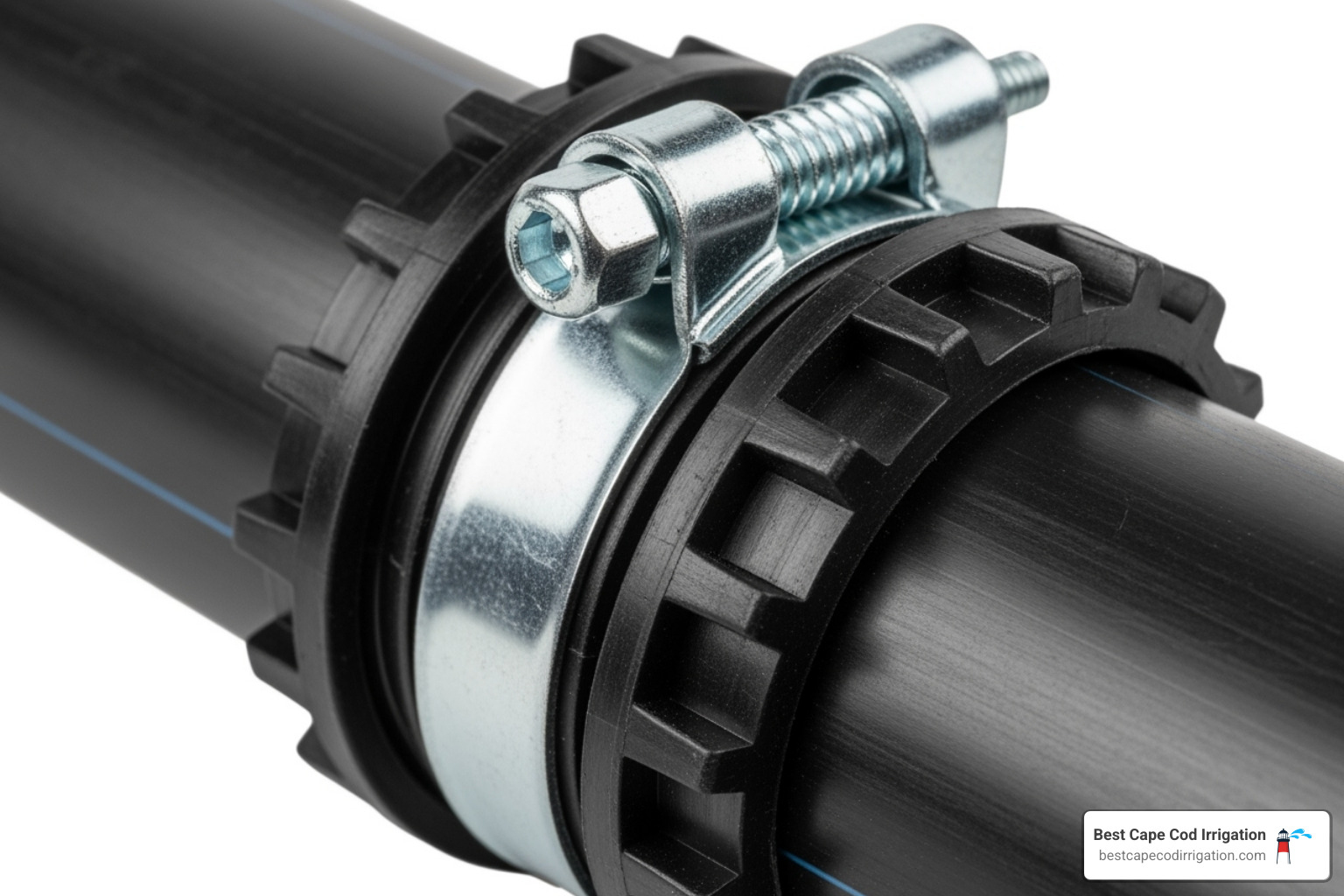
To connect fittings to poly pipe, slide a hose clamp or crimp ring onto the pipe, then push the barbed fitting firmly into the pipe. Gently warming a stiff pipe with a torch can make this easier. Once the fitting is seated, secure the clamp tightly. For main lines that stay pressurized, consider using two staggered clamps for extra security against leaks. The key to leak-free connections is to make them snug without overtightening and damaging the pipe.
Step 3: Installing Valves, Heads, and the Controller
The valve manifold directs water to different zones. You can build your own or use a pre-assembled unit. Place it in an accessible, protected location.
Use swing pipe to connect sprinkler heads to the poly pipe. This flexible tubing allows for precise positioning and absorbs impacts, protecting the main line from damage. Attach the swing pipe using a barb fitting or a self-tapping saddle, which lets you tap into a pipe without cutting it.
Before installing sprinkler heads, you must flush the system by running water through each zone for a few minutes to clear out any construction debris.
The automatic timer or controller is the system’s brain. Mount it in a protected area like a garage. Wire the system by running low-voltage, direct-burial wire from the controller to each zone valve, using waterproof connectors. Each zone valve connects to a separate wire and a shared common wire. Test each zone’s connection before burying the wires.
If you encounter issues, Best Cape Cod Irrigation can help with More info about Sprinkler System Valve Repair.
With all components in place, you’re ready to bring your system to life.
Post-Installation: Testing, Maintenance, and Troubleshooting
This testing phase is crucial, as it’s much easier to fix problems before the trenches are buried.
Testing Your New System for Leaks and Pressure
Slowly turn on the main water supply to avoid shocking the system. First, flush each zone for several minutes to clear out any remaining debris from the installation.
With each zone running, walk the entire line of your installing sprinkler system with poly pipe project, carefully checking every connection for leaks. Look for pooling water, sprays, or damp spots. Even a small leak can waste significant water over time.
Check that sprinkler heads are popping up completely. If a head only comes up partway, it may indicate low pressure. If you see a fine mist instead of water droplets, the pressure might be too high. The spray pattern should be even and reach the next head. Most heads have built-in adjustment screws to fine-tune the spray pattern and distance. Proper adjustment ensures better coverage and less water waste.
Once you’re confident the system is leak-free and working correctly, you can backfill the trenches. Compact the soil gently around the pipes and replace the sod. If you find leaks later, help is available for More info about Irrigation Pipe Leak Repair.
Common Problems After Installing Sprinkler System with Poly Pipe and How to Fix Them
Even well-planned projects can have issues. Here are common problems and solutions:
- Low pressure: Often caused by too many heads on one zone or using pipe that’s too narrow. The fix may involve splitting a zone into two or upgrading to a larger diameter main line.
- Clogged sprinkler heads: Turn off the system, remove the nozzle and filter from the affected head, and clean them in soapy water.
- Leaks at fittings: For barb fittings, tighten or replace the clamp. For compression fittings, a slight turn of the nut usually works. If a pipe section is damaged, cut it out and splice in a new piece with a coupler.
- Kinked pipe: Never straighten a kink, as it creates a weak spot. Always cut out the kinked section and use a coupler to connect the ends.
For complex issues, our team can assist with More info about Lawn Irrigation Repair.
Long-Term Maintenance and Winterization
A poly pipe system can last 25 to 30 years or more with proper care.
Routine maintenance is simple. A few times a season, run the system and check for leaks, ensure heads are popping up correctly, and clean any clogged nozzles or filters.
On Cape Cod, winterization is essential. While poly pipe is more freeze-tolerant than PVC, you must remove all water from the system before winter.
The winterization process involves shutting off the main water supply and using an air compressor to blow all water out of the pipes and sprinkler heads, one zone at a time. This is the best way to prevent freeze damage, even with pipes buried below the frost line. A little care in the fall ensures your system will be ready for spring.
Frequently Asked Questions about Poly Pipe Irrigation
Here are answers to common questions from Cape Cod homeowners about installing sprinkler system with poly pipe.
How long does a poly pipe sprinkler system last?
A well-installed poly pipe system can last 25 to 30 years or more. Polyethylene’s resistance to corrosion, salt air, and freeze-thaw cycles contributes to its longevity. Higher-grade pipe with UV protection will outlast cheaper alternatives, especially in any above-ground applications. The key to reaching the 30-year mark is proper annual maintenance and winterization.
What is the main difference between HDPE and LDPE poly pipe for sprinklers?
The difference is density, which affects their use.
- HDPE (High-Density Polyethylene) is stronger and more rigid, making it ideal for high-pressure mainlines that carry water from the source to the zone valves. It’s also more puncture-resistant.
- LDPE (Low-Density Polyethylene) is more flexible, making it perfect for lateral lines that need to bend around landscaping. It’s easier to work with in tight spaces and is the standard for drip irrigation systems.
Many systems use HDPE for mainlines and LDPE for laterals, leveraging the strengths of both.
Can poly pipe be installed above ground?
Yes, poly pipe is versatile enough for above-ground use, which is useful for temporary setups or areas where trenching isn’t feasible. However, it is crucial to use UV-resistant poly pipe for any sections exposed to sunlight, as standard pipe will degrade over time. When installing above ground, secure the pipe with tubing staples or clips to prevent it from moving and becoming a tripping hazard. This method is great for connecting to raised garden beds or running irrigation along a fence line.
Conclusion
By following these steps, you can successfully complete your own installing sprinkler system with poly pipe project. The result is a durable, water-efficient solution that will keep your Cape Cod lawn beautiful for years to come.
Poly pipe’s key benefits—flexibility, durability, and freeze resistance—make it an ideal choice for our region. You’ve built more than just a sprinkler system; you’ve created a water-efficient asset for your property that saves time, conserves water, and improves your home’s curb appeal.
The satisfaction of a successful DIY project is immense. However, if you prefer a professional touch or have a complex property, the experts at Best Cape Cod Irrigation are here to help. With over 25 years of experience on the Cape, we understand our unique sandy soils and coastal weather. We design and install custom systems that are perfectly custom to local conditions.
Whether you do it yourself or hire our team, you’re making a smart investment in your property. Here’s to many years of effortless watering and a lush, green lawn.
Schedule your professional irrigation installation today!
