


Crossing Your Driveway: How to Install Sprinkler Pipes Underground
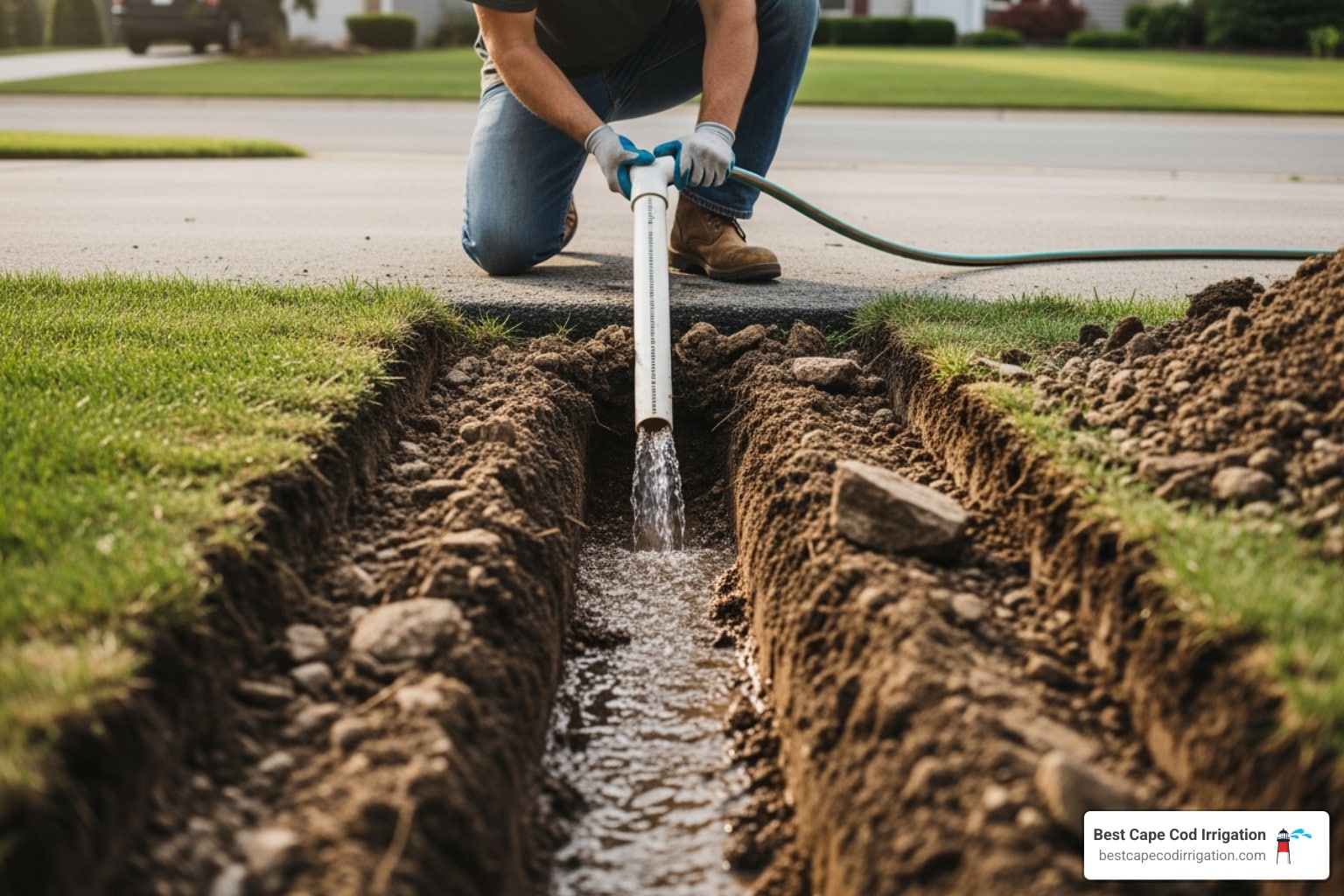
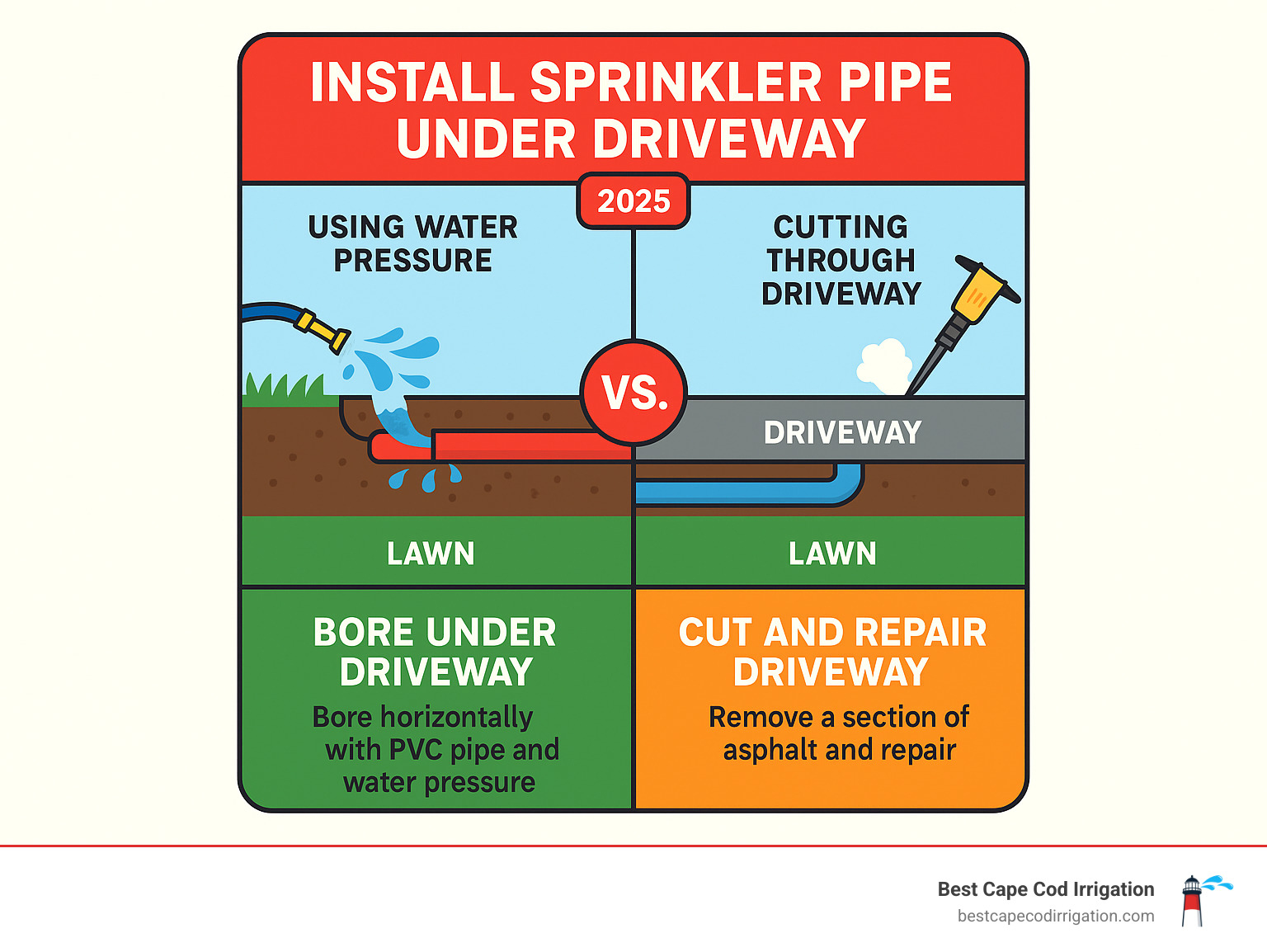
Dealing with a driveway when planning your sprinkler system can seem like a major roadblock. But it doesn’t have to be. Here’s a quick overview of how to install sprinkler pipe under driveway without breaking up your pavement:
- Prepare: Dig small trenches on both sides of your driveway, reaching the desired depth for your sprinkler lines (6-12 inches deep).
- Assemble: Create a simple boring tool using a section of PVC pipe, specific hose fittings, and your garden hose.
- Bore: Turn on the water and use the pressure to push the PVC pipe horizontally under your driveway, gently working it through the soil.
- Connect: Once the pipe is through, remove the boring fittings and connect it to your main irrigation system. No major excavation needed!
As a Cape Cod homeowner, getting water to every corner of your yard can be a challenge when a driveway cuts through it. Running irrigation lines under a solid driveway might seem impossible, historically involving costly, messy concrete removal.
But there’s a smarter way. This guide will walk you through a proven DIY method to get your sprinkler pipes under your driveway, saving you time and preventing damage. You’ll learn how to ensure your entire lawn gets the consistent watering it needs to stay vibrant.
While we specialize in professional irrigation installation, we understand the satisfaction of a successful DIY project. This article focuses on tackling one of the trickiest parts: getting your pipes across that paved obstacle. Let’s dig in!
Planning and Preparation: Your Blueprint for Success
Before you start, careful planning is crucial. A well-thought-out plan saves time, prevents headaches, and ensures your project runs smoothly, allowing you to successfully install sprinkler pipe under driveway.
Essential Tools and Materials
Getting the right tools upfront makes all the difference. Most of what you need is available at your local hardware store.
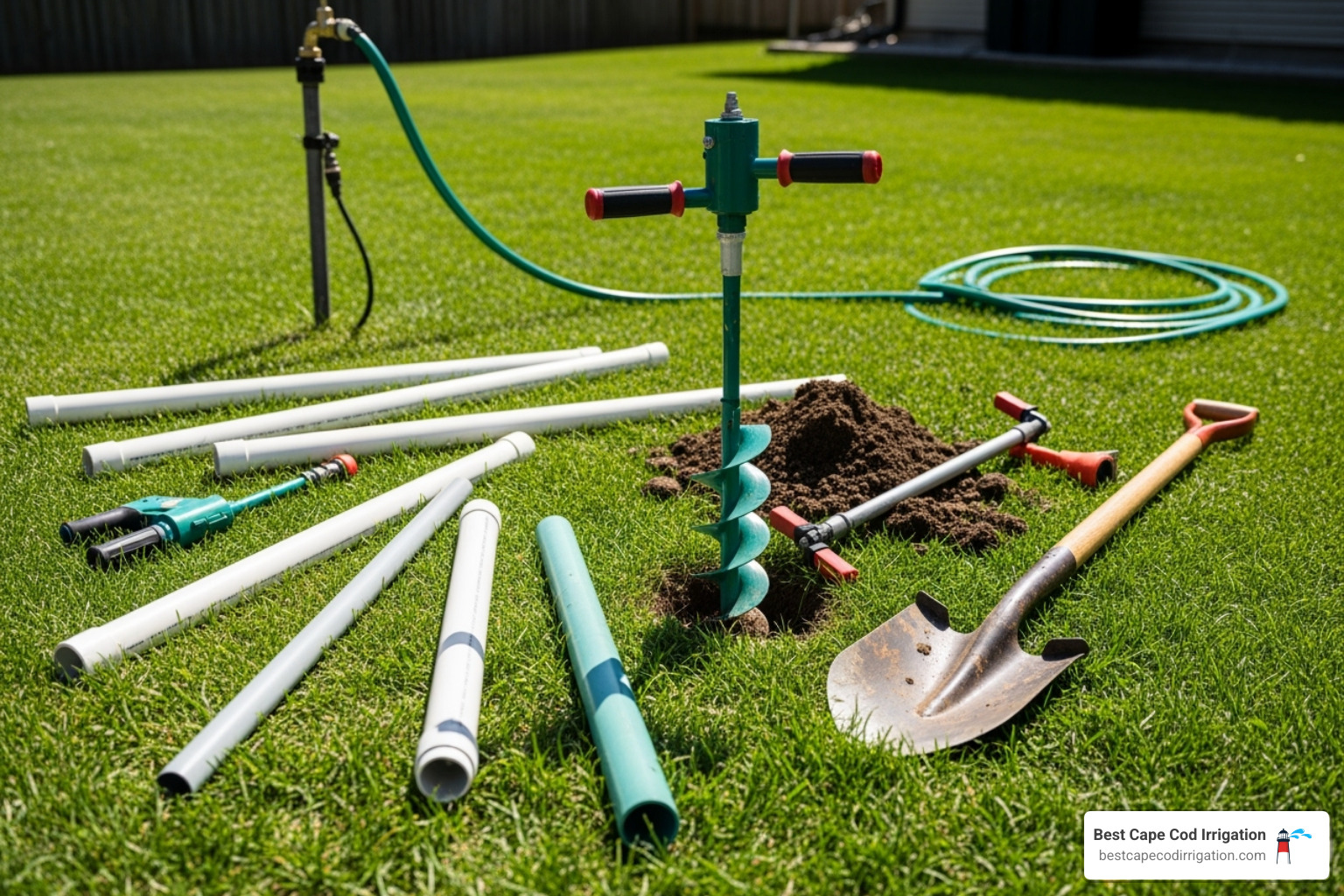
Your shovel or trencher is essential for digging the entry and exit trenches. A trenching shovel is helpful for Cape Cod’s sometimes stubborn soil. For the boring tool itself, you’ll need Schedule 40 PVC pipe – this heavier gauge pipe is tough enough to push through soil without breaking. Get a length that’s at least twice your driveway width, plus a few extra feet for maneuvering.
Don’t forget your PVC primer and cement for secure connections, a pipe cutter for clean cuts, and your garden hose to power the operation.
The boring kit includes specialized pieces: PVC male adapters, a brass hose swivel fitting to attach your garden hose, and a sweeper nozzle (though some prefer using the open pipe end). Round out your toolkit with a tape measure, level, safety glasses, and gloves.
Before You Dig: Safety First
This next step is critical. Before you put a shovel in the ground, you absolutely must call 811. This is not optional.
The 811 hotline connects you with local utility companies who will mark underground gas lines, power cables, and water mains. Hitting one of these can be dangerous, expensive, and potentially life-threatening. Skipping this step is never worth the risk. This commitment to safety is part of our safe installation process that we follow on every project.
Once utility lines are marked, plan your pipe route carefully. You want the straightest shot possible under your driveway while avoiding any marked utilities. You’ll typically be boring through soil, not solid rock.
Digging the Trenches
Now it’s time to break ground. You’ll need to create two trenches, one on each side of your driveway where your pipe will enter and exit.
For trench depth, aim for 12 to 18 inches deep when going under a driveway, especially considering the Cape Cod frost line. This extra depth protects your pipe from vehicle weight and future driveway work.
Your entry trench should give you plenty of room to work, extending a few feet back from the driveway edge. The exit trench mirrors this on the opposite side. Use your level to ensure the trench bottom stays level. This helps your boring pipe travel straight.
Finally, measure your driveway width accurately. This determines your pipe length and boring distance, saving guesswork later.
How to Install Sprinkler Pipe Under a Driveway: A Step-by-Step Guide
Now it’s time to put your planning into action. This section walks you through the water pressure method, a clever and effective DIY technique to install sprinkler pipe under driveway without a jackhammer.
Step 1: Assemble Your Boring Tool
Your boring tool is a specially modified section of PVC pipe that’s simple to assemble.
First, cut your PVC pipe. We recommend Schedule 40 PVC for its durability. You’ll want a piece that’s at least twice the width of your driveway, plus an extra 2 to 4 feet for maneuvering. For a 16-foot driveway, a 34-foot piece (or two 10-foot pieces coupled together) is ideal.
Next, prepare for fittings. With clean, smooth pipe ends, use PVC primer and cement to securely attach PVC male adapters to both ends. Prime first, then apply cement with a good twist for a strong bond.
Finally, connect your hose fittings. On one end, screw your brass hose swivel fitting onto the male adapter for your garden hose. On the other end, you can attach a sweeper nozzle. Some DIYers prefer an open pipe end, finding it just as effective and less likely to get stuck.
Step 2: The Boring Process
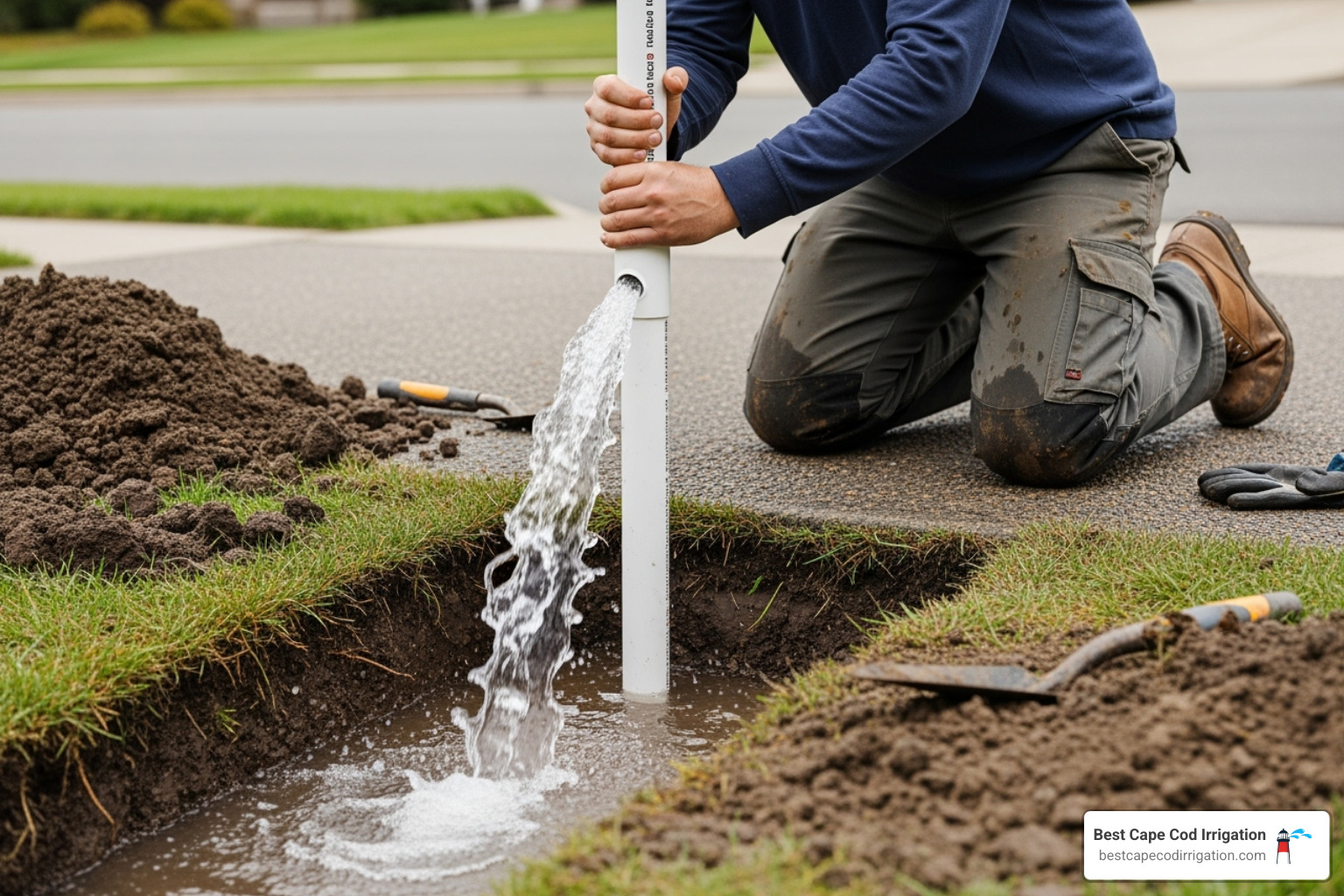
Now, let the water pressure do the hard work of loosening the soil so your pipe can glide through.
First, connect your garden hose to the brass swivel fitting on your boring tool. Then, position the pipe in your entry trench, aiming it straight under the driveway. Use a level to ensure the pipe is straight, which helps it go where you want without veering off course.
Next, turn on the water. Start with a moderate flow and gradually increase it. As water jets from the nozzle, begin to push and twist the pipe forward into the soil. Use a gentle, steady motion, letting the water break up the soil and flush it away.
If you hit resistance, don’t force it. Pull the pipe back slightly, let the water flow for 15-30 seconds to clear the obstruction, then try pushing again. This trick helps prevent creating large voids under your driveway that could lead to settling or cracking. Cape Cod’s sandy soil is generally perfect for this method, as it’s less likely to have large rocks or dense clay.
Step 3: Completing the Pass-Through
Keep up the steady pushing and twisting, and the nozzle end of your PVC pipe will emerge from the exit trench.
Once the pipe emerges on the other side, you’ve created your tunnel. Immediately turn off the water and disconnect the hose and fittings from both ends of the PVC pipe.

This PVC pipe can be your actual irrigation line or serve as a protective sleeve for another pipe or even electrical wiring for landscape lighting.
Step 4: Connecting to Your System
The final step is to hook the pipe up to your irrigation system.
First, if the pipe ends were damaged during boring, cut the pipe ends clean with your pipe cutter for a strong, leak-free connection.
Next, clean the pipe ends to remove any dirt. Then, use your PVC primer and cement to prime and glue fittings, applying primer first, then cement, to the outside of the pipe and inside of the fitting.
Finally, securely connect to your main irrigation line. Attach the necessary fittings (couplings, elbows) to link your new pipe to the rest of your system. Let the cement cure according to the manufacturer’s instructions before turning on the water.
If you run into trouble with connections or leaks, we offer professional pipe repairs to ensure your system runs perfectly.
Key Considerations and Best Practices
You’ve successfully bored a pipe under your driveway, but there are a few more important considerations. The water-jet method is fantastic, but it’s not a one-size-fits-all solution. Factors like your driveway’s material, soil type, and pipe depth all play a role in the success and longevity of your irrigation system. This ensures your system maintains its integrity for years to come.
Choosing the Right Method to Install Sprinkler Pipe Under Your Driveway
Not every driveway or soil condition is the same, especially on Cape Cod. What works in sandy soil might be a nightmare in dense clay. Here’s a comparison to help you decide if the DIY water-jet method is the best approach for your situation or if calling a professional is a better choice.
| Factor | DIY Water-Jet Boring | Hiring a Professional (Directional Boring) |
|---|---|---|
| Cost | Low ($50-$150 for kits/materials). Please note these are average costs based on internet data and not actual quotes for our services. | Moderate to High (can add $100 to over $900 to your total installation cost). Please note these are average costs based on internet data and not actual quotes for our services. |
| Tools | Shovel, PVC pipe, garden hose, basic fittings | Specialized hydraulic boring machines, trained operators |
| Time | Can be a few hours to a full day for DIY | Typically faster (hours), less labor-intensive for homeowner |
| Soil Conditions (Rocky/Clay) | Best for sandy or loose soil; very challenging/impossible in rocky or dense clay | Can handle a wider range of soil types, including rocky and dense clay |
| Driveway Length | Ideal for standard residential driveway widths (up to ~20 ft) | Suitable for any length, including very long or wide driveways |
| Risk of Damage | Low risk to driveway if done carefully; risk of creating voids if not careful | Minimal risk to driveway; precise control of boring path |
For most Cape Cod homeowners with sandy soil and standard-width driveways, the DIY water-jet boring method is a cost-effective and efficient solution to install sprinkler pipe under driveway.
What is the Best Pipe and Depth?
When installing pipes under a driveway, selecting the right material and depth is crucial for longevity and performance, especially with vehicle traffic and Cape Cod weather.
For pipe material, Schedule 40 PVC is your best bet. It’s a strong, rigid pipe whose stiffness helps it bore straight and hold its shape. While flexible Poly pipe is better for freezing temperatures, it isn’t recommended for boring directly due to its flexibility; it can wander off course. If you use poly pipe, run it through a larger, pre-bored PVC sleeve for protection.
For pipe diameter, we highly recommend at least 1-inch or 1.25-inch PVC for supply lines under a driveway. A larger diameter provides better GPM (gallons per minute) and pressure, ensuring your entire system gets adequate water flow without significant pressure drops.
Finally, burial depth is key. While most irrigation lines are buried 6 to 12 inches deep, lines under a driveway should be between 12 to 18 inches deep. This extra depth provides crucial protection from vehicle weight and ground settling. On Cape Cod, this deeper burial also helps keep the pipe below the frost line, preventing damage from freeze-thaw cycles.
Best Practices to Install Sprinkler Pipe Under a Driveway
To ensure your DIY project is a success, keep these pro tips in mind.
First, avoid large voids. When boring, let the water do the work. Pushing too hard can create empty pockets under your driveway, which can lead to settling or cracking. Slow and steady wins this race.
Always check for level. A consistent, level path ensures the pipe emerges where you expect it and prevents potential drainage issues or stress on the system.
Consider installing a larger sleeve pipe. You can bore a larger diameter PVC pipe (e.g., 2-inch or 4-inch) to act as a permanent conduit. Then, you can easily run your irrigation pipe (or even wiring for landscape lighting) through this protective sleeve. This makes future repairs or upgrades a breeze. Professionals sometimes use 4-inch green sewer pipe (ASTM D3034) for this purpose as a strong, cost-effective option.
Finally, think about future-proofing. While you’re at it, consider adding a second, empty conduit for future electrical runs or another irrigation zone. This small extra effort can offer huge future convenience.
For more hands-on advice and community-driven solutions from fellow DIYers, you can always Get more DIY tips from community forums.
Frequently Asked Questions about Installing Pipe Under a Driveway
We’ve helped countless Cape Cod homeowners tackle this challenge and have heard every question. Here are the most common ones, with answers from our decades of experience.
What are the biggest risks of a DIY installation?
While this project is doable for many homeowners, there are genuine risks to be aware of when you install sprinkler pipe under driveway.
Hitting an unmarked utility line is the scariest possibility. Even after calling 811, there’s a small chance of encountering an unmarked gas line, electrical cable, or water main, which can create a dangerous and expensive emergency.
Creating a large void under the driveway is the most common mistake. Pushing too hard with too much water pressure can wash out excess soil, leaving a hollow space that can cause your driveway to settle, crack, or collapse later.
The pipe getting stuck halfway is incredibly frustrating. An unexpected rock, dense clay, or buried debris can halt your progress and turn a DIY project into a call for professional help.
Proper planning and proceeding slowly can prevent most of these headaches. Call 811, understand your soil, and don’t rush.
How much does it cost to run a pipe under a driveway?
The cost varies depending on your approach.
For the DIY route, you’re looking at $50 to $150 for boring kits and materials, plus the cost of PVC pipe, primer, and cement. Most projects stay under $200.
Hiring a professional is more expensive but sometimes worth it. This task can add $100 to over $900 to your total sprinkler system installation cost. The range depends on driveway width, material, and soil conditions. Rocky soil or a long driveway will be on the higher end.
Please note these are average costs based on internet data and not actual quotes for our services.
A complete sprinkler system typically runs $2,000 to $4,500 for most Cape Cod homes, so this is just one piece of the puzzle.
When should I call a professional?
While DIY is rewarding, sometimes it makes more sense to call a professional. Here’s when to consider it.
Exceptionally long or wide driveways are challenging, as it’s harder to keep the bore straight and prevent the pipe from getting stuck.
Thick, reinforced concrete driveways often have dense sub-bases that are difficult for water-jet boring to penetrate.
Rocky or dense clay soil is where DIY methods often fail. A professional’s directional boring equipment can power through conditions that would stop a PVC pipe.
Limited time or patience is a valid reason to call us. Rushing this project leads to mistakes and expensive repairs.
A professional has specialized equipment that makes the job faster and safer, especially in challenging conditions. For residents in the Cape Cod area, the expert team at Best Cape Cod Irrigation can handle the entire process for you.
Get a Flawless Finish Without Damaging Your Driveway
Successfully getting that sprinkler pipe under your driveway is a huge win, and the satisfaction of a DIY job well done is hard to beat.
This method allows you to enjoy a lush, vibrant lawn with a fully integrated irrigation system, without the expense of tearing up your pavement. A healthy, consistently watered lawn boosts your home’s curb appeal and property value. With your pipes tucked safely away, you’re setting your system up for long-term health.
But not every project is a DIY dream, especially with Cape Cod’s tricky soil or if you simply prefer a guaranteed result. That’s where the experts at Best Cape Cod Irrigation come in.
With over 25 years of regional know-how on Cape Cod, we understand local conditions. We’re ready to design and install a custom, eco-friendly system for worry-free watering. Whether you’ve tackled the driveway hurdle yourself or you’d rather we handle the whole irrigation installation, we’re here to help you achieve the lawn of your dreams.
Ready to get started? Contact us today to schedule your irrigation installation!