



Why Drip Irrigation Maintenance Is Essential
Drip irrigation maintenance is critical for keeping your garden healthy and your water bills low. Here’s what you need to know:
- Check filters monthly – Clean or replace clogged filters
- Flush lines seasonally – Minimum 3 times per year with clean water
- Inspect emitters regularly – Look for clogs, leaks, or damage
- Monitor pressure – Keep between 20-50 psi for optimal performance
- Winterize system – Prevent freeze damage before temperatures drop below 37°F
Proper maintenance of your drip irrigation system isn’t just about preventing problems—it’s about ensuring your garden thrives while conserving water. As the saying goes, “an ounce of prevention is worth a pound of cure,” and nowhere is this more true than with drip irrigation systems.
Drip irrigation delivers water directly to plant roots, reducing evaporation and runoff. When properly maintained, these systems can achieve water use efficiencies of up to 90-95%, compared to just 60-70% for traditional sprinkler systems. However, without regular care, even the best-designed systems can fail.
Most drip irrigation problems occur during the driest times of the year—precisely when your plants need water most. Regular maintenance helps ensure your system operates efficiently when you need it most, extending its lifespan from less than 10 years (poorly maintained) to 15-20 years (well-maintained).
Studies show that emitter clogging causes up to 50% of drip system failures. This is why checking and cleaning filters regularly can reduce clogging incidents by up to 80%. Whether you’re growing vegetables, maintaining landscape beds, or caring for container plants, a well-maintained drip system is your best ally for a healthy, water-efficient garden.
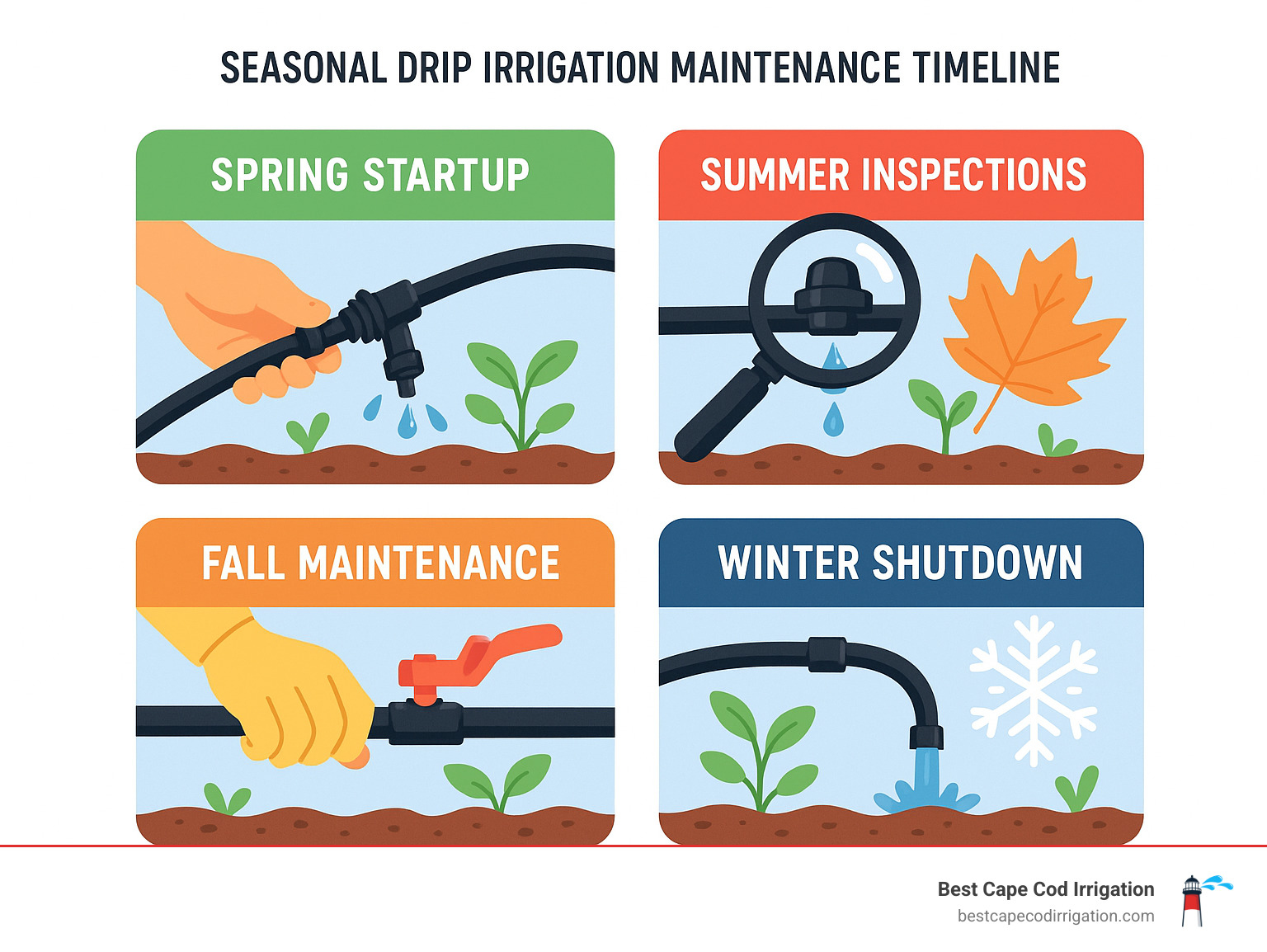
Why Regular Drip Irrigation Maintenance Matters
Let’s face it—water is precious, especially here on Cape Cod. That’s why the efficiency of your drip irrigation system matters so much for both your garden’s health and your water bill. When you keep your system in tip-top shape, you’re looking at an impressive 90-95% water efficiency compared to traditional sprinklers that typically hover around 60-70%. That’s a difference you’ll notice both in your plants’ vitality and your monthly water costs.
Think of your drip system as a long-term investment. With proper care, these systems can faithfully serve your garden for 15-20 years. Neglect the maintenance, though, and you might be looking at replacement in less than a decade. The math is pretty simple—a little attention now saves a lot of money later.
According to scientific research on system performance, about half of all drip irrigation maintenance issues stem from clogged emitters. When those tiny water outlets get blocked, your plants receive uneven water, leading to stressed vegetation, wasted resources, and potentially costly plant replacement. Regular check-ups can catch these problems before your garden suffers.
What Is Drip Irrigation & How It Works
Drip irrigation maintenance starts with understanding how your system actually works. At its heart, drip irrigation is a remarkably simple concept—deliver water directly to plant roots through a network of pipes and emitters.
Your system begins with main lines that connect to your water source. These feed into submains (the secondary pipes), which branch out to laterals (the smaller tubes that run alongside your plants). Finally, the water reaches emitters—those crucial little devices that regulate water flow directly to your plants’ root zones.
The entire operation runs at a gentle pressure of about 20-50 psi. This low-pressure approach is exactly what makes drip irrigation so efficient. Instead of spraying water into the air where it can evaporate or blow away, drip systems place water precisely where plants need it most—at their roots.
Benefits of Consistent Drip Irrigation Maintenance
When you commit to regular drip irrigation maintenance, you’re setting yourself up for multiple rewards that go well beyond basic watering:
Your plants receive uniform water distribution, eliminating those frustrating dry spots that can plague even the most attentive gardeners. Every plant gets its fair share—no more, no less.
Your wallet stays happier too. The small, consistent investment in preventive maintenance almost always costs less than emergency repairs or complete system replacement. It’s like changing your car’s oil regularly instead of waiting for the engine to fail.
Disease prevention becomes a natural benefit as well. By keeping foliage dry and delivering water directly to roots, properly maintained drip systems help your plants stay healthier with fewer fungal and bacterial issues.
The return on investment becomes clear over time—water savings add up, plants thrive rather than struggle, and your system keeps working year after year without costly overhauls.
Perhaps most importantly for our Cape Cod community, the environmental benefits are substantial. Water conservation matters deeply in our coastal region, where groundwater protection is a priority for everyone.
We’ve seen across Cape Cod—from the clay soils of Falmouth to the sandy stretches of Wellfleet—that well-maintained drip systems provide years of trouble-free operation, even in our unique coastal conditions. A little attention goes a remarkably long way in keeping your garden green and your water usage lean.
Drip Irrigation Maintenance Essentials
The foundation of effective drip irrigation maintenance is understanding the essential components that require regular attention. These core maintenance tasks will keep your system running efficiently throughout the growing season.
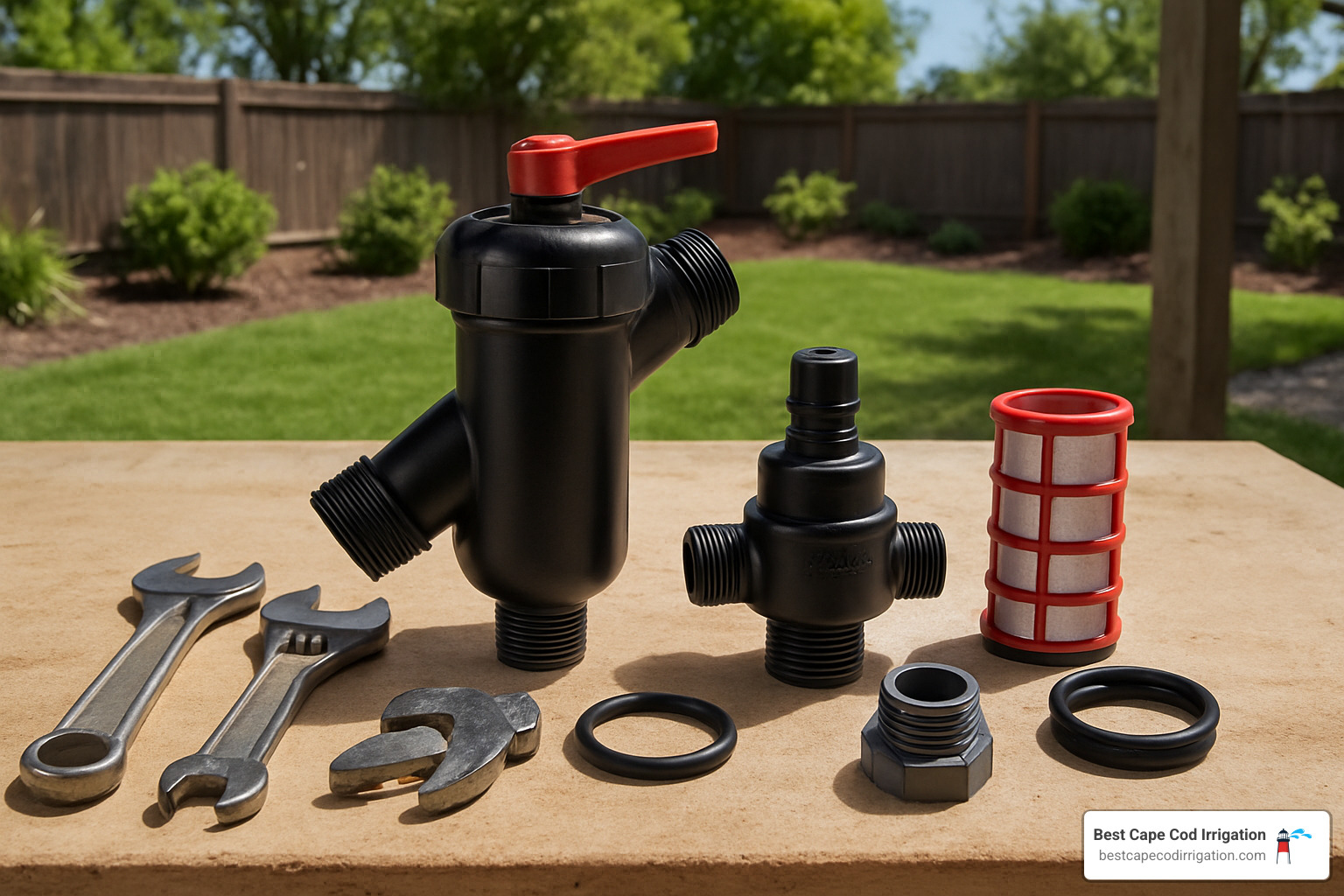
Routine Inspection Checklist
Regular visual inspections are your first line of defense against potential problems. We recommend conducting a thorough walk-through of your system at least once a month during the growing season, and more frequently during peak summer months. Here’s what to look for:
- Visual assessment: Walk your property while the system is running and look for:
- Wet spots or puddles that might indicate leaks
- Dry areas suggesting clogged emitters
- Plants showing signs of water stress
- Exposed tubing that could be damaged by UV exposure or lawn equipment
- Check for leaks: Examine all connections, fittings, and tubing for:
- Water spraying or seeping from connections
- Damaged tubing from wildlife, rodents, or mechanical damage
- Loose fittings that may have worked free during pressure cycles
- Inspect for UV damage: Look for:
- Brittle, cracked, or discolored tubing
- Tubing that’s difficult to bend or has lost flexibility
- Emitters that have become brittle or discolored
- Monitor pressure: System pressure should remain consistent within ±10% of your target pressure (typically 20-50 psi). Significant pressure variations often indicate problems that need attention.
- Check emitter output: Periodically verify that emitters are delivering the expected amount of water by collecting and measuring output over a set time period.
In Cape Cod’s sandy soils, proper water distribution is especially important, as water can quickly drain away from root zones if not delivered consistently.
Primary Keyword Tasks: Drip Irrigation Maintenance Schedule
A consistent maintenance schedule is the key to preventing problems before they start. Based on our 25+ years of experience on Cape Cod, we recommend the following drip irrigation maintenance schedule:
Weekly Tasks:
– Quick visual inspection of the system while running
– Check filter pressure differential (if equipped with pressure gauges)
– Spot-check several emitters for proper flow
– Look for any obvious leaks or damaged components
Monthly Tasks:
– Clean or replace filters
– Flush main and submain lines if water quality is poor
– Check system pressure and adjust if needed
– Inspect valves and controller for proper operation
– Look for signs of rodent or wildlife damage to exposed tubing
Seasonal Tasks (3 times per year minimum):
– Complete system flush (mains, submains, and laterals)
– Chemical treatment if necessary (chlorination, acid treatment)
– Comprehensive emitter check and cleaning
– Controller programming review and adjustment
– Complete system pressure test
– Filter deep cleaning or replacement
Annual Tasks:
– Replace any damaged components
– Update system as needed for landscape changes
– Winterize system before freezing temperatures (critical in Massachusetts)
– Spring recommissioning after winter
For systems using clean municipal water, three complete flushes per season is typically sufficient. However, for systems using well water or water with higher mineral content (common in some Cape Cod areas), we recommend flushing at least once every fourth irrigation cycle.
Flushing & Cleaning Your System Like a Pro
Proper flushing and cleaning are fundamental aspects of drip irrigation maintenance that prevent clogging and ensure consistent water flow. Following the correct procedures will significantly extend your system’s life and maintain peak performance.
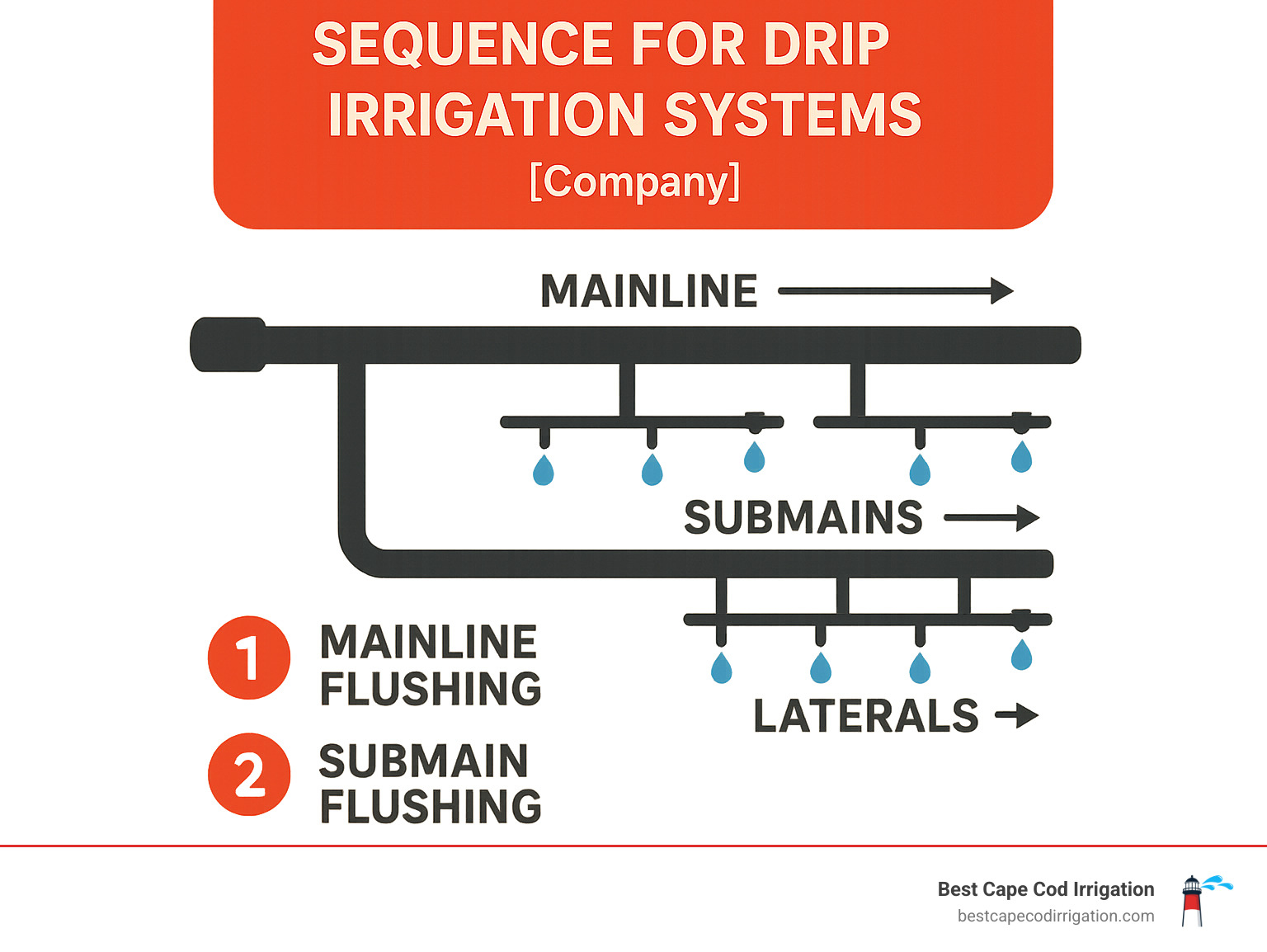
How to Properly Flush Mains, Submains & Laterals
Think of flushing your drip system like cleaning a house—you start from the top and work your way down. Always follow the direction of water flow: mainlines first, then submains, and finally laterals. This prevents you from simply pushing debris from one section into another.
For mainline flushing, close all your zone valves before opening the end cap or flush valve on the mainline. Let the water run for at least 2 minutes or until it runs clear—you might be surprised at what comes out! Once clear, close the end cap and repeat for each mainline section.
With your mainlines clean, move on to the submains by opening one zone valve at a time. Open the end cap on each submain, run water until clear, then close it up. This methodical approach ensures each section gets properly cleaned.
Finally, tackle your lateral lines by opening their end caps and running water until clear, typically 2-3 minutes. For best results, only flush a few laterals at once to maintain adequate flow velocity—at least 0.5 m/s is needed to effectively sweep away sediment.
“I always tell my Cape Cod customers to think of system flushing like changing your car’s oil,” says our senior technician. “You can skip it, but eventually you’ll pay a much higher price in repairs.”
If your system doesn’t have flush valves installed, consider adding them during your next upgrade—they’re worth their weight in gold for maintenance. For larger properties, automatic flush valves that operate at system startup can save hours of manual work each season.
Chemical Treatments for Tough Clogs
Sometimes water alone just won’t cut it, especially with our mineral-rich Cape Cod well water. When stubborn clogs persist, it’s time to bring in chemical reinforcements.
Chlorination works wonders for organic matter buildup. Aim for 0.5-2 ppm free chlorine at the furthest dripper, inject the solution at your system’s injection point, and run for 10-15 minutes to distribute it throughout. Then shut down for 2-24 hours to let the chlorine work its magic before thoroughly flushing the system.
Hydrogen peroxide offers a more environmentally friendly alternative that’s particularly effective on organic matter. Follow manufacturer guidelines for dilution (typically using a 35-50% solution), inject it into your system, allow circulation, and flush thoroughly afterward.
For those pesky mineral deposits—common in many Cape Cod water systems—acid treatment is your best bet. Perform an acid titration test first to determine the correct concentration, aiming for a pH of 2-4. Always add acid to water, never water to acid (a little chemistry class flashback for you). After injection, run your system for 30-60 minutes, then let it sit before flushing thoroughly.
Safety should always come first when handling these chemicals. Wear appropriate protective equipment (gloves, eye protection, proper clothing), and ensure you have proper backflow prevention installed to protect your water source. If you’re unsure about chemical treatments, our team at Best Cape Cod Irrigation can handle this for you safely and effectively.
Preventing Emitter Clogging—Your Drip Irrigation Maintenance Must-Do
Emitter clogging accounts for about half of all drip irrigation failures, making prevention absolutely essential. Think of your emitters as the lungs of your system—when they can’t breathe, nothing works right.
Proper filtration is your first line of defense. For standard drip emitters, use 120-mesh filters, but upgrade to 155-mesh filters for drip tape with smaller orifices. Sprinkler nozzles can get by with 80-mesh filters. Clean these filters regularly—more frequently with well or pond water (which many Cape Cod homes use) and less often with municipal water.
Choosing the right emitters for your specific situation makes a huge difference in long-term maintenance needs. For Cape Cod’s often hilly terrain, pressure-compensating emitters ensure even water distribution. If you’re in an area with hard water (common in parts of Barnstable and Yarmouth), cleanable emitters are worth the extra investment. For particularly problematic water sources, select emitters with larger flow paths that are less prone to clogging.
Water quality monitoring gives you valuable information for tailoring your maintenance schedule. After 25 years of working with Cape Cod irrigation systems, we’ve seen how our regional water quality varies dramatically from one town to the next. Testing your water source for pH, mineral content, and organic matter allows you to customize your approach.
Implement a consistent preventive flushing routine, especially after applying fertilizers which can contribute to clogging. For properties with hard water, you’ll need more frequent flushing—some of our clients in areas with particularly mineral-rich water benefit from continuous low-dose treatments.
“The most expensive drip irrigation system is the one you have to replace because of poor maintenance,” as we often remind our clients from Falmouth to Chatham. A little attention now saves a lot of headaches (and money) later.
For more information about smart chemigation approaches that can extend your system’s life, check out our smart irrigation solutions.
Troubleshooting & DIY Repairs
Even with diligent drip irrigation maintenance, occasional repairs will be necessary. Being prepared with the right tools and knowledge can save you time, money, and plant stress when problems arise.
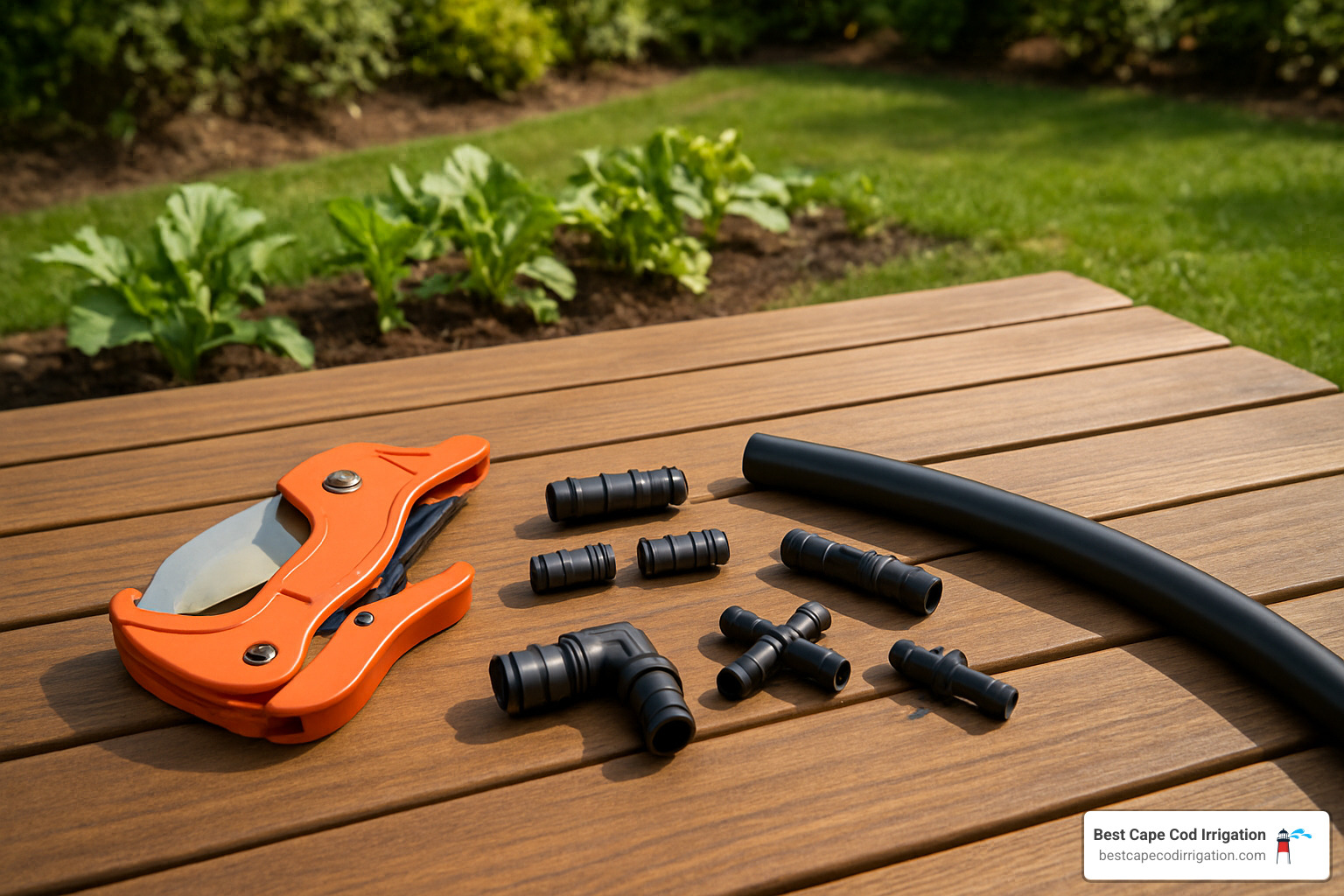
Fixing Leaks and Damaged Tubing
I can’t tell you how many times I’ve seen a beautiful garden suddenly develop dry patches because of a sneaky leak in the drip system! Leaks and damaged tubing are especially common here on Cape Cod where we have our share of curious wildlife and active gardeners.
Before tackling any repair, always turn off your water supply first—trust me, you’ll stay much drier that way! When you spot a leak, grab your hose cutters (not your kitchen scissors—they’ll never be the same) and make clean, straight cuts to remove the damaged section.
The secret to a successful repair is matching your connectors correctly. For barb fittings, focus on the inner diameter of your tubing, while compression fittings need to match the outer diameter. Here’s a pro tip we’ve learned after 25 years on Cape Cod: hand-tighten only! Over-enthusiastic tightening with tools can crack your fittings faster than you can say “sprinkler system.”
For those annoying little pinhole leaks, keep some goof plugs and poly tubing repair tape in your maintenance kit. They’re perfect quick fixes, though if you find a section with multiple small holes, it’s usually better to replace the whole piece. Once you’ve made your repair, don’t forget to cover the area with mulch or soil to prevent UV damage—the Cape Cod sun can be brutal on exposed tubing.
Dealing With Clogged Emitters
Clogged emitters are like having a kink in your garden hose—frustrating and surprisingly common. When you notice a plant looking thirsty despite your irrigation system running, a clogged emitter is often the culprit.
For cleanable emitters, the fix is relatively simple. Remove the emitter from the tubing and give it a nice vinegar bath for about 30 minutes—the acidity works wonders on mineral deposits, which are common in many Cape Cod water systems. After soaking, a gentle scrub with a small brush or toothpick usually does the trick. Rinse thoroughly before reinstalling.
Non-cleanable emitters require a different approach. Simply cut out the clogged one and replace it with a new emitter of the same flow rate. If you find yourself doing this frequently in certain areas, consider upgrading to cleanable models—your future self will thank you!
Want to check if your emitters are working properly? Here’s a simple test we teach our Cape Cod clients: place the emitter in a container, run it for exactly 36 seconds, then measure the collected water in milliliters. Multiply by 100 to get the flow rate in liters per hour. This should match the manufacturer’s specifications within about 5%. If not, it’s time for a cleaning or replacement.
Primary Keyword Focus: Drip Irrigation Maintenance Safety Tips
Safety might not be the most exciting aspect of drip irrigation maintenance, but it’s definitely the most important. This is especially true when working with chemicals or making repairs.
When handling chemicals for cleaning your system, always remember the golden rule: acid goes into water, never the reverse! I’ve seen the splashing that can happen when this rule is ignored, and trust me, you don’t want that experience. Always wear appropriate protective gear—gloves and eye protection at minimum—and store all chemicals in their original containers away from curious kids and pets.
Before opening any part of your system for repairs, release the pressure first. Think of it like opening a soda bottle—you’d give it a gentle twist to release the pressure before opening it completely, right? The same principle applies here, just with potentially more spray if you skip this step!
Electrical safety is another crucial consideration, particularly in our sometimes damp Cape Cod environment. Ensure all electrical connections are properly grounded and use waterproof connections for outdoor wiring. Always turn off the power before servicing electrical components—a rule that’s saved many of our technicians from a shocking experience over the years.
Being mindful of our unique Cape Cod environment is also important during maintenance. When flushing your system or using chemical treatments, be aware of where that water goes. Our sandy soils and proximity to sensitive wetlands mean we need to be especially careful about what we put into the ground.
While DIY repairs can save money, there’s no shame in calling in the professionals when needed. At Best Cape Cod Irrigation, we’ve seen it all in our 25+ years of experience, and sometimes a quick service call can save you hours of frustration and prevent costly mistakes.
Monitoring Tech, Records & Seasonal Care
Modern technology has revolutionized drip irrigation maintenance, making it easier than ever to keep your system running smoothly year-round. Think of these tools as your garden’s health monitors—they’ll help you catch small issues before they become big problems.
Using Technology to Track System Health
Gone are the days of guessing whether your irrigation system is working properly. Today’s smart technology gives you real-time insights that can save water, time, and money.
Flow meters have become game-changers for many of our Cape Cod clients. These devices track exactly how much water your system uses, helping you spot hidden leaks that might otherwise go unnoticed for weeks. When you notice your usage creeping up without explanation, it’s often your first clue that something needs attention.
Pressure sensors work like your system’s blood pressure monitor. They help you maintain that sweet spot between too much pressure (which can damage components) and too little (which leads to poor water distribution). We’ve found that placing sensors at strategic points throughout larger systems helps identify problem areas quickly. When pressure drops in one zone but not others, you know exactly where to start looking.
Soil moisture sensors have been particularly valuable for our clients with sandy Cape soils, where water drains quickly. These sensors tell you what’s happening beneath the surface, so you can water based on what your plants actually need rather than guessing. Many of our clients have been surprised to find some areas need half as much water as they’d been applying, while others needed more!
Smart controllers represent the brain of modern irrigation systems. They can automatically adjust watering schedules based on weather forecasts, saving you from that classic Cape Cod gardener’s frustration—coming home to find your system running during a rainstorm. Many of our clients love being able to check on their system from their phones, especially those who only visit their Cape homes seasonally.
For larger properties, mapping and imaging technology helps identify patterns that might not be visible at ground level. A section of yellowing grass or struggling plants often points to irrigation issues long before you’d notice a problem with the hardware itself.
More info about smart irrigation solutions
Record-Keeping & When to Call the Pros
Good record-keeping might not be the most exciting part of garden maintenance, but it’s like having a health history for your irrigation system. When something goes wrong, these records become invaluable.
Keep track of when you clean filters, flush lines, and perform chemical treatments. Note any repairs you make, along with the dates and specific parts replaced. If possible, record pressure readings periodically—a gradual decline often signals developing problems.
Pay special attention to emitter discharge measurements. When outputs vary by more than ±5% from their specifications, it’s time to investigate. Small variations are normal, but larger ones indicate issues that need addressing.
After 25 years of serving Cape Cod homes from Sandwich to Provincetown, we’ve learned that certain situations clearly call for professional help:
Persistent pressure problems that basic troubleshooting can’t fix often indicate deeper system issues. When emitters throughout your system show significant variation despite your best maintenance efforts, it’s time for expert diagnostics. Electrical problems with controllers or wiring can be particularly tricky and sometimes dangerous for DIY repair.
Water quality issues are especially common in certain Cape Cod areas with high mineral content. If you’re fighting a constant battle against clogging despite regular maintenance, professional water treatment solutions might be necessary.
In our Massachusetts climate, proper winterization is critical. A single missed drain point can lead to cracked pipes and expensive spring repairs. Many of our clients find that professional winterization and spring startup services provide peace of mind worth far more than their cost.
System upgrades require careful planning to ensure compatibility with existing components. What seems like a simple addition can create pressure problems throughout your entire system if not properly designed.
Even if you’re comfortable handling routine maintenance, an annual professional inspection can catch developing problems before they cause damage. Think of it like your annual physical—preventive care that saves money in the long run.
More info about Schedule Maintenance
Whether you’re a dedicated DIY gardener or prefer to leave the technical work to professionals, understanding these monitoring technologies and maintenance practices will help keep your drip irrigation system performing efficiently for years to come.
Frequently Asked Questions about Drip Irrigation Maintenance
How often should I inspect my drip system?
A question I hear all the time from Cape Cod homeowners is about inspection frequency—and it’s a great question! For most gardens, I recommend a quick weekly walk-through during growing season, just to catch any obvious issues while they’re small. Think of it as a casual garden stroll with purpose.
For more thorough inspections, monthly is the sweet spot. And at the bare minimum, every system needs three complete check-ups yearly: when you wake it up in spring, during peak summer use, and before tucking it in for winter.
Here on Cape Cod, our specific climate dictates a slightly customized schedule:
– Spring (April-May): This is your comprehensive startup inspection—think of it as your system’s annual physical
– Summer (July): Mid-season tune-up when your system is working hardest
– Fall (October): Pre-winter inspection and winterization to prevent freeze damage
If you’re using well water (as many Cape homeowners do), you’ll likely need more frequent attention. Our local groundwater often contains minerals that can build up in your system faster than municipal water. A good rule of thumb: if you notice mineral deposits on your faucets or showerheads, your drip system is dealing with the same issue.
What chemicals are safe for cleaning and at what dose?
When it comes to chemical cleaning, safety should always be your priority. I’ve helped countless Cape Cod gardeners steer this aspect of drip irrigation maintenance, and there are three reliable options I typically recommend:
Chlorine (Sodium Hypochlorite/Bleach) works wonders for organic matter like algae and bacteria. For everyday treatment, aim for 0.5-2 ppm free chlorine at your furthest dripper. If you’re doing continuous treatment, 1-2 ppm is ideal, while shock treatments might require 10-20 ppm for 30-60 minutes.
Here’s a practical example: If you have a 90 gpm system and you’re targeting 3 ppm using standard 5.25% household bleach, you’d want to inject at 0.31 gallons per hour. Not too complicated once you get the hang of it!
Hydrogen Peroxide has become increasingly popular among environmentally-conscious Cape Cod homeowners. Typically used at 35-50% concentration, it breaks down into water and oxygen, leaving no harmful residues. It works faster than chlorine and is particularly effective against organic matter.
For mineral deposits (a common issue in several Cape Cod towns), acids are your best friend. You’ll want to target a pH between 2-4 for effective cleaning. Professional-grade options include nitric (60%), sulfuric (90-96%), phosphoric (75-85%), or hydrochloric (30-35%) acids. For DIY enthusiasts working on small systems, plain white vinegar works surprisingly well for cleaning individual emitters.
Remember the golden rule: always add acid to water, never water to acid. And please, wear appropriate safety gear—your eyes and skin will thank you!
When is it time to hire a professional?
While many drip irrigation maintenance tasks are perfectly manageable for homeowners, there are definitely times when calling in the pros makes sense. After 25+ years of helping Cape Cod residents with their irrigation needs, I’ve found these situations typically warrant professional help:
When water quality issues persist despite your best maintenance efforts, it’s often time for expert analysis. The unique water profiles across different Cape towns—from Falmouth to Chatham—sometimes require specialized treatments.
Before and after winter is critical in our Cape Cod climate where freezing temperatures can wreak havoc on improperly winterized systems. Proper winterization and spring startup are specialized services that protect your investment.
If you notice your system’s performance declining significantly (more than 5-10% variation in emitter output), this often indicates deeper issues that benefit from professional diagnosis.
Chemical treatments, while effective, can be intimidating. If you’re uncomfortable handling these substances, there’s no shame in calling in help—safety first!
System upgrades or expansions should integrate seamlessly with your existing setup, and a professional can ensure compatibility and optimal performance.
Unusual pressure fluctuations that basic troubleshooting doesn’t resolve often require specialized equipment to diagnose and fix.
An annual professional inspection can catch subtle problems before they become costly repairs—think of it as preventive medicine for your irrigation system.
And finally, when planning landscape changes that might affect irrigation needs, professional guidance can save you from expensive trial and error.
At Best Cape Cod Irrigation, we’ve developed our maintenance programs specifically for the unique challenges of Cape properties—from sandy soils to salty air and everything in between. Our technicians aren’t just irrigation experts; they’re Cape Cod irrigation experts who understand the specific challenges our local environment presents.
Conclusion
Let’s face it—your garden’s success story begins with drip irrigation maintenance. It’s not just about fixing problems when they arise; it’s about creating a proactive relationship with your irrigation system that prevents issues before your plants suffer.
Think of maintenance as an investment rather than a chore. Those few minutes you spend each week checking emitters or that monthly filter cleaning session translate directly into healthier plants, lower water bills, and a system that will serve you faithfully for decades rather than years.
Here on Cape Cod, we face unique challenges that make proper maintenance even more crucial. Our sandy soils drain quickly, requiring consistent and reliable irrigation. Our seasonal temperature swings demand proper winterization and spring startup procedures. And our commitment to protecting our fragile coastal environment makes water conservation not just financially smart but environmentally responsible.
After 25+ years of helping Cape Cod gardeners from Falmouth to Provincetown, we’ve seen how properly maintained systems flourish while neglected ones falter—especially during those critical hot summer weeks when your garden needs water most.
Whether you’re a hands-on gardener who enjoys the satisfaction of maintaining your own system or someone who prefers to leave it to the professionals, establishing a regular drip irrigation maintenance routine is one of the smartest decisions you can make for your landscape.
At Best Cape Cod Irrigation, we’re passionate about helping our neighbors maintain efficient, reliable irrigation systems that work in harmony with our unique local conditions. From seasonal tune-ups that keep your system running smoothly to comprehensive smart system upgrades that take water efficiency to the next level, we bring decades of Cape-specific expertise to every property we service.
Ready to ensure your drip irrigation system is performing at its best? Contact us today for a professional system evaluation. Your garden will thank you with lush growth, and your water bill will show the savings!
