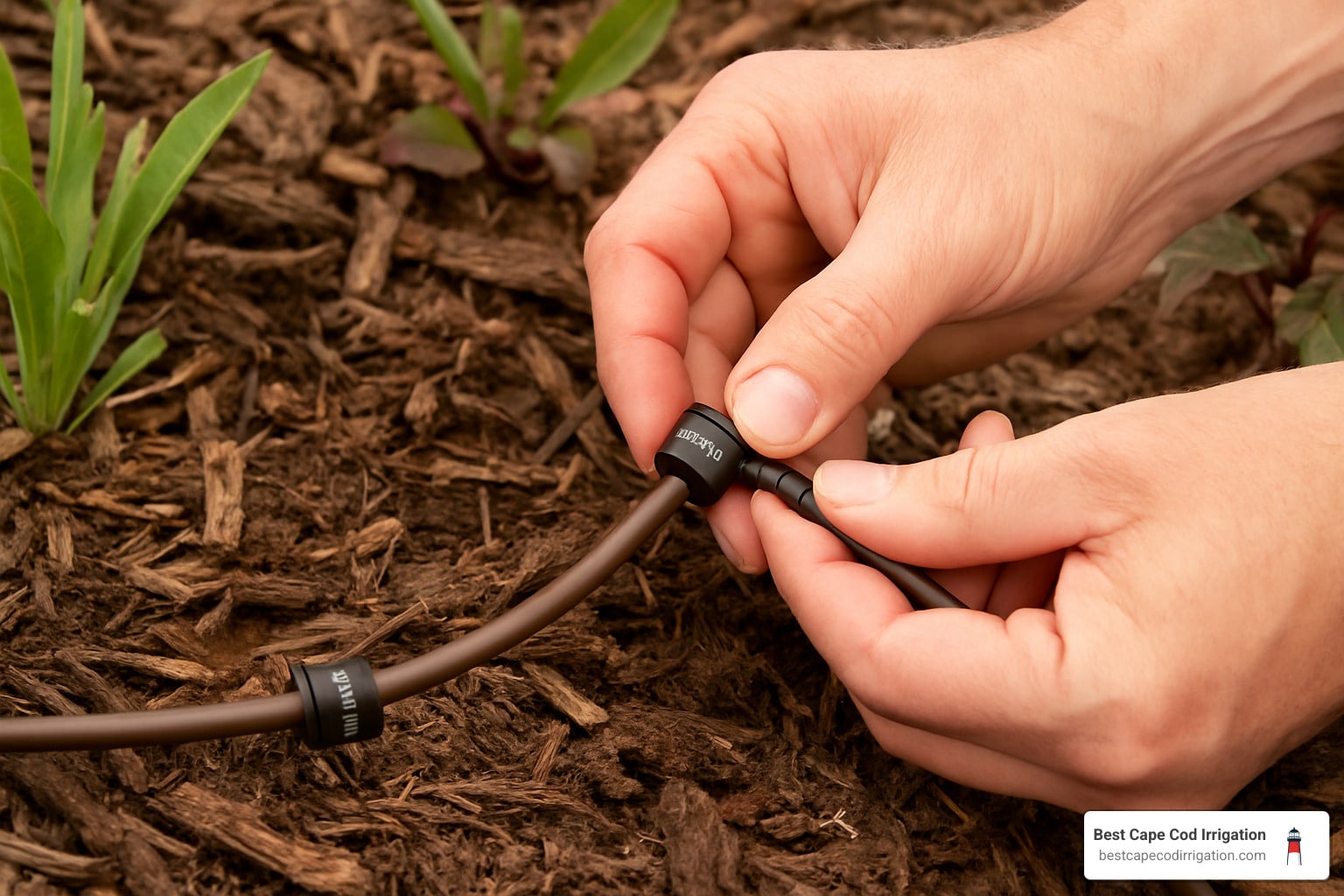



The Smarter Way to Water: Why Drip Irrigation Makes Sense for Cape Cod
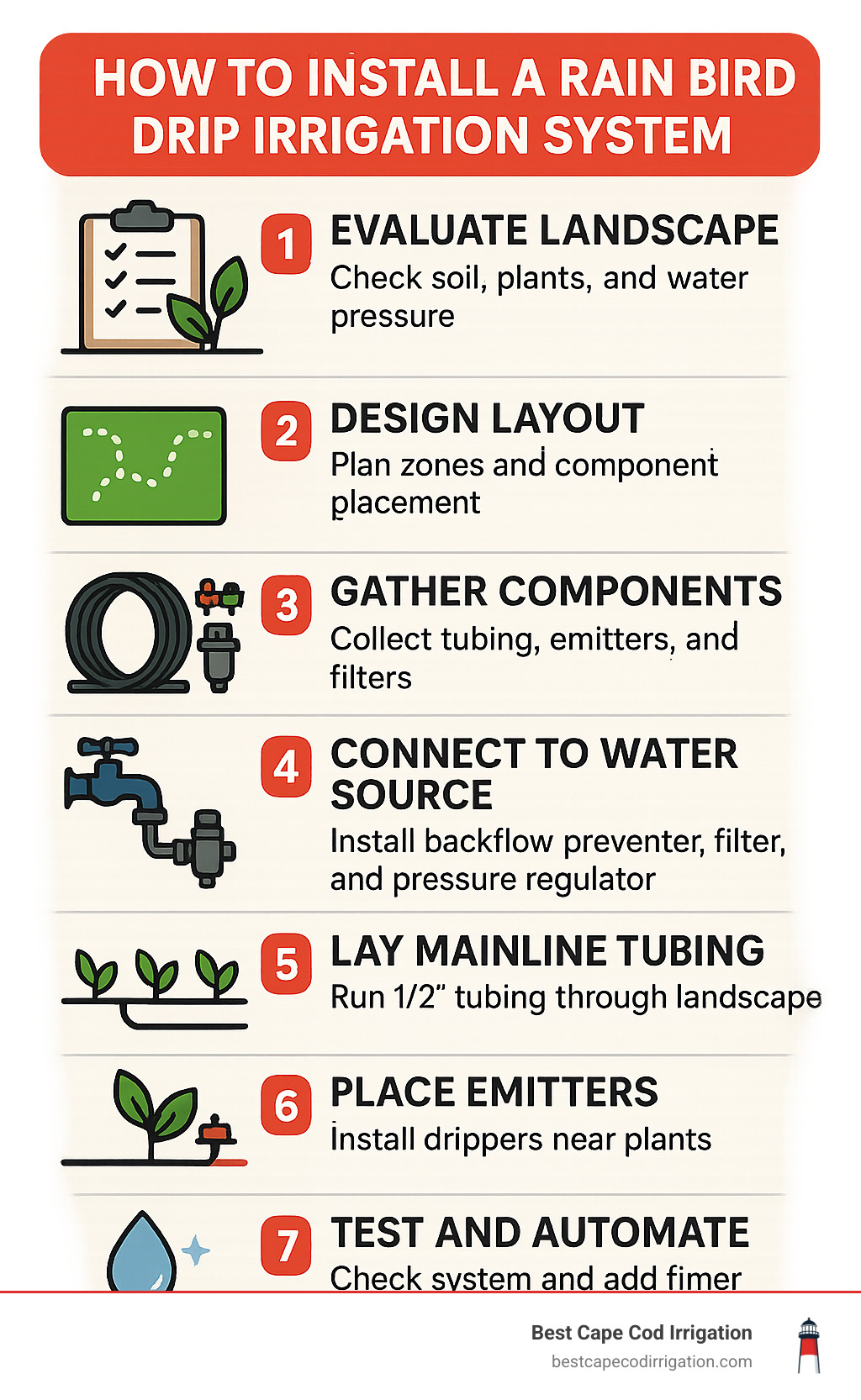
Rain bird drip irrigation system installation involves connecting a water source to a network of tubing and emitters that deliver water directly to plant roots. Here’s a quick overview of the installation process:
- Evaluate your landscape – Check soil type, plant needs, and water pressure
- Design your layout – Plan zones and component placement
- Gather components – Collect tubing, emitters, filters, and pressure regulators
- Connect to water source – Install backflow preventer, filter, and pressure regulator
- Lay mainline tubing – Run 1/2″ tubing as your water distribution network
- Place emitters – Install appropriate drippers near plant bases
- Test and automate – Check for leaks and add a timer
Are you tired of dragging hoses around your Cape Cod property? Frustrated with sandy soil that seems to drain water instantly? A Rain Bird drip irrigation system might be exactly what you need.
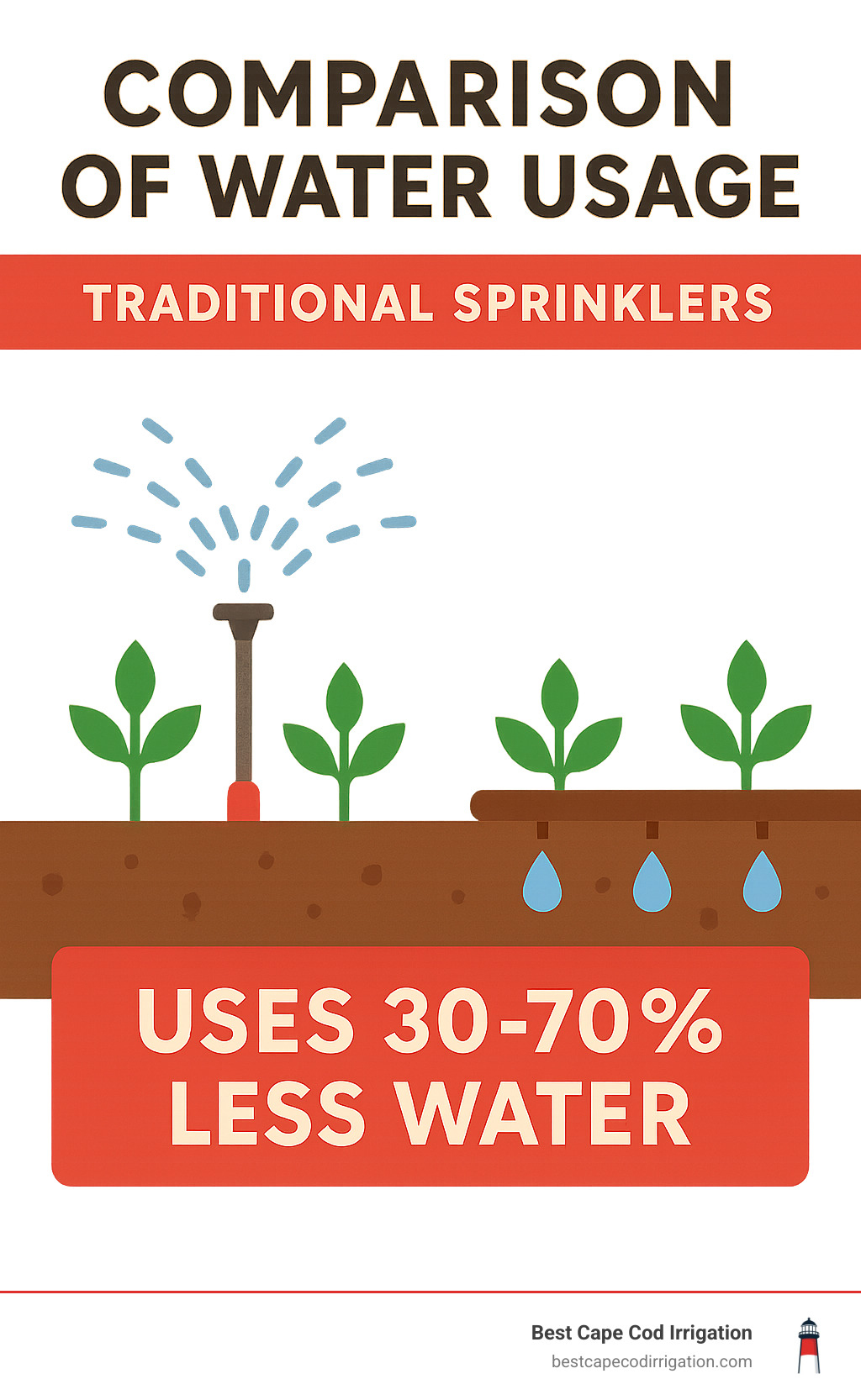
Drip irrigation delivers water directly to plant roots, reducing waste by up to 90% compared to traditional sprinklers. This targeted approach is perfect for Cape Cod’s sandy soils, where water conservation matters and traditional sprinklers often lead to runoff or evaporation.
Unlike complex irrigation projects, Rain Bird has designed their systems to be DIY-friendly. With the right components and a bit of planning, you can install a professional-grade system in a single weekend.
The benefits are impressive:
- Water savings of 30-70% over conventional sprinklers
- Healthier plants with consistent moisture at the root zone
- Less weeding as you’re not watering areas between plants
- Reduced disease from keeping foliage dry
- Automation that works while you’re away
Over the next sections, I’ll walk you through the complete process of installing your own Rain Bird drip irrigation system in 7 straightforward steps. Whether you’re irrigating garden beds, container plants, or landscaping around your home, this guide will help you create an efficient, water-saving solution.
What You’ll Learn
In this comprehensive guide, you’ll find everything you need to know about installing a Rain Bird drip irrigation system, including:
- How to evaluate your landscape’s specific watering needs
- Planning an efficient drip irrigation layout
- Selecting the right components for your garden
- Step-by-step installation instructions
- How to automate your system for worry-free watering
- Maintenance tips to keep your system running smoothly for years
At Best Cape Cod Irrigation, we’ve installed countless drip systems across Cape Cod, and we’re excited to share our expertise with you.
Step 1 – Evaluate Your Landscape & Water Supply
Taking time to assess your property before diving into your Rain Bird drip irrigation system installation is like checking the weather before a beach day on Cape Cod—absolutely essential for success!
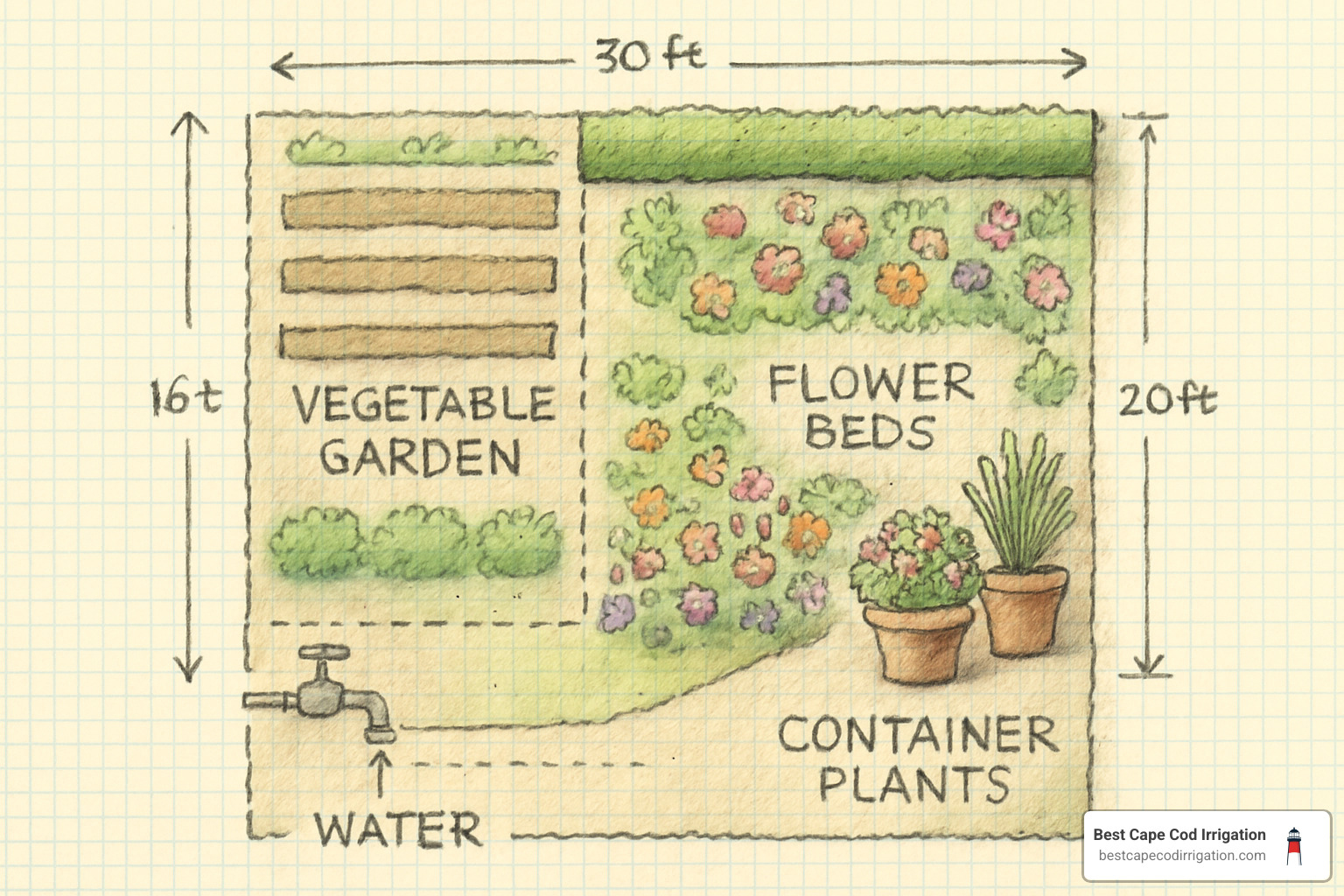
Start by grabbing a piece of paper and sketching a simple map of your outdoor space. Nothing fancy needed here, just note:
- Different planting zones (vegetable gardens, flower beds, container plants)
- Plant types and their water requirements
- Sunny versus shady areas
- Slopes or elevation changes
- Distance from water source to furthest planting area
“Having a healthy and vibrant garden doesn’t have to be complicated or time-consuming,” notes Rain Bird’s installation guide. “But proper planning is essential for success.”
Here on Cape Cod, our sandy soil presents unique opportunities for drip irrigation. That quick-draining quality that frustrates many gardeners? It’s actually perfect for a drip system! However, it does mean you’ll need to plan for more frequent, shorter watering cycles with possibly higher flow rate emitters. Consider mixing some organic matter into your soil to improve water retention—your plants will thank you!
For the eco-conscious gardener (and aren’t we all these days?), consider connecting your system to a rain barrel. This approach works beautifully with our seasonal rainfall patterns here on the Cape and aligns perfectly with our commitment to water-wise gardening.
Suitability Checklist
Before loading up on irrigation supplies, let’s make sure your property is drip-ready with these simple tests:
First, check your water pressure. Your outdoor faucet needs to deliver at least 20 PSI for a Rain Bird system to work properly. No pressure gauge? No problem! Most hardware stores sell inexpensive pressure gauges that attach to your outdoor spigot.
Next, test your water flow. Grab a 1-gallon container and time how long it takes to fill from your outdoor faucet. If it takes 15 seconds, your flow rate is 4 GPM (60 seconds ÷ 15 = 4), which is plenty for most drip systems.
Finally, understand your soil infiltration rate—fancy talk for how quickly water soaks in. Dig a 6-inch hole, fill it with water, let it drain completely, then refill and see how much drains in an hour. With our Cape Cod sand, you’ll likely see rapid drainage, which is perfect for drip irrigation but will influence how you schedule your watering.
Want to learn more about keeping your entire landscape healthy in our unique Cape Cod conditions? Check out our guide on the importance of lawn irrigation for healthy Cape Cod landscapes.
Step 2 – Design Your Rain Bird Drip Layout
Now that you’ve evaluated your landscape, it’s time to roll up your sleeves and design your drip system. This is where the magic happens – a thoughtful design now will save you headaches (and water) later.
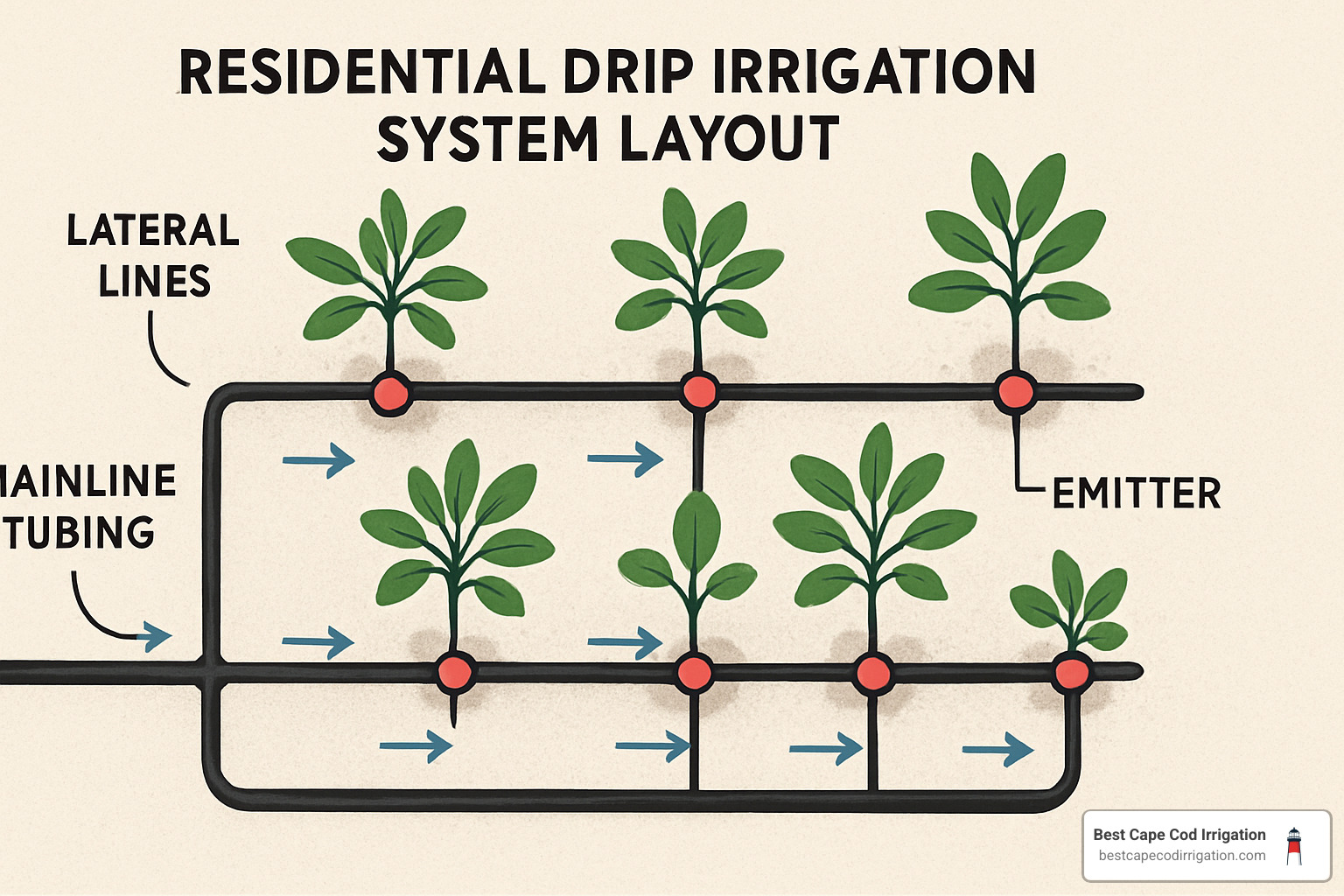
Grab a piece of paper and sketch a more detailed garden plan. Mark the locations of your beloved plants, those lovely walkways you don’t want to disturb, and start plotting the journey your mainline tubing will take through your landscape. Think of it as creating a roadmap for water to reach every thirsty plant in your garden.
“The time you spend planning now will pay dividends in water savings and plant health for years to come,” as we often tell our Cape Cod clients.
Rain Bird offers a helpful online tool to plan out your garden layout – it’s like having a professional irrigation designer in your pocket!
For larger properties (which we see plenty of on Cape Cod), consider dividing your system into zones. Group your water-loving hydrangeas together, separate from your drought-tolerant lavender. Areas baking in full Cape Cod sunshine will need different watering schedules than those tucked in shady corners. This zoning approach not only keeps your plants happier but optimizes your water use.
When designing your layout, we’ve found that loop or center-feed grid patterns work wonders for more uniform water distribution. These clever designs split water flow in multiple directions, ensuring consistent pressure even in those far-reaching corners of your garden. After 25+ years of installing systems across Cape Cod, we’ve found that grid layouts are perfect for flower beds and vegetable gardens, while simpler linear designs work beautifully for border plantings.
Want to take your system to the next level? Consider incorporating a smart controller that adjusts watering schedules based on actual weather conditions. These clever devices are game-changers for Cape Cod’s unpredictable weather patterns and can dramatically reduce water usage. Learn more about these water-saving wonders in our guide to smart irrigation solutions.
Selecting the Right Kit
Rain Bird makes your drip irrigation system installation easier with several kit options that include all the essentials:
The Landscape & Garden Kit is perfect for typical Cape Cod flower beds and vegetable gardens. It includes your 1/2″ mainline tubing, various connectors and fittings, an assortment of emitters, and basic tools to get you started.
If your focus is container plants on your deck or patio (a Cape Cod summer staple!), the Patio Plant Kit is your best friend. These come with thinner 1/4″ tubing that’s less obtrusive, specialized container emitters, and often include a simple hose-end timer – perfect for vacation homes.
For more advanced setups or connecting to existing irrigation, the Control Zone Kit provides everything you need: pressure regulator, filter, valve components, and adapters for various water sources.
Based on our decades of experience with Cape Cod’s unique conditions, most homeowners here do best starting with a Landscape & Garden Kit and expanding as needed. This approach gives you the perfect balance of coverage and value while allowing you to get comfortable with your new system before tackling more complex zones.
Step 3 – Gather the Essential Rain Bird Components
With your design complete, it’s time to gather all necessary components for your Rain Bird drip irrigation system installation. Having everything on hand before you start will save you from those frustrating mid-project trips to the hardware store!
Water Source Connection Components:
Think of these as the heart of your system. You’ll need a backflow preventer (this protects your home’s drinking water), a pressure regulator to bring water pressure down to the ideal 20-30 PSI range, and a PR Series filter to catch any debris that might clog your emitters. Don’t forget a simple hose adapter to connect everything to your outdoor faucet.
Distribution Components:
These parts form the circulatory system of your irrigation setup. The 1/2″ XF Series mainline tubing serves as the backbone, while smaller 1/4″ distribution tubing branches off to deliver water to individual plants. You’ll also need compression or barbed fittings to connect tubing sections securely, plus end caps and flush valves for system maintenance.
“The quality of your tubing makes a huge difference in the longevity of your system,” notes our lead technician at Best Cape Cod Irrigation. “Rain Bird’s XF Series is UV-resistant and flexible enough to curve around garden beds, which is perfect for Cape Cod’s coastal landscapes.”
Emission Devices:
These are the business end of your irrigation system – they actually deliver the water to your plants. PC (Pressure-Compensating) emitters ensure consistent water flow regardless of pressure changes, which is especially important for longer runs of tubing. For different plant needs, consider a mix of standard drippers, SQ Series micro-sprays for groundcover areas, and bubblers for larger shrubs and trees.
The sandy soil we have on Cape Cod influences which emitters work best. Generally, we recommend 1.0 to 2.0 GPH (gallons per hour) emitters for most plants in our region. This provides enough moisture without wasteful runoff in our quick-draining sandy soil.
Accessories:
Don’t overlook these small but mighty components! Tubing stakes keep your lines securely in place, while bug caps prevent insects from making homes in your emitters. A good hole punch tool and tubing cutter will make installation much easier and cleaner than trying to improvise with household tools.
Rain Bird’s complete Xerigation™ product line includes over 150 drip irrigation products designed to work together seamlessly. They’ve thought of everything, from copper shields that prevent root intrusion to specialized emitters for container gardens.
When shopping for components, consider buying a few extra emitters, stakes, and connectors. In our 25+ years of installing irrigation systems across Cape Cod, we’ve found that having spares on hand saves time and frustration when you need to make adjustments or repairs down the road.
By gathering all these components before you begin, you’ll set yourself up for a smooth installation process and a drip system that will serve your garden faithfully for years to come.
Step 4 – Rain Bird Drip Irrigation System Installation: Connect, Regulate & Filter at the Faucet
The heart of your rain bird drip irrigation system installation begins at the water source. This connection point is where the magic starts – changing your ordinary outdoor faucet into an efficient watering command center.
Let’s get your faucet assembly set up properly – it’s easier than you might think!
Start with the backflow preventer, which is non-negotiable for any irrigation system. This small device prevents contaminated water from flowing backward into your drinking water. Beyond being a good practice, it’s often required by Cape Cod building codes to protect our local water supply.
Next, attach your filter – preferably Rain Bird’s PR Series filter that conveniently combines filtration and pressure regulation in one unit. Look for a minimum 150 mesh (100 micron) filter to catch tiny particles that would otherwise clog your emitters. Think of it as a bouncer for your irrigation system, keeping the troublemakers out!
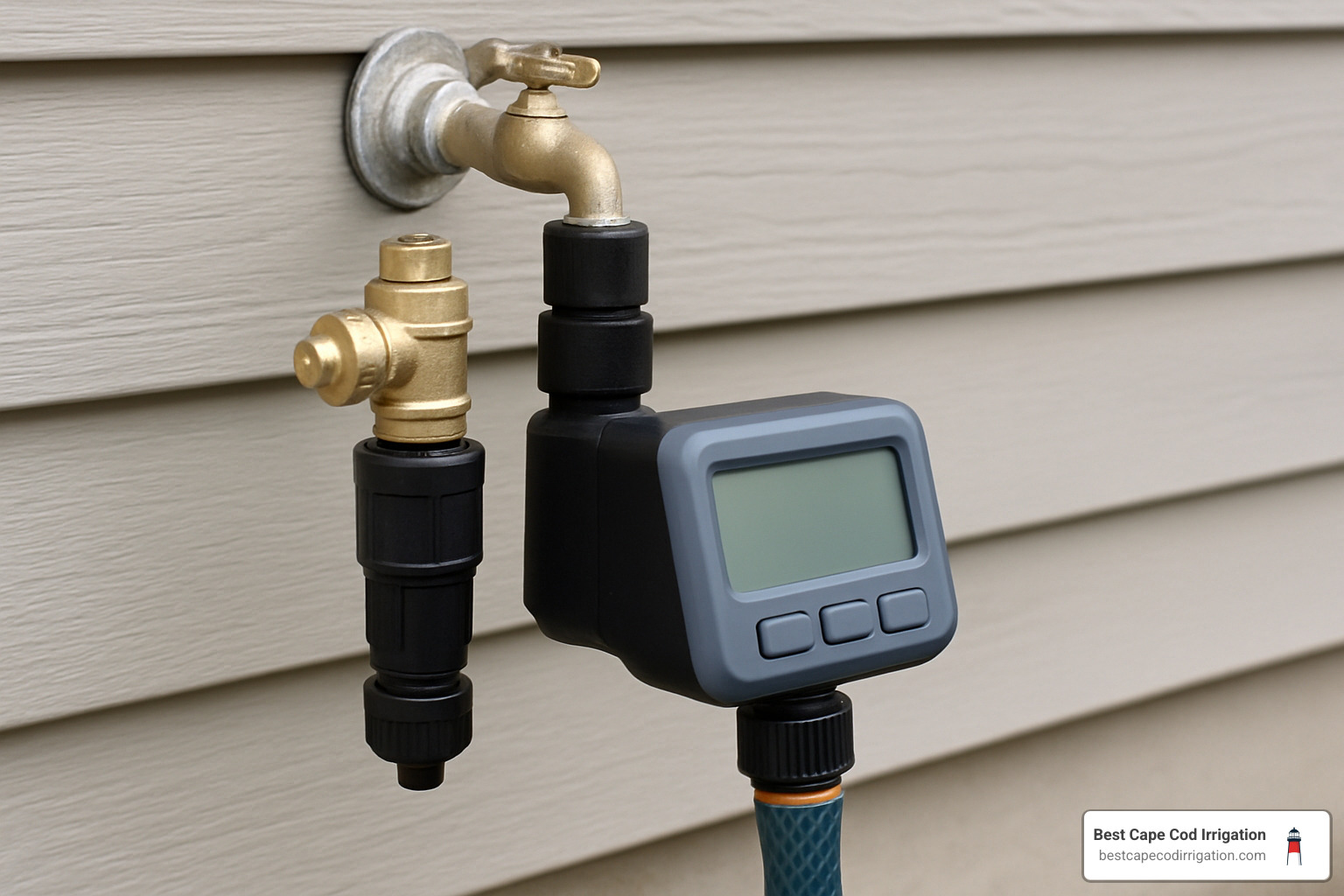
If you’re using a separate pressure regulator, connect it after the filter. Most drip systems perform their best between 20-30 PSI – higher pressure can damage components while lower pressure might leave your plants thirsty.
“I can’t tell you how many DIY systems we’ve repaired because someone skipped the pressure regulator,” shares our installation team lead. “Cape Cod water pressure fluctuates significantly, especially during busy summer months. Without proper regulation, you’re basically setting your system up for failure.”
Want to still use your faucet for other purposes? Add a hose splitter – a simple Y-shaped adapter that lets you run your drip system and still have a free connection for washing your car or filling the kiddie pool.
Finally, make your life easier by connecting a timer. The Rain Bird Hose End Timer transforms your manual system into an automated one, freeing you from the “did I remember to water?” worries when you’re busy or away from home.
Rain Bird Drip Irrigation System Installation Starts With Proper Pressure
Water pressure is the lifeblood of your irrigation system. Most Cape Cod homes have sufficient pressure, but it’s worth understanding a few key points:
Your rain bird drip irrigation system installation needs at least 20 PSI to function correctly. If you’re curious about your home’s pressure, grab an inexpensive pressure gauge from your local hardware store and attach it to your outdoor faucet for a quick reading.
Cape Cod’s varied landscape means you might have elevation changes on your property. If your garden climbs a slope, consider using pressure-compensating emitters. These smart little devices deliver consistent water flow regardless of pressure changes from elevation differences – perfect for maintaining even watering across your entire garden.
Running your system from a rain barrel? You’ll likely need a booster pump since rain barrels typically rely on gravity alone, which rarely provides sufficient pressure for proper drip irrigation function.
For most Cape Cod installations connecting to municipal water, the standard Rain Bird pressure regulator will work perfectly. It’ll take your home’s higher pressure and bring it down to the sweet spot for drip irrigation – ensuring your system runs efficiently without wasting water or damaging components.
Proper pressure isn’t just about making your system work – it’s about making it work efficiently for years to come. As we always tell our clients at Best Cape Cod Irrigation, “Take care of your pressure issues at the start, and your system will take care of your garden in the long run.”
Step 5 – Lay Mainline Tubing & Branch Laterals
With your control zone connected to the water source, it’s time to create the backbone of your system by laying out the mainline tubing and branch laterals. This network will carry water throughout your garden, bringing life to every corner.
Here’s a pro tip before you start: let your tubing warm in the sun for 15-30 minutes. This simple step makes the plastic more flexible and much easier to work with—something we’ve learned from years of Rain Bird drip irrigation system installation across Cape Cod’s varied landscapes.
Begin at your water source, unrolling the 1/2″ mainline tubing along your planned route. Leave a bit of slack near the control zone—you’ll thank yourself later when doing maintenance. Make clean, straight cuts with tubing cutters or sharp scissors (jagged cuts can lead to leaks).
For most gardens, you’ll want to create a distribution network by running the mainline either around the perimeter of planting areas or through the center of beds, depending on your design. When you need to steer corners or create branches, add tees and elbows by pushing the tubing firmly onto the barbed fittings until fully seated.
“When installing systems on Cape Cod, we’ve found that securing tubing properly is especially important due to our sandy soils,” explains our installation specialist. “The loose soil structure means tubing can shift more easily than in clay-heavy regions.”
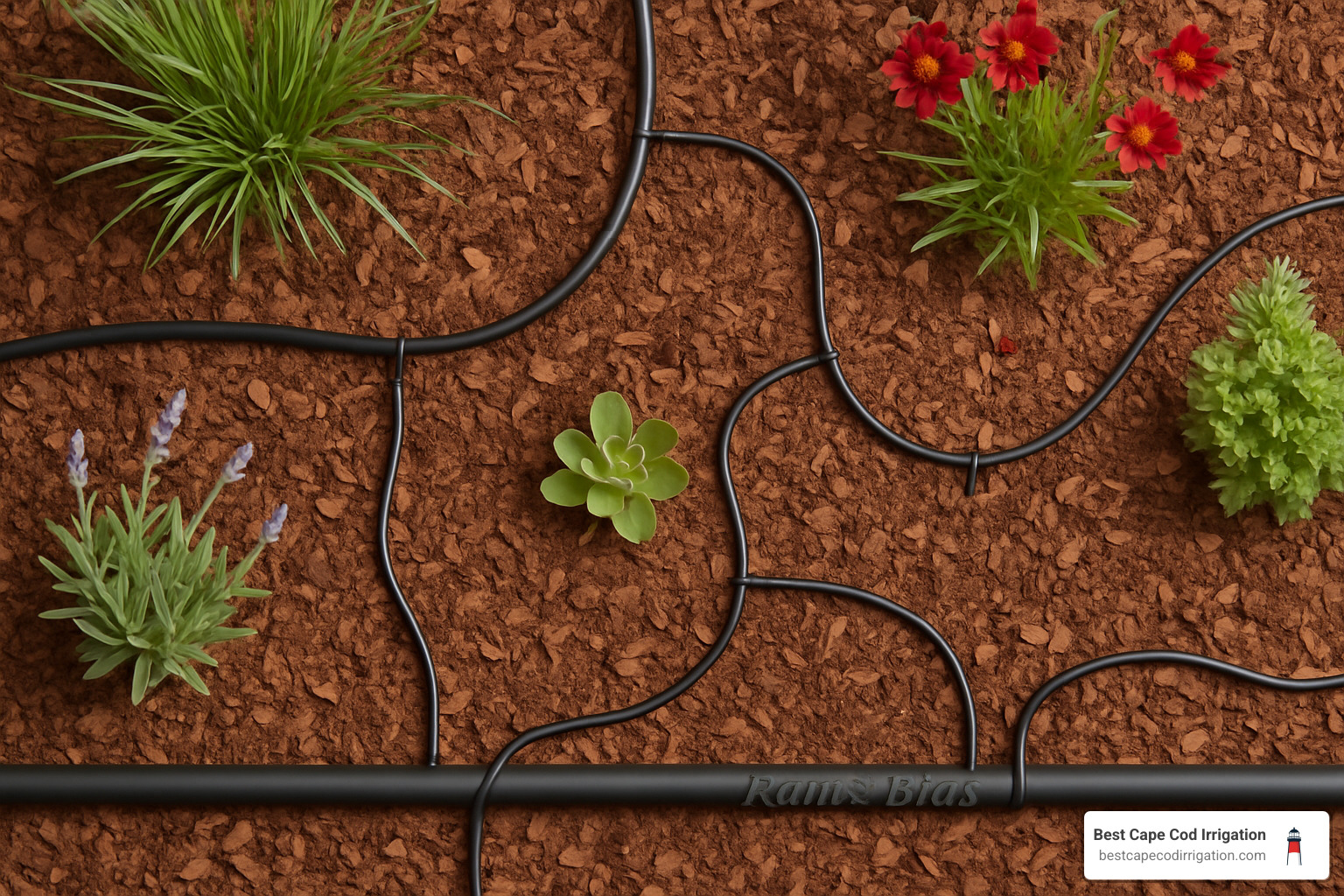
Don’t forget to cap the ends of all mainlines with either end caps or flush valves. We strongly recommend using flush valves rather than simple caps—they’ll make seasonal maintenance much easier down the road.
For reaching individual plants, connect 1/4″ lateral tubing to the mainline using barbed connectors. These smaller lines give you the flexibility to deliver water exactly where it’s needed.
Curved beds are a common feature in Cape Cod’s naturally flowing landscapes. The good news is that Rain Bird XF tubing is wonderfully flexible, making it ideal for following these graceful contours. Just lay the tubing along the curve and secure it firmly with stakes.
For most home gardens, we recommend on-surface installation, where the tubing sits on top of the soil. You can easily cover it with mulch for a cleaner look. However, if you’re installing in high-traffic areas or want a more permanent solution, consider subsurface installation at a depth of 4-6 inches.
Best Practices for Tubing Runs
Over our 25+ years installing irrigation on Cape Cod, we’ve developed some guidelines that ensure optimal performance:
Keep your runs reasonable. Limit 1/2″ mainline runs to 200 feet from the water source, and keep those 1/4″ laterals under 8 feet if possible. Going beyond these distances often results in pressure loss and uneven watering—the last thing you want after all this work!
Avoid kinks and sharp bends as they restrict water flow and can damage tubing over time. For turns tighter than a 2-foot radius, use proper fittings rather than forcing the tubing.
Give hardscapes some space by keeping tubing 2-4 inches away from walkways, patios, and other elements. This prevents accidental damage during lawn maintenance or when entertaining guests on your patio.
Stake generously in our sandy soil. Use stakes every 3-5 feet along straight runs and at every curve or direction change. In Cape Cod’s loose sandy soil, you might need even more frequent staking to prevent shifting.
Always leave a little slack for thermal expansion. Tubing will expand and contract with temperature changes, so avoid pulling it drum-tight—a small amount of slack will prevent stress on your connections.
For those with sloped landscapes, which we see often in parts of Cape Cod, water naturally flows downhill. To ensure even distribution, install lines across the slope rather than up and down when possible, use pressure-compensating emitters, and consider adding check valves to prevent drainage when the system turns off.
Following these guidelines will give your Rain Bird drip irrigation system installation a solid foundation—one that will serve your garden faithfully through Cape Cod’s unique seasonal conditions for years to come.
Step 6 – Place Emitters, Stake Lines & Automate
With your tubing network in place, it’s time for the most customized part of your Rain Bird drip irrigation system installation – adding the emitters that deliver water directly to your plants. This is where your system truly becomes custom to your garden’s specific needs.
Think of emitters as the final delivery point in your irrigation system. Different plants have different water requirements, so selecting the right emitter for each plant is crucial for efficient watering.
For most Cape Cod gardens, you’ll want a mix of these emission devices:
For individual plants like perennials and small shrubs, 0.5-2 GPH drippers work perfectly. These deliver a slow, steady flow directly to the root zone.
For larger shrubs and trees that need more water, bubblers are your best choice. These deliver higher volumes while still maintaining efficiency.
For groundcover areas where plants grow close together, Rain Bird’s SQ Series micro-sprays provide gentle, even coverage without wasting water.

“The key is placing emitters at the drip line – that’s where a plant’s feeder roots are concentrated,” explains one of our Best Cape Cod Irrigation technicians. “Think about where rainwater would naturally drip off the foliage. That’s your target zone.”
Installing emitters is straightforward. First, identify the ideal locations near each plant’s base. Then use Rain Bird’s hole punch tool to create openings in your tubing. Simply insert the barbed emitters into these holes – they’ll click into place securely. For Cape Cod’s sandy soil, be sure to stake emitters firmly, especially taller ones that might tip over.
Don’t forget to add bug caps to protect emitter openings. These small protective covers prevent insects and debris from clogging your system – a common issue in our coastal environment.
Container plants need special consideration during your Rain Bird drip irrigation system installation. Run ¼” tubing to each pot, either placing it over the edge or drilling a small hole in the container. If you’re working with lifted containers, here’s a pro tip: soften tubing ends in hot water before installing fittings to prevent frustrating kinks.
Once all your emitters are in place, it’s time for perhaps the most satisfying part – automation. No more forgetting to water or dragging hoses around!
Rain Bird offers several timer options to fit any budget:
- Simple hose-end timers attach right at the faucet
- Battery-operated controllers offer more flexible programming
- Smart controllers adjust watering based on weather conditions
For Cape Cod’s sandy soils, we strongly recommend programming shorter, more frequent watering cycles rather than occasional deep soakings. This approach prevents water from simply draining through our sandy soil before plants can use it.
Consider adding soil moisture sensors for the ultimate in efficiency. These clever devices override your timer when the soil is already moist enough, preventing overwatering during rainy periods – something we experience quite often on Cape Cod!
Fine-Tuning Your Rain Bird Drip Irrigation System Installation for Plant Diversity
Cape Cod gardens typically feature a wonderful mix of plants with varying water needs. To accommodate this diversity, focus on three key aspects:
Flow matching ensures plants with similar water requirements are grouped together. Your native beach plum and bayberry will need far less water than your vegetable garden, so they should ideally be on different zones. Newly planted areas generally need more frequent watering than established beds until their root systems develop.
Root-zone coverage is about strategic emitter placement. For new plants, position emitters directly at the base where young roots are concentrated. As plants mature, move emitters outward toward the drip line where feeder roots have spread. For trees and larger shrubs, use multiple emitters spaced evenly around the root zone for balanced hydration.
Run-time scheduling should consider Cape Cod’s unique conditions. Our sandy soils typically need shorter, more frequent cycles – usually 2-3 times weekly for 30-45 minutes during the growing season. As seasons change, adjust accordingly; plants need less water in cooler months. The same applies as plants establish – gradually reduce frequency to encourage deeper root growth.
“The beauty of a well-designed drip system is that once it’s set up, it practically takes care of itself,” says one of our longtime clients in Chatham. “I’ve cut my water usage in half while my garden looks better than ever.”
Observation is key to success. Watch how your plants respond and make small adjustments as needed. Your irrigation system should serve your garden’s needs, not the其他 way around.
Step 7 – Test, Troubleshoot, and Winterize
The final step in your Rain Bird drip irrigation system installation is testing, troubleshooting, and preparing for seasonal maintenance. This crucial phase ensures your system works efficiently and will last for years to come.
Begin by thoroughly testing your system. Turn on the water and walk your garden, checking that all emitters are functioning properly. You should see water gently dripping from each emitter – a satisfying sight after all your hard work! Install flush caps at the end of mainlines to allow you to clear debris from the system during maintenance.
“When we complete a drip system installation, we always run a full test cycle with the client present,” explains our service manager. “This not only confirms proper operation but also helps the homeowner understand how their system works and what to look for when monitoring performance.”
While checking your system, pay close attention to all connection points to spot any leaks. A small drip now can become a bigger problem later, so tighten fittings or replace any problematic sections. Verify that each plant is receiving the intended amount of water – your plants will thank you for this attention to detail!
Consider installing a Xeri-Pop indicator – this clever little pop-up device rises when your system is operating. It’s particularly useful when your irrigation lines are hidden under mulch or foliage, giving you visual confirmation that everything’s working as it should.
For Cape Cod’s seasonal climate, winterization isn’t just recommended – it’s essential. When temperatures start to drop in fall, disconnect your system from the water source before the first freeze. Open all flush caps to drain water from the lines, preventing potentially damaging ice expansion.
If possible, use compressed air to blow out any remaining water in the lines, but keep pressure below 40 PSI to avoid damage to your components. And don’t forget to bring timers and pressure regulators indoors during winter months – these electronic components don’t appreciate freezing temperatures!
For subsurface installations, Rain Bird’s XFS dripline with Copper Shield™ Technology offers additional protection against root intrusion. This innovative feature releases tiny amounts of copper ions that prevent roots from growing into emitters without harming your plants – perfect for permanent installations in Cape Cod landscapes.
For more detailed information about seasonal maintenance specific to our region, visit our guide on openings and winterization.
Keeping Your Rain Bird Drip Irrigation System Installation Performing for Years
Regular maintenance will extend the life of your drip system and ensure consistent performance. Make checking your filter a monthly habit during the growing season. Cape Cod’s water quality varies significantly by location – some areas have more sediment than others, potentially requiring more frequent filter maintenance.
If you notice an emitter isn’t flowing properly, don’t panic! Clogs happen, but they’re usually easy to fix. Simply remove the emitter from the tubing, soak it in equal parts white vinegar and water for several hours, then rinse thoroughly and reinstall. If it’s still stubbornly clogged after this treatment, just replace it with a new one – they’re inexpensive and worth keeping a few spares on hand.
One of the most important maintenance tasks is routine zone flushing. Plan to flush your system 2-4 times per year by removing end caps, running the system for 2-3 minutes to flush out any accumulated debris, and then replacing the end caps securely. This simple practice prevents many common drip system problems.
“In our 25+ years of experience on Cape Cod, we’ve found that systems receiving regular maintenance can last 10-15 years or more,” notes our maintenance team leader. “The small investment in routine care pays significant dividends in system longevity and plant health.”
With proper installation, testing, and maintenance, your Rain Bird drip irrigation system will provide reliable, efficient watering for many growing seasons, giving you more time to enjoy your beautiful Cape Cod landscape rather than watering it by hand!
Frequently Asked Questions about Rain Bird Drip Irrigation System Installation
How do I choose emitter flow for my soil?
Selecting the right emitter flow rate for your particular soil type can make all the difference between struggling plants and a thriving garden. Here on Cape Cod, our sandy soil presents both challenges and opportunities.
For our region’s sandy soils, which drain quickly, you’ll want to use higher flow emitters (typically 1-2 GPH) paired with more frequent but shorter watering cycles. This approach ensures plants get enough moisture without wasting water. Many Cape Cod gardeners find that using multiple emitters for larger plants helps create a wider moisture zone in our quick-draining soils.
If you’re lucky enough to have patches of loamy soil on your property, medium flow rates between 0.5-1 GPH usually work beautifully. You won’t need to water quite as often, but when you do, let it run a bit longer to allow proper absorption.
For the rare Cape Cod garden with clay soil areas, slow is the way to go. Lower flow rates (0.5 GPH or less) prevent the pooling and runoff that can happen when water hits clay too quickly. With clay, patience pays off—water less frequently but for longer periods.
Not sure what kind of soil you’re working with? Try this simple jar test in different areas of your garden:
- Fill a clear jar about one-third full with soil from your garden
- Add water until the jar is nearly full
- Shake vigorously and let it settle for 24 hours
- The layers will tell the story—sand settles first, followed by silt, then clay on top
The proportions of each layer will help you identify your particular soil mix and choose emitters that deliver water at just the right rate.
Can I retrofit an existing sprinkler zone to drip?
Absolutely! Converting sprinklers to drip irrigation is one of our favorite upgrades for Cape Cod gardens. It’s like giving your plants a promotion from “getting occasionally drenched” to “receiving steady, consistent moisture exactly where they need it.”
The process is surprisingly straightforward. Start by screwing spray-to-drip adapters onto your existing sprinkler risers after removing the spray heads. These clever devices are the bridge between your old system and your new, more efficient one.
Since sprinkler systems typically operate at higher pressure (30-50 PSI) than what drip systems need (20-30 PSI), you’ll need to add a pressure regulator to prevent damage to your new drip components.
Don’t forget the filter! This small component makes a huge difference in preventing clogged emitters, especially when converting from sprinklers to drip. Think of it as insurance for your new system.
From there, simply connect your 1/2″ mainline tubing to the adapter and proceed with the rest of your Rain Bird drip irrigation system installation as normal.
“One of the most satisfying projects we do is converting sprinkler zones to drip,” shares our retrofit specialist. “Our Cape Cod clients typically see a 30-50% reduction in water usage for those zones, and their plants have never looked better. The change is remarkable.”
Remember to adjust your controller’s run times after retrofitting. Drip irrigation typically needs longer watering durations than sprinklers but less frequent cycles—a perfect match for our sandy Cape Cod soil conditions.
How often should I flush the system?
Think of flushing your drip system like changing the oil in your car—it’s not glamorous, but skip it at your peril! Regular flushing keeps your Rain Bird drip irrigation system installation running smoothly by clearing out sediment and debris that inevitably find their way into your lines.
When you first install your system, give each zone a thorough flush to wash away any manufacturing residue or installation debris. This initial cleaning sets your system up for success from day one.
For ongoing maintenance, aim to flush each zone 2-4 times per year. Simply open the end caps and let the water run for 2-3 minutes. This simple practice is especially important with Cape Cod’s variable water quality, which can change seasonally or even after heavy storms.
Any time you make modifications or repairs, be sure to flush the affected zones afterward. And don’t forget that important seasonal startup flush in spring when you reactivate your system after winter.
“In my 25 years of installing irrigation on Cape Cod, I’ve seen that flushing is the single most important maintenance task for drip systems,” our maintenance coordinator often tells clients. “It takes just a few minutes but makes all the difference in preventing clogged emitters and ensuring your plants get even watering.”
For optimal results with Rain Bird’s XF Series Dripline, aim for a flushing velocity of 1-2 feet per second to effectively clear debris. Don’t worry—this is easily achieved by simply opening the flush caps at the end of each zone and letting the water flow until it runs clear.
Conclusion
Installing a Rain Bird drip irrigation system transforms the way you water your Cape Cod landscape—delivering moisture precisely where plants need it while conserving our precious water resources. It’s truly the smart approach to gardening in our unique coastal environment.
Throughout this guide, we’ve walked through the seven essential steps to create an efficient, reliable drip system custom to Cape Cod’s distinctive conditions. The benefits you’ll enjoy are substantial and immediate:
Water bills typically drop by 30-70% compared to traditional sprinklers—a significant saving that Cape Cod homeowners consistently report. This efficiency is particularly valuable given our region’s sandy soils, which can waste tremendous amounts of water through traditional irrigation methods.
Beyond the financial savings, you’ll notice fewer weeds popping up between your plants (since you’re not watering those spaces), healthier plant growth from consistent moisture at the root zone, and the wonderful freedom that comes with automated watering. Imagine heading to the beach without worrying about your garden wilting in the summer heat!
“My Rain Bird drip system paid for itself by August,” one Chatham homeowner told us last year. “Between the water savings and not having to replace plants that used to die from inconsistent watering, it was the best garden investment I’ve made.”
Most of our customers find their systems deliver a complete return on investment within a single growing season. When you factor in the time saved from dragging hoses around and the improved plant health, the value becomes even more apparent.
While many Cape Cod gardeners successfully install their own drip systems using this guide, others prefer the assurance of professional installation. At Best Cape Cod Irrigation, our team brings over 25 years of regional expertise to every project. We understand the unique challenges of Cape Cod soils, plants, and water conditions, ensuring your system performs flawlessly from day one.
Whether you tackle this as a weekend DIY project or partner with our experienced team, installing a Rain Bird drip irrigation system represents a smart investment in both your landscape and our fragile Cape Cod environment. For those interested in professional installation services, we invite you to learn more about our irrigation system installation options or contact us for a personalized consultation.
Success with drip irrigation comes down to thoughtful planning, proper installation, and regular maintenance. With the approach we’ve outlined, your system will provide years of reliable, efficient watering—keeping your Cape Cod landscape lush and beautiful while respecting our local water resources.