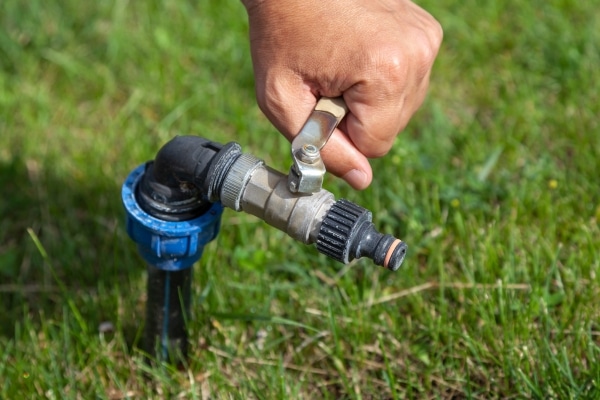



Preparing Your System for the Growing Season
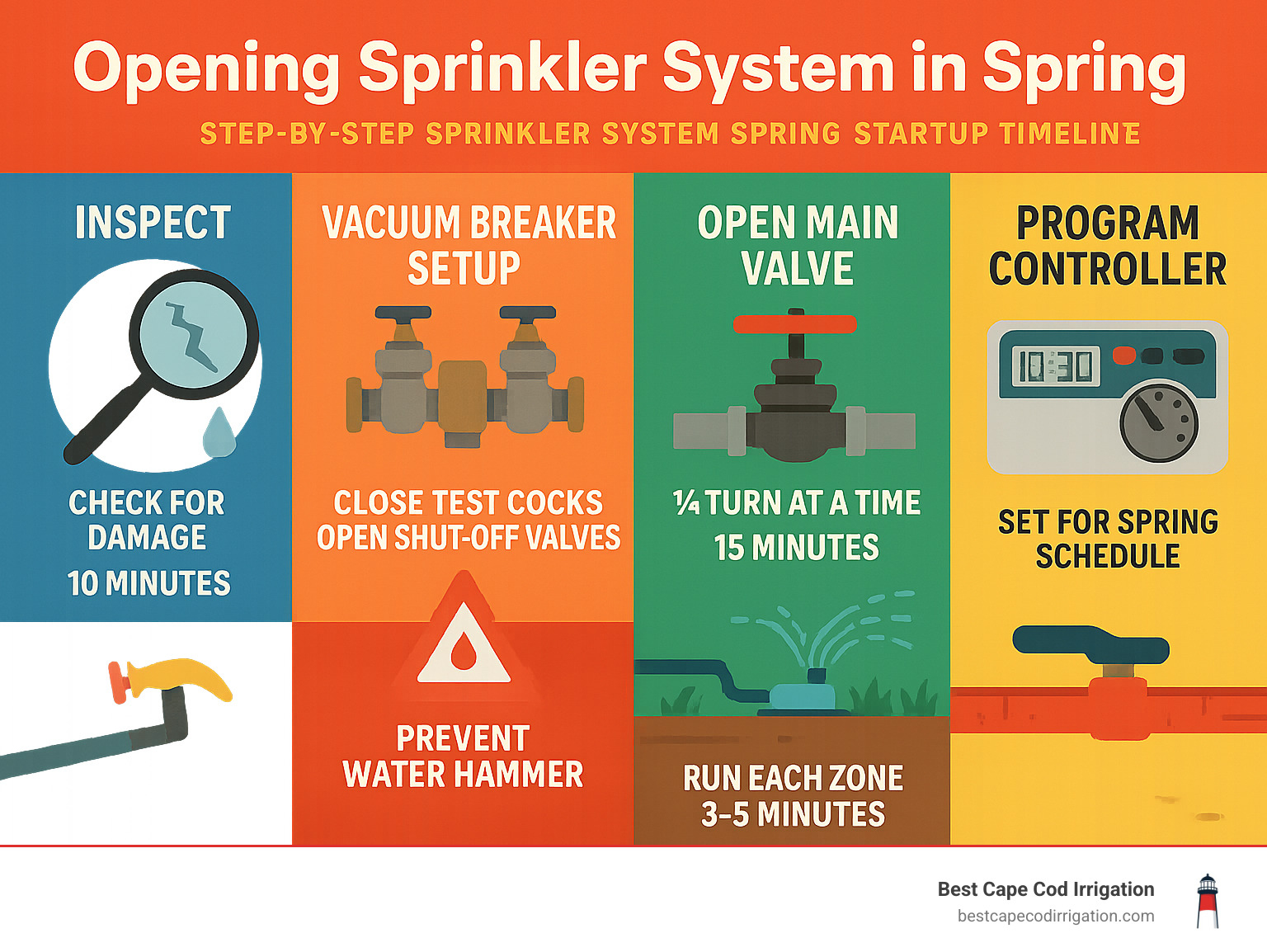
Opening sprinkler system in spring is a critical task for Cape Cod homeowners who want to ensure their irrigation systems work efficiently without damaging components. Here’s a quick guide to safely starting your system:
- Wait for the right time – Mid to late May is typically ideal for Cape Cod, after freezing temperatures have passed
- Gather necessary tools – Screwdriver, pliers, sprinkler valve key, and Teflon tape
- Inspect for winter damage before pressurizing
- Close test cocks and open shut-off valves on the vacuum breaker
- Slowly open the main valve (¼ turn at a time) to prevent water hammer
- Test each zone individually for 3-5 minutes
- Check for leaks and adjust heads as needed
- Program your controller for spring watering needs
When winter finally releases its grip on Cape Cod, your sprinkler system needs more than just a quick flip of the switch. Proper spring activation prevents potentially costly damage while ensuring your lawn gets the water it needs as temperatures rise.
Many homeowners rush this process, not realizing that opening valves too quickly can create a dangerous “water hammer” effect. This surge pressure can be as high as 15 times normal operating pressure, potentially cracking pipes, breaking fittings, and damaging sprinkler heads—turning a simple startup into an expensive repair job.
“A sudden rush of water when opening the system can break elbows, fittings, valves, and sprinkler heads, potentially costing hundreds of dollars in repairs,” notes irrigation experts. This is why patience during system activation is crucial.
For Cape Cod’s sandy soil conditions, a properly opened and adjusted irrigation system ensures water reaches plant roots efficiently without wasteful runoff. Taking about 30-60 minutes to complete, this process will set your lawn up for success throughout the growing season.
Before You Turn the Water On: Timing, Tools & Safety
The key to a successful spring startup begins with timing and preparation. After a long Cape Cod winter, it’s tempting to activate your irrigation system at the first sign of warm weather, but patience is essential.
Why Waiting Matters
There’s nothing more disappointing than rushing to open your sprinkler system only to have an unexpected late frost undo all your hard work. Cape Cod’s spring weather can be quite the trickster! Those gorgeous 70-degree April days might feel like winter’s end, but our local climate data tells a different story – overnight freezes commonly sneak back well into May, leaving hastily-opened irrigation systems vulnerable to expensive damage.
Mid to late May is your sweet spot for safe activation on Cape Cod. The last frost date typically falls between May 1-15 for most of our region, making that mid-May window your ideal target. Regular lawn watering isn’t usually necessary until early June anyway, so there’s truly no advantage to rushing.
Not sure if your ground is ready? Try this simple soil-thaw test: dig about 12 inches deep in several spots around your property. Any frozen soil at that depth means it’s still too early. Many of our seasoned Cape Cod gardeners have a more charming method – they wait until the forsythia blooms, signaling that soil temperatures have maintained about 55°F for at least a week. Nature’s own green light!
Waiting those extra weeks can save you from the heartbreak of cracked pipes, damaged valves, and broken sprinkler heads – repairs that can quickly turn a simple spring task into an expensive headache.
Must-Have Startup Kit
Being prepared makes all the difference when opening your irrigation system. Before you head outside, gather these essential tools to ensure a smooth, efficient process.
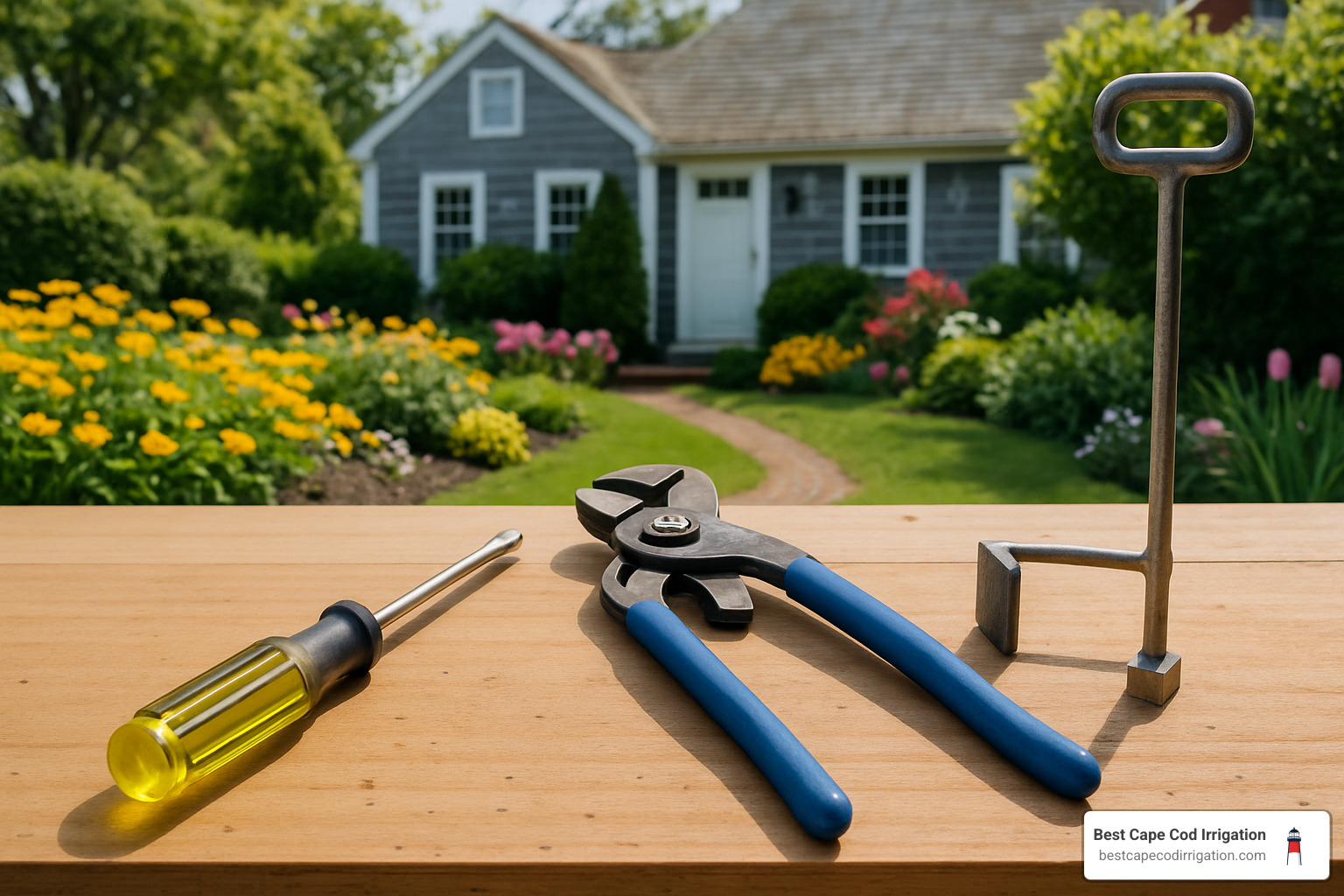
Your spring startup toolkit should include a flat-head screwdriver for adjusting heads and test cocks, and channel-lock pliers for tightening fittings. Don’t forget Teflon tape – this humble item is absolutely essential for creating watertight seals on threaded connections. A sprinkler valve key gives you access to buried valve boxes, while a small hand shovel helps clear winter debris from heads.
Safety should never be an afterthought! Safety glasses protect your eyes when working with pressurized components, and ear protection can be helpful when standing near noisy valve releases. Always keep a pressure gauge handy to monitor your system and prevent dangerous water hammer effects.
Be prepared for minor fixes with a selection of spare parts – replacement heads, nozzles, risers, and O-rings are particularly valuable on Cape Cod, where our sandy soil and seasonal weather can be tough on irrigation components. Finally, don’t underestimate the humble notepad and pen – documenting issues as you go ensures nothing gets forgotten.
Our Cape Cod customers who keep these tools ready find the startup process much less stressful. For more comprehensive information about seasonal irrigation services, check out our detailed guide on Openings & Winterization. And if you’re interested in the science behind water hammer and surge pressure, This Old House offers excellent research on why slow, careful activation matters.
Opening Sprinkler System in Spring: 10-Step Guide
If you’ve weathered a few Cape Cod winters, you know our sandy soil and seasonal shifts can be tough on irrigation systems. After 25 years of helping local homeowners, we’ve refined this 10-step process to safely wake up your sprinklers from their winter slumber.

Step 1: Opening Sprinkler System in Spring—Inspect & Close Indoor Shut-Off
Start in your basement or crawl space where the main indoor shut-off valve lives. This is typically near where your water line enters the home. Make sure this valve is closed before you begin—this gives you complete control over when water enters your system. While you’re there, take a moment to check for any signs of leaks or damage that might have occurred during winter. Remove any insulation you added for freeze protection, and as a precaution, place a drip pan underneath to catch any unexpected drips during startup.
Step 2: Label & Close Test Cocks on the Backflow Device
Head outside to your backflow preventer—either a Pressure Vacuum Breaker (PVB) or Reduced Pressure Zone (RPZ) device. Most Cape homes have these mounted above ground near the foundation. Look for the small test cocks (they look like miniature screws) that were likely left open for winter drainage. Using your flat-head screwdriver, close each one by turning them perpendicular to the pipe.
A quick tip from our team: Consider adding waterproof labels to these components. We’ve seen countless confused faces when homeowners try to remember what’s what after a long winter!
Step 3: Replace Bleeder Caps & Apply Teflon Tape
Those bleeder caps that were removed for winter drainage need to go back on now. Before reinstalling, take a moment to inspect the threads and clean away any sand, debris, or mineral buildup—a common issue with our Cape Cod water.
Wrap each threaded connection with 3-4 turns of Teflon tape, making sure to wrap in the direction of the threading (usually clockwise). This prevents the tape from unwinding as you tighten. Hand-tighten first, then give a gentle quarter-turn with pliers. As Martha from Chatham learned: “I skipped the Teflon tape once and had water spraying everywhere! Now I never forget—it’s such a simple step that saves so much hassle.”
Step 4: Crack Open the Main Water Valve (¼ Turn)
This step is where patience truly pays off. Find your main water shut-off valve for the irrigation system and open it just a quarter turn—no more! Listen carefully as water begins entering the system. You should hear a steady filling sound without any alarming bangs or knocks.
The science behind this caution is compelling: hydraulic engineers have found that surge pressure during quick valve opening can spike to 15 times normal operating pressure. That’s enough force to crack pipes, blow out fittings, and turn a simple startup into an expensive repair job. By opening the valve gradually, you’re allowing trapped air to escape slowly and pressure to build evenly.
Step 5: Fully Open Backflow Ball Valves Vertically
Once your main line has started filling, move to the backflow device. You’ll see two large ball valves that control water flow to your zones. Turn these to the open position (handle parallel with the pipe) one at a time, starting with the inlet side (the one closest to your water source).
Again, patience is key—open each valve just a quarter turn initially and wait for the water flow sound to stabilize before continuing. This gradual approach protects the internal float assembly from damage. Some vibration in the pipes is normal as the backflow device seats properly, but if you hear violent spurting or banging, immediately close the valve and slow down your approach.
Step 6: Opening Sprinkler System in Spring—Manual Flush of Each Zone
Now that water is flowing to your system, it’s time to flush each zone to clear out air and any debris that settled in over winter. At your controller, switch to manual operation mode and activate each zone individually for about 2-3 minutes. This shorter-than-normal run time is perfect for this initial flush.
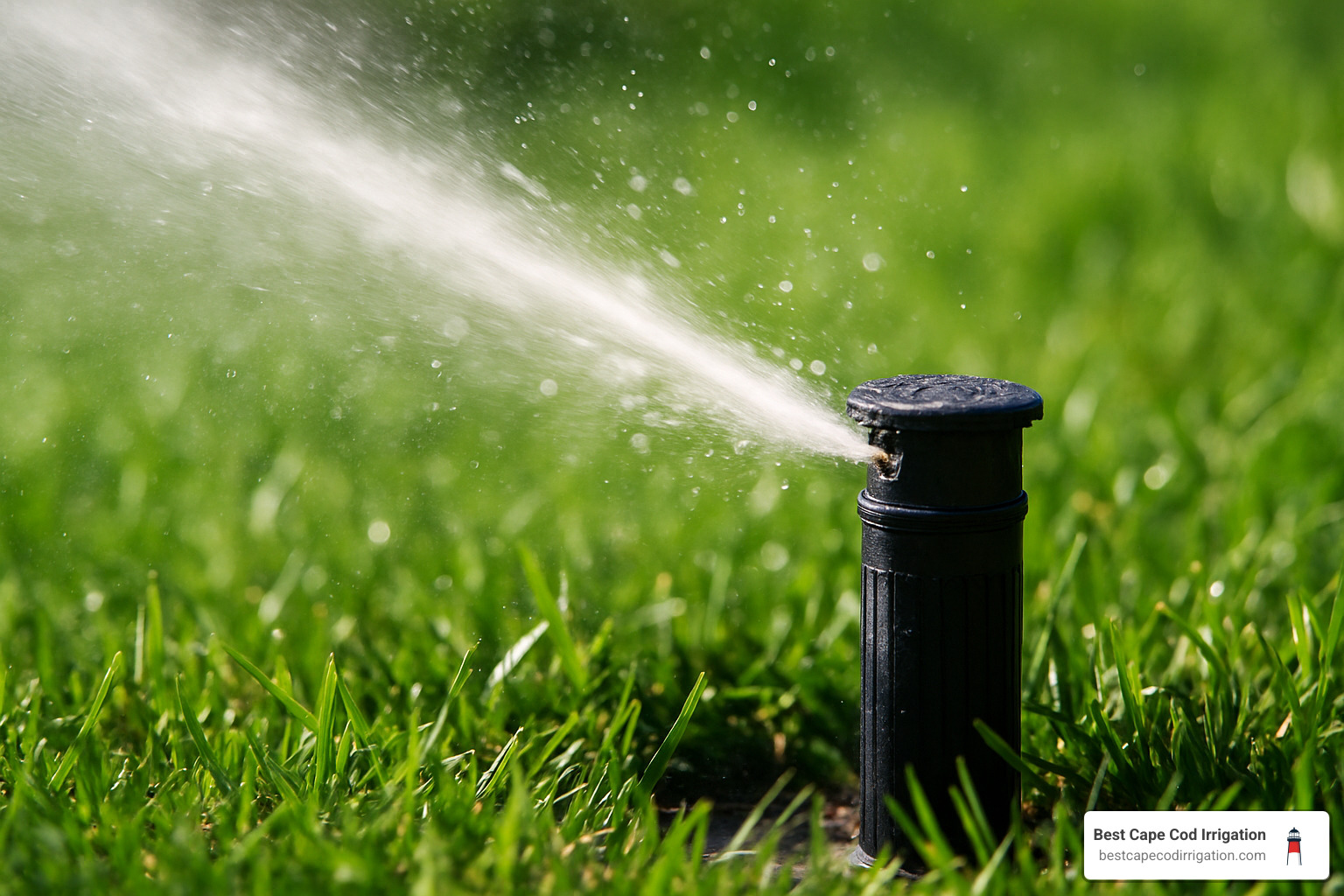
Don’t be alarmed when you see a burst of air followed by sputtering water before normal spray patterns establish—this is exactly what should happen as the lines clear themselves of winter cobwebs.
Step 7: Walk the Yard & Inspect Heads During Flush
While each zone runs, take a stroll around your property to inspect all sprinkler heads. Our Cape Cod winters, with their freeze-thaw cycles, can be particularly hard on irrigation components. Look for heads that aren’t popping up fully, spray patterns that look uneven, tilted heads, or sprays blocked by overgrown grass.
Use your hand shovel to clear soil from partially buried heads—a common issue in our sandy soil—and your screwdriver to make minor spray adjustments. Keep an eye out for heads that have shifted during winter frost heaves, which we see frequently across the Cape.
Step 8: Tighten Fittings & Replace Damaged Components
Now it’s time to address any issues you spotted during your inspection. Look for leaking connections, cracked sprinkler bodies, damaged nozzles, or loose fittings at the valve manifold. Use your pliers to gently tighten loose connections, being careful not to over-tighten plastic components.
This is where those spare parts you gathered earlier become invaluable. For risers that have broken below ground level, you’ll need to carefully dig around the head to access the damaged section. Our sandy Cape soil makes this easier than in other regions, but still requires care to avoid damaging nearby lines.
Step 9: Open Main Valve to Full Position After Stabilization
With immediate issues addressed and all zones functioning, return to your main shut-off valve. Now you can gradually open it to its full position, waiting 3-5 minutes between each quarter turn. This patient approach allows the entire system to stabilize as pressure increases.
If you have a pressure gauge installed, keep an eye on it during this process. For most Cape Cod homes, the sweet spot is between 40-65 PSI. Anything higher might stress components, while lower pressure can lead to inadequate coverage, especially in our well-drained sandy soil that needs thorough, even watering.
Step 10: Record Findings for Post-Startup Tune-Up
Grab your notepad and jot down any issues that need further attention but weren’t critical enough to address immediately. This might include zones with uneven coverage, areas where heads need to be repositioned, or controller settings that need seasonal adjustment.
As one of our Orleans customers puts it: “I thought I’d remember all the little issues I spotted, but by the time I got back to the garage, half of them had slipped my mind. Now I keep a dedicated ‘sprinkler notebook’ that’s saved me countless headaches.”
This documentation becomes invaluable for planning maintenance or sharing with professionals if you decide to bring in expert help for more complex issues. At Best Cape Cod Irrigation, we often find that these notes help us zero in on problems much faster when customers call us for assistance.
Post-Startup Checklist: Zone Testing, Programming & Troubleshooting
After completing the initial startup process, it’s time for more thorough testing and programming to ensure your system is operating efficiently for the growing season.
Fine-Tune the Controller for Spring & Summer
Now that your system is operational, it’s time to program your controller for regular watering. For Cape Cod’s unique climate and soil conditions, we recommend:
-
Set the current date and time: This seems basic but is often overlooked after winter when controllers may have reset.
-
Establish appropriate watering days: Most Cape Cod lawns benefit from 2-3 watering days per week in spring, increasing to 3-4 days during summer heat.
-
Program start times: Early morning (4-6 AM) is ideal for Cape Cod, allowing water to soak in before evaporation while reducing disease risk.
-
Set zone run times: For spring, most zones need 10-15 minutes per cycle. Sandy areas may require multiple shorter cycles (cycle-soaking) to prevent runoff.
-
Adjust for microclimate variations: Areas in full sun typically need more water than shaded zones.
-
Program seasonal adjustments: Modern controllers allow percentage adjustments that can be increased as summer approaches.
-
Test your rain sensor: If you have one installed (required by Massachusetts state law), verify it’s functioning by wetting the sensor and confirming the system shuts down.
-
Replace the backup battery: This ensures your programming remains intact during power outages.
For Cape Cod’s sandy soils, we typically recommend applying 1/4 to 1/2 inch of water per irrigation event. This promotes healthy root growth without wasteful runoff or excessive water use.
One of our long-time customers shared: “After years of guessing at watering times, having a properly programmed system has not only made my lawn healthier but actually reduced my water bill by eliminating overwatering.”
Quick Fixes vs. Call a Pro
While many spring startup issues can be handled by homeowners, some problems warrant professional attention. Here’s a guide to help you decide:
DIY-Friendly Issues:
- Clogged nozzles (can be cleaned with compressed air or by rinsing)
- Minor spray pattern adjustments
- Replacing damaged sprinkler heads
- Repositioning tilted heads
- Programming controller settings
- Replacing batteries or fuses
When to Call Best Cape Cod Irrigation:
- Electrical issues with solenoids or controllers
- Main line leaks or breaks
- Significant pressure problems (too high or too low)
- Valve failures
- Backflow device repairs or certification
- Complete zone failures
- Complex programming needs for water conservation
A professional spring startup typically takes between 30-60 minutes and can identify potential issues before they become costly problems. Our technicians carry common repair parts on their trucks, allowing most issues to be addressed in a single visit.
Frequently Asked Questions about Opening Sprinkler System in Spring
When is it safe to start if we get an early warm spell?
It’s tempting to fire up your sprinklers during those gorgeous April days when Cape Cod gives us a taste of summer, but patience really is a virtue here. Even when daytime temperatures feel balmy, those overnight temps can still dip below freezing and wreak havoc on your irrigation system.
Instead of watching the weather app, get your hands dirty! Check your soil temperature at about 12 inches deep. When it consistently stays above 55°F for at least a week, you’re generally in the clear. Many of our customers use a natural calendar instead—when those bright yellow forsythia bushes burst into full bloom across the Cape, that’s Mother Nature giving you the green light.
Most Cape Cod lawns don’t actually need regular watering until June anyway. As one of our long-time customers wisely told us, “It’s better to drag out the hose for a week or two than to be writing a check for repairs on a cracked system.” Words to live by!
How do I prevent water hammer without a pressure gauge?
Water hammer—that alarming banging noise that happens when moving water suddenly changes direction—can damage your system before you even get to enjoy your first sprinkler rainbow of the season. Even without a fancy pressure gauge, you can still protect your system with these simple techniques:
The “turtle wins the race” approach works best: turn those main valves just a tiny bit—about 1/8 to 1/4 turn—then wait patiently until you hear the water flow completely stop before turning more. Your ears are your best tools here! A properly filling system makes a steady, consistent sound. Any banging, knocking, or rattling means you need to slow down even more.
We teach our Cape Cod customers the “count to 30” method: after each quarter turn of the valve, simply count to 30 before turning further. For the extra cautious, removing sprinkler heads at high points allows trapped air to escape as the system fills.
Given Cape Cod’s typical municipal water pressure of 60-70 PSI, we’ve found that this quarter-turn-and-wait method prevents the vast majority of water hammer problems our customers might otherwise face. Slow and steady definitely wins this race!
What signs mean I should shut it back down and call a technician?
Sometimes your startup reveals issues that are best left to the pros. If you spot any of these warning signs, it’s time to close the main valve immediately and give us a call:
Unexpected geysers or major leaks are the most obvious red flags—any uncontrolled water spray means something’s broken and needs attention fast. Persistent air spurting from heads after several minutes of operation suggests a leak that’s drawing in air.
Pay attention to sounds too. Unusual whistling, chattering, or banging from the backflow device indicates potential internal failure that requires professional service. If you notice very low pressure throughout the system or multiple zones failing to activate, you likely have a main line issue or electrical problem.
One subtle but serious sign: if your backflow device is leaking from its relief valve, that’s your system telling you it needs professional attention right away.
After 25+ years serving Cape Cod irrigation systems, we’ve unfortunately seen many systems suffer additional damage when homeowners pushed through these warning signs hoping they’d resolve themselves. They rarely do! When in doubt, shut it down and give Best Cape Cod Irrigation a call—we’d much rather help you prevent a problem than repair a bigger one later.
Conclusion
As the Cape Cod growing season approaches, opening sprinkler system in spring properly isn’t just a task to check off your list—it’s an investment in your landscape’s health and your system’s longevity. After all, your irrigation system is one of the hardest working features of your property, silently keeping your landscape lush through our hot, sandy summers.
By following our 10-step process, you’re not just turning on water—you’re preventing costly damage while ensuring every drop counts. And on Cape Cod, where our unique sandy soil drains faster than mainland clay soils, proper irrigation timing and maintenance become even more critical.
Think of spring activation as your irrigation system’s annual physical. It’s the perfect opportunity to catch small issues before summer heat turns them into landscape emergencies. That slow drip from a fitting? Much easier to fix in May than during July’s peak watering season when a failure could leave sections of your landscape parched.
Remember these essential points as you prepare for the season:
- Patience pays dividends—waiting until mid-May might feel late, but it protects your investment from late frost damage
- Gentle awakening prevents trauma—those quarter-turn valve adjustments prevent the water hammer that cracks fittings and pipes
- Thorough inspection saves water—identifying misaligned heads now prevents those brown spots (and wasted water) later
- Smart programming conserves resources—taking time to set proper watering schedules for Cape Cod’s specific conditions keeps your landscape healthy with minimal waste
Many of our customers have successfully handled their own spring startups for years. However, if you’re short on time or want expert eyes on your system, our professional opening service provides peace of mind and attention to detail that comes from 25 years of Cape Cod irrigation experience.
Our technicians don’t just activate your system—they bring a trained eye that spots potential issues before they become problems. They’ll optimize your controller settings for water conservation based on your specific landscape needs and soil conditions. And most importantly, we complete this service efficiently in a single visit, freeing you to enjoy spring rather than troubleshooting sprinklers.
Whether you’re a dedicated DIYer or prefer to leave it to the pros, proper spring activation creates the foundation for a beautiful, healthy landscape throughout the growing season. Your irrigation system represents a significant investment in your property—protect it with the seasonal care it deserves.
For professional assistance with your spring irrigation startup or to schedule a maintenance visit, contact Best Cape Cod Irrigation today. Your lawn will thank you all season long.